Bust a Move--Street Dance n Taiwan
Kaya Huang / photos Chuang Kung-ju / tr. by Geof Aberhart
October 2007


July 2007 was a fairly ordinary month in Taipei, with hot, fickle weather and frequent thunderstorms. But while mainstream popular culture was caught up in the spectacle of an American Idol style television show, in an underground mall between Zhongshan and Shuanglian MRT stations shoppers were met with thunderous music and groups of young people spinning and contorting themselves in all sorts of unusual positions.
Tsai Cheng-lung, a member of a dance club from Taibei High School, is pulling a traditional street dance move, the windmill, rotating around on his upper body while his legs spin around in the air. At the other end of the mall, dance group UndergraduEight make smooth, flowing hip-hop dance moves to pumping bass. As these young dancers pull off flips, spins, and other high-difficulty, flashy moves, they demonstrate that street dance can more than stand up to more mainstream trends.
"Once summer vacation rolls around, the number of street dance competitions kicks up to more than 30," says Gino Huang, manager of TBC Dance Studio. The rapid rise in popularity of street dance has left even our photojournalist, a long-time follower of popular culture, amazed. On the weekend of August 4, the semi-finals of the third annual MRT Street Dance Tournament, the 2007 Best Dance finals, the opening rounds of the fourth Shinkong Street Dance Cup, the semi-finals of the 2007 Puma Street Dance Contest, and the finals of the Taisun Battle Championships all took place in various locations around Taiwan, illustrating the boom in street dance's popularity.
The other obvious indicator of street dance's growth is the number of dance clubs being established on campuses nationwide.
"The big thing with senior high students at the moment isn't Jay Chou, it's street dance" says Chen Hsin-lung, former leader of the dance club at Taipei's Sungshan Senior High School. This September, before embarking on his undergraduate career at National Taiwan University, Chen used his final high-school vacation to form a dance crew with fellow dancers from Taipei Municipal Jianguo High School and the Affiliated Senior High School of National Taiwan Normal University. The resulting crew, named "UndergraduEight," participated in the MRT Street Dance Tournament, beating out professional crew Alcanta to take first place. Similar competition to become a top street dancer has swept campuses throughout Taiwan.
From junior high schools to universities, it seems like every school is being caught up in street dance fever, to the point that at the Taiwan regionals for the Battle of the Year competition, there was even a nine-year-old competitor. And street dance is not only growing in popularity with the kids: the subculture associated with it is also making inroads into academia.
As well as publishing The History of the Development of Street Dance Amongst the Youth of Taiwan in 2003, Taipei Physical Education College this year established a street dance group under the Department of Dynamic Art, and the Taipei City Government has published a white paper on the formal introduction of street dance to physical education curricula, as well as actively promoting the development of the form.
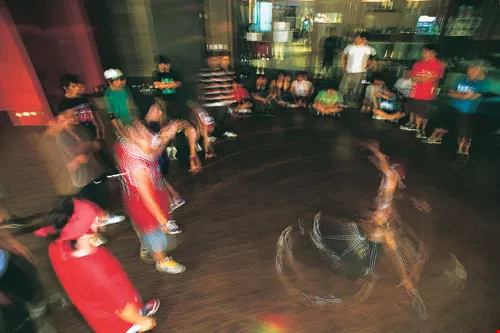
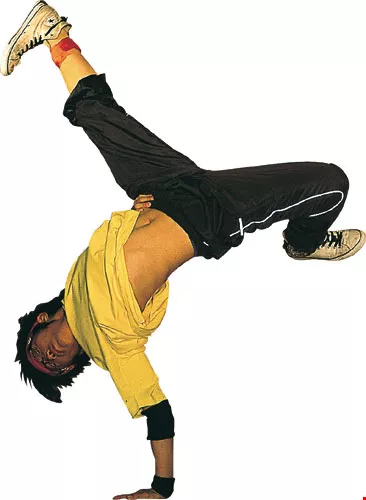
Thomas spins, pulls off a one-handed handstand, moves into a headspin, and then freezes. From its start as a release for African-Americans' anger and frustration to an internationally recognized dance form, so-called "battling" still retains much of its original style and look.
Street dance spirit
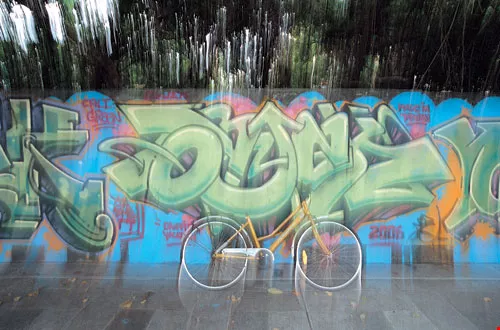
Like many other youth subcultures, like graffiti, tattooing, and cosplay, street dance is an imported phenomenon, originating in American hip-hop culture.
Hip-hop culture began in 1970s America, growing from the cultures of African-American, Hispanic, and Caribbean youth, and is made up of four major elements--rap, DJing, graffiti, and street dance. Hip hop emphasizes the expression of self and spirit, as well as the courage to try new things. Its perspective on life is one of being true to yourself and doing everything with dedication and spirit.
To many people, hip hop and street dance are essentially interchangeable. In reality, hip hop is a much broader concept, while street dance is only a part of the culture. Street dance originated as a way for African-Americans to express themselves and their frustrations through dance and music, and is marked by the battle-like style of the dance moves. When dancing, dancers seem like their blood is boiling, and even the final poses--known as "freezes"--are aimed at "attacking" your opponents and declaring your position. As American popular culture has swept the globe in the past three decades, hip-hop culture has come with it, and street dance has become one of the most recognizable dance forms in the world today.
As time has gone on, street dance has evolved, developing two main streams--old school and new school. Old school is the earlier form, characterized by fancy and floor-based moves, with dancers using the floor as a prop to assist all parts of their bodies, striking onlookers dumb with their flourishes, exaggerated style, and aesthetic.
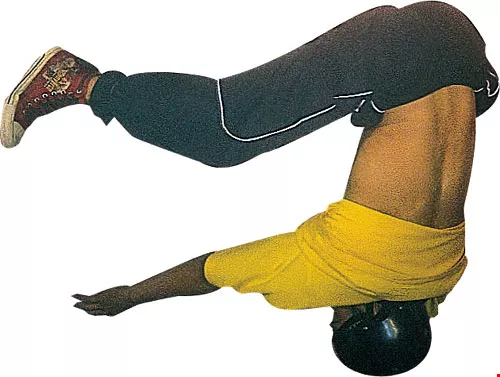
One example is the headspin, where the dancer pivots on his head and spins around and around; another is the windmill, where the pivot is the upper body and the dancer's legs spin around in a windmill style. These are two of the most iconic moves of the old-school style known as "breaking."
Michael Jackson could be considered an icon of early street dance. For the 1974 Jackson 5 track "Dancing Machine," 16-year-old Michael performed a dance known as "The Robot," where the dancer gives the appearance of being controlled by a supernatural force like a robot, with their hands and feet moving stiffly and in a clanking manner following the rhythm of the music. When a special pause in the music occurs, the robot springs back to life.
To old-school breakers, street dance is a way of life. As the culture evolved, it moved from being a form of entertainment to a kind of "battle." When Taiwan Panorama visited TBC Dance Studio, near Shihlin Night Market, a group of 20 people were practicing this more battle-oriented style.
Two people start a battle, with one opening with moves seeing their arms and legs spinning, to which the other responds with a body spin supported by a single hand, known as a "handglide," a high-difficulty move. They then follow one another, with the first person unable to pull off a better move the loser. In the battle environment, each B-boy ("breaker boy") stands in anticipation of their "attack," with dance moves standing in for fists, and out-dancing the opponent the ultimate goal.
Over the 20 years between 1970 and 1990, hip hop evolved, with some styles developing that were less ferocious, their rhythms slower and the tracks less driving. Out of this grew new-school dance, with its emphasis on harmonious, rhythmical motions, while the dance moves themselves became more varied and fluid. New-school dance can be difficult to categorize due to this complexity; for example, the dance moves used by popstar Jolin Tsai for her album Dancing Diva, combining gymnastic moves with hip-hop dance, and the writhing, hip-shaking, footwork-heavy "house" dance style of fellow songstress Landy Wen are both expressions of new-school dance.
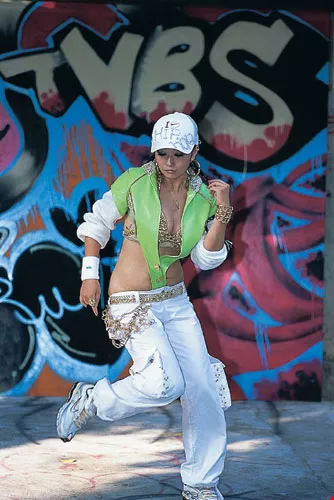
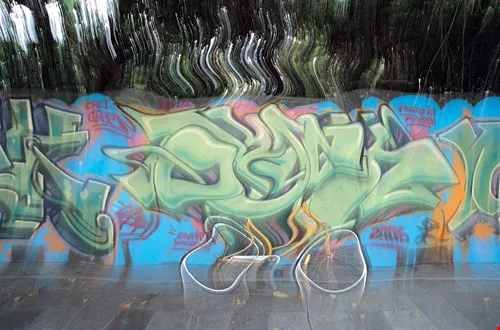
Hip-hop culture has four main components: rap, DJing, graffiti, and street dance. Of these, street dance has caught on the most vigorously in Taiwan.
Street dance in Taiwan
"Hip-hop dance is narrowly considered an American thing, but since its arrival in Taiwan, the dance and culture have taken on a more local flavor," says Lee Chi-yuarn, director of Chocolate Rap, neatly summarizing the rise of street dance in Taiwan. And MTV has been a critical force in fanning the flames of this rising trend.
In her master's thesis, Cheng Kung University Institute of Art Studies student Lee Ching-yi states, "Taiwanese youth first saw street dance through MTV, and this generated tremendous interest in the form, leading to the establishment of today's street dance culture." MTV opened up a new world for Taiwanese street dance, and by the mid-80s there were already dance crews being founded in Taiwan such as the Lingyi Crew, Pili Partners, and the Popping Brothers. Later, Taiwanese youth saw music videos by MC Hammer and Vanilla Ice, copied the moves, and eventually moved into practicing breaking.
Popular television talent show Five Lights Singing Contest was also a strong promoter of Taiwanese street dance and its commercial development. Groups like Gestapo and L.A. Boyz came to prominence through the show and put out albums to build on their popularity. L.A. Boyz, whose members had grown up in the United States, were particularly prominent players in bringing street dance and hip hop to mainstream attention in Taiwan. Peng Ying-lun, regarded as the godfather of popular street dance in Taiwan, says that the development of street dance in Taiwan can be divided into four eras since L.A. Boyz's first album, and that the biggest influence on dance styles have been Japanese pop groups from the Johnny and Associates agency--including Smap and KinKi Kids--with American influence the second major source.
"Companies like Coca Cola began holding a number of national street dance competitions, which was a milestone in the art's development in Taiwan," says Gino Huang, who burst onto the scene through 1994's Coca Cola Street Dance Cup and currently serves as manager for TBC. Other local acts, including Popcorn, TBC, OZ, Dance Soul, and One Day, have come to prominence through such competitions.
At the peak of street dance's popularity, group after group of high school students, their school uniforms accompanied by helmets and kneepads, could be seen in Hsimenting and in the shadow of the National Concert Hall, practicing the six basic elements of footwork and sweating furiously.
Dance studios began popping up all over Taiwan. Even eastern Taiwan, so often behind the curve on trends, was swept up in the fever, and now many of that area's Aborigines have left west-coast crews astounded with their natural rhythm and physical agility in various dance contests. This is a clear illustration of the way street dance is the only one of the four elements of hip-hop culture--the others being graffiti, DJing, and rap--to really take hold throughout Taiwan.
My link to the world
What is the attraction of street dance? What special significance does it have? The answers are different for everyone.
Tung Yan-shan, a graduate of Taipei Municipal Jianguo High School, saw his classmates at junior high doing street dance and thought it was "cool," so he followed their lead into the world of street dance. "To me, being a street dancer is a sweet burden. Street dance brings together choreography and music, and in it you feel a sense of beauty and rhythm. But if you get off tempo, you start looking like a dancing monkey, which can be infuriating. Having gone from not knowing a thing to memorizing the moves well, and on to earning praise from the audience, I feel like I've overcome every difficulty I faced," says Tung.
To improve his dancing, Tung spent a portion of his NT$6000 a month allowance on lessons at a studio. When money was tight, he'd get ideas from MTV, watching videos through, rewinding them, pausing them, and analyzing the moves and rhythms. Once he'd memorized the moves and lyrics, figured out how they tied together, and worked out how each move linked to the next, he would start trying to inject his own ideas.
"After practicing each video's moves for a month or more, I could finally replicate the whole thing," says Tung.
"Even though I tested into National Taiwan University, proving I hadn't taken my eye off what I was 'supposed' to be doing, my parents still haven't really understand my love for street dance," says Tung. He remembers the biggest clash he and his parents had, after his 11th-grade mid-terms. After always having been near the top of the class, Tung had dropped down to 32nd, and after seen his report card, his father went blue in the face and blew up at him. "Is dancing really this important to you? Is it so important you can't even be bothered with your homework?" Standing in the lounge, the younger Tung spat back at his father, "I know what I'm doing!" Eventually they both relented somewhat, with son putting his dancing on hold to focus on 12th grade, and father allowing him to return to it after starting university.
Comparing himself to these younger newcomers, 17-year veteran dancer Peng Ying-lun says, "Dance was my only way of reaching out and communicating with the world." Previously he had been considered little more than a "destructive" child, but with street dance providing a means for him to earn some recognition on behalf of his school, Peng, like many other kids in a similar position, found direction in dance.
"Dance is a means of expression," explains Peng. At some level, street dance's lack of inhibition and its origins give it a genuine street flavor, while its ferocity and battle spirit, with dance moves a proxy for actual fighting, give young people a relatively risk-free outlet for rebellion. In 1990, the 16-year-old Peng turned to dance as a way to resist the growing stress of advancing through the education system and the pressure to conform to social norms, and through dance he found the courage to express himself.
In this means to "communicate" with the world, Peng also found something to dedicate his life to. Now, 15 years later, Peng continues to soak up all he can from the best of the best in all kinds of dance, taking part in performances in Hong Kong, China, Japan, and even New York and Brazil, and battling with the best in the world. He has been the leader of Taiwan's first street dance crew, The Party; choreographer and dancer for singer A-mei Chang's "Sunrise" tour of China; and a member of the first Taiwanese crew to perform in Japan, which is notoriously unwelcoming of foreign crews.
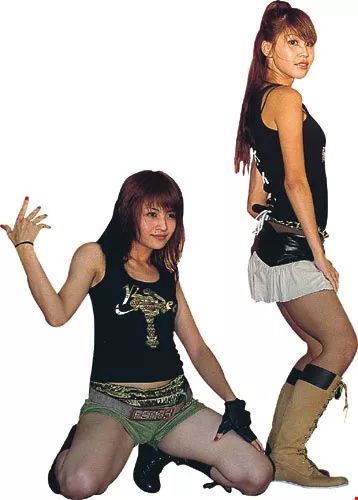
Behind the flashy,vibrant poses,hip-hop culture is about personalization,being yourself,and having the courage to try new things.
The future of dance
"He ain't dancing no more?" "Nope." "Why not?" "Same as me, probably. Can't see the point...." This is a portion of dialogue from the Taiwanese street-dance movie Chocolate Rap, where characters Ali and Pachinko discuss the protagonist Chocolate's decision to quit dancing.
"Taiwanese dancers seem to be relying mostly on instinct to develop, and their careers as dancers are short, finishing up around 27 or 28. Over the course of that short time, everyone suffers a raft of injuries," says Chocolate Rap's director Lee Chi-yuarn. He explains that the origins of the movie lie in the desire to leave a document for those dancers, so they have something else to go alongside all those injuries.
Since the street dance market is still small, there aren't many commercial options available aside from opening your own studio or working with celebrities once you become famous. Additionally, Taiwan's perception of street dancers is still lagging behind its neighbors South Korea and Japan. All told, the pressure to make a living can eventually force many older dancers out of the scene to find steady work, just as Pachinko, a top dancer in Chocolate Rap, chooses to switch to suit and tie to work for his family's trading business.
"That first wave of Taiwanese dancers, from 1985, have all called it quits, and none of them are even still in the dance industry in any fashion," says Peng Ying-lun, who still can't resist a good beat even at age 33, suddenly turning silent. In the world of breaking battles, what's needed is explosive power, and all the most amazing and spectacular moves can wreck even a young body as the injuries pile up over the years and the muscles start to go weak. For veteran dancers, putting themselves to the test can be a painful experience.
"I've heard of dancers breaking their necks on stage mid-headspin because of insufficiently warming up their neck and shoulder muscles," says Gino Huang, who himself has had to take a half-year break from dancing due to overexertion in practice. When a move like the windmill, which pivots on the floor around the upper body, smoothly transitions into a headspin, all of a sudden the head and neck are holding up the dancer's full body weight, easily 60 kilograms, which results in tremendous pressure on the ten-odd centimeters of the neck, while the dancer spinning on the top of his head can quickly result in baldness.
But street dancers nevertheless don't get anything like the public recognition that ballet dancers and modern dancers do. Ballet dancers start from childhood, and can dream of one day standing tall on the national stage, drinking in the applause. Once they're too old to dance, they can move on to teaching at an arts school. Street dancers, meanwhile, have only short careers and are quickly injured by the demand for explosive power in their dance, then simply retire.
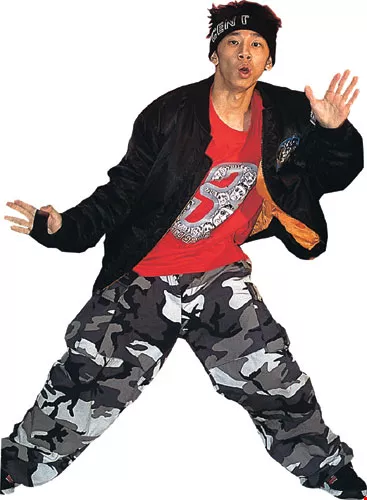
The next generation
But let us leave these bleak visions for a moment and turn our attention to the hustle and bustle of the MRT underground mall. On August 10th, with Typhoon Pabuk looming off the coast of Taiwan, dance crew UndergraduEight is desperately making the most of their available practice time, with less than 16 hours before their finals appearance.
"Since finishing our university entrance exams in July and deciding to enter this contest, we've been practicing every day until ten or 11 at night," says Li Chia-min, a member of the eight-person crew.
Isn't that tiring? Even though they're young and full of vigor, practicing from morning till night for a solid month has taken its toll. "Even if we are tired, there's nothing else we can do about it. If we're not totally ready, our moves may not be 'fierce' enough," says outgoing, talkative crew leader Chen Hsin-lung. If they let their moves stagnate, they're bound for disappointment. To the members of UndergraduEight, a lack of technical progress is the cause of mental fatigue, something far harder to overcome than mere physical tiredness.
The next morning, with less than eight hours sleep, the members of UndergraduEight head to the Shinkong Mitsukoshi department store in Hsinyi District to report for the Third Annual MRT Street Dance Tournament, then hurry over to the Y17 youth center on Jen-ai Road to participate in the finals of the 2007 Puma Street Dance Contest. Once they are finished there, they rush back to Hsinyi, making it just in time for the youth division. When the music kicks in, the three girls and five guys, clad in black Adidas short jackets and black capris, hit the stage, formed up two in front, three in the middle, and three at the back.
The two in the front, Lee Chia-min and Cheng Si-hao, do a move known as "Walls," imitating climbing an invisible wall, while the middle and back rows crouch down, heads shaking, progressing smoothly into a move called "The Wave." From there, they continue dancing, all the time changing formation. Two minutes and 15 seconds into the routine, the music increases in tempo and the three girls move into center stage from the outside, while the five guys surround them, and then bang! The music stops, and all eight unzip their jackets, revealing yellow and red vests underneath, and strike a final pose. At this moment, the applause and howls from the crowd reach a thunderous crescendo.
At 6 p.m., the members of UndergraduEight pick up the first-place trophy and their NT$100,000 prize. When their youthful laughs are later heard in a BBQ restaurant, all their tiredness has completely slipped away.
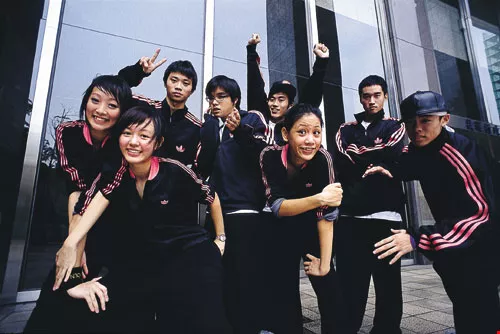
Eight students from different schools have come together to create the perfect ending to their high-school lives, using their final summer vacation to form a dance crew, practice their routines, and eventually win the youth division of a dance contest held by the Taipei Rapid Transit Corporation. Through their passion and skill, they prove that their love for dance need not interfere with their academic success. At the time of publishing, these young students have already moved on to become freshmen at various universities around Taiwan.
Dancing into the future
In the past, street dance in Taiwan occupied a substantially lower position in most people's minds than ballet or modern dance, and couldn't hold a candle to the elegant, gentlemanly art of ballroom dancing. Even flamenco and belly dances have been generally better received. Today, though, street dance is becoming more akin to a sporting pursuit, and is even entering into the world of academia.
"In Asia, hip-hop culture is flourishing the most in Japan and South Korea, maybe even more than it is in the United States, and the South Korean government has even made breaking part of their cultural development plan. Meanwhile Taiwan has been catching up technically and in terms of numbers. We knew there'd be enough customers if we opened classes, but the end result exceeded our expectations," says Chang Ming-feng, dean of the Department of Dynamic Art at Taipei Physical Education College. This year, the department has accepted 11 top dancers as students, and will give them formal training in all aspects of the art, from music through choreography. The school also hopes to set up seminars on the field. Whether or not they can improve or even rewrite the standing of street dance in Taiwan will be well worth watching.
With a shot of two young men pulling dance moves under the setting sun, the movie Chocolate Rap comes to an end. As water pounds down on them, the two young dancers are knocked down and drag themselves back up again--isn't this a reflection of the ups and downs of youth? Do you have something in your life you would dedicate yourself to? Perhaps this has got you contemplating that very question.
Key Points for Breaking Practice
●There aren't many requirements clothing-wise, just as long as you can move freely, the clothing can absorb
sweat, and the pants are loose.
●Sneakers are the best choice for footwear; basketball shoes grip the floor too much, and leather shoes are just inappropriate.
Remember to warm up and stretch 20 minutes before dancing, paying particular attention to the neck and shoulders.
Kneepads, elbow pads, wristguards and helmets are indispensable.
●To stay in optimal condition, avoiding smoking and drinking, while maintaining a good diet.
●Neither age nor gender are issues.
●As soon as you suffer a sprain, stop practicing and apply ice and compression. This will minimize swelling and promote healing.
●Generally, three days after a sprain, apply a hot compress to reduce clotting and start working on rehabilitation.
You should battle through dance, not through words or weapons.
●Winning and losing are temporary, injuries can be forever.
| Category | Introduction | Style | Details |
| Old School | Developed in American west coast cities such as Los Angeles. Emphasizes exaggerated, explosive movements. | Popping | A dance style characterized by jolting motions. Dancers tense and relax muscles along the body's axes, focusing largely on the shoulders and arms. In Asia, this style is most commonly seen in music videos by Korean artist Rain. |
| Electric Boogie | Commonly known as "The Robot." The dancer gives the impression of being moved by invisible strings or controlled by an invisible outside force, like a marionette. | ||
| Breaking | Breaking is what most people associate with street dance and breakdancing. It focuses on ground moves and flashy techniques. | ||
| Locking | Locking focuses on hand and arm movements. The hands and arms are spun and rotated before suddenly locking in place. | ||
| Wave | This style gives the impression that some kind of force is moving through the limbs and body of the dancer, resulting in the dancer moving in a wave pattern. | ||
| New School | Developed in New York. Focuses on smooth, rhythmic movements to accompany the slower rhythms of new-school hip hop. Also integrates and modifies old-school moves. | House | House focuses on fast rhythms and leg movements. |
| Hip Hop | Hip-hop style is a variable style made up of a variety of dance moves and styles. | ||
| New Jazz | New jazz dance relies on the interplay of power and softness, and can emphasize the sensuality of female dance movements. Commonly seen accompanying R&B music. |
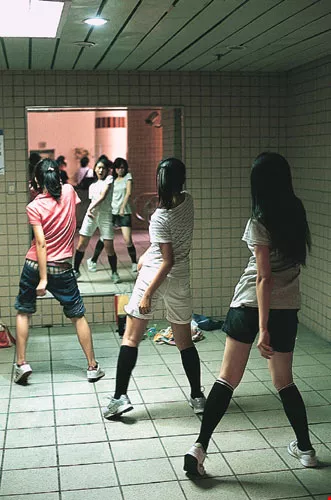
Street dance is flourishing in Taiwan, and whether it's the well-equipped setting of a dance studio (left) or an underground mall between MRT stations, you can find young people practicing their moves almost anywhere.
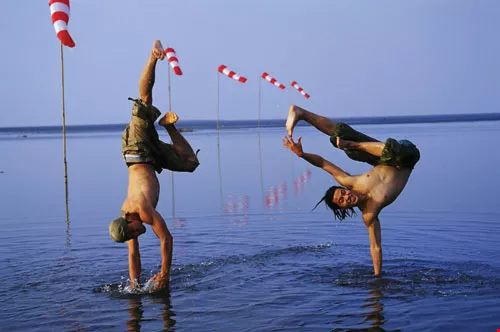
Chocolate Rap is Taiwan's first movie about street dance. Director Lee Chi-yuarn uses the contrast between the hard, powerful world of street dance and the soft, flowing nature of water to illustrate the emotions and the ups and downs of his youthful stars.

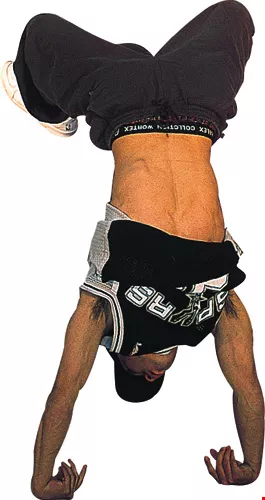
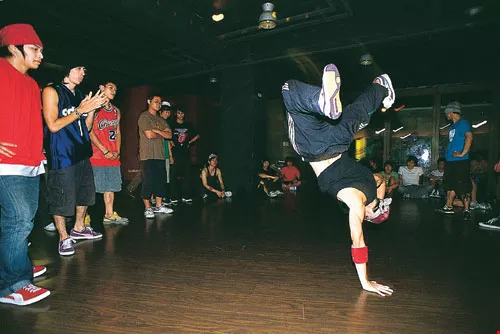
Street dance is flourishing in Taiwan, and whether it's the well-equipped setting of a dance studio (left) or an underground mall between MRT stations, you can find young people practicing their moves almost anywhere.

@List.jpg?w=522&h=410&mode=crop&format=webp&quality=80)


