
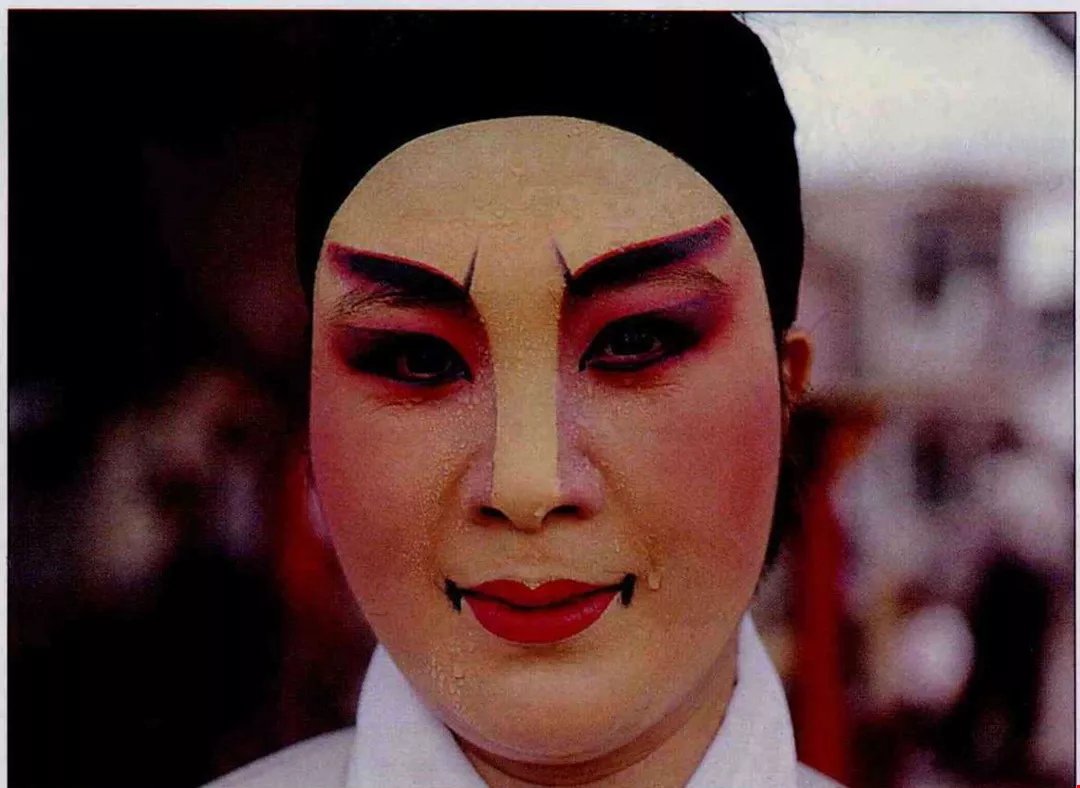
From returning to one's native village to visiting ancestral graves there, to bringing Matsu back to her native home, and even to going to the mainland in search of old relics, there's nothing unusual about the search for one's roots. Mainland popular opera--Hsiang Opera--is one of the few types of drama that showed up in different forms on the other side after having its origins in Taiwan.
When one sees an opera in the suburbs of Changchow, the open air stage is set up next to the river. Looking from a distance, the shadows of the players are cast against the white curtain which has been erected, as the actors and actresses make themselves up in traditional costume and chat with the fans backstage. Watching the performance and watching the people, past and present absentmindedly intermingle in light and shadow.
Go back now to 1950s or 1960s Taiwan. A faint breeze rinses the riverbank, and two or three old friends are chatting and laughing, setting up chairs to watch the drama, and making a running commentary on the quality of the performers.
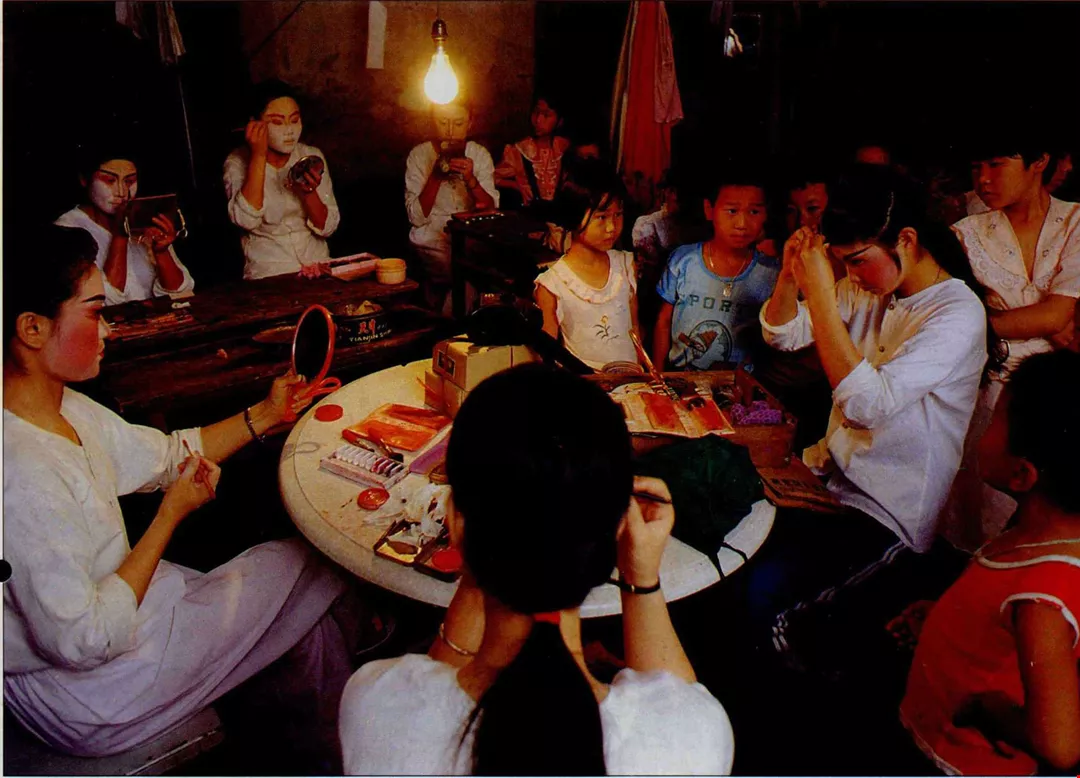
Look closely at the picture and you can see a lot of spirit in those eyes. How many childhood memories such a picture brings back.
Economic prosperity, look back at the "four olds":
On Yanglaopu Street in Changchow, when the drivers of the three-wheeled rickshaws rushing passengers to the show see a vehicle coming, they don't hit the horn but just call out "hey, hey" as a signal, which counts as enough to warn off the oncoming car. In the long alley lined with houses, mothers bring out small stools and feed their small children under the eaves. Several of the older housewives in the neighborhood gather at the corner to chew the fat, while on the side hand-pulled carts carry off goods.
Is it true that this type of lifestyle is neither hectic nor busy, that it is more humanitarian and full of feeling for one's fellows? But everybody says: "Taiwan doesn't have narrow streets like this!" or" Taiwan is very wealthy!"
With economic reform in the 1980s, in fact many small towns along the coast in the mainland are on their way to becoming well off. The "four olds," activities of yesteryear like worshipping at the temple or seeing the street opera, have been getting stronger and stronger and are blossoming all over.
The Fukienese tradition of the pan-hsien (literally "playing god")--a pre-performance vignette involving prayers asking for the felicitations of the gods--is still discouraged from being openly performed under the official atheism of Communist China. Many publicly supported companies, bowing to official policy, find it inconvenient to add a pan-hsien. But the publicly supported troupes often have the best artists whom everyone wants to see. As a result many small villages and towns have no choice but to "open another pathway" and come up with a bit more money to get the publicly sponsored troupe to perform the main show while a private troupe does the preliminaries. In some places, on holidays, sometimes different neighborhoods in the same town will each sponsor a troupe, who will then perform together in what is known as the "merged stage."
Lin Kuo-hui, director of the Lunghai County hsiang-chu Company in Changchow, says that there is one village in the county that has made a contract with the company, booking them in one gulp all the way up to the year 2000, making it clear that, "no matter who becomes company director or village mayor, the contract is inviolable." so what's so great about this hsiang-chu? Why does everyone love it so much?
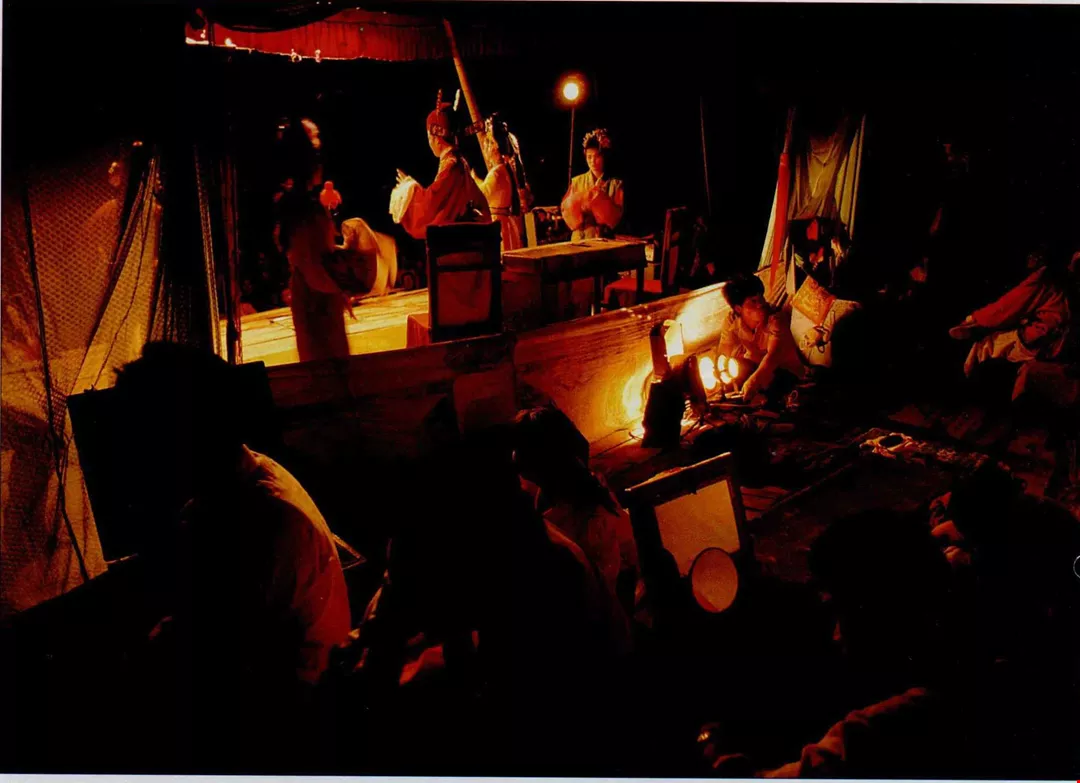
Things are fast and furious on stage, and not very quiet backstage either. Working the lights, skimming a book, chatting about the day's affairs... life is indeed but a play.
Hsiang-chu in the mainland, ko-tzai-hsi in Taiwan:
The term hsiang-chu seems unfamiliar to the Taiwanese ear, but everyone is familiar with ko-tzai-hsi (Taiwanese opera). They are in fact two branches from the same tree. Whether it be in terms of the compositions, the gestures, or the singing style, in fact hsiang-chu is our very own ko-tzai-hsi.
Taiwanese opera originated in the Yuanshan area of Ilan County. It is said that in the early years of the Republican era, "there was a guy nicknamed ko-tzai-chu who became famous in Yuanshanchieh and Toufen through his skill at song. During his leisure time he would sing mountain songs, accompanied by a stringed gourd instrument, singing and playing at the same time for his own entertainment."
After this type of singing, melded together with minor local dramatic forms like chin-ko, tsai-cha, and che-nung, was brought to Taiwan by Fukienese immigrants, and absorbed the martial arts parts of Peking Opera, as well as the backdrops and structures of Fuchow Opera, by 1925 or 1926 there were already several professional troupes, frequently going on stage to perform popular dramas.
After flourishing in Taiwan, ko-tzai-hsi then became so hot that it made its way over to the mainland.
In 1926, Taiwanese businessmen living in Fukien established a Taiwanese Opera troupe in Hsiamen for their own amusement. The following year, the drama class at a Hsiamen school invited performers from Taiwan to teach ko-tzai-hsi, which is said to be the beginning of the penetration of Taiwanese Opera into the mainland.
In 1928, a Taiwanese Opera company that had returned to the mainland to visit temples did a tour of Matsu temples in Hsiamen, creating an enormous vogue. Thereafter, anytime a Taiwan troupe went to Fukien they had to do at least a short period of performing; thus did ko-tzai-hsi spread throughout that province.
Chen Zhiliang, director of the Taiwan-Fukien Area Opera Association, states that at that time, when Taiwanese Opera was becoming all the rage for the people of Hsiamen, one could hear the famous seven-character meter being sung from sunrise to sunset in every corner of the city. Even street vendors would accompany themselves and sing a bit of ko-tzai-hsi to attract customers.
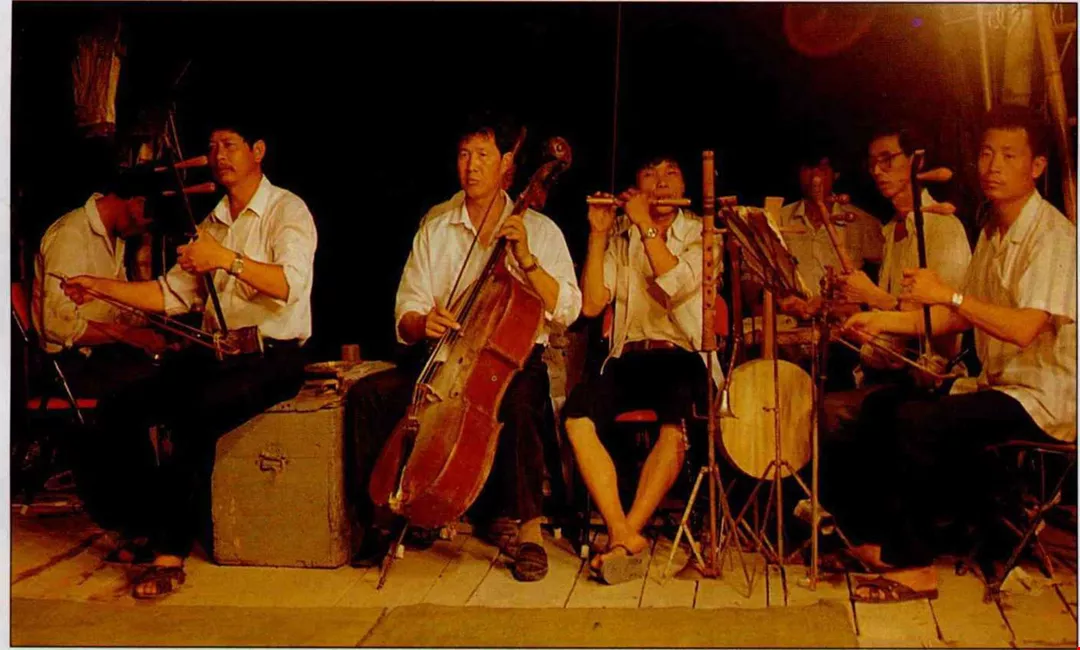
Instruments for Hsiang Opera include gourd stringed instruments, Chinese violins, and cellos, somewhat different than what one normally sees in Taiwanese Opera.
Two branches of the same tree buffeted by the same shocks:
After getting a foothold in Hsiamen, Taiwanese Opera spread quickly to the interior. Lunghai, Shewei and Nanmen in Chang-chow became important centers. People in the countryside being more enthusiastic than in the cities, it wasn't long before the stage and puppet theater forms from Chuanchow and the "Monkey Theater" type native to Changchow were all affected and declined in popularity. Some companies thus switched over to performing ko-tzai-hsi. These areas are all in the Hsiang River area (today the Chiulung River in Changchow), so the form became known as hsiang-chu or Hsiang Opera.
History marched on, and interchange continued between the opera forms on the two sides of the Taiwan Strait. During the War of Resistance Against Japan from 1937-1945, both Taiwanese ko-tzai-hsi and Fukienese hsiang-chu were repressed under the impact of the times.
In Japanese-occupied Taiwan, the occupiers were then strongly pushing the policy of "Japani-fication," and banned the performance of Taiwanese Opera. Many artists had no choice but to switch over to singing Japanese songs and wearing Japanese style clothing to perform so-called "improved opera." In mainland China, because ko-tzai-hsi had its origins in a Japanese occupied territory, it was banned as the "music of defeat." In order to make a living many artists had no choice but to perform underground. Some people just rearranged the popular "seven-character meter" of the ko-tzai-hsi, once again picking up some nourishment from Fukienese songs, with the new pattern known as dou-ma meter. The name was also changed to one different from and better sounding than ko-tzai-hsi so that a living could still be eked out.
The altered dou-ma meter was first performed in Taiwan in 1948 by the Nanching Douma Troupe from Changchow. After growing in popularity, it was absorbed in turn by Taiwanese Opera companies, and with the passage of time became on a par with the "seven character meter" as the two main patterns for Taiwanese ko-tzai-hsi.
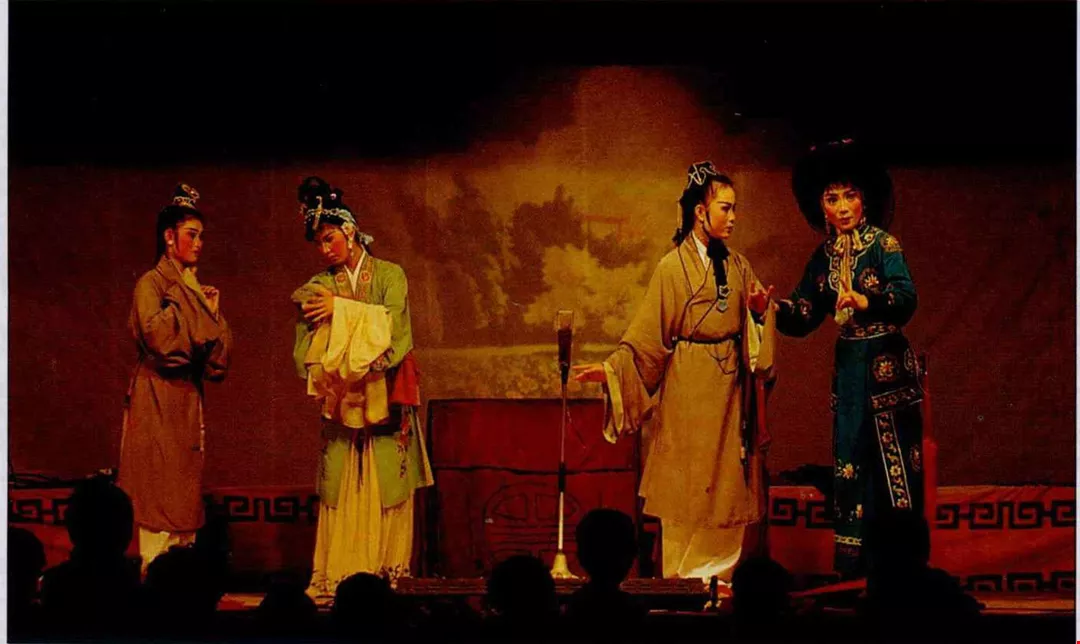
The large screen on the hsiang-chu stage is for backlit shadows to add to the overall impact of the performance. The makeup and costumes are also detailed and meticulous, with most retaining traditional hand-embroidered designs.
Help from the public sector, broadening of territory:
Through the percolation of artists between the two sides of the Taiwan Strait, ko-tzai-hsi finally emerged as the mature local dramatic form for the Taiwan-Fukien area. After being separated for forty years, what differences have developed in the forms of these two fated sisters?
Compared to Taiwanese ko-tzai-hsi troupes, which still rely for their development on private effort, after the Cultural Revolution, the mainland authorities went all out to revive traditional drama. Relevant measures, such as building opera schools, preserving rare dramatic forms, and creating new scripts, have long been the envy of people in Taiwan's ko-tzai-hsi scene.
Take for example the Nanching County company, which was established in 1955. It set up a school in 1959, and "invited Fukienese Peking Opera personages to come and teach," relates Huang Lung-hsiang, director of the Nanching Hsiang Opera Company. After waiting impatiently for opera to be reopened in 1970, the arts school also began accepting new students. The Nanching troupe suspended performing in 1986 and 1987 to concentrate on development of new talent. This is the "company class" opera school typical of the mainland.
The special feature of the communist system is that the state is charged with everyone's care. In Fukien, publicly sponsored troupes like Nanching are on the so-called "half-subsidized system." The state is responsible for the wages of the players and technicians, and also subsidizes the costs of performing.
"Newly arrived actors get l00 or so RMB [about NT$500] per month, and there is an annual subsidy of RMB97,000 plus about RMB200,000 taken in from performing for the year, compared to annual expenses of RMB300,000-plus, so income and outflow about balance off," explains Huang Lung-hsiang.
What the Nanching company enjoys is considered second-grade state treatment, and there are five other such hsiang-chu troupes in the Changchow area. The ones receiving the best treatment are the top level ones on the "full-subsidy system," like the Hsiamen and Changchow municipal Hsiang Opera companies. All expenses and salaries are covered in full by the state. Besides these two types of publicly supported companies, there are also private groups which have sprung up in just the past few years. According to estimates, there are about 300 amateur companies in the nine counties and one municipality of Changchow alone.
Even if it is a private, non-government supported cast, they also share in this broad room for survival. This is the ideal fertile land that people from Taiwan's opera world have long pined for. The maintenance of the basic rural village structure, plus leisure time and extra cash that people are willing to spend on cultural activities, is just like Taiwan shortly after retrocession, before any electronic or television media had become widespread, when local opera was definitely in its prime.
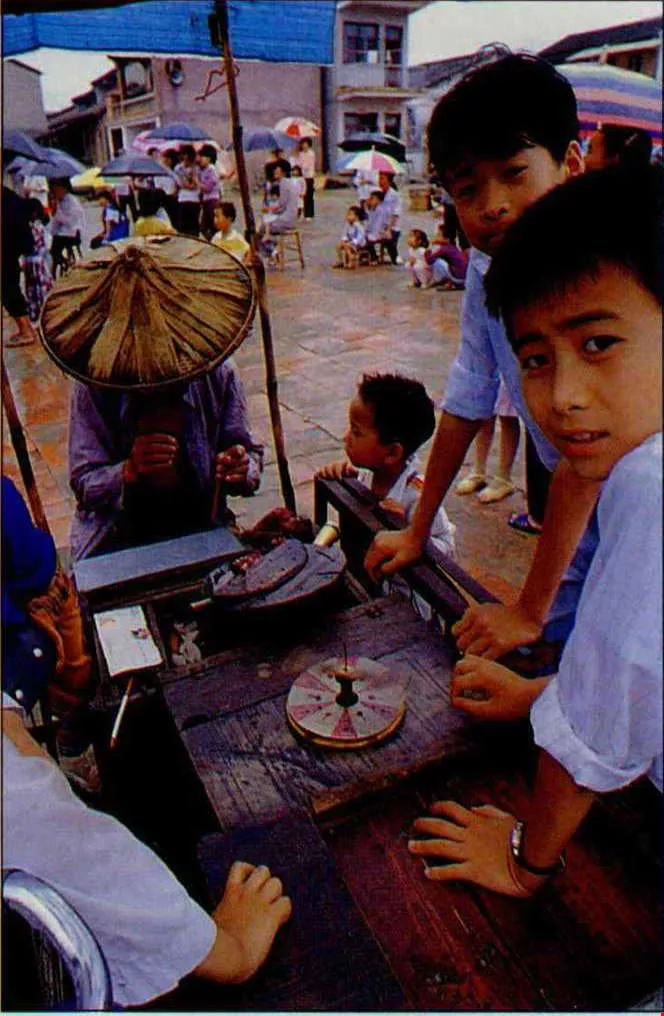
There's opera to watch, offerings to munch on, and even roulette to play at. It's great to have everybody together!
Culture serving politics:
Companies which are fully supported by the state have the advantage of not having to worry about how to keep the tradition going from one generation to the next. But, on the other hand, "the place where the Communist Party most differs from others is that 'culture must serve politics,'" frankly states an official in the world of Changchow hsiang-chu. This is the most difficult problem for mainland drama groups to overcome.
In Fukienese rural villages, besides celebrations of the gods which have economic benefits in mind, state-sponsored dramatic operations have the responsibility of spreading the official line, as for example in modern dramas encouraging birth control or extolling some new positive and condemning the corresponding negative. These accompany the traditionally-costumed Hsiang Opera and are performed everywhere in turn.
Further, Communist Chinese policy includes guidelines for altering scripts, requiring that "terrifying or degenerate feudalistic elements be abandoned; that barbaric, terrifying, obscene or superstitious monstrous images be expunged. . . ." In the eyes of someone from Taiwan such words are start-ling: What could their standards and definitions be? Is this just entering another set of shackles?
But what one cultural official in Changchow is concerned about is with full protection from top to bottom, there will be a psychology of "eating from the giant rice pot" and of not trying to progress or innovate. He argues that state-supported companies have the problem of not feeling threatened or challenged enough, so that artistic breakthroughs are difficult.
Like many things after economic reform, after liberalization opera troupes in the mainland have also come across fundamental problems of the system of public ownership.
Wang Zhibing, vice-director of the Lunghai County Arts Committee, takes the following example: Fukienese Opera is flourishing, and there is no Shortage of talented actors and actresses, but the state-run companies all have older performers unwilling to step aside, so there is a problem of infusion of new blood. For instance, in the Chang-chow municipal company, they have 80-plus members. In fact, they "suffer from overcrowding, so it's virtually impossible to squeeze in a new face." Thus, although they are contracted to play all year round and the market response is excellent, given the state-mandated budget and organization, it is extremely difficult to add new players or to spin off new casts.
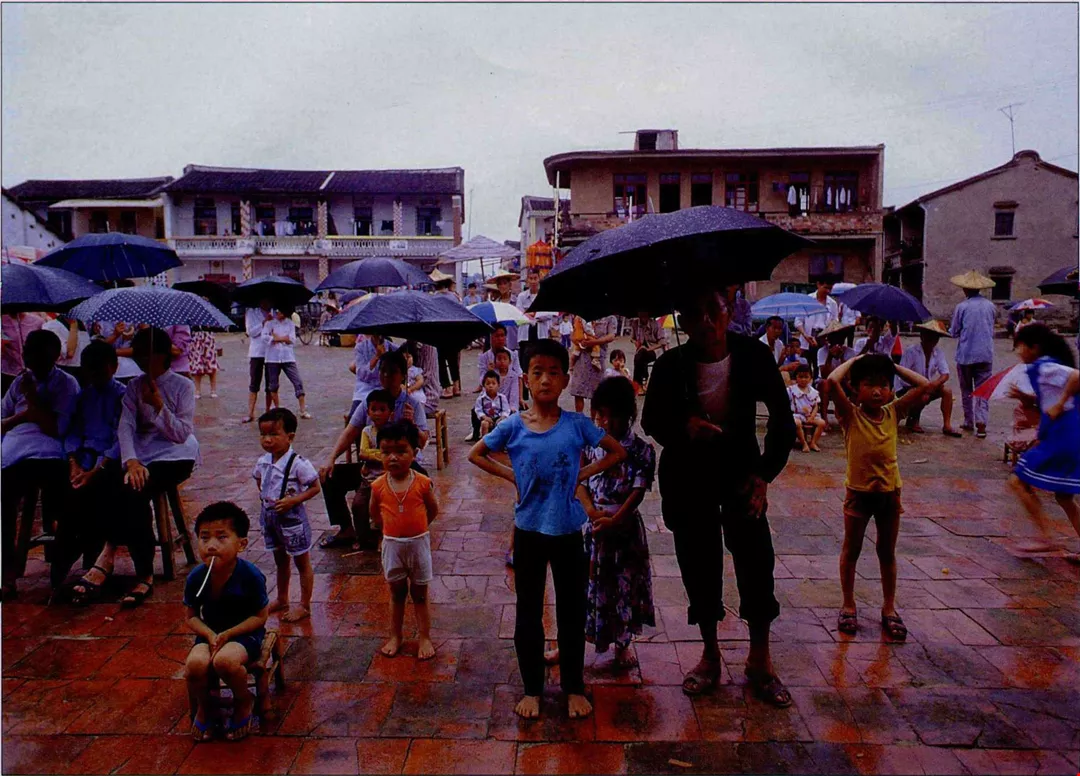
The afternoon performance has just begun, but now it's raining! The players look unperturbed, the audience is too fixated to notice. Who's afraid of a little rain?
Private troupes full of vitality:
Why aren't the old-timers willing to retire? The problem is none other than economics. In the past few years, although the coastal areas have prospered in the wake of economic reform, there has been severe inflation. The monthly pension of RMB200 or so for the older performers is of course no match for complimentary bonuses from the audience and other market income sources which are still given in the company.
Currently Fukien Province stipulates that performers must retire at 70, but there are also provisos. Middle-aged understudies who have not yet reached retirement age can keep their positions (without pay) in state companies in order to encourage more outflow to private companies and to encourage more infusion of new blood. But the response hasn't been very great, and the average age of the performers in state-run companies is well on the high side. "Art is the most ruthless of occupations, and when the actors pass their prime, their business disappears," says Chen Zhiliang, who worries that if this continues over an extended period it will affect the quality of the publicly-supported troupes.
Some "private enterprise" non-government casts are, in contrast, full of vitality. The Chiuhu Hsiang Opera Company of Lunghai County is a case in point. This is a family operation, with one-third of the 36 participants coming from the same extended clan. Sons, sons-in-law, and grandsons perform together on the same stage, so it's quite a scene.
Chiuhu's performing budget is about 1/4 less than that of a state-run company, but, with over 200 performances a year, their profit is by no means worse than the government version. Further, Chiuhu also brings in skilled people from all over in order to strengthen its ranks. Perhaps these private troupes like Chiuhu don't perform with the same level of technique as the state-supported troupes, but they don't seem inferior in their operating results.
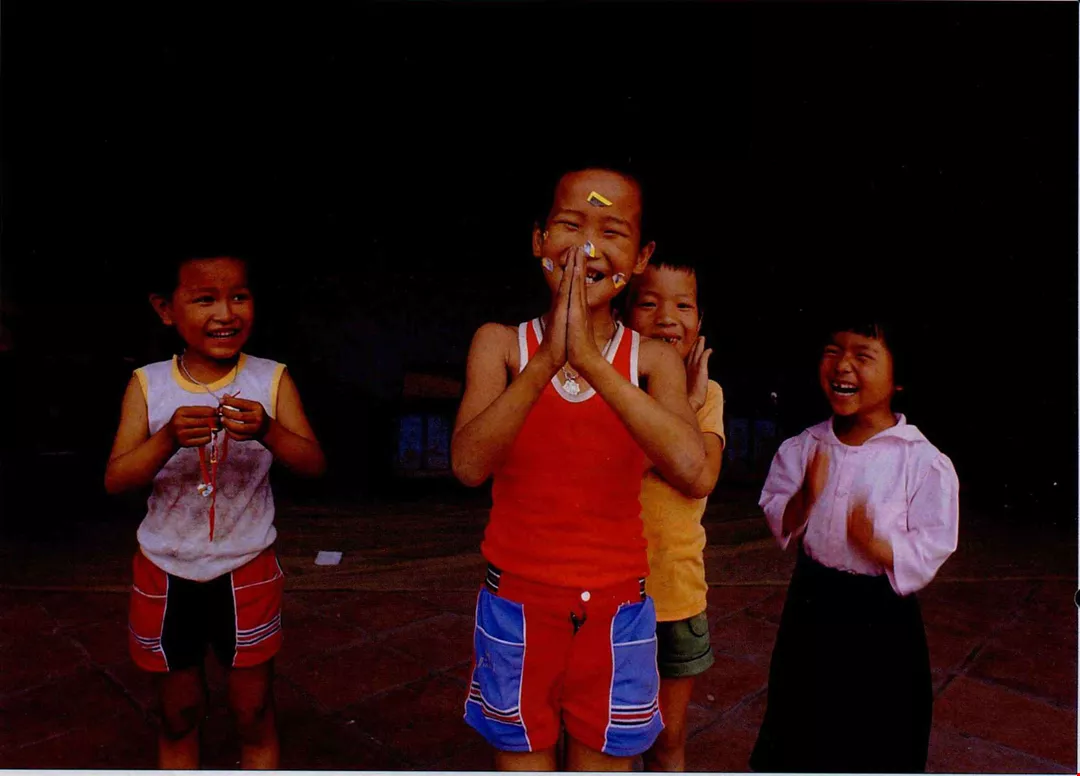
The day after the show, children scramble over the stage, acting out their own version just like the original. This is how tradition is passed.
High-pitched? Simple and natural!:
Besides the operations of the organization, after more than forty years apart, the Hsiang Opera of the mainland has also developed its own style. For example, hsiang-chu singing copies after Peking Opera, with the tone high pitched and clear, using falsetto, with the same styles for the leading man and leading lady. The gestures and choreography are also more pronounced and defined. The music is performed according to fixed charts, which is quite different from the traditional Taiwanese ko-tzai-hsi where "the teacher gives the root, the actors improvise the branches"--the actors on the stage and the musicians backstage play off and coor-dinate with each other.
Wang Chen-yi, secretary-general of the Association of Taiwanese Ballads, who has been to the mainland many times, contends that as ko-tzai-hsi has been developing for less than 100 years, it has the special characteristic of being thoroughly plain and simple. For example, singing is done in a natural voice, with the transitions gentle. Movements are smoother, more suave, closer to the style of southerners. But mainland ko-tzai-hsi has more deliberately copied from the great tradition of Peking Opera, with "southern dramas in northern voice," thus adulterating the local character, so that the style of opera there has already changed.
Wang Chen-yi believes that ko-tzai-hsi had once been unified, as in that period when dou-ma and seven character meter were sung side by side, marking a new milepost in its development. But today developments have caused ko-tzai-hsi to lose its personality, which is a lurking threat.
As the two sides of the Strait look back and forth, mainland artists similarly have their own view of Taiwan ko-tzai-hsi, especially that such as performed by the famous Ming Hua troupe, which uses special techniques and kung-fu from martial arts theater. "It's certainly impressive, but weak on content," offers Chen Zhiliang. "There's too little singing, and the gestures and movements are not refined enough." But he has high praise for Liu Chiung-chih from Ilan who plays tragic leading ladies: "She takes Taiwan's most unique crying tone to new heights."
Looking at one mountain peak from another:
But mainland artists are quite envious of the pluralized environment that has both traditional and adapted Taiwanese Opera. One commented that mainland ko-tzai-hsi "has a political character, not a personality." Zhuang Yuezhi, who plays the role of the leading lady in the Nanching group, says that although mainland versions are rich in traditional character, she feels that the Taiwanese ko-tzai-hsi she sees on coastal television is really appealing. "The rhythm of the plot is quicker, the costumes are beautiful, the lyrics are both moving and graceful," says Zhuang. She hopes that one day she will be able to meet her idols Yeh Ching and Yang Li-hwa.
The things to eat, the gods who are worshipped, and the Fukienese language in one's ears as one passes through villages in Fukien are all similar to Taiwan and these things are all around everywhere you go. And there are the marks of a constant stream of Taiwan visitors coming to ancestral graves or to worship at temples.
As you go through the big cities on the coast, the old hometown is constantly being introduced: "This is a factory opened by (or an eel farm started up by, or a building put up by. . .) a Taiwanese."
Can ko-tzai-hsi on both sides learn something from this experience, and create a new life for Fukienese-Taiwanese Opera?
[Picture Caption]
p.32
When the play is over, bean-sized drops of sweat pour off their faces--it's brutal! But the audience is here for a show, so how can they not go all out?
p.33
Look closely at the picture and you can see a lot of spirit in those eyes. How many childhood memories such a picture brings back.
p.34
Things are fast and furious on stage, and not very quiet backstage either. Working the lights, skimming a book, chatting about the day's affairs... life is indeed but a play.
p.35
Instruments for Hsiang Opera include gourd stringed instruments, Chinese violins, and cellos, somewhat different than what one normally sees in Taiwanese Opera.
p.35
The large screen on the hsiang-chu stage is for backlit shadows to add to the overall impact of the performance. The makeup and costumes are also detailed and meticulous, with most retaining traditional hand-embroidered designs.
p.36
There's opera to watch, offerings to munch on, and even roulette to play at. It's great to have everybody together!
p.37
The afternoon performance has just begun, but now it's raining! The players look unperturbed, the audience is too fixated to notice. Who's afraid of a little rain?
p.38
The day after the show, children scramble over the stage, acting out their own version just like the original. This is how tradition is passed.

@List.jpg?w=522&h=410&mode=crop&format=webp&quality=80)

@List.jpg?w=522&h=410&mode=crop&format=webp&quality=80)


