Bamboo Curtain Studio and the Green Art Action
Lee Hsiang-ting / photos Bamboo Curtain Studio / tr. by David Mayer
March 2016
When art and the environment rub elbows, what kind of sparks are they likely to throw off?
Countless artists from around the world have taken part in the residency program at the Bamboo Curtain Studio, where art and environmental sustainability come together.
By focusing attention on Plum Tree Creek, which empties into the Danshui River not far from the studio, local residents and the artists engage in an ongoing dialogue that leads to a new and deeper understanding of the local area.
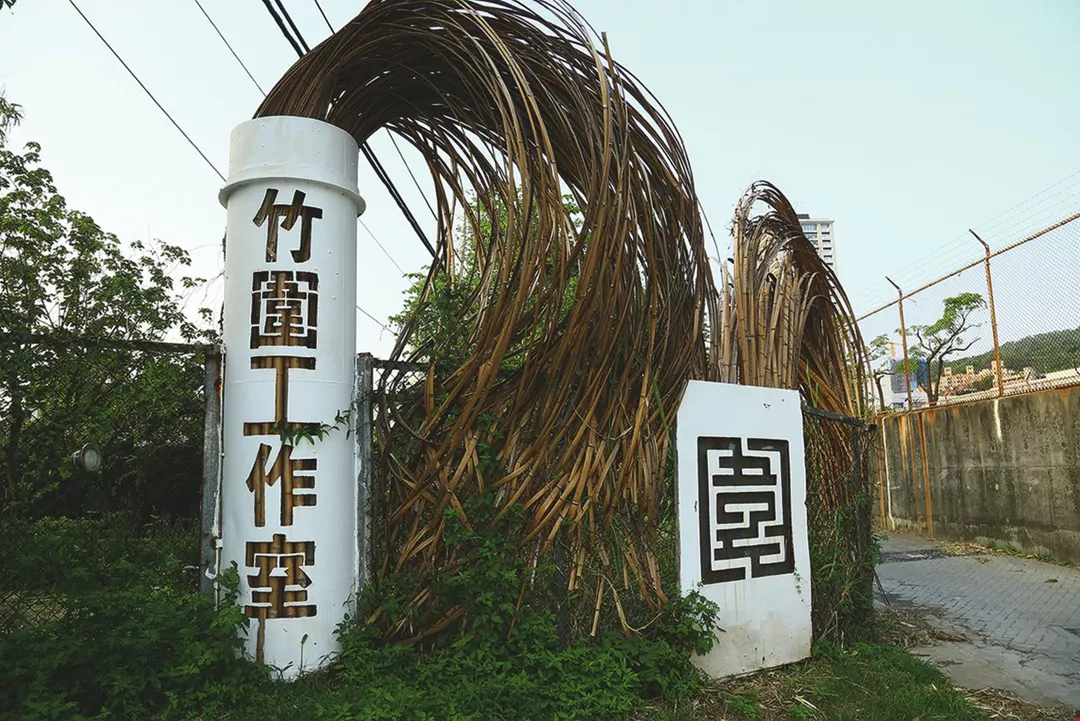
If you exit the Zhuwei MRT Station and walk ten minutes along the riverside bicycle path toward Tamsui, right alongside the path you’ll come across a nondescript row of ramshackle structures that house the Bamboo Curtain Studio (BCS).
Back in 1995, these buildings were a group of abandoned poultry sheds. But the artist Margaret Shiu, needing a space for her work, converted the property (owned by her husband’s family) into her personal atelier, where she took to working with ceramics alongside Chen Cheng-hsun and Marvin Minto Fang.
The artists who’ve worked in residence here over the years have needed an environment very different from what can be found at the mainstream art galleries and fine arts museums in downtown Taipei.
Artists have the freedom in this space of more than 2,600 square meters to set fires, cause inundations, drill holes, and even let mold and ants run amok. The ideal of “breaking down barriers and borders” has made the BCS into a hotbed of experimental art, and turned a covey of poultry sheds into a platform for free creation.

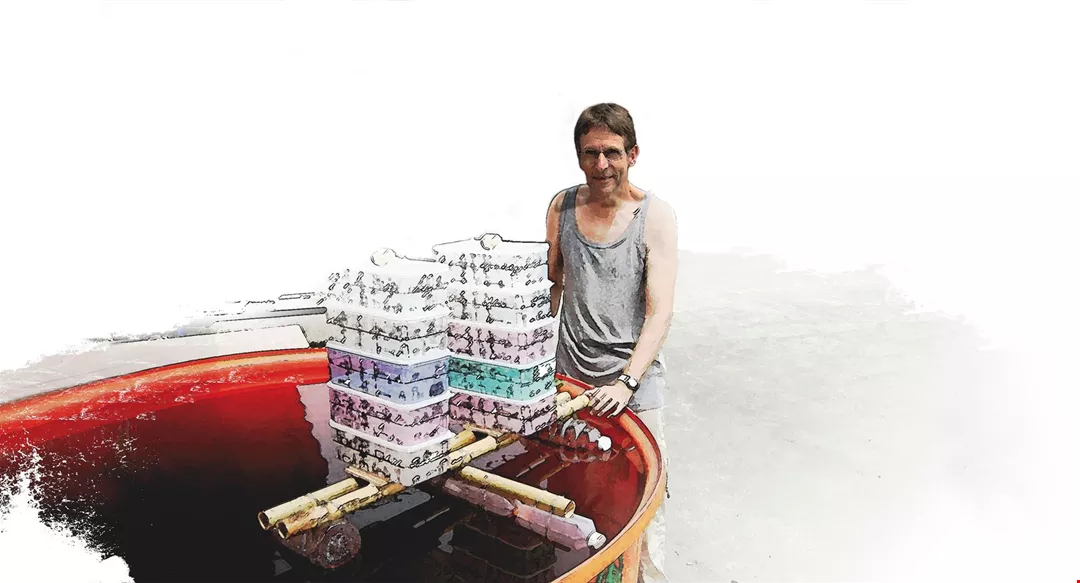
Dutch artist Ruud Matthes drew an assortment of everyday images on translucent food containers in his Model for a Floating City, a series of humorous yet thought-provoking installation works. (2007)
Art intervenes in public space
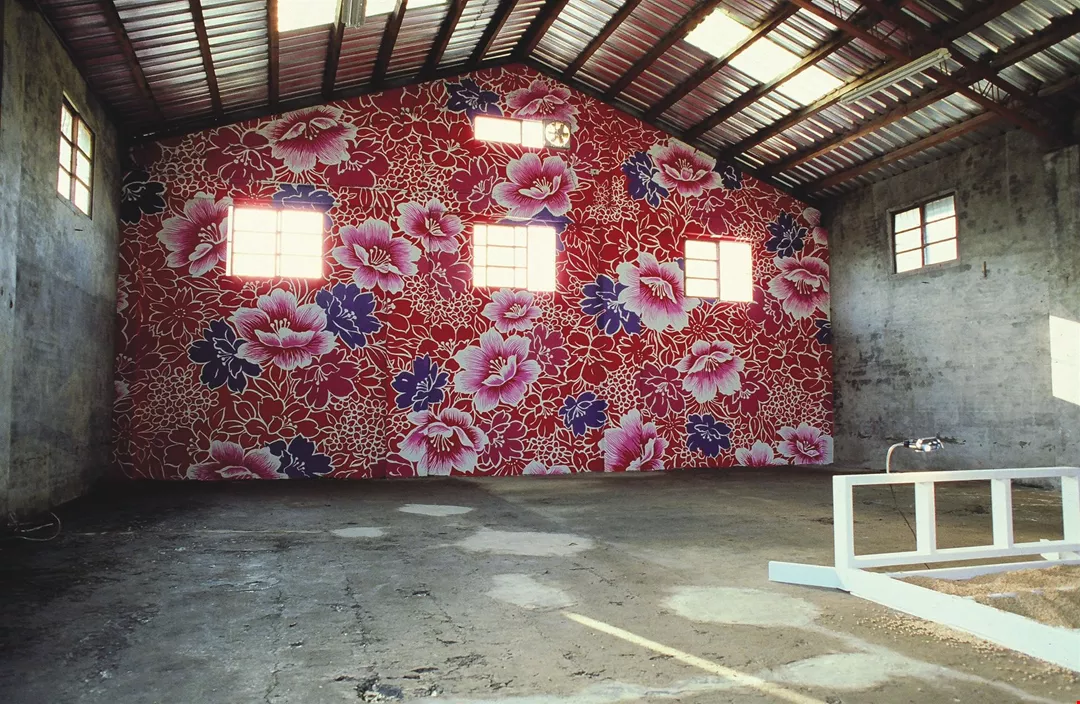
For artists, a really big space like this has posed challenges and enabled many Taiwan-based artists to develop a mature style of their own. A good case in point is Michael Lin. As one of several artists taking part in 1998 in the “Back from Home” exhibit, Lin took a work originally executed at life size and expanded it to make an experimental piece that brought international acclaim. And it was at the BCS that Wang Wen-chih started on the rattan and bamboo weaving for which he is now world famous.
In 2003, as Huashan Creative Park came to the fore as a multidisciplinary arts platform for northern Taiwan, the BCS began to transition into the arts atelier and arts village that it is today.
After the Council for Cultural Affairs (now the Ministry of Culture) began subsidizing arts village projects in 2007, the BCS launched an international exchange program for a fixed number of foreign artists each year. Under the program, artists are provided with lodgings, work space, and resources so that they can come and learn about Taiwan’s culture and arts scene. The Ministry of Culture is now implementing the Emerald Initiative to increase the share of resident artists in Taiwan who come from Southeast Asia. In addition, the BCS has set up ongoing exchange programs with Halland Art Museum in Sweden, The Artists Village in Singapore, and Cemeti Art House in Indonesia.
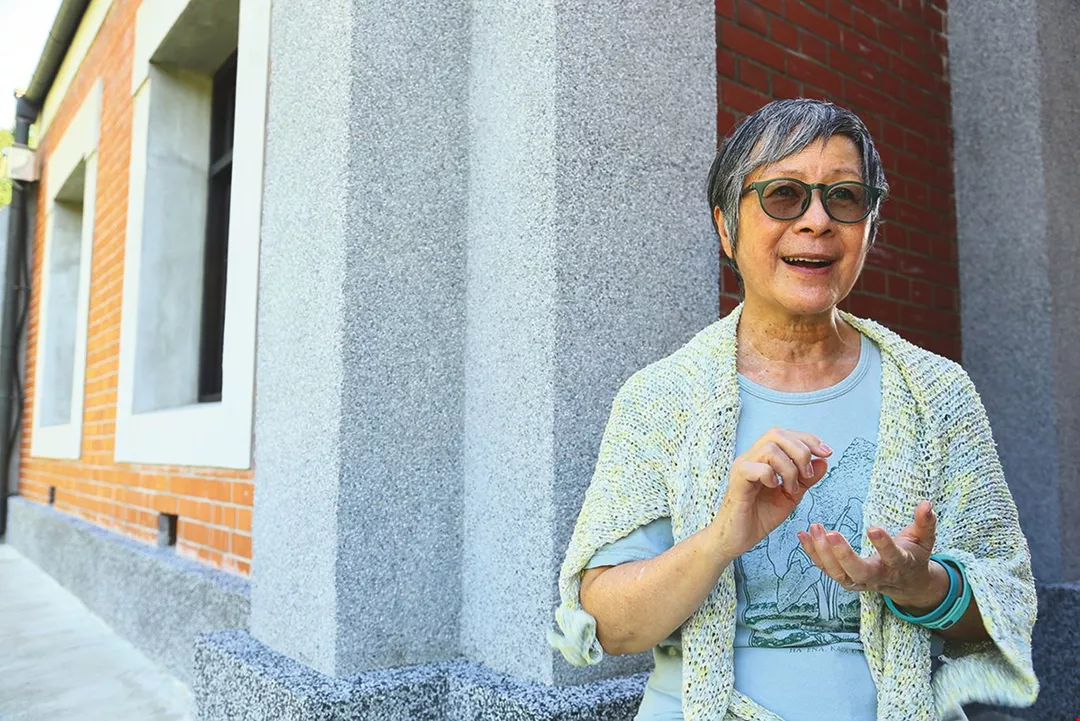
Margaret Shiu states: “We’ve adhered to the idea of ‘local action, global connection’ for over a decade now.” She adds that culture is a force to be reckoned with, and exchange is not just done for the sake of exchange; local action is also needed, and the point of inviting foreigners to come and serve as artists in residence is to have them see how art is produced in Taiwan and what Taiwan’s strengths are.
In 2010, BCS staff started thinking about whether it might not be possible to link art to everyday life by creating a dialogue between artistic creation and the environment.

Michael Lin took a work originally executed at life size and expanded it to cover an entire wall in Back from Home, an exhibit curated by Manray Hsu.
Art intervenes in the environment
In 2011, curator Wu Mali arranged for the artists in residence to launch a Green Art Action series focusing on the nearby Plum Tree Creek.
According to BCS research and development director Catherine Lee, there are over 400 streams of this sort in Taiwan, and if artists could launch a similar campaign for each one to get local communities concerned and involved with riparian environments, the result would be cleaner streams, then cleaner rivers, and then a cleaner ocean.
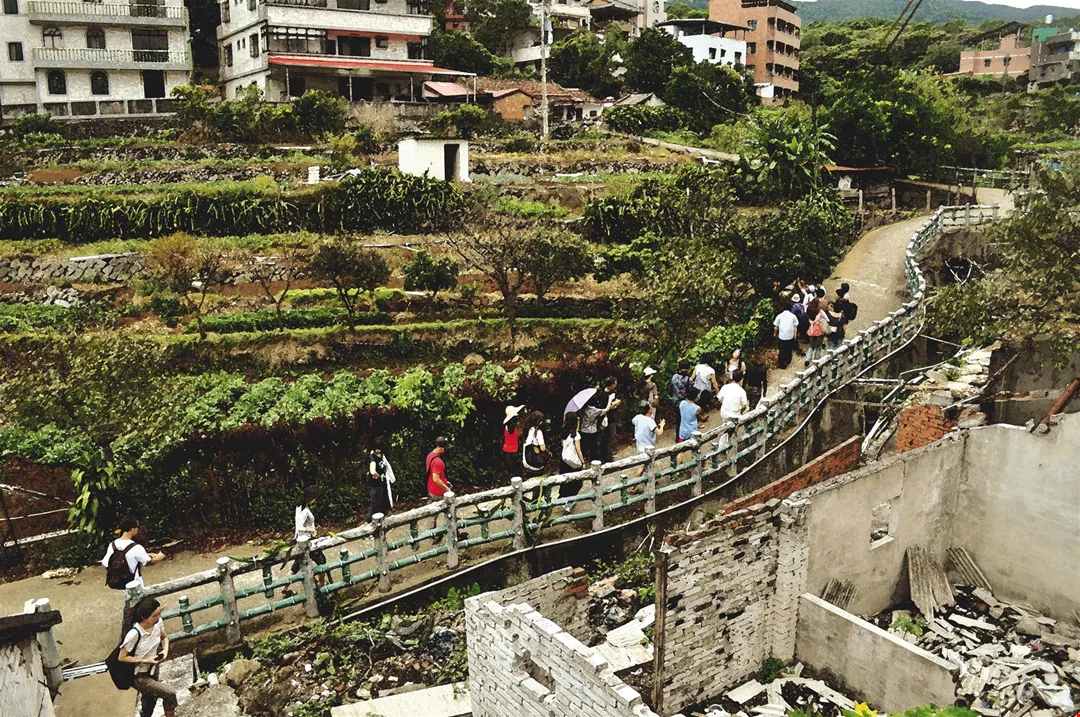
In the Environmental Art Movement at Plum Tree Creek, artists lead students from Zhuwei Elementary School along the length of the creek, from the upstream reaches on down, so that they can become familiar with its colors and listen to its birds and insects. These types of outings are incorporated into schools’ art instruction. During the course of the project, the artists have discovered that most children are very unfamiliar with this stream near their homes.
“To raise local consciousness, you’ve got to have some social groups to take the lead,” says Lee, who mentions the example of Zhuwei Elementary School, where the artists have piqued the interest of the students, and then the teachers. The teachers want to continue this type of education for the sake of the students. Now the students at Zhuwei High School have a Plum Tree Creek activity club.
Wu organized monthly breakfast meetings for a time to afford people living along the upper, middle, and lower stretches of the creek chances to get together and communicate. Participants discussed what was happening in the creek near their homes, recalled times past, and in the process put together the story of the whole creek. And the artists from the BCS were involved throughout the entire process.
At the breakfast meetings, they used vegetables grown by residents living near the upper reaches of the stream, and made sure that the food tied in to the seasons. During the meetings, which continued for a year, they arranged for antiquarians, ecologists, hydrological experts, and other such persons to take part in the discussions and provide their views regarding the future of Plum Tree Creek.
In 2012 the BCS launched a community theater. They got together with old folks in the area to look at old photos and talk about the old days, which they then incorporated into plays in which local senior citizens acted under the direction of BCS artists. Says Lee: “Every single person played a part in this art action.”
.jpg?w=1080&mode=crop&format=webp&quality=80)
Wu Yu-chien, Document VI (1998)

Friends from overseas
The first resident artist this year at the BCS was Agus Tri Budiarto (Timbil) from Indonesia. The holder of a degree in chemical engineering, Timbil has been involved in a project in his homeland to develop a safe generic fermentation method for home-brewed alcohol. He has set up workshops in Indonesia to teach people proper fermentation methods. In the course of this work he has discovered the great importance of water quality, and developed a method for testing it. After coming to Taiwan, Timbil joined with New Zealand artist Andrea Selwood to lead students from Zhuwei Elementary School to Plum Tree Creek to test the water quality using a fish caller (a device that uses sound to attract fish so that one can observe which species are present) and litmus paper.
A Singaporean puppetry troupe—The Finger Players—did a residency at the BCS in 2012 and created a puppet called Ah Keng. The puppet’s head is covered with little red orbs symbolizing the bayberries (Myrica rubra) growing along Plum Tree Creek. By means of puppet shows, the troupe got local residents to feel a connection to the surrounding environment. These shows were highly interactive in nature.
At the invitation of the BCS, The Finger Players returned to Taiwan this year to make puppets together with students at Pingding Elementary School, located near the upper reaches of Plum Tree Creek. Troupe members also interviewed old folks in the area, created a new play, and taught members of the school faculty how to manipulate the puppets in hopes that Ah Keng could continue performing once the troupe had moved on.
Kongsak Gulglangdon, a Thai artist with a special interest in environmental preservation, did a three-week residency in Taiwan last year and discovered a wide variety of birds living in the wetlands where Plum Tree Creek empties into the Danshui River. Also, along the upper reaches of the creek, he saw lots of Eurasian magpies. He was very impressed to see the many viable bird habitats in Taiwan, and expressed an interest in coming back to Taiwan this year.
The many activities organized by the BCS have forged close ties with the local community, and residents no longer feel that art is something distant. Says Lee: “Since launching the Plum Tree Creek Project, we’ve started hoping in the last two years to attract more artists with environmental expertise who can share experience in the field of environmental art.”
Just last month—when the BCS held an event at the Tamsui Customs Wharf to exhibit some of the work that’s been done over the past few years as part of the Green Art Action—Kongsak Gulglangdon led a group of eight artists from Thailand to take part. Together with counterparts from Taiwan, they displayed works of environmental and life-themed art to share stories connected with Plum Tree Creek.
According to Margaret Shiu: “When dealing with community matters, people from cultural circles have no conflicts of interest. They can see to it that art has a voice, and they can use the medium of art to speak on behalf of the environment in which we live.”
Art sprouts forth from the place where we live, from the mouth of the creek to the streets and lanes of the community. The creek generates an impetus toward public participation. The artists just serve as catalysts. Sparks of this sort are not short-lived, but ignite flames that stay alive through the generations.
.jpg?w=1080&mode=crop&format=webp&quality=80)
The space-defying woven works of rattan and bamboo by Wang Wen-chih are strong enough to be used as a children’s jungle gym.

Ever since converting a group of abandoned poultry sheds into an arts village, Bamboo Curtain Studio founder Margaret Shiu has adhered to the idea of “local action, global connection” as her guiding principle. (photo by Jimmy Lin)

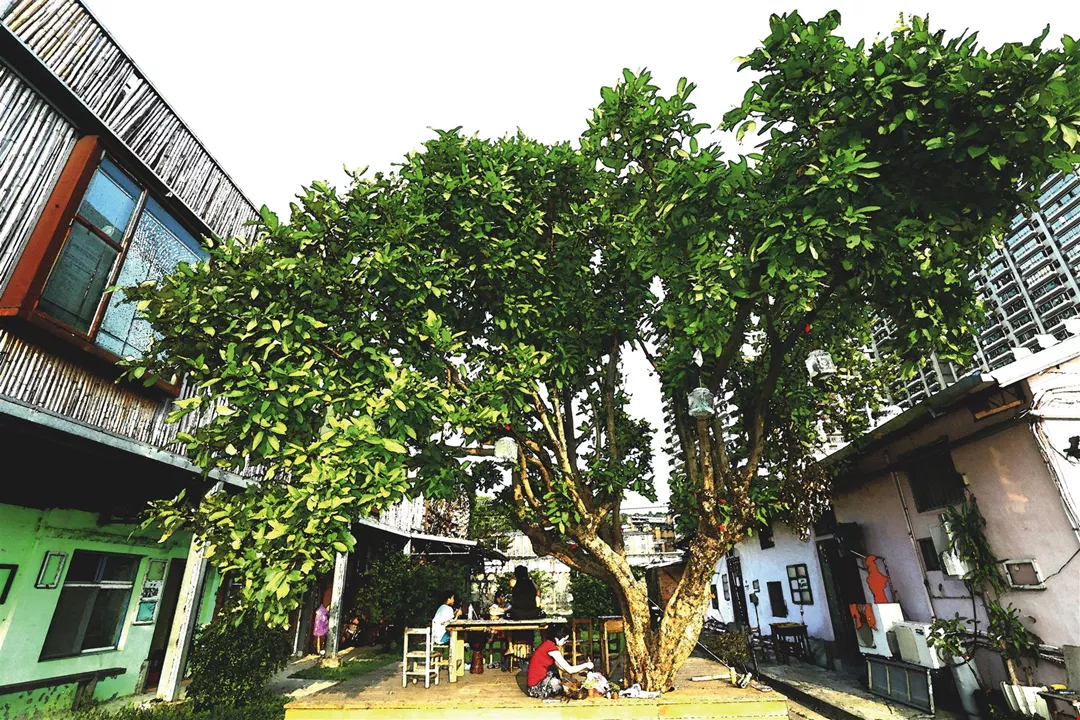
The Bamboo Curtain Studio, with its composite space, is a hotbed of creativity that pulses with freedom. (photo by Jimmy Lin)

The Bamboo Curtain Studio, with its composite space, is a hotbed of creativity that pulses with freedom. (photo by Jimmy Lin)

The Bamboo Curtain Studio has been very active in the field of environmental art. It all started with “The Landscape of the Tamsui River: Festival of Art & Environment at Zhuwei” in 2002. More recently, the “Environmental Art Movement at Plum Tree Creek” was launched in 2011, and continues to this day.

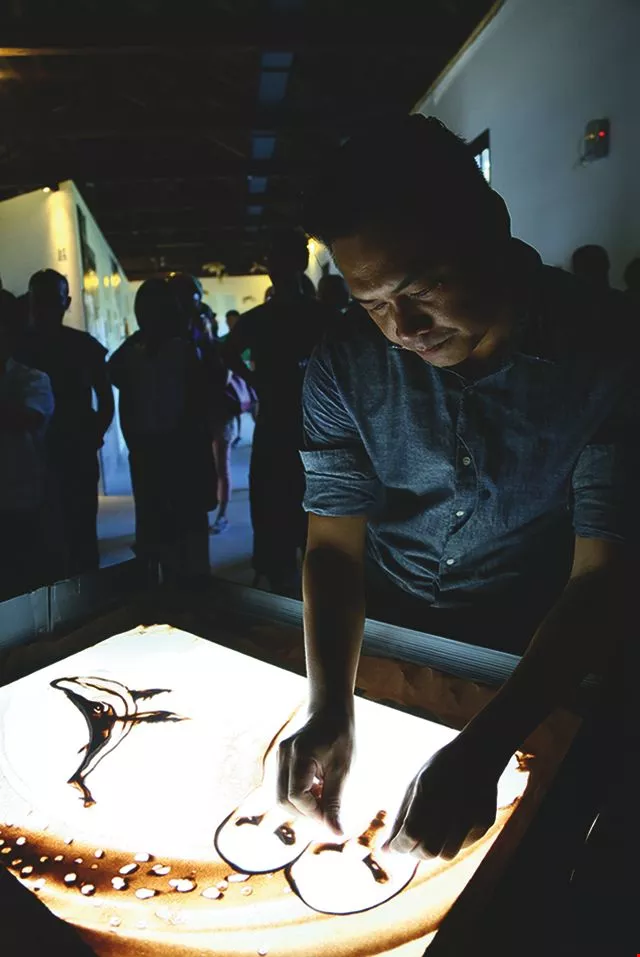
Thai sand artist Kongkiat Kongchandee is here demonstrating sand painting with an environmental focus. (photo by Jimmy Lin)

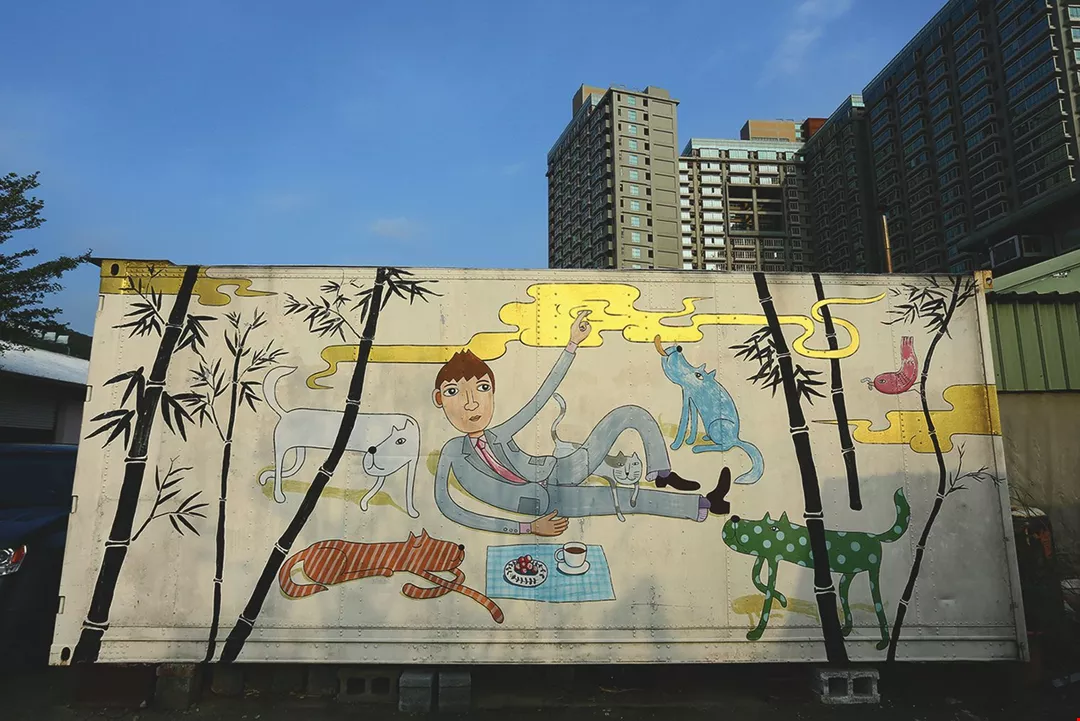
A large work executed by inkwash painter Pan Yu-yo during a residency at the Bamboo Curtain Studio in 2008.