Yoga 2.0: Tuning In to Body, Mind,and Spirit
Kaya Huang / photos Hsueh Chi-kuang / tr. by Ken Kraynak
April 2007


The worldwide yoga fever is starting to heat up in Taiwan. Over the past two years yoga studios have cropped up one after the other, and it seems that everybody is practicing and talking about yoga. Trendy up-market yoga centers which feature spacious premises and French doors, such as Pure Yoga from Hong Kong, True Yoga from Singapore, and Space Yoga, seem to be on every corner. Annual revenue for a single yoga studio can be as much as NT$100 million. Suddenly the yoga craze has taken hold of Taiwan.
Then there is the recent fifth Taipei Biennial art exhibition, which was titled "Dirty Yoga" even though it had almost nothing to do with the actual practice of yoga. While the curators, American Dan Cameron and Taiwanese Wang Jun-jieh, were strolling through Taipei they made an interesting observation: most of the yoga centers are located on eastern side of Taipei, which is the most bustling and prosperous area of the city. Wang was taken aback: "It's not that previously Taipei didn't have any yoga centers at all; there were a few small yoga studios and some classes offered by fitness centers. But now, all of a sudden, you see large buildings which are entirely occupied by specialty yoga centers."
According to Wang Jun-Jieh, in India yoga is practiced in order to purify body, mind and spirit, but during its circuitous journey to Taiwan it has become a fad, another imported fashion, an aping of international trends. The original essence of yoga has not been transmitted to Taiwan, yet with the establishment of large yoga centers in Taipei, Taiwan is starting to catch on to the international yoga trend. Suddenly this ancient spiritual practice has been thrust onto the popular stage, but in the process the true wisdom of yoga has been obscured by a host of misconceptions and myths.
There is the yoga craze, and then there is yoga craziness. What does the future hold for yoga in Taiwan, when everybody is pursuing a trendy type of yoga shorn of its traditional background and purpose--integration of body, mind and spirit? Where will it go from here?
So there you have it: everybody is doing yoga.
Hollywood stars diligently practice yoga in order to maintain a youthful and graceful appearance. Britain's Prince Charles underwent yoga therapy for back problems. Those who work in the high-tech industry use yoga to improve flexibility and soften up a chronic stiff neck. Even kids are getting into the act.
"I did it, I finally get it!," exclaims A-pao. Though he is not yet four years old and was a bit mixed up at the start, with the guidance of Hung Kuang-ming, long-time teacher of yoga for children and author of Children's Yoga, he mastered the suriya namaste (sun salutation), the most basic yoga asana (posture). A-pao's mother is in the next classroom with her chest and elbows pressed against the floor, following her breath as she slowly completes the "cat" asana, which tones the back.
If there is a demand, then a supply will be created. Thus a wide variety of yoga studios have appeared on street corners and in residential neighborhoods. There are even some entrepreneurs who are considering establishing a yoga academy where scientific research on yoga will be carried out. Within a 100-meter stretch of Lane 248 of Chunghsiao East Road Section 4 can be seen the signs of six different yoga studios. In a short while yoga--practiced in India for some 5,000 years with stress on meditation, contemplation, breathing exercises and physical suppleness--has become a sure way for city dwellers to relieve stress, improve flexibility, and get in touch with their inner selves.
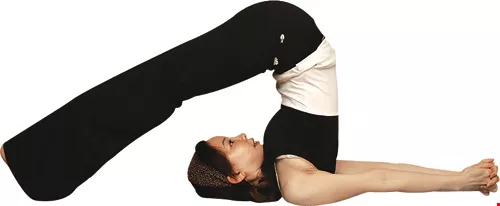
Halasana
From yoga craze to crazy yoga
Cheng Yung-an was only 30 when he began to practice yoga as a way of dealing with his deteriorating physical condition. Although recently married, he had developed a bad temper and was suffering from a lack of energy, so that as soon as he got home he would put on a poker face. At that time he was suffering from irritable bowel syndrome, which included bouts of both diarrhea and constipation, and he often fell into states of extreme fatigue. A classic example of those who are joining the yoga craze, Cheng Yung-an dutifully attends his yoga class once a week in hopes of gaining relief from his troubles. In areas such as work, marriage, mind and spirit, the fast pace of life results in much stress for modern people. This stress manifests itself in a variety of physical ailments, including headaches, insomnia, ulcers, neck and shoulder pain, and numbness of hands and feet. Yoga ameliorates such conditions by teaching people how to relax and regain their balance.
Originally an art dealer, Hung Kuang-ming began to practice yoga after discovering that he had a highly egotistical character, which resulted in a lot of anxiety and a lack of inner balance. He was only in his early 30s, and 99% of his time was spent on work. He lacked exercise, didn't take care of himself, and had a large belly. Then he began to practice yoga. He has just turned 50, but he's in such good condition that you'd think he was still in his 30s.
In addition to improving his health, practicing yoga has also led to major improvements in Hung's attitude.
"For example, yoga includes many postures which require standing on one foot. Previously, no matter how I stood, my stance was unsteady. I was suffering from a lack of physical balance and stamina, as well as poor concentration, all of which made it rather difficult to stand on one foot. Through meditation practice I slowly learned how to relax and let go, and how to release my innate energy. I also improved my concentration and became more efficient. In the long run, while other people kept on spinning their wheels, I made some real progress in life," says Hung, standing on one foot, gazing straight ahead, motionless in body and mind, as he happily recounts all the benefits he has gained from practicing yoga.
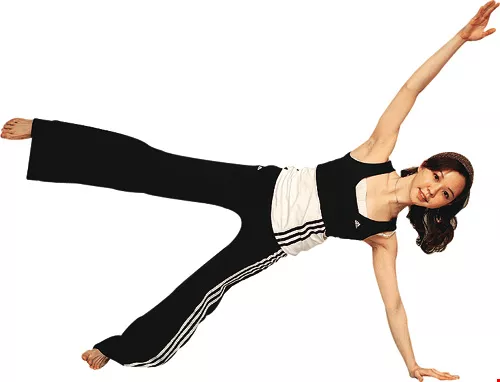
Vashishtha asana
Body: asana practice
"After completing a highly demanding yoga course I was able to face difficulties with a deep breath, acceptance and communication--and without easily giving up. I learned how to be aware of my body, so that an unexpected situation would no longer result in anxiety, an increased heart rate, and a rush of blood to the head. Instead, I would calmly and rationally deal with the situation." Seven years earlier Hung Kuang-ming's friends used to say that he looked just like a gangster, but now the lines of his face have softened. "Although I might still get a bit flustered by trivial things, I have learned how to avoid throwing a fit, Hung says with a sheepish grin.
"The body has its own self-healing mechanisms, but oftentimes we ignore them due to external demands and the tendency to follow our desires. Yoga teaches us how to listen attentively to the body, so that the body's self-healing capacity naturally kicks in, which results in increased suppleness of body and mind, as well as overall good health," explains Hung.
Various slow and gentle movements promote relaxation and deep breathing, and also moderately stimulate the muscles, nerves, endocrine glands, joints, and internal organs. Such movements also help one gather in, purify, and empty the mind. This type of yoga which brings about equilibrium of body and mind is known as hathayoga or asanayoga.
Yoga asanas originated several thousand years ago when yogis (spiritual practitioners) practicing meditation and contemplation in the forests of the Himalayas began to observe how wild animals instinctively cured their ailments, rested, and sustained their alertness. Realizing that animals are very effective in adapting their bodily functions to changing external conditions, these yogis began to imitate the postures of the animals. The asanas they practiced were named accordingly: the cat asana, the fish asana, the cobra asana, the lion asana, the peacock asana, and the crane asana, to name but a few.
It should be noted that yoga is not an athletic competition to see who can twist themselves into pretzels most quickly. Yoga postures are just one part of the puzzle, not the whole picture. At present, however, most yoga practitioners give priority to asana practice and continuously make a great effort to perfect their postures. Not only do they often end up overdoing it and getting injured, they also misunderstand the real import of yoga practice.
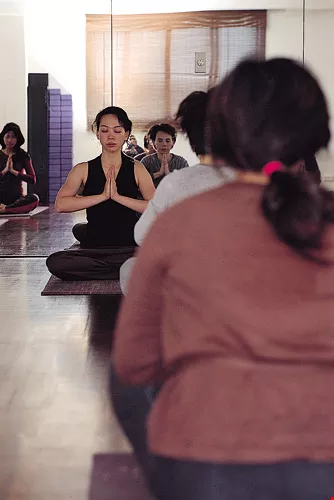
If you hear some unusual sounds while at the yoga center, it's probably the tranquil and resonant strains of Sanskrit chanting being recited by yoga students. The photo shows a yoga breathing class at John's Yoga Living.
Mind: key to a new life
Genuine yoga is a way of life which includes a wide variety of physical, mental and spiritual disciplines. "The Yoga Sutra, an Indian scripture written by Patanjali, includes only three sentences on asana practice," says Hung. Yoga in Taiwan emphasizes asana practice because it has started out as just another fitness fad, and has had to shape itself into a health and beauty regimen in order to satisfy the demands of urbanites. In its next phase, however, yoga should be able to go beyond being simply a physical exercise, turn its attention to the mind and spirit, and gradually reclaim the outlook with which it started 5,000 years ago.
Yoga starts with mental purification, letting go of regret, and actively engaging in good deeds as a way of gaining happiness and insight into the meaning of life. In the next stage, asanas, pranayama (breathing exercises) and regulation of diet are used to bring the body into optimal condition. This leads to control of the sense organs and increased self-mastery. Yoga is an umbrella term which includes many different branches, all of which emphasize mental purification and a wholesome lifestyle. Karmayoga, which emphasizes that physical work can be a form of spiritual practice, is one example. With some 200,000 followers, Ananda Marga is the most prominent representative of karmayoga in Taiwan.
On Sunday afternoons the harmonious strains of the devotional chanting of baba nam kevalam (a Sanskrit mantra which means "only the name of the beloved") can be heard wafting out of a building alongside a footpath near the end of Tingchou Road. The group chanting is followed by silent meditation with legs crossed and gaze fixed. This is how group meditation is practiced at Ananda Marga.
Founded in India in 1955, Ananda Marga (Sanskrit for "the path to bliss") came to Taiwan in 1979, and is regarded as the vanguard of the yoga movement in Taiwan. Ananda Marga bills itself as a unique spiritual tradition which includes a holistic approach to life centered on self-realization and social service.
"In the early days few Taiwanese had even heard about yoga, let alone orthodox, spiritual yoga," recounts Lien Chin-fa, the current director of Ananda Marga's Taipei yoga studio. The founder of Ananda Marga, Shrii Shrii Anandamurti, came to Taiwan in 1979 to give religious teachings and propagate his system of social service. He established branch centers all over Taiwan in order to promote a holistic and integrated spiritual discipline which includes yoga, meditation, vegetarianism and spiritual philosophy.
Ananda Marga's concept of social service is not quite the same as that of other religious movements, in that personal spiritual practice is seen as the foundation, and social service is seen as a test of one's spiritual progress, as well as a way of bringing it into full play. Their spiritual practice is an orderly and methodical progression from individual self-realization to selfless social service. The ultimate goal is to unite the microcosm (the individual self) with the macrocosm (the universe), whereby self-integration and perfect harmony are attained.
The social service activities of Ananda Marga are mainly carried out by the Ananda Marga Universal Relief Team (AMURT), which has over 200 orphanages in India, Africa and elsewhere in the third world. Ananda Marga has also established a model community near Yuching, Tainan County, which includes a yoga and meditation center, a neo-humanistic education kindergarten and elementary school, ecological conservation, agricultural research, a natural healing center, and a disaster relief supply depot. The goal is to create an ideal social and economic environment based on self-sufficiency and ecological balance.
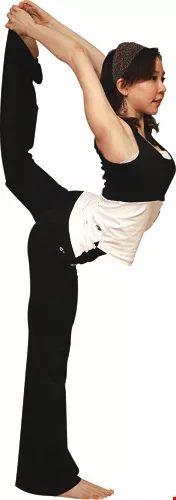
Natara
Spirit: key to spiritual practice
The combined effects of toxins in the body and stress on the mind make modern people tense and anxious. Only when the toxins and stress are removed will we enjoy a supple body and real health. A parable found in the Yoga Sutra tells the story of a large tree and a small blade of grass. When a flood occurred the large tree got washed away, but the blade of grass, relying on its flexibility and tenacity, managed to survive. The moral of this story is echoed in the Daoist aphorism "flexibility overcomes solidity." A flexible person is actually very patient and determined, and is also highly adaptable.
"If as soon as you leave your yoga class you make a beeline to the hotpot restaurant and pig out as a way of rewarding yourself, or your company encourages you to attend on-site yoga classes simply to increase your stamina so that you can work even more overtime, you'd be better off without yoga," says Hung Kuang-ming, laying bare some of the pitfalls that often beset yoga practitioners.
Yoga is a Sanskrit term whose most basic meaning is "yoking" or "joining." It is derived from the Sanskrit verbal root yuj, meaning "to yoke," which is related to the Indo-European root yeug, "to join," "to integrate," "to unify." Based on its Sanskrit meaning, then, yoga can be translated as "self-unification." Only through integration of body, mind and spirit is it possible to get in synch with the rhythm of the universe. Thus, in addition to asanas, orthodox yoga practice also includes cultivating love of self, others, and all sentient beings. Environmental protection and organic food can be seen as ways of putting the philosophy of yoga into practice.
Adopting a healthy diet is the first step towards purification of body and mind. Since food is our primary source of energy, it is seen as the secret path to the spirit, and thus plays a prominent role in the practice of yoga. The ancient dietary teachings of yoga distinguish three different types of physical constitutions: wind, fire and earth, each of which has its own unique requirements with regard to how and what to eat. According to Hung, this is a highly refined science based on detailed study of the relationship between the body and the natural world. It rejuvenates the body and improves the quality of life by improving the quality of food.
There is an adage in the West: "Of all the food we eat in a day, only one quarter maintains the body; the other three quarters maintain the doctor." Natural vegetarian food plays an important role in the yoga practitioner's pursuit of integration of body, mind and spirit. In view of the influence food has on the mind, as well as the ethical principle of non-harming, food is classified according to three principles: sattva (purity), rajas (activity, passion), and tamas (inertia, darkness). Those who practice yoga asanas should try to eat more foods of the sattvic type. Acaryas (spiritual guides) of Ananda Marga only eat foods of the sattvic type.
"Merely learning the movements and practicing breathing exercises is not enough. If your diet and mind remain unhealthy, it won't be easy to find spiritual balance in life," says Hung.
In 2004 Tim O'Reilly, founding director of the American publishing group O'Reilly Media, coined the term "Web 2.0," which refers to the next phase of Internet services characterized by online collaboration and interaction. This can be seen as analogous to the next phase of the "yoga lifestyle" which is beginning to emerge, which is also based on the spirit of interaction, collaboration and sharing. As it moves away from a fixation on mastering difficult asanas to the pursuit of integration of body, mind and spirit, the peaceful yoga revolution is taking center stage in Taiwan.
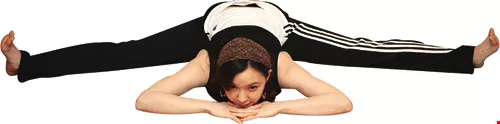
Upavista Konasana
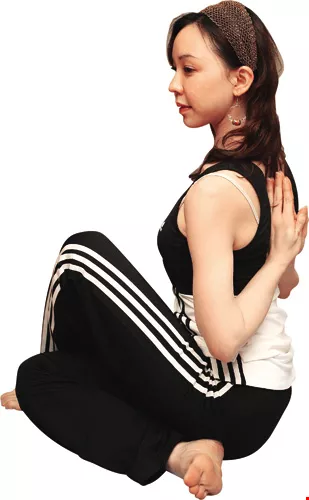
Gomukhasana

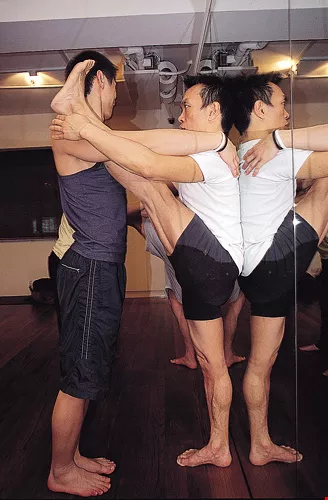
Yoga is not just for women; classes for children and men are becoming increasingly popular. Above is Hung Kuang-ming leading a yoga class for children. Below two men help one another with leg stretches.
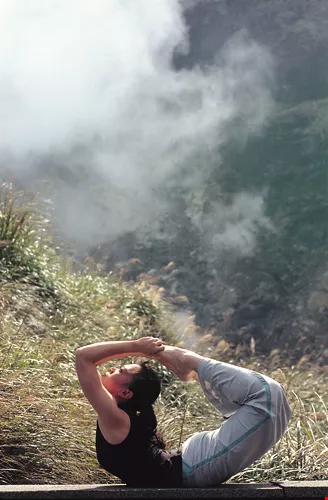
Recent increased interest in Taiwan in the integration of body, mind and spirit through yoga--reminiscent of the New Age Movement which began in America in the 1960s--is gradually evolving into the pursuit of "the art of living."
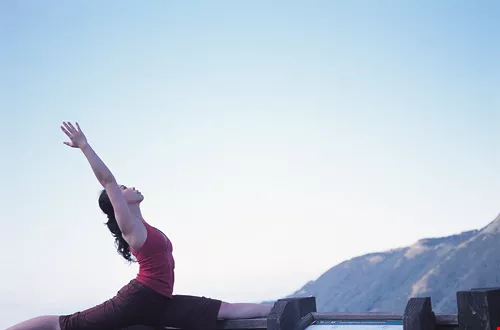
As the initial giddy excitement begins to subside, the Taiwanese are beginning to gain a more mature understanding of orthodox yoga. Practicing asanas in the pursuit of health and beauty is being supplemented by mantra recitation and meditation, and yoga in Taiwan is slowly evolving into a full-fledged spiritual practice.
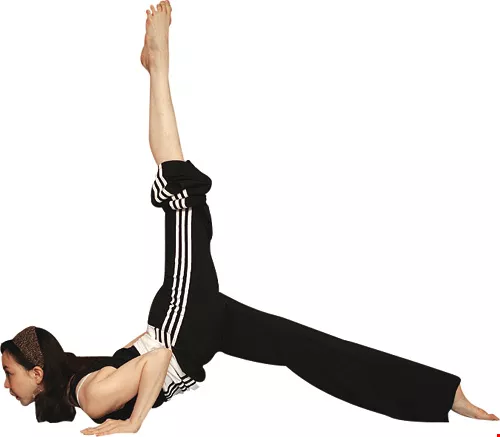
Shalabasana
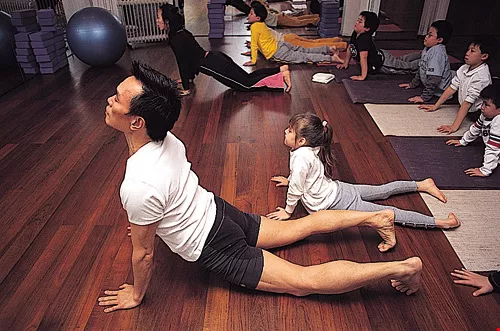
Yoga is not just for women; classes for children and men are becoming increasingly popular. Above is Hung Kuang-ming leading a yoga class for children. Below two men help one another with leg stretches.


@List.jpg?w=522&h=410&mode=crop&format=webp&quality=80)


