The Final Act--The Soul Guiding Chen
Ventine Tsai / photos Hsueh Chi-Kuang / tr. by Phil Newell
May 1994


In Taiwan folk customs, each time the birthday of a deity comes around, the faithful hold a festive parade around the temple area, with colorfully made-up folk artists and kaleidoscopic performance troupes, to express gratitude for divine beneficence.
These artists and performers are known collectively as yi-chen, which simply means "arts and troupes." Traditional yi-chen have deep religious significance, as well as admirable artistic skills. Modern troupes are mainly in it for the fun or interest, and reflect a slice of contemporary life. With traditional and modern yi-chen constantly evolving, Sinorama has undertaken a continuing series on Taiwan's arts and performance companies to leave a permanent record of where they are today.
"The Soul Guiding Chen, also called the "Soul Guiding Opera," is an important performing troupe (or chen) in a funeral. With chants and dirges, dances and gestures, and Taoist magic, the soul of the deaceased is appeased and guided along the bridges and roads, past numerous obstacles, through the Five Hells and Ten Palaces, across to the Western Paradise. Hsu Fu-chuan, who has researched funerary culture for many years and has won the appelation "Master of the Dead," sees the Soul Guiding Chen as somthing the Chinese people have developed to "appease the soul of the deceased."
Waking from a dream of riches only to be executed, you feel that life is short/
Life and death are fated, neither rich nor poor can escape/
The seasons change, the sun sets in the west and the water still flows/
Where is the general's horse today, the field is covered with flowers and grass/
Life is a lonely boat, day and night the water flows upward/
The boat is smashed and repaired/
Death brings respite from the affairs of the world.
From "The Dream of Nan Ko" sung by the Soul Guiding chen
When life comes to its end, a performance of the Soul Guiding Chen is indispensible. It is played out everywhere, city and country, The spirit and structure of the performance stays largely the same. But for the details, you've got to look to the changes made by the director--the Red-Helmeted Master.
On this particular day, when the Hsinsheng Soul Guiding Chen of Tainan County performs at the funeral of Grandmother Baga of the Yeh family, they lead the soul of the deceased as usual across the bridges and roads to the Flower Garden City. Troupe director Huang Lai-fu brings the soul to admire the flowers, looking at everything from the "fragrant jade flower" of January to the "pear flower" of December. Each type of flower represents a type of child, because each of these flowers is believed to be matched up with a particular life, and beautiful and healthy flowers indicate that the family descendants will be likewise flourishing.
The list for the Yeh residence is short. Grandmother Baga only had two daughters. The elder daughter had already passed away leaving only one son, while the second daughter has no sons at all and is wracked by illness. While chanting, troupe leader and "Red-Helmeted Master" Huang Lai-fu specially instructed the deceased to appeal to the old man and woman who looked after the flower garden to care especially well for the flowers of the Yeh household so that the next generation would flourish. The daughter-in-law of the house was very touched, and declared, "This is certainly what my mother-in-law most desires." Also during the chant Huang Lai-fu did not forget to praise this mainlander daughter-in-law for respecting local Taiwanese customs and inviting a Soul Guiding Chen to perform, and he also offered cigarettes and tea to guests in gestures of respect.
To consider thoughtfully people's feelings is essential for troupes to spend time and effort on if they are to survive. Whether or not they can touch the hearts of the bereaved family and make the survivors feel that the troupe was not hired pointlessly depends entirely on these small gestures.
As early as 6:00 am, they come to the front doorstep of the home of the deceased. The joyful red paper couplets hung on the door for New Year's, unacceptable for a funeral, have been torn down, and replaced with a pair of paper and string lanterns which signify to outsiders that there has been a recent death in the family. Wearing a red helmet (like those worn in Peking Opera) the "Master of the Three Altars" --who is also called the The Red Helmeted Master and is playing the role of a master or high priest of Taoist arts--carries an Emperor Bell for chasing away evil spirits in his right hand, while with his left hand he blows a Dragon Horn (made from the horn of a water buffalo) to call down the spirits. Amidst the rising and falling sound of the dragon horn, the musician adds chords on an amplified three-stringed gourd instrument. The female members of the company--incongrously dancing in short skirts--surround the small tent-like structure that forms the center of the troupe's activities, and a great drama of life and death, played out at the juncture point of the two, begins . . . .
The old saying has it that "the soul of the deceased should not be offered food in her own home for three days, and should return to the soul worshipping altar on the seventh day." In Chinese tradition, after death, the body of the deceased is kept in the home, and a place is laid at the table as always for them. After three days the body is encoffined, and for the next three days no food is offered to the soul of the departed. On the seventh day, the soul, which has been in a dream-like state, returns to the homestead.
Today is the seventh day of mourning for the old matriarch of the Yeh family, Grandmother Baga. For the past seven days, Grandmother Baga, you do not know what has happened; you think you have been sleeping, or in a dream. Today you return home to see your sons and grandsons, and I believe you will have an idea of what's going on.
After not having eaten for three days, a soul can get pretty hungry. Seeing a bowl of rice ball soup, deliberately set out by family members without spoon or chopsticks, the deceased just plunges in and pulls out the rice balls bare-handed. After eating and washing up, only then does the soul of the departed discover--the musicians start up and performers ask, "Discover what?" --does the departed discover that her fingernails are completely black. Alas! Grandmother Baga, so now you finally know. But we have our deaths registered even before we are born into this world, so you need no longer fret and need no longer be distressed.
Huang Lai-fu, the head of the Hsin Sheng Soul Guiding Chen, uses clear and direct language to explain to the deceased what role the Soul Guiding Chen will be playing on this seventh day after death. Since the soul has left behind the troubles of this world, then there should be "a clear division between the world of light and the world of darkness."
It is customary in Chinese funerals for family members, though saddened by their loss, to put out the rice ball soup without spoon or chopsticks to remind the soul of the departed of the fact that they have passed away. Also, the coffin is placed in the doorway with the feet pointing outward, and the soul is called upon to rise up and go forward, so that the spirit goes outward away from the home. Often a paper palanquin is burned at the doorway for the soul to be carried in on its passage to the Western Paradise. All of these unobtrusive arrangements "are for the express purpose of distinguishing the world of light from the world of darkness according to the Confucian social order," explains Hsu Fu-chuan.
In fact, the performance on the seventh day after death is just the curtain-opener for the Soul Guiding Chen. The full ritual is not played out until the eve of the carrying out of the coffin, which takes place on a day selected because it is auspicious for funerals.
At four in the morning, with the sky a dusky black, the troupe arrives at the home of the deceased, a certain Yen Chinshan. Upon arriving, the head of the troupe asks the family of the deceased the time of death, the cause of death, and what relationship the deceased has to the person who paid for the troupe to appear. They also inquire as to which deities are worshipped in the locality; only then will they know what to say later, and which deities they must appeal to. "The beginning of the program is to seek the intercession of the gods and to appease the soul of the deceased, so there has to be some preparation for there to be a focus,"points out Huang.
The Dragon Horn blows, and the gavel bangs, and the Taoist master (or priest) intones: "First we invite Heavenly Master Chang of the left altar, Martial Emperor Liang of the right altar, and our kind and benevolent Mother Goddess of the core altar; secondly we invite the local Buddhist deity, the diety Chih Fu, and the local Cheng Huang Yeh, master of the laws of the underworld; and thirdly we invite the Mountain God and the Earth God. We sincerely pray for their protection in the nether world, and ask them to come before this altar to help your soul to the Western Paradise."
An ang-yi (which is to say, a female medium) burns paper bribe money off to one side as an offering to the spirits so that these spirits will guide and protect the deceased along the road to the Western Paradise and insure that the soul arrives safely.
After the spirit escort has been called forth, the Taoist priest then moderates his tone of voice and appeases the soul of the deceased: "Patriarch Yen Chinshan, you were allocated 69 years of life, and unfortuantely passed away on January 25 of the lunar calendar of this year. Today is an auspicious day for you to go to your grave, and you will be taken to a good place, with an auspicious setting. Your filial sons and daughters have spared no expense to bring the Hsin Sheng Soul Guiding Chen to lead you to the Western Paradise."
"Patriarch Chinshan, since your death from illness, everyone young and old has been deeply saddened. They sought the best doctors to cure you, but their treatments were of no avail. Your birth was registered with the North Pole Star spirit and your death was registered with the spirit of the South Pole Star. When you think about it, this has all been fated! So you should no longer bemoan your condition, but should instead protect your righteous and virtuous descendants so that they remain in good health and enjoy high positions and great achievements generation after generation under your oversight."
Family members then line up to offer incense, and on the canopy of the troupe there is a couplet reading: "There are trees in the mountains that are thousands of years old, but rare is the person who sees 100 years." The banners blow in the wind as if swaying with the music.
The divine generals having been called down, the heavenly soldiers and horses were also called upon, and the soul of the deceased was asked to enter the palanquin. With the old woman, one of three main players in the company, taking the role of the benevolent Mother Goddess walking in front, and the ang-yi medium trailing behind, the procession sets off to "pass through the obstacles and challenges on the road to Paradise."
They cross mountains and hills, rivers and bridges, safely passing the little goblins blocking the road and the malevolent demons at the passage from each stage to the next. For example, at one point there are a green dragon and white tiger clawing and tearing at the clothes of the deceased. Then there is the River of Soul Forgetting with its poisonous waters that will make the deceased forget who he or she was. "Passing the Obstacles" is the core of the Soul Guiding Chen ritual. The Taoist master, the musician, and the performers engage in chants back and forth, each able to play their roles to the full. Across roads and vales, bridges and streams, there are 36 obstacles in all to get past. Each of them is slightly different from the others, showing a rich imagination about what the afterlife must be like.
When the palanquin for the soul starts off, the priest inquires: "Benevolent Mother Goddess, is the path to the Western Paradise really so difficult?"
"Indeed! It is like when people want to cross the Chunghsiao Bridge, there is a girl who sticks her hand out for the toll. In the same way, if you want to get to the Western Paradise, you can't do without three measures of gold and three of silver; only then will the path be smooth," responds the old woman playing the goddess to the master's question. The main purpose of this part is to explain to the family why there should be a Soul Guiding Chen there.
"What's that passage up ahead?"
"You are at the stone highway."
"And who is guarding the stone highway?"
"It is Tachung Yeh who is in charge of the junction of light and darkness."
"Patriarch Chinshan! Have you come across the road?"
"Yes I have, Chinshan has crossed the road."
"In that case, just sit tight, and the three of us will guide you, explaining each obstacle and passage and calling out the names as we climb the mountains. Patriarch Chinshan, are you enjoying it?"
"Yes, Chinshan is very happy."
In this way, each time they reach a new checkpoint, the performers will stop and, in a dialogue of chanting between the Taoist master and the musician, they will introduce the setting of the given passage. Between the obstacles, the three female performers dance by the side, singing, "Paper bribe money is coming, to carry you, Chinshan, across the bridge. Let us go, let us cross the bridge!"
Of the 36 passages along the road, they stop at the major ones for a look around, and generally move on without stopping at the minor ones, calling out "passing through." If there is not enough time, the beat of the music is accelerated, and the faster music is called "hastening the passage." And for those locales that are really insignificant, they simply "jump the obstacle." The itinerary of the trip to the West is arranged by the guide (the Taoist priest), but the final goal is invariably the Western Paradise.
Passing point after point, they arrive at the border from which the deceased gazes longingly back at his hometown; this is the saddest of all the stops. It is here that the soul takes its final leave of the sons and daughters kneeling before the coffin. The musicians stop their up-tempo travelling music and play slowly and gently, creating a mood without playing any particular melody. "The time when the Taoist master speaks is when the musician needs to use all his or her skills. When he speaks of the goodwill of the deceased to bring out a sense of filial piety, he must play darkly and with pathos in order to create the appropriate mood," says Lai Hsiao-fei, musician for the Chung Mei Soul Guiding Chen of Erchung in Taipei County.
Taking up the type of melody often used during tragic scenes in Taiwanese opera, the performers tearfully sing, "The sky is black, and lightning appears startlingly. Where are we? Looking for mother in the depths of the netherworld, but the road is strange and the way cannot be found, so the master must be asked to lead the way."
Having sung to the most moving part, the performers often cry right along with the children. Following the mood, the priest intones his words as if reading psalms, singing these words to remind the children of the benevolence of the parent:
The love of parents is as deep as the sea/
And people must not forget the benevolence of
their parents/
Sons and daughters must be filial/
And those who are not filial go against Heaven.
If the troupe sings all the parts, they may sing for up to two hours in a single ritual. When in their imaginary passage they get to the six-sided pavilion for the reading of the Buddhist scriptures, the procession "pauses" as the spirit escort puts down the palanquin while all listen to the master tell the story of the "Five Generations of Heroes." These five generations are: The Sakyamuni Buddha who rode to the West on a lotus flower; Chou Wen-wang of the hundred sons and thousand grandsons who became the emperor and ruled all under Heaven; Shih Tsung, who was said to be as wealthy as an emperor; Peng Tzu, who lived in the human realm for 820 years; and Kuan Kung, who passed the five obstacles and beheaded the six generals. The main point of telling this tale is to appease the soul of the deceased by explaining that in the vicissitudes of human life, no matter whether one is a saint, an emperor, a wealthy man, a person of extraordinary longevity, or a hero, in the end they can't avoid death.
In the long rual, all the somber singing about loss and sorrow sometimes is too much even for the bereaved family, so, for example, when they get to the Temple of the Earth God, the master and the old woman suddenly break into hsiang-sheng (traditional fast-paced and witty dialogue).
"Hang on just a minute! Old Earth, how can you call that protecting the people when they plant for a year but get only two grains?"
"That's not what I said at all. I said that I wish for the people to plant one seed and get two grains in return. You really have a problem with your ears, old woman."
"But wait a minute! How is it you want our children and grandchildren to study for six years just to recognize one character?"
"What, You really want to start something with Old Earth, don't you? What I want is for your children and grandchildren to study to build character. How come you didn't hear that clearly?"
"People say that children of the deceased act as if they were stupid, not because they really are stupid, but because someone has just died so they feel a sense of loss and shock. We want to give them a little bit of joy in their tragedy, so that they will not feel excessive grief," feels Huang Lia-fu. To laugh at the appropriate moment is "a very healthy outlook."
The tears have passed, the laughter has passed. After passing the 36 obstacles, it is still necessary to pass through the ten levels of hell to see the tortures being inflicted on evil-doers, and to be tried. No one has lived a fully blameless life. Therefore, before entering hell the Soul Guiding Chen will mainly describe the good deeds performed by the deceased when alive so that they can avoid the tortures of hell.
Finally they reach the Western Paradise, and the three-stringed gourd plays alone. It seems to say that the deceased is lingering around, unwilling to leave behind loved ones, and the troupe members wear white mourning caps and the family kneels to pray and light incense. The performer doing the role of the young girl uses the most emotive style of Taiwanese opera vocalizing to sing: "The heart is heavy at the wine-drinking ceremony, and the hand holding up the cup has a teardrop on it; soul of the deceased, you are going to the West, so drink slowly and enjoy this wine and food we offer." The performers lead the family members to prostrate themselves in front of the coffin, and raise cups of wine in offering, crying as they prostrate themselves on the floor, "Father, my flesh and blood father."
Though one may accompany a guest for 1000 miles to send them off, in the end it is still necessary to part, and there are times when a person must go on alone. According to the process of the Soul Guiding Chen, just as the family is kneeling before the coffin crying, the deceased has happily consumed the three cups of wine and has already transformed to become a spirit in the other world.
The soul of the departed having been sent off to the Western Paradise, the deities and spirit soldiers who provided the escort are then thanked and sent on their way back to Heaven and to their camps. Finally, the performers do not forget to appeal to the gods to protect and bless the neighbors on both sides, who have been disturbed for an entire day by the ritual, wishing everyone health and success in business. Most importantly, they wish that the household that paid for the performance in the first place will flourish and become wealthy and tranquilly establish new families and generations. Thus the seemingly tragic send-off for the deceased winds up in a hopeful way.
The soul has of course never actually appeared throughout the "soul guiding." The role is played by a performer who answers in its stead. The main player in fact gets only a bit part, and even then watches from the sidelines as someone else recites his lines. And the performers themselves don't try to conceal the fact that few of the "Taoist masters" have actually had any training and have none of the supernatural abilities ascribed to priests; they simply learn the gestures and are merely performers for this soul-guiding ritual, nothing more.
"In life, distinguishing between reality and fiction is one thing, insuring that the correct rituals are not abandoned is another. If you can do things according to the proper order and make the living feel better, then you've achieved the goal," says Huang Lai-fu, who has operated a Soul Guiding Chen for nearly forty years and also has many other funerary performance groups (like the "Five Son sand Five Daughters Wailing at the Grave").
The performance is finally over. The Soul Guiding Chen has taken one of the three souls of a person to the Western Paradise, one to be buried in the mountains, and one to be left behind in the commemorative tablet on the ancestral altar, to safeguard the generations to come. This drama of life, it seems, is without end and without a conclusion.
[Picture Caption]
p.104
The Master stands at the center blowing the Dragon Horn, while the musician plays a three-stringed instrument off to the side. There is chanting and movement all around the central tent to lead the soul of the deceased to the Western Paradise. Unlike most other performing troupes, the Soul Guiding Chen is addressed to a human soul, not a deity.
p.106
"Birth registered with the North Pole Star deity and death is registered with the South Pole Star deity." On the seventh day after death, family members leave a bowl of rice ball soup and invite in the soul Guiding Chen to tell the soul of the deceased that it has already crossed from the world of light to the world of darkness.
p.107
After arriving at the home of the deceased, they must first ask the year of birth, year of death, and cause of death of the departed so that later they will know the appropriate things to say to the family members.
p.108
After crossing the bridges and roads, the soul is finally led to the Western Paradise. At this time, the performers bring the family members forward to say goodbye; this is the saddest part of the Soul Guiding ritual.
p.109
"Money is being offered." On the path to the Western Paradise it is necessary to burn spirit money to bribe the deities and demons at each checkpoint to clear the road.
p.110
One soul is sent to the Western Paradise, one is buried in the ground, and one is left behind at the commemorative tablet on the ancestral altar in the family home. This at least is the popular understanding of "three souls."
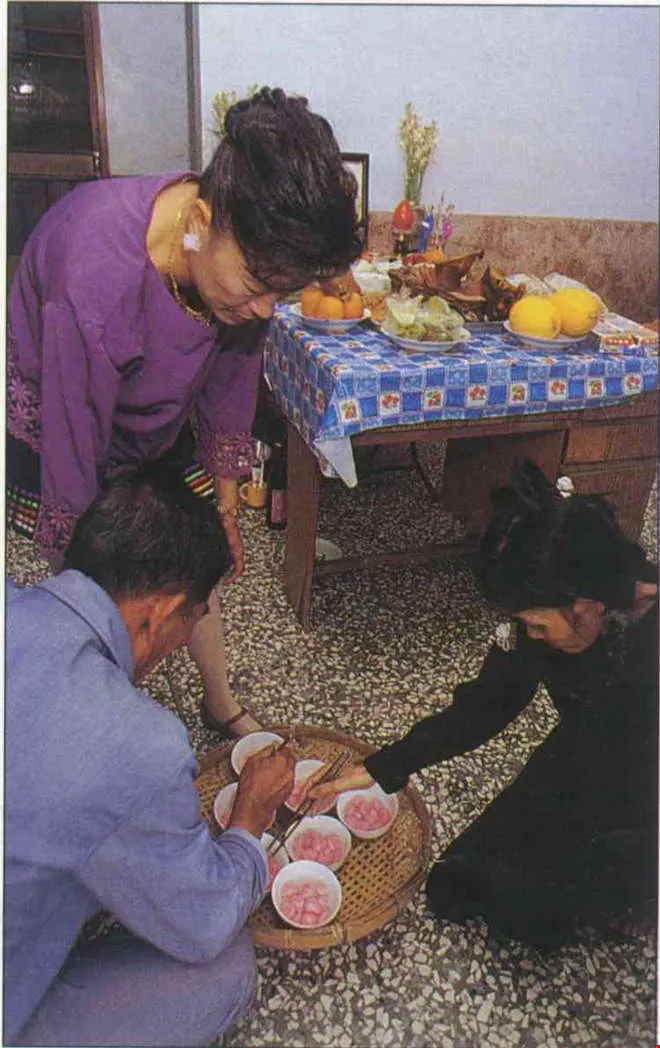
"Birth registered with the North Pole Star deity and death is registered with the South Pole Star deity." On the seventh day after death, family members leave a bowl of rice ball soup and invite in the soul Guiding Chen to tell the soul of the deceased that it has already crossed from the world of light to the world of darkness.
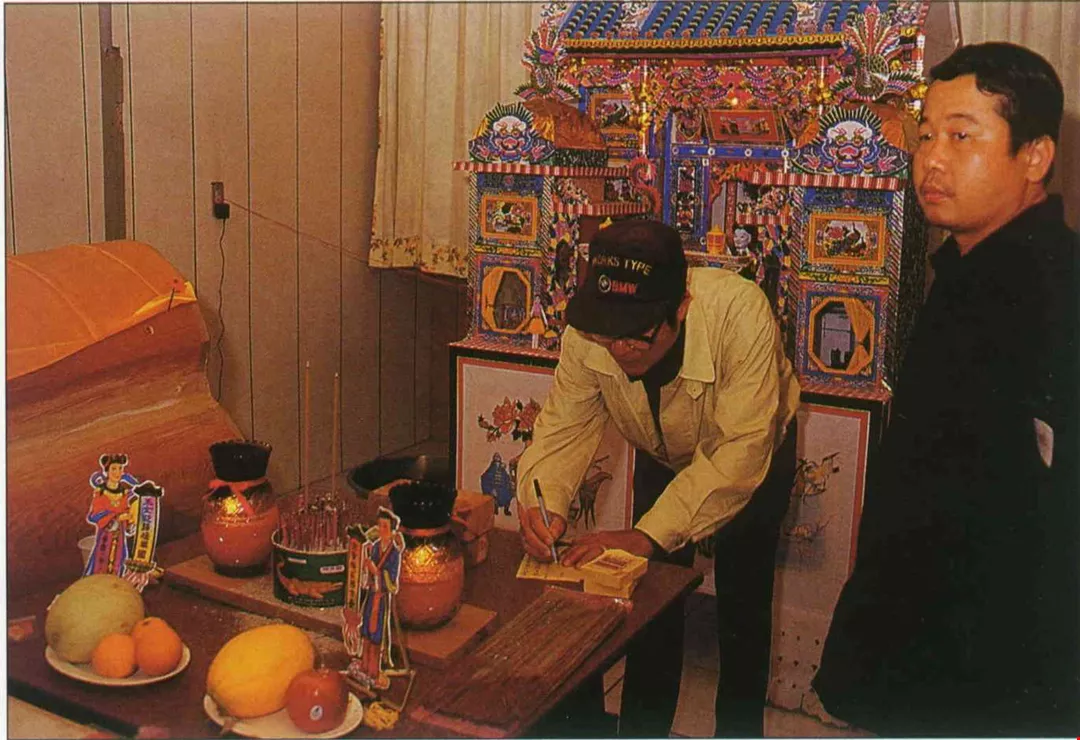
After arriving at the home of the deceased, they must first ask the year of birth, year of death, and cause of death of the departed so that later they will know the appropriate things to say to the family members.
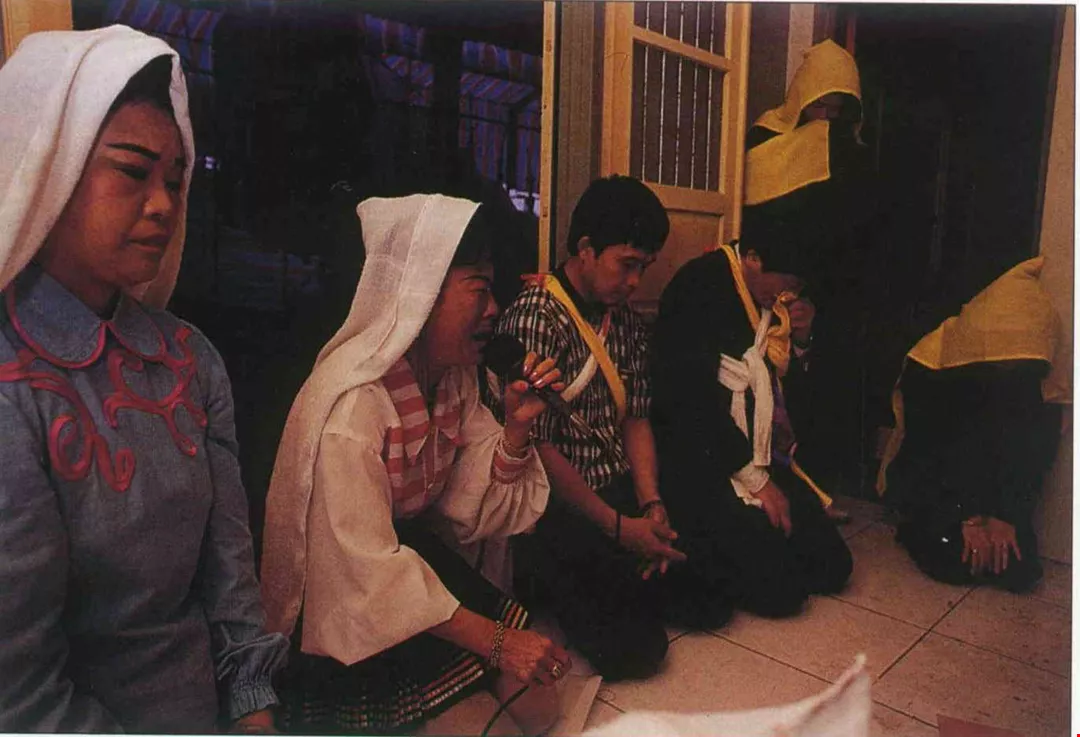
After crossing the bridges and roads, the soul is finally led to the Western Paradise. At this time, the performers bring the family members forward to say goodbye; this is the saddest part of the Soul Guiding ritual.
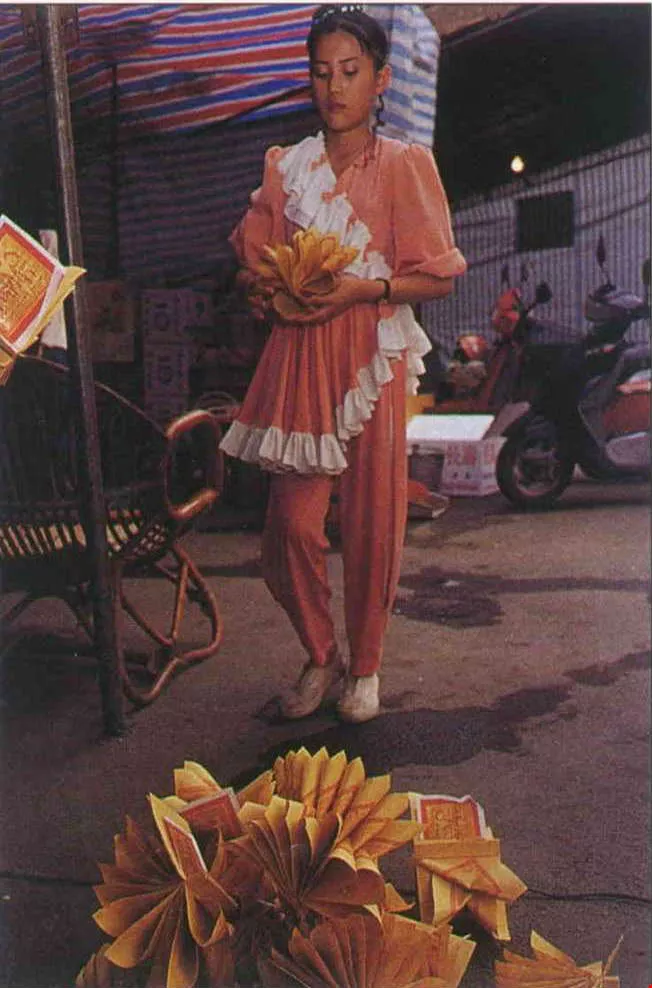
"Money is being offered." On the path to the Western Paradise it is necessary to burn spirit money to bribe the deities and demons at each checkpoint to clear the road.
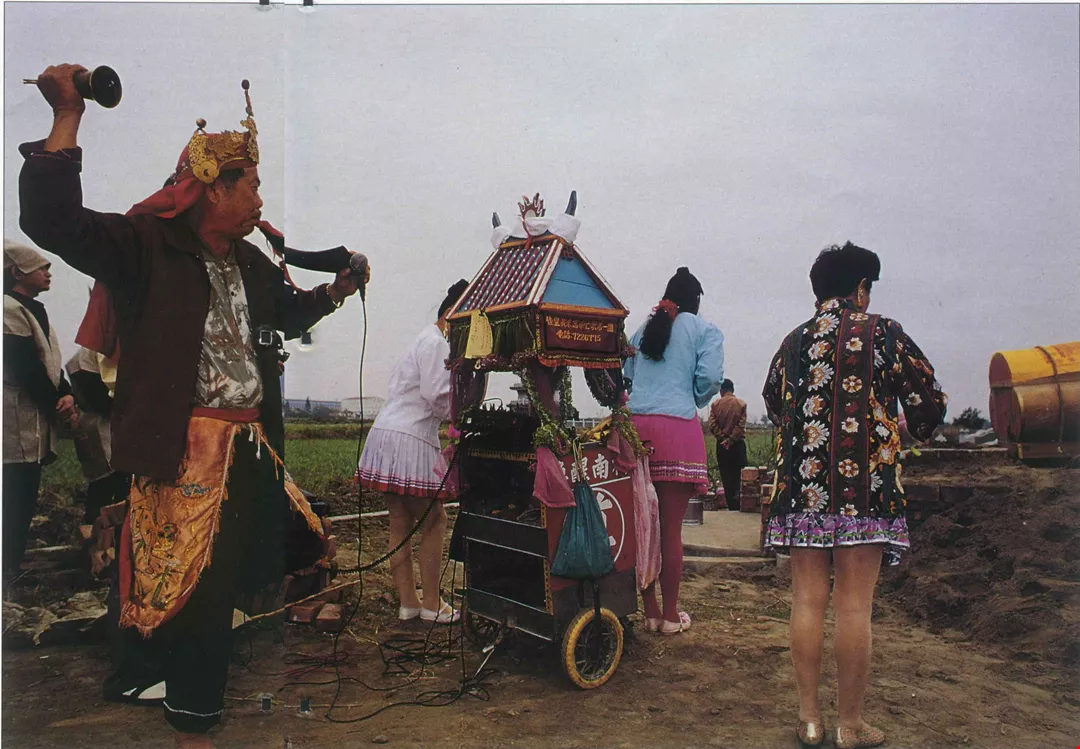
One soul is sent to the Western Paradise, one is buried in the ground, and one is left behind at the commemorative tablet on the ancestral altar in the family home. This at least is the popular understanding of "three souls.".


