A Feast of Fine Art: The Musee de l'Orangerie Comes to Taiwan
Tsai Wen-ting / tr. by Christopher MacDonald
January 2000


They're back! Monet, Cezanne, Renoir, Picasso, and Matisse are here again, in an exhibition which arrives in Taiwan courtesy of France's Musee de l'Orangerie, and which ranges from Impressionism's explorations of light and shade, to the bright dashing colors of Fauvism and the experimental efforts of Modernism.
During the 1990s Taiwan has played host to some of the most famous paintings in the world. In 1993 the National Palace Museum mounted an exhibition of 66 works by Monet and other masters of French Impressionism, followed in 1997 by the "Golden Age of Impressionism" from the Musee d'Orsay in Paris, and the major Picasso show in 1998. And now we have the "Chefs-d'?uvre du musee de l'Orangerie" exhibition, which is currently on at the Taipei Fine Arts Museum. All this is great news for hundreds of thousands of art fans in Taiwan who no longer have to fly abroad to see the originals of their favorite paintings.
Color after the earthquake
In contrast to previous exhibitions of Impressionism in Taiwan, the current show focuses mainly on the Post-Impressionist period, including a diverse selection of works ranging from Fauvism, to Cubism and beyond. According to the Taipei Fine Arts Museum, this was the period when Europe moved into the era of modern art. It was a turning point which changed the direction of art throughout the world, and even left its mark on Taiwan, as can be seen from the work of the older generation of Taiwanese painters that is currently also on display at the Fine Arts Museum. This was the main reason for the museum, which focuses largely on contemporary art, to bring the exhibition over to Taiwan.
Art appreciation has become an important part of modern life, and the exhibition is filled with groups of school students, and parents with children. For the people of Taiwan, still getting over the shock of the 9/21 earthquake, the Chefs-d'?uvre exhibition, with its soothing, elegant paintings, is a welcome arrival.
In fact, the exhibition very nearly didn't make it to Taiwan at all on account of the earthquake. France's Ministry of Culture was initially inclined to cancel the show due to concerns about the safety of the pictures, but was reassured after two specialists flew across to check the condition of the facilities at the art museums in Taipei and Kaohsiung. Art audiences in Taiwan are thus able to enjoy once more the original works of the giants of Post-Impressionism, including Cezanne, Matisse, and Modigliani.
The play of sunlight
A massive train engine spews clouds of steam, while a group of ladies and gentlemen-the former in billowing skirts, parasols in hand, the latter sporting whiskers and standing stiffly in their suits-pose gaily for a photograph. As cultural critic Yang Chao explains: "For people used to traveling about by horse-drawn carriage, the first trip by a train brought an entirely new sense of speed and perspective to the scenery."
At the end of the 19th century, French urbanites were well accustomed to the comforts of life in a modern city, and liked to make outings by train to destinations like the newly popular Seine town of Argenteuil. As the train sped along its way, the sunlight seemed to turn the flowers and trees into lines of color. Painters were the first to notice this visual effect, and began to emerge from their studios, turning their attention from indoor models to the outdoor world of people and scenery.
Monet, who liked painting lotuses, worked for four years from a studio in an abandoned boat by the river at Argenteuil, where he spent long hours observing the play of sunlight on water and exploring the changing relations among light, shade and color. As a result of these efforts, however, he later developed cataracts and lost his sight.
Lucky bourgeoisie
At the same time as analyzing the relations between light and color, the Impressionists also depicted such scenes as daytrippers at leisure beside the river, and the men and women of cafe society in the throbbing heart of the city.
According to art academic Chiang Hsun, Impressionism, from which sorrow and suffering and even seriousness all seem to be absent, was a product of the first generation to enjoy the fruits of urban life following the industrial revolution. The painter Renoir was particularly fond of showing nudes posed amid nature, depicted with caressing strokes of the brush. In his painting "Jeunes filles au piano," one of the daughters of a well-to-do family is seen playing the piano. She has long golden tresses, a delicate bloom in her cheeks, and a sweet, innocent smile. Every element of the picture hints at the blessed and prosperous life of the bourgeoisie. Little wonder that more than a century later the works of the Impressionists are as loved as ever, and attract record-breaking audiences whenever and wherever they are exhibited.
Before Impressionism, art was mainly confined to the salons, and consisted largely of portraits of the wealthy, or religious images. By the time of Modernism, however, the lives of ordinary people had become an acceptable subject matter for painters. Liu Chiao-mei, assistant professor in art at Taiwan National College of Arts, says: "We could describe them as 'anti-class.'" For example Cezanne, who has been called the Father of Modernism, painted ordinary scenes such as apples in the kitchen, or the children of a friend.
Ahead of their time
Impressionism tends to be regarded in Taiwan as a fairly conservative, mild style of painting, but when it first emerged over 100 years ago it was part of the biggest wave of change and experimentation in the history of art. Young painters from all around the world converged on Paris, where they created new schools of art such as Impressionism (Monet), Fauvism (Matisse) and Cubism (Picasso), each of which marked a major departure from tradition. Painting began to be freed from the prescribed methods for rendering perspective and anatomy that had held sway for centuries, ever since the renaissance.
The name "Impressionism" originated with Monet's attempts to capture the fleeting effects of natural light, and actually commemorates the refusal of the official salons to accept his mode of painting. Young painters of the day, excluded from salon exhibitions, organized a show of the "unselected," to oppose the sole standard of art that was imposed by the academy. Monet's contribution was a scene of the banks of the Seine at dawn, entitled "l'impression, le soleil levant." The academy rejected the painting, and the art media seized on the term "impression" to mock the fact that mere impressions were all the "unselected" were capable of conveying. As things turned out, the label came to signify one of the most important schools of art in history.
Matisse was a painter who saturated the canvas with shimmering swaths of color. For example, one of his works shows a woman languishing amid the brilliant reds and greens of carpet and upholstery, with a backdrop of bright yellow-and-blue wallpaper. But there was naturally no admission to the salons for rebellious, non-mainstream work of this type, and Matisse's uninhibited, densely colored style of painting was pejoratively labeled "Fauvism," from the French word meaning "wild beast."
Exotic flora
In addition to the many young artists from France itself, artists from all round the world flocked to Paris, soaking up the heady atmosphere but also contributing elements of their parent cultures to the movement. Examples were Pablo Picasso, who was Spanish, the Chinese painters Chang Yu and Xu Beihong, the Italian Amedeo Modigliani, the Russian Marc Chagall, and the Lithuanian Chaim Soutine. The alternative cultures of these places further enriched the artistic uniqueness of the city.
Modigliani brought with him the aesthetic tradition of the Sienna region, and employed graceful curving lines to outline the figures of his subjects. Some of those subjects, with their long faces, almond eyes and mournful expressions, evoke Italian paintings of the Virgin Mary. Soutine meanwhile, displayed a Slavic wildness in his style, and his portraits are anything but "beautiful." Unflattering to the subject, and rendered in furious, manic strokes of the brush, his paintings nevertheless reveal a true, if ugly side of human nature.
Of course, the most astonishing contribution to art during the 20th century was that made by Picasso, the pioneering Spanish painter. As the founder of Cubism, Picasso developed a technique for portraying his subject from every different angle at once, piecing these disparate elements together into human form. Later he was inspired by the majesty of Roman sculpture to produce monumental figures of his own, so entering his "Neo-Classicist Period." Throughout the 20th century Picasso continued to experiment and innovate, transcending the limitations of the self, and this is the very spirit that has informed the course of art during much of the past hundred years.
Musee de l'Orangerie
The current exhibition includes three portraits of art dealer and collector Paul Guillaume, and in fact it was his collection that formed the basis for the entire Musee de l'Orangerie collection. Hsieh Li-fa, an artist who has spent many years in France, says: "This exhibition of paintings from the Musee de l'Orangerie, can in fact be seen as Guillaume's major work." Artists express the singular experience of the individual, but through the unique vision of a particular collector, the mood of an entire artistic era can be seen.
None of the paintings on display won awards in their day, a time when salons set the tone, but Guillaume had the vision and foresight to befriend many of the struggling and isolated young artists. A comparison can be drawn with those painters working in Taiwan in the early part of this century, whose pictures began commanding huge prices in the 1990s, a full seven decades after they were painted. Sighs Hsieh: "It would be well worth collectors and dealers in Taiwan giving some thought to the example of Guillaume, who was so ahead of the artistic trends of his time."
The 81 masterpieces in the Chefs-d'?uvre exhibition come to Taiwan during an interval when the Musee de l'Orangerie is closed for renovations, and indeed this is the first time that the Musee has agreed to make such a large loan of its paintings. The exhibition is insured to the value of NT$22 billion, and was transported on five separate charter flights in order to spread the risk of loss.
The Taipei Fine Arts Museum acted as go-between for the exhibition, which is also supported by Cathay Life Insurance, the China Times Group and EVA Airways.
Chefs-d'?uvre du musee de l'Orangerie opened in Taipei in December, and runs through to March 1. The show then transfers to the Kaohsiung Museum of Fine Arts, and departs these shores on April 23. Art-lovers are advised not to miss this chance to welcome the new millennium in the company of Monet, Renoir et al.
p.48
Pierre Georgel, director of the Musee de l'Orangerie in France, Mun-lee Man, director of the Taipei Fine Arts Museum, and Huang Chao-sung, president of the China Times, observe Andre Derain's "Arlequin et Pierrot." Without their efforts, this feast of art would never have come to Taiwan. (photo by Diago Chiu)
p.50
"Portrait de Mademoiselle Chanel" by Marie Laurencin, its subject poetically rendered in pastel shades of pink and blue and given a fairytale setting. Unfortunately, the independent-minded Mademoiselle Chanel, creator of the brand of that name, didn't like the painting at all and refused to accept it. She and the artist fell out as a result.
p.51
The great majority of the paintings from the Musee de l'Orangerie come from the Paul Guillaume collection. At the age of just 23, Guillaume became the then 30-year-old Modigliani's first agent. The Italian later painted this portrait, entitled "Paul Guillaume, Novo Pilota."
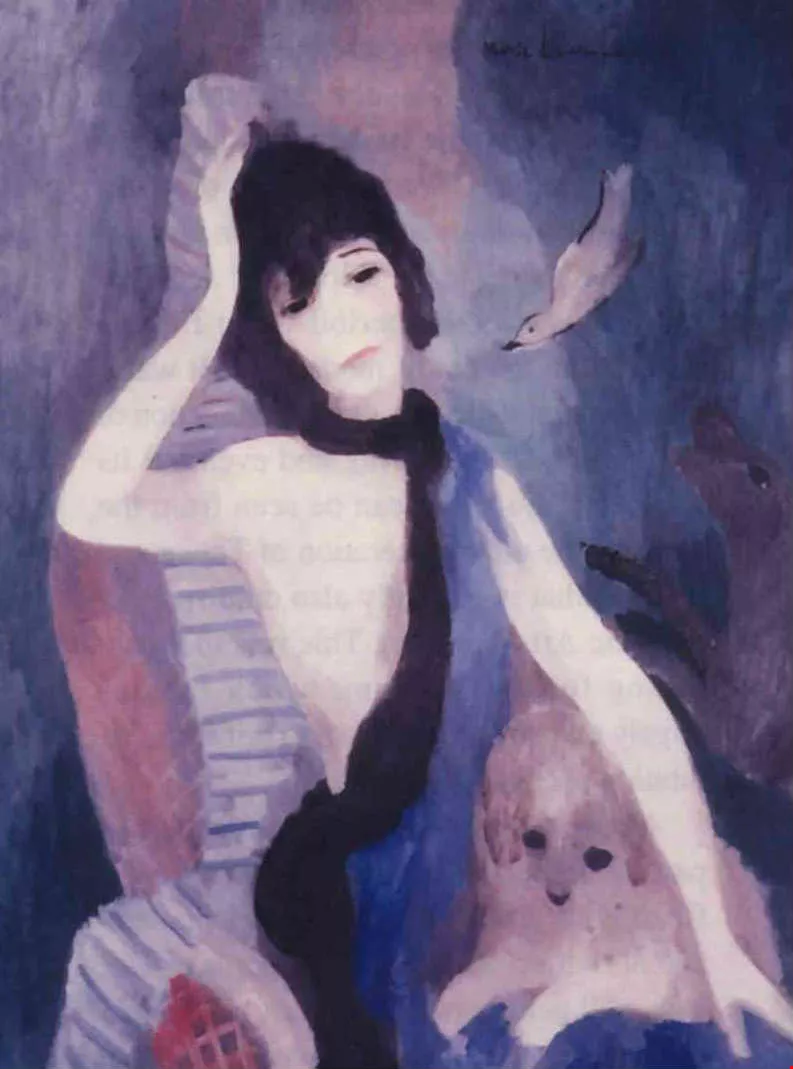
"Portrait de Mademoiselle Chanel" by Marie Laurencin, its subject poetically rendered in pastel shades of pink and blue and given a fairytale setting. Unfortunately, the independent-minded Mademoiselle Chanel, creator of the brand of that name, didn't like the painting at all and refused to accept it. She and the artist fell out as a result.
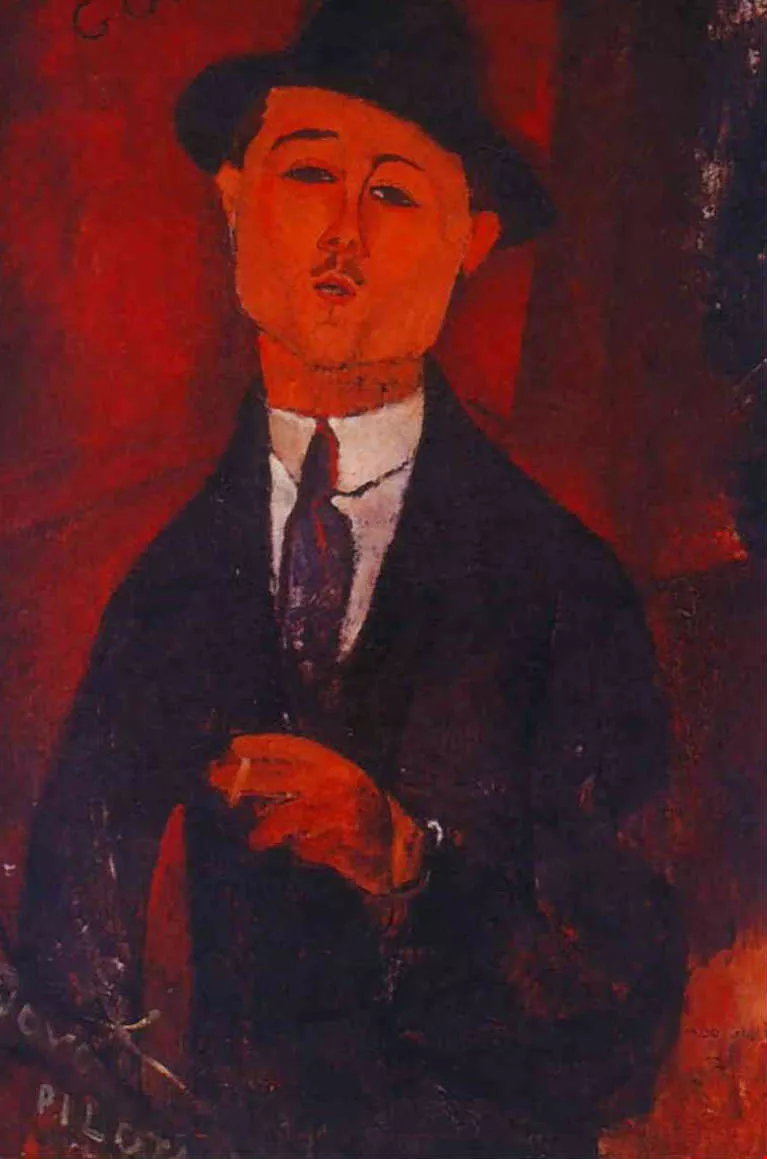
The great majority of the paintings from the Musee de l'Orangerie come from the Paul Guillaume collection. At the age of just 23, Guillaume became the then 30-year-old Modigliani's first agent. The Italian later painted this portrait, entitled "Paul Guillaume, Novo Pilota.".

@List.jpg?w=522&h=410&mode=crop&format=webp&quality=80)


