
In the world of television, for a program to last a full five years is quite a feat. The Chinese variety show Shuang-hsing Pao-hsi has done it, though. This July marks the show's fifth birthday.
And in March of this year the program's hosts, Pa Ke (he's a man) and Chou Mei-yi (she's a lady), won a Golden Bell Award as the year's best television emcees.
Shuang-shing Pao-hsi has been one of the three top-rated variety shows on TV for several years now. But this year Pa Ke and Chou Mei-yi not only won the best emcee award, they were the only nominees--the judges' unanimous choice.
When they went up to receive their award, Pa Ke joked, "Being the only ones nominated takes all the fun out of winning!"
In fact, the honor was a while in coming. Two years ago Pa and Chou were nominated but didn't win. Intending to please the judges, they added juggling and acrobatic routines between their singing acts. But the next year they were nominated again, and again they lost. They finally decided just to be themselves, to go back to their old format, and not to worry so much about winning or losing. And it was their more relaxed performance that at last won the judges' favor.
Originally, Shuang-hsing Pao-hsi was a "smorgasbord" of song and dance numbers and comedy skits. But because there were so many similar programs on the air and top-notch comedy skits were hard to come by, their producer, Ts'ao Jen, decided to give the show a brand-new look, subtitling it "Battle of the Blues and Whites."
The Blues and the Whites are two teams of popular singers, different each week, including current stars, experienced old hands, and hopeful newcomers, who compete in singing a gamut of songs in Mandarin, Taiwanese, and English: from romantic ballads, folk tunes, and art songs to pop and disco. . . . The variety of songs and singers appeals to young and old alike.
Another reason for the show's popularity is that all the performances are live, with no lip-synching, allowing viewers to get a taste of the "real thing." And given the show's popularity, singers have been eager to take part, looking on it as a kind of test and challenge. About 400 have appeared in the past two years.
While each singer performs, his or her teammates provide moral and artistic support by cheering or dancing along: there's a lot of team spirit, which the audiences love. And the emcees are not above joining in the fun sometimes too, which adds to the warm and friendly atmosphere.
A straight musical program might be a feast for the ears but would become a bit cloying without the dialogue to spice things up.
Like grease to a wheel, the emcees keep things spinning smoothly along-- particularly this pair, who provide a change of pace just by stepping on the stage.
Pa Ke is tall and thin, with big, lively eyes, but a handsome Prince Charming he's not. He himself says, "I'm fat--inside out." When people call him "The Bamboo Pole" and "Rubber Raft," he pretty much has to take it.
Chou Mei-yi, in contrast, has been styled "The Aircraft Carrier." Her full 190-1b. figure has become her trademark.
Even without saying a word, this Laurel- and Hardyesque pair can cause a chuckle, and they know how to make the most of their "strong points."
Their remarks at this year's Golden Bell Awards ceremony were a typical example.
Accepting their award, Pa Ke said, "It's just a short ways up here from our seats, but we've been walking now for three years," Chou Mei-yi immediately apologized, "It's all my fault, because I'm so fat and slow-moving." Pa Ke added, "We Chinese have a saying that ugly people are lucky. But this year the luck's finally come round to a handsome pair like us!" Chou took over: "Pa Ke, think where you are. You should be more modest at an awards ceremony--even if what you say is absolutely true!"
Wit like this often flashes out in their dialogue between songs, much of it in the form of untranslatable word play and puns. A sample: Once after Chou Mei-yi, who has a strong, clear voice, had sung a song herself on the show, Pa Ke, who is not so talented, rather enviously remarked, "Chou Mei-yi sang 'El Condor Pasa' really well," and then described her as a "condor in Berkeley Square." He explained: "That's because a nightingale could never be so big."
The Golden Bell judges cited their witty repartee and special chemistry as what makes their program click.
One faithful viewer says, "Their give-and-take is fast and furious. Like Mexican jumping beans, they just won't quit!"
Chou's laughter is a unique gift. "A smile from her is like a belly laugh from anybody else," an old friend says. And when she laughs, it's like a little drum: tum-tum-tum. Audiences find it infectious.
Their wit and their chemistry together are what makes them so special. But it didn't just come out of nowhere.
In the beginning they had to go by the script and felt rather confined. To get to know each other better and to build up more tacit understanding, they constantly held meetings with their crew, ate together, thrashed things out, and tried out new routines. Finally, the producer tore up their scripts and let them go off on their own. Now, says Chou Mei-yi, "We know each other's soft spots. One thrust from Pa Ke, and I can parry and return. Back and forth we go without a miss."
Strange to say, both these award winning emcees got started in the field rather late in their careers: Pa Ke was an actor and a child star; Chou Mei-yi, for 14 years a singer. Neither had a quick-and-easy climb to the top.
Pa Ke got into show business because of his sister. She saw that her little brother, then in the second grade, was quick-witted and self-assured and had him audition, successfully it turned out, for a children's theater troupe. Two years later he found himself a star in the movies.
But audiences like to think that child stars never grow up, and roles disappeared in his teens. After graduating from the National Taiwan Academy of Arts and doing his stint in the military, he took up art design as a steady job and acted in bit parts on TV when he could.
At the same time, he never stopped "improving himself." Watching movies and videotapes was his required curriculum; reading newspapers, books, and magazines, his electives. "He was always observing, reflecting, digesting, and absorbing," an old firend says, "like he was getting ready for the next big chance."
That chance came along in the person of producer Ts'ao Jen, who hired him as an emcee on a hunch. With his acting experience and the well-rounded general knowledge he had given himself, Pa Ke got into the swing of things quickly.
As an emcee, he often likes to bring up serious topics, like consumers' rights or environmental protection, in an easy-going, unobtrusive way. "A good emcee should try to set a direction for his audience in social questions," Pa Ke says with a seriousness different from what we usually see onstage. He hopes his words, like a satirical cartoon, can point out social problems humorously, succinctly, and forcefully.
Just as it is for Pa Ke, reading books and newspapers is regular homework for Chou Mei-yi. And they both take the same attitude toward performing: "Do your best" and "be natural." What's different is her earlier start as an emcee.
She had always like to sing, so after she graduated from junior college, she went to voice class for training. After winning third place in a singing contest, she was hired as a singer at a radio station and a night club.
It was at the night club that she got into emceeing. She was so nervous that she kept drinking water, and since she couldn't keep going to the bathroom all the time, in a couple of months she developed bladder stones.
But with time and experience she learned how not to take herself too seriously to chat with the performers and, she says, "to constantly watch the audience's reaction and the boss's."
Although emceeing was getting easier, she was still comparatively unknown. She often had to play bit parts, stall a restless audience waiting for the main act to arrive, and stand in for no-shows, sometimes getting all costumed up just to step down at the last minute when the no-show suddenly "showed." All of which developed her acting skills and ability to improvise.
One night she was singing at a night club in a peppery role in a comic opera when an executive from the Chinese Television Service happened to be in the audience. Soon after, Ts'ao Jen came looking for her for his show. And now it's been five years.
Over those five years, audiences have watched Chou Mei-yi and Pa Ke progress and grow, and their progress and growth have made audiences happy and grateful.
This July is Shang-hsing Pao-hsi's fifth birthday, a "ripe old age" for a TV show. The program's crew are excited, and Chou's and Pa's Golden Bell award is no doubt the finest birthday present the crew could have received.
The toughest problem now, says Pa Ke, "is how to compete with yourself and outdo your past achievements--the best thing would be to get another Golden Bell." And Chou Mei-yi, smiling and stroking her figure, adds: "Next time I can't use being overweight again as an excuse."
[Picture Caption]
Pa Ke and Chou Mei-yi make a rare pair.
One fall from "Chou Hardy" and "Pa Laurel" cries uncle. (photo courtesy of Min Sheng Pao)
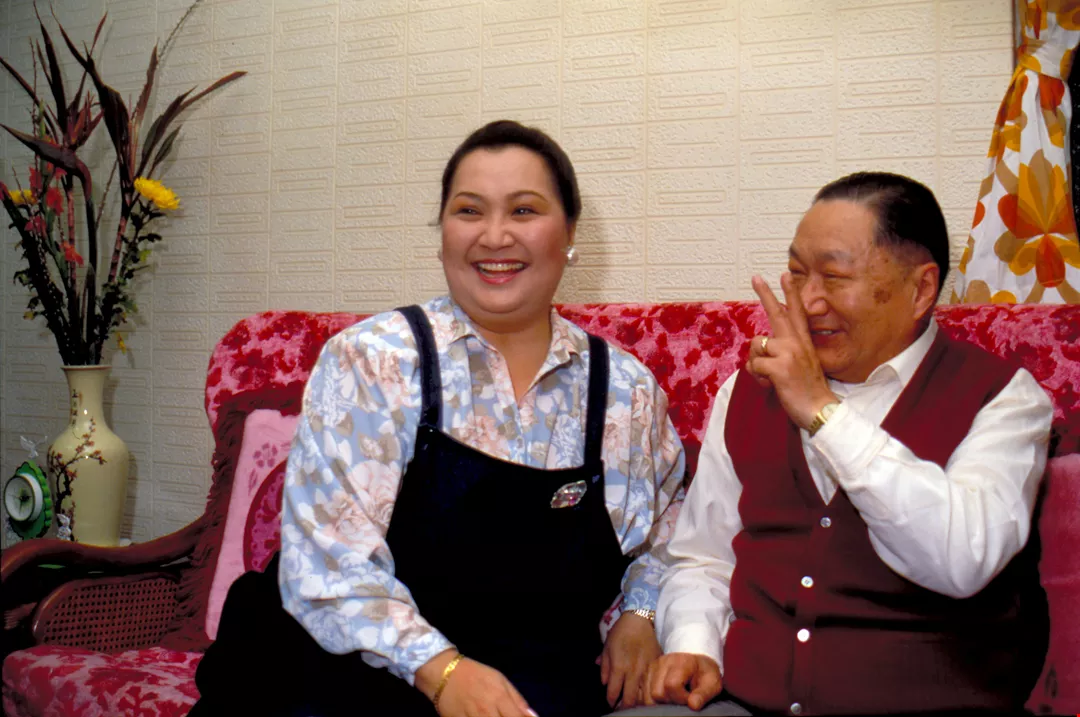
"Dad wants me to hurry up and get married. He says there are only two conditions for my husband: to be alive and to be male."
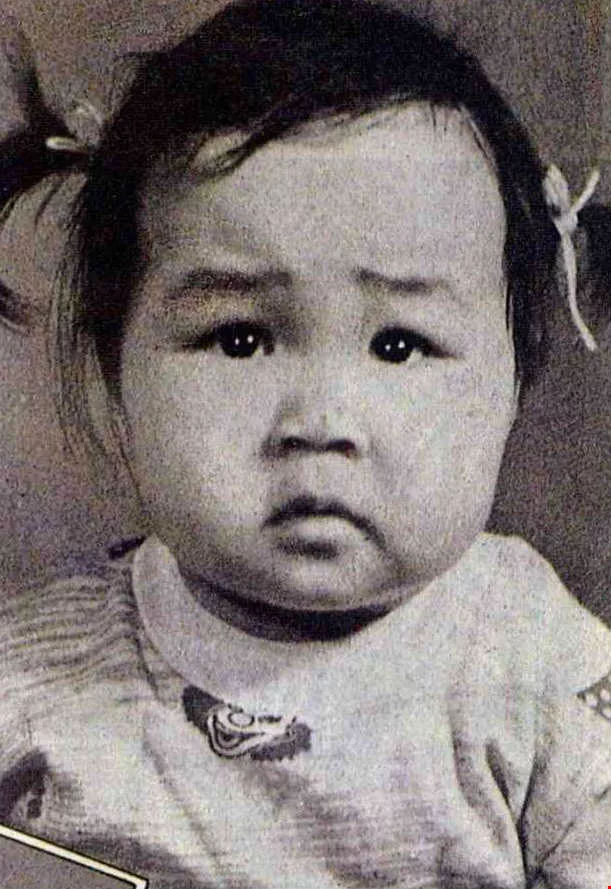
"Even when I was small I was a little fatty!" (photo courtesy of Chou Mei-yi)
Pa Ke (r.) in one of the movies that made him a star as a child. (photo courtesy of Pa Ke)
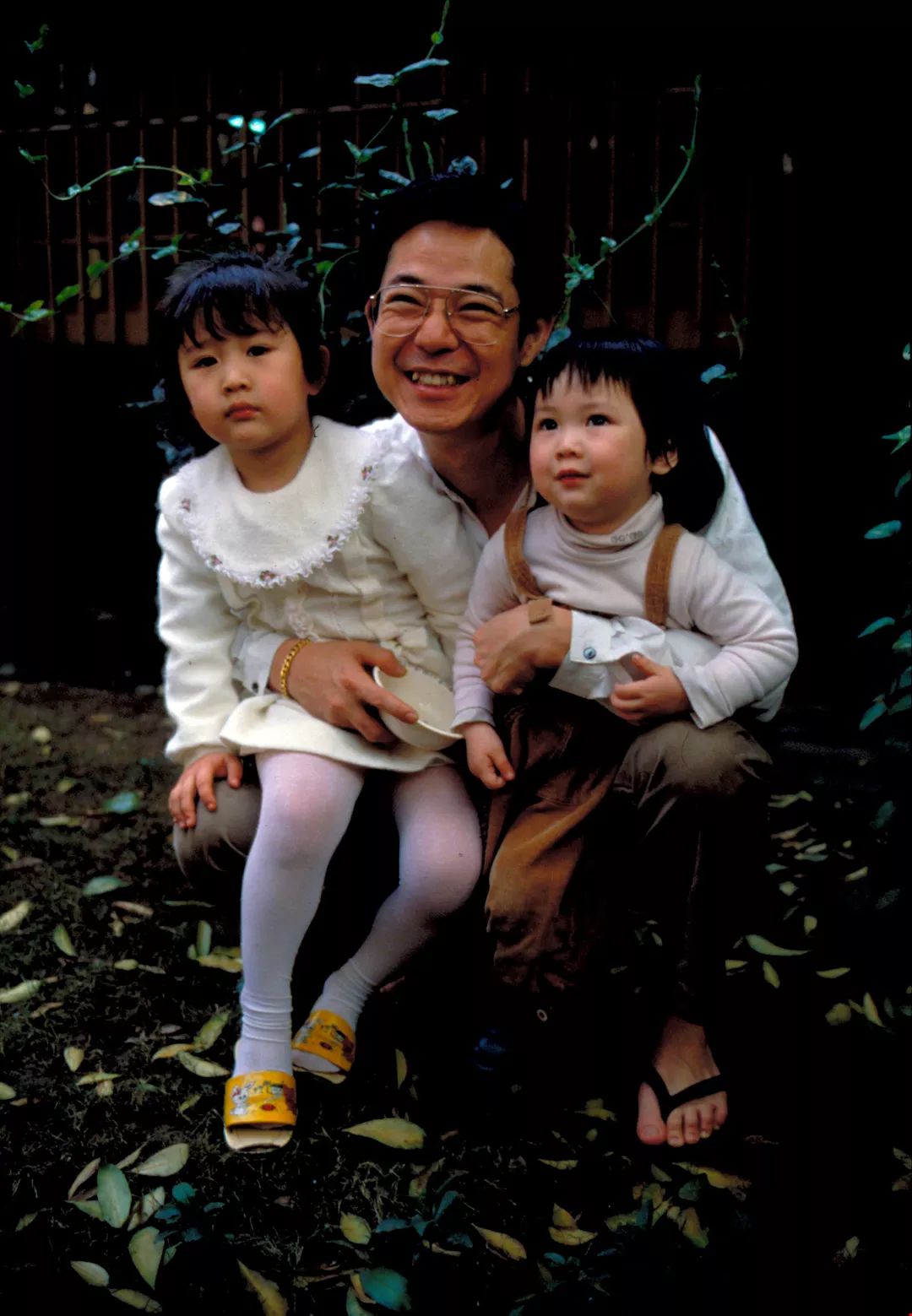
"Luckily my daughters don't look like me!" Pa Ke credits their good looks to his wife.
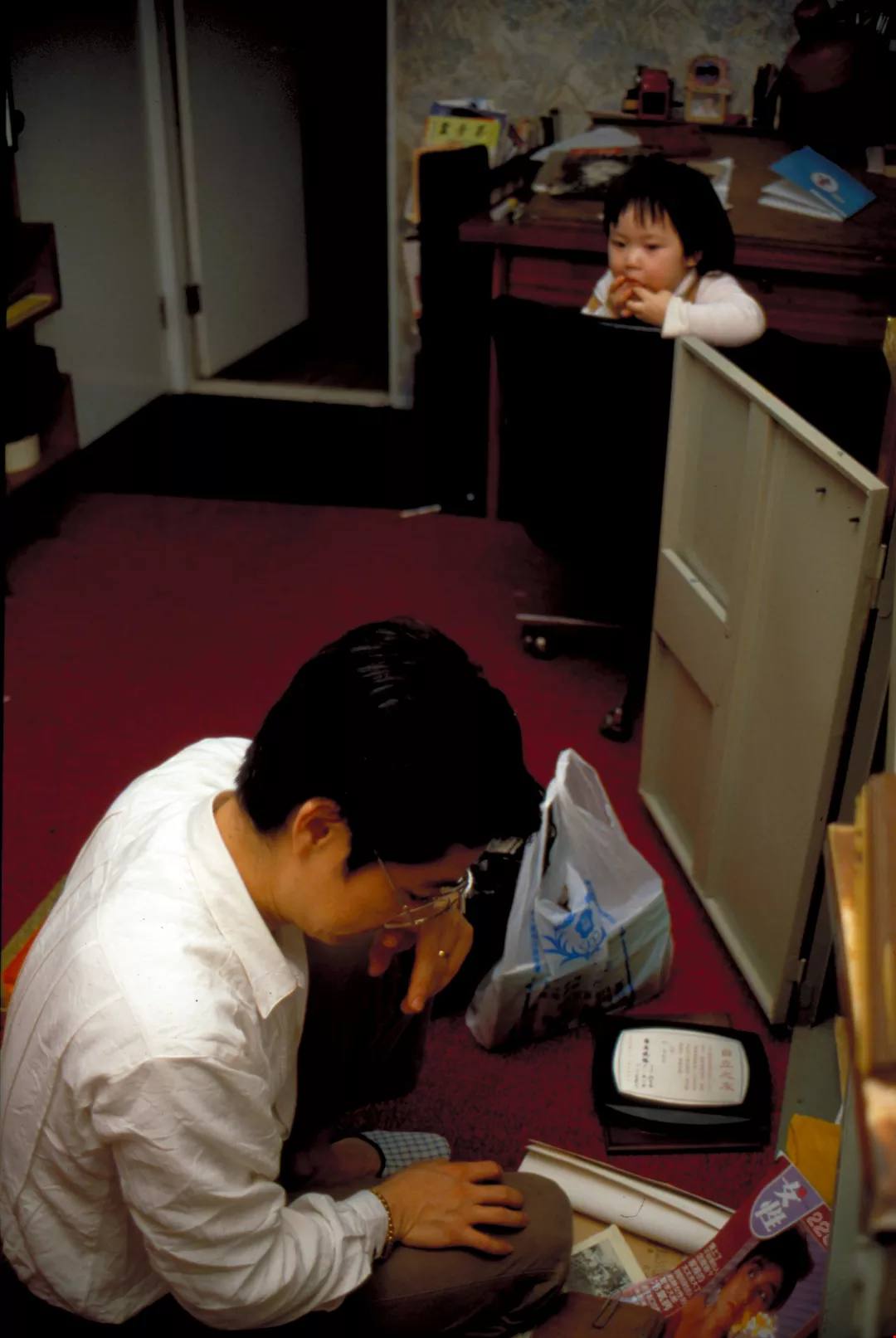
Pa Ke turns his cabinet inside out looking for clippings of himself as a child actor. His daughter has run over to see what's up.
The bright, shiny Golden Bell awards confirm Pa's and Chou's talents as emcees.
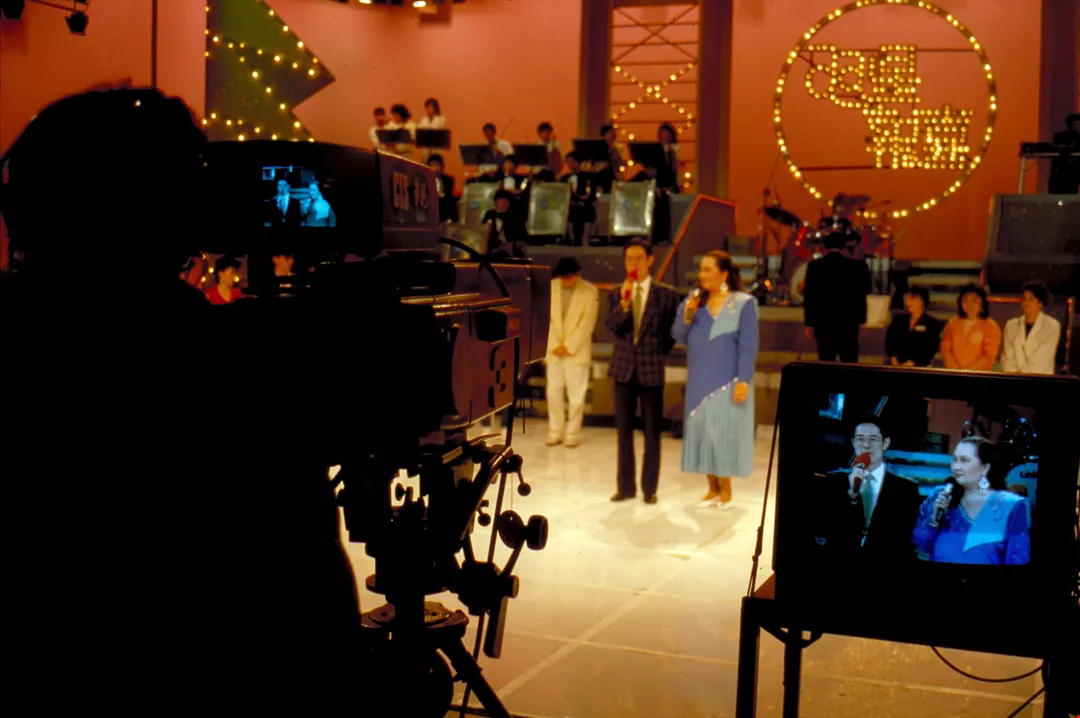
Pa Ke and Chou Mei-yi make a rare pair.
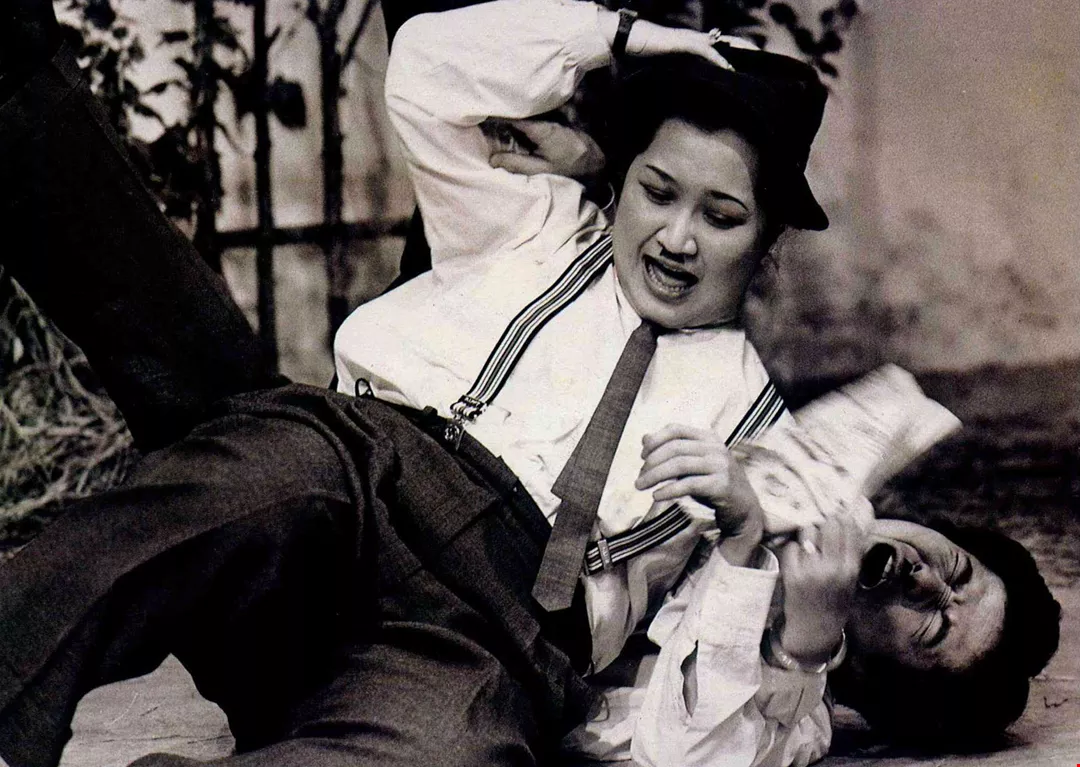
One fall from "Chou Hardy" and "Pa Laurel" cries uncle. (photo courtesy of Min Sheng Pao)
"Dad wants me to hurry up and get married. He says there are only two conditions for my husband: to be alive and to be male.".
"Even when I was small I was a little fatty!" (photo courtesy of Chou Mei-yi)
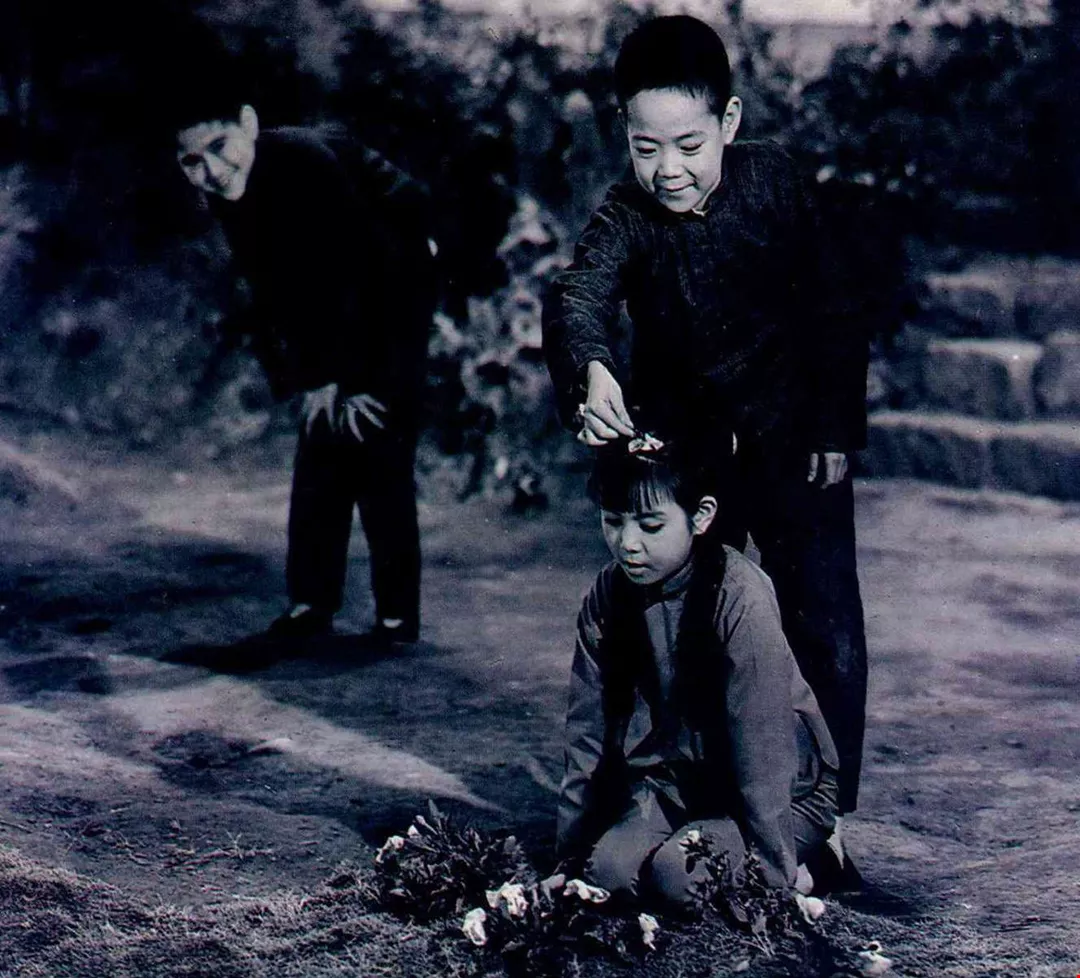
Pa Ke (r.) in one of the movies that made him a star as a child. (photo courtesy of Pa Ke)
"Luckily my daughters don't look like me!" Pa Ke credits their good looks to his wife.
Pa Ke turns his cabinet inside out looking for clippings of himself as a child actor. His daughter has run over to see what's up.
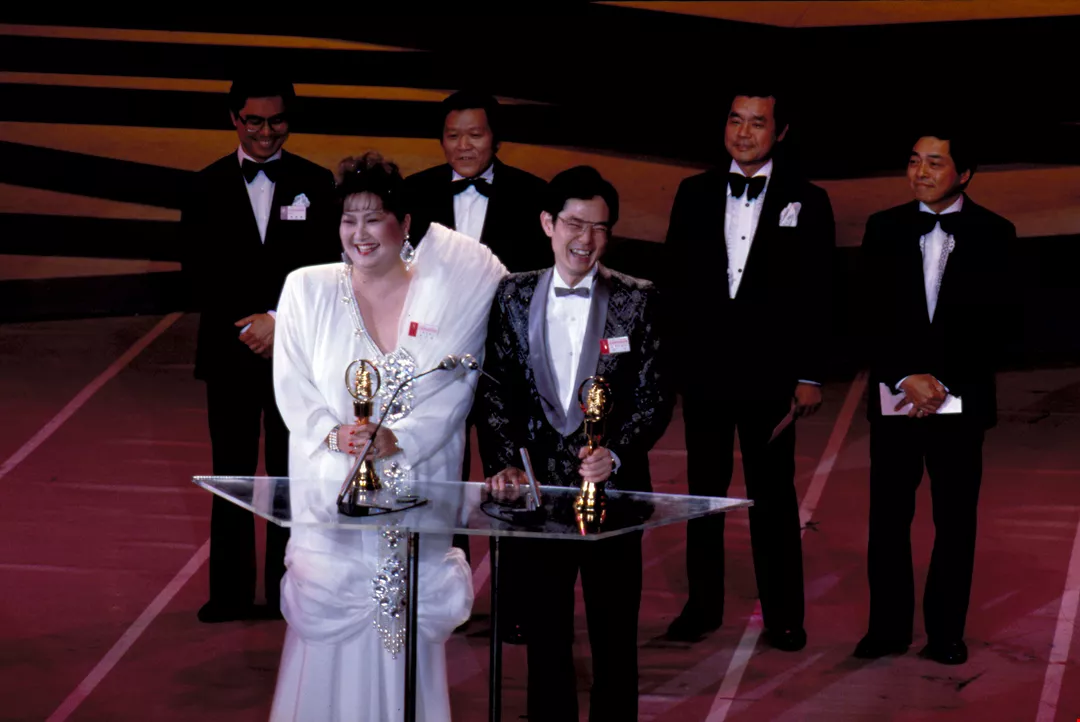
The bright, shiny Golden Bell awards confirm Pa's and Chou's talents as emcees.

@List.jpg?w=522&h=410&mode=crop&format=webp&quality=80)

@List.jpg?w=522&h=410&mode=crop&format=webp&quality=80)


