An East–West Dialogue on Life, Death, and the Afterlife
At the National Museum of History, Egyptian Mummies Meets To Be Continued
Esther Tseng / photos Jimmy Lin
June 2026
The National Museum of History is presenting To Be Continued: Cultural Visions of Life, Death, and Beyond alongside the international exhibition Egyptian Mummies: Journey into Immortality, exploring Eastern and Western perspectives on life and death across different belief systems.
In the summer of 2026, the National Museum of History (NMH) is taking the unusual step of presenting two exhibitions in tandem: the major international exhibition Egyptian Mummies: Journey into Immortality on the first and second floors, and the museum’s own special exhibition To Be Continued: Cultural Visions of Life, Death, and Beyond on the fifth floor.
This encounter between civilizations transcending millennia brings precious ancient Egyptian artifacts into direct dialogue with historic and cultural objects preserved in Taiwan. It also breaks through longstanding taboos around speaking of death, inviting contemporary viewers to move like travelers across different times and spaces as they look anew at mortality and come to a deeper understanding of life.

The authentic mummies and funerary objects on display can be traced to important finds from the Franco-Tuscan Expedition to Egypt, undertaken in 1828–29 by French Egyptologist Jean-François Champollion and Ippolito Rosellini, the “father of Italian Egyptology,” as they explored the Nile Valley.
Crossing the line between life and death: The mummies’ long flight
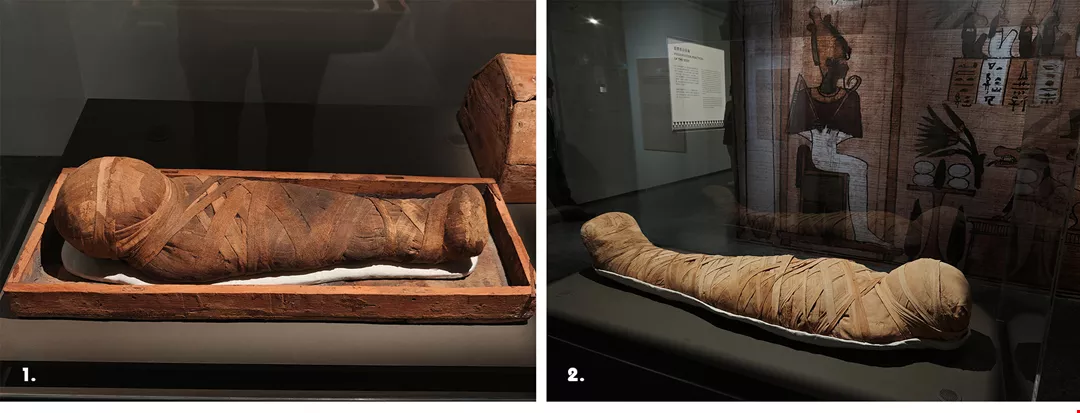
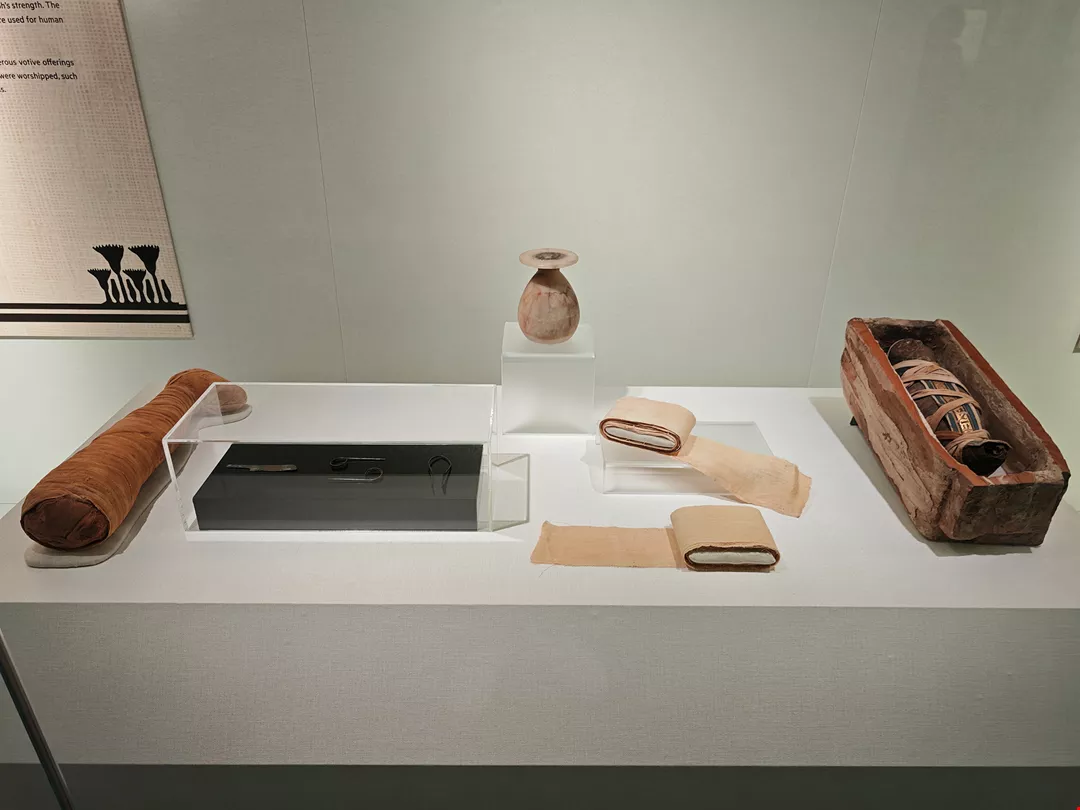
Among the exhibitions’ greatest highlights are four authentic mummies that have crossed oceans to reach Taiwan: a female mummy, a child mummy named Callisto, a dog mummy, and a “suspected mummy.”
These precious holdings from the National Archaeological Museum of Florence in Italy have usually traveled by truck when exhibited within Europe. This time, the human and animal mummies alike took what was, after thousands of years, their “first flight”—with distant Taiwan as their destination.
Giulia Basilissi, a restorer at the Florence museum, notes that these ancient objects are in fact extremely fragile. That is especially true of organic materials such as the textiles wrapped around mummies and human tissue itself. Moving such objects over a long distance presents a major conservation challenge. She praised the NMH team in Taiwan for its meticulous and rigorous approach to artifact protection, saying she was impressed by the attention paid to details such as humidity, temperature, and light control.

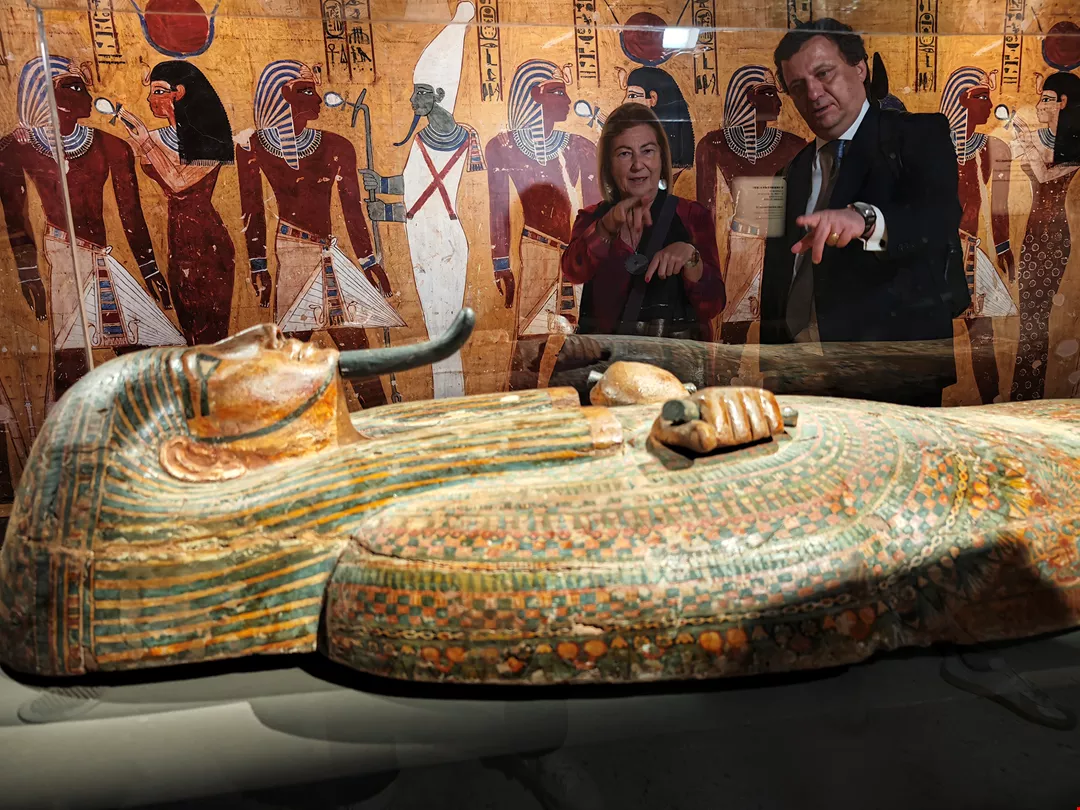
Marco Lombardi, representative of the Italian Economic, Trade and Cultural Promotion Office in Taipei, and Maria Cristina Guidotti, curator of the National Archaeological Museum of Florence, welcomed the cultural exchange the exhibition has created between Taiwan and Italy.
Basilissi explains that the Florence museum holds many mummies and sarcophagi, most of which entered Italy in the late nineteenth century. At the time, X-ray technology did not yet exist, so researchers would cut into mummies to study their internal structure. Today, however, X-rays and other imaging technologies allow researchers to examine skeletons and remains without invasive procedures. Such studies have revealed that some female mummies had been pregnant, and have sometimes uncovered burial jewelry or amulets sewn inside the wrappings. X-ray imaging has also revealed that the “suspected mummy” on display actually contained the remains of a falcon.

1. The infant mummy Callisto was about one to two years old.
2. Skeletal features suggest that this female mummy, dating to the first or second century CE, may have died in childbirth.

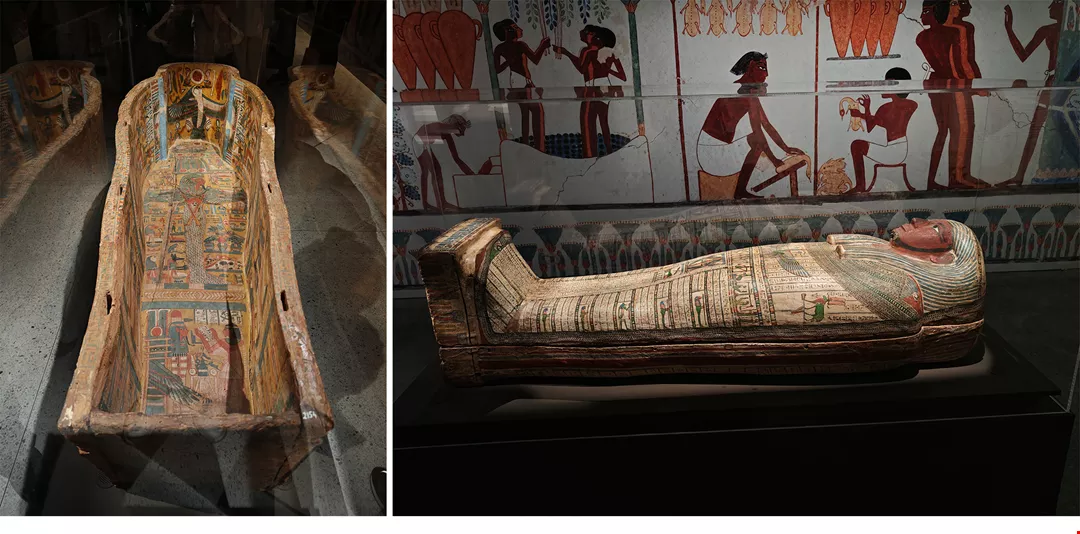
These artistically significant mummy coffins symbolize the ancient Egyptians’ protection of the dead.

Many animal mummies were made as votive offerings dedicated by pilgrims.
A dialogue between civilizations: Death Is not the end
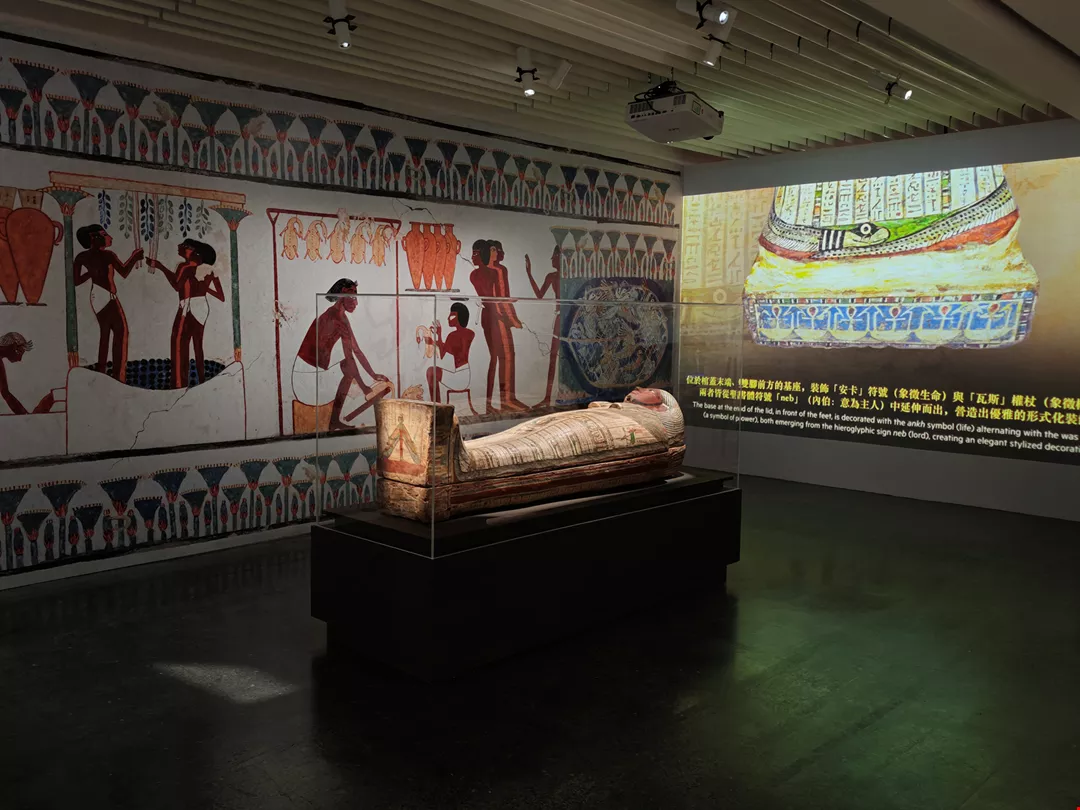
The ornate painted coffins, canopic jars used to preserve internal organs, funerary nets, and many kinds of amulets on display in Journey into Immortality recreate the sophisticated embalming techniques and material culture that ancient Egyptians developed to help the dead pass safely into the afterlife. Visitors can examine precious papyri, coffins with markers of status and artistic value, and heart scarabs, while audiovisual aids and illustrated explanations show how the ancient Egyptians built on beliefs and moral concepts to construct an order for life after death.
Curator Maria Cristina Guidotti observes: “Through the introduction of mummies and funerary objects, what is presented is not merely the end of life, but the beginning of life’s continuation in another form.”
Ascending to the fifth floor, visitors enter To Be Continued, an exhibition organized around the themes of “cycle, transformation, ethics, and ancestral spirits.” It leads viewers from Buddhist reincarnation, Daoist visions of the Ten Kings of Hell, and the Confucian ethic of honoring the dead and remembering one’s ancestors to the ancestral-spirit beliefs of Taiwan’s Indigenous peoples. Among the highlights is the NMH’s Thangka of Amitāyus (Scroll Painting of Amitayus Buddha), an important antiquity. The exhibition also is working closely with the Laiyi Township Office in Pingtung County to bring in local Paiwan narratives. In coordination with the 170th anniversary of the Taipei Xia-Hai City God Temple, the temple has generously lent a statue of the City God to the exhibition, giving concrete form to the deity’s role in judging good and evil.
NMH director Hung Shih-yu emphasizes that the two exhibitions together reveal the emotions and wisdom human beings share when confronting questions of life and death. Both suggest that death is not the end. Whether in the ancient Egyptians’ pursuit of immortality through mummification, Eastern ideas of reincarnation, or Paiwan beliefs in ancestral spirits, death is understood as a transformation and continuation of life in another form.
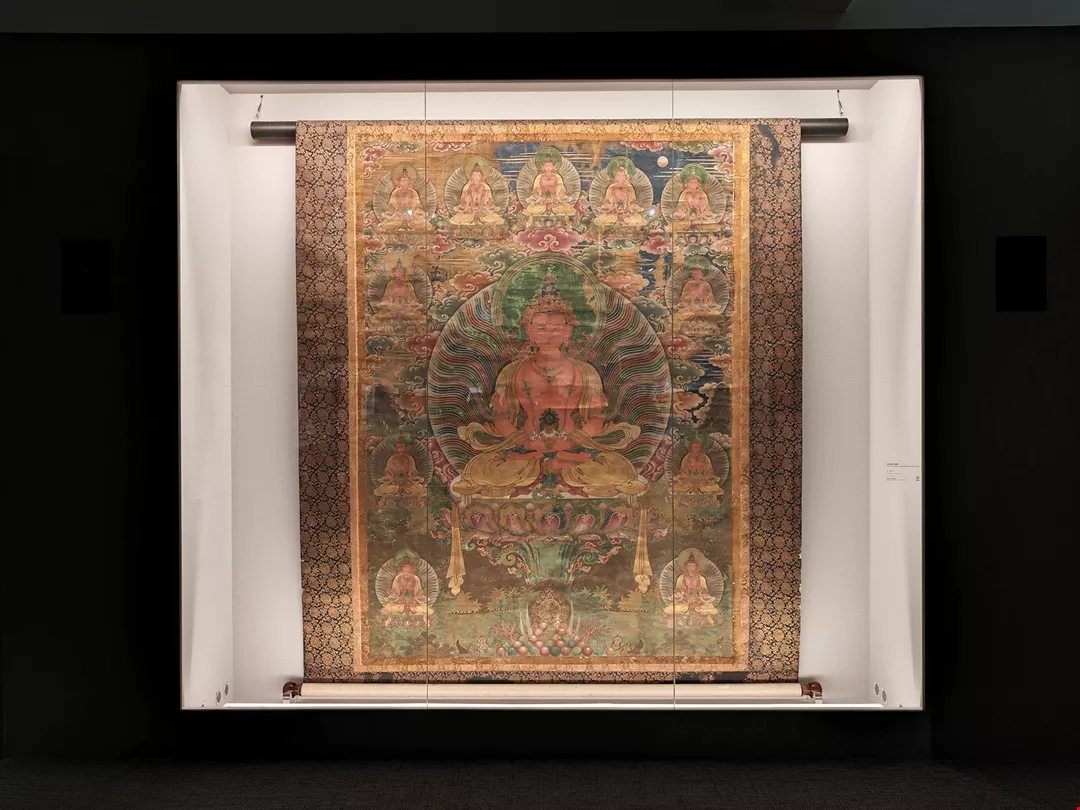
Thangka of Amitayus Buddha, designated an Important Antiquity by Taiwan’s Ministry of Culture.

Taipei Xia-Hai City God Temple has generously lent a statue of its City God to the exhibition. The City God is responsible for judging good and evil.
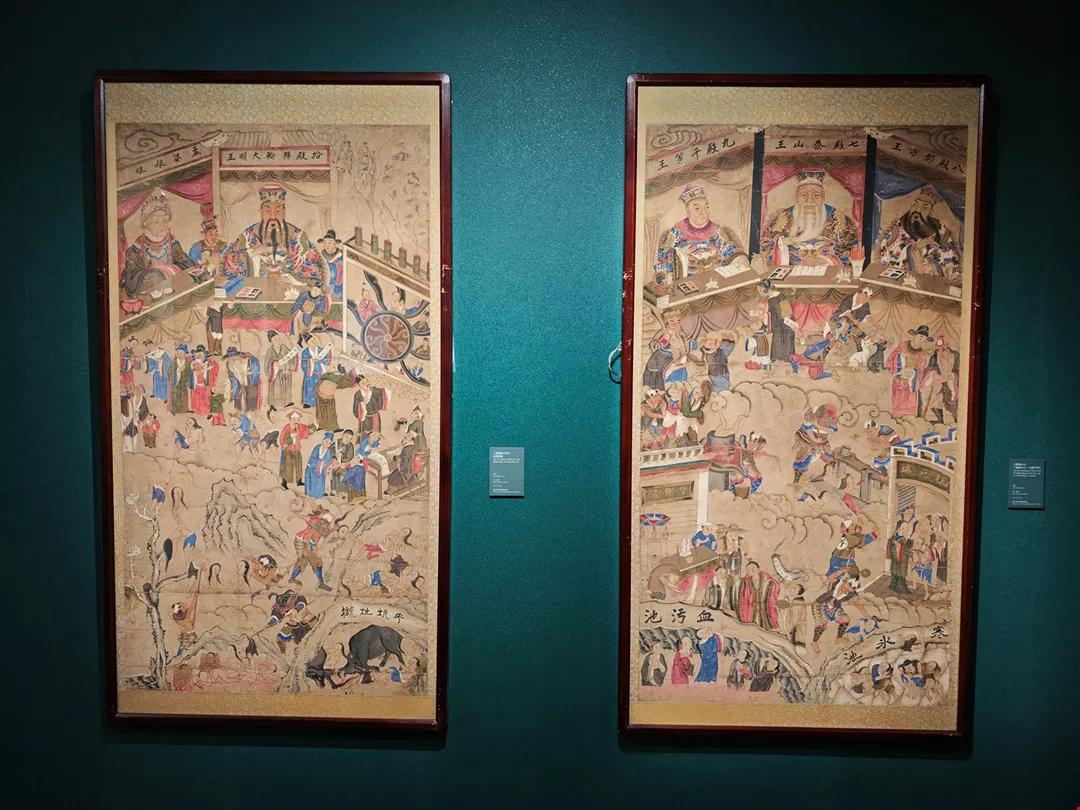
Once the deceased has successfully passed through the judgments of the Ten Kings of Hell, they may move from death toward spiritual transcendence.

Lords of the underworld, East and West
Journey into Immortality introduces Osiris, the Egyptian god of the underworld, before whom the deceased would undergo the moral test of the “Weighing of the Heart” before they could pass into the afterlife. In To Be Continued, viewers encounter a different vision of judgment: Before the Daoist City God, Kṣitigarbha Bodhisattva, and the Ten Kings of Hell, the good and evil deeds of one’s earthly life shall be accounted for one by one. Those who have passed through this process may return to the six realms of rebirth, moving from death toward spiritual transcendence.
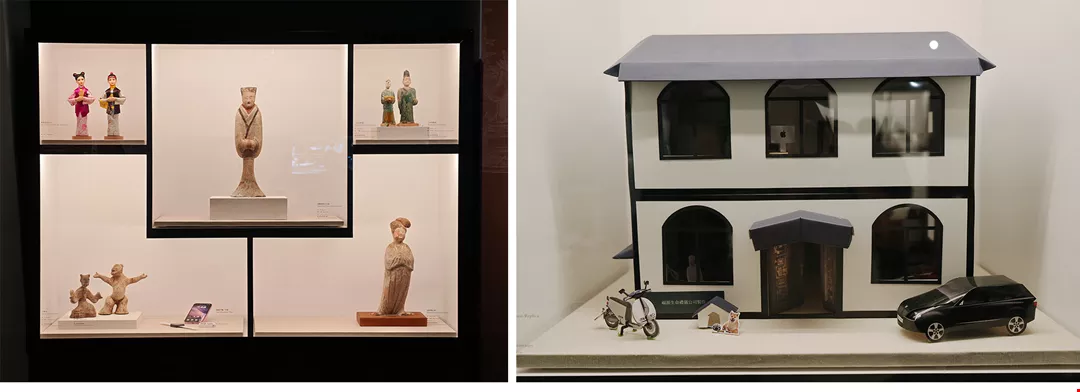
The two exhibitions also reveal striking parallels between Eastern and Western rituals that “serve the dead as one would serve the living.” Ancient Egyptians prepared canopic jars and all kinds of amulets for the deceased; among the burial objects is a boat carrying nine helmsmen, suggesting a journey along the Nile to have an audience with the god of the underworld. In Chinese funerary culture, ancient burial objects such as pottery figurines and ceramic courtyard buildings have evolved into today’s practice of burning paper replicas of mobile phones or luxury cars. Behind these practices lies the same emotional impulse: the living sending off the dead with care and affection.
As Venerable Huei-kai of the Buddhist organization Fo Guang Shan has said, within the system of reincarnation, life before and after death belong to the same continuum. Understanding how life after death may be settled can make one more optimistic about life, allowing one to face both living and dying with ease. When visitors enter the exhibition spaces and look again at death, they are in fact embarking on a journey—at the meeting point of ancient civilizations and contemporary culture—into life, faith, and the human pursuit of eternity. For only when we come to understand death anew do we truly learn how to cherish life.

Ancient funerary objects such as pottery figurines, and the modern practice of burning paper replicas of mobile phones and luxury cars, both reflect the idea of “serving the dead as one would serve the living.”
Exhibition Information
Egyptian Mummies: Journey into Immortality
Venue: 1st and 2nd floors, National Museum of History
Dates: Now through September 28, 2026
To Be Continued: Cultural Visions of Life, Death, and Beyond
Venue: 5th floor, National Museum of History
Dates: Now through September 20, 2026