The Caution in Mirror: Hou Chun-ming's Mandala Diary
Ta Yueh-kuang / photos art courtesy of Hou Chun-ming / tr. by Tsai Nanting
April 2008


Like handling sacrificial goods, I presented my just-finished drawings in the central hall, reverently placing them before my funeral portrait.- Preface
The last two years have witnessed an explosive art market, with works by Chinese artists continuing to be in hot demand at the auction houses. In the autumn auction season in Taiwan last year, five auction houses sold nearly NT$2.3 billion worth of art, a record. Among the sales, two in particular raised eyebrows: Hou Chun-ming's Chakra, Clone Technique (1997) selling at NT$4.6 million, 15 times its initial asking price; and his eight-piece woodblock Erotic Paradise (1992), which sold for over NT$2 million at a Sotheby's auction in Hong Kong.
(photo by Jimmy Lin)
Shameless pornography
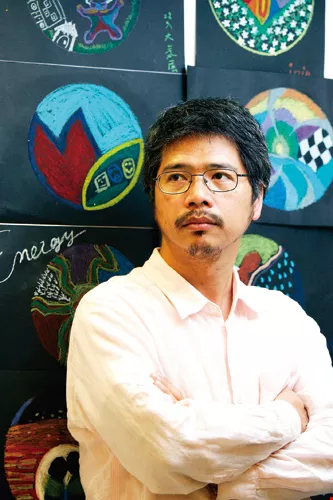
Born in 1963, Hou Chun-ming achieved fame early in life for the wildness and subversiveness of his art, primarily woodblocks and installation pieces. Among his early works were his brash illustrations and commentary on pornography in the manner of Taiwanese folk art, considered works of genius in an age when Taiwanese culture was emerging from the strictures of martial law.
Just as the world has started to take notice of Hou's older work, the artist has come out with The Caution in Mirror: 376 Days of an Artist's Mandala Diary. Hou has also been giving art classes that promote the therapeutic role of mandalas. Morphing from wild artist to New Age guide for souls in distress, Hou's transformation has discombobulated many an art critic.
Hou Wang Shu-chao, chairwoman of the Spring Art Gallery, which has collected all of Hou Chun-ming's 402 mandalas, writes in the book's preface: "His works are quite crazy, full of male and female sex organs... As a viewer, they make me uneasy and I have a hard time looking at them directly. However, his works have an unavoidable sincerity and focus to them, exerting their own magnetism through touches of facetious humor and insight into human life.
Hou Wang Shu-chao is a renowned Taiwanese connoisseur. She also has a son, the painter Hou Yu-shu, who is of the same generation as Hou Chun-ming. Her comments not only provide a bit of humor, but also shed light on the controversial nature of Hou's art.
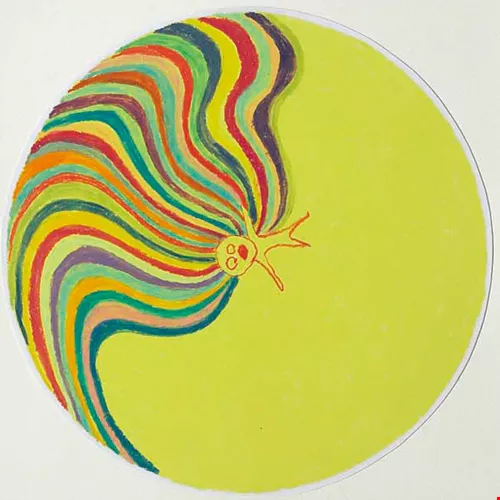
September 5, Yuanli: A Man-Eating Rainbow Beast
Delayed adolescence
Hou Chun-ming's reputation for craziness stems mainly from early series such as Large Intestine Meridian, Erotic Paradise, Sou Shen Ji, Bitch Couple, and 4-Season Porno. The names alone evoke their shock to religious sensibilities.
In Divination Sticks of Ecstasy, which has been called "titillating kitsch aesthetic" as well as "mediumistic theology," Hou imitates the format of temple divination sticks and classic woodblocks that feature illustrations with textual commentary. Content-wise, however, the pieces are filled with sexual organs and couplings. They are on the one hand titillating, while on the other hand imbued with a feeling of ironic warning. The works caused a sensation when introduced in 1992. From then on, Hou would most often be linked with sexual themes and folk motifs.
When the topic of artistic creation is raised, Hou says, "It's not just me-to people in East Asia in general, there's great power in the repression and escape that sex represents. As the saying goes, 'It's human nature to need food and sex.' Just as you need food every day, sexual energy is something that a person grapples with for a lifetime."
While some have opined that Hou "never got through adolescence," he himself feels that it was simply late to arrive. Hou divides his life into three stages. While in junior high and high school he got good grades and was a model student who served as class monitor. During his four years in university Hou was inspired by his mentor, Professor Chen Tsun-shing, to cut his teeth in ethnography, immersing himself in Taiwan's unique culture of temple festivals and folk art. These experiences truly inspired him. Says Hou, "Even though I grew up in the countryside, I was looking at these temple festivals in amazement and with a completely new set of eyes." His adolescence was only now beginning to kick in.
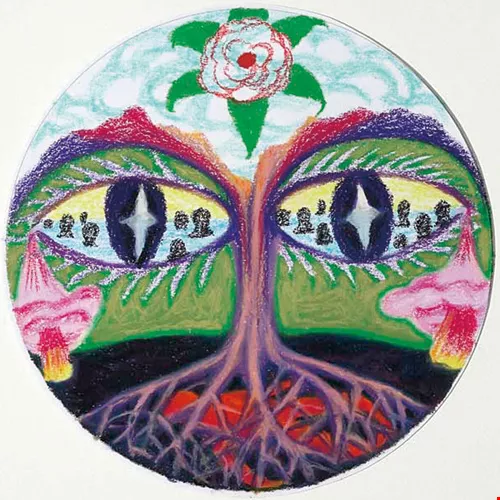
January 23: After Yoga
Turning point
During that period, Hou found powerful support in his then-wife, Hsu Chin-ling, who had been attracted to the "misplaced youth" that she saw in the artist. The two fell in love and got married. Hsu became Hou's assistant, manager, and emotional support. In the long run, feeling stifled by how intertwined the two had become, Hsu felt, "I needed to be myself." She moved to the USA to study art therapy. Over time she realized, "I had been dependent upon my husband's dependence on me." She made the decision to press for divorce.
The divorce was tough for both parties. Like many "geniuses" who are not adept at navigating the mundane world, Hou experienced a creative breakdown, suffering depression and pain resulting from the loss of his wife's emotional and practical support.
"My whole body ached. It especially hurt when I was lying down, but it also hurt when I got up," says Hou, who recorded this period of his life in Last Testament of a 36-Year-Old Seeker of Love. As Hou now describes that period of his life, his voice is no longer filled with pain, though he does speak with passionate intensity. To ease his suffering, Hou began to attend classes in spiritual growth, studying Osho meditation, free writing, and mandala drawing.
Most people might think that an artist, especially one like Hou, is captive to dramatic mood swings and would reject art therapy, which seeks to re-ground the patient in the mundane. So why did Hou choose this route?
"I'm sure this caused a lot of misunderstanding," says Hou, "But since my ex-wife studied art therapy, I wanted to understand what it was and how it produced the changes that it did."
Starting in 2000, Hou began "living the life of a renunciant," "mourning for a past that was dead." He continued to seek healing through mandalas. After 376 days of self-seeking, Hou not only emerged from his pain and pushed his art to a new level, but he also transformed from being an artist who "never got through adolescence" to someone who remarried, had children, and now lives out the role of the "socially aware father figure" teaching others to draw mandalas in art therapy groups.
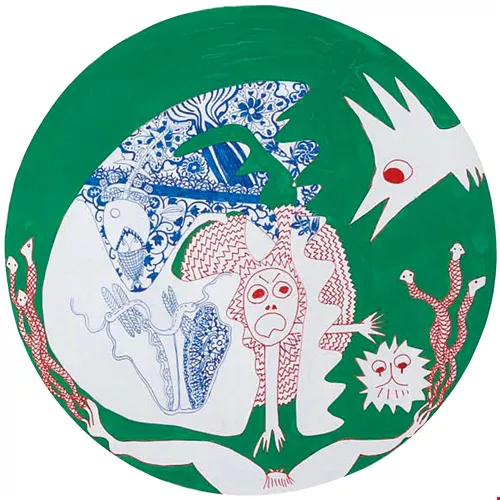
December 7, Mucha: Let Me Be
Four transformations
The eminent psychologist Carl Jung developed the use of mandalas in therapy, advocating free drawing within their circles. As Hou describes it, when he used to color freely on an ordinary A4 page, he felt that energy was seeping out of him. The mandala, however, was different. Within its infinitely significant circle, "Energy is drawn inwards and returns to me, reflecting my own physical and mental state.... It's a dialogue between self and self, rather than a mode of self-expression or a seeking after others' approval." Hou calls this a kind of "in-gathering."
Creating mandalas not only brought Hou healing but also an artistic awakening. His artistic energy, previously circumscribed and carved up by the lines on the page, was now rejuvenated by the softer lines of spontaneous roaming within the mandala's circle. He describes himself as a field lying fallow, with its soil loosened, seeds sown, and soil loosened again. As his inner emotions stabilized, he says, "I was no longer clutching for dear life at any random piece of driftwood floating my way."
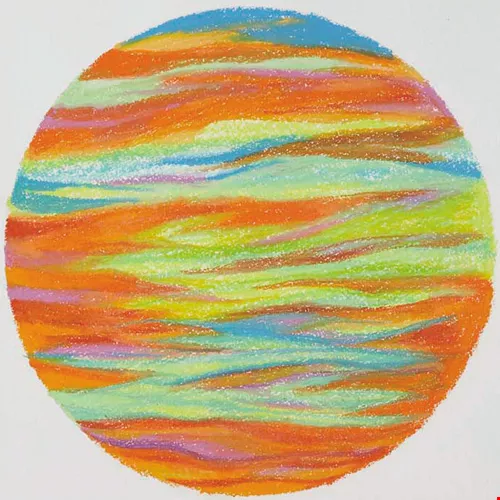
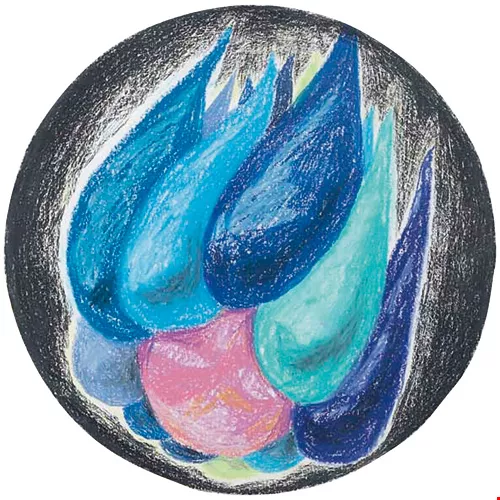
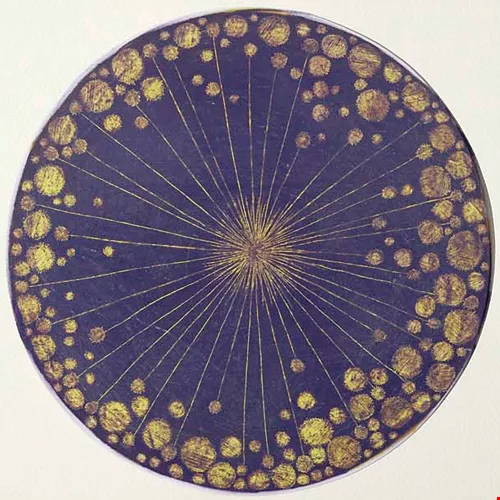
The Caution in Mirror is divided into four chapters that represent the four seasons of Hou's mandala art. A portion of each chapter is devoted to the artwork, while another portion is devoted to text.
One can see the beginnings of Hou's emotional transformation from the chapter titles alone: "First Season: Shutting Myself In, Stilling the Mind, Shocking But True"; "Second Season: Exorcism, Summer Days, Butterfly Candy Stuck on My Face"; "Third Season: Desperately Seeking, First Kiss, between Two Breasts"; "Fourth Season: Magic Flower, Love, Wishes upon my 38th Year." The sense of hope, emerging as if from a cocoon, is palpable.
In terms of the artwork, the images grow progressively more beautiful throughout the course of the book. However, as Professor Soong Wen-li of Fu Jen Catholic University notes in his review, Hou Chun-ming will always be Hou Chun-ming, never able to abandon his sense of self. According to Soong, Hou has not been transformed into the integrated, authentic Self that Jung considered the mark of a truly healed individual. But he has found some kind of balance between an artist who finds beauty in wildness and a rehabilitator of the soul.
Is The Caution in Mirror a collection of art or a glimpse into Hou's psyche? Perhaps the two are not mutually contradictory. Hou points out that these images are not about self-expression or acts of "creativity." However, because they constitute a deeper, more naked self-revelation, they are no less revelatory than his other major works.
Explains Hou, now a father of two: "I've now moved into the third stage of my life. I'm focusing on what I can achieve in my career and how I can truly provide for my family. My mandalas helped me to become a father."
After a late-arriving adolescence and finally becoming a family man at age 40, Hou Chun-ming makes clear that he has now reached maturity. Hou is now a father with responsibilities. How was this father figure gestated and born? Readers will be able to find their own answers within the pages of his new book.
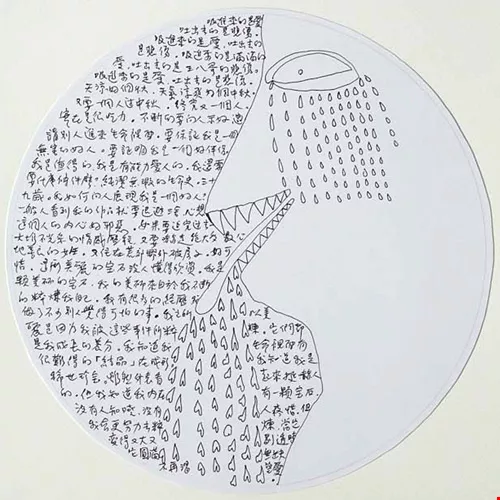
September 11, Yuanli: Bastard
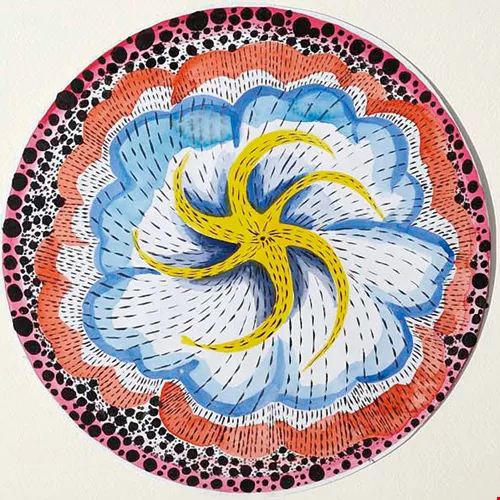
May 22: Don't Go Wandering in the Garden in Spring
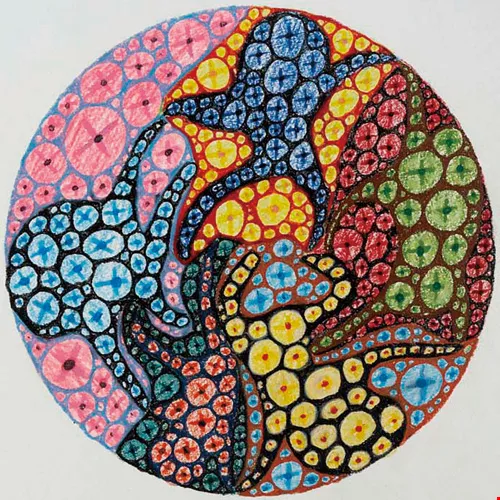
July 11, Sunny, Yuanli
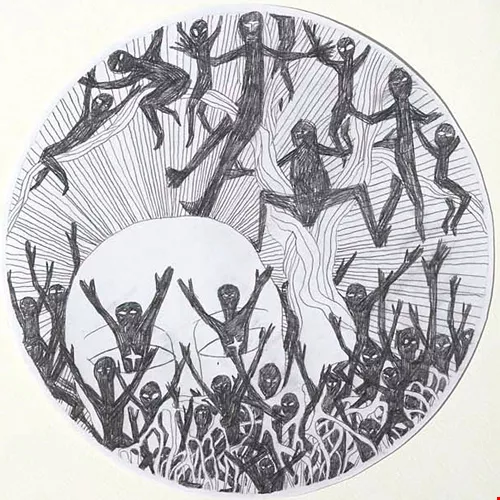
January 3, Mucha: After the Still of Mind
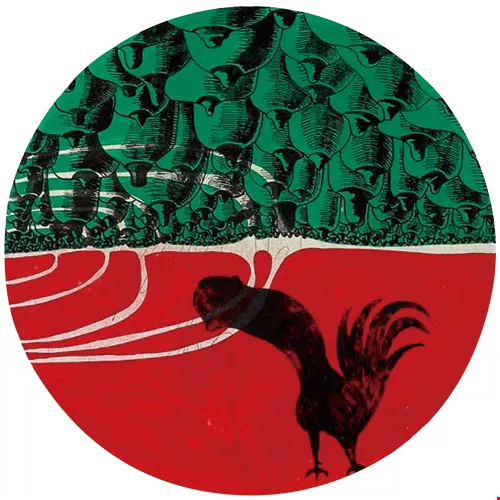
December 19, Mucha: Giant Nipples Small Penis Unable to Harmonize Postal Box on the Street Corner My Beloved One

@List.jpg?w=522&h=410&mode=crop&format=webp&quality=80)


