

Toy figures feature in the childhood memories of many of us; they were good friends of ours as we grew up. But these days, toy figures are no longer just playthings for kids; they’re objects that soothe grownup souls as well as collectibles to be placed proudly on display.
In Taiwan, the word gongzai (“figure” or “figurine”) has become a trendy term as well as a corporate marketing tool. But they’re also objets d’art that have entered the hallowed halls of art museums, and enjoy the adulation of fans. What social significance does the toy figure culture reflect, and how intense is the Taiwanese love for these items?
During the sweltering summer heat, the 9th annual Taipei Toy Festival proves popular. A crowd of people are lined up at the booth of Hong Kong pop toy designer Kenny Wong, awaiting his autograph.
The Taipei Toy Festival, sponsored by Monster Taipei, saw only 4,000 to 5,000 visits during its initial run in 2003, but the number reached 20,000 to 30,000 this year. The average age of the visitors was between 25 and 30, but children as young as 12 attended too.
Jen Huang, director of Monster Taipei, a company that distributes Japanese and American toys, organized the toy festival with profits from his toy store. At first he intended it to be a one-time-only event; little did he know that the festival would continue to grow, not only receiving wide acclaim from Taiwanese toy figure aficionados, but also attracting designers from Hong Kong, Japan, the US, France, Spain, mainland China and South Korea to come at their own expense to exhibit their work.
“The Taipei Toy Festival has become the most important platform in the Asia-Pacific region for toy figure designers to exchange ideas,” Huang smiles.
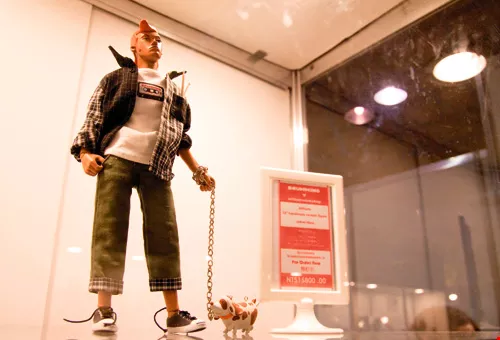
A 12-inch human figurine jointly designed by Mayday drummer Guan You and Hong Kong toy designer William Tsang.
Within a few short years, the word gongzai has become trendy in Taiwan. The word originates from Hong Kong (Cantonese: gungjai), meaning “human figure” or “human-shaped toy.” Taiwan’s toy-making industry has long been strongly influenced by the US, Japan and Hong Kong.
In 1967, Mattel, maker of the Barbie doll, founded the Meining Workshop in Taishan, Taipei County. It was the largest Barbie factory in the world at the time, with a daily output of over 20,000 dolls. These beautiful, trendsetting Barbie dolls were once sought after by many Taiwanese now in their 30s and 40s.
In recent years, Hollywood-made global box-office hits such as Pirates of the Caribbean, Batman, Transformers, Iron Man and Captain America, fueled by aggressive promotion, have given many middle-agers the chance to recapture their childhood dreams, turning old toys, coated with dust, into hot collectibles.
“Among American toys, superheroes and military action figures are the most popular, and the more lifelike the facial expressions, the higher the collecting value,” says Amy Chang, marketing director of Full-Tone Inc., who has over a decade of experience in toy figure brand planning.
To the Taiwanese, long influenced by Japanese anime and manga, characters such as Hello Kitty, Doraemon, Chibi Maruko-chan, and those from One Piece have become household names. Chang notes that after all this time, Japanese toy figure culture is still going strong; indeed, it’s been exported to other countries. Every year comics, cartoons and movies stir up demand for toy figures, and the cuter the character, the more it’s liked and the better it sells.
The urban vinyl style of toy figures got their start in Hong Kong. In 1999, Hong Kong designer Michael Lau released a limited edition of 1,000 12-inch figurines of characters from his “Gardener” comic strip, whose images now adorn young people’s skateboards, surfboards, basketballs and other sporting equipment, and are featured on tattoos, earrings and fashion accessories, driving urban pop culture fashion in Hong Kong.
Taiwan has blended the powers of American, Japanese and Hong Kong toy figure culture, but because it requires a great deal of funding to develop figure molds and create a brand, local designers still have plenty of room for improvement. Promising domestic toy figure designers at present include cartoonist Ah Tui, toy designer Lin Mengzhi (known as Captain Butter), and record-cover designer Akibo Lee, all of whose toy figure designs are highly popular.
To study figure design, lifelong toy enthusiast Lin Mengzhi majored in sculpture at the National Taiwan University of Arts. After graduation, based on his figure design portfolio he was hired by Taiwan’s largest toy manufacturer, Glory Innovations, where he helped manufacture Japanese cartoon characters. But he grew tired of drawing established characters like Doraemon, Hello Kitty and Chibi Maruko-chan day in and day out, so once he was acquainted with the toy figure manufacturing process, he decided to quit. Now he incorporates his beloved hamburger shapes into his figure designs, in hopes that he, as a Taiwanese domestic designer, can also create local brands.
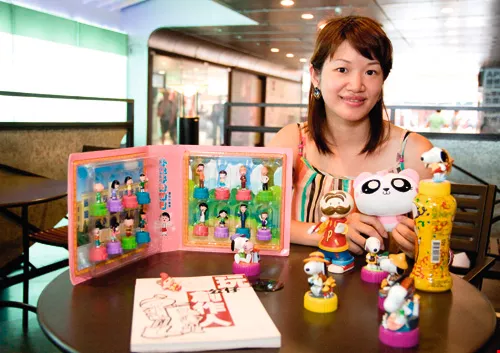
Amy Chang planned the Snoopy Taiwan and Chibi Maruko-chan rubber stamp series for 7-Eleven, which helped initiate the points card exchange craze.
But it’s not easy to create a brand of figures. The round-eyed, red-helmeted, football-carrying Tatung Baby, introduced by the venerable Tatung Company in 1969, has been called Taiwan’s first themed doll figure, but despite its popularity, it didn’t become as fashionable as Barbie dolls, Hello Kitty or Doraemon, which have been favorites for three or four decades. One reason is that Taiwan’s figure culture had not come to the fore at that time.
In 2003, convenience store chains introduced points cards that could be exchanged for toy figures. This activity triggered a collecting craze, and the number of fans quickly grew, allowing Taiwan’s toy figure culture to bloom. But the figures offered for exchange were always from the world of classic Japanese and American cartoon characters.
Open-chan is one of the few examples of a successful domestic figure brand, rising from a corporate spokes-figure to become Taiwan’s first international-class cartoon character. Currently there are seven members in Open-chan’s family, which is now Taiwan’s most popular cartoon family.
In 2005, to test the market waters and cultivate its brand image, 7-Eleven launched a campaign in which stickers were offered when people bought drinks and bread. The stickers could be exchanged for Open-chan cell-phone accessories. The result: the stock of 300,000 accessories was sold out in a week.
According to Aqua Chen, assistant professor of product design at Ming Chuan University, most American and Japanese toy figures developed first from comics and animated cartoons. They had to be given expressions, personalities and stories before associated products could be derived from them and market longevity maintained. But 7-Eleven did the opposite: they first introduced the commercial toy figure. Only after the figure received consumer recognition and the company’s brand recognition was enhanced did they develop a family and stories. For the future, animated cartoons are planned, starring these characters. This is a much more maverick approach.
After the toy figure culture caught on, playing with figures gradually transcended the “idle pleasure” stage. Many collectors wanted to seek fond recollections of yore from such toys, seeing them as sustenance for the spirit.
After getting a job and gaining economic independence, Lin Mengzhi started to collect figurines methodically.
“I didn’t collect them for their value, but to improve my mood. I believe there’s a childlike innocence within the heart of every adult,” he laughs.
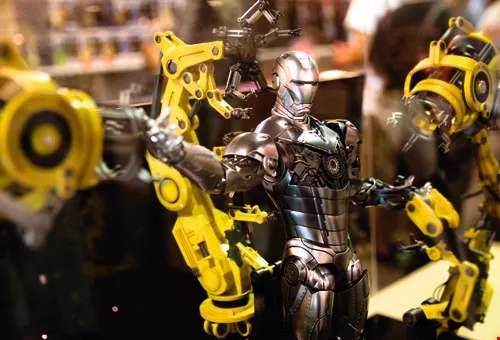
Toy figures inspired by the movie Iron Man.
Besides having therapeutic value, toy figures also have value as collectibles. This is especially the case with the work of well-known overseas designers, in which limited numbers and a richer sense of design increase collectability and value.
According to Aqua Chen, there are two major factors that increase the value of a figure. One is limited availability: when figures are seen as works of art instead of commodities, and their uniqueness is stressed, collectors can show off how their tastes differ from others. The other is the renown of the designer: if the cooperation of a trendy brand or celebrity is involved, the value skyrockets.
Lin Mengzhi cites the example of Japanese artist Yoshitomo Nara’s new work Mori Girl. Each one was priced at NT$150,000, and the number available in Taiwan was limited to just 10. The figure was scheduled to launch in Taiwan on July 25, but a month before that date all 10 figures had been ordered by collectors.
Four or five years ago, Jen Huang bought one of Nara’s Little Wanderer figures for just over NT$40,000, bearing Nara’s autograph. He recently saw one just like it fetch NT$600,000 in an online auction, over 11 times the original price he paid.
News stories can also increase collecting value. Chen has found in her research that the most popular and highest valued figures in Europe and North America are those depicting skulls, fierce expressions or villains. For instance, toy building block company Lego once sold toy figures based on Osama bin Laden, George W. Bush, Kim Jong Il, and Muammar Gaddafi. The political satire is palpable.
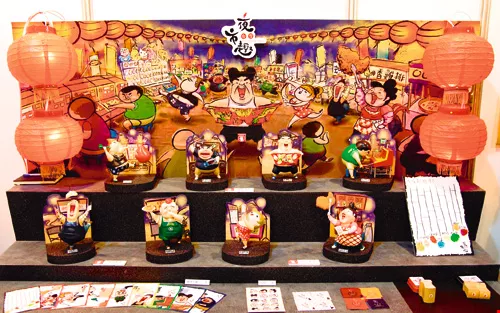
For this year’s Taipei Toy Festival, Tainan University of Technology student Wang Yu’an and her classmates designed figures with Taiwan’s night-market food and games as the theme, giving them a very Taiwanese flavor.
Having been energized by American and Japanese pop culture, Taiwan’s current domestic toy figure market can be divided into two major categories: commercial figures and designer figures.
Let’s look at the example of 7-Eleven’s Open-chan family. Since the family’s launch in 2005, an average of 200 to 300 products featuring the characters have been released each year, over 1,000 to date. Liu Hongzheng, manager of 7-Eleven’s Integrated Marketing Department, notes that items featuring the Open-chan family include giveaways, beverages, theme parks, vacation resorts and more. In 2011 they brought in a revenue of NT$1.2 billion; this year’s revenue is expected to exceed NT$1.5 billion, thanks to high-unit-priced products to be released by China Motor Corporation and Nissan Taiwan: Open-chan images will be printed on electric motorcycles and on the March car.
Moreover, designer figures have risen from the status of toys and commercial products to that of sculptures, paintings and other works of art, their value heightened through art auctions.
Inspired by personal experience, Kenny Wong created a cute, blonde, blue-eyed, pouting little girl figure, Molly, in 2006. In a few short years Molly became famous overseas, attracting crowds of fans in Taiwan, Singapore and Malaysia. This year Wong came to Taiwan to take part in the toy festival. While here, he exhibited nearly 20 Molly oil paintings, all of which sold out immediately.
Chang says that toy figures designed by Takashi Murakami, Yoshitomo Nara, Yayoi Kusama, Michael Lau and KAWS are recognized as works of art. For example, toy figures by Hong Kong designer Michael Lau were at first chiefly sold in Japanese department stores and fashion boutiques. In 2007, at the invitation of Nike, he designed a limited series of figures of sports stars such as NBA player Kobe Bryant, Brazilian footballer Ronaldinho and world tennis champion Roger Federer; these were sold exclusively at a Nike charity auction, increasing Lau’s standing and value of his works.
As the figure culture has developed, the materials, themes, forms and styles involved have become increasingly diverse. The range extends from rag dolls and plush toys to Gundam and Transformers.
Says Joe Lin, head of Mr. Joe Model Studio, Japanese toy giant Bandai has sold tens of thousands of Gundam model kits over the past 32 years. But they differ from traditional figures in that you assemble Gundam models yourself, earning you a greater sense of accomplishment. Moreover, recently they include fashion elements like plastic stick-on gems and decals, helping beautify the exterior form.
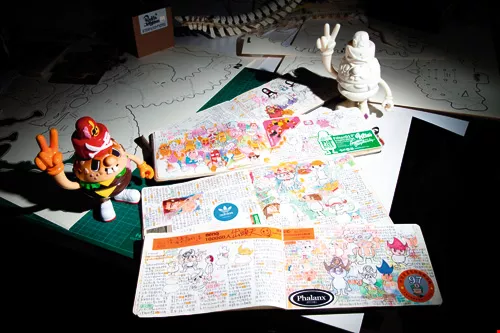
Accustomed to sketching every day in his notebook, designer Captain Butter spent nearly three years conceptualizing the Pirate Hamburger figure.
Taipei Department of Cultural Affairs commissioner Liu Wei-gong, who studies pop culture, says that toy figures are in fact a microcosm of culture and a sign of the times. Adults who don’t want to grow up can return to the happy feeling of childhood by playing with figures.
Liu doesn’t collect figures, but he once had a special fondness for capsule toys. To relieve the daily stress of schoolwork while studying in Germany, he developed the habit of going to the store to buy capsule toys. Even though he didn’t know what was inside, he derived a sense of fun from this activity.
“I’d shake them, trying to guess what’s inside, and buy three to five at a time. It was a lot of fun,” says Liu. Behind these capsule toys was a series of stories, and buying a capsule toy was like buying the memories connected to it. It also gave him a deeper connection with Germany.
Liu once received a capsule toy sent by a student, inside of which was a wrinkle-browed To-Fu Oyako figure. This showed him that there was a new generation of loners. “Nowadays,” he observes, “many children grow up in single-parent families or without siblings, and need toys to create their own worlds.”
To designers and collectors, toy figures are not just kids’ playthings. The fantasy worlds built through unbounded creativity are the most fascinating allure of these figures!
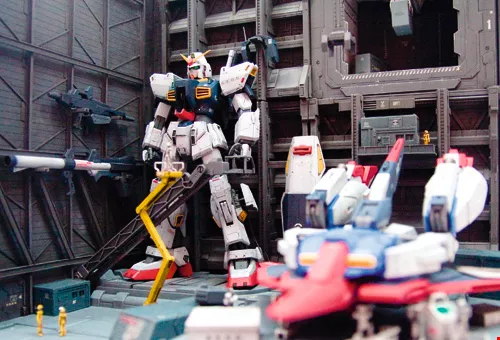
The work by Gundam model guru Joe Lin that won him the championship for the Taiwan region at the 2011 Gunpla Builders World Cup.
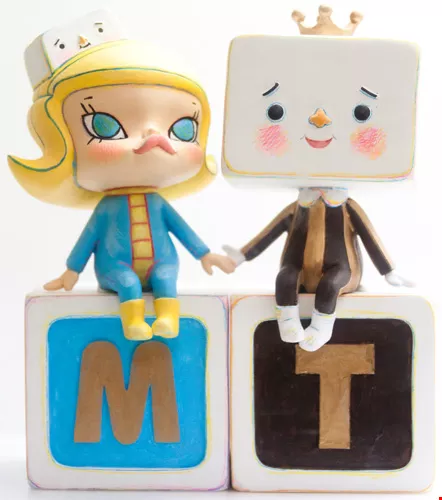
Molly, created by Hong Kong pop toy designer Kenny Wong, and To-Fu Oyaku, by Japanese designer Shinichiro Kitai (“Shin”), have many fans throughout Southeast Asia.
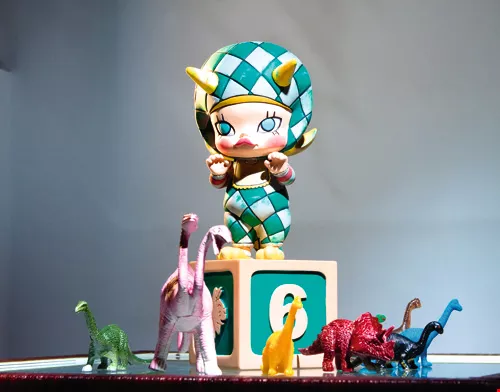
The Molly figure, created by Hong Kong designer Kenny Wong, wears a dinosaur-shaped costume for a lovable appearance.
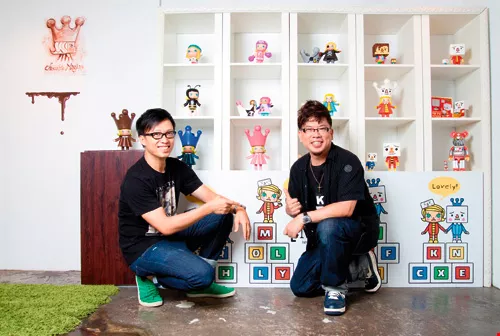
Forty-something Kenny Wong (left) and Jen Huang are children at heart, immersing themselves in a fantasy world of toy figures.


@List.jpg?w=522&h=410&mode=crop&format=webp&quality=80)
@List.jpg?w=522&h=410&mode=crop&format=webp&quality=80)


