A Touch of Green Brings History to Life
Lee Hsiang-ting / photos Hsu Pei-hung,Television Service / tr. by Geof Aberhart
January 2016


Once again, literary giant Kenneth Pai and Golden-Bell-winning director Tsao Jui-yuan have joined forces, this time bringing Pai’s short story “A Touch of Green,” from his collection Taipei People, to the screen as a television series. Telling a tale of tragic love among military men and families, the series brings to vivid life the Taiwan of the period from 1945 to 1981.
As Taiwan’s television industry seems to be hanging by a thread, Tsao is going against the flow to produce more elaborate, epic television dramas in the hopes that such productions will help elevate the industry and showcase Taiwan’s creativity to the rest of the Chinese-speaking world.
Classic literature is a wellspring of potential for drama.
Kenneth Pai’s stories are often focused on women, contrasting these women against the background of their times. Taipei People is no exception. An anthology of 14 short stories, Taipei People familiarizes readers with the many faces of Taiwanese society both before and after World War II. The book was also the only Taiwanese work to make it to the top 20 in Yazhou Zhoukan’s “100 Great Works of 20th-Century Chinese Fiction.”
“A Touch of Green,” for example, tells the tale of three military wives either side of WWII, exploring their magnificent loves that tragically could not stand up against the turbulent times in which they lived. As their pilot husbands are changed by the devastation of war, these ladies remain both strong and fragile.
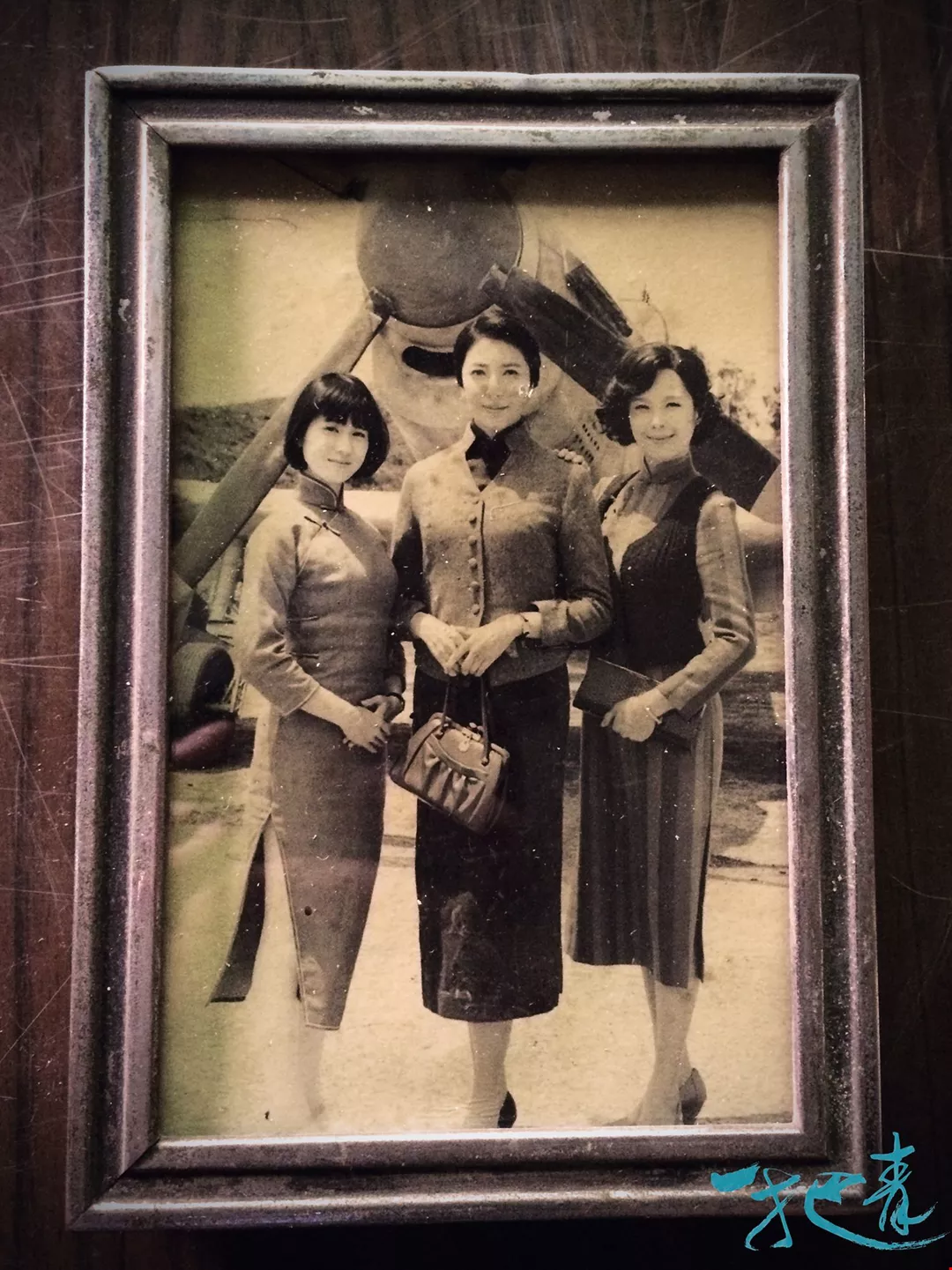
A Touch of Green’s three leading ladies—from left to right, Lien Yu-han, Cheryl Yang, and Tien Hsin—bring the toughness and tenacity of Kenneth Pai’s characters to life. (courtesy of Tsaoism Production)
In dialogue with the past
The TV version of “A Touch of Green” marks director Tsao Jui-yuan’s third time adapting one of Pai’s works, following 2003’s Crystal Boys and 2005’s Love’s Lone Flower. A firm believer in television’s unique appeal to audiences, Tsao says he shot the series A Touch of Green in the hopes of creating a dialogue with the past through images.
“I feel like that is an era on the brink of saying a permanent farewell to us. Those people are all in their 80s and 90s now, and soon they’ll no longer be around to make us think about that time, nor will they be able to influence our society any more. But to people like me, born in the 1950s and 60s, that time has absolutely had a huge impact on us, and I wanted to bring the period back to life to show the younger generation this piece of our history.”
Initially Tsao had planned to shoot the story as a movie. He even had a script all ready; all that was left was the problem of funding. Then someone suggested that he adapt it into a television series. At the time, the Ministry of Culture was offering subsidies for selected series shot in high definition, and so Tsao set to retooling his adaptation for television, ultimately earning one of the subsidies and securing a place on the Public Television Service schedule.
“Whether it turned out to be a movie or a television series,” says Tsao, “what was most important to me was the story itself. That said, a 30-part series allows us to give a more detailed depiction of the times and tell the tale more thoroughly.” In fact, editing the story for TV helped Tsao craft a more comprehensive work.
Tsao feels that Taiwan should move toward more high-quality series in order for the industry to really take off. This would also give production staff more opportunities to continue refining their skills. “Films are like fireworks, but a series can penetrate the culture more thoroughly,” says Tsao. “HBO has continued making series in recent years that have attracted big-name directors and stars while also telling more human, more touching stories.”
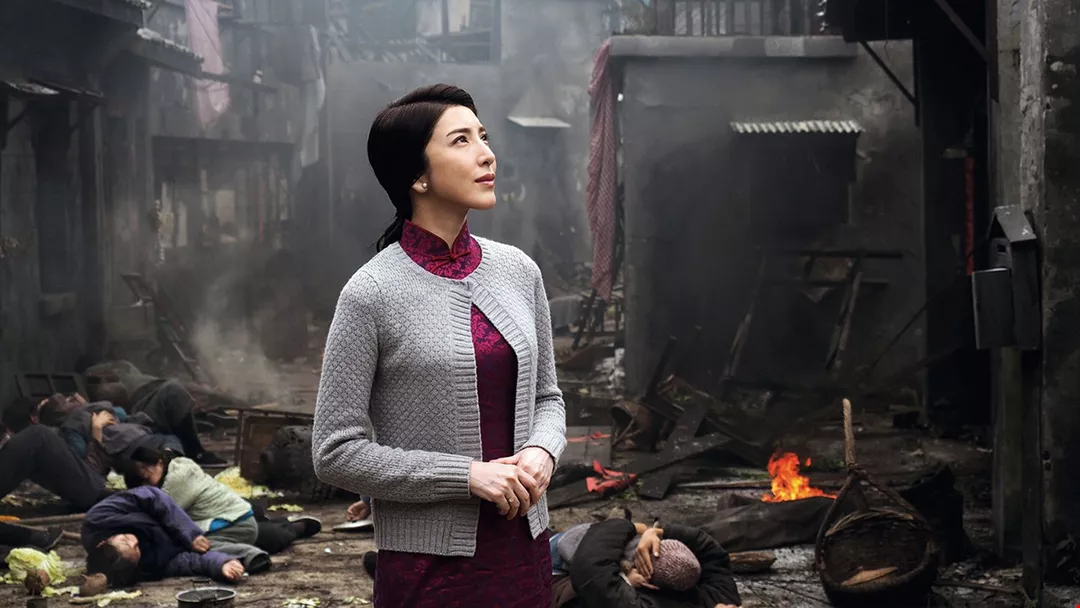
A Touch of Green aims not only to present realistic characters, but also to accurately portray the era in which the story is set.
The trouble with realism
Aspiring to show to the Chinese-speaking world just what Taiwan is capable of in terms of television production, Tsao and screenwriter Huang Shiming were committed to one idea: everything had to be perfect. That commitment to perfection turned out to be the biggest problem the pair faced in the course of production.
Just getting the script finished took two and a half years. From the original story, a mere 10,141 Chinese characters in length, they crafted a 450,000-character script across 837 scenes, having to consider every detail down to what people ate and drank. Field research for such details was less than easy.
Information on military dependents’ villages in China at the time proved particularly challenging for Huang. “For what air-force wives thought and felt, we had to rely on fragmentary information from diaries and stories from their children. Only with a lot of cross-checking could we be sure we were being truthful to the period.”
The vast majority of records from wartime are from the male perspective, leaving Huang to piece together the underlying emotions of the time. He does emphasize, though, that everything in the script is built on the spirit of Pai’s original work, simply aiming to create greater tension between characters.
Chinese literature frequently focuses on linguistic flow over fine details, but when adapting such works for the screen, there are some details that can’t be so easily glossed over. Sometimes things need to be extrapolated and extrapolated again. To this end, Tsao constantly reminded Huang to “not be too ostentatious, too literary, or too highfalutin’,” which was the biggest challenge for Huang considering his tremendous respect for Pai and his works.
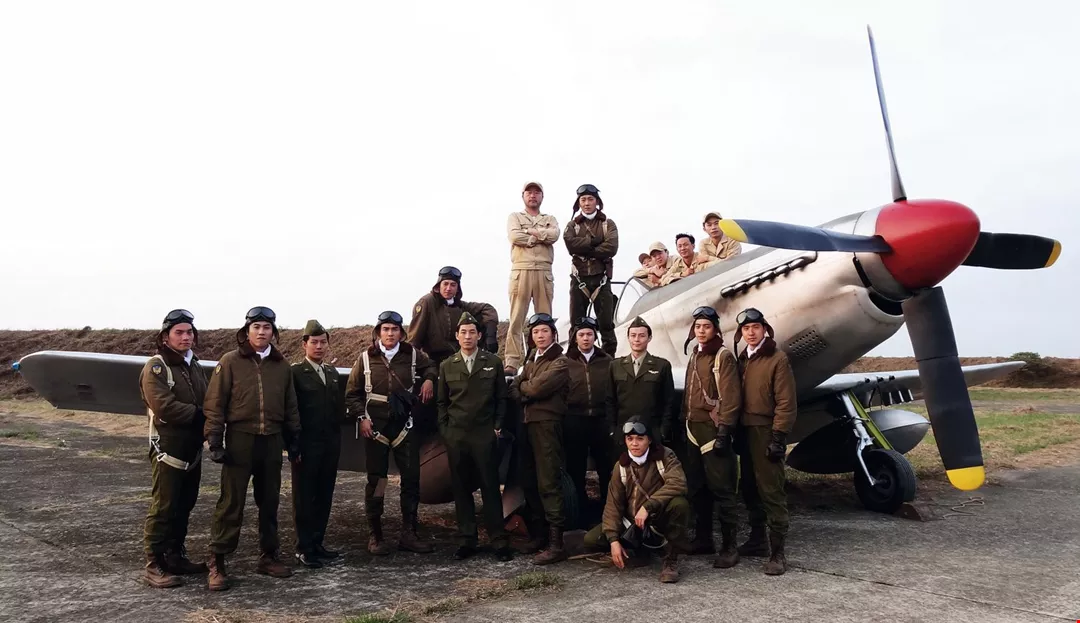
The production team insisted on shooting as much as possible in Taiwan, even building two hangers and two full-size replica fighter planes for the series.
Paying the price for perfection
Getting the resources for period pieces is difficult given the current scale of the Taiwanese television industry. Sets and props need to be developed from scratch, and in the case of A Touch of Green, the air-force theme simply made things even harder.
For authenticity’s sake, the production team had to set up two aircraft hangars and build two full-size replica fighter planes. “We might not be able to shoot sweeping, epic scenes,” Tsao told the team, “but if we get every little stitch on the clothing and every little detail on the props absolutely perfect, those little details will accumulate. If we stick to that, we’ll make something spectacular.”
Although the production received NT$60 million in subsidies from the Ministry of Culture, more than three years of preproduction work caused costs to escalate to over NT$180 million, leaving quite the shortfall. Even a few days before shooting began, Tsao reveals, the finances were still not all locked in. The troubles they faced are a microcosm of the television industry in Taiwan as a whole, and thinking back on it still gives Tsao chills.
“Finding the funding for this really gave me a sense of the depressing situation this industry is in. Everyone wants to buy up Korean and Chinese dramas, but meanwhile we couldn’t find the money we needed. Some people suggested we shrink down the scope of the project, but I was utterly unwilling to compromise on quality. If we didn’t make the show, we would be in breach of our contract with the Ministry of Culture and would be liable for at least NT$30 million. But if we just charged onward, we might lose even more, so we were really between a rock and a hard place.”
Fortunately, an entrepreneur stepped in near the last second with a large cash injection, and while not all the expenses were covered, they were at least able to get started with shooting.
Over the seven-plus-month shooting schedule, Tsao simultaneously took on the roles of director, producer, and executive producer. This just added to the pressure, to the point where on several occasions Tsao wasn’t sure he’d be able to make it through. “We had a total of nearly 900 scenes to shoot, and every day we didn’t shoot we lost at least NT$200,000, so we followed a ten days on, one day off schedule. Fortunately we did have support from the military and our CGI team, but even so we were still hard up for money. Meanwhile the crew and actors would be out all day shooting under the blistering sun, so much so that I barely even want to go out into the sun again for a good year now that we’re done.”
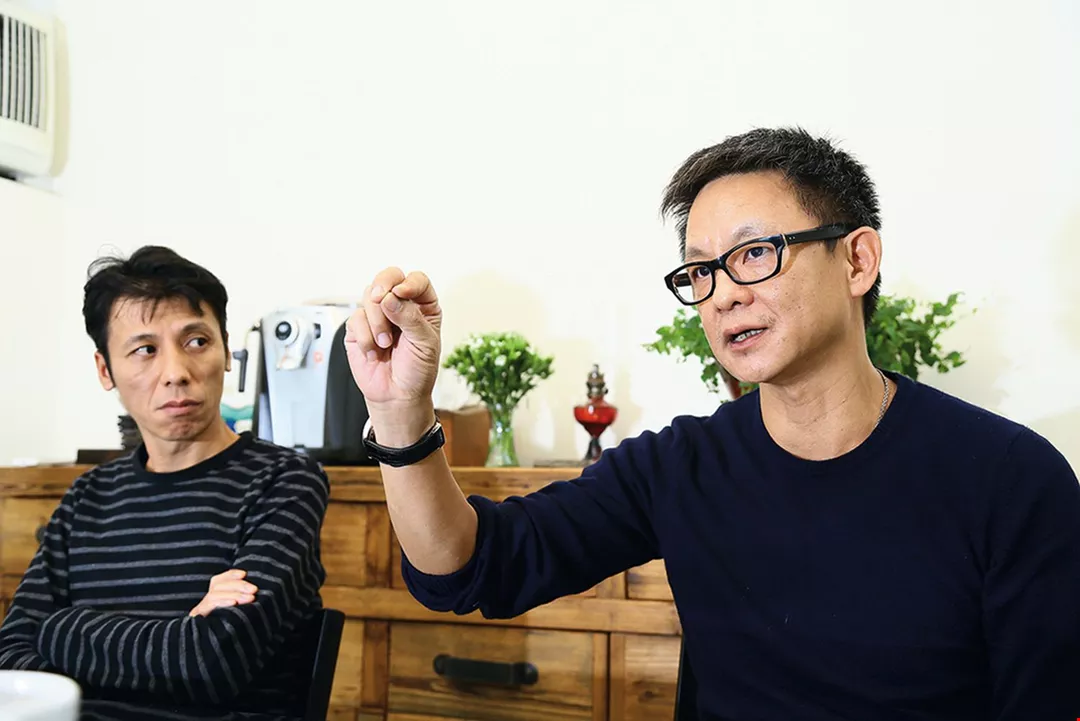
Golden-Bell-winning director Tsao Jui-yuan (right) says that Taiwan needs a more comprehensive policy toward the television industry, to help the industry prosper through broader cooperation. (photo by Jimmy Lin)
A “made in Taiwan” collaboration
Over 90% of the scenes in A Touch of Green were shot in Taiwan on just under 30 main sets with over 300 speaking actors and 2,000 extras. Two hundred professionals were involved in postproduction work, with 700 animated scenes and 600 CGI shots. Despite these massive numbers, Tsao was determined to have as much as possible done in Taiwan, and this insistence earned him the help of a number of people across the industry.
“At the moment, if you want to get anything like this done in Taiwan, it has to be a collaborative effort,” says Tsao, grateful for the help he received. Yan Zhenqin, who took on the responsibility of supervising the computerized special effects, led a group of young people as they tried to find ways to create massive scenes of flying and combat on a tight budget. The end result, though, was world class.
The National Applied Research Laboratories’ National Center for High-Performance Computing also lent a hand with postproduction, a milestone in such cross-sector cooperation. From Life of Pi to The Assassin, Taiwan’s postproduction capabilities have slowly been coming to the fore, and the NCHPC has produced a number of talented professionals on the digital animation computing side.
“If the NT$60 million from the Ministry of Culture is enough to give a group of young people experience in the full postproduction process while also exposing the younger generation to that important period in history, then it’s money well spent,” says Tsao with genuine emotion.
Previously Korean dramas like Winter Sonata and Autumn in my Heart swept through Asia, showcasing how far Korean television had come and helping kickstart the so-called “Korean Wave.” Similarly, Japan’s elegant roman-fleuve dramas have earned no small number of followers in the Chinese-speaking world. Now, even corporate hotshots like Alibaba’s Jack Ma are seeing the potential soft power in the television industry and investing heavily in it, cultivating a new generation of directors and screenwriters. All of this is testament to the massive cultural power of television.
“We don’t want to just make a television show,” says Tsao. “We want this show to make people realize that we really can make things like this.”
A Touch of Green is the result of collaborations across the worlds of the arts and television, proving that Taiwanese television still has some life left in it. We can only wait and see if this show will be able to get society thinking and engage a new generation, giving something to all who watch it.
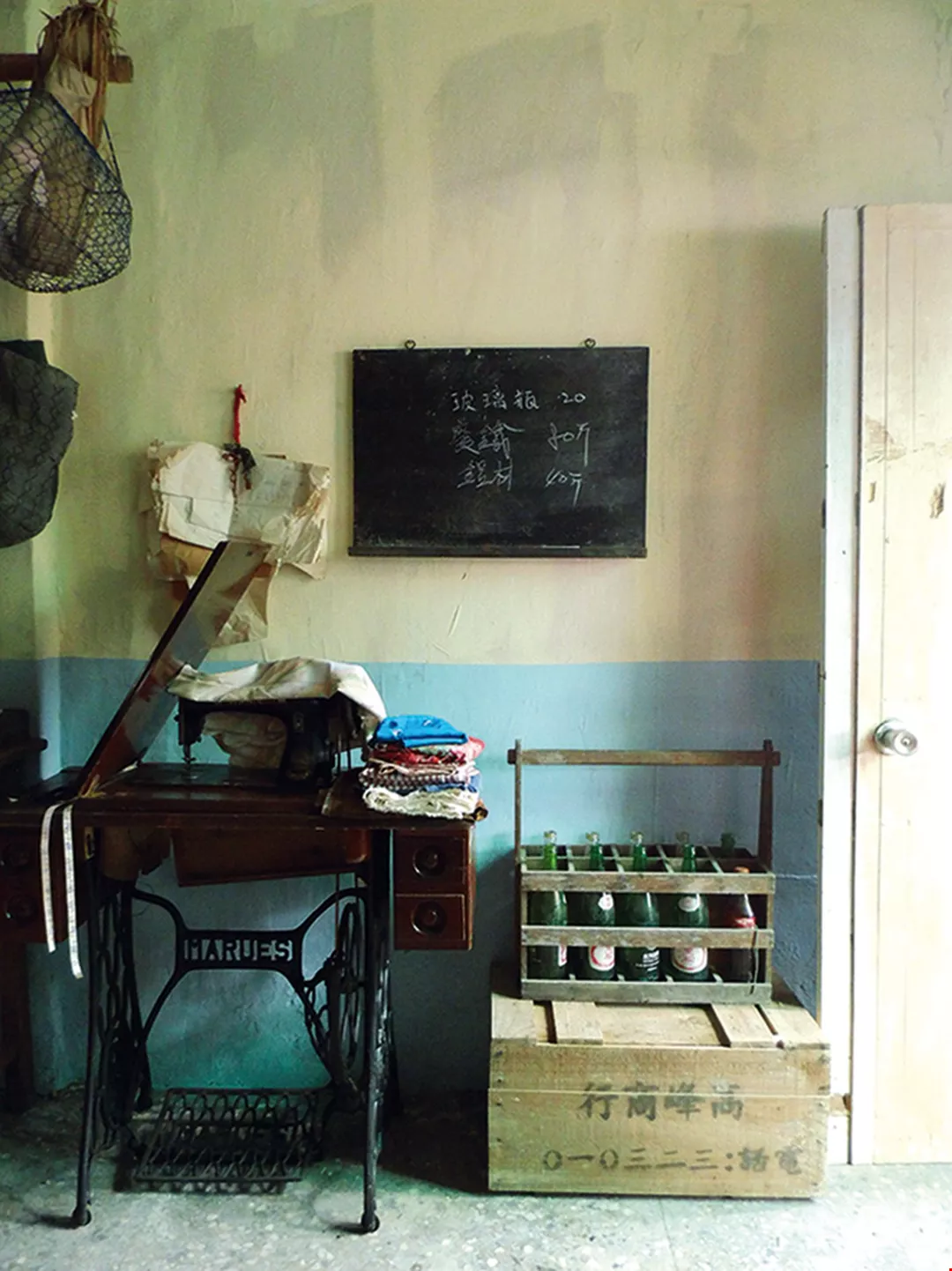
Every detail, from costumes and props to sets, has been meticulously researched for accuracy, resulting in a 30-episode production budget of NT$180 million. (courtesy of Tsaoism Production)
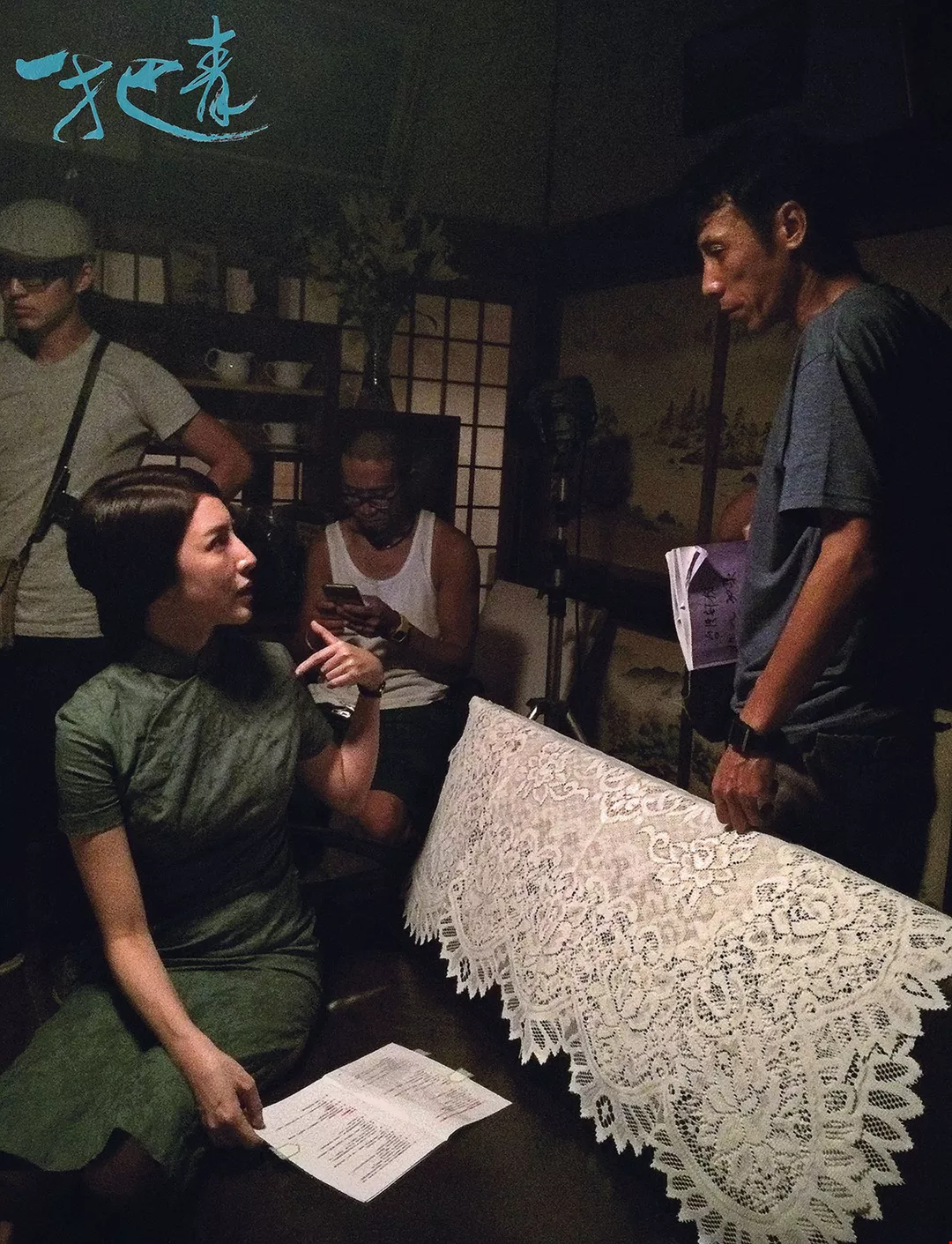
The difficulty of finding historical information on the period meant it took screenwriter Huang Shiming over two and a half years to complete the adaptation of “A Touch of Green.” This photo shows Huang (right) and actress Cheryl Yang in discussion on the set. (courtesy of Tsaoism Production)
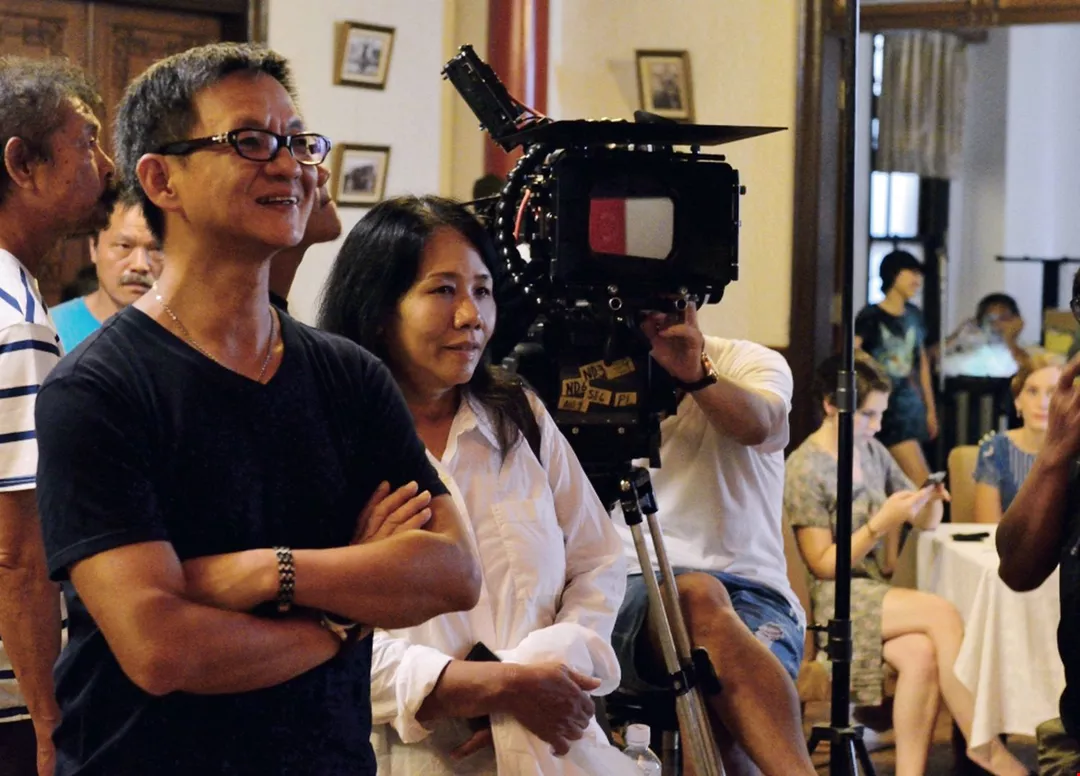
Golden Melody Award winner Chen Xiaoxia (right), once again inspired by Tsao, headed up the production of the musical soundtrack for A Touch of Green.
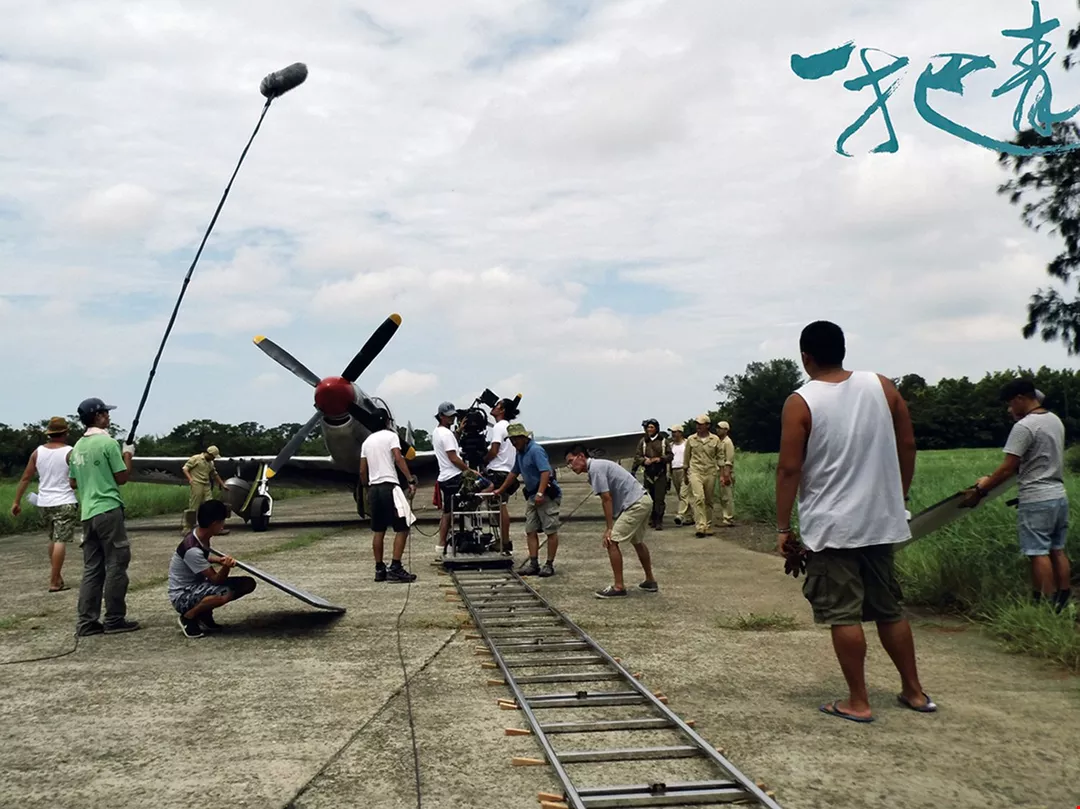
The air force being a major part of the show made shooting A Touch of Green difficult, pushing the team’s limited budget as far as it could go. (courtesy of Tsaoism Production)
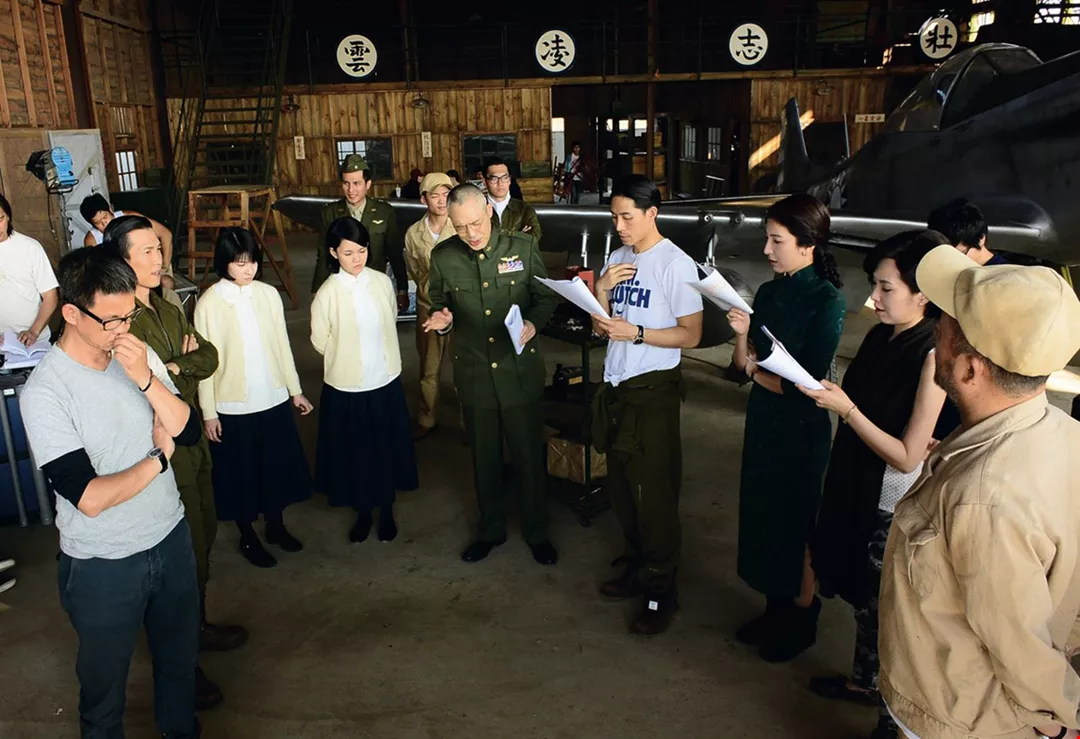
The air force being a major part of the show made shooting A Touch of Green difficult, pushing the team’s limited budget as far as it could go.
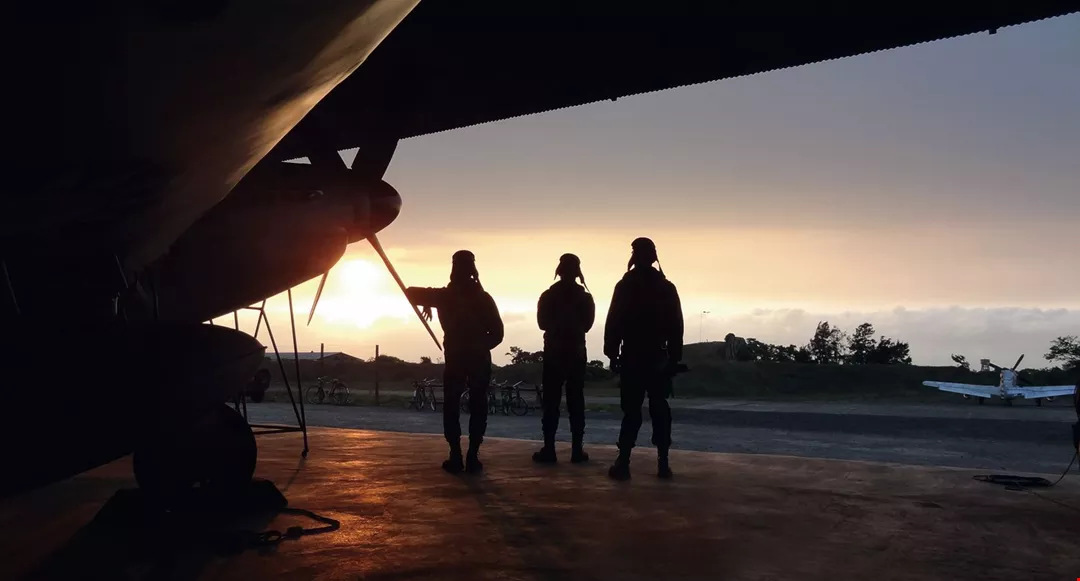
This adaptation of Kenneth Pai’s “A Touch of Green” promises to start a new chapter in Taiwanese television drama.


