Where is the Modern Chinese Architecture?
Theresa Wang / photos Chien Yung-pin / tr. by Mark Halperin
March 1986


A bus full of pilgrims from the countryside pulls up to a building with green-tiled, uplifted eaves and an impressive facade. The pious file out the bus door, greeted by a friendly woman dressed in white. She points to the cross at the top of the building and the characters for "Foreign Language School," clearing up the misunderstanding.
Such mistakes happen often to foreigners and even sometimes to Chinese. Schools, hotels, and sports arenas often display uplifted corners and sloping ridges with yellow tiles. Some people comment that Taipei resembles a city overrun with temples.
Twentieth century cities present a complex and varied face. In the early 1900s, buildings in the U.S. and Europe started to lose the arches, spires, and complex designs that had characterized them for centuries, exhibiting instead a cleaner, simpler look. Change also came to China, as steel-and-concrete construction made its appearance in the big cities, radically altering the cityscape. At times it looked as if only temples were still being built in the traditional palace style with traditional materials.
Other buildings appear to be the result of some sort of cultural compromise. Many hotels, libraries, schools, and even martyrs memorials are constructed with steel and concrete, but wear a Chinese-style roof. The Grand Hotel, on its perch overlooking Taipei, is perhaps the most prominent example. The ambiguity produced by this Chinese-but-not-really architecture leaves many people puzzled and more than a few architects feeling uncomfortable.
"People aren't satisfied with that look any more," says one young architect. The style made its initial appearance in Peking and Nanking in the 1940s, and early on earned the description, "Matching a Western suit with a skullcap." Examples abound in Taipei, and the young architect believes he and his colleagues should be using both the traditional spirit and form in trying to create an architecture fit for the modern age.
"The first thing to do is to get rid of that imperial palace style," says Han Paote, a scholar of traditional architecture. Tradition, in his eyes, should meet two conditions: it should be found everywhere and should be something that all can share. "And those colors in Ming-Ching architecture," he continues. "Far too exaggerated. And unrepresentative of the modesty and humbleness in traditional Chinese thinking."
How can traditional architecture develop a modern descendant? Architects and scholars generally agree that traditional architecture had three special characteristics. First, from a structural perspective, the brackets piled layer by layer to support the eaves and the graceful sweep of the roof created a sense of fullness and lightness. Second, the strict attention paid to etiquette and the comprehensive ethical system of traditional society engendered a respect for balance and uprightness. Third, from a spiritual standpoint, the ancient Chinese cosmic order of yin and yang helped produce a feeling for the use of space.
The first conscious attempt to work in the spirit of traditional Chinese architecture by modern architects dates back to the late 1940s, when I.M. Pei, Chen Ch'i k'uan, and Chang Chao-k'ang designed Tunghai University. Looking back at the project, Chen emphasizes, "What made the place special was its space arrangement. Space on the campus was very lively and fluid. Photographs aren't enough. You have to see people move, see how they use the space."
"Fundamentally speaking though, Tunghai University was built according to the principles of modern architecture," says Chen. The designers sourced locally the stones and red brick for the walls and, preferring to remain faithful to the materials on hand, chose to do without the curved lines of the past. "People criticize the place for not being Chinese, Japanese, or Western. Could this mean what we have here is an example of modern architecture?" asks Chen with a smile.
Wang Ta-hung studied architecture at Cambridge University and later at Harvard under one of the fathers of modern architecture, Walter Gropius. According to Wang Tseng-jung, editor of Chinese Architect, Wang's Sun Yat-sen Memorial Hall represents a successful blend of modern and traditional approaches. The structure has the broad sloping roof of the past, but Western bricks have replaced the encaustic tiles. The roof's corners are uplifted, but in a simple, unadorned way, without exaggeration. The interior retains the spirit of the old courtyard home. Comments one expert, "It's built in the old style, but with creativity and considerable self-expression."
Wang Ta-hung emphasizes simplicity in his work. Simplicity, he says, should be the mark of a developed civilization, and reflects better the Taoist spirit in Chinese culture. He criticizes Ching architecture for being too baroque, even un-Chinese. "The people who use the classical style the best are the Japanese, because they look to the high T'ang for their model."
In the late 1960s and 1970s, as Taiwan's economy took off, tall buildings began springing up all over Taipei. Many bore the marks of Western post-modern architecture, being topped off with miniature steeples and sloping roofs. A reaction against this style recently set in, and roofs tiled in the Chinese style have started to appear on all sorts of multi-storied buildings, including restaurants, hotels, and even barbershops.
Such architecture drew criticism, as architects disparaged using skullcaps." Some dismissed the style as a promotion gimmick, a product of immaturity and undigested outside influences. Others felt their colleagues were too quick and extreme in their reactions and believe foreign influence will inevitably shape the future of Chinese architecture. Says Chen Ch'i-k'uan, "Chinese sometimes are too Sensitive to what is and is not indigenous to Chinese culture. Whether a building is Western or Chinese basically is a matter of degree."
Yet the question of what constitutes a modern Chinese roof continues to inspire considerable debate and criticism. Some fear that such a situation contributes to frustration and defeatism among the architectural community. "It's not really fair," says one learned observer. "Standards in a transition period should be different from those imposed on a mature and developed style."
Public acceptance and approval remains elusive, and few architects are willing to point to a building and call it representative of modern Chinese architecture. Many observers unfortunately seem caught up in a problem over roofs. Does a roof tiled in the traditional fashion make the building Chinese? Does having another style make it modern? The question is irrelevant, in the eyes of many. Says Wang Tseng-jung, "How to create a new architecture which fits the way Chinese today live their lives, that is the crux of the issue."
[Picture Caption]
Roofs shaped like horsebacks, is this modern Chinese architecture? Or Chinese modern architecture? (Buildings photoed are the Ta An Apartments.)
From afar a temple, up close a church.
The layout of Tunghai University campus
This apartment building closely resembles the style of traditional homes in south Taiwan.
Yu Yueh chen's National Taiwan University Agriculture Center employs the traditional approach in its use of tube-like tiles.
The Chinese Cultural City Building (left) and the Grace Baptist Church (right) were designed by Chen Ch'i-k'uan.
The highly ornamental beam brackets of the Grand Hotel (right) produce a completely different effect from the cleanly lined brackets of the Dr. Sun Yat-sen Memorial Hall (left).
The owls on the ridge of the Leofoo Inn (left) and the simple ridge of the Grace Baptist Church (right): different responses to Chinese architectural tradition.
The massive white face of Chiang Kai-shek Memorial Hall evokes a strong sense of modernity.
Red brick and a betel palm--the essential look of the Taiwan countryside.
With its sheer walls and vertical, stripe-like windows, the Academia Sinica's Institute of Ethnology bears the mark of the Taiwanese esthetic.
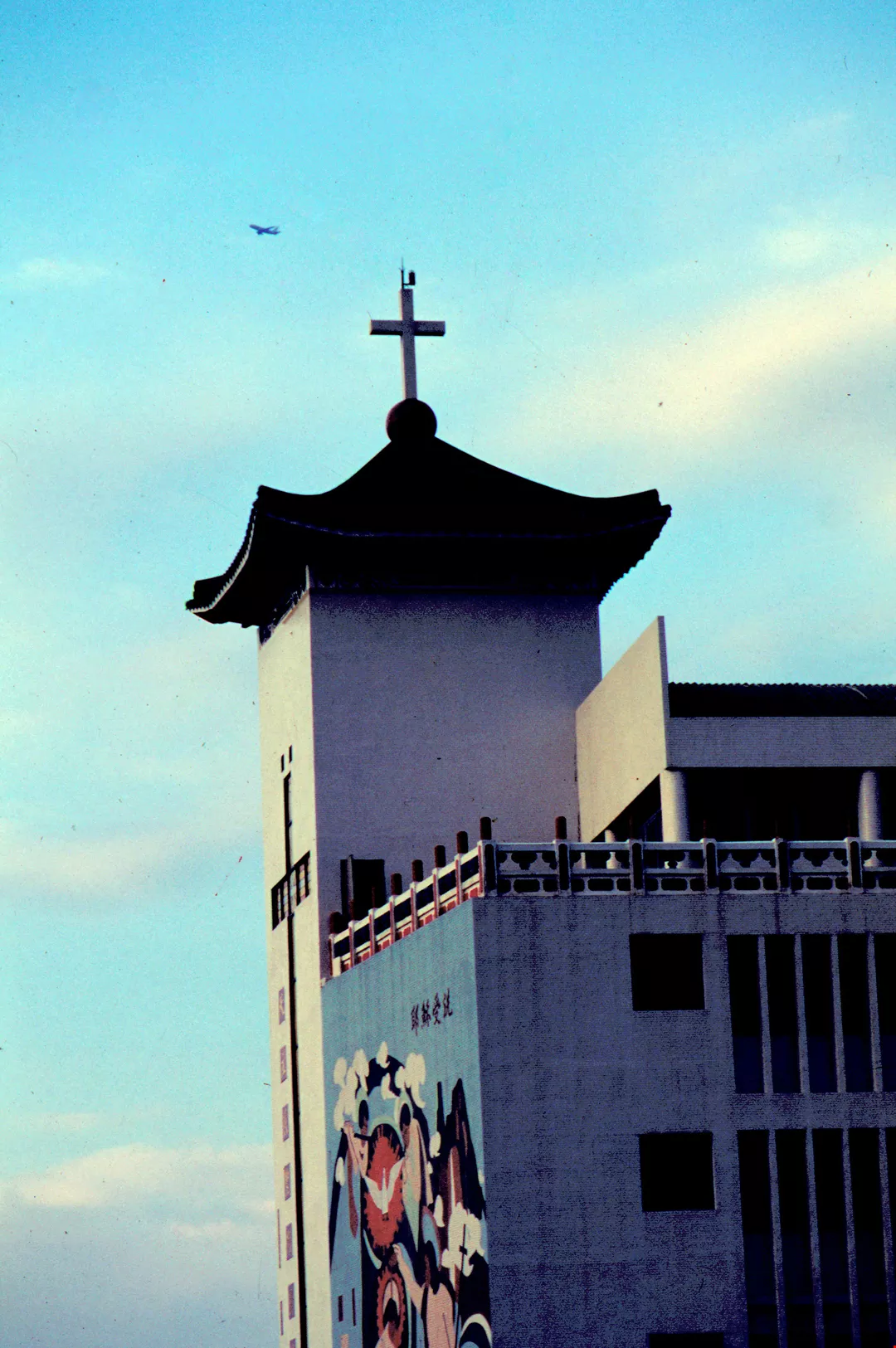
From afar a temple, up close a church.
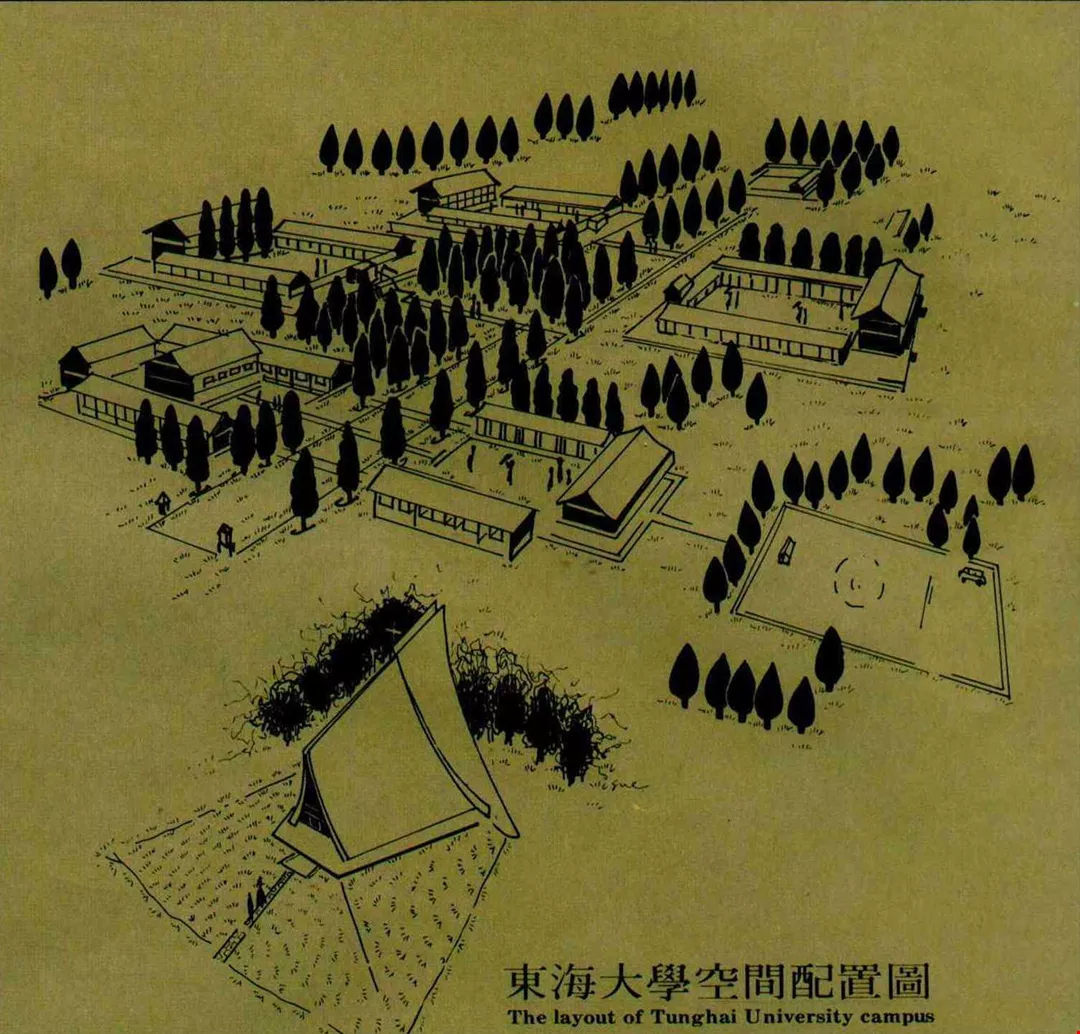
The layout of Tunghai University campus.
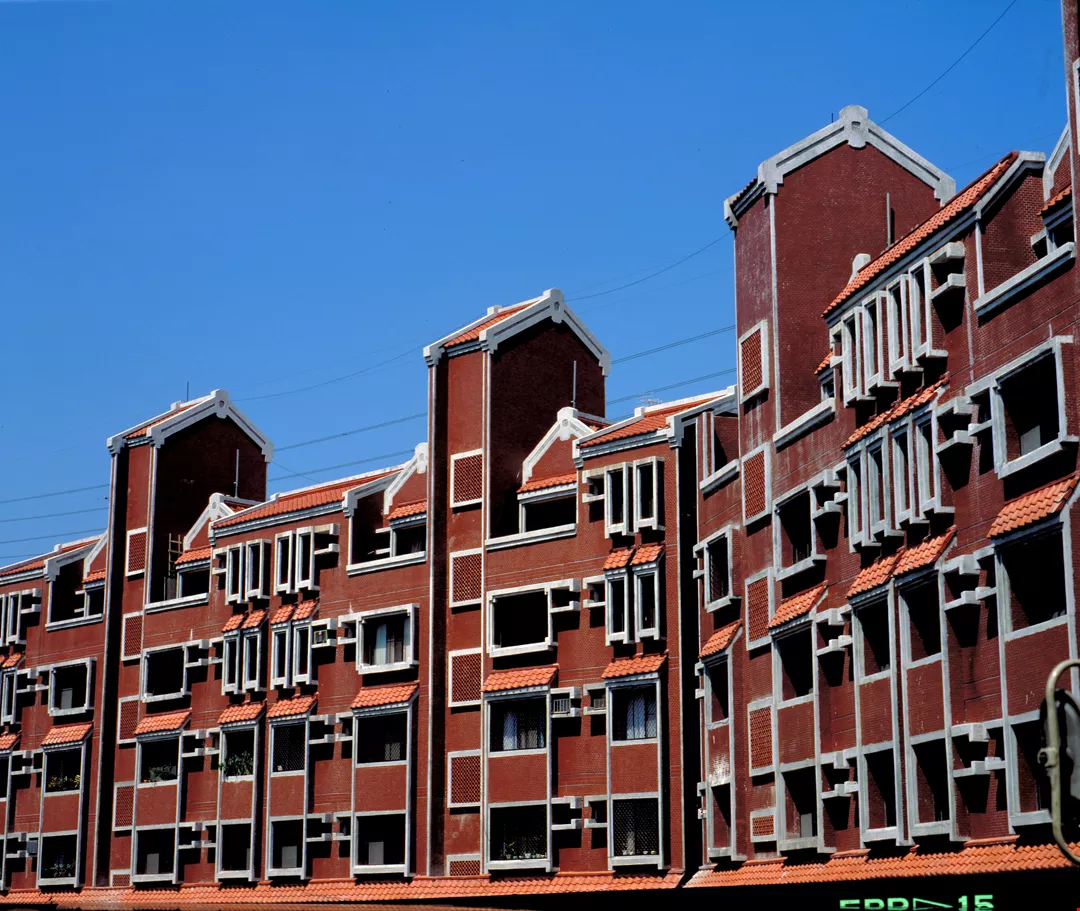
This apartment building closely resembles the style of traditional homes in south Taiwan.

Yu Yueh chen's National Taiwan University Agriculture Center employs the traditional approach in its use of tube-like tiles.
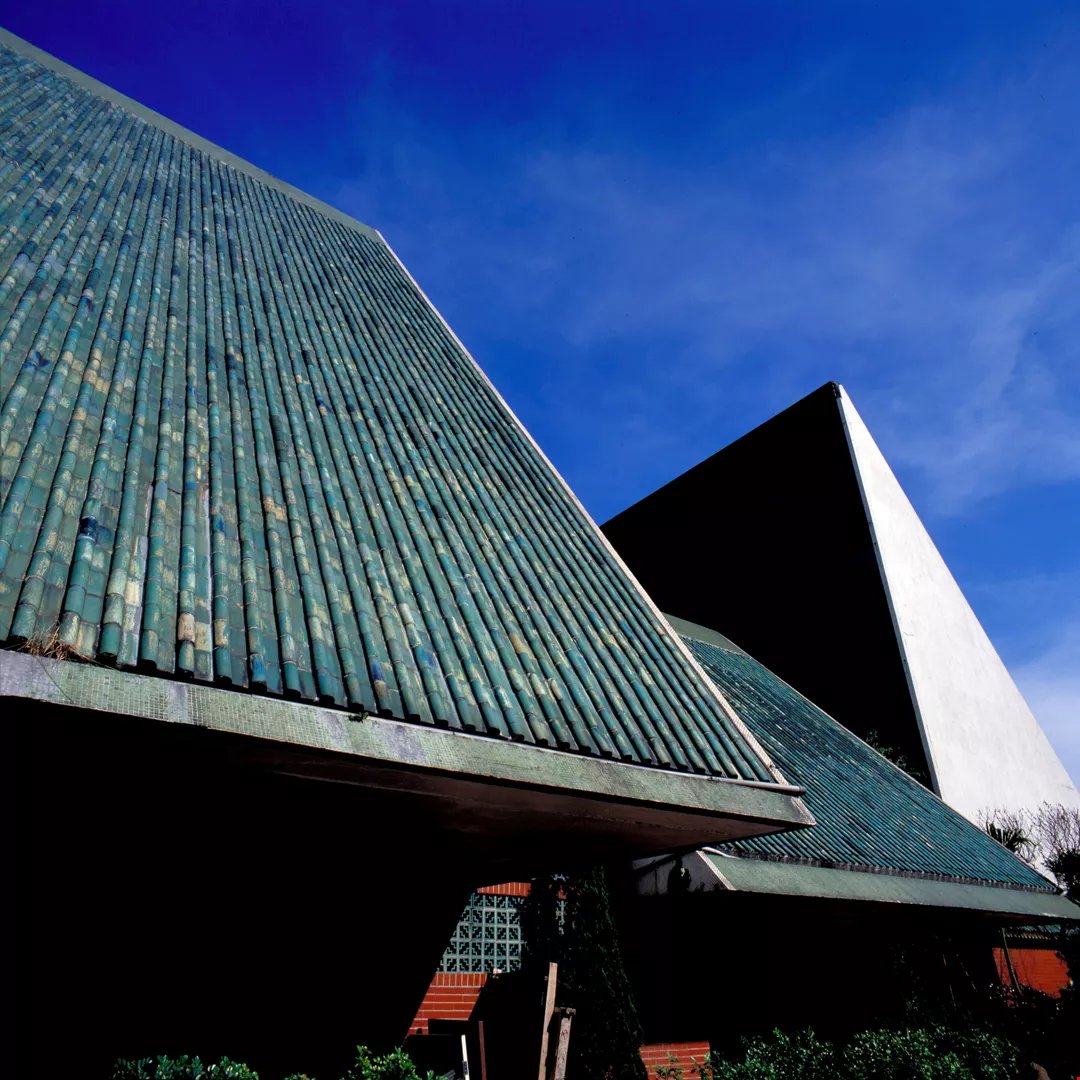
the Grace Baptist Church.
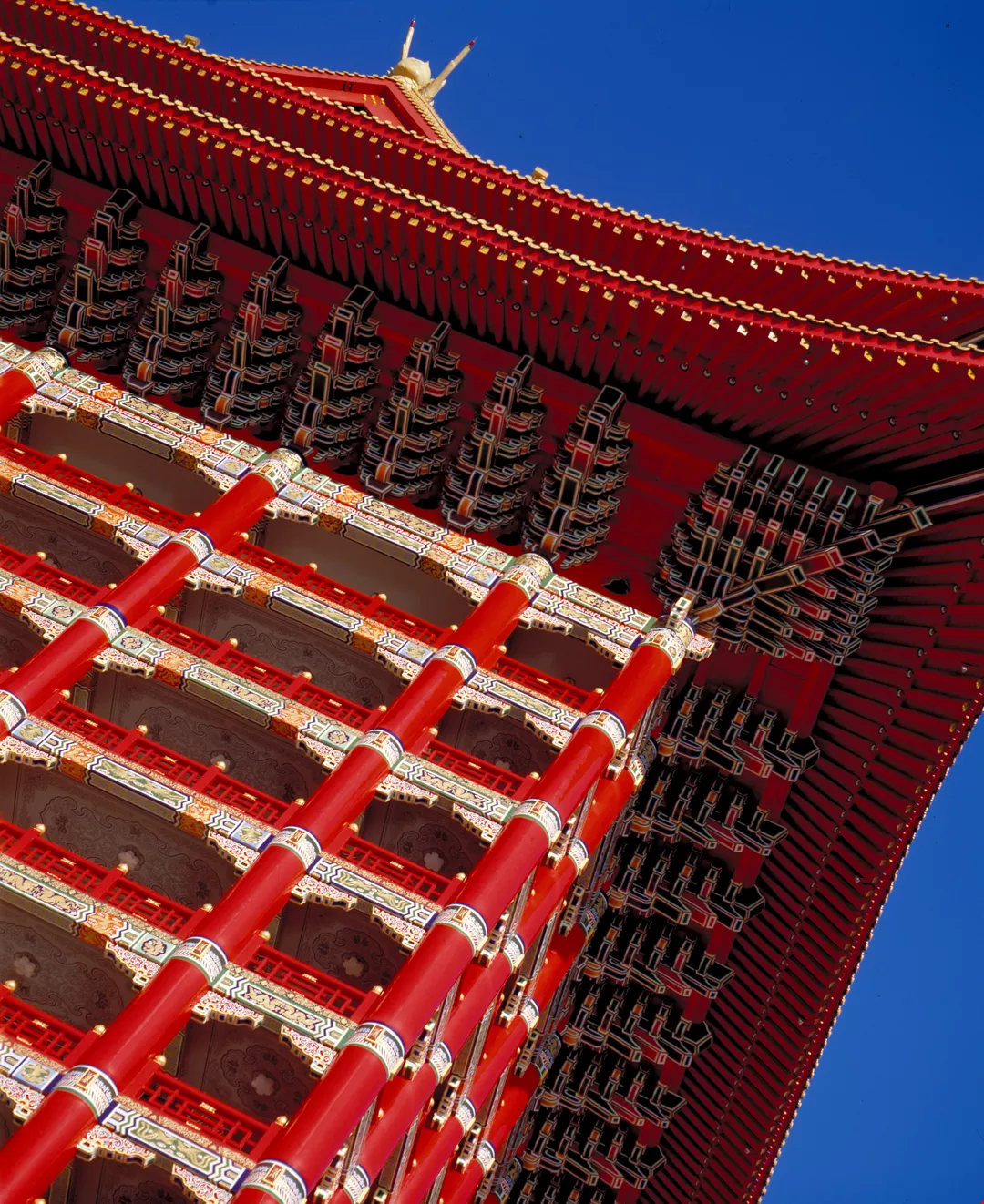
The highly ornamental beam brackets of the Grand Hotel (right) produce a completely different effect from the cleanly lined brackets of the Dr. Sun Yat-sen Memorial Hall (left).
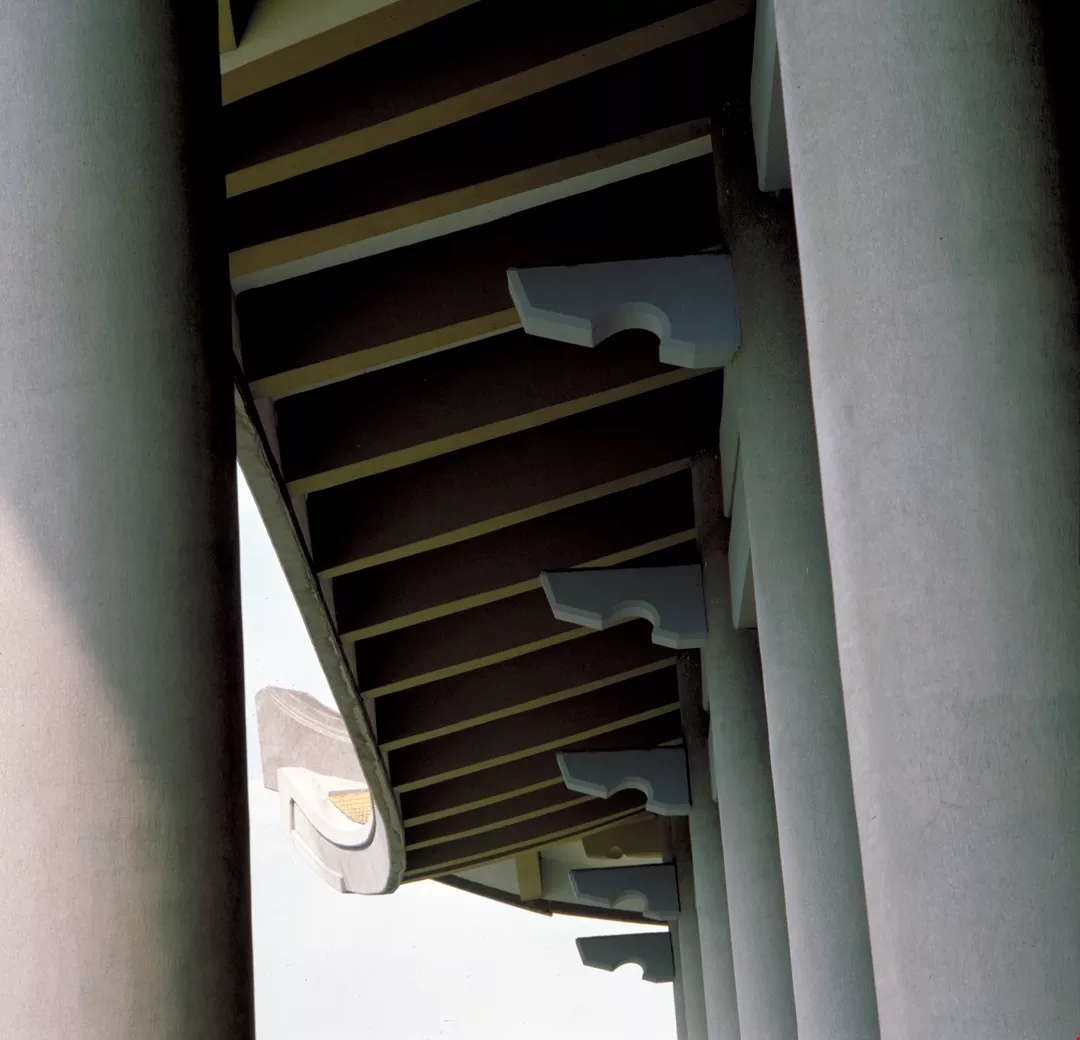
produce a completely different effect from the cleanly lined brackets of the Dr. Sun Yat-sen Memorial Hall (left).
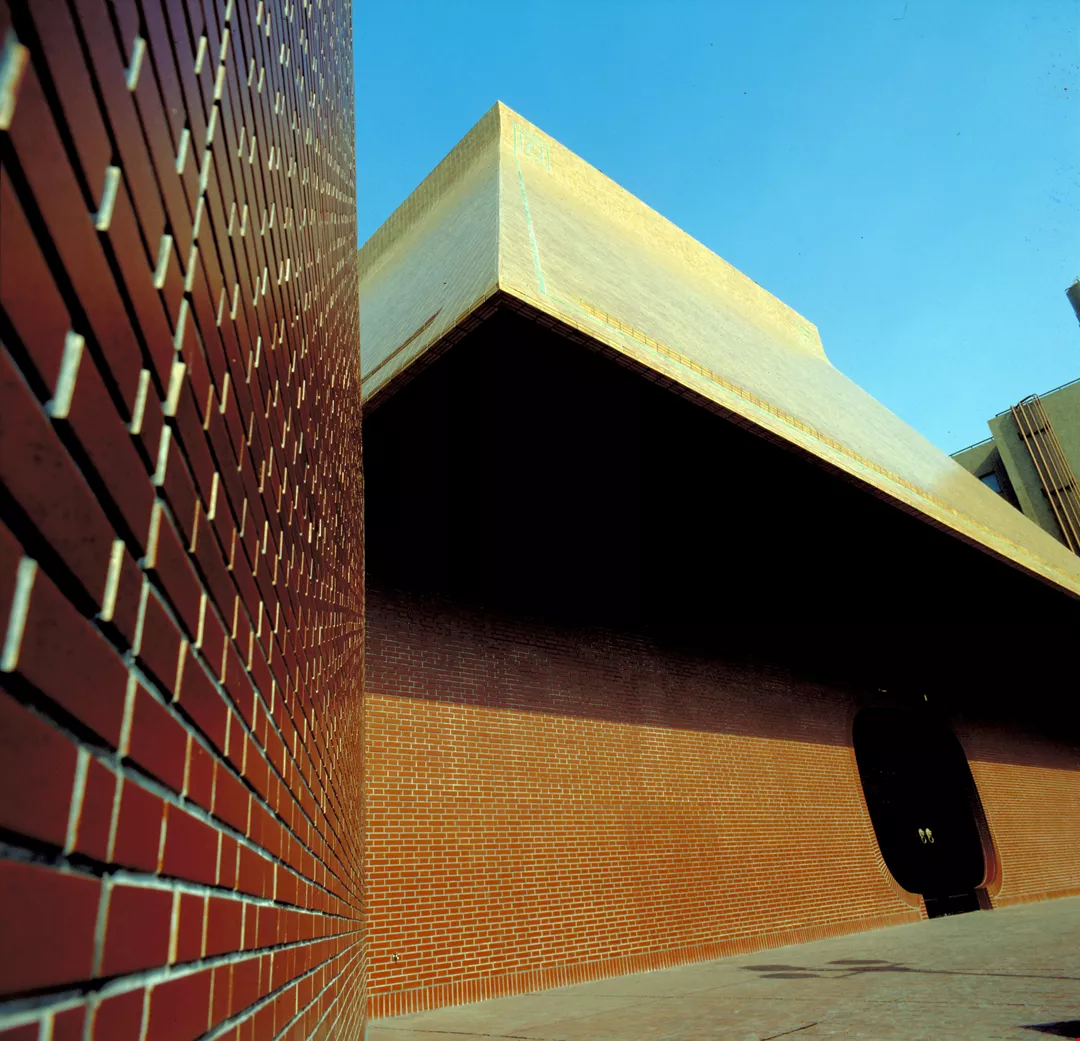
The Chinese Cultural City Building (left) and the Grace Baptist Church (right) were designed by Chen Ch'i-k'uan.
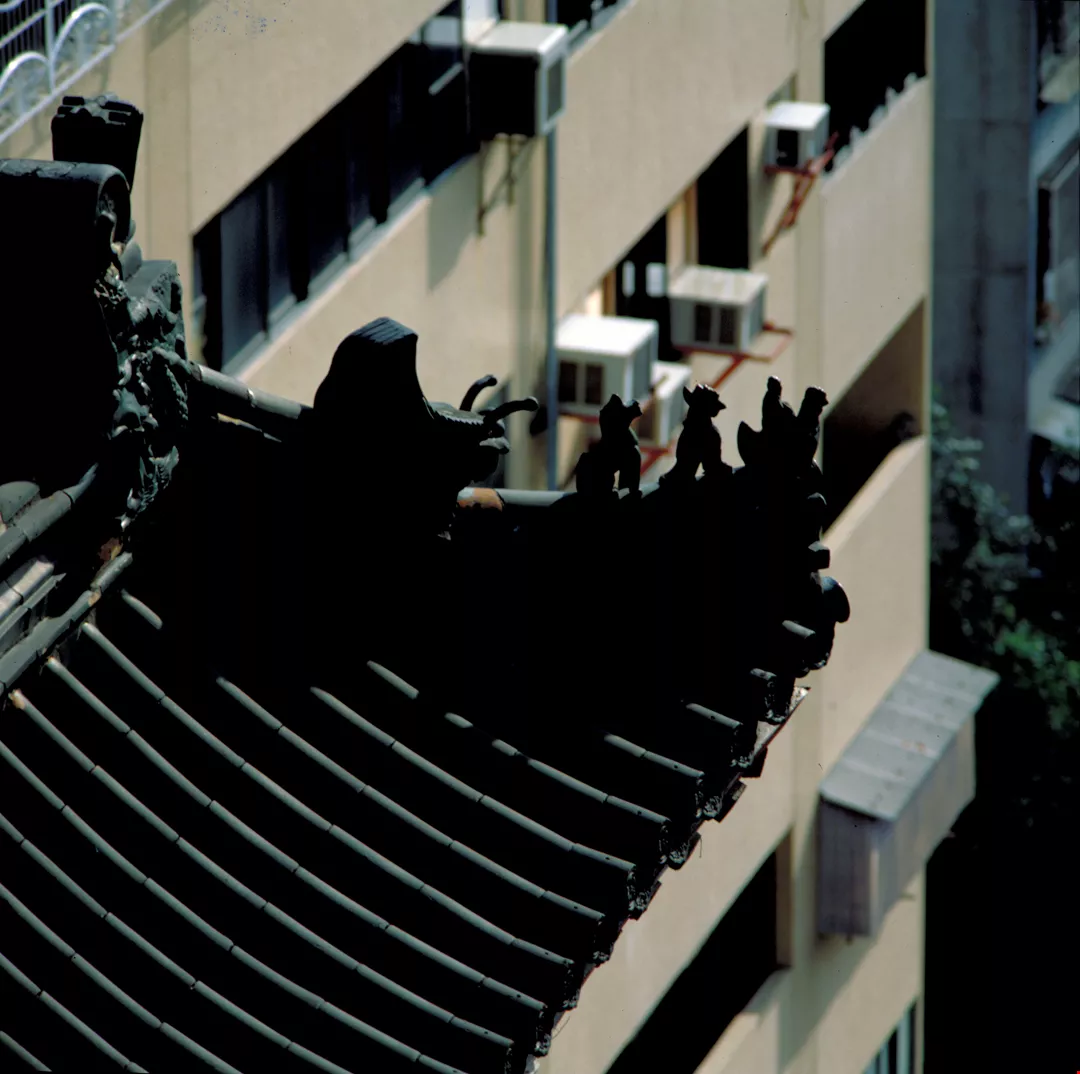
The owls on the ridge of the Leofoo Inn (left) and the simple ridge of the Grace Baptist Church.
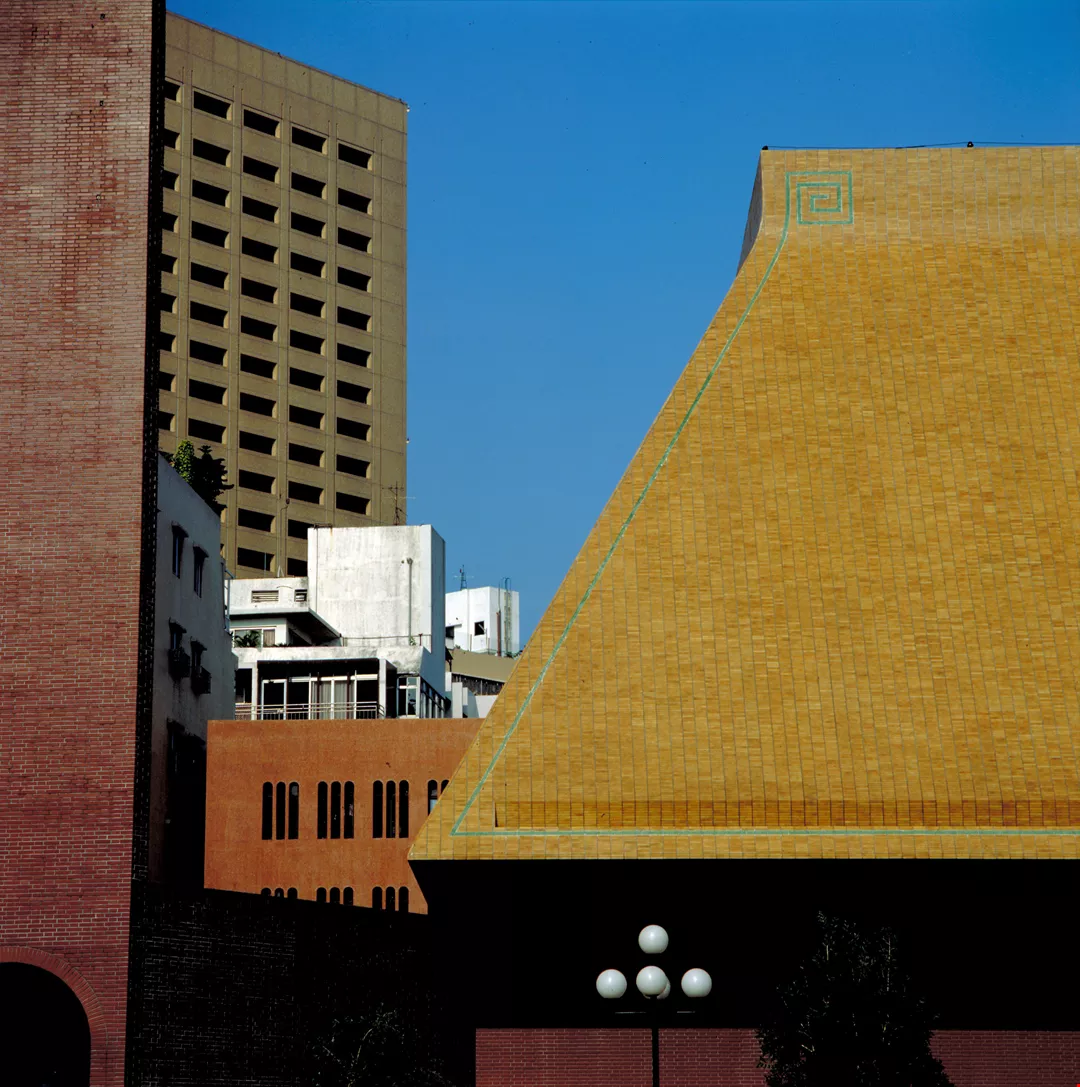
The owls on the ridge of the Leofoo Inn (left) and the simple ridge of the Grace Baptist Church (right): different responses to Chinese architectural tradition.
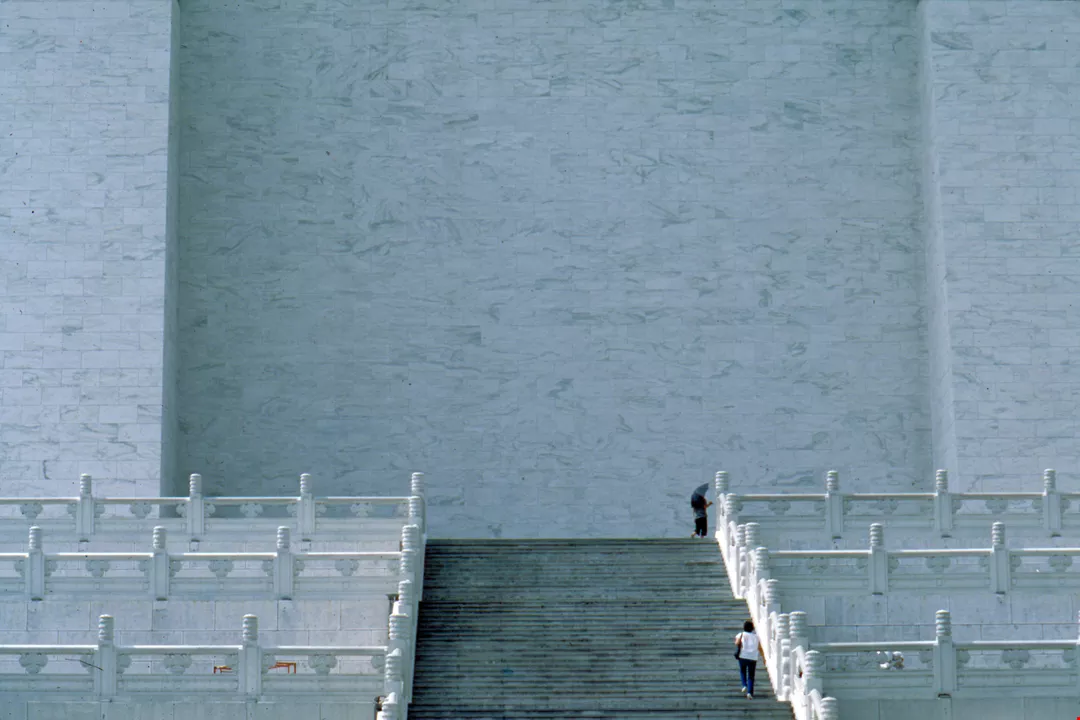
The massive white face of Chiang Kai-shek Memorial Hall evokes a strong sense of modernity.
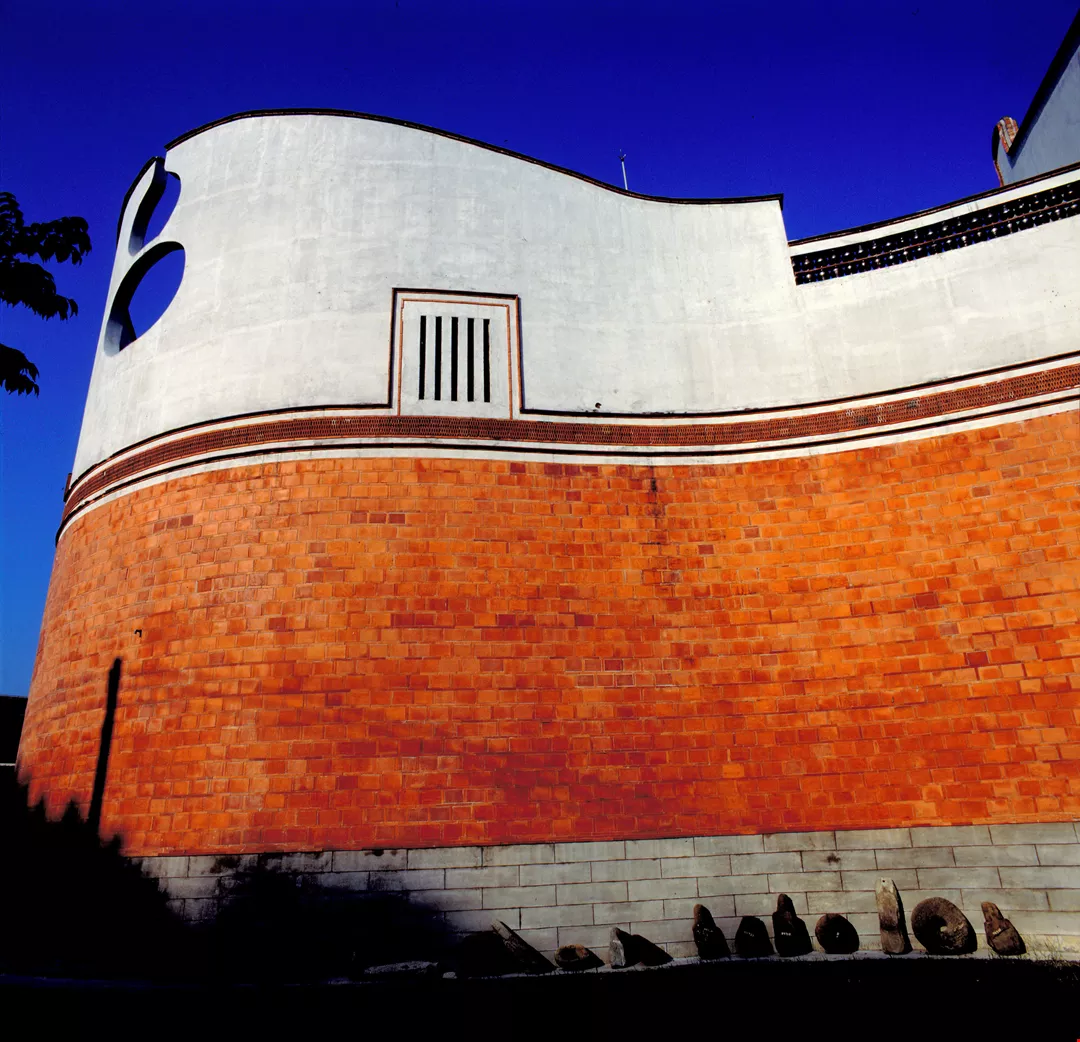
With its sheer walls and vertical, stripe-like windows, the Academia Sinica's Institute of Ethnology bears the mark of the Taiwanese esthetic.
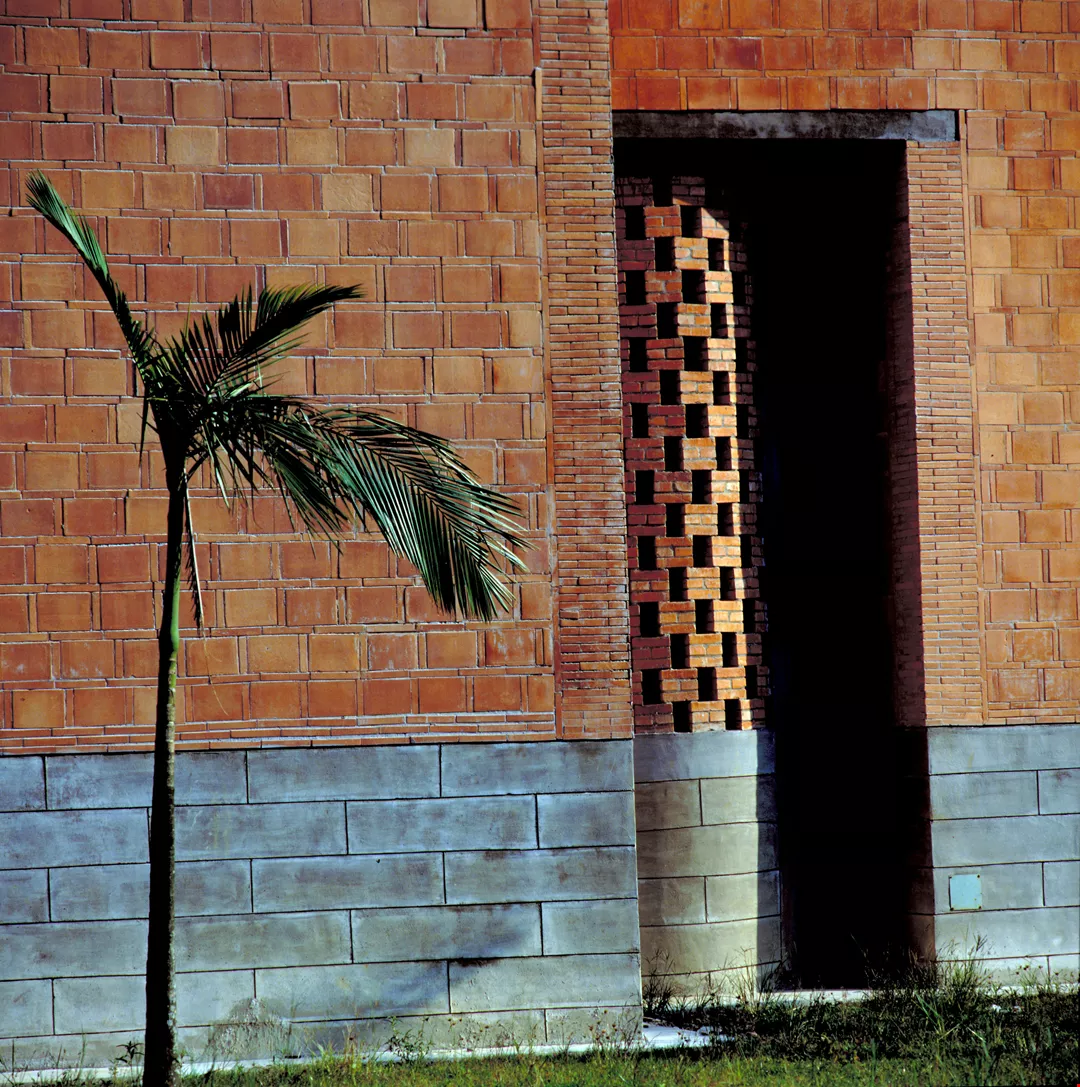
Red brick and a betel palm--the essential look of the Taiwan countryside.

@List.jpg?w=522&h=410&mode=crop&format=webp&quality=80)

@List.jpg?w=522&h=410&mode=crop&format=webp&quality=80)


