Taiwan’s New Generation of Comic Artists Take Up the Torch
Liu Yingfeng / photos Yang Wen-ching / tr. by Geof Aberhart
October 2012


Everyone has their own particular memories of comic books. Ever since comics first appeared in Taiwan in the 1940s, each generation has seen more and more people get involved in making comics and tending the fertile earth of this creative field.
At this year’s Golden Comic Awards, held by the Ministry of Culture, two guests in particular captured everyone’s attention: one was the recipient of a Lifetime Achievement Award, the founder of comic publisher Tongli Publishing and a man who has dedicated some 50 years to the comics industry, Fan Wan-nan; the other, a rising star who won the Best Comic Grand Prize after just over two years in the industry, Ko Ying-mai (under the pen name Cory).
Between them, these two represent the old and new generations of Taiwanese comic-book creators, and in a time where Taiwanese comics face tremendous challenges, each is doing what they can to bring their passion for comics to audiences.
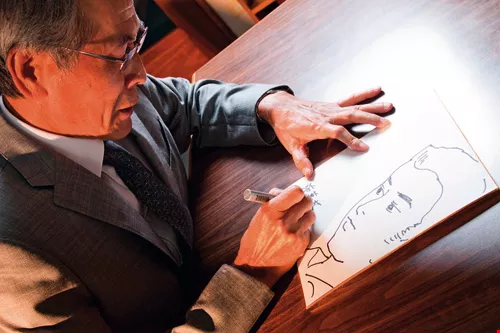
In front of a clear display case containing the autographs of Japanese comic legends Fujiko F. Fujio and Akira Toriyama, Tongli Publishing founder Fan Wan-nan picks up a marker and sketches a character from a boys’ comic on a whiteboard. Despite having put down the pen some 40 years ago to focus on publishing, his drawing skills are as sharp as ever.
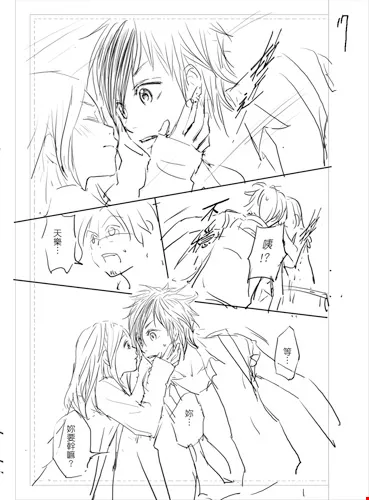
After years of training, Cory has struck a balance in her art between realism and cartoonishness. Cory’s fluidly crafted storyboards illustrate a formidable editing ability rarely seen in Taiwanese comic creators.
A comic-book lover from childhood, at age 17 the Tainan-based Fan joined Yisheng Books, a company that reproduced Japanese comics, as a graphic artist. After spending four or five months carefully crafting reproductions of drawings day in and day out, Fan decided to set out on his own, testing his skills by creating a wuxia comic.
Chen Haihong’s wuxia comic Little Hero, Dragon Whirlwind was sweeping Taiwan at the time, and Fan was caught up in it as well. Under the pseudonym Fan Yinan he submitted his owndrawings to Wenchang Publishing; upon release, this début work was enthusiastically received, and Fan was invited by Wenchang to move to Taipei and work for them.
His second title, Blood Demon, was released in 1963 and defied the tradition of releasing an issue every fortnight or month, instead publishing a new issue every seven to 10 days. It was also Taiwan’s first single-title comic. Wenchang made the most of this breakout success, publishing a hardcover edition of Blood Demon and sparking a revolution in an industry that had only released paperbacks.
Fan went on to publish numerous other wuxia titles, including Ugly Swordsman and Beautiful Swordsman, before his 20th birthday, his prolific output only stopping when he began his military service at age 21. He had intended to return to the drawing board after completing his service, but in the short time he had been gone, the market had shifted dramatically.
In 1966, the government enacted the Sequential Art Publication Guidelines, a law that required publishers to submit comic books to the National Institute for Compilation and Translation for approval before publication. As a result, where at its peak the Taiwanese comic industry was publishing some 4000-plus titles a year, by 1970 only 200 were being submitted for approval. This slide was compounded by comic sales being restricted to book rental stores and a limited number of bookstores. The drop-off in comics in just four years was astonishing.

In the 1990s, Tongli Publishing began providing platforms for local comic artists to get published, including Dragon Youth Comic and Star Girls.
Their sales plummeting, some publishers decided to take advantage of the lax copyright laws of the time and simply submit Japanese works to the authorities. Amongst these publishers was Fan’s boss. Following his example, Fan too became a publisher of comics.
Then, in late 1975, he joined with five other comic artists and two editors to invest a total of NT$1 million to establish Hongguang Publishing, which made a name for itself by publishing the Osamu Tezuka title Black Jack in Taiwan. However, Hongguang’s early days did not exactly go as planned.
As they were duplicating Japanese comics, they had to wait to receive original art from their Japanese partner before they could submit anything for review. However, ships between Tainan and Japan were few and shipping could take two to three months. It wasn’t until their 10th month of operations that they finally began to make some money.
The problems with funding and with obtaining the art work dragged on, so after a bit over a year Fan Wan-nan decided to pull out, selling his shares to a fellow shareholder. In order to make the transition smooth, Fan had to head north and call on people with whom he had worked previously. After arriving in Taipei, Fan learned from friend Lin Guanghua about a store on Linsen North Road that imported Japanese comics and went there to check it out for himself.
Stepping inside and seeing the store brimming with comics got Fan excited, and he asked about their importing schedule, discovering it only took them a week to get new issues. After all of the trouble with Hongguang, Fan had been considering packing it all in, but this store reignited a flame of hope in him.

Taiwanese comic artist Choi Hong-chong and novelist Yu Wo blazed a new cooperative trail in their joint work on the comic 1/2 Prince.
In 1977, Fan returned to the publishing world, setting up Tongli Publishing. Thanks to his previous experiences, Fan thought he was familiar with the market and would be able to speed up the pre-publication review process. He never expected that this new endeavor, too, would be fraught with problems.
The newborn Tongli set about acquiring the rights to several Japanese comic adaptations of world literary classics including The Adventures of Tom Sawyer and The Little Match Girl, the first volley in the company’s battle for recognition. The reasoning behind Fan’s choice of titles was this: these classic works of literature are recognized as having educational value, and thus could help erase some of the prejudices against comics, while also speeding up the review and approval process. What he didn’t realize was that while he’d solved the review time problem, sales were still poor.
Ultimately, not even half of the initial run of 2000 copies in the “World Literature” series were sold, with the rest being put into storage. “I really paid for that one,” says Fan.
That early gamble cost Tongli heavily, and it wasn’t until the release of I’m Teppei that Fan was able to turn things around. During his time with Yisheng back in Tainan, Fan had had much exposure to the work of Japanese comic artist Tetsuya Chiba, and so after establishing Tongli he published Chiba’s comic I’m Teppei, which went on to sell between 200,000 and 300,000 copies, finally setting Tongli on solid ground.
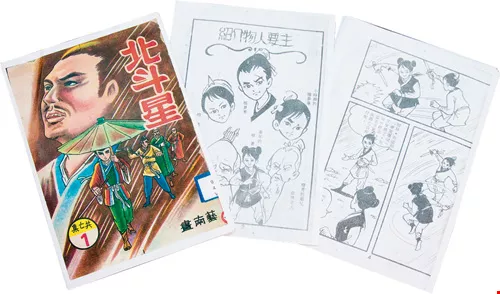
Fan Wan-nan’s titles, including Blood Demon, transformed Taiwan’s comic landscape by becoming some of the first single-title comic publications.
However, with publishers focused on the business opportunity presented by Japanese comics and the authorities still enforcing the review and approval process, local Taiwanese comic artists were left in the cold. And so, some 30 years after setting out into the industry, Fan Wan-nan decided to once again get ahead of the curve by fostering local talent.
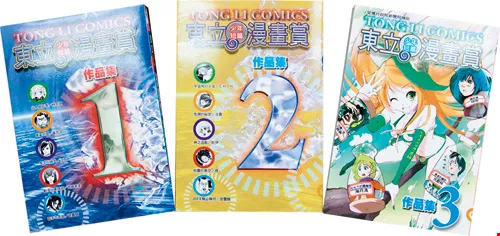
In 1992, Tongli held their first New Comic Artist Awards to encourage Chinese-language comic artists. Over 500 people entered, with entries coming not only from Taiwan, but Hong Kong and Singapore as well, and the long-dormant Taiwanese comic scene finally began to blossom once more.
In addition to the awards, Fan also created the first locally produced, regularly published comic anthologies, Dragon Youth Comic and Star Girls, providing a platform for local artists to get their work published. Taiwanese comics enjoyed a new golden age in the 1990s, with artists like Lin Zhengde of Young Guns and You Sulan of Qingguo Yuanling becoming icons of this new generation.
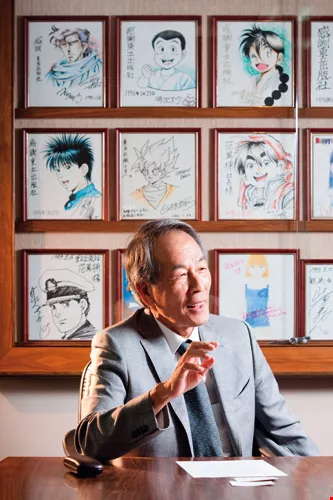
Tongli Publishing’s founder Fan Wan-nan has been involved in Taiwan’s comics industry for almost half a century, going from rising comic artist to pioneer of local comic publishing and sparing no effort in cultivating new talent.
But while this new generation has been reveling in these new creative opportunities, Fan is still deeply troubled by what he sees as the three biggest dangers facing the industry in Taiwan.
The first is a lack of professional talent. Both art and writing are crucial to comic books, and Fan is of the mind that there are very few in Taiwan who can successfully do both. Those that are good artists lack writing ability, and those who can craft amazing stories lack artistic ability.
He attributes this to Taiwan’s lack of a strong comic training system. With the education system not even deigning to consider such skills worth focusing on, the majority of comic artists are self-taught, figuring things out on their own and spending upward of a year or two refining their skills to professional level.
Fan believes that through professional schooling, creators could get a stronger foundation in art, so once they go out into the industry, they won’t have to “apprentice” as long, and they will be able to get straight into focusing on things like dramatic structure.
Second is the impact of the digital revolution. The rise of the Internet, Fan says, has made it easier to obtain and distribute pirated comics, which has led to a drop in legitimate retail sales.
With more and more people owning smartphones and tablet computers, and with online options like social networks and online games capturing more and more of the audience, the Taiwanese comic industry, already small to begin with, is becoming increasingly fragmented.
The final problem is that of erasing the general public’s prejudice against comics.
Fan remarks that surveys have shown that some 50% or more of Japanese elementary school students want to become comic artists when they grow up; in Taiwan, not only are most parents strongly against their children going into the industry, very few of the children themselves even want to. As an illustration, look at Tongli’s New Comic Artist Awards, where entries are less than half of what they once were. Thus it is more urgent than ever that those in the industry and in education can come together to train new talent.

Cory, a rising star in Taiwan’s comic industry, hopes her creations can be a force for good in her readers’ lives.
With Fan Wan-nan having broken new ground for Taiwanese comics, a new generation is now tending that land. One of those new rising stars is Ko Ying-mai (Cory), who only entered the industry in 2009, but in three short years has won awards and acclaim not only in Taiwan, but also in China and Japan.
After winning China’s Golden Dragon Award last year, this year Cory won the second prize at Japan’s International Manga Award for her Make a Wish, Daxi!, which beat out almost 145 other titles from over 30 countries to earn the title. This also made Cory the first Taiwanese artist to take the prize. In August, Cory added two more awards to her resumé, taking the Best Young Woman Comic and Best Comic Grand Prize at the 3rd Golden Comic Awards.
To the 30-year-old Cory, as with many of her fellow children of 1980s Taiwan, comics were a source of spiritual nourishment when growing up. As an elementary school student she had trouble with her schoolwork and found solace in comics. At the age of 13, as Japanese comic YuYu Hakusho hit it big across Taiwan, Cory decided that she wanted a career in comics.
Having made up her mind so early, Cory took a different path to that of the traditional student, enrolling in the arts program at Renyi Senior High School before going on to the mass communications program at Tung Fang Junior College of Industry and Commerce, laying the foundations for her future career as a comic artist.
Fan Wan-nan’s titles, including Blood Demon, transformed Taiwan’s comic landscape by becoming some of the first single-title comic publications.
In her short career thus far, Cory has constantly sought to learn from other artists and comics, continuing to practice different styles. Her two biggest influences, though, remain Yoshihiro Togashi (creator of YuYu Hakusho) and Shou Tajima (illustrator of Multiple Personality Detective Psycho). One of these was an inspiration for Cory’s art, the other, for helping her understand how to write a good story, the two skills that can decide the success or failure of any comic artist’s attempts to create a standout series.
Generally, Asian comic book narratives focus heavily on a single protagonist, but through reading Togashi’s works, Cory discovered that he invested even minor characters with power and had them go through their own arcs.
Tajima’s work, with its more realistic style, also drew Cory in, and she began attempting to combine elements of both more cartoony and more realistic art styles. She explains that the cartoony manga style uses a more symbolic approach to expression, while the more realistic style, in contrast, depicts emotions and facial expressions in greater detail, so that characters don’t greet joy and sorrow with the same poker-faced look.
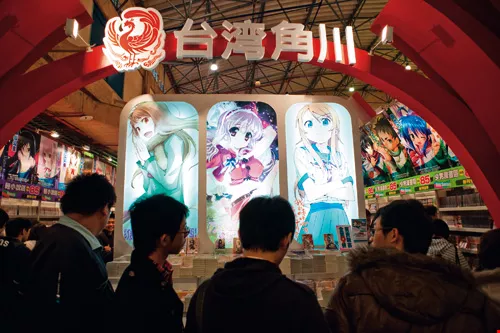
Comic fans crowd the floors of Taipei’s annual comic convention, rushing to pick up the latest products. Those in the industry hope that the local market will be driven to new heights by this kind of enthusiasm.
Once Cory had decided to go into comics, virtually her whole life began to revolve around them. After she got to know renowned comic artist Xu Peiyu through a comics training class, in 2003, when she was just 21 years of age, Xu hired her to serve as art director for his Shanghai studio.
While most of her time in Shanghai was put to use coming up with story ideas, editing storyboards, and drawing drafts, she also spent some time on her writing skills. During this time she also had to work on developing storylines and adjusting them as they went along, thus accumulating experience with comic storytelling.
Eventually, wanting to focus entirely on her own comic work, Cory decided to return to Taiwan, but her experience in Shanghai working on all elements of comic production has been a huge help to her in this new phase in her career.
At the moment, Cory has only two titles running, but even in this competitive market each title has sold over 10,000 copies since launch, making them not only top sellers amongst Taiwanese titles, but placing them up alongside popular Japanese titles.
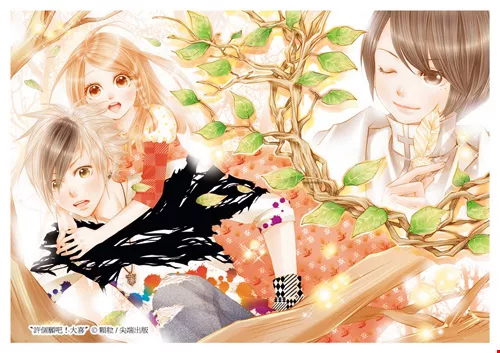
After years of training, Cory has struck a balance in her art between realism and cartoonishness. Cory’s fluidly crafted storyboards illustrate a formidable editing ability rarely seen in Taiwanese comic creators.
Whenever her favorite comics are brought up, Cory’s eyes light up and she breaks out into a smile that makes her look much like her own female characters. Having taken what started as a hobby and turned it into a career, Cory has gone from drawing just to entertain herself to also having to consider her responsibility to her readers.
With comics having been such a force for good for her, Cory hopes that her own comics will provide encouragement to her readers, giving them the same comfort she got from them in her youth.
Tongli Publishing’s founder Fan Wan-nan has been involved in Taiwan’s comics industry for almost half a century, going from rising comic artist to pioneer of local comic publishing and sparing no effort in cultivating new talent.

@List.jpg?w=522&h=410&mode=crop&format=webp&quality=80)


