The Audience is Back! Taiwan Films Enjoy a Renaissance
Chang Chiung-fang / tr. by Phil Newell
May 2012


The latest word on Taiwan’s film industry is, “We’re rolling!”
Ever since Cape No. 7 set a new record for domestically made films in Taiwan with a box-office take of NT$520 million, filmmakers, critics, and audiences have been rethinking the future potential of this industry. The greatest worry is that the recent success of local films will turn out to be ephemeral.
With policy now refocused on making big commercial productions, the industry has escaped from its chronic crisis condition of “only being able to produce art-house films, not commercial films,” and has rediscovered the entertainment value of movies. Over the past five years, Taiwan’s motion-picture industry has been through a renaissance. Now is the time to charge full-speed ahead.
The total value of production of the film industry (including ticket sales, licensing, soundtracks, etc), in Taiwan has averaged about NT$5 billion per annum over the past few years. In the past Hollywood gobbled up 90% of this money. Just a few short years ago, Taiwan-made films accounted for less than a 2% share of total box-office revenues.
But there has been a dramatic shakeup in the local film market since 2008, when the market share of local films rose sharply to 12.09%, and last year that number hit 17.46%.
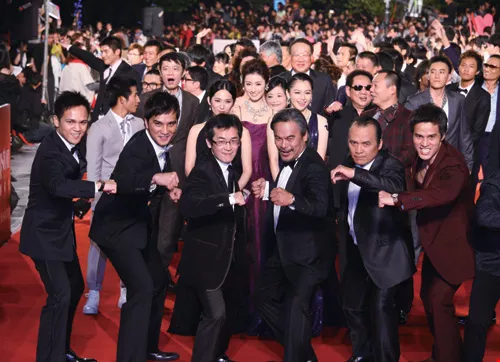
One of Taiwan’s top hits in 2011 was Seediq Bale, a fact-based story of an Aboriginal uprising against Japanese colonial rule in Taiwan, which featured a cast composed mainly of indigenous people. There was quite a memorable scene at the 48th Golden Horse Awards when the director, Wei Te-sheng (third form left), led actors into the venue performing an Aboriginal warrior dance.
This transformation from frog to prince has been entirely unanticipated. People were simply dumbfounded when Cape No. 7 became a huge pop-culture hit and sent out a clear signal that you could actually make a profit by producing a film in Taiwan for Taiwanese audiences.
What happened? With hindsight, some commentators have ascribed the movie’s success to “serendipitous timing.” Veteran film critic Wen Tien-hsiang, executive director of the Taipei Golden Horse Film Festival Executive Committee, avers that Cape was not just a film but a social phenomenon, a product of prevailing social conditions at the time. “It was a kind of miraculous redemption at a time when the ideals of the DPP administration had collapsed amidst the Chen scandal and the golden future promised by the new KMT administration of Ma Ying-jeou was like a burst bubble.”
Robert Chen, associate professor in the Department of Radio and Television at National Chengchi University, says that if he watches a movie that makes him laugh until his sides ache, he figures it could pull in NT$50 million at the box office, but the figure of NT$500 million would have never entered his head. “The film got a lot of help from the fact that it came out during a window when there were no hot Hollywood films, and there were some unexpected holidays from work because of oncoming typhoons. Also, things weren’t going very well in the country at the time, with political scandals and economic problems. Eventually, the film ‘went viral’ and crossed into that territory where it became ‘the thing to do’ and ‘an event.’ It then had a momentum of its own, and even the content of the film itself was no longer relevant.”
While some point to timing, others take a “dialectical” point of view. They argue that people had been turned off of Taiwanese directors because they were producing almost exclusively art-house films, in contrast to which Cape No. 7 was like a breath of fresh air, simply offering people a pleasant time.
Cape No. 7 brought people who had not seen a domestically produced film in years back to the theaters, and proved to be a powerful morale booster for the whole Chinese-language film industry. When director Peter Ho-san Chan received the 2008 Golden Horse Award for best film for The Warlords, in his acceptance speech he specifically thanked Taiwanese who had gone to see Cape: “You’ve given hope to Chinese-language films!”
Happy as they were, many people in Taiwanese cinema—veterans of numerous failed attempts to relaunch their industry—still worried that the whole thing would just turn out to be a flash in the pan. Events seemed to be pointing in that direction in 2009, when, in the absence of any Taiwan-made blockbusters, the box-office share of domestic films fell to 2.3%, sending a chill through filmmakers.
But then in early 2010 Monga, released at the Chinese New Year, was a huge hit, and even regained for Taiwan—in the person of Ethan Ruan—the Golden Horse Award for best actor, which had not been won by a Taiwan-born performer in 11 years before that. After the near collapse of 2009, Monga recharged the batteries of the Taiwan commercial film revival.
2011 was huge. Led by Seediq Bale, which topped NT$100 million, Taiwan films grabbed over 17% of the market. Other successes were Night Market Hero and You Are the Apple of My Eye. Turning the corner into 2012, the baton was picked up by films like Black and White, LOVE, and Din Tao: Leader of the Parade, all of which also surpassed NT$100 million.
Wang Tung, chairman of the Department of Filmmaking at Taipei National University of the Arts, is optimistic that the trend is likely to continue. This senior director, who won Golden Horse Awards for best director, best dramatic film, and best original script back in 1987 for Strawman, says that the Taiwan motion picture industry has “turned up the heat,” and now is the time to keep feeding the fire.

For decades now Taiwan-made films have been trying to survive in the shadow of Hollywood domination. They have been kept alive largely by the individual genius and perseverance of directors who are today recognized as the doyens of Taiwan cinema, such as: Kevin Chu (photo by Jimmy Lin), Hou Hsiao-hsien (photo by Jimmy Lin), Wang Shaudi (photo by Jimmy Lin), Tsai Yueh-hsun
For the past 30 years the Taiwan film industry has been in a state of uncertainty. Though there were past flashes of success, they did not amount to any major change in the nature or competitiveness of the industry. Robert Chen suggests that one reason has been the absence of a comprehensive industry structure.
He points out that there are three major cogs to commercial success: production, distribution, and screening. Their teeth have to be closely meshed to ensure a balance of supply and demand. But in Taiwan these three cogs have never been well coordinated. For many films, the director, working on a shoestring budget, has been solely responsible for the script, production, distribution, and marketing.
While Hollywood produces 400–500 films a year, Taiwan makes less than 30. This makes it impossible to keep a steady supply coming online to keep a grip on market share, or to support a cadre of full-time professionals, including actors.
Theater companies need to be sure that they constantly have films coming online to show in their theaters. Therefore most sign contracts with Hollywood distributors, so that virtually all distribution channels have come to be monopolized by American films. Even if a Taiwan-made film gets shown, all it takes is one bad weekend at the box office and it is pulled right away.
In his new book, Wen Tien-hsiang says that since distribution channels are clogged, Chinese-language films have to take advantage of the interest generated by the Golden Horse Awards, or win some overseas film festival award, to attract attention. If they fail to do either, and the director does not already enjoy name recognition, they will usually be nothing more than filler for the slack periods between peak movie-going seasons.
After years of living in Hollywood’s shadow, local filmmakers finally got a whiff of success through Cape No. 7. Robert Chen says that over the past several years people with all the necessary skills for each stage of film success have come onto the scene, and now thought is given to films’ marketing and the timing of their screening right from the first day that shooting begins. “The Taiwan film industry has already taken its first steps toward systematic organization.”

The film LOVE, directed by Niu Chen-zer, is an archetypal cross-strait collaborative film with a script and star power suited to the tastes of audiences on both sides.
The Government Information Office has played its own modest role in this resurgence, especially with its long-standing grant program for local productions.
Under the program, the government subsidizes selected films, providing essential capital that filmmakers need. But it is more than just cash, says Wang Tung: It is like an expert “seal of approval.” “Many directors turn first to the GIO for financing because only after they get a government grant will they be able to find private investors willing to join in.”
Unfortunately, everybody wants to get a subsidy, and inevitably there will not be enough to go around. As a result questions have been raised about the criteria used for awarding the grants. For example, Fung Kai, who directed the box-office hit Din Tao: Leader of the Parade, has publicly complained about being refused GIO financial support.
Director Kevin Chu, a member of the committee that reviewed Din Tao’s grant application, says that most commercially successful films do in fact receive subsidies, with Din Tao being one of the rare exceptions. The reason it was refused was that some members of the review committee felt that “everybody” was flocking to make films about Prince Nezha (a Taoist deity) and Taiwanese temple-festival parade troupes, and they didn’t want to have too many films on the same theme.
Robert Chen, who often serves on grant application evaluation committees, states that the evaluation mechanism is constructed around a balance of representation from government, academia, and the industry, and everybody has their own considerations in mind.
Michael Mai, a veteran film critic who has likewise often participated in grant application reviews, says that in general there is not much of a problem with the review process per se, but there will always be about 30% of review outcomes that are mistakes, plain and simple. He reveals that one time someone brought in a proposal whose storyline was virtually identical to that of a previous Japanese movie, but almost no one on the committee had seen the Japanese film, and regrettably the proposal was approved.
It’s also obvious that there are some directors who are just opportunistic, and want to get the money into their hands first; then they will film whatever story they want afterwards. Mai suggests that the grant review process should adopt an “examination and grading” system, like in schools. “There would be a report card that would be taken out every now and then for reassessment.” It would be best if some kind of follow-up mechanism could be added to the process, so that directors who only want to take the money but don’t intend to do a serious job making films won’t try to get away with anything.
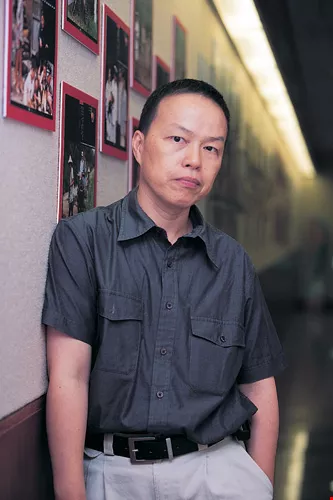
For decades now Taiwan-made films have been trying to survive in the shadow of Hollywood domination. They have been kept alive largely by the individual genius and perseverance of directors who are today recognized as the doyens of Taiwan cinema, such as: Kevin Chu (photo by Jimmy Lin), Hou Hsiao-hsien (photo by Jimmy Lin), Wang Shaudi (photo by Jimmy Lin), Tsai Yueh-hsun
In addition to greatly increased subsidies from the central government, local governments are also starting to pay attention to the possibilities that come with making films near to home.
Kaohsiung City set a precedent in 2004 when it created a film commission to provide administrative and financial support for filming there. Numerous other city and county governments have followed suit, putting effort into creating a film-friendly environment and clearing obstacles to production, opening new avenues for the revitalization of Taiwan film.
Jennifer Jao, director of the Taipei Film Commission (TFC), says that not only can assistance at the local government level raise the standards of domestic film production, but filmmaking also brings jobs and potential retail and tourism spin-off benefits. Films can even be vehicles for marketing Taiwan itself.
The revival of made-in-Taiwan commercial cinema has run side by side with a dramatic increase in production assistance. For example, the TFC has increased the number of projects to which it provides assistance from 54 in its first year to 419 last year (34% of which were feature films), the figure doubling each year. On one Saturday night in just this past March, three feature films were being shot in locations around Taipei at the same time.
Local governments are also moving into marketing. “As the production side of the industry revives, marketing will become even more important,” says Jao. Making a film without funding its marketing is like having a child without paying for its education—it’s a shame that so much effort will lead to so little in the end! The TFC has thus been assisting with the placement of advertising since 2009.
For decades now Taiwan-made films have been trying to survive in the shadow of Hollywood domination. They have been kept alive largely by the individual genius and perseverance of directors who are today recognized as the doyens of Taiwan cinema, such as: Kevin Chu (photo by Jimmy Lin), Hou Hsiao-hsien (photo by Jimmy Lin), Wang Shaudi (photo by Jimmy Lin), Tsai Yueh-hsun
The motion picture industry depends on unceasing creativity. If you want to keep attracting an audience, you have to constantly have new blood coming into the business.
Wen notes that in 2007 there were eight motion pictures made by directors doing their first feature films. 2008 was even more of a notable moment of arrival for new directors in Taiwan, with filmmakers like Singing Chen, Niu Chen-zer, Lin Shu-yu, Wei Te-sheng (maker of Cape No. 7), Yang Ya-che, and Chung Mong-hong launching their maiden voyages, with spectacular results. First-time feature-film directors for 2009 included Kevin Ko, Fu Tien-yu, and Lou Yi-an, with Cheng Yu-chieh and Cheng Fen-fen coming out with their second efforts. In 2010, first-time director Ho Wi-ding gave us an outstanding work, Pinoy Sunday, a film that broke new ground by addressing the problems faced by foreign laborers working in Taiwan.
One of the films currently being assisted by the TFC, When a Wolf Falls in Love with a Sheep, is also being directed by a relative newcomer, Hou Chi-jan. After completing the middle segment of a three-part film, Juliet, as well as his maiden work One Day in 2010, he went straight to work on the Wolf project, which received a “Golden Script” award from the TFC.
“It’s an honor for me to work with all these young filmmakers,” says Jennifer Jao. In the past many directors from Taiwan set their sights on international recognition for their work, and put style at the forefront. The new generation of directors are more tuned in to local audiences, and they are mining Taiwan stories that will appeal to local moviegoers.
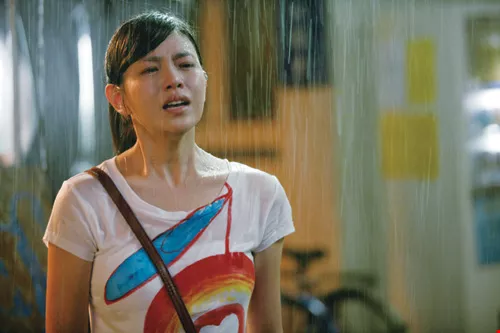
You Are the Apple of My Eye also proved to be a hit with audiences in all Chinese-speaking markets, and it made female lead Michelle Chen into an overnight star.
But even as local films thrive, some wonder whether the narrowly focused subject matter won’t make it impossible to market them anywhere but in-country.
“Movies have to be able to cross national boundaries,” says Kevin Chu. “The subject matter has to be something people in other countries can identify with.” Taiwan should aim to make “big” films, with “big” being defined not by the budget but by the breadth of their appeal.
A problem to be faced sooner or later is that the domestic market is limited in size. Where are Taiwan films going to find more viewers? The only way Taiwan will stay competitive in the motion-picture business will be if filmmakers target the worldwide Chinese-language audience.
Wen Tien-hsiang points out that while Taiwan film had a banner year with local audiences in 2011, the limited size of Taiwan’s market means that mainland China is the real prize.
Is there any real potential for Taiwan films to penetrate the mainland market? Perhaps we can get some insight into this question by looking at the experience of the Hong Kong motion picture industry.
Robert Chen says that following the signing of the Closer Economic Partnership Agreement between Hong Kong and mainland China in 2003, there was a sharp rise in films funded jointly by investors from the two locales. Last year over 70 feature films were made in Hong Kong, of which more than 50 were big-production period films about Chinese history made in cooperation with the mainland. However, such films don’t sell well in Hong Kong itself. Meanwhile, themes that have proven popular in the past with Hong Kong audiences—gangster sagas, horror flicks, gay films, and comedies—have declined because they often can’t get past mainland Chinese censors. As a result, Hong Kong audiences have elected to embrace Hollywood.
Taiwan has enjoyed none of the same wealth of opportunities for joint productions with the mainland as Hong Kong has had, but the Economic Cooperation Framework Agreement (ECFA), signed between Taiwan and mainland China in 2010, may change the future of filmmaking in Taiwan. In the past, Taiwan-made films had to compete for the limited quota of 30 foreign, non-US films allowed into mainland China in any one year. (The total quota for all foreign films is 50, but the US is guaranteed 20). However, since October of 2010, thanks to the inclusion of films into the ECFA “early harvest” list, Taiwan-made films now face no quota restrictions in entering the mainland.
Sadly, the first film to hit the mainland under the new rules, Night Market Hero, was a box-office flop. It has been argued that the main reason is the cultural gap between the two sides. Robert Chen says the subtleties of the Taiwanese language were lost in translation into Mandarin subtitles for the Chinese market, and mainland Chinese, lacking any real knowledge of Taiwanese society, would not have got most of the jokes. All eyes will now be on the next picture scheduled to head into the mainland, Seediq Bale, to see whether its reception is any different.
Chen adds that Taiwan directors are right now focused on emphasizing local culture in an effort to consolidate their newfound success in the Taiwan market. But there will certainly be a growing number of joint ventures in the future in order to penetrate foreign markets.
The film LOVE, directed by Niu Chen-zer, could be considered an archetype of cross-strait cooperation. Financing came from both Taiwan and mainland China, the script was a joint product of one Taiwanese and one mainland writer, and the cast included stars from Hong Kong as well as Taiwan and the mainland.

In 2008, Cape No. 7 sparked a surprise revival of the commercial fortunes of Taiwan-made films. Other films have carried the success even farther. (photo left courtesy of ARS Film Production; photos right, left to right, courtesy of Green Day Film, Activator Marketing, ARS, Star Ritz Productions, Polyface Entertainment Media, Honto Productions, ifilm, and Prajna Works)
Whether or not they believe that Taiwan-made films can continue to ride the current wave of popularity to new heights, everyone seems in agreement that the resurgence at least demonstrates the potential of the industry.
In 2010, the Taipei Golden Horse Film Festival Executive Committee produced a special film in which 10 senior directors (including Wang Tung, Wu Nien-jen and Wang Shaudi) and 10 newcomers (including Wei Te-sheng, Cheng Wen-tang, and Shen Ko-shang) were invited to make five-minute shorts on the theme of “things unique to Taiwan.” The shorts were then combined into a 100-minute-long feature, which was shown at the opening ceremonies of the 2011 Golden Horse Awards. Robert Chen calls these 20 directors “the hope of the future for domestic motion pictures.”
Wen Tien-hsiang praised the work, saying it is clear the older directors have not lost their touch, while the younger ones show all the talent needed to pick up the baton and run with it. “The features of Taiwan film that give it the greatest potential in the Chinese-language film market are pluralism, freedom, passion, and idealism. They are no guarantee of how long the commercial popularity of Taiwan films will last, but they show clearly why filmmaking has been able to survive here no matter how bad things get.”
Like a well-drawn plot, the history of Taiwan films has been filled with highs and lows, thrills and spills, and the Government Information Office has been a part of it. As Michael Mai says: “The GIO is an institution we’ve all grown up with, and we’ve been through a lot together!”
Now the show is over, the lights are up, and it is time to go home. The GIO, whose assistance has been acknowledged in countless end-of-movie credits, is also taking its final bow. With the GIO’s film support program moving to the new Ministry of Culture, we can look forward to the beginning of a new era for locally made motion pictures!
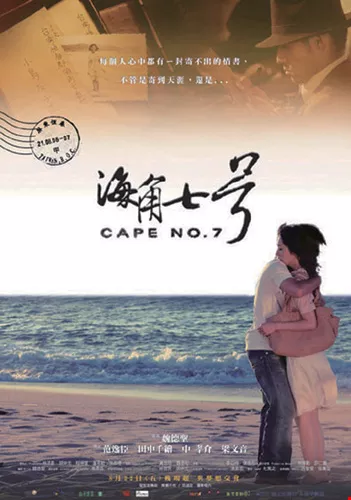
In 2008, Cape No. 7 sparked a surprise revival of the commercial fortunes of Taiwan-made films. Other films have carried the success even farther. (photos right, left to right, courtesy of Green Day Film, Activator Marketing, ARS, Star Ritz Productions, Polyface Entertainment Media, Honto Productions, ifilm, and Prajna Works)
In order to further promote the local motion-picture industry, in 2010 the Government Information Office unveiled a five-year industry plan that aims to develop the commercial potential of Taiwan-made films. The program focuses on mid- and large-scale productions with commercial potential or artistic value. The intended function is to “light the fuse” for the local film industry.
The “Flagship Group” subsidy goes to projects with budgets of NT$100 million or more, for which the GIO provides up to 30% of the capital. The films selected for the first-phase Flagship Group were Wei Te-sheng’s Seediq Bale, Hou Hsiao-hsien’s The Assassin, Wang Tung’s The Straits, and Chen Yu-hsun’s The Killing Move, with each receiving grants ranging from NT$20–30 million.
Other funding in the five-year program is for “strategic” films with costs of NT$60 million or more; a “general” category for directors with two or more movies under their belts; and a “newcomer” category for new cutting-edge directors. Works like You Are the Apple of My Eye, The Soul of Bread, and Anywhere, Somewhere, Nowhere, which have already hit theaters or are in production, have received subsidies under the latter heading.
In addition, the GIO devised a futher program to reward commercially successful films. Under this scheme, any movie that grosses over NT$20 million automatically earns its director a subsidy for his or her next film equal to 20% of the box office of the successful film. This should help directors who have already been affirmed by the market to carry their careers to the next level.(Chang Chiung-fang/tr. by Phil Newell)

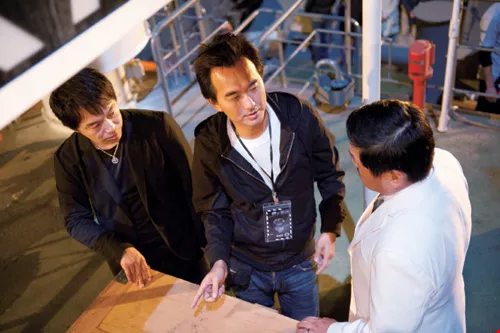
Hou Chi-jan, director of When a Wolf Falls in Love with a Sheep, currently in production.

The new generation is injecting fresh creative blood into Taiwan film-making. Yang Ya-che
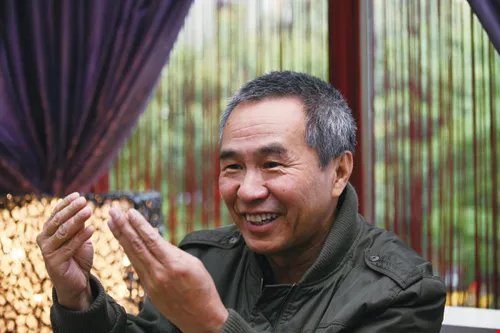
For decades now Taiwan-made films have been trying to survive in the shadow of Hollywood domination. They have been kept alive largely by the individual genius and perseverance of directors who are today recognized as the doyens of Taiwan cinema, such as: Kevin Chu (photo by Jimmy Lin), Hou Hsiao-hsien (photo by Jimmy Lin), Wang Shaudi (photo by Jimmy Lin), Tsai Yueh-hsun

@List.jpg?w=522&h=410&mode=crop&format=webp&quality=80)


