Opening the Palace Files: A New Look at Taiwanese History
Jackie Chen / photos Pu Hua-chih / tr. by Jonathan Barnard
April 1996


Missiles are flying and people are buying rice in a panic? Reports say that the military exercises carried out by mainland China caused panic buying of rice in Fujian and Canton, whereas in Taiwan, off whose coast the missiles were aimed, things were a good deal calmer. In fact, history shows that this situation is not unprecedented. Way back at the beginning of Qing rule over Taiwan, the island was already a great rice producer, and for a long stretch of time the densely populated area around Changzhou and Quanzhou relied on Taiwan rice. This is recorded in detail in the documents about Qing dynasty Taiwan found at the National Palace Museum.
What else do its documents reveal about the early pioneers? And how will releasing these materials affect research on Taiwanese history?
If you mention the Qing dynasty documents of the National Palace Museum, historians will know exactly what you are talking about. They include all of the imperial rescripts: reports to the emperor from officials posted in the provinces on which he would add his own observations. And they also include various kinds of documents from other palace bodies, such as those of the Junjichu (palace executive staff), the cabinet and the Academy of History--over 400,000 documents all told. The Museum started organizing these materials way back when it was founded in 1925, and more than 40 years ago, they made the trip south to Taipei. Yet apart from a few academics, no one has had access to them.
For historians, these documents at the National Palace Museum are like the contents of a yet-to-be-plundered treasure. Who knows how many precious objects are stored within?
Take, for instance, the imperial rescripts. In the official Qing dynasty histories, the focus is on the royal family and the central government. Most of the stuff about emperors is stereotyped and boring. But the National Palace Museum's files include many local materials, including information about the weather, harvests of rice and wheat, the price of goods, bad local regulations, petty officials, taxes and tariffs, border defenses, and the activities of secret societies. During the Qing dynasty, particularly during the rule of Kangxi, Yongzheng and Qianlong, provincial officials were encouraged to make secret reports to the central government. These combined with the imperial rescripts provide concrete descriptions about the emperor's personality and the high officials' modus operandi that are completely absent from the official histories.
For example, when Kangxi was encouraging officials to write secret reports, he would often say something like: "You can't let people know about this. It's very important. If there's a leak, be careful, be careful!" He was very careful himself. He never wrote anything unduly critical, and if the report looked as if it had been opened and changed, he would not write a response.
His son Yongzheng handled things completely differently. Chen Chieh-hsien, who is the director of the Chinese Studies Materials center at the United Daily News, says that in his responses to officials' reports Yongzheng would often convey warm fatherly feelings when he was in a good mood, and when he was displeased he would scold them, or would write comments that would make them embarassed or insecure, making them feel "that their heads were being played with, that an 'unfortunate ending' was always possible." Chen says that the National Palace Museum's documents make up for areas in which official Qing documents were previously lacking.
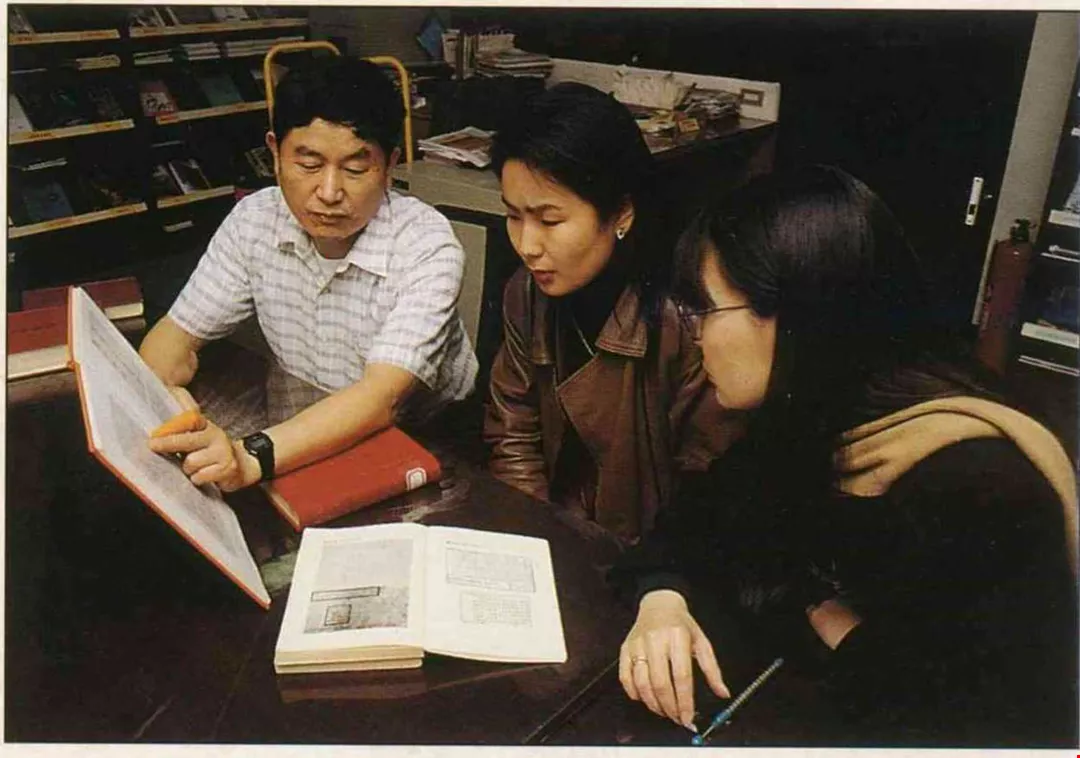
With the National Palace Museum library loaning out precious Manchu and Chinese historical documents, it has attracted many guests from afar, including Manchurians and Mongolians.
Files unsealed
Beginning in 1983, these files, held deep in the dark depths of the National Palace Museum, began to be "unsealed." One after another, the museum published collections of imperial rescripts and monthly reports of the Junjichu. To see these materials, no special connections were needed--just an ROC identity card to get you into a large public library.
"Because the Japanese had occupied Taiwan, the Qing documents here were removed, and the files of the Qing court's appointed officials as well as county and local records no longer exist," writes Chin Hsiao-yi, the museum president, in his preface to A Brief Introduction to the Taiwan Historical Documents of the National Palace Museum. Chin stresses that to make up for this "local shortfall," the National Palace Museum worked to sort through the huge collection of Qing dynasty documents relating to Taiwan first.
For the huge publishing endeavor of the "Qing Dynasty Taiwan Documents Series," they began in March of last year by publishing eight volumes of imperial rescripts--valuable historical materials indeed--and then in October published A Brief Introduction, which offered a short description of the museum's precious collection of historical documents relating to Taiwan, such as maps, charts of tributes paid by vassal states, reports to the emperor written in Manchurian, and reports written by Shan Biao-zhen, Ding Richang and Liu Mingchuan, who were at different times the highest officials posted in Taiwan.
Qing rule over Taiwan spanned more than two centuries, from 1684, the 23rd year of Kangxi's rule, to 1895 when the treaty of Shimonoseki ceded Taiwan to Japan. In Taiwan Zong Ti Xiang, a general history of Taiwan, Tai Kuo-hui divides Qing rule in Taiwan into the early glory years of the dynasty under the emperors Kangxi, Yongzheng and Qianlong, and the 19th century, when the Qing court was forced to seriously reconsider Taiwan's defenses and more actively govern the island as a result of so many foreign powers eying it covetously. The court's attitude toward administering the island was completely different during the two periods.
During the earlier era, when the Qing was in its heyday, controlling an expanse from the Ussuri River in the east to Xinjiang in the west, from Mt. Daxingan in the north to the "small island of Taiwan" in the south, the Qing court viewed Taiwan as a border region requiring little of their attention. Up to the time that they removed the Zheng clan from power in Taiwan, some members of the Qing court held that they should just let the island be, describing it as "an undeveloped place with little tax revenue that is separated from the mainland by a strait and hard to administer." They didn't even think it should be included in maps of China proper.
Among the documents at the National Palace Museum, there is a "Sketch Map of Taiwan" with both Chinese and Manchu writing probably drafted in 1681. From it, one can see the court's knowledge of Taiwan at that time.
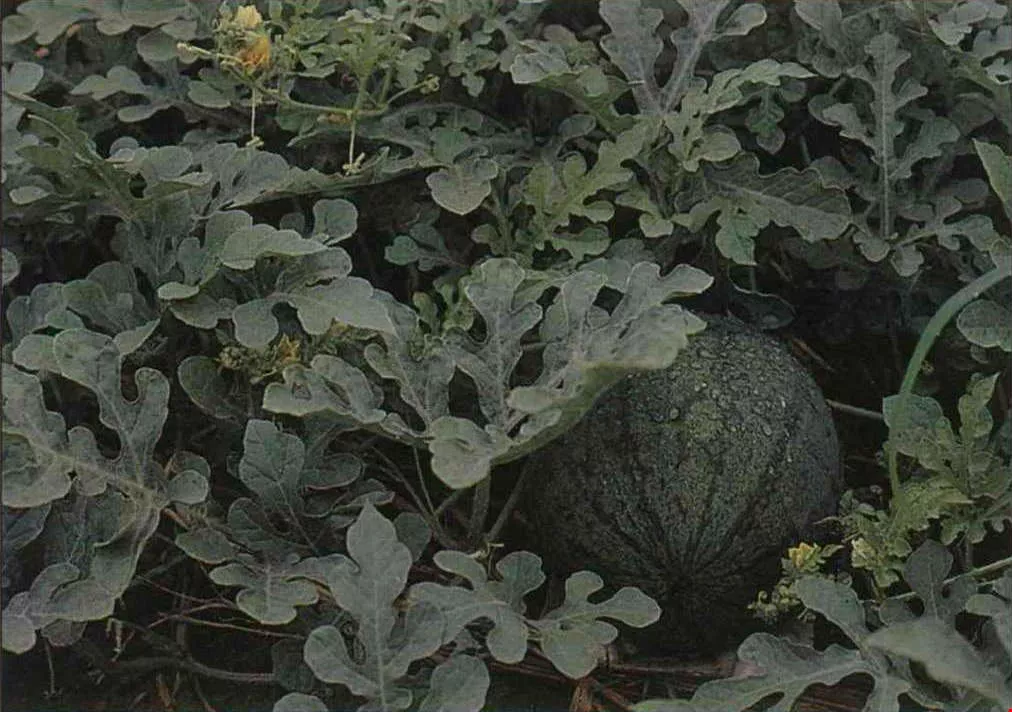
In the early Qing dynasty, unsuccessful attempts were made to grow watermelons in Taiwan. Reports to the emperor about the experiments were written in Manchu. (photo by Vincent Chang)
Like a water mark
The "Sketch Map of Taiwan" was drawn with ink on paper and is about 120 centimeters square. The island of Taiwan, looking much like an irregularly shaped water mark, occupies most of the map's upper left corner. To its left is written, "The journey from Tanshui to Chengtienfu [Tainan] takes about half a month." To its right is written, "At Tagou-tsufan [meaning 'the barbarians that beat dogs,' now the city of Kaohsiung] boats can dock." Relative distances north and south are drawn fairly accurately, but the only place on the island with any detail is the area around what is today Tainan.
Next to Anping Port appear the words, "This port, named Yikunshen, is very deep, and has been used as a port of entry to Taiwan since ancient times. Here one can moor a boat." And by Chengtienfu: "There is no city wall. Where one comes ashore, there is a big street and marketplace, and the officials live on either side of the street. This place has sandy soil, and there are no mountains, rocky outcroppings or forests. The army is stationed on a desolate hill."
The map provides a lot of help in understanding the layout of the Zheng clan's military bases and Tainan settlements. Chuang Chi-fa, a researcher at the National Palace Museum, believes that this was one of China's earliest maps of Taiwan. "It was probably used by the Qing court to attack the pro-Ming forces of Zheng Chenggong (Koxinga)," says Tsao Yung-ho, a professor of history at National Taiwan University.
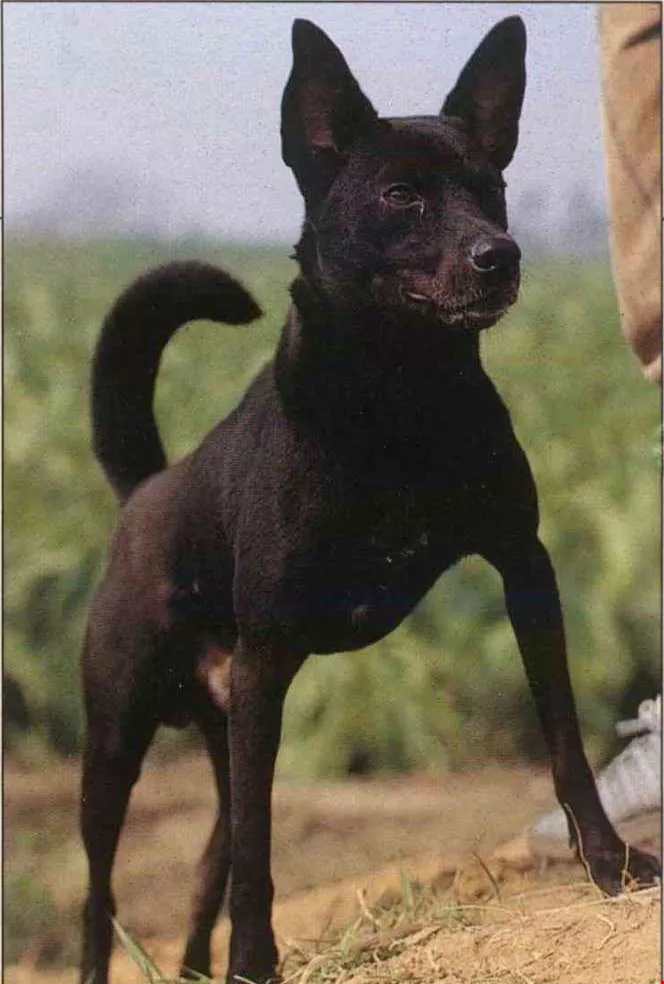
On reports to the emperor, Kangxi would make criticisms of things offered in tribute. Taiwanese deer-catching dogs he described as "not as good as BeiJing dogs." The Taiwan canine might object, explaining, "I only performed worse because I was shipped across the sea and wasn't used to the environment." (photo by Hseuh Chi-kuang)
Useless mangoes
The National Palace Museum's exhibition of Qing dynasty charts and drawings in March of last year received a lot of attention. The exhibit also included "Paying Tribute," a collection of paintings by Xie Sui, a court painter during Qianlong's rule. These depict some of the minorities of the border areas and China's vassal states. Among them are paintings of 13 different Taiwanese tribes, including the assimilated aborigines of Shuishalien in Changhua and Shanchumao in Fengshan County, and the plains tribes of Tachiehtien in Taiwan County.
Each of the 13 illustrations depict one man and one woman. The women are all holding fruit and vegetables or carrying children or bamboo baskets on their backs. The men are in furs and carrying iron poles or knifes and spears. Both the women and the men are barefoot. Compared to the "Fan Su Tu" (barbarian customs illustrations) made in Chuluo County (what is now Chiayi) during the rule of Kangxi, their lavish colors suggest those of the palace, as do their subjects' jewelry and clothing, which included shawls, head dresses and colored belts. "The illustrations had strong Han Chinese colors to them, which probably means that they weren't very accurate," says Chan Su-chuan, an associate researcher at the Institute of Taiwan History at the Academia Sinica. Nevertheless they show the image court painters had of Taiwanese aborigines.
Reports written in Manchu about agriculture, rain water and grain store values are numerous as well. Chuang Chi-fa points out that local officials would every year list rain-water and harvest statistics, grain store values, and tributes paid. These are important reference materials for those studying the economic and social history of early Qing dynasty Taiwan.
In regard to the various local products paid to the emperor as tribute, Chan Su-chuan asks, "Why were deer, big export earners during the Dutch era, suddenly never mentioned? Were there fewer deer, or in the eyes of the local officials, were deer not worth noting?" To answer questions of this sort, more research is needed.
Lu Yulong, the governor of Fujian, once offered mangoes harvested in Taiwan as a tribute to the emperor, explaining in detail how he had personally inspected the fruit to see if it was fresh, and how members of his family had carefully packed it.
The emperor's comment: "I had never seen mangoes before, and so I wanted to see them. Now that I've already seen them and decided that they are of no use, there's no need to offer them again."
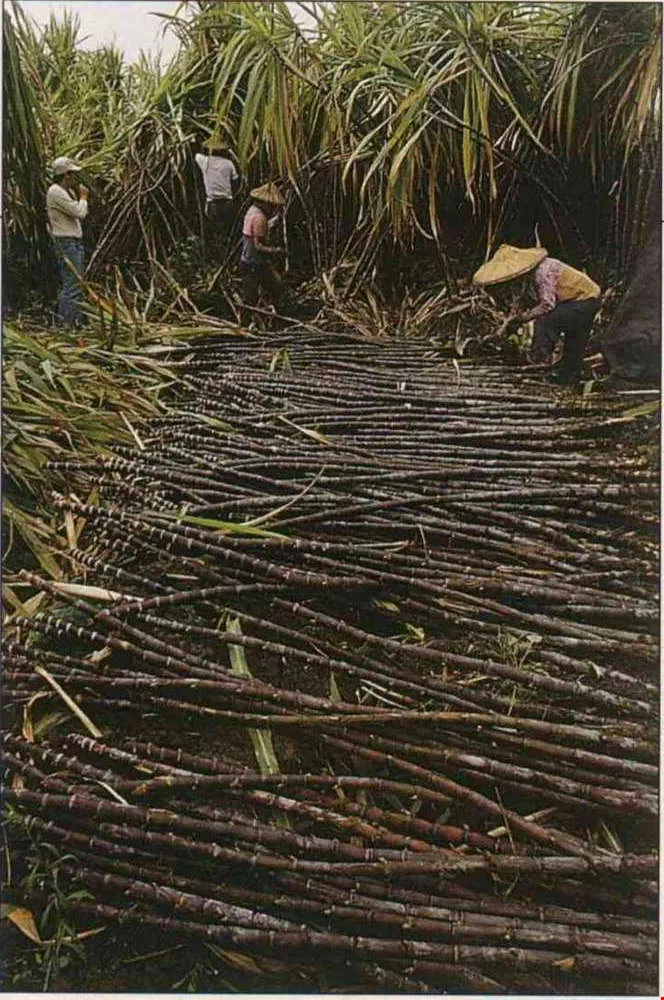
In the Qing dynasty, Taiwan already had a sugar industry. Fujian Governo r Ding Richang in his reports to the emperor declared that the tax on sugar was reasonable. (photo by Vincent Chang)
Taiwanese dogs inferior?
Soon after the Qing took control of Taiwan, officials began frequently making offerings of local products. Besides mangoes, the "Palace Files" show that Jueluo Manbao, the governor-general of Fujian and Zhejiang, also offered barbarian jasmine, bananas, thorny bamboo, 'yellow pears' (thought to be pineapples), barbarian rice, Siamese-style striped floor mats, five-colored parrots that could sing barbarian songs, white and green ringdoves, barbarian chickens, ducks, Taiwanese monkeys, and Taiwanese dogs with a proven ability to catch deer.
These products would go on the long journey to Beijing. The local officials wanted to please the emperor, but such comments as "Useless," or "They plant and reap good 'barbarian rice' right in Jehol," or "There are many good white ringdoves near the capital," or "Beijing dogs are better," typify Emperor Kangxi's lack of enthusiasm for Taiwanese products.
Professor Chen Chieh-hsien, an expert on Qing dynasty history, says that the governors of every province would frequently send local products to Beijing in hopes of currying favor with the emperor. But Kangxi and Yongzheng believed the practice was a waste of money and manpower and didn't encourage it, belittling it in the margins of imperial reports and statements of accounts.
Furthermore, the local officials' selections often wouldn't suit the emperor's tastes. "The melons from Xinjiang, for instance, caught the emperor's fancy," Chen explains, but many products, like Taiwan's mangoes, did not. Some, as recorded in the "palace files," met a downright frosty reception. What was once offered from Tianwenjing in Henan, for instance, was promptly placed in the imperial trash can.
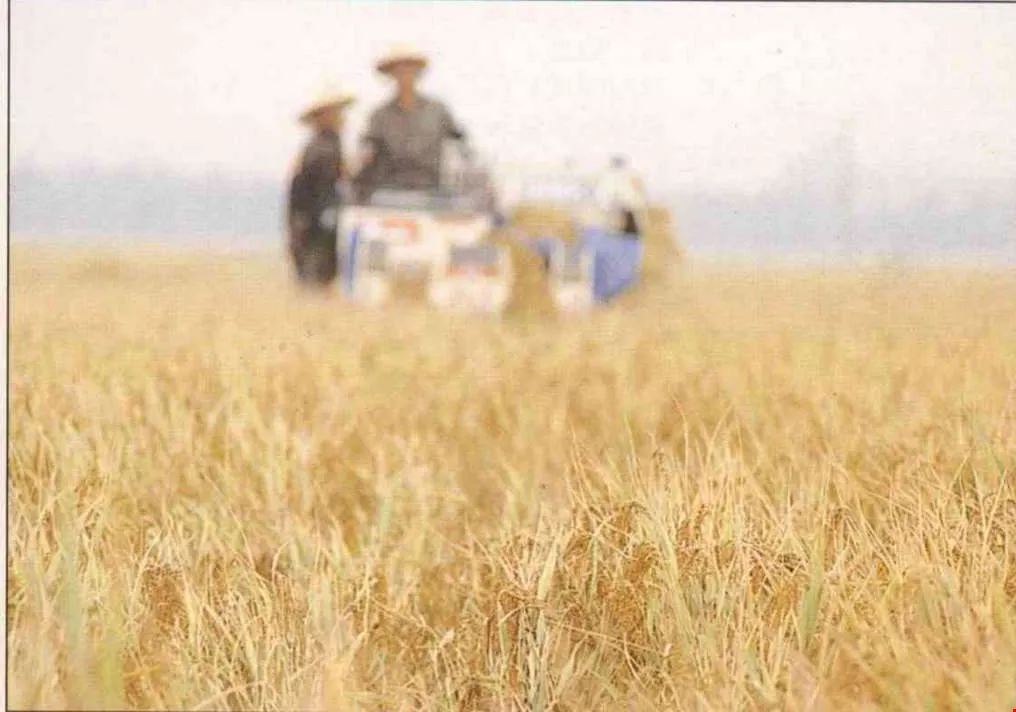
In the early Qing, Taiwan was a major supplier of rice to Fujian. (photo by Diago Chiu)
Four seasons of mild weather
"Taiwan has mild weather that is rarely cold. In the winter it's windy, but one rarely sees frost or snow. The night dew is like drizzle. Hence, trees, grasses and flowers flourish. There is mild weather all four seasons of the year and bugs don't hibernate. Planting is easy, and foods produced here include sweet potatoes, peanuts, sugar, fish, salt, and rice. Other fruits and vegetables, beans, wheat, hemp and other crops are also suitable for growing here." So described an official who inspected Taiwan in a report during the Kangxi-Yongzheng era. It is one of many concrete descriptions of this "treasure island"--with its fertile soil and abundant produce--found in the documents released by the National Palace Museum.
Even in the early Qing dynasty, Taiwan was a major rice producer for the southern Fujian area. According to imperial reports from officials posted in Fujian, Taiwanese rice was cheaper than rice from Zhangzhou and Quanzhou. They wrote, "Taiwan has vast expanses of farmland, and every year much rice is produced there. Even in years when the harvest is poor, the price of rice is still low there." And when there was ample rain during the summer and fall, there was an abundant yield of sweet potatoes, which could be substituted for rice as a staple food, thus helping to keep down the price of rice.
These historical materials show that during the years of Kangxi, there was a long stretch when the heavily populated areas of Quanzhou and Changzhou absorbed much of Taiwan's rice production. "It is estimated that from the first to the fifth lunar month, Taiwan ships 10,000 dan [one dan equals about 60 kilos] of rice a month, 5,000 going to Zhangzhou and 5,000 going to Quanzhou," reported Gao Qizhuo, Yongzheng's governor general of Fujian and Zhejiang.
For fear that Zheng Chenggong's pro-Ming settlers and their descendants would grow stronger, and also because the government hoped to ensure the supply of rice, limits were placed on migration to Taiwan during the reigns of Kangxi and Yongzheng in the early Qing dynasty. But because life was hard all along the Fujian coast and agriculture was thriving in Taiwan, many people went to the island illegally. Chuang Chi-fa says that statistics in local reports to the emperor show that from 1747-1792 a total of 4,496 people smuggled themselves onto the island. The majority of these were from Fujian and Canton, and they entered through such ports as Luermen, Lutsukang (now Lukang), Tanshui, Penkang, Tunhsiao (now Tunghsiao), Chungkang and Keelung.
Stories about these illegal immigrants to Taiwan that appear in the reports of high ministers are quite colorful. Some "arrived in Taiwan to sell goods for a few days, and then, lacking money, decided to stay." Then there were fishermen "whose catch wasn't enough for their families to eat, and thus decided to smuggle people onto the island." Officials described in great detail how soldiers took bribes to let people in, and how mainlanders would take great risks to smuggle themselves onto the island. These reports also describe the methods local officials took to combat the problem. The situation today offers many parallels, with mainlanders still taking risks to smuggle themselves into Taiwan.
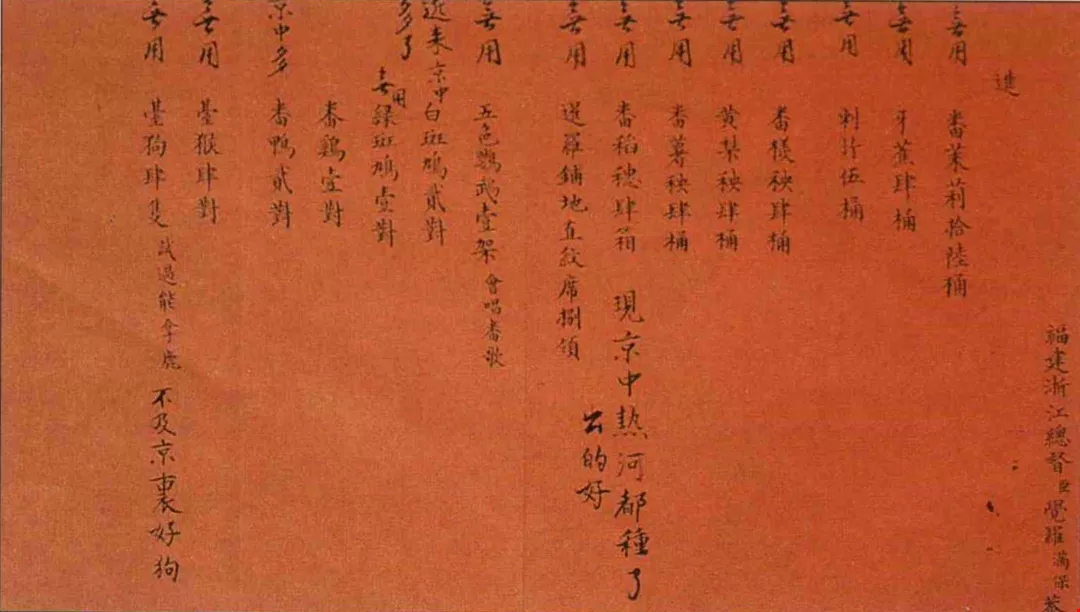
When Kangxi often wrote "useless" in the lists that local officials made of things given to him in tribute, did this show that the presenters had not successfully curried his favor ? (from Brief Introduction to the Taiwan Historical Documents of the National Palace Museum)
From passive to active
In the 19th century the Qing dynasty was being forced to modernize as it faced encroaching foreign powers. This had a big impact on Taiwan during the tenure of the last three Qing officials in charge of the island: Shen Baozhen, Ding Richang and Liu Mingchuan. Clues are to be found in the imperial rescripts.
Before the middle of the 19th century, Qing rule over Taiwan followed a policy of "preventing the descendants of the pro-Ming followers of Zheng Chenggong from causing trouble, but not being too active in administering government," says Lin Yu-ju, a doctoral candidate in history at National Taiwan University. Whether in regard to posting officials or stationing troops or managing tribal affairs, the policy adopted was "passive." It wasn't until the end of the 19th century, when foreign powers imposed themselves on China one after another, that Qing policy on Taiwan would turn active, taking a 180-degree turn.
The turning point, when China finally recognized the importance of the island, came in 1874, the year of the Mudan Incident when Japanese troops attacked Taiwan. In response the Qing court sent Shen Baozhen, an important foreign affairs official who was then responsible for shipping in Fuzhou, to deal with the situation.
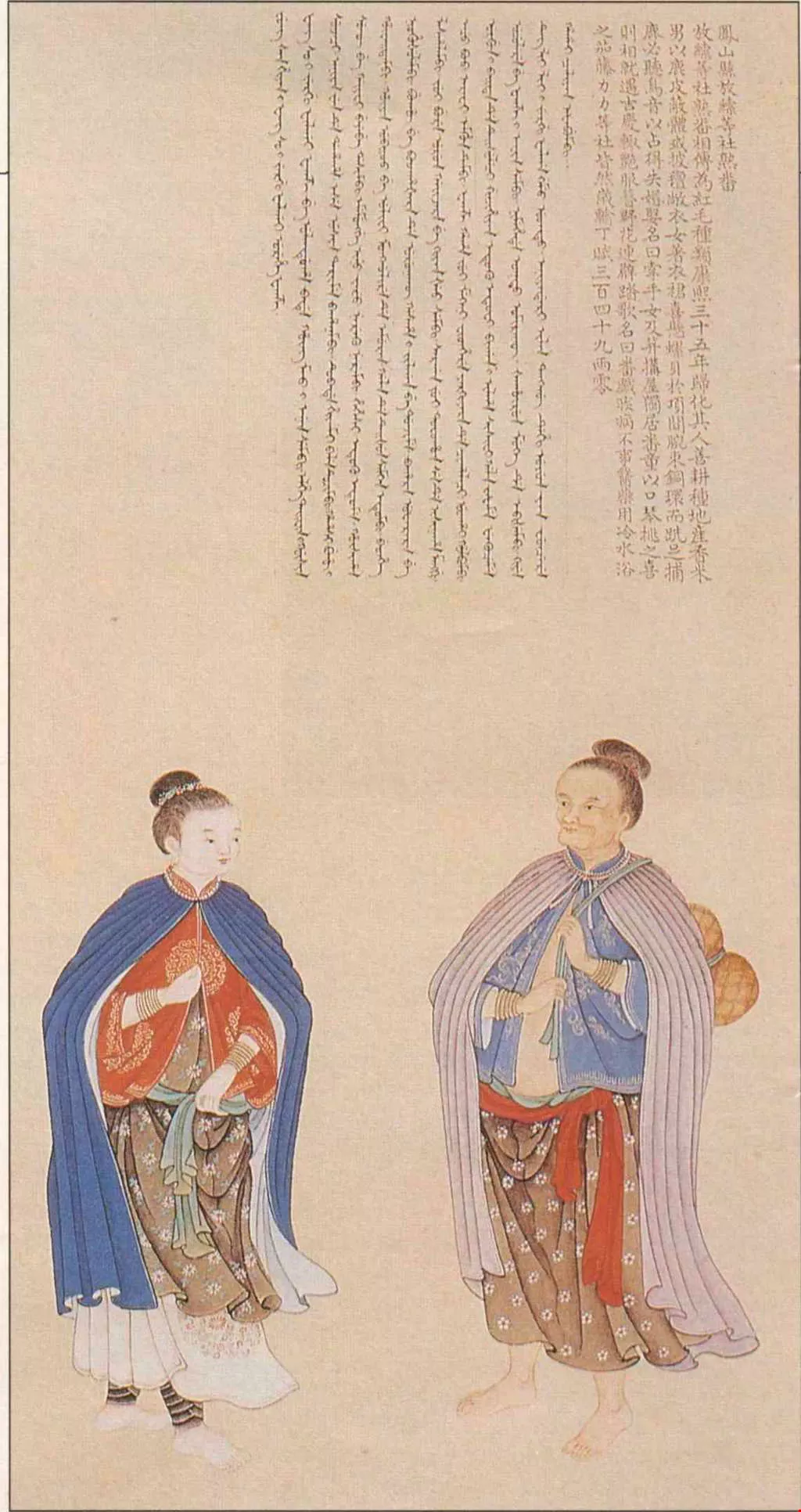
In these "Paying Tribute" illustrations, the assimilated aboriginal tribes of Fengshan County wear ornaments in their hair and scarves that appear to be made from silk. The "court style" pervades throughout. (from Brief Introduction to the Taiwan Historical Documents of the National Palace Museum)
Mandarins on the move
The imperial rescripts in the National Palace Museum collection show that when Chen came to Taiwan he denounced Japanese troops, provided the aborigines with basic education, and stuck to a policy of being prepared for conflict but not provoking the Japanese. Although later, under mediation by British envoys, the Qing court would have to pay 52,000 taels in compensation to Japan and silently relinquish claims to Okinawa as a result of the Mudan Incident, Shen's policy of "developing the mountains and pacifying the aborigines" blazed the trail for Liu Mingchuan to follow with his "new policies."
Shen requested permission to build a city in Laochiao. Today's Hengchun is laid out largely according to those plans. Materials about how the original town was built are described in detail in the National Palace Museum documents. Shen also came up with the policy of developing the mountains with separate northern, central and southern cross-island roads. "To build the southern road, they lived in grass huts for half a year as the road took a hundred turns. Then they started on a road to Peinan [now Taitung]." The northern road ran from Su-ao to Chilai (now Hualien), and the central road ran from Linchipu (now Chushan) to Pushihko (now Yuli). Shen Baozhen built Taiwan's first east-west roads and started development of the interior mountain regions.
Ding Richang took over after Shen Baozhen, coming to Taiwan from Fujian likewise as a "shipping official." After arriving in Taiwan in 1876, he immediately began investigating all of the island's affairs. First he made a tour of the north, on which he undertook an arduous journey to the region around Su-ao. Starting from Keelung, we passed the cliffs of Santiaoling, hearing no birds. It was a journey that carts and horses could not make. Then we used vines to ascend, and in three days we reached Su-ao...." In the National Palace Museum files Ding Richang gives detailed descriptions of what was then wilderness.
These documents show that Ding Richang's reforms included overhauling the Taiwan tax system, dispensing with the tax on fishermen households and other redundant or unreasonable levies. The consequent drop in revenue he would make up by developing mining and agriculture. He asked the court to buy equipment for mining coal, and he went to Patou himself to see how coal was mined. He also asked the court for permission to develop sulfur production. And he pushed such new agricultural money makers as camphor and tea. Ding's report to the emperor mentioned, Currently the teas produced in Moshan and Shihting are best. The high mountain dew is heavy, and the teas taste sweet. The teas of Chinpaoli, Keelung and Santiao are poor. There is too much coal in the mountains there, or the proximity to the sea makes the teas salty in flavor...." Ding was quite detailed and honest about Taiwanese tea.
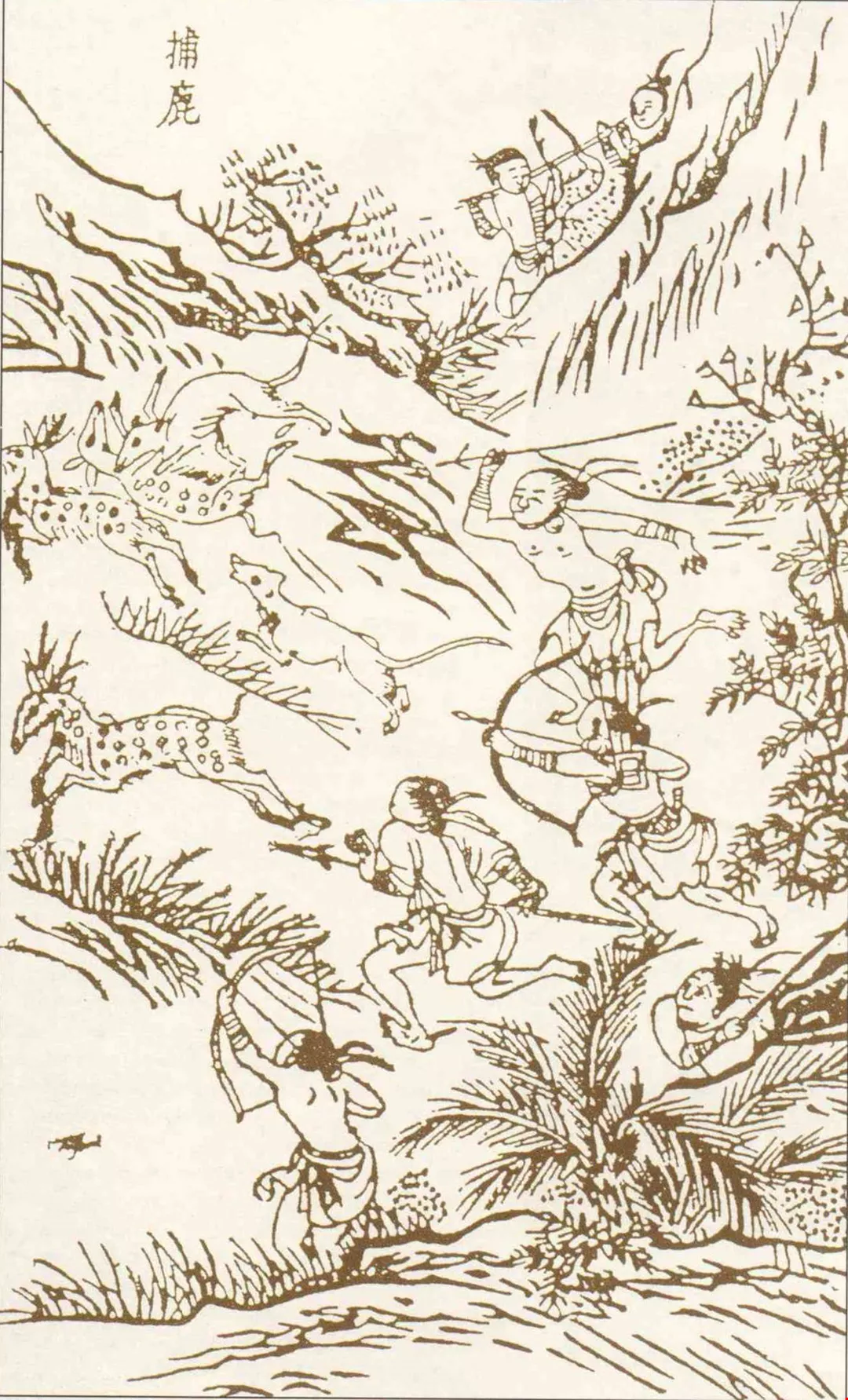
(right) Are the likenesses of the plains tribes that appear in the locally written Chuluo County History more accurate? (from Chuluo County History)
War pushes modernization
Taiwan's first provincial governor Liu Ming-chuan came to Taiwan as the result of war. Documents show clearly how he protected Taiwan during the Sino-French war.
After the signing of the Treaty of Tianjin, the French retreated to Penghu. Liu Ming chuan, viewing Taiwan as dangerously exposed, with no warships or cannons to protect it, relied on forces from Hunan and the Huai River and local Taiwanese militia. They held out for eight months until the end of the war. Afterwards, Liu proposed four urgent measures: (1) setting up defenses for Taiwan and Penghu; (2) drilling soldiers to defend Taiwan and Penghu; (3) collecting back taxes to provide sufficient pay for the soldiers; and (4) pacifying all of Taiwan's aborigines.
The reports to the emperor made mention of Taiwan and Penghu's geographic and strategic importance: Looking at all of Taiwan's ports, from Tachia south to Fengshan, the sand banks are vast, and warships cannot approach the shore. North of Tachia to the area around Hsinchu, the ports are numerous, and all the way to Ilan warships can get close to shore. This is the case in Keelung and Huwei, though mountains aid in the defense. Setting up cannons on them would give us strong positions.... Penghu is not only the gateway to Taiwan but also a key to the north and south seas. To protect Taiwan, protecting Penghu is essential. For protecting the north and south seas, Penghu is also essential as a gateway. Warships should be based in Penghu and Xiamen to maintain a tight defense. There are no nearby places for enemy warships to approach the shore." Liu's observations and suggestions about Taiwan still sound very good today.
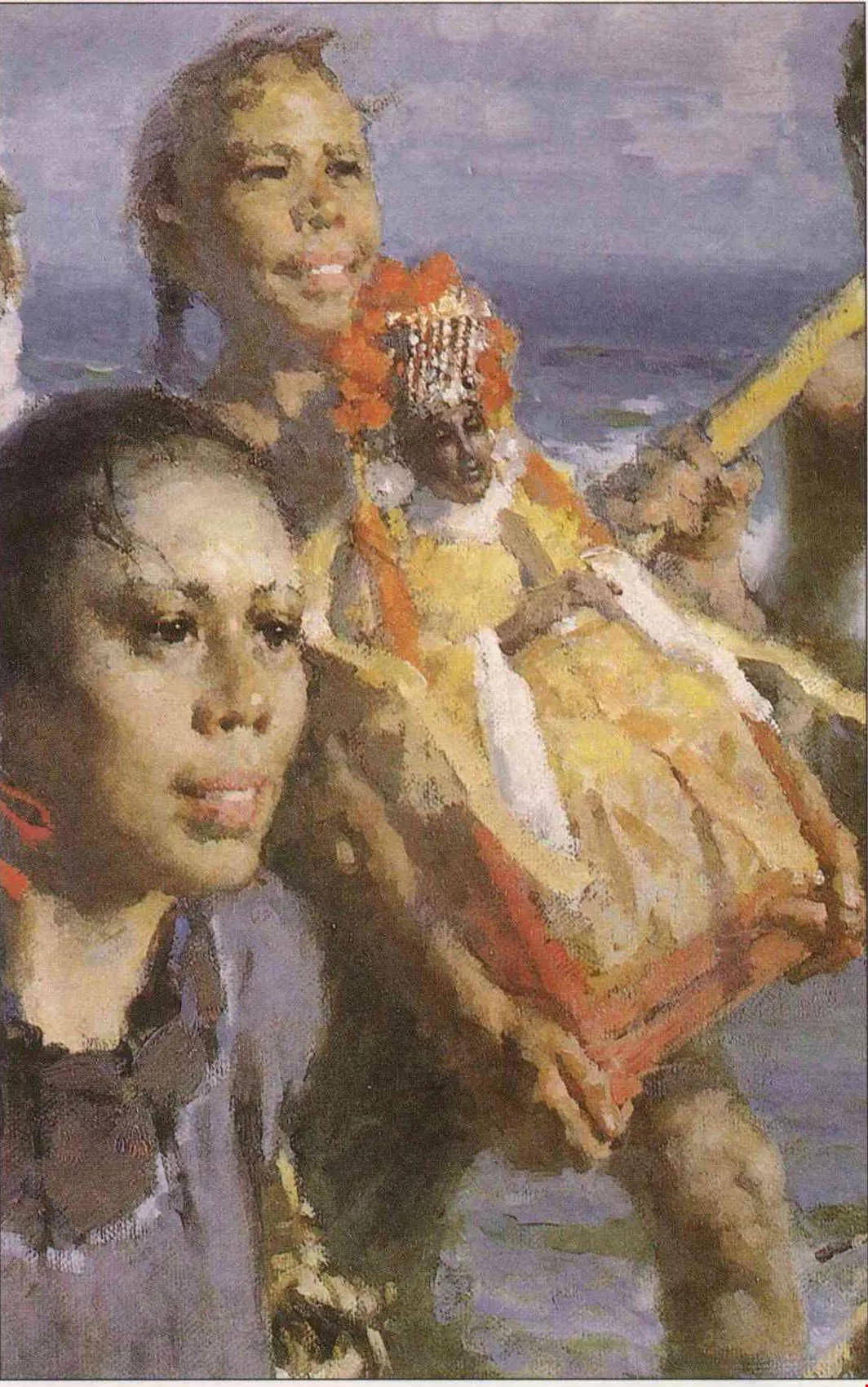
Have they crossed the black channel, to find a better life? "Pioneers Crossing the Sea" is by the artist Ran Maoqin. (courtesy of Ran Maoqin)
Rewriting the history of the Fuzhou sea battle
Among the historical materials in the National Palace Museum relating to Liu Mingchuan, one historical incident is particularly worthy of note: In 1884 the French, after failing in an attack of Keelung, attacked Fuzhou. The naval battle there, which took place in the afternoon of the third day of the seventh month of the lunar calendar, lasted only half an hour (some say only seven minutes) before the Qing's southern fleet was defeated.
Why were the Qing forces so easily routed? Historians have different theories. Some argue that the leaders of the Qing forces weren't sure if they wanted peace or war. Others say that the Qing admirals were ignorant and lived decadent lives. But The Sino-French Naval Battle at the Mouth of the Min River," which is a colored illustration in the Monthly Military Reports" of the National Palace Museum collection, offers another possibility.
It turns out that the Qing forces were put at a great disadvantage because of the tide. In this illustration, the Chinese and French forces are represented by little tadpole shapes colored red and blue respectively. In the illustration the Qing ships resemble the pincers of a pair of tongs protecting the Min River, and in the middle are French ships facing the cannons of Luoxingta. In theory, it seems that the Qing forces shouldn't have lost.
But the accompanying text explains, When the tide is rising, the bows of the boats face inward. When it is ebbing, the bows face outward. The tide was high at noon, and when the battle started it was already ebbing." Because of the tide, the Chinese ships were facing toward the shore at the start of the battle, with their cannons pointing that direction. Of course they couldn't hit the enemy ships. They became completely useless. The French ships, on the other hand, had their cannons pointed directly at the Qing vessels. No wonder the foreign war ships were victorious!
This was really a bizarre incident in history. As more and more historical documents are unearthed, new theories may arise about many incidents.
In the 1990s, with the culture of the native soil" receiving so much emphasis in Taiwan, research into Taiwanese history has been given practical value. Besides these Qing documents now being published by the National Palace Museum, important new materials relating to Taiwanese history may come to light internationally, such as in the case of documents relating to the Dutch rule, or through efforts to collect local documents such as contracts. As these materials are sorted and examined, will historians, in summing up and reinterpreting from the many theories that exist about Taiwan's past, construct a more complete framework that allows the true colors" of history to emerge?
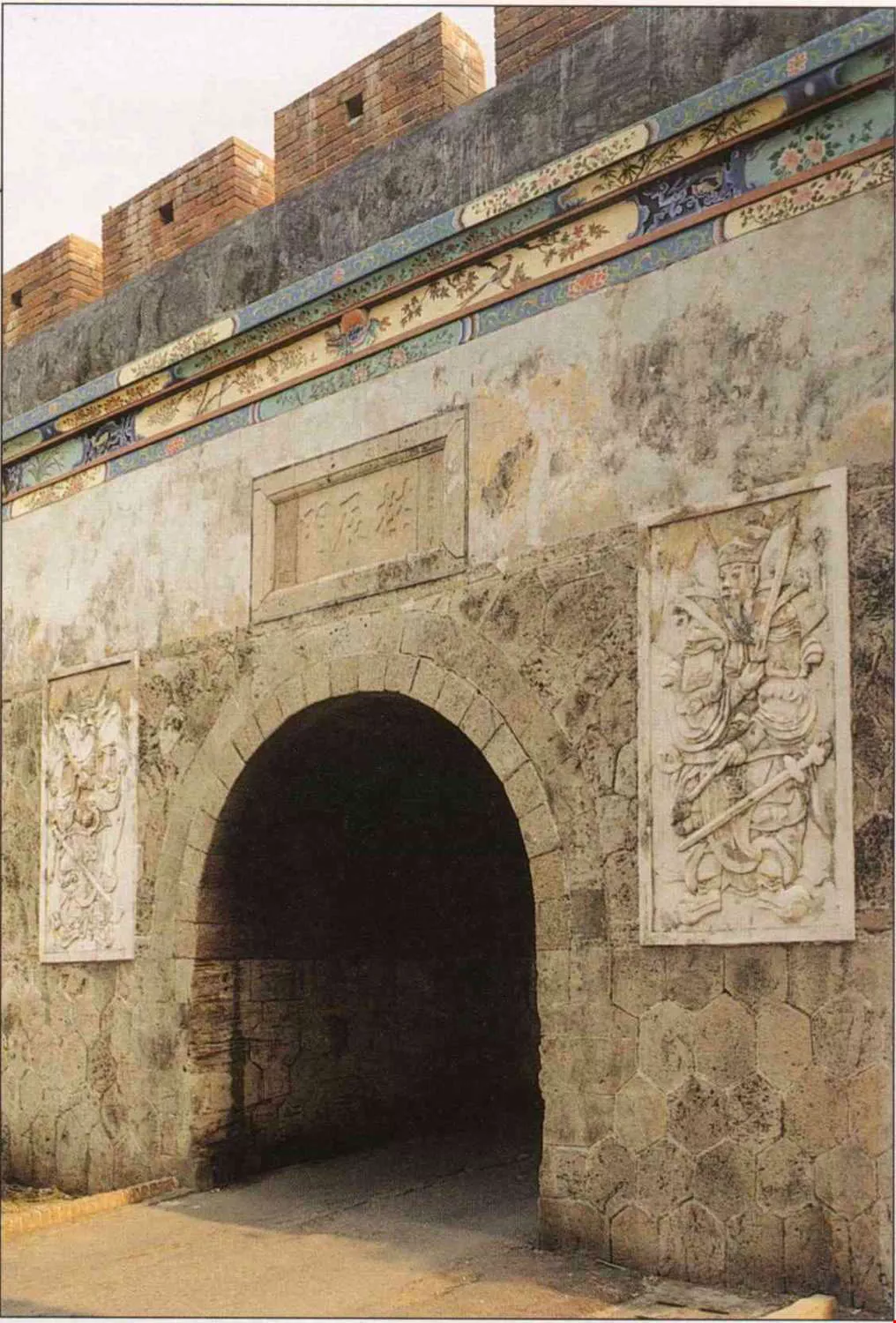
The relic of Tsuoying was built during the rule of Emperor Daoguang (1823-1850). In the Qing it was the Fengshan city wall. (photo by Cheng Yuan-ching)
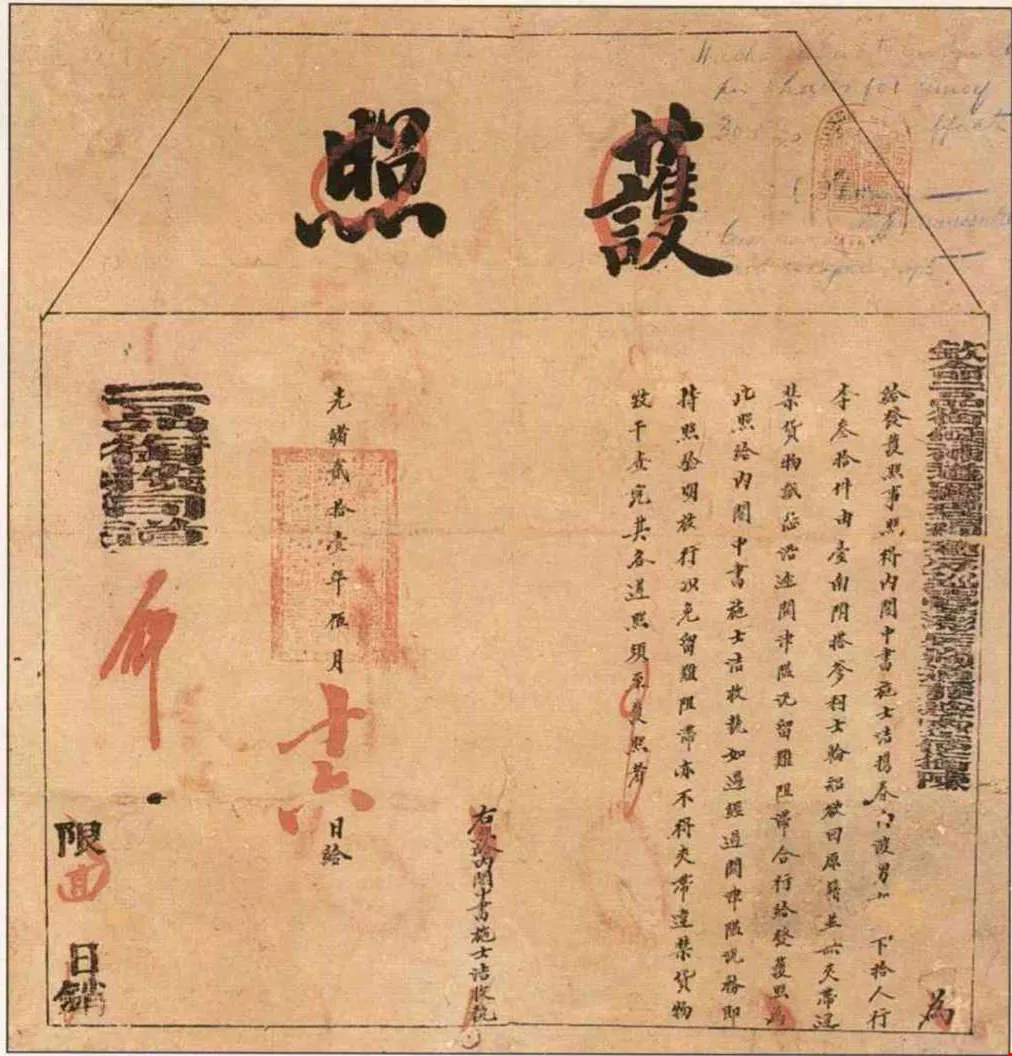
During the rule of Guangxu, Taiwan County issued family passports. This passports contains 10 names and 30 pieces of luggage and notes that its bearers are carrying no prohibited goods. During the Qing dynasty, the government wavered between strict and loose policies regarding those mainlanders who wanted to cross the strait to Taiwan. (courtesy of National Museum of History)
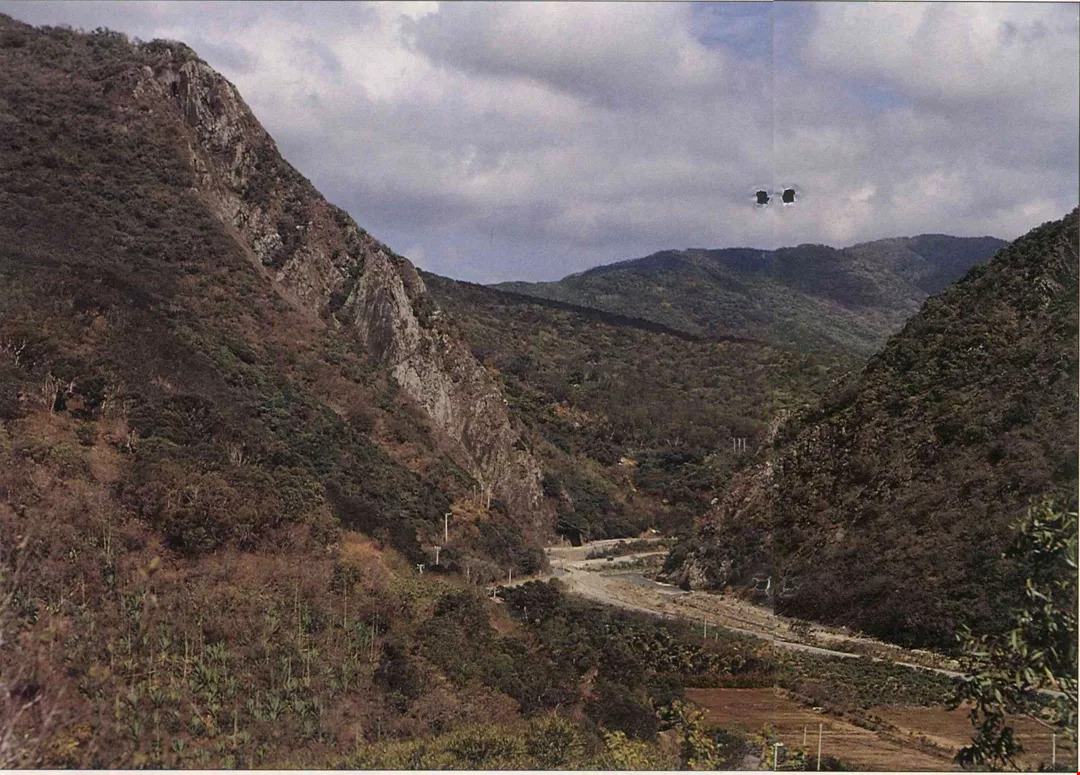
The Mudan Incident, during which Japanese soldiers attacked Taiwan, was key in getting the Qing government to look seriously into defending Taiwan's coastal waters. The incident took place in the Checheng district of Hengchun. Relics of the battlefield remain. (Photo by Diago Chiu).
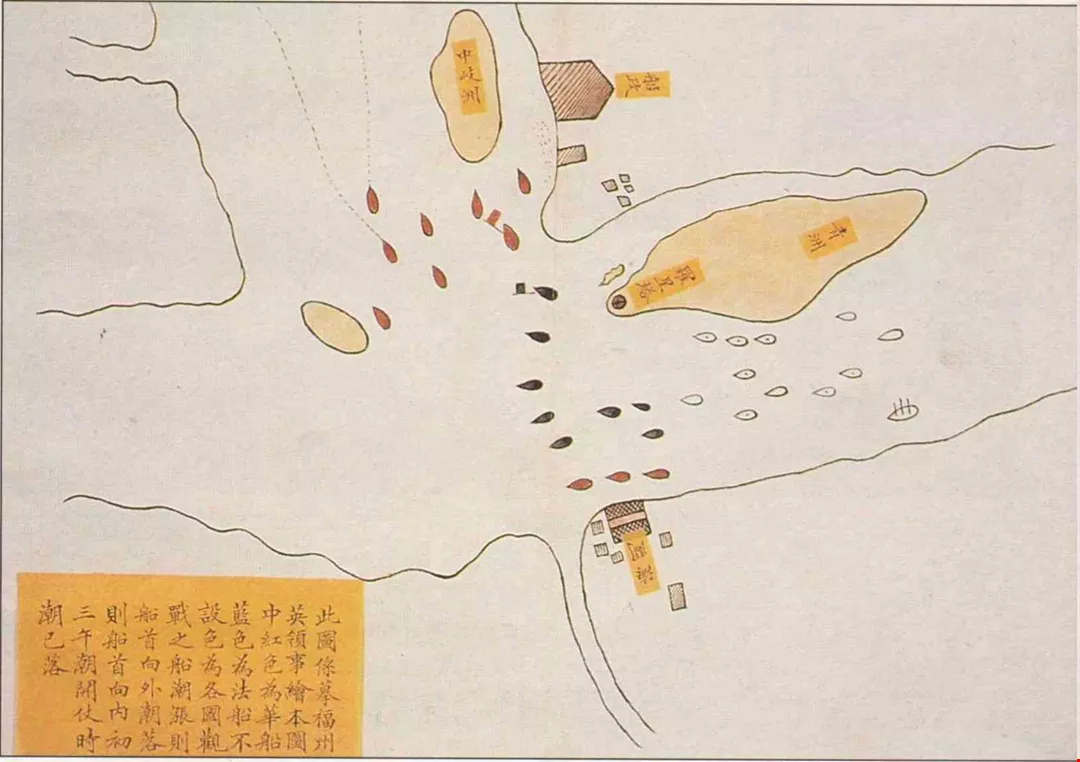
This color chart, from the military documents collection at the National Palace Museum, offers another explanation for the Sino-French naval battle at Fuzhou.
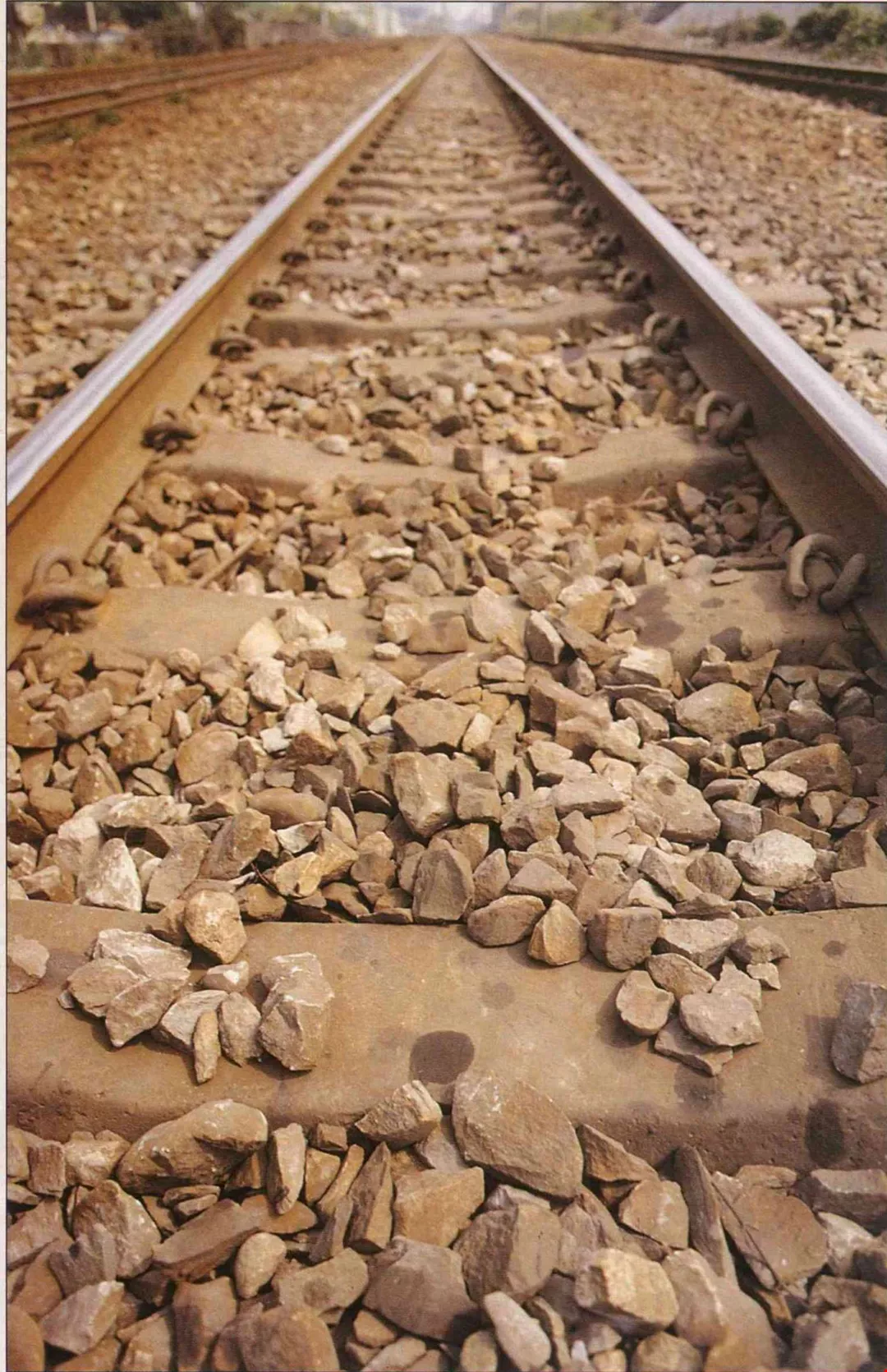
Railways were the first step in Taiwan's trek toward a modern infrastructure. Liu Mingchuan laid a railway from Hsinchu to Keelung, the first in China built by Chinese with Chinese funds.
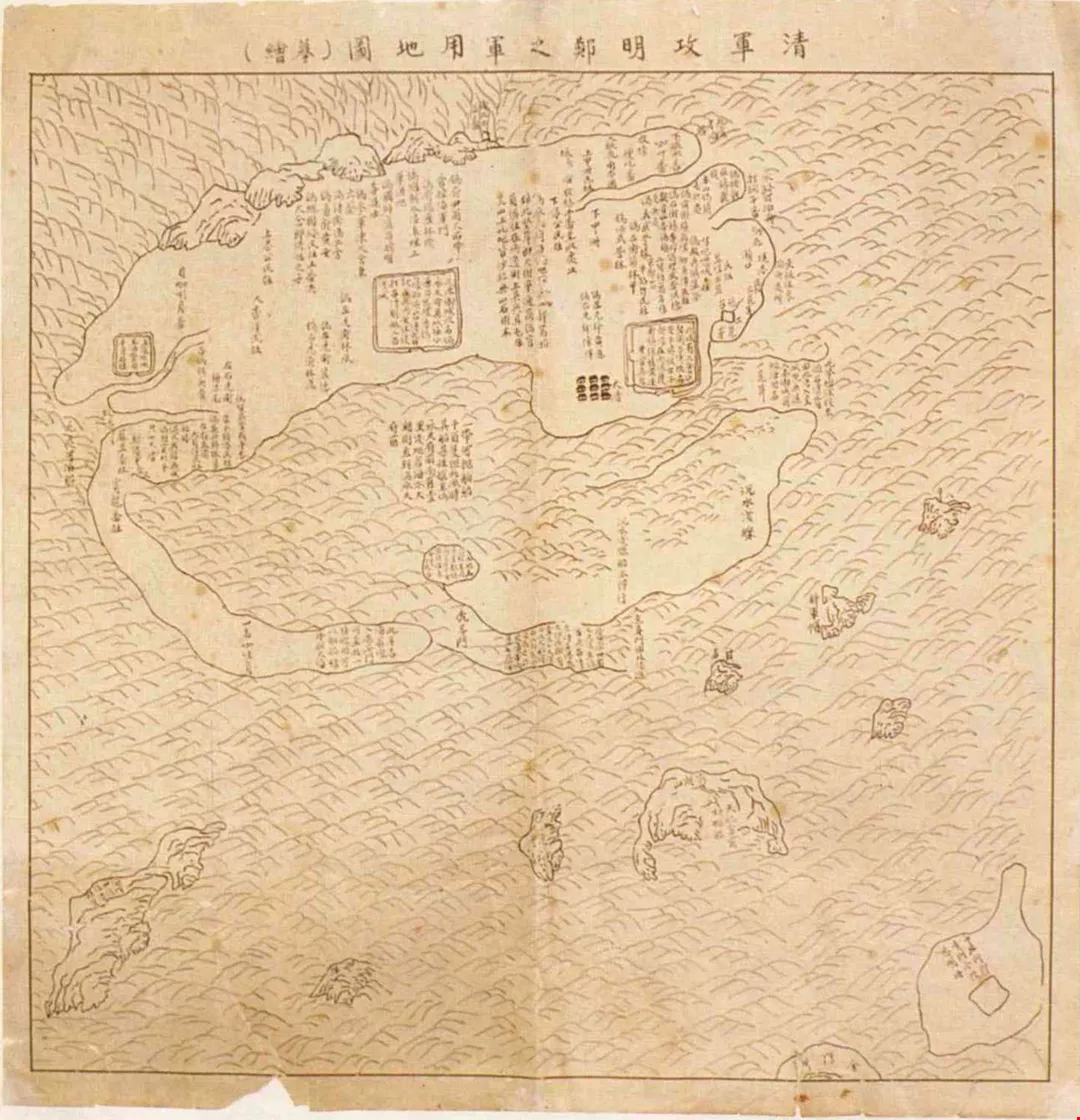
A copy of the "Map That Qing Troops Used to Attack the Pro-Ming Zeng Chenggong Forces," which is in the National Palace Museum's "Northern Taiwan Map Collection." It was modelled from the same source as the National Palace Museum's "Sketch Map of Taiwan." (courtesy of Tsao Yung-ho)

@List.jpg?w=522&h=410&mode=crop&format=webp&quality=80)


