Old Movie Theaters Get a Facelift
Chang Meng-jui / photos Hsueh Chi-kuang / tr. by Christopher J. Findler
September 2007


According to the Fair Trade Com- mission's latest statistics, each person in Taiwan watches an average of less than one movie per year in a movie theater. The plethora of entertainment options now available has unseated movies as Taiwan's "national pastime." The decline in moviegoers has resulted in the closing of a number of cinemas, so that almost 90% of the 309 townships on the main island of Taiwan have no movie theaters.
Studies by Ye Long-yan show that soon after Taiwan was returned to Chinese control in 1945, it had more than 150 movie theaters. Taiwan's movie industry peaked between 1960 and 1980 with nearly 2,000 films being produced locally and in excess of 800 movie theaters. But all good things come to an end. Today, Taiwan makes fewer than 20 feature films a year and now has only 160-plus theaters, 46 of which are located in Greater Taipei.
Since multiplexes began springing up in Taiwan a decade ago, business for traditional large theaters, which also featured the smell of mildew and the occasional rat, bottomed out--some have closed their doors and others have been torn down or converted for other uses. Some have even been reduced to strip joints complete with pole dancing. Remember scenes like those in the heart-warming Italian classic Nuovo Cinema Paradiso, which depicts simple country folk sitting in an old theater, eyes fixed on the silver screen as they laugh and cry together? Those days are gone for good.
Despite the gloom that's enveloping the industry, there are still those who are optimistic as they strive to find new opportunities. They refuse to twiddle their thumbs as their theaters are relegated to history. Tainan City's Chin Men Theater and Taichung City's Wonderful Cinemas are two examples. To keep up with the latest trends and attract customers, the theaters are being given facelifts and featuring art films, and management is incorporating local culture into the cinemas. Whether or not their labors prove fruitful, they should be commended for their efforts.
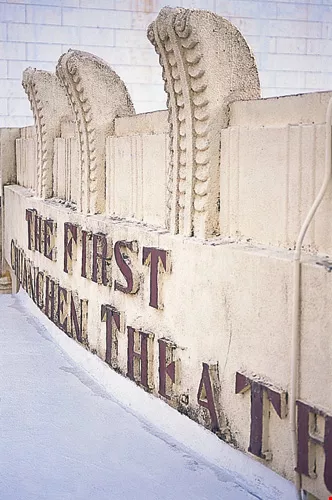
Completed in 1950, Chin Men Theater was built in a baroque style, incorporating arched windows, black Japanese roof tiles, Japanese soffit vents, and carved stone door columns (right). This brilliant piece of art is an integral part of the collective memory of the people of Tainan.
(1) Chin Men Theater
With the Cannes Film Festival celebrating its 60th year, festival president Gilles Jacob asked 33 of the world's most brilliant directors, directors whose works have been shown at Cannes, to shoot three-minute clips on the theme "To Each His Cinema" in which they depict cinema in their lives. Renowned Taiwanese director Hou Hsiao-hsien selected the Electric Princess Picture House, located in Tainan County's Matou Township, and Tainan City's Chin Men Theater, for his short film. Hou's film shows adults heading to the theater with kids in tow. A common practice in the 1960s, this brought back a lot of happy memories for large numbers of people. Many in Tainan have a special place in their hearts for Chin Men Theater. As a student at the Tainan First Senior High School, for example, director Ang Lee frequented Chin Men.
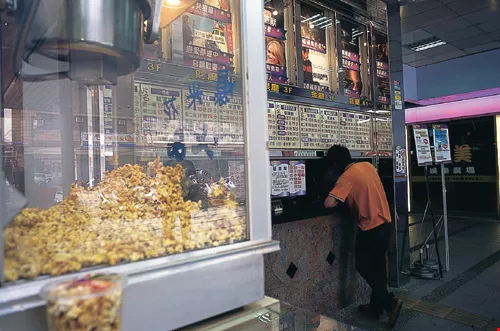
A year of renovations bestowed Taichung's Wonderful Cinemas with a magnificent new visage. Its five screens used to only show second-run films. Now, one was designated to play premiere features only, making the Wonderful the only theater in Taiwan to screen both first and second-run films.
Golden age of cinema
Chin Men Theater is located in near Fort Provintia in Tainan's West Central District, an area bristling with historic places of interest. Completed in 1950, it was originally christened "The First Chuanchen Theatre" and was built in a Baroque style, its ceiling 20 meters high. A beautiful piece of art itself, the edifice boasts such elaborate elements as arched windows, black Japanese roof tiles, and Japanese soffit vents. Originally managed by Ou Yun-ming, a wealthy Tainan merchant, it was taken over in 1969 by Wu Yi-yuan, Ou's relative by marriage. Wu, who had worked at First Chuanchen several years, changed its name to Chin Men Theater. It would primarily show films produced by the eight major US motion picture companies.
With 50, Tainan City had the most theaters in Taiwan and more than its share of movie aficionados. Promotion was rare--ticket sales depended on word of mouth. If a film was good, the word would be all over the city very quickly.
"That really was the golden age of movie theaters. It was common for families to see films together," Wu recalls. Movies included such blockbusters as Ben-Hur, The Sound of Music, A Fistful of Dollars, and Dr. Zhivago. James Bond films were so popular that in addition to filling the theater's 700-plus seats, many people were more than willing to buy "standing room only" tickets. The theater was packed all the way back to the door to the WCs.
"Half of the audience would still be trying to exit when the next showing started!" reminisces Wu with a chuckle.
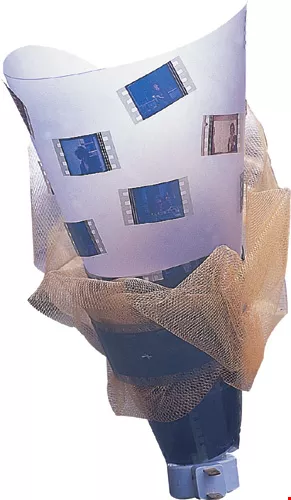
After Wonderful Cinemas was converted into a multiplex, projectionists find themselves busy running back and forth between theaters with reels of film. The photo on the right shows film reels used in Wonderful as works of art.
Two-for-one tickets
Faced with intense competition, in 1971, Wu accepted a theater manager's recommendation to only show second-run foreign films at Chin Men, charging only NT$6 for two films. Chin Men became the first theater in Taiwan to charge one ticket for two second-run films.
This new strategy attracted large crowds of moviegoers, especially students. Every Saturday afternoon (Taiwan still didn't have two-day weekends), crowds of uniformed students could be seen parking their bicycles and squeezing into the theater. Chin Men might have been showing second-run films, but if they chose well, the tickets still sold like hotcakes. Wu says that they once showed the locally produced film The Kingdom and the Beauty and the American comedy The Love Bug. The combo was so popular that a month later, it was still going strong.
Chin Men's heyday lasted a number of years. Wu Yi-yuan's second son Wu Chun-cheng, now 44, took over the family business. Wu practically grew up in the theater and as such had a special passion for movies. After graduating from Tainan First Senior High School, he registered to take the entrance exam for art school to help him realize his dream of becoming a director, but an unexpected problem with his ear and the inability of doctors to treat it effectively forced him to abandon his dream. He took over the reins of the family business at his father's suggestion.
However, after 1990, videotapes, cable TV movie channels, rampant piracy, and the government's loosening of restrictions on the number of copies permitted to be made of foreign films and the number of screens theaters could have, all began to have an impact. Cinema was changing.
In contrast to the sumptuousness of traditional cinemas, their franchised multiplex counterparts today normally have six to ten (or more) smaller screens in viewing rooms with seating for one or two hundred. They also offer a variety of choices in terms of food and fun to draw the young crowd. Shifts in consumer trends have resulted in old cinemas bellying up and being torn down. Those that have managed to stay afloat are at risk of going under at any time.
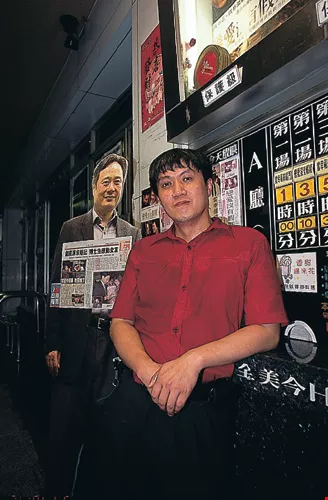
Wu Chun-cheng, who was never able to realize his dream of becoming a director, implemented drastic measures in a battle to preserve old cinemas.
New marketing methods
Owners of old theaters find their backs up against the wall. Eight years ago, Wu Yi-yuan talked to his son about shutting the theater's doors, but after running the cinema 20-some years, Wu Chun-cheng couldn't let go. He didn't have it in his heart to close the book on this theater which had meant so much to so many in Tainan for so many years. He decided to put up a fight to save the cinema. He turned right back around and talked his father into making drastic changes.
The first change was to give the cinema two screens, each of which would show two second-run flicks. Next, he had the ceiling and restrooms renovated, the walls painted, and the 20-year-old wooden seats replaced with new seats with soft cushions.
Despite the renovations, Wu made sure to preserve some of the things that make the theater special. Theaters today, for example, use promotion posters printed on computerized inkjet printers, but Chin Men insists on using its intricately hand-painted signboards. Wu had other ideas, too. He brought together the idea of hand-painted billboards and postcards to create limited-edition hand-painted cinema tickets. This helped make his theater a topic of conversation and spurred sales. Moviegoers loved the hand-painted tickets when the theater showed Happy Rice and March of the Penguins.
Wu is constantly thinking of new ways to give the theater yet another shot in the arm. A few years back, three typhoons seriously damaged Chin Men's roof. It had to be retiled. Wu had a brainwave: give the theater a facelift, encouraging people to "adopt" the repair work in exchange for prizes and the 55-year old black Japanese roof tiles which were made into pieces of art. The event drew large crowds.
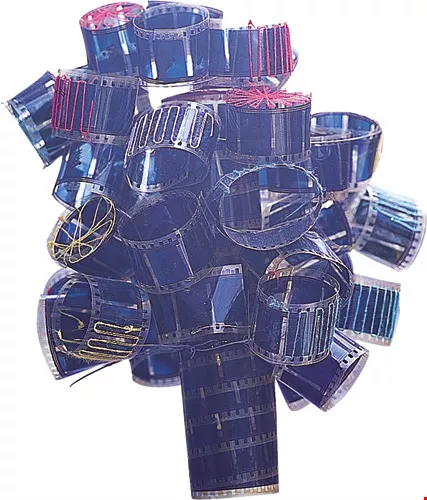
After Wonderful Cinemas was converted into a multiplex, projectionists find themselves busy running back and forth between theaters with reels of film. The photo on the right shows film reels used in Wonderful as works of art.
Waiting for other Ang Lees
In 1999, the oriental martial arts flick Crouching Tiger, Hidden Dragon took the world by storm. When the film's director Ang Lee came back to Taiwan to attend the Golden Horse Awards, he returned to Tainan to visit his parents. Crouching Tiger, Hidden Dragon happened to be showing at Chin Men as a second-run film. Taking advantage of the opportunity, Wu asked his brother to use his position as head of Tainan's First Senior High School Parent Association to ask Lee to visit the old theater. Lee consented.
Ang Lee has innumerable memories linked with Chin Men. Lee said that he was there so much that it was almost a second home. Many of the films he saw there, including Roman Holiday with Audrey Hepburn, are etched in his mind. Heralded by the media, Lee's journey of nostalgia in Chin Men aroused a lot of memories among many of Tainan's residents. Crouching Tiger, Hidden Dragon was shown at Chin Men for 108 days--a record for second-run films at Chin Men.
In contrast to today's spiffy new multiplexes, Chin Men not only exudes art and culture, it is an epicenter for nostalgia and old-time human kindness.
This past May 20th, a PhD student at National Cheng Kung University selected Chin Men, the favorite haunt of him and his girlfriend of nine years, to perform a skit to propose to her. When the late show was coming to an end, a slide show suddenly cut onto the screen. It showed their relationship over the years and his declaration of his feelings for her. Friends and family, who had been lying in wait, offered their congratulations to him and his blubbering girlfriend. Theater owner Wu Chun-cheng's enthusiastic help not only served to bring these two to the altar, it added another heart-stirring story to Chin Men's already impressive repertoire.
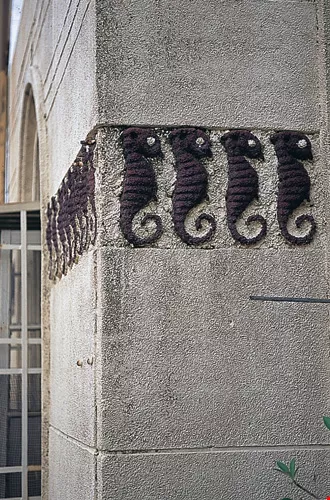
Completed in 1950, Chin Men Theater was built in a baroque style, incorporating arched windows, black Japanese roof tiles, Japanese soffit vents, and carved stone door columns (right). This brilliant piece of art is an integral part of the collective memory of the people of Tainan.
(2) Wonderful Cinemas
On weekends and holidays, Wonderful Cinemas, located in Taichung City's Central District, is the scene of hawkers and lines of people waiting to purchase tickets. Many of them hail from the Fengyuan and Nantou areas. Few realize, however, that two years ago, this commercial district was lackluster with only handfuls of people coming on any given night to view movies in the complex's five empty theaters.
One after another, Taichung's old cinemas had thrown in the towel. Wonderful Cinemas was also hurting, but after all these years, proprietor Huang Ping-hsi couldn't bring himself to give up. He invested a hefty NT$20 million into overhauling the theater, while making major adjustments to its operating policies. Other movie theater operators weren't optimistic about Huang's unorthodox methods, but Huang paid them no heed. "When I make up my mind to do something, nobody can stop me." Huang would rather fight than just roll over and die and he believed in what he was doing.
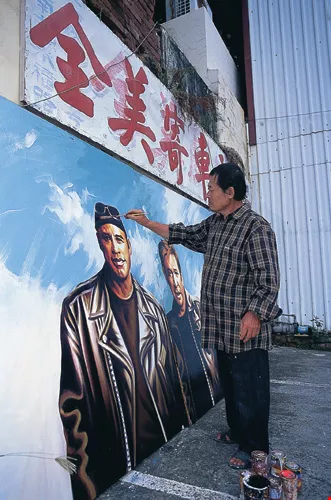
Chin Men Theater's management insists on using hand-painted movie posters. Each stroke of the brush of the painter Yen Chen-fa helps to vividly capture the expressions of the characters depicted in the illustrations.
Taichung's film house
He was by no means acting out of desperation or on impulse. Prior to renovating his theater, Huang, who has almost 30 years of experience in managing cinemas, contemplated a number of alternatives, gathered information, and listened to what the public wanted from cinema. He was confident that many people still enjoyed watching films in movie theaters, but he also knew that their hearts were not being stirred up by any of the methods then being used. He decided to focus his energies on this area.
At the beginning of 2005, after a year of renovations, Wonderful Cinemas reopened its doors. In addition to a facelift, one of the Wonderful's five screens would now show strictly premiere films. It was now the only cinema in Taichung to offer both first and second-run films.
Even more remarkably, the Wonderful had exclusive rights in central Taiwan to the premiere films it showed and profits would not be the sole factor in its decisions.
Prior to that, box office considerations made showing art films, films by independent producers (those other than Hollywood's Big Eight), and documentaries a major obstacle for theaters in central and southern Taiwan. To see these types of films, moviegoers had to travel all the way to Taipei. This situation produced a cultural rift between the north and the rest of the island.
Thanks to Huang, today, high-quality alternative films can be seen at the Wonderful. Over the past couple of years, it has shown such Taiwanese films as The Touch of Fate, Happy Rice, Gift of Life, and cultural films like The Science of Sleep and The Blue Butterfly. Last year, in collaboration with Spot-Taipei Film House, Wonderful Cinemas held a film festival showing works by the great German director Werner Herzog, supplying alternatives for the viewing pleasure of the people of Taichung. Consequently, word of mouth has made the Wonderful a mecca for young people in central Taiwan who like culture and art.
In addition to targeting the predilection for art films of certain groups, to make audiences more discriminating Huang is working to cultivate the viewing tastes of young people. He dialogs with a number of teachers and students in post-secondary-school student organizations in Taichung, supplies old movie reels to students as materials for installation art and has practically converted his theater's corridors into an art gallery for student works.
He even took the initiative to invite students to his theater to see his collection of films and movie posters. After viewing them, students are encouraged to share their thoughts. Activities such as these serve to pass on the torch. They have been well received by students, many of whom have become loyal customers of the Wonderful.

Completed in 1950, Chin Men Theater was built in a baroque style, incorporating arched windows, black Japanese roof tiles, Japanese soffit vents, and carved stone door columns (right). This brilliant piece of art is an integral part of the collective memory of the people of Tainan.
A bumpy history
Wonderful Cinemas experienced a heyday after commencing operations in 1981. The theater is located on Chungcheng Street near the Kungyuan Road intersection--the thriving city center in those days. One street over is Chunghua Road's popular night market.
Initially, the Wonderful showed only first-run Hollywood blockbusters, like Alien, Raiders of the Lost Ark, and Back to the Future. "Every evening, the endless streams of people resembled the crowds seen on weekends in Fengchia night market. Getting into the theater on time required pushing and squeezing. We even needed cops around to maintain order." An old Taichung movie buff recalls, "Back then, for the people of Taichung, if you had never seen a movie at Wonderful Cinemas, then you'd never seen a movie."
Unfortunately, the good times don't last. The 1990s saw several luxurious modern cinemas built in Taichung City and the decline of the Central District's commercial area. The Wonderful's glory days were coming to an end. In 1995, the doors were closed. The following year, Huang Ping-hsi purchased Wonderful Cinemas. He dropped premiere films to exclusively show second-run films. At first, business was good; it looked as though the Wonderful would rise from the ashes.
Nobody knew what was lurking just around the corner. In 1999, military training at Chengkungling for males in higher education, training that had been around for 40 years, was terminated. Without the students as well as their visiting friends and relatives, the Wonderful's box office sales plummeted by half. Later the same year, the September 21st earthquake wreaked havoc on central Taiwan, both physically and economically. And the SARS epidemic of 2003 had the people of Taiwan so frightened that nobody dared venture into public places, much less the closed spaces of movie theaters.
"Those were the darkest of years for Taiwan's movie industry. My heart scraped bottom daily when I looked at my empty theater." Despite everything, Huang didn't give up hope. He believes that "all things must pass." As long as people love movies, a crisis like this one can be made into an opportunity.
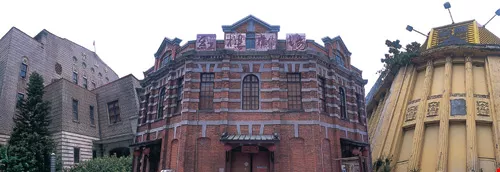
Old cinemas were once Taiwan's unchallenged leisure centers. Today, some have been converted to other uses. Performance venues like Taipei's Zhongshan Hall and the Red Playhouse, for example, have been reduced to business places. Other old theaters been abandoned or even torn down.
Huang the legend
Fifty-five years old this year, Huang Ping-hsi's love affair with movies began at 17. He and his friends used to wait outside of any one of the small theaters in his hometown of Hsiluo in Yunlin to slip in and catch the end of a movie when no-one was watching the door. To this day he remembers the joy those adventures brought. At 18, he went to Taipei to work. His brother-in-law, who was working in a theater in Hsimenting, asked him to work there too. Huang didn't need to be asked twice. He jumped into the industry feet first, starting off as a gopher delivering and storing reels.
After completing his military service, Huang actively pursued a career in movie theaters. He wanted to be a manager. In 1980, he leased Hsimenting's Paihsueh Theater. At the time, business was booming for theaters that showed two second-run films for one ticket. He later leased the Kuotai, Kuaile, Yuanhuan, Chiaohsing, Hsingfu, and Yingke Theaters. At one time, he had as many as ten cinemas, including ones in Kaohsiung and Pingtung. You might say he was the originator of movie theater chains in Taiwan.
Over the course of running theaters, Huang has experienced more than his share of disasters. After operating for six years, the Paihsueh was destroyed by fire. He lost everything he had made from it. Even worse, after investing almost NT$10 million in renovations for Sanchung's Chiehshou Theater, Huang incurred serious losses when the cinema burned to the ground just three days after reopening. Later, his landlord failed to mention that the municipal government was planning to widen the road next to the Happy Stage Theater in Taichung, and only six months after Huang signed the three-year lease, the building was razed. His landlord skipped town with three years' rent money and the deposit.
Fortunately, Huang remains confident about the movie industry. Every time circumstances land him on his keister, he gets back up and keeps plowing ahead. He feels that there are no shortcuts to success in movie theaters, but you need to be honest. If you are honest, everything else falls into place. Because he stuck to his guns and stayed honest, he eventually came to own a theater of his own.
Huang has other hopes and dreams for the movie industry, including combining the film and cultural industries. Over the years, he has accumulated a collection of over 500 35-millimeter films from all over the world, old out-of-production movie projectors, and more than 1,000 carefully mounted movie posters. He has been careful to protect them, ensuring that they are maintained and stored in dehumidified conditions. To do his part in passing on the torch, he has stored everything neatly in the cinema's storeroom where the public can view it free of charge.
Huang Ping-hsi doesn't feel that he is successful per se. He has a different definition of success: "Success is watching lots of good movies with others in the theater."
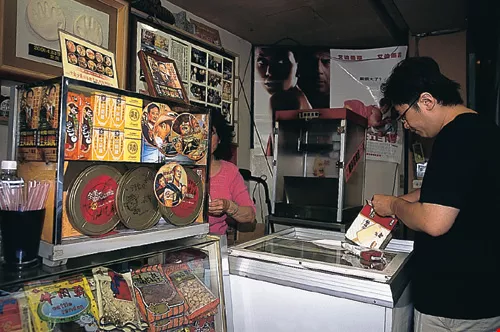
The proprietor is continually on the lookout for new opportunities for Chin Men Theater and producing all kinds of film-related products that give the public a ride down memory lane.

After Wonderful Cinemas was converted into a multiplex, projectionists find themselves busy running back and forth between theaters with reels of film. The photo on the right shows film reels used in Wonderful as works of art.
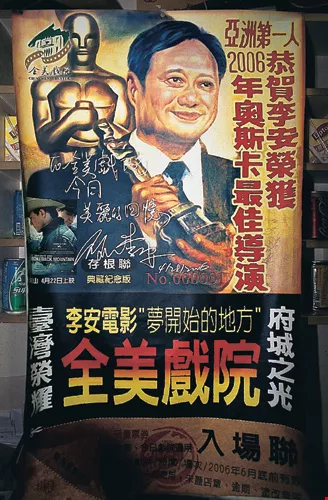
Chin Men Theater handed out hand-painted tickets based on Ang Lee's Oscar for Best Director as collector's items for moviegoers. They drew a great deal of attention, while spurring sales.
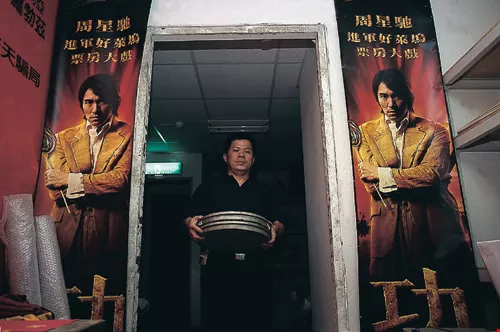
After Wonderful Cinemas was converted into a multiplex, projectionists find themselves busy running back and forth between theaters with reels of film. The photo on the right shows film reels used in Wonderful as works of art.
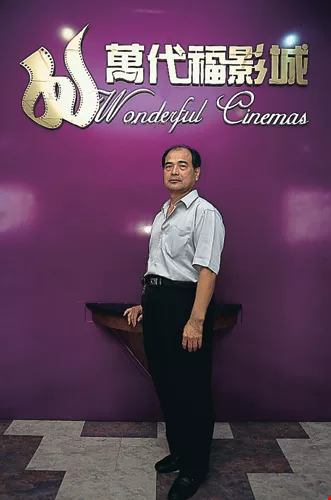
Huang Ping-hsi is confident about cinema and believes that if you fall, you have to get back up and keep plowing ahead. He also feels that there is no secret of success in the theater business, but honesty and sincerity take obstacles out of the way.
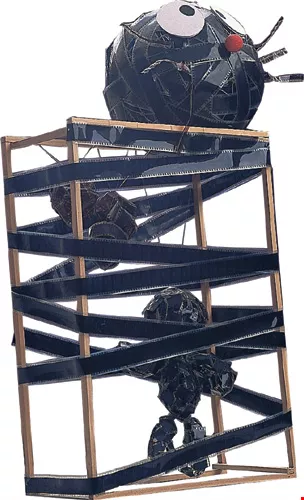
After Wonderful Cinemas was converted into a multiplex, projectionists find themselves busy running back and forth between theaters with reels of film. The photo on the right shows film reels used in Wonderful as works of art.


