Retro Appeal: Pens and Pencils in the Spotlight
Liu Yingfeng / photos Jimmy Lin / tr. by Jonathan Barnard
September 2016


SKB, Bismarck, Telex… can you remember your first fountain pen? In your student days, when you opened your pencil case and saw neat rows of perfectly sharpened pencils, did it not bring a certain indescribable joy?
With the IT wave, moments such as these became seemingly a thing of the past. Fortunately, with the renewed popularity of writing by hand, the warmth imparted by these writing implements is returning to people’s lives.
With its proximity to the harbor, Kaohsiung’s Yancheng District, formerly a bustling area, is home of the stationery supply firm SKB, which has been operating here for more than 60 years.
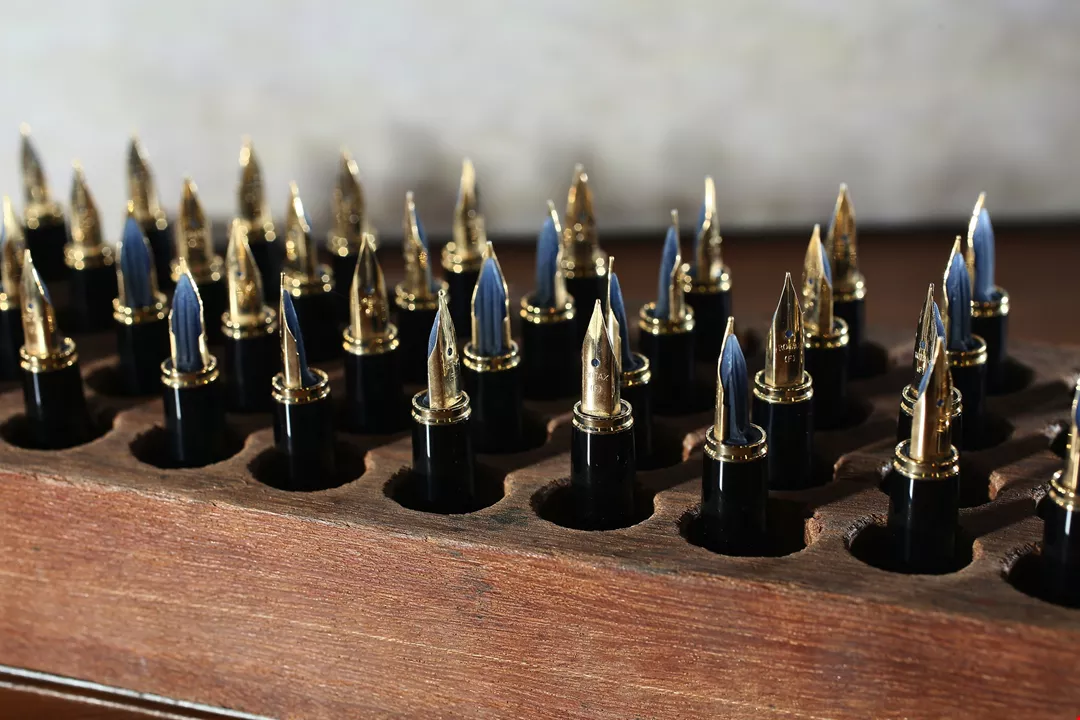
After World War II, the Japanese in Taiwan returned to Japan. Having originally worked at a driving school, in 1951 Lu Ronghuo took over Goro Arakawa’s Green House Stationery Store. He changed its name to Wen Ming Books and began to import stationery supplies. Then, using the initials for “smooth, knowing, beauty,” he began to market a line of SKB fountain pens, which Wen Ming assembled from imported parts.
The first SKB pen was made in 1959. A year later they introduced the classic streamlined SKB 22. Eric Lin, an assistant manager at SKB Wen Ming Manufacturing, explains that the Type 22 pens sold for NT$75 apiece back when a civil servant’s salary was only NT$300. It represented a fourth of their monthly income.
Nevertheless, when the pen was launched, it immediately created a sensation.
Even though they were doing fine with the fountain pen business, Lu Ronghuo could smell that the market was shifting, so he decided to reorient the company’s focus to ballpoint pens.
As expected, cheap and convenient ballpoint pens came to dominate the mass market. All manner of ballpoint pens came out of SKB’s large factory in Yancheng.
Every year they designed a dozen or more new ballpoint pens. There were the “Blue Jade,” “White Jade” and “Green Jade” pens that few people know about these days, the “Secretary” line with its no-nonsense style, and the specialty pens with their unique designs and perfumed inks. The pens occupied a large portion of the shelves of stationery stores and became a familiar part of life for multiple generations.
Half a life spent with pens
Any history of stationery supplies in Taiwan must include the name SKB. And “Uncle Fu,” who went to work at SKB after graduating from high school in 1970, is a walking history book of the company.
Now 63, he is responsible for centrifuging the ink. Every day hundreds of ball point pen cartridges pass through his hands, as he repeatedly dips them first in a chemical and then in an alcohol solution, carefully washing away the excess ink before placing them under a yellow halogen light to dry.
Fountain pens, ballpoint pens, pens of all kinds… there isn’t a type of pen that Uncle Fu doesn’t know how to make. The company was on a roll in the 1960s and 1970s. He recalls how the boss used to send staff to Japan for training. A total of 500 workers put in three shifts at the factory, with 30 machines in operation around the clock. Every day northbound trucks and trains were loaded with the company’s products.
A new craze for writing revives fountain pens
But today, when the industry is no longer thriving, when long-time competitors such as Telex and Bismarck are no longer even making pens, SKB has become Taiwan’s sole producer.
In the 1990s, a double threat foretold of a decline in the use of paper and pens: There was the rise of the Internet and digital communication, with a concurrent drop in the birth rate. Long focused on producing ballpoint pens, SKB had to reconsider its future.
“A pen should be more than just a writing implement: It should be an accessory of fun.” In 2012 SKB decided to look for some of their old workers and start producing fountain pens again. Back in the day, they had designed such models as the Type 22, as well as a three-inch pen for extra portability. SKB decided to reenter the fountain-pen market with several of its well-loved classics.
Hugo Chen, SKB’s product manager, explains that in order to give consumers an opportunity to re-experience SKB’s past glories, they elected to resurrect some historical models for the group of fountain pens that marked the brand’s return to the market. They just slightly tweaked the colors and nib designs. As for its newly designed pens, SKB specially used traditional materials such as wood and brass along with added patterns on the barrels to provide a sense of warmth.
Recently, with the new craze for handwritten communication in Taiwan, SKB has only gained in prominence. Not long ago, the famous pen calligrapher Ethan Yeh posted a video on a Facebook fan page. The pen in his hand was none other than an SKB “Secretary” 0.7 oil-based-ink ballpoint pen.
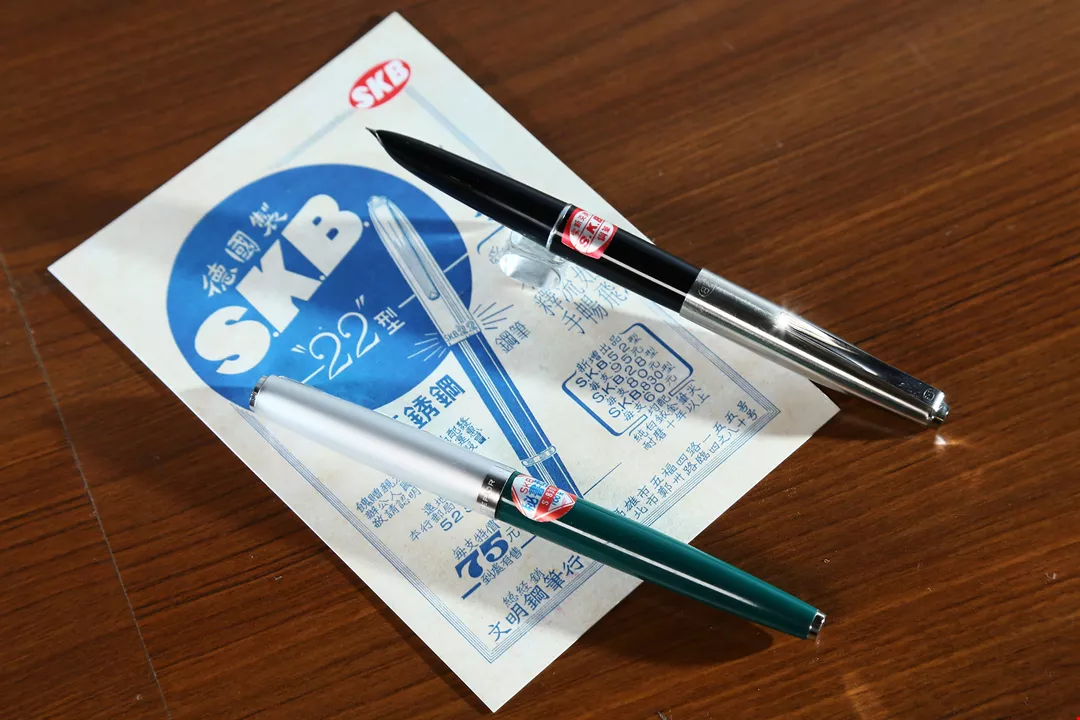
With its streamlined style and elegant design, the SKB 22 immediately caused a stir upon its launch. The brightly colored ballpoint pens the company produced also feature prominently in the memories of Taiwanese of a certain age.
The story of Rabbit pencils
In the south there are SKB’s fountain pens. Up north in Yilan there are Rabbit pencils, which are deeply embedded in people’s memories of childhood.
The company’s traditional Japanese-style building has become the Rabbit Pencil School, half production facility and half tourist center. Entering the space, which has the atmosphere of a traditional factory, one is immediately confronted with an oversized version of its classic pencil design: the yellow 88 Rabbit pencil.
“The number 88 [pronounced ba-ba in Mandarin] was chosen for the auspicious associations with its near homonym: ‘get rich’ [fa-fa],” explains the school’s director and the company’s third-generation CEO Tang Zhitian, as he points to the classic pencil design.
In Rabbit’s boom years of the 1970s, it was producing at least 20‡30 types of pencil every year. What with all the additional types produced by Rabbit’s domestic and foreign competitors, there was a veritable ocean of pencils, but the simple Rabbit 88 with its yellow barrel left the deepest impression on people.
Having accompanied the Taiwan public for several decades, everyone has their own life stories connected to Rabbit pencils.
Once Tang participated in a seminar about entrepreneurialism and startups, and the host asked participants to introduce their companies. Confronted with silence, Tang raised his hand to volunteer. The words “I’m from Rabbit Pencils” had barely slipped from his mouth when the host interrupted him, excitedly relating his own stories about Rabbit pens from back in his student days. Many of his classmates were overseas Chinese from Hong Kong and Macao, and Rabbit ballpoint pens were their favorite souvenirs. Whenever those classmates prepared to go back home, they always brought a bag or two full of Rabbit pens to give to friends.
Rabbit ballpoint pens are richly represented in the memories of people born in the 1950s, 60s and 70s. You’d take off the blue cap, pull out the pen cartridge, and use the barrel to cut out rounds of tangerine skin, which you’d then stuff into the barrel, before shooting them out with the pressure from a quick chopstick jab. It was an awesome makeshift air gun.
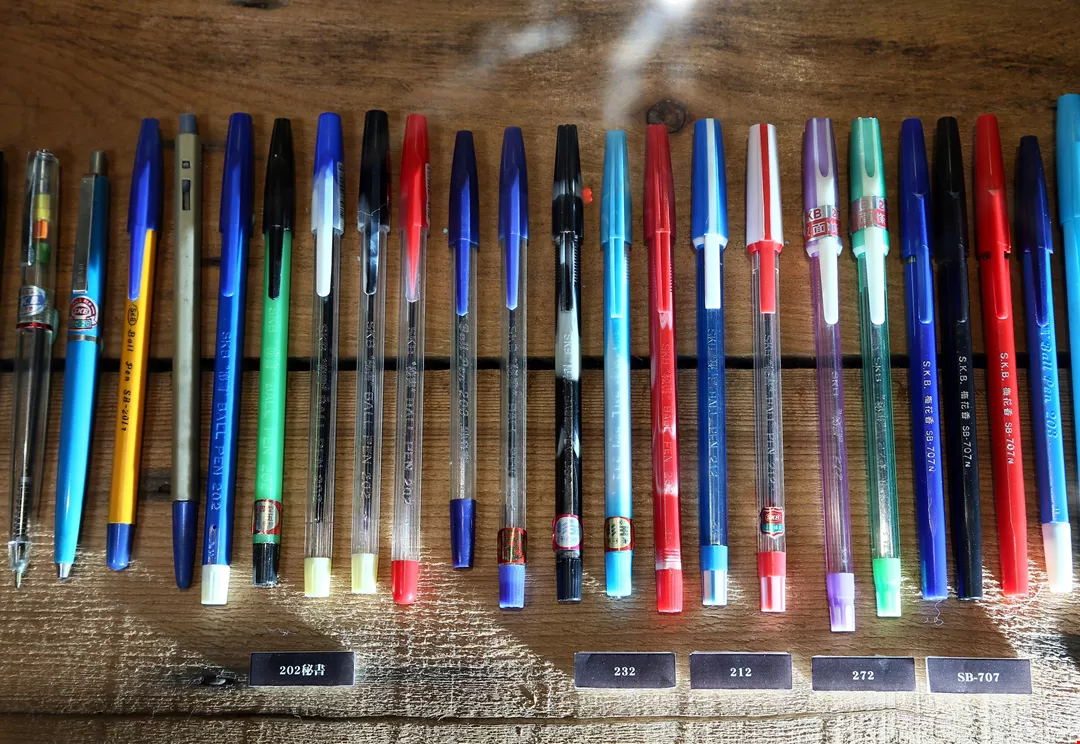
With its streamlined style and elegant design, the SKB 22 immediately caused a stir upon its launch. The brightly colored ballpoint pens the company produced also feature prominently in the memories of Taiwanese of a certain age.
The aura of pencils, Rabbit’s warmth
A prize given to you by a teacher, a pen with a barrel made for blowing glue bubbles… those were the Rabbit pens that everyone in those generations was familiar with. As for kids these days, who may have just gained a familiarity with Rabbit, Tang hopes that they too will get a sense of “Rabbit’s warmth.”
The company was originally one of Taiwan’s big three pencil makers along with Liberty and Simbalion, but after the rise of the Internet and falling birth rates in the 1990s, its business went into decline. In 2008 it decided to turn into a “tourist factory,” reemerging for the public as the Rabbit Pencil School.
“How do you make pencils? Do pencils actually contain lead?” Few seem to know the answers to this stream of questions. “Come to the Rabbit Pencil School, and you’ll get the answers,” says Tang.
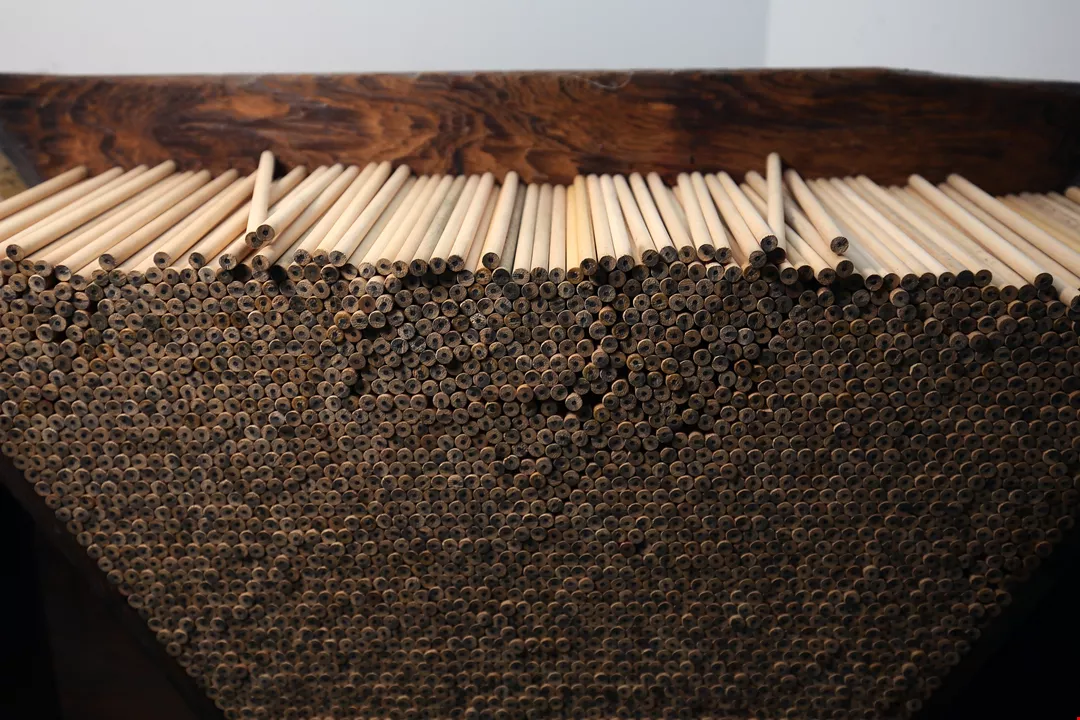
In comparison to 2008, when it had just opened and featured only some simple exhibits and an introductory video, in recent years the school has added fun gym classes and various DIY activities. In order to create a school-like atmosphere, the more-than-60-year-old factory building has become a classroom with a strong old-timey atmosphere: the entryway has been done up as an in-school supply store filled with classic pencils from yesteryear as well as unusual designs from recent years. And whereas the factory had been inconvenient to open up from a production standpoint, for the Rabbit Pencil School it was specially redesigned to provide clean lines of sight for tours. From the selection, cutting, drying and shaping of the wood, to the assembling of the wooden pieces with the graphite cores… children can see it all.
“As soon as you enter, you smell the wood, as well as the faint smell from the paint being baked on the pencils,” says Tang. When kids later pick up pencils, it will bring to mind that aroma.
Hold a pen and softly commit some writing to paper. What kind of tactile impression has the pen left on you hand? Has it awakened memories of your own personal experiences with pens?
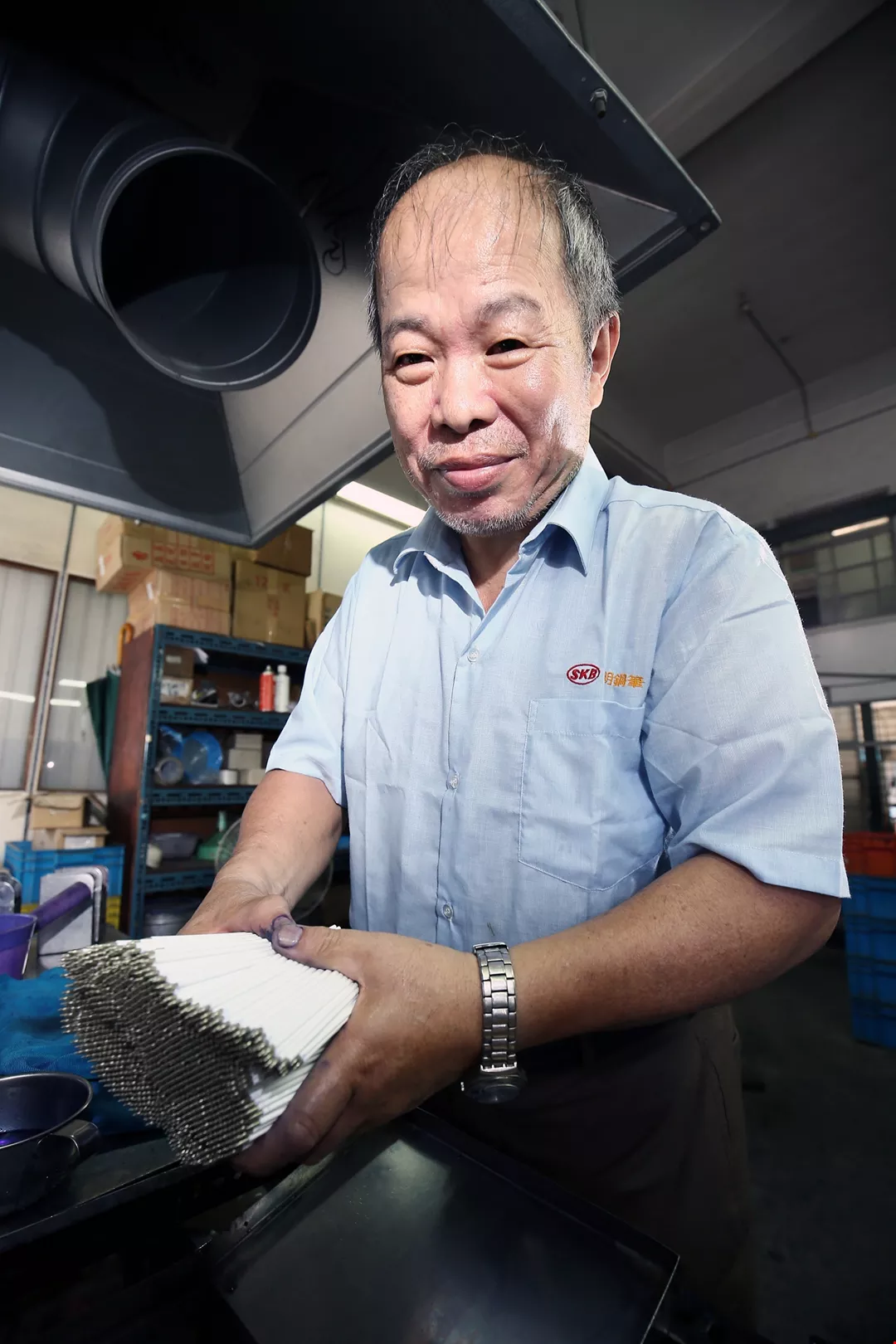
Uncle Fu went to work at SKB right after he graduated from high school. No type or style of pen is too hard for him to make.
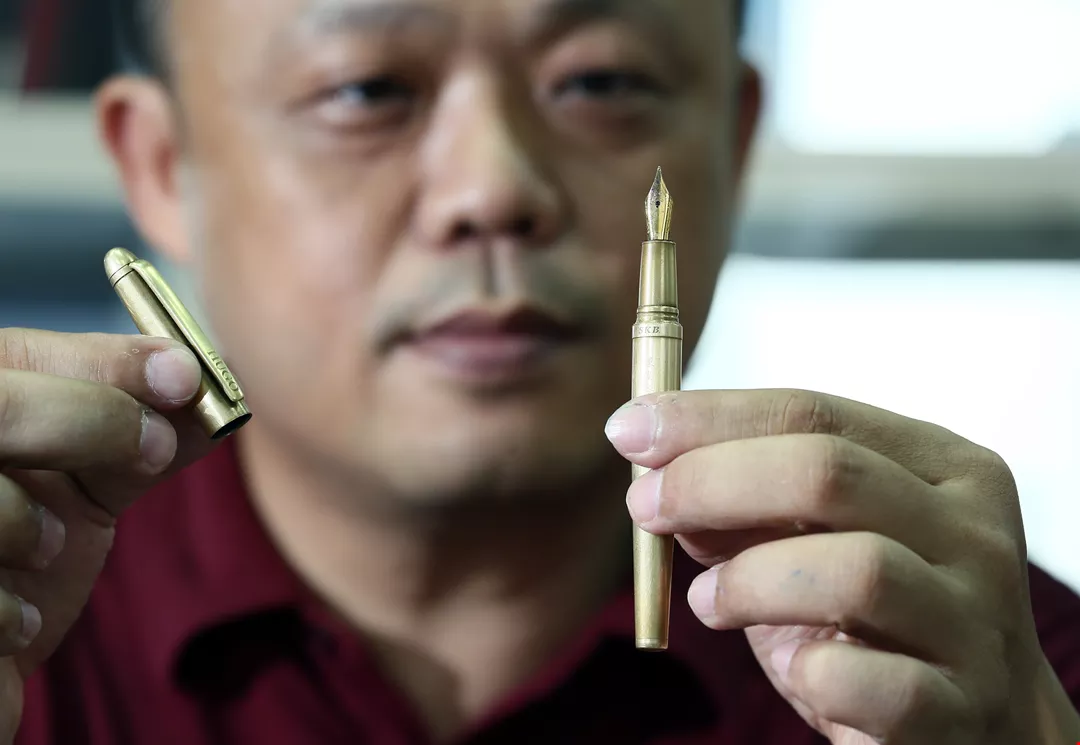
With the fashion for writing by hand, SKB has decided to resurrect its line of classic fountain pens, as well as releasing new designs made from materials such as wood and brass.
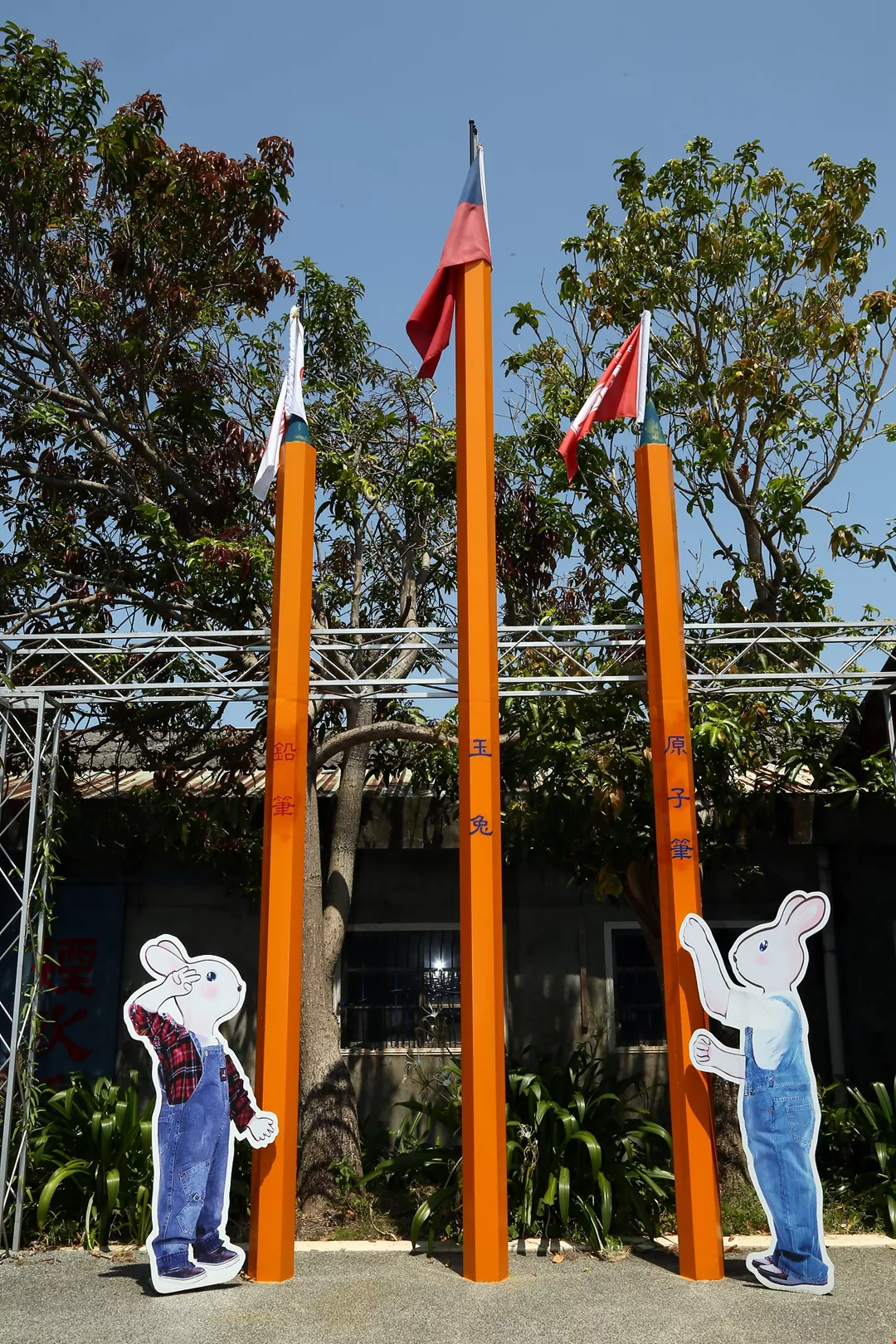
Rabbit’s factory, built more than 60 years ago, has been turned into the Rabbit Pencil School, where oversized blue-topped and orange-barreled ballpoint pens are serving as flagpoles. They stir up happy memories for those born in the 1950s and 1960s.
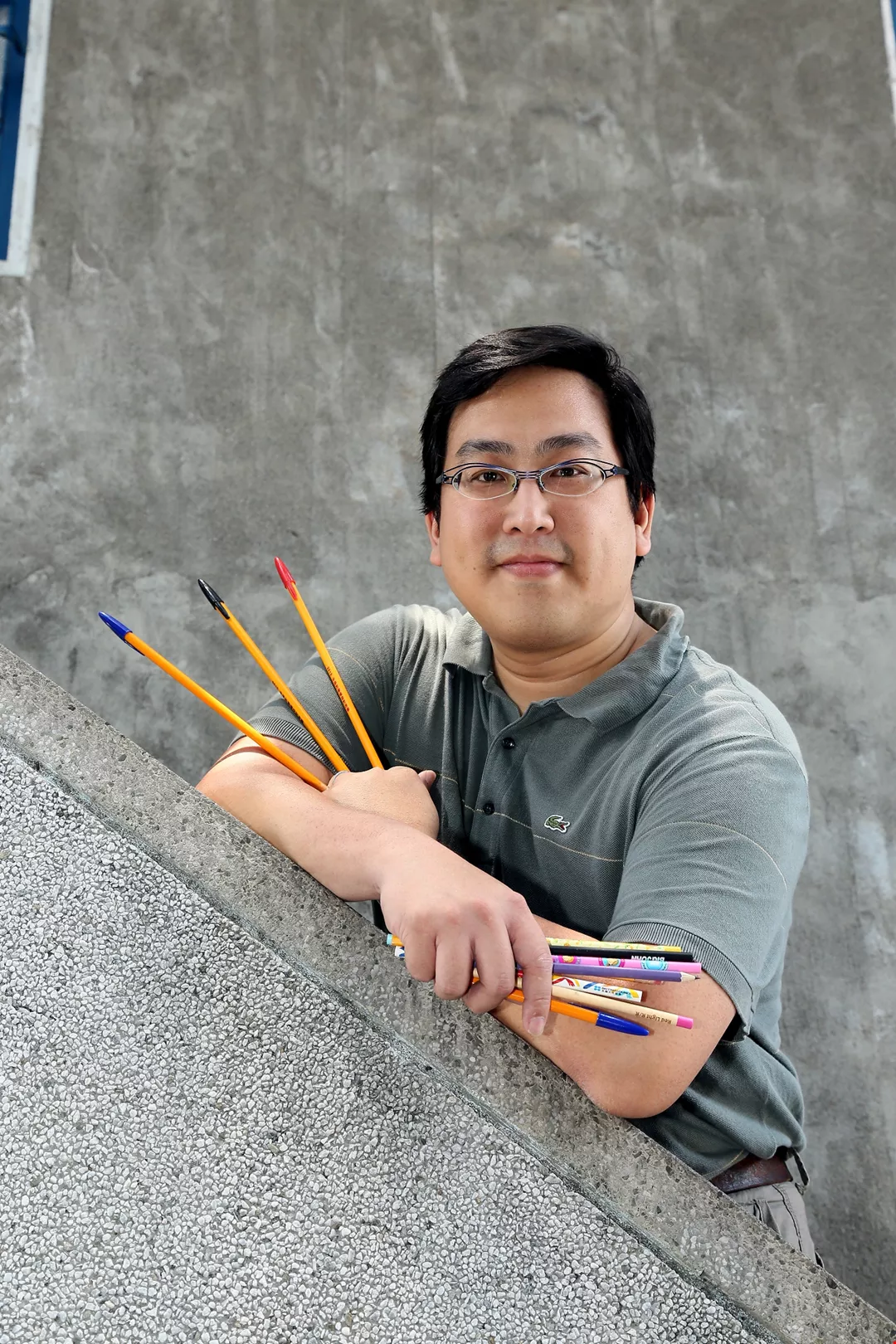
Tang Zhitian, director of the Rabbit Pencil School and the company’s third-generation boss, holds some of the company’s classic pens, including the 88 and the F-220.
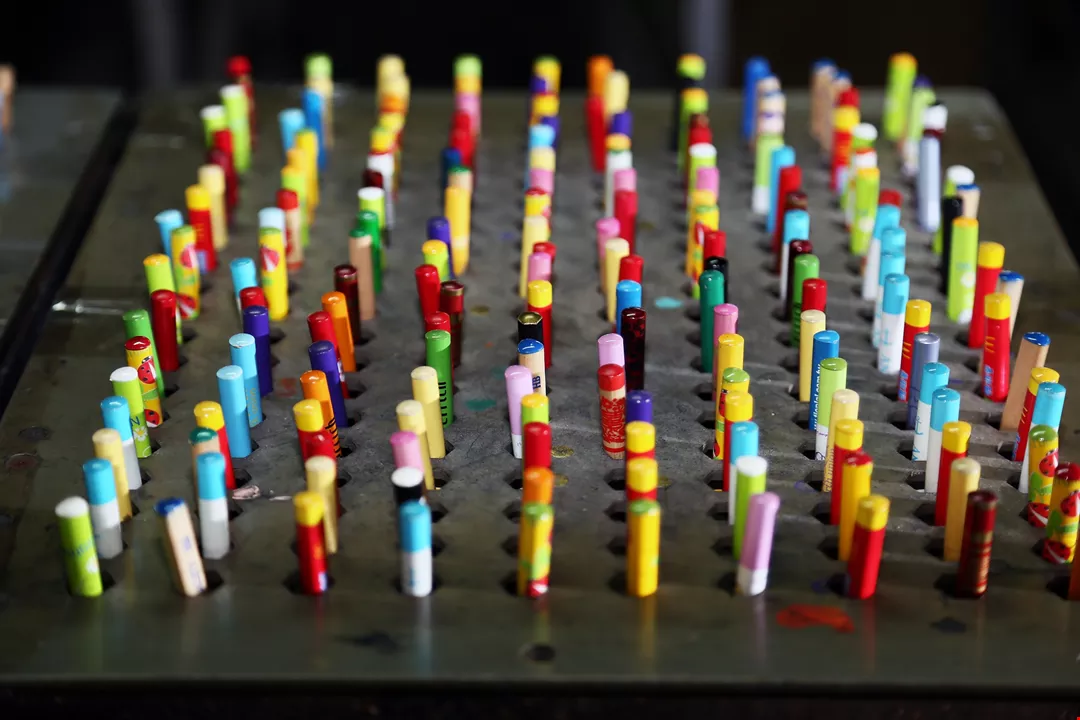
There are many steps to producing colorfully painted pencils, including cutting and drying the wood, gluing together the parts, and baking on the paint.
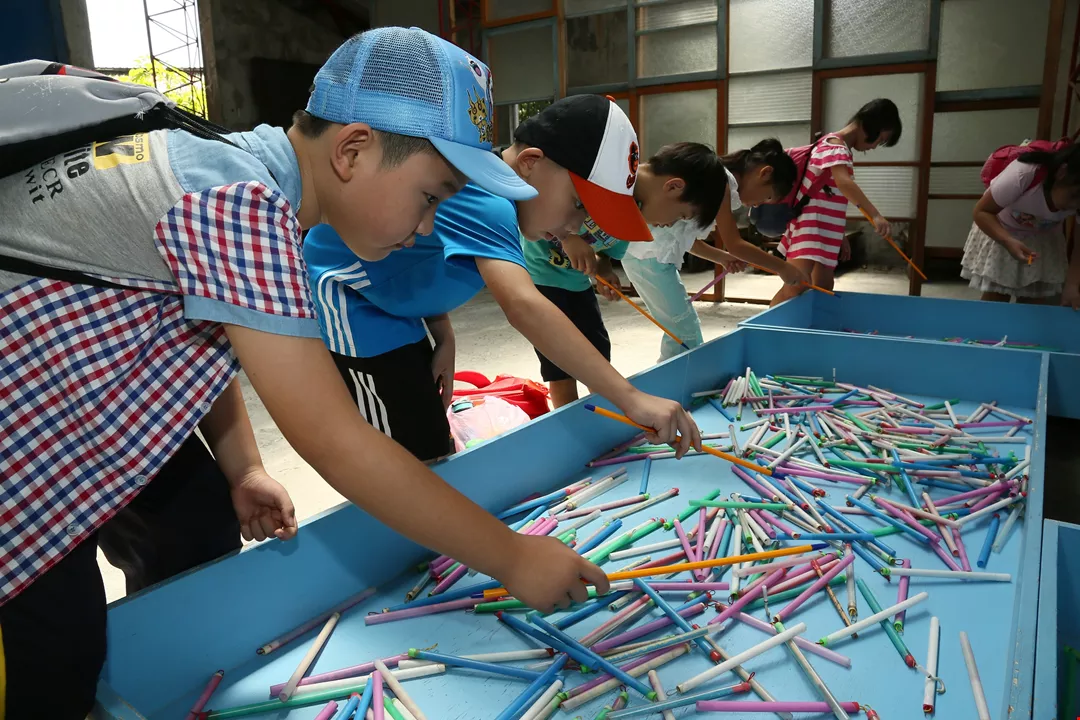
The Rabbit Pencil School offers a rich selection of fun DIY activities. The activity of fishing for pencils has proven to be much loved by adults and children alike.

@List.jpg?w=522&h=410&mode=crop&format=webp&quality=80)


