National Palace Museum Exhibition to Open in Japan
Sam Ju / photos courtesy of the National Palace Museum / tr. by David Smith
April 2014


Many of the finest treasures ever produced by Chinese culture will be thrilling museumgoers in Japan this summer when the National Palace Museum puts 231 exhibition pieces on display from June to November at the Tokyo National Museum and the Kyushu National Museum.
This will mark the first time that the NPM has ever lent items for exhibition elsewhere in Asia, and it is also the first time since the museum relocated to Taipei in 1965 that the “crown jewels” of its collection—the Jadeite Cabbage with Insects and the Meat-Shaped Stone—have ever been lent out overseas.
Although Japan is just a three-hour flight from Taiwan, the Japanese people have had to wait more than 40 years for the NPM exhibition to come along. The key to this historic breakthrough in cultural ties was the Japanese Diet’s passage of the Law Concerning Promotion of Exhibitions of Art Objects from Overseas (the “Exhibition Law”), which ensures that exhibition items cannot be impounded while they’re on loan. The process was helped along, moreover, when huge donations from Taiwan after Japan’s massive earthquake of March 2011 generated strongly positive feelings between the people of the two countries. And, of course, the hard work of ROC diplomats during the course of negotiations must not go unmentioned.
More than ten years of preparation have gone into the exhibitions. Since taking office in 2008, President Ma Ying-jeou has stressed to every group of Japanese visitors he receives that the relationship between Taiwan and Japan is now regarded as a special partnership, and the two sides need to strengthen economic, trade, tourism, and cultural ties.
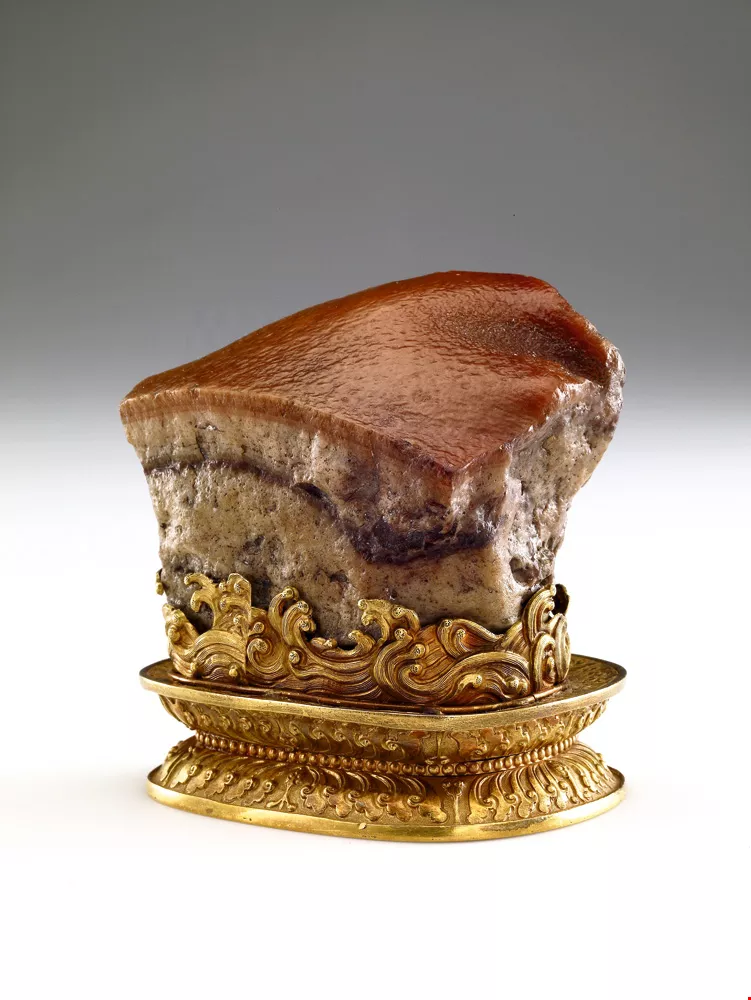
Meat-Shaped Stone/Dimensions: 5.73 cm x 6.6 cm x 5.3 cm/Carved from a piece of naturally occurring banded jasper, the Meat-Shaped Stone looks for all the world like a hunk of “Dong Po pork” (braised pork). The sculptor expertly took advantage of the layered coloring of the rock to achieve the precise look of alternating layers of lean and fat in pork, while the hair follicles and veining are executed with superb realism. The Jadeite Cabbage with Insects and the Meat-Shaped Stone have been the most popular and best known pieces in the NPM collection for the past 20 years, thanks in part to their skilled carving, and in part to the choice of subject matter that is such a commonplace part of everyday life.
In a recent exclusive interview with Taiwan Panorama magazine, NPM director Fung Ming-chu explained that two conditions have to be present for the NPM to arrange for a loan exhibition overseas. First, there must be a guarantee that exhibition pieces will not be impounded. And second, the overseas partner must respect and use the museum’s official name: National Palace Museum. Accordingly, the first hurdle for Japan was to get the Diet to pass legislation prohibiting the impoundment of loaned items.
John C.T. Feng, then head of the Taipei Economic and Cultural Representative Office (TECRO) in Japan, and his co-workers actively liaised with Takeo Hiranuma, chairman of the Japan–ROC Diet Members’ Consultative Council, Katsumasa Suzuki, chairman of the Japan–Taiwan Economic Security Research Council, and other parliamentarians to seek their help in making a loan exhibition possible.
A bill to prevent impoundment, introduced in Japan’s House of Representatives by Keiji Furuya and Hirofumi Ryu, was first put on the agenda of the Committee on Education, Culture, Sports, Science and Technology during the term of Prime Minister Taro Aso, but every time there was a change of prime minister or a cabinet reshuffle, the bill either stalled in committee or dropped off the agenda altogether.
But finally, committee chair Makiko Tanaka brought the bill forward for deliberations on March 8, 2011 and it passed out of committee with unanimous support, thus advancing an encouraging first step toward preventing foreign art objects from being seized while on loan in Japan.
Two days later, the bill went to the full house where once again it passed on a unanimous vote. Then a day later, on March 11, the earthquake hit, triggering a series of tsunamis that surged across the east coast. The entire nation went into mourning.
The people of Taiwan, being themselves quite familiar with earthquakes, reacted with an outpouring of sympathy. Immediately, the donations started coming in. And then they just kept coming. The people of Japan were deeply moved. Two weeks after the quake, on March 25, Japan’s House of Councillors passed the bill by a vote of 235 to zero, thus putting the Exhibition Law on the books.
The push to get the law passed had started during the term of Prime Minister Yasuo Fukuda and continued under Taro Aso and Yukio Hatoyama before coming to fruition under Prime Minister Naoto Kan.
Even before passage of the Exhibition Law, major Japanese media outlets had already expressed willingness to take part in organizing an NPM loan exhibition.
For example, Nagayoshi Sumida, president of Sankei Shimbun, told President Ma Ying-jeou on a visit to Taiwan in May 2010 that his newspaper had been seeking for 30 years to bring about an NPM loan exhibition in Japan, and that Sankei Shimbun was hoping to help organize an exhibition once passage of the Exhibition Law was secured, so that the people of Japan could have a chance to see Chinese cultural treasures.
Because the NPM holds the best of the best in Chinese cultural treasures, Director Fung figures that the Japanese parliamentarians, media organizations, and everyday people who had supported passage of the Exhibition Law would surely be looking forward to an exhibition with great anticipation.
The Tokyo National Museum, which has very close ties to the NPM, sent out a letter after the Exhibition Law was passed, to present the NPM with a “dream list” of the items it wanted to borrow.
In June 2013, the Tokyo National Museum, the Japan–ROC Diet Members’ Consultative Council, and many of Japan’s principal media organizations (including Yomiuri Shimbun, Sankei Shimbun, and Asahi Shimbun) established an NPM exhibition steering committee. Then in October, the directors of the NPM, the Tokyo National Museum, and the Kyushu National Museum signed an agreement in Taipei and announced that 231 exhibition pieces from the NPM collection would be put on display at the museums in Tokyo and Kyushu from June to November as part of an event entitled “Treasured Masterpieces from the National Palace Museum, Taipei.” In addition, the agreement provided for the famed Jadeite Cabbage with Insects to be lent for two weeks to the Tokyo National Museum, and for the Meat-Shaped Stone to be lent for two weeks to the Kyushu National Museum.
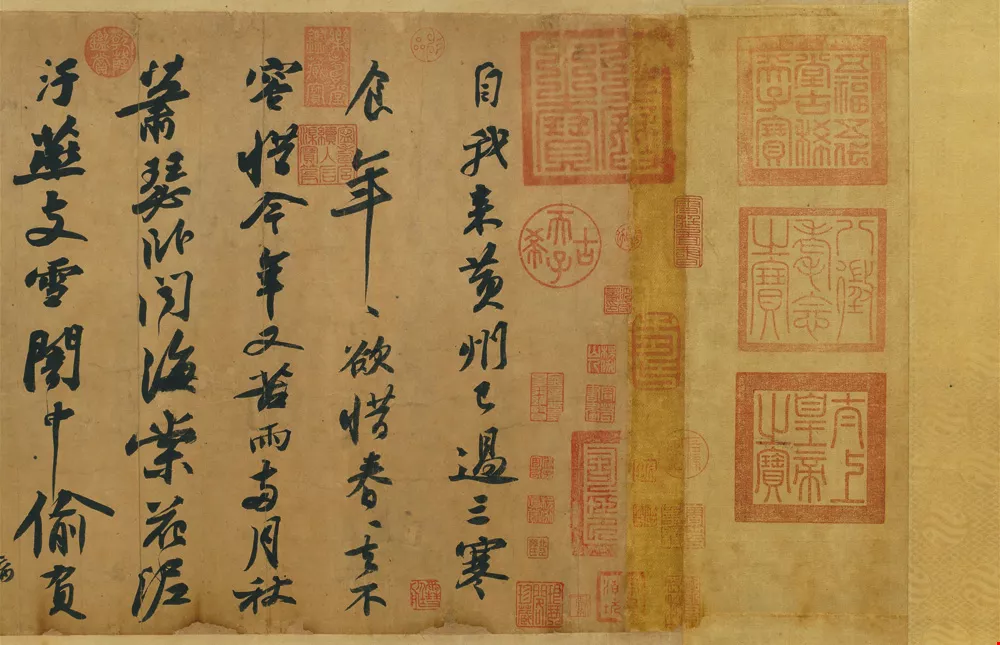
The Cold Food Observance/Dimensions: 34.2 cm x 199.5 cm/Su Shi (styled “the Hermit of Dong Po”), was a master of literature and the arts during the Northern Song Dynasty. In 1082, three years after Su Shi had been fired from his government position and demoted to the town of Huangzhou, on the day of the cold food observance (105 days after the winter solstice), he wrote two works of five-character poetry, executing them as a work of calligraphy that came to be known as The Cold Food Observance. The noted Ming-Dynasty art critic Dong Qichang regarded The Cold Food Observance as the best extant example of Su Shi’s calligraphy. Indeed, this work is regarded as the third-greatest work of calligraphy in Chinese history, behind Wang Xizhi’s Preface to the Orchid Pavilion Gathering and Yan Zhenqing’s Draft of a Requiem to My Nephew.
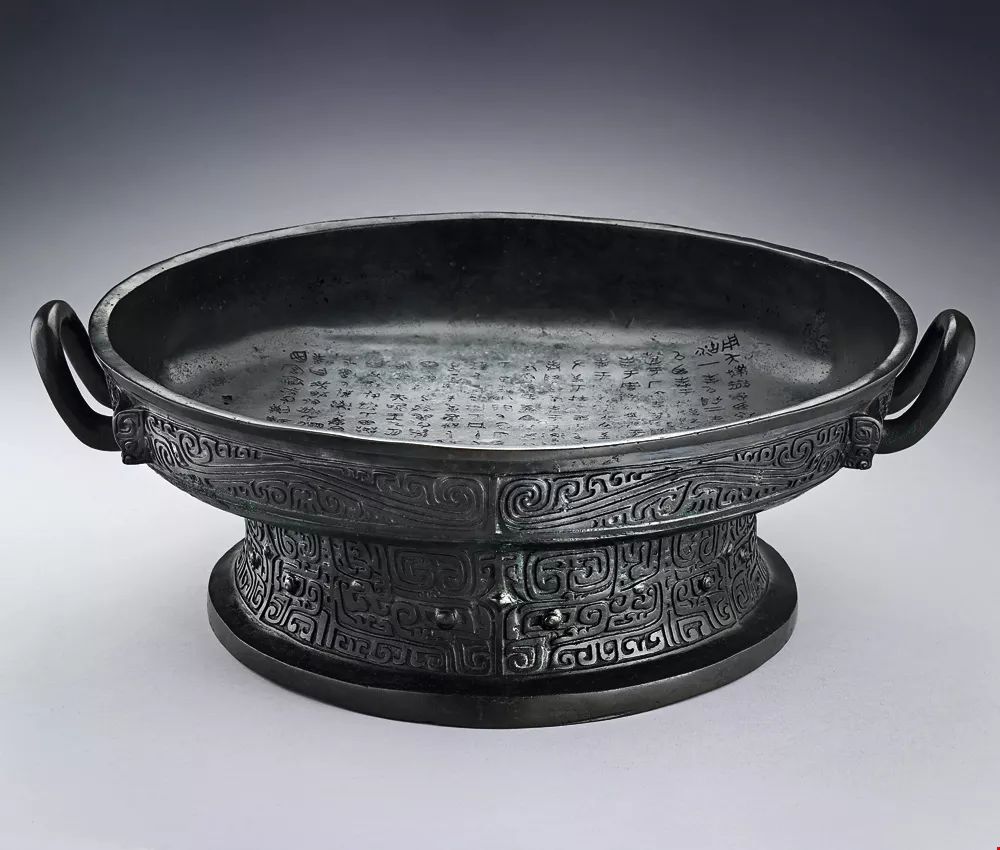
The NPM reviewed the “dream list” and from it picked a selection of loan items, including paintings, calligraphies, ceramics, bronzes, jades, lacquerware, embroideries, and rare texts. Pretty much every item is among the best of the best in the incredibly long history of Chinese art.
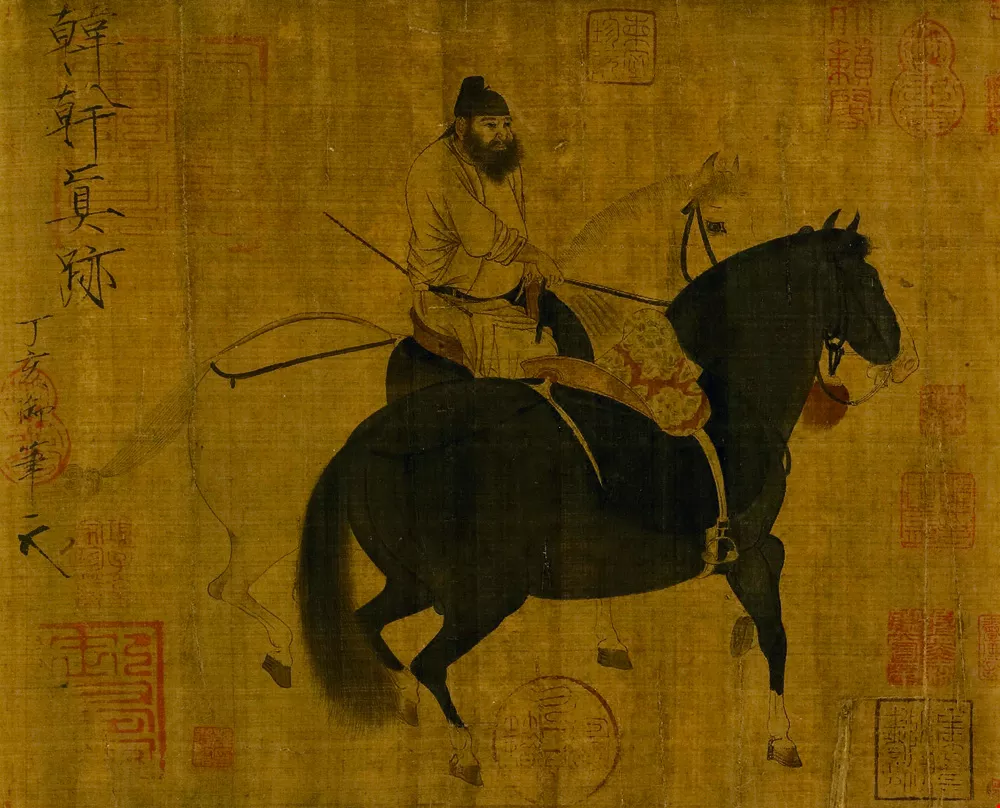
Items of calligraphy and painting that have always been the most popular with Japanese visitors to the NPM—Su Shi’s The Cold Food Observance, Han Gan’s Two Horses and a Groom, Wu Yuanzhi’s The Red Cliff, and Ma Yuan’s Attending an Imperial Banquet—will be making the trip to Japan.
NPM deputy director Ho Chuan-hsin explains that Japanese calligraphers and painters have long been deeply influenced by their Chinese counterparts, and most people in Japan are familiar with the works of such masters as Su Shi and Wang Xizhi. Indeed, many in Japan are quite avid fans.
The Cold Food Observance, for example, is considered by many the best work of running-script calligraphy ever done by Su Shi. After a combined force of British and French troops destroyed the Old Summer Palace (Yuan Ming Yuan) on the outskirts of Beijing in 1860, Su’s masterpiece was taken to Japan, where it ended up in the hands of a collector named Seido Kikuchi, who in 1923 risked his life to save the famed work from destruction in a massive fire touched off by the Great Kanto Earthquake. After World War II, the NPM eventually repurchased it.
According to Deputy Director Ho, in addition to their admiration for Su’s work itself, the Japanese also take great interest in the man’s life. Back when The Cold Food Observance was still in Japan, cultural luminaries there often held special parties just to commemorate Su Shi’s birthday.
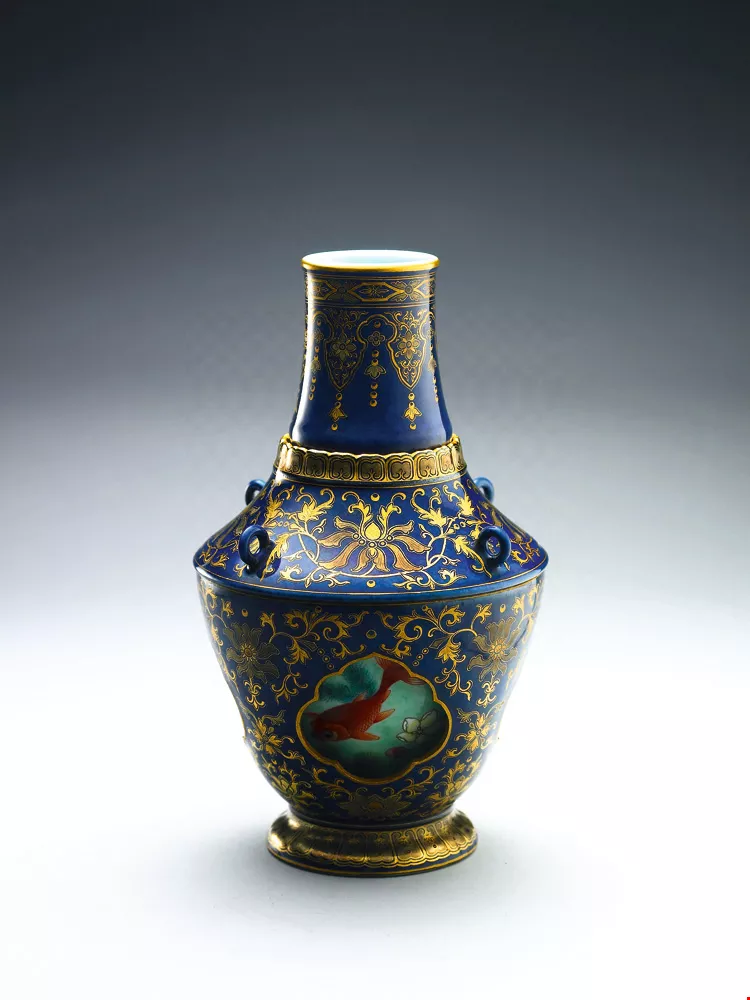
The works of calligraphy and painting in the exhibition are all from the Tang, Song, and Yuan Dynasties, while the other items range all the way from the Neolithic Period to the Qing Dynasty. Tsai Mei-fen, head of the NPM’s Department of Antiquities, points out that “the only ceramics that the Japanese requested were all Ru ware and Guan ware, an indication of their strong preference for intricately crafted ceramics.”
Ho notes that Chinese cultural treasures are an important component of the collection at the Tokyo National Museum, so one of the objectives of the upcoming exhibition is to show how important the NPM collection is, and how well it represents the broad spectrum of Chinese cultural treasures: “If you want to see the best pieces from each period in history, you simply must come to the National Palace Museum in Taipei.”
For example, says Ho, you’ve got to visit the NPM if you want to see the top works of calligraphy from the Jin and Tang Dynasties (by Wang Xizhi and Huai Su) or the Song Dynasty (by Su Shi, Huang Tingjian, Mi Fu, and Cai Xiang). The same holds true for the greatest paintings of the Yuan Dynasty (by Huang Gongwang, Wang Meng, Ni Zan, and Wu Zhen) and the Ming Dynasty (by Shen Zhou, Wen Zhengming, Tang Yin, and Qiu Ying.
The point of the loan exhibition, says Ho, is to give Japanese viewers a feel for the comprehensiveness and unsurpassed quality of the NPM’s collection.
In the interests of reciprocity, the museums in Tokyo and Kyushu have agreed to mount a loan exhibition in Taiwan after the NPM exhibition in Tokyo comes to a close.
Among the 150 items selected for the trip to Taiwan are a number of masterpieces from the Tokyo National Museum that have never been lent out overseas before—a statue of Mahamayuri (one of the Wisdom Kings in the Buddhist pantheon), the Maple-Viewing Screen, and the Cypress Trees Screen—as well as some of the top treasures from the Kyushu National Museum, including A Tale of Flowering Fortunes (calligraphy) and Zhou Maoshu Appreciating Lotuses (a work of ink and light color on paper). Fully 88 of the works are classed as national treasures. The exhibition is scheduled to open in October 2016 at the National Palace Museum Southern Branch, which by then will have opened in Taibao City, Chiayi County.
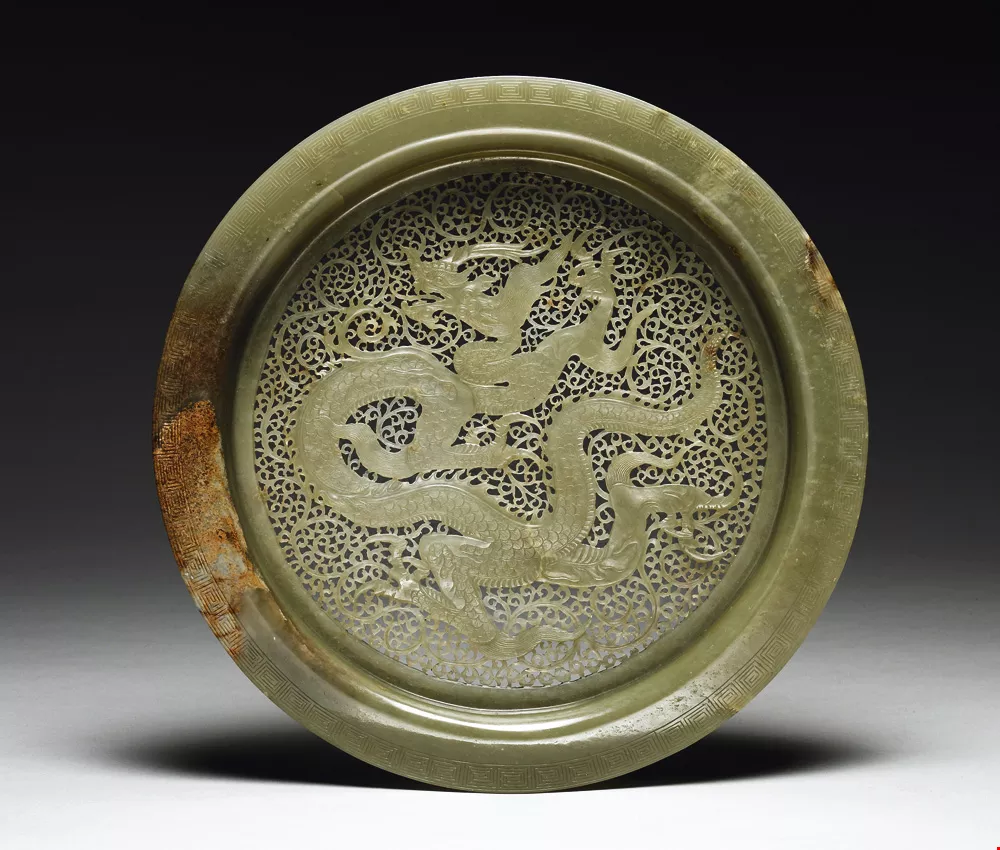
Taipei’s National Palace Museum has scored a huge breakthrough with a loan exhibition scheduled for June to November at the Tokyo National Museum and the Kyushu National Museum.
The last time the NPM sent items from its collection to Japan was in 1970, when a loan exhibition was organized for the Osaka World Expo. The Republic of China was still a member of the United Nations at the time, so there was less reason for concern about the exhibit pieces being impounded. Between 1990 and March 2011, when the Japanese Diet passed the Exhibition Law, the NPM mounted major loan exhibitions in the United States, France, Germany, and Austria, all of which had laws on the books to prevent exhibition objects from being impounded.
Those major NPM loan exhibitions have been followed by minor ones in the years since.
As an example, NPM director Fung mentions a loan exhibition (“Mémoire d’Empire: Trésors du Musée National du Palais, Taipei”) that the NPM organized in Paris at the National Galleries of the Grand Palais from October 1998 to the following January. French museums have borrowed on a smaller scale from the NPM on several occasions since then, as when the Guimet Museum of Asian Art borrowed a small number of items from the NPM in connection with a 2012 exhibition on tea.
The Japanese Diet’s passage of the Exhibition Law will greatly facilitate the exchange of cultural treasures between Japan and Taiwan. Fung reports that the Miho Museum, which was designed by Chinese-American architect I.M. Pei, recently applied to the NPM to borrow a bronze Buddhist statue, originally from Kashmir, after the loan exhibition in Tokyo and Kyushu closes.
“The Miho is a fantastic museum, and it has a very strong relationship with us,” says Fung, adding that “ever so many” museums apply to the NPM for loan exhibitions. The Asian Art Museum of San Francisco, for example, has been in talks with the NPM since 2009, and the mayor of San Francisco will come to Taiwan in April to push for treasures from the NPM to “make it to the US again.”
In the United States, the NPM put on exhibitions in 1961 and 1996, traveling to Washington DC, New York, Boston, Chicago, and San Francisco. “The Museum of Fine Arts in Houston has recently approached us about a loan exhibition,” says Fung. If all goes well, the next US exhibition “could go to two or three cities there.”
After a law to prevent the impounding of cultural treasures was introduced in the British parliament in 2007, the British Museum applied to the NPM for a loan of Ming-Dynasty treasures that will be part of a big Ming exhibition scheduled to open in September 2014.
In addition, after Australia passed similar legislation last year, the Australian Office Taipei promptly contacted Fung to indicate its desire for a traveling exhibition from the NPM to come to Sydney and Melbourne. Says Fung: “The Museum of New Zealand also came to us for a loan exhibition. They have a lot of items from the Maori culture in their collection, especially jades, so they’re very interested in Chinese jades.”
“Letting our treasures travel the world is something we at the NPM have also been working toward,” comments Fung, adding that since President Ma Ying-jeou took office, “improved cross-strait relations have meant that the NPM now encounters less resistance to its plans. The clearest examples of that are the Japanese Diet’s passage of the Exhibition Law and the mounting of the loan exhibition at the Tokyo National Museum.”
“Artistic treasures are a part of culture,” declares Fung. And she adds with no little confidence that anyone who admires Chinese culture cannot but admire the collection at the NPM. That so many of the world’s leading museums want so badly to exhibit items from the NPM, she says, “is only natural at a time like this, when Chinese culture is all the rage.”
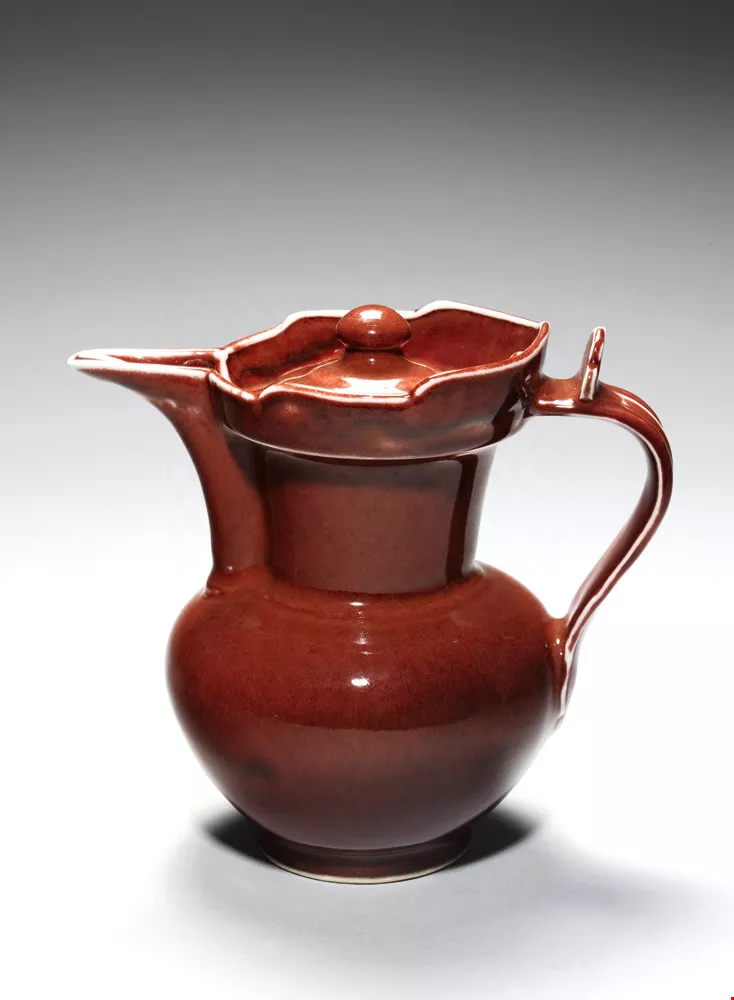
Taipei’s National Palace Museum has scored a huge breakthrough with a loan exhibition scheduled for June to November at the Tokyo National Museum and the Kyushu National Museum.
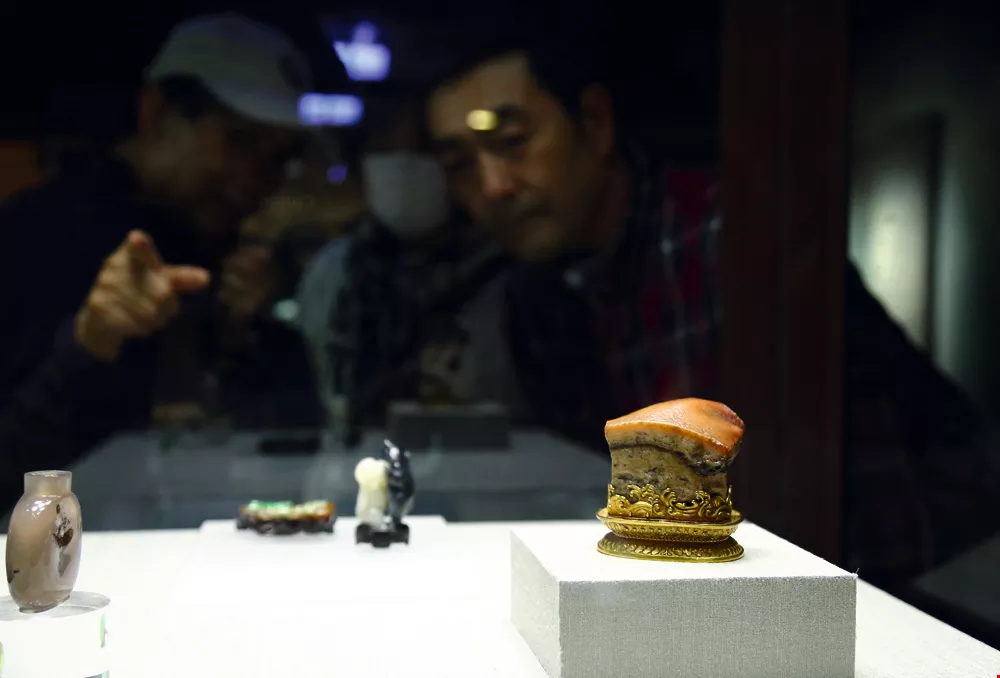
Japanese visitors to the National Palace Museum have a clear preference for intricately crafted ceramics. They always linger a lot longer where works of this sort are on display.
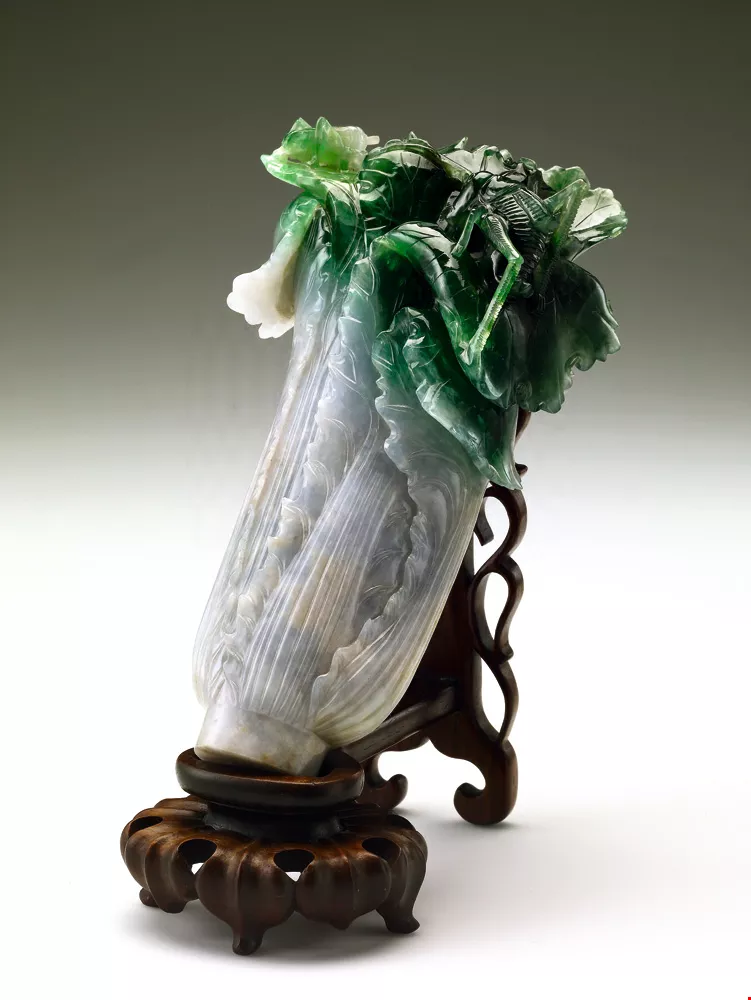
Jadeite Cabbage with Insects/Dimensions: 18.7 cm x 9.1 cm x 5.07 cm/Made of polished jadeite, this object is very nearly an exact match for the color and shape of a stalk of bok choy cabbage. It was originally kept in Beijing’s Forbidden City at the Yonghe Pavilion, once the sleeping quarters of Consort Jin, a concubine of the Guangxu Emperor, which is why many think this object may have been a dowry item that symbolized the consort’s purity. A katydid and a locust crawling on the cabbage signify a wish for many offspring.
Taipei’s National Palace Museum has scored a huge breakthrough with a loan exhibition scheduled for June to November at the Tokyo National Museum and the Kyushu National Museum.
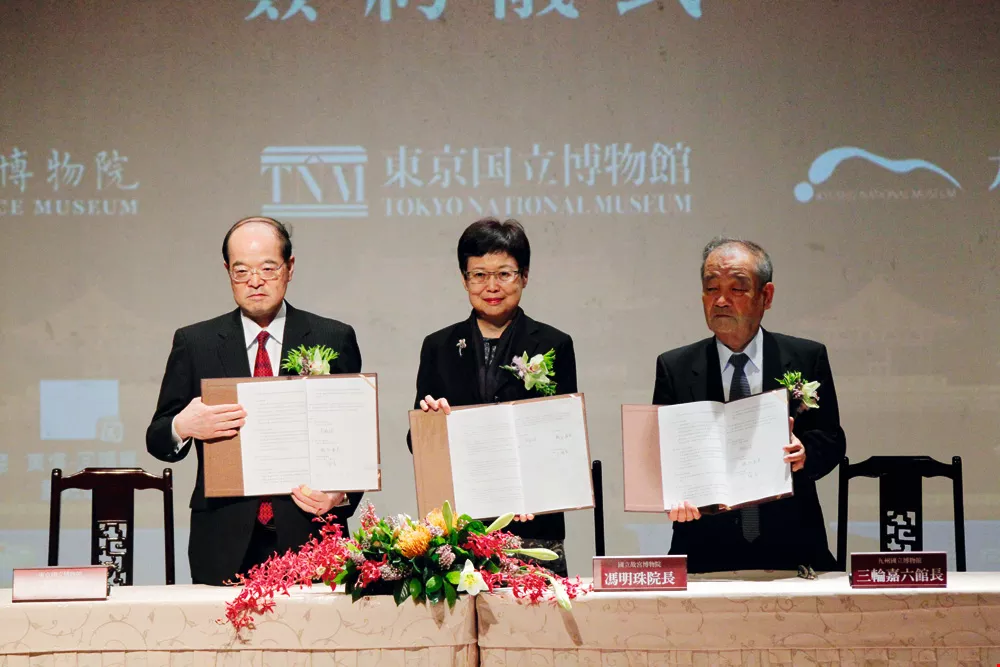
In October 2013, National Palace Museum director Fung Ming-chu (center), Tokyo National Museum executive director Masami Zeniya (left), and Kyushu National Museum director Karoku Miwa (right) signed an agreement providing for items from the NPM collection to be exhibited in Japan.
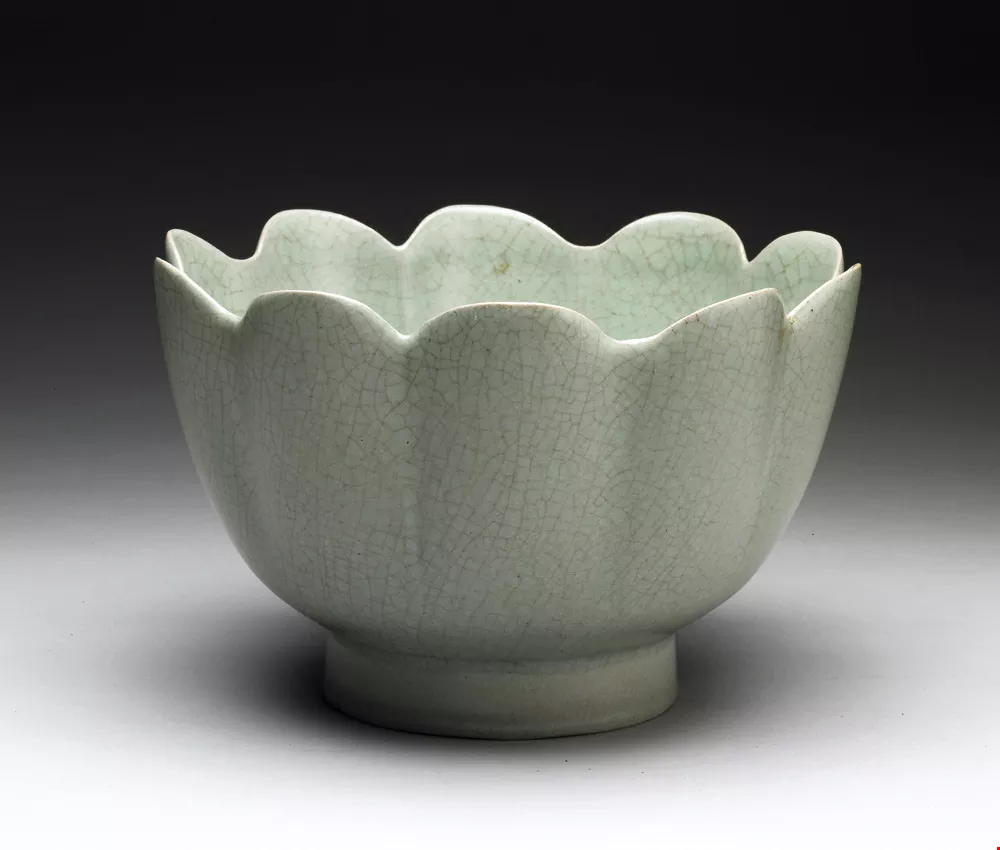
Taipei’s National Palace Museum has scored a huge breakthrough with a loan exhibition scheduled for June to November at the Tokyo National Museum and the Kyushu National Museum.
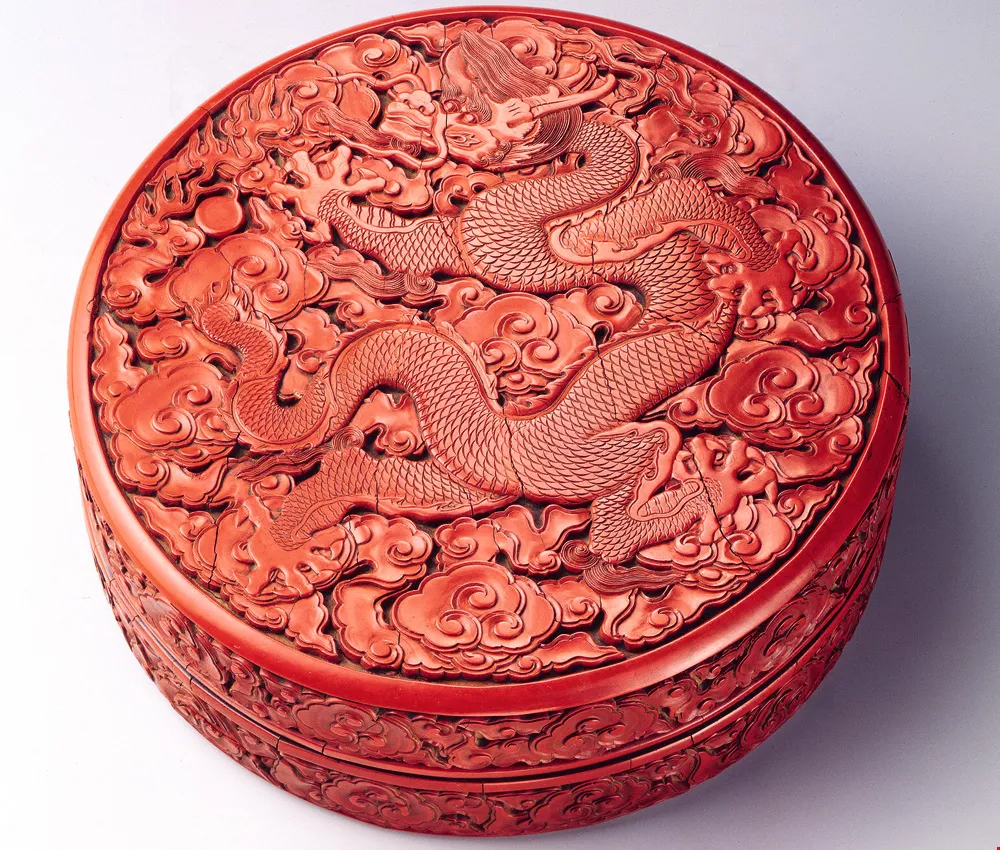
Taipei’s National Palace Museum has scored a huge breakthrough with a loan exhibition scheduled for June to November at the Tokyo National Museum and the Kyushu National Museum.
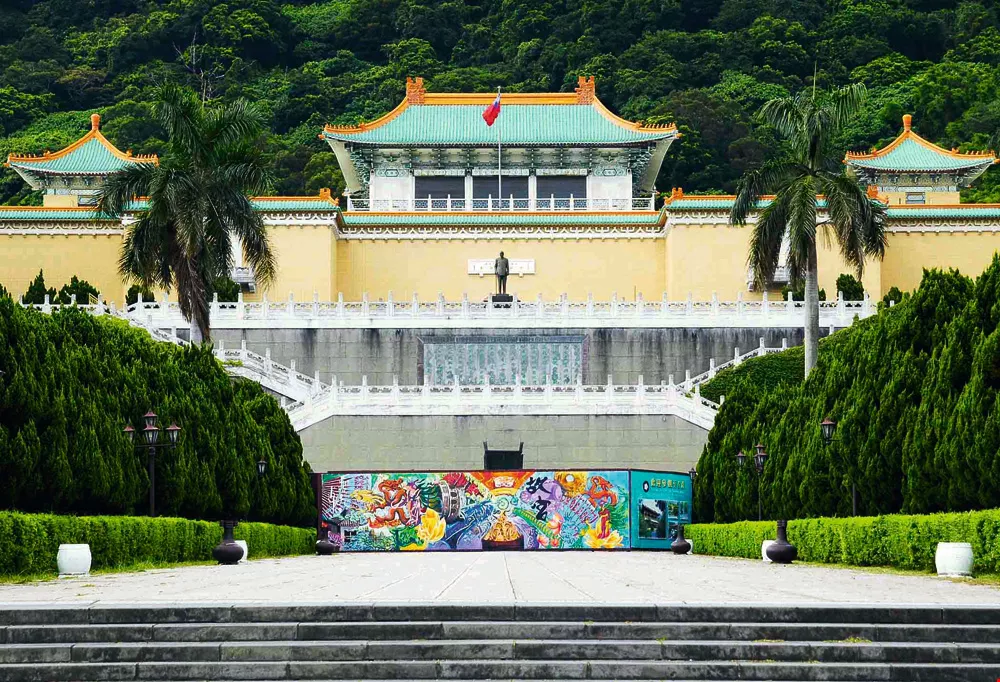
Many of the most exquisite treasures ever to be produced by Chinese culture are in the collection of the National Palace Museum in the northern Taipei neighborhood of Waishuangxi.
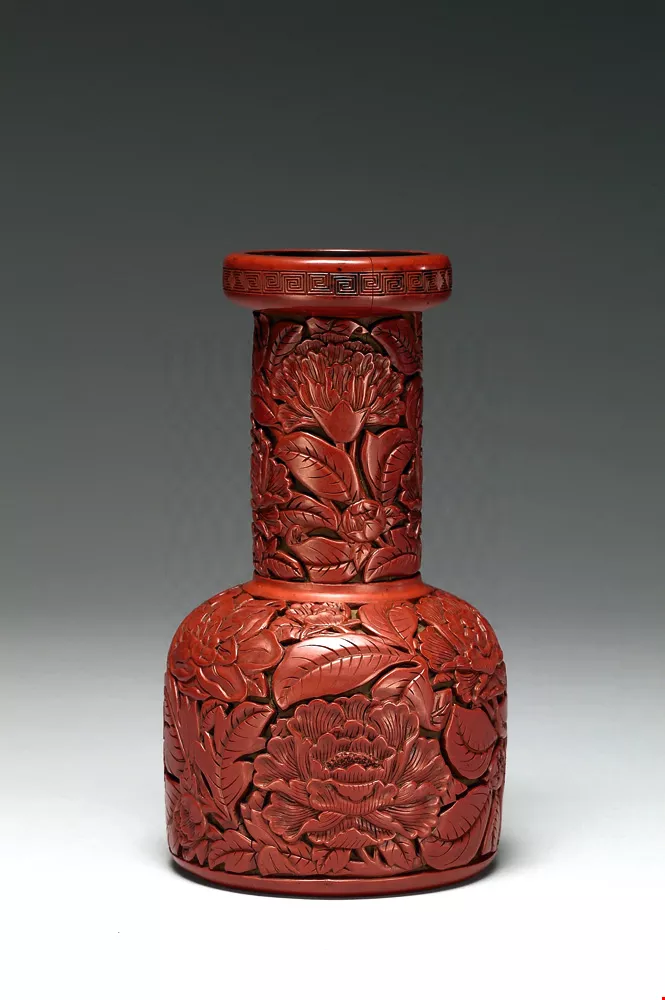
Taipei’s National Palace Museum has scored a huge breakthrough with a loan exhibition scheduled for June to November at the Tokyo National Museum and the Kyushu National Museum.
Taipei’s National Palace Museum has scored a huge breakthrough with a loan exhibition scheduled for June to November at the Tokyo National Museum and the Kyushu National Museum.


