Your Hidden Neighbors--Lee Chun-yang and Insect Intelligence
Kuo Li-chuan / photos courtesy of Yuan-Liou Publishing Co. / tr. by William Dirks
August 2005


As Japanese sculptor Horin Matsuhisa once said, "Nature holds many treasures for us. Once we open our hearts and join in oneness with nature, genuine love will unfold." Lee Chun-yang, who has spent more than 60 years studying insects, believes they possess their own minds, and has spent a lifetime enthusiastically delving into the richness of their hidden worlds in an effort to unlock the secret codes governing their intelligence. The films Lee has made give further glimpses of this miraculous world that has always been all around us and beneath our feet, but just beyond our awareness.
Gushing monsoon rains darken the afternoon skies as we walk into the office of entomologist Lee Chun-yang, who explains in a mixture of Japanese, English and the Taiwanese dialect the tactics a hunter wasp uses to catch a leaf-roller moth. As an afterthought, he adds a leisurely observation: "Actually I was never really that interested in insects."
In his early years, Lee never guessed at his later life-long association with the insect world. As chance would have it, however, he was assigned to the study of crop pests at the Taiwan Agricultural Research Institute, and his intensely curious nature has led him to continue his observation and study to this day. Now 83, Lee believes that "curiosity is the mother of discovery," and his deep curiosity has led him on a lifetime journey to discover the mysteries and unlock the secrets of nature.
Born to a prosperous landowning father in Chiayi during the Japanese occupation in 1922, at age nine Lee developed a strong early interest in photography when he received a simple camera set from his father. Later, in his fourth year of high school, at a time when a teacher's monthly salary was only 30 Japanese yen, his father went so far as to spend 275 yen to buy a Minolta for young Lee. Lee also remembers a Japanese instructor in his second year of junior high, a Mr. Matsumoto, who introduced his class to the work Souvenirs Entomologiques by the French scientist Jean Henri Fabre (1823-1915). To this young son of a country squire, the book's depictions of various insect behaviors represented a strange and alien world, and even a somewhat frightening and repelling one.
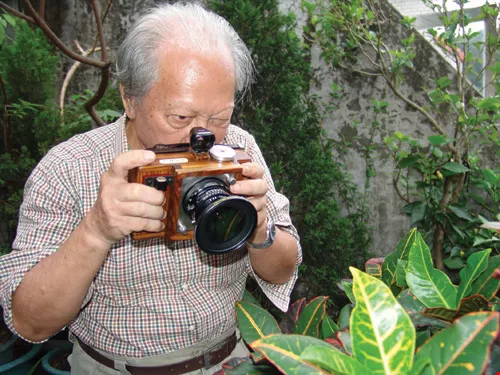
While working in the Taiwan Agricultural Research Institute, Lee Chun-yang received a chance pest-research assignment, sparking his curiosity and starting a life-long fascination with insect life. In addition to making documentary films, Lee has also long been reseaching insect intelligence.
Changed by new insights
In 1941, during World War II, Lee gained admission to the agricultural studies department of the Tokyo University of Agriculture. Returning to Taiwan two years later, Lee entered the Department of Applied Animal Husbandry of the Agricultural Research Institute of the Taiwan Governor-General's Office. In principle, the Institute did not accept Taiwanese, because at the time most Taiwanese intellectuals chose medicine or law, and seemed disinclined for research work. Lee Chun-yang's outstanding academic record, however, made him an exception. Originally specializing in plant pathology, Lee was instead requested to study pests. "At first," Lee says, "there was no way I could like those fuzzy, squirming little things. But my view of these creatures changed after I observed the breeding behaviors of the rice leaf beetle."
After mating, the male rice leaf beetle (Oulema oryzae) is far from anxious to leave, remaining instead on the female's back, and only departing reluctantly after turning several more circles. Says Lee, "This tiny insect, only six or seven millimeters long, has feelings!"
After the war's end, Lee remained at the Agricultural Research Institute in agrochemical and pest research, and beginning in 1954 was published several times in the prestigious US Journal of Economic Entomology. In 1961, Lee went on to obtain a doctorate from the Tokyo University of Agriculture with a dissertation on the leaching and migration of the pesticide Endrin, after which Endrin was banned by the US Food and Drug Administration.
Through the introduction of a friend, Lee became involved in helping an overseas chemical and pharmaceutical firm film a commercial, and he was later entranced by the showing of the Disney nature film The Living Desert at a local theater. Lee felt that "if barren deserts have such miraculous creatures, there must be an even more surprising side to the insects around me in everyday life."
In 1968, deciding he wanted to make "a truly interesting insect film," Lee formulated a plan covering all aspects of insect behavior: Where do they live? What do they eat, and how? What are their defense mechanisms? How do they select a mate and breed? How do they care for their offspring? How do they shed their cuticles and molt into pupae? How are insects' behavioral modes determined once they develop wings and can fly freely?
Ideally, Lee hoped, he would film some 230 species of insects, but what would such a formidable project add up to in terms of time and money? Various factors seemed to place it out of his reach: Even leaving aside the fact that he lacked any professional experience or equipment, a single reel of 16mm film (lasting a mere two minutes and 45 seconds) then cost about NT$1,000, with a roughly equal amount required to send it overseas for developing. Even using his whole salary, he could only film two or three reels per month. Yet Lee cast these concerns aside and advanced toward his ideals.
For Lee, the film represented a meeting of his personal dreams and his research career. Every aspect-composition, lighting, and so on-of every inch of the film was subject to Lee's aesthetic demands, and even slight dissatisfaction meant numerous re-takes. Because most of the insects he was filming were so small, Lee even personally designed new extension tubes and Barlow lenses for further magnification of images shot through macro lenses, and made his own modifications when the specifications of the Japanese products he was using didn't meet his needs. (His work was so good that it won praise from the renowned German optics manufacturer Zeiss.)
But Lee's perfectionist demands, combined with spasms of the optic nerve, a hereditary disorder which had occasionally troubled him since age 15, greatly increased the stress and difficulties of filming, and put tremendous pressure on his photographic assistants and family members who helped him in the filming.
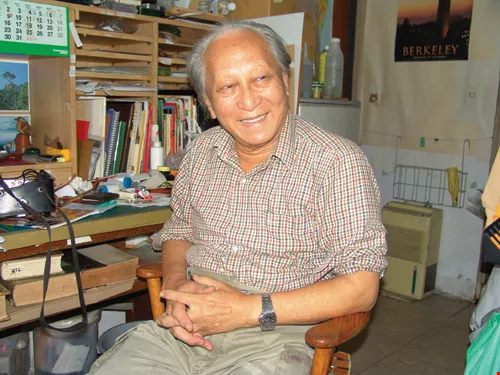
Lee imposed strict aesthetic demands with regard to the composition, lighting, and other aspects of his famous 1975 documentary on insects, which brought his professional career together with his personal aspirations. He even designed his own photographic extension tubes for extra magnification of his subjects. The documentary won international recognition, and became a benchmark for local insect photographers.
Driven to the limits
Lee benefited during the early period of filming from the strong contributions of Hung Wen-yao, who entered the Agricultural Research Institute at 19 and served Lee as research assistant for many years. Daytimes, Hong tested the effectiveness of various agrochemical compounds at the institute, while evenings and weekends he put in overtime with Lee. Hung found, captured, and fed the film's subjects, noting down aspects of their life cycles, while helping prepare the necessary gear and managing the "stars" of the film. According to Hung, "Mr. Lee is both a scientist and an artist. Once he decides to do something, he will make sure it's perfect."
Eventually Hung Wen-yao was forced to stop work on the project when the dual tasks of work and filming with Lee became too much, after which Lee called on various family members for help. First came Lee's eldest son. He was studying at National Taiwan University's College of Agriculture, located nearby the Lee home, meaning that he could just make it to class when he heard the school bell ring as they worked on his father's project.
For the filming of the leaf-rolling weevil (Paroplapoderus pardaloides) for the film segment called "The Baby Cradle," Lee's second son, a student at Chungli's Chung Yuan Christian University, returned to Taipei on weekends, where he and his father alternated in observing the weevils' activities. And despite having always been squeamish about bugs, even Lee's daughter got involved. When she saw how exasperated Lee was at insects that continually "ignored his directions" and crawled beyond camera range, she abruptly walked over, caught them in her hand, and put them back in place so he could continue filming.
The course of filming stretched over eight years, during which Lee's eldest son entered the military and then went abroad to study, while his daughter married. During that time, Lee's wife and two younger sons also took their turns as temporary assistants. Mrs. Lee, who shared neither her husband's interest in insects nor his photographic experience, frequently faced an anxious and frustrated filmmaker, from whom she occasionally received rude scoldings. Patient and understanding of her husband's pressures, she held her peace. Recalling those days, she says, "I had to keep holding the umbrella up to shield him and the insects from the sunlight, right up until he was ready to roll the film. And if the bugs flew off, I had to jump to catch them."
Due to the fleeting 2'45" length of each film reel, Mrs. Lee also had to stand behind the camera with her eyes fixed on the tiny time-indicator window, reading out the times as the reel wound toward its finish. That allowed Lee to avoid having to change reels at crucial moments or waste film stock. Recalling the ordeal she endured at the time, Mrs. Lee is silent for a moment, then says, "Making that film was a grueling experience."
Perhaps his intense concentration on the project and the daily frustration of failed takes caused Lee to overlook what his family and assistants were going through. Recalling those times now is distressing for Lee, who feels especially sorry to recall how his youngest boy's hands trembled under the stress of repositioning the tiny arthropod actors who failed to cooperate with their director.
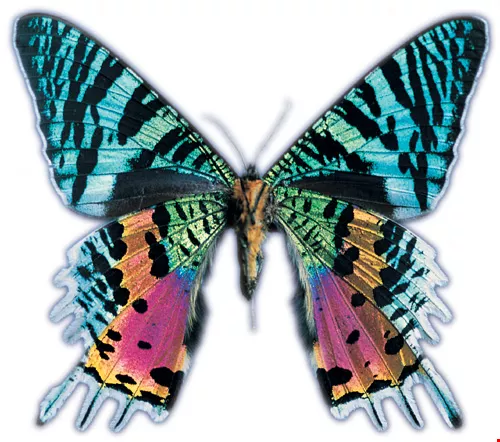
Is it a butterfly? A moth? On first glance, it appears to be the former, which causes Lee Chun-yang to speculate that there are no absolute divisions in nature, and that only with love can the gulf between species be crossed. Lee was also led to investigate the long-standing riddle of whether insects can think, and poured his knowledge into the book "The Insect World of Lee Chun-yang."
The insect world of Dr. Lee
After spending eight years and exhausting his family's savings, Lee Chun-yang's self-funded film, the first-ever Taiwanese documentation of insect ecology, reached completion. In the end, his painstaking editing of the more than 300 reels he had filmed yielded a movie lasting just under two hours, entitled Your Hidden Neighbors.
In 1975, Lee mailed the film to the British Broadcasting Corporation. They were astounded by the film, and sent reporters to Taiwan to interview Lee. In January of the following year, the BBC chose a prime Sunday time slot to broadcast their production of "The Insect World of Dr. Lee," which received international acclaim while also initiating a wave of Taiwanese media reporting on Dr. Lee. Lee accepted invitations for lecture appearances and film showings at locales around the island-even kindergartens invited him to speak!
Two years later, Lee produced a re-edited version of the film with a new name, The Hidden Events, which won first prize in the specialized film category at the Photographic Society of America's 48th International Film Festival. The same year, the internationally renowned US Smithsonian magazine made its interview with Lee a cover story, with the title, "One Man's Zeal Reveals a Rich, Hidden World." The article included a thought-provoking introduction:
"Just think, the next time you flick a bug off your sleeve or are tempted to crush it underfoot: you might be destroying an outstanding engineer, a responsible parent, a disguise artist capable of fooling Sherlock Holmes, or one of the world's greatest lovers...."
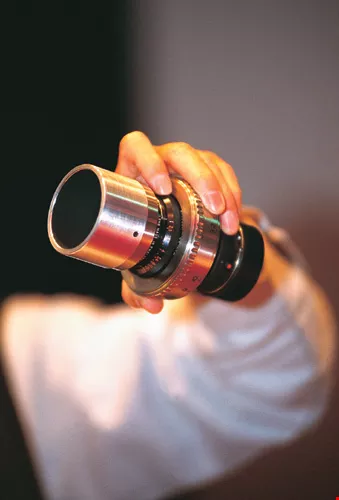
Lee imposed strict aesthetic demands with regard to the composition, lighting, and other aspects of his famous 1975 documentary on insects, which brought his professional career together with his personal aspirations. He even designed his own photographic extension tubes for extra magnification of his subjects. The documentary won international recognition, and became a benchmark for local insect photographers.
Capable of thought?
Yet, despite all the international acclaim for the expertise revealed in his documentary on insects, Dr. Lee remained perplexed by an insoluble riddle. Over the years of filming, he himself was often amazed by the variety of insect behavior, and was especially inspired by the reaction of one audience to the film: As they watched a weevil, no larger than a grain of rice, spin a delicate "baby cradle," their reaction was, "That's a person, not an insect!"
That idea pricked Lee's curiosity like a needle: Is it possible insects are really like humans? Extensive observations have shown that weevils have the inborn ability to roll leaves, which could be called an "instinct." But during the rolling process, some are meticulous workers, others cut corners; they adopt different approaches and show different levels of technical skill in adressing problems; and there are differences between the way individual weevils carry out different stages of the process, suggesting that something more is at work than a mere mechanical response.
Pondering these ideas, Lee says, "Doesn't that show that they can 'think' just like humans?" But for a long time, most people, and even leading experts, have naturally assumed that insects don't think, but simply act according to "instinct," and that instinct makes them blind automatons. Even Fabre, in Souvenirs Entomologiques, wrote, "The instinct of insects certainly has its foolish aspects."
Lee first began reading Souvenirs Entomologiques when he was young and still unacquainted with the insect world. Even then, he was disappointed with Fabre's notion of "instinct," yet he had no means of refuting it. But fate led him to the Agricultural Research Institute, and after over 40 years of observation, research, and filming of insects, the 60-year-old Lee Chun-yang found he still could not accept this notion of "instinct." He became determined to cast light on the riddle lying in the no-man's-land between science and philosophy: can insects think?
Psychological warfare
Lee found the psychological strategy used by the solitary wasp (Anterhyn-chium flavomarginatum) to capture leaf-roller moth larvae highly instructive, and he decided they would be his research subjects. "I wanted to do experiments, like Fabre, to back up my ideas," he says. While he knew that these wasps accomplished many things on the basis of instinct, he wanted most to understand whether they had "intelligence." When they meet the unexpected, he asked, can they devise a response?
To avoid its natural enemies, a leaf roller moth larva will roll a leaf up in the silk it spins, forming a tube open on both ends; the leaf provides both shelter and food for the larva. Because the moth larva is the natural choice of the solitary wasp as food for its soon-to-emerge young, Lee selected one of these rolled-up leaves, set up his camera, and filmed the following ingenious hunting techniques:
A wasp gracefully alights on the leaf-roll, but instead of piercing the leaf to get at the larva, Lee watches it as it scurries to the base of the leaf. The wasp taps the leaf-roll with its antennae to find out where the larva is, and when it finds the larva, its tapping frightens the larva into moving to the other end. The wasp immediately follows the larva to that end, and pokes its head into the open end of the leaf-roll. Lee explains, "The wasp does that not to see better, but to frighten the larva with the knowledge that a potential killer has come!"
The poor larva sees its mortal enemy and flees to the other end of the leaf-tube, and again the wasp gives chase. Back and forth the larva scurries, the wasp chasing across the leaf. After several rounds of this, the wasp returns to the opening at the front and is suddenly quiet, waiting with perfect composure for the prey it knows will appear. When the larva, dizzied by the chase, pokes its head out to see what has happened, the wasp scoops it up and flies off to its nest.
Lee's eyes light up as he describes in detail the scene he witnessed 20 years earlier: "It's hard to believe your own eyes when you see such intense psychological warfare playing out on a tiny leaf between the clever wasp and the frightened, helpless larva."
An angry wasp
Through his extensive observation and documentation of insect behavior, Lee has discovered that not only does the solitary wasp have battles of wits with larvae; it can also make guesses, be forgetful, and even show anger.
Once as Lee was trying to film the way the solitary wasp uses mud-balls to seal openings in its brood chamber, he discovered his camera angle was out of kilter just as the wasp was about to finish sealing another opening. When the wasp flew off to find more mud, Lee poked the hole open again with a pencil. The unfortunate wasp was going to have to work overtime, but it gave Lee the chance to get a good shot.
When the wasp returned and discovered a problem, it immediately set the mud-ball aside and crawled into its nest to investigate, and then set about work again. When it flew off for more mud, Lee enlarged the hole again. This time, when the wasp returned to find the situation changed again, it once more checked the inside of the nest, but this time, it emerged and buzzed about, now investigating Lee's camera, before going back to work.
The third time Lee re-opened the hole, the wasp immediately put aside the mud-ball and flew toward Lee, who was bare-chested and wearing short pants in the summer heat. "It was flying around me, as if to threaten me. Then it even started examining my navel!" Lee's wife, acting as his assistant, doubled over with laughter when she saw this unusual wasp behavior.
"I wouldn't have stopped it even if it had tried to sting me, because I wasn't facing just an insect, I was facing a mother earnestly trying to defend her young," says Lee. The response of this wasp left Lee with something to ponder: why, given the same stimulus-re-opening the hole-three times, did the wasp respond differently each time? Does that mean they operate on more than instinct? Insects can get suspicious, and their suspicions grow, just as with humans.
Think with love
Perhaps some will ask, what does it matter to humans if insects can think? But Lee believes, "Many times our first reaction is to crush a bug when we see it. But from another point of view, what if insects can think, what if they have a psyche? What if at that moment they are hurrying home to see their dear offspring? How can you still bear to crush them?"
To see whether the solitary wasp was capable of homing in on its nest as a pigeon does, he took three wasps and released them at varying distances from the nest. Two of the wasps returned to the nest several hours later, but a sudden rainstorm arose after he released the third. Lee feared the worst for it, but then next day the tired, bedraggled wasp found its way home. "In unfamiliar territory, after suffering a severe downpour, that tired mother wasp was still determined to return home to her precious eggs. If it wasn't for her steadfast love, she couldn't have done it," maintains Lee.
Lee points out that humans often think in contrasting pairs-true or false, good or bad, useful or useless-and we make a great variety of distinctions and categorizations as we do so. But, according to Lee, "That kind of thinking may be wrong, as there's no set criterion for the dichotomies we produce, and they may be entirely bogus." Instead, this man who has spent the better part of his life wordlessly communing with insects implores us to "set aside such dichotomies," and instead to "think of things with love."
Lee hopes that people will open up their hearts and look at insects from another point of view-not to mention the people and things surrounding them. As Lee says, "Only with love can we set our thinking straight and recognize the truth; only when we 'think with love,' letting universal love give impetus to our thoughts, can any question truly find its solution."
A Japanese saying has it that "inchbugs have five souls," and the British say, "Step on a bug and it will turn on you for a fight to the finish." We've seen Lee's painstakingly filmed insect documentaries, and read his The Insect World of Lee Chun-yang, written while squinting over his own special ruled paper and enduring optic nerve problems, all for the sake of setting down his more than 20 years of research into insect intelligence. So the next time you meet a member of the "six-footed clan," show them the style of the "two-footed clan": say hello and live with them in peace. Don't overlook them, and definitely don't casually slaughter our small friends!

@List.jpg?w=522&h=410&mode=crop&format=webp&quality=80)


