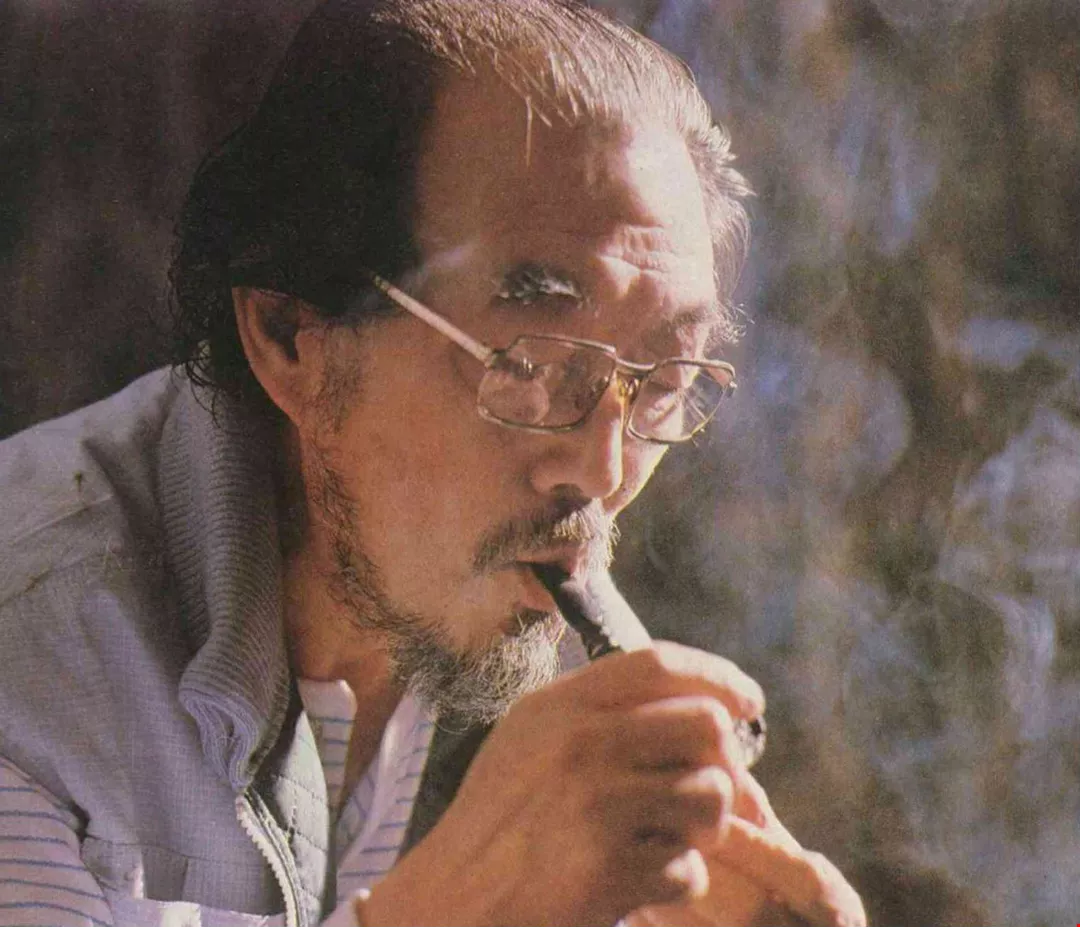
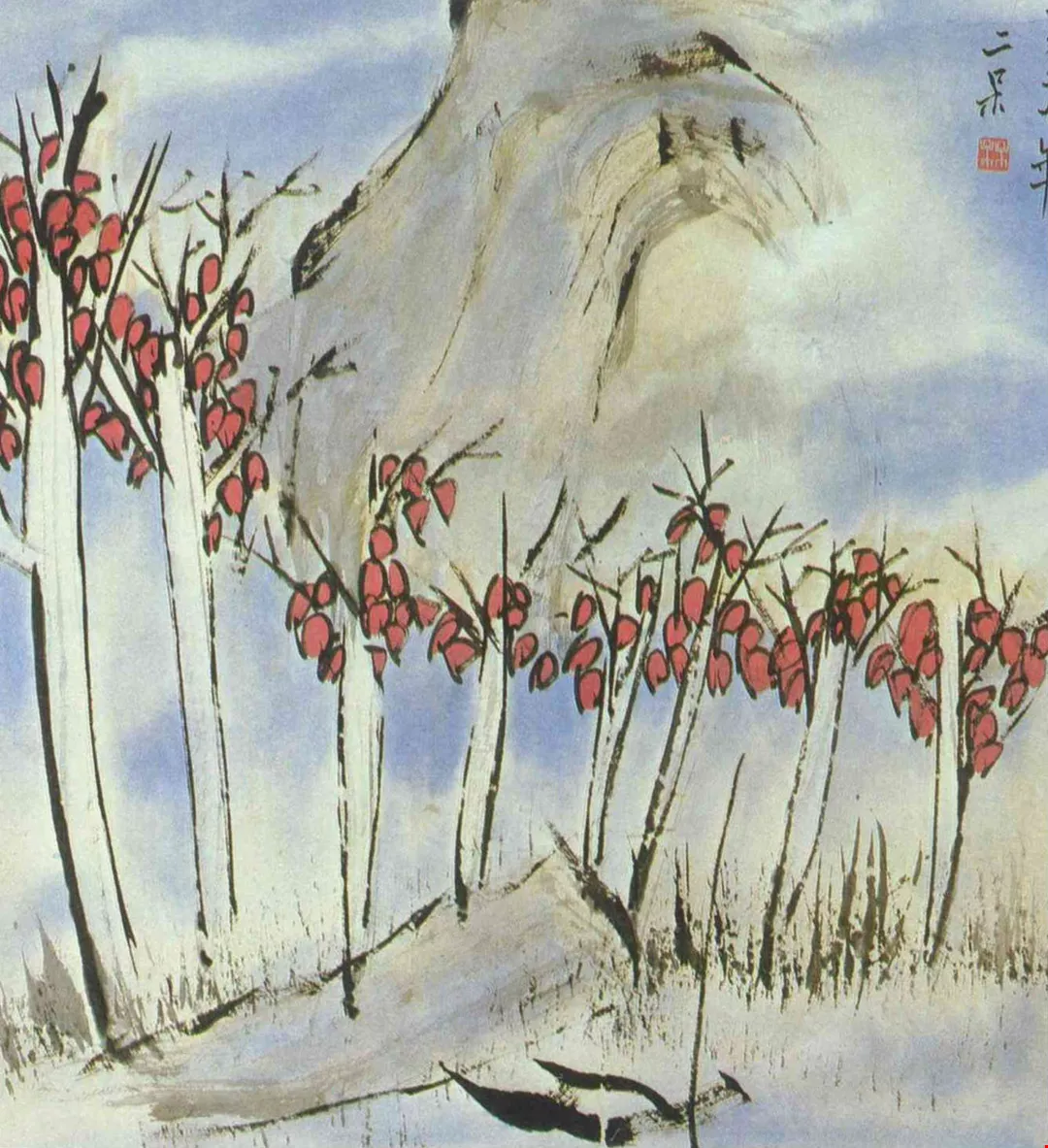
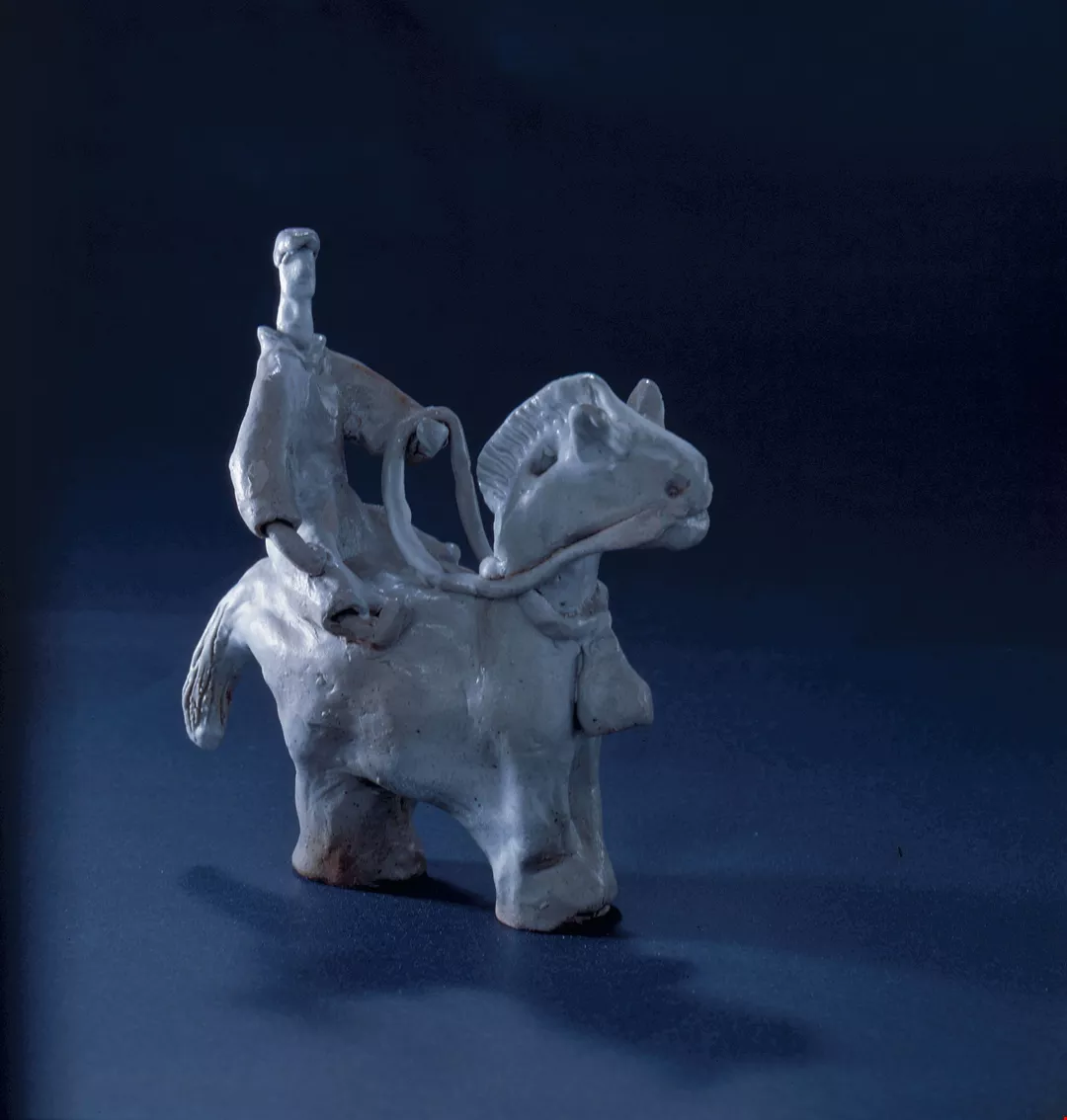
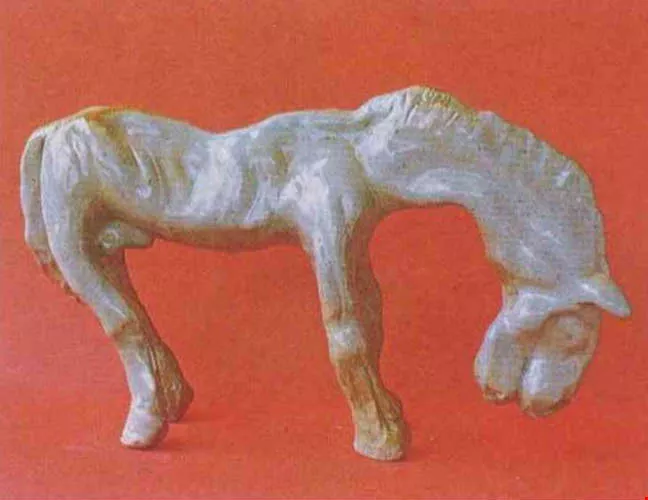
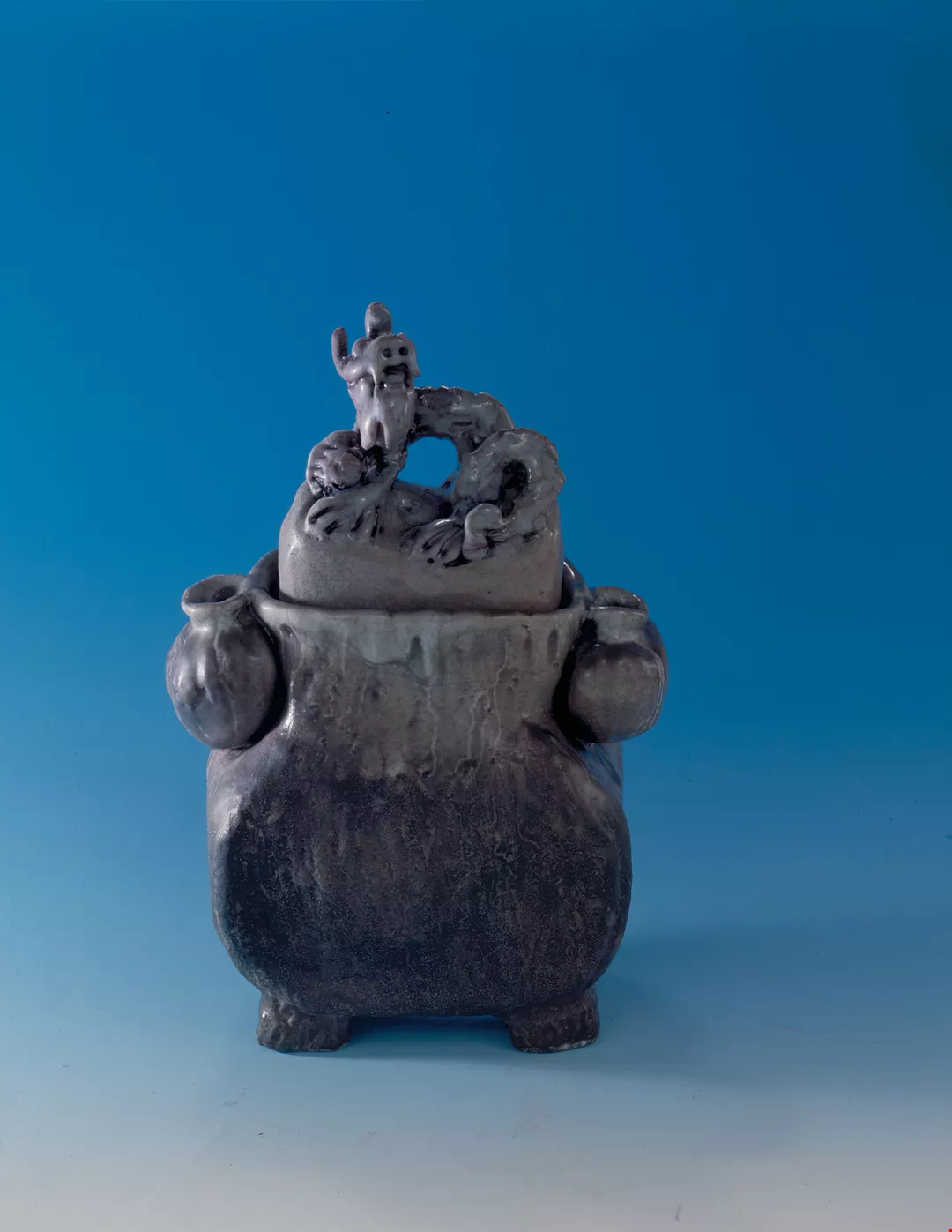
Chao Er-dai is a self-professed "slave of art", and he lists eleven "masters" to prove it. They are Chinese ink painting, calligraphy, pottery, seal carving, sculpture, drawing, oil painting, print making, photography, poetry, and literature. As he explained, "In this life I bow to no one and submit to no power. But before art, I am humble and submissive, I do whatever I am told. The arts have sustained me. When I am troubled, I worship one of the 11 "masters", and I achieve the peace of mind I seek."
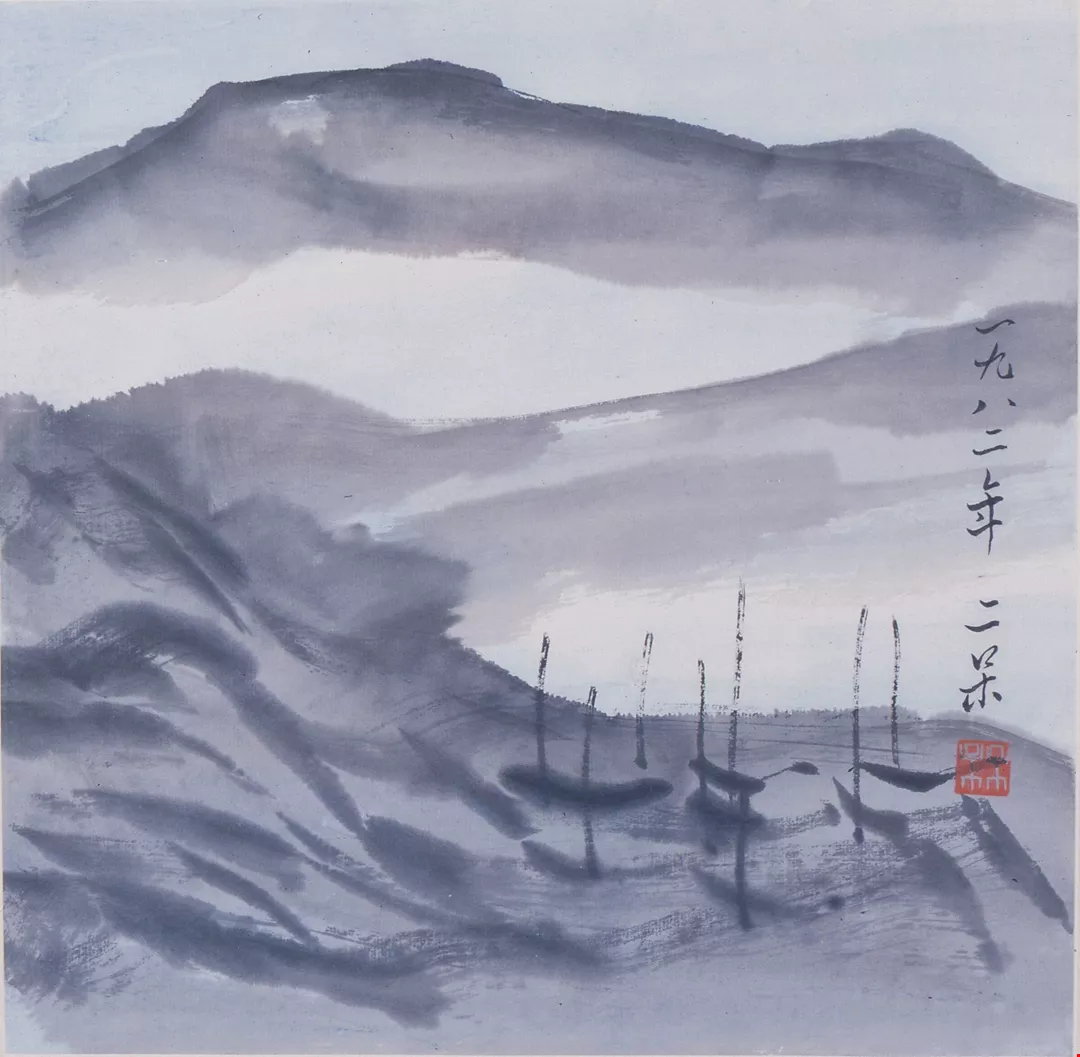
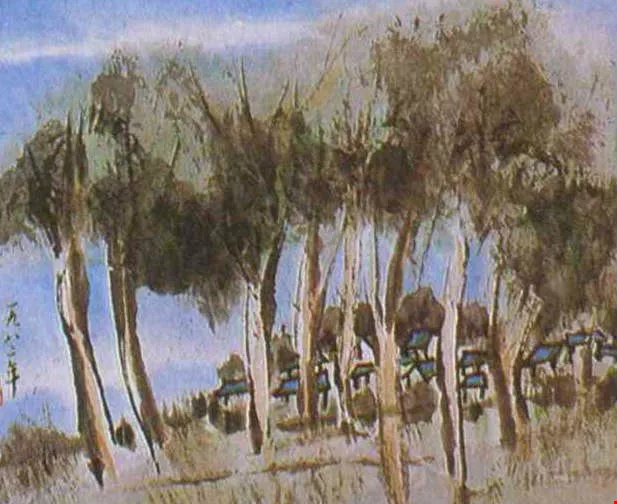
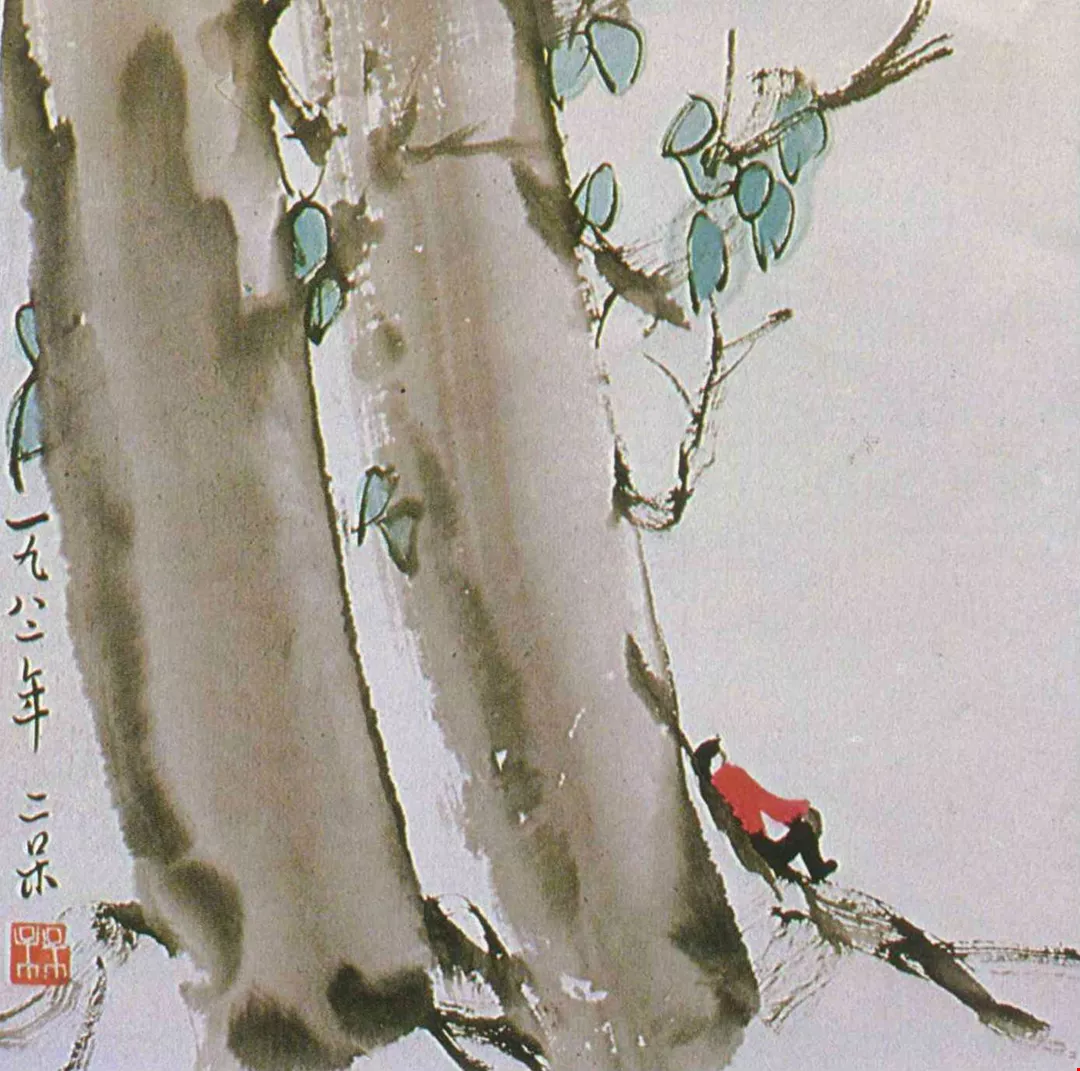
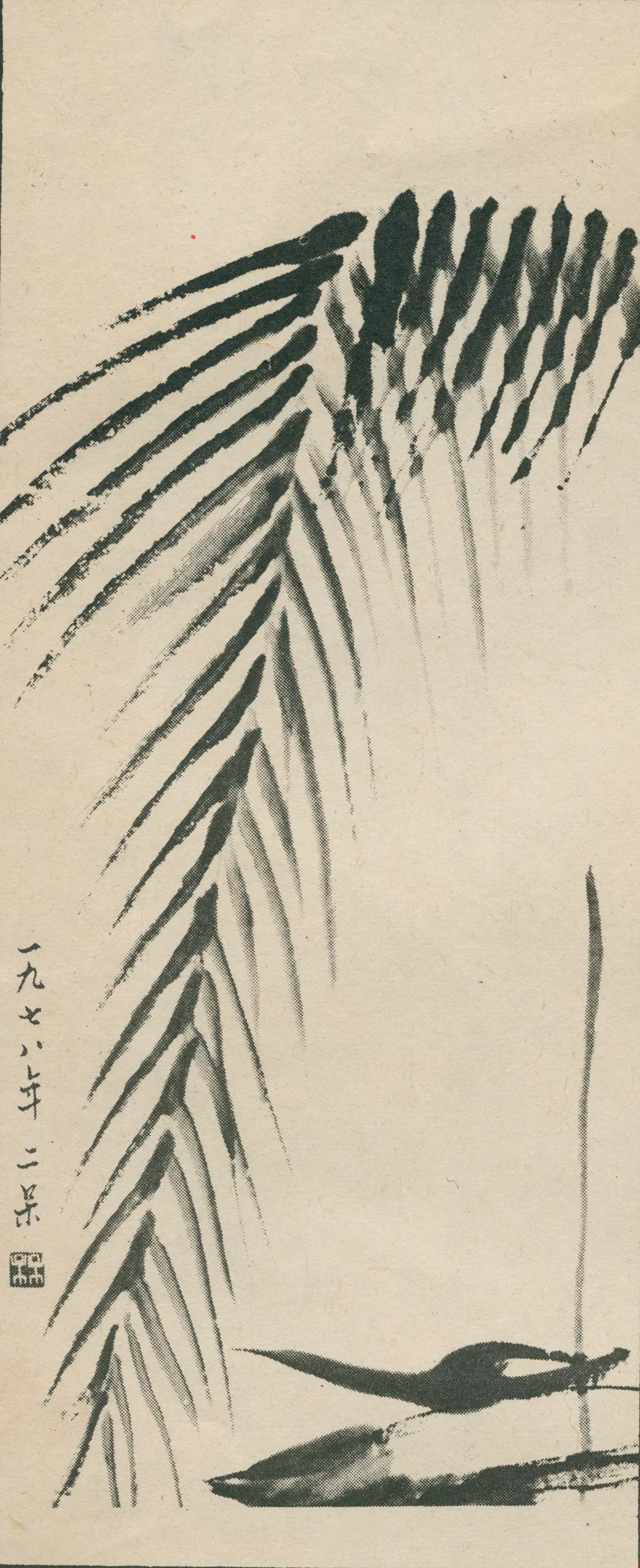
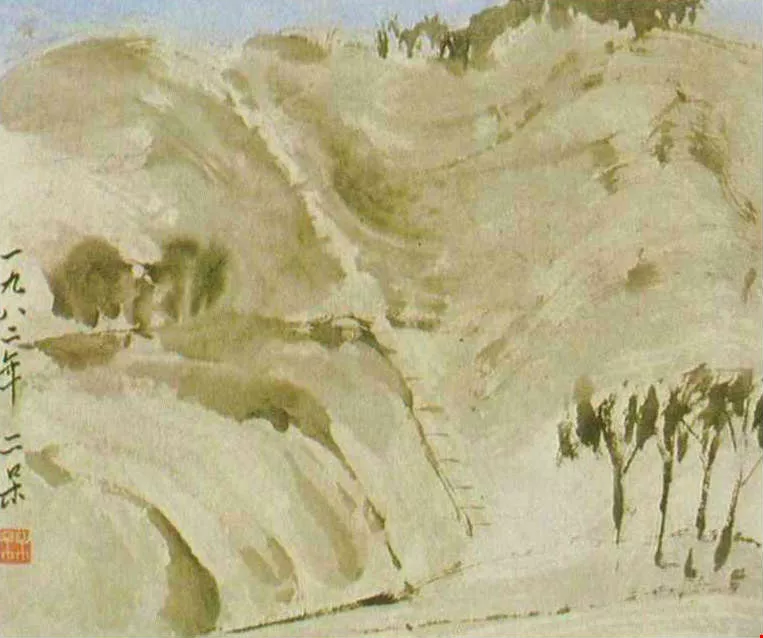
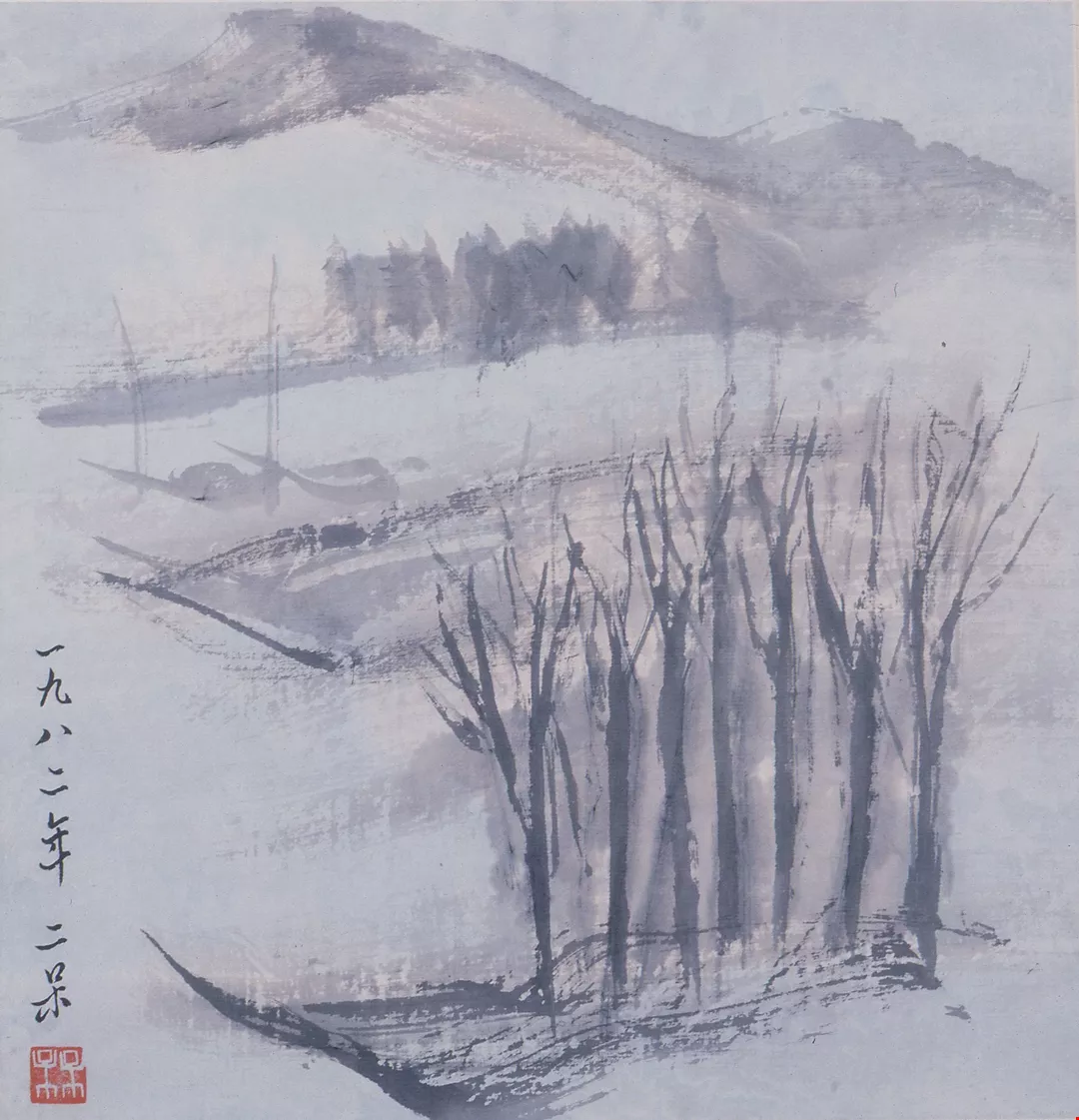
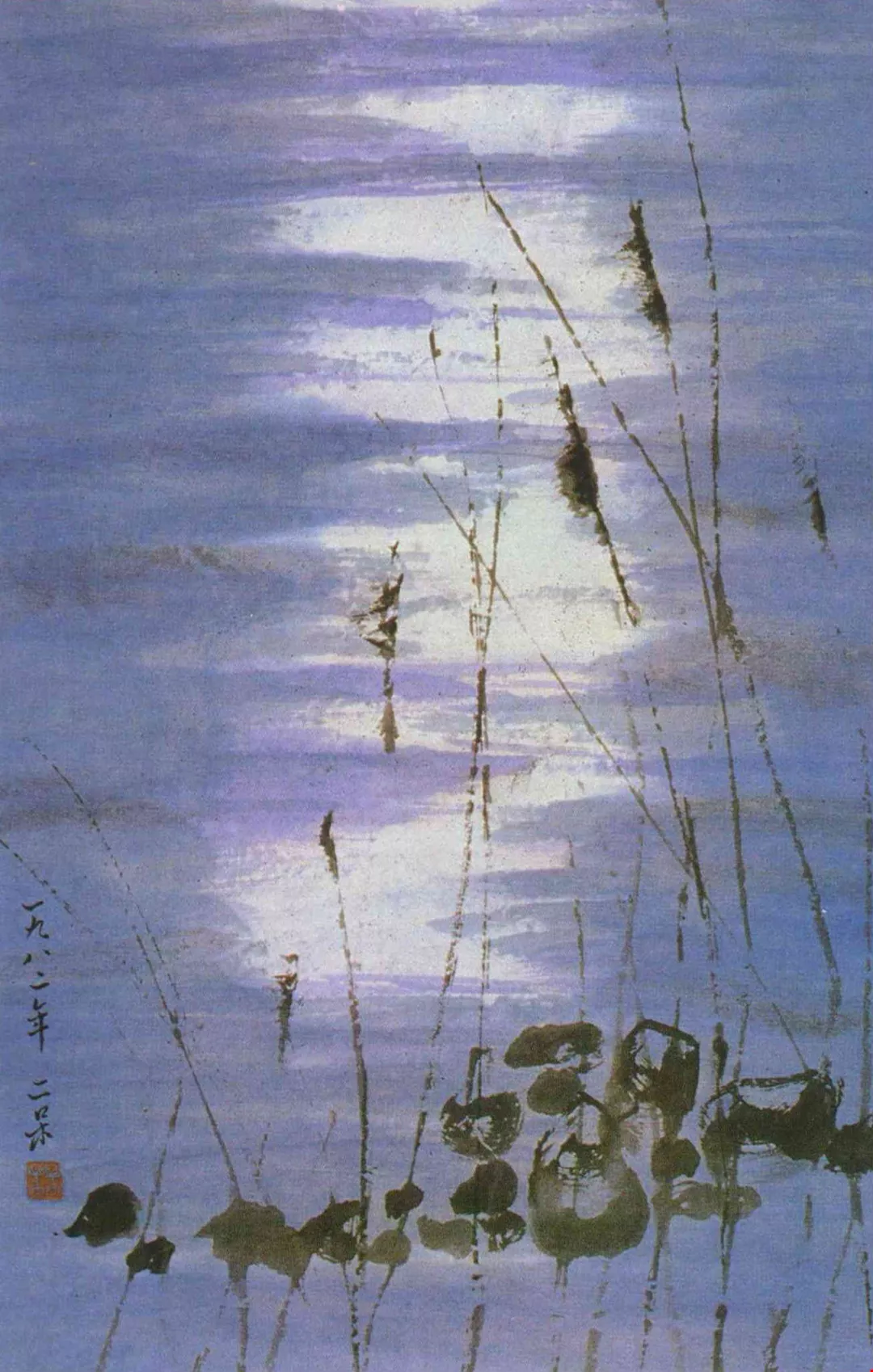
Er-dai completes his works quickly and simply without apparently pausing a moment for thought. Yet the works convey a grace, melancholy and artistry that moves the spirit. But what is the spirit hidden behind these simple paintings?
In his studio a piece of calligraphy reads "Occasionally wander in the realm of men." In fact, Er-dai lives much like a hermit, treasuring his solitude and privacy. He resembles the heavenly immortals of legend who would on occasion come down to visit the world of men. Yet during his meanderings, Er-dai has experienced the full range of human emotions and has tasted the sweetness of success and the bitterness of tragedy.
Chao Er-dai was born in 1916 in Kiangsu into a prominent and wealthy family. His given name was Tung-ho but because he was the second son and was noted for his taciturn habits, he was affectionately dubbed Er-dai (second-fool), a name which has stuck. Since childhood, he has enjoyed painting, and even before he could handle chopsticks, he would hide in the woodshed and paint. Then he would come home, covered with ink, to face a scolding. Fortunately, however, his grandmother encouraged him and allowed Er-dai to paint in her room. She would even give him embroidery patterns to fill in. Er-dai commented, "Grandmother wanted me to color in the patterns, but I preferred to paint my own ideas."
At the age of six, he began to study with the family tutor. Soon, he and several other children who liked to paint discovered a great treasure--The Mustard Seed Garden Painting Manual. For four years he studiously copied the drawings in the book, and although he could not read the text, he still understood what it was about. His family, however, was not pleased with his interest in painting, especially since it caused him to neglect his studies and even his meals. Finally, when it looked like Er-dai would fail in his studies, his father forbade him to paint.
Er-dai listened to his father and became a hard-working student, eventually graduating from the College of Law and Business Administration of the National Northwestern University. He then went into government service, first as the youngest county chief in Sanyuan County in Fukien Province. His interest in art, however, never diminished and he still painted, only now secretly and for his own satisfaction. Eventually, Er-dai's father found out. He recalled; "One day my father came into my room while I was county chief. He saw all the paintings and asked: 'Did you paint these?' Nervously I answered, 'I have been secretly painting all along.' My father didn't reply, but just remained there gazing at them."
Chao Er-dai quickly rose through the ranks, eventually becoming chief of Fukien's largest county, Linsen. After coming to Taiwan he rose just as rapidly through the business world and in 1963 was appointed general manager of the Taiwan Agricultural and Industrial Development Corp. becoming one of the Republic of China's leading businessmen.
Many think it strange that such a celebrated artist should also have made a name for himself as an official and businessman, but there are precedents. For instance, during the Sung dynasty there was Su Tung-po, and during the Ching, Cheng Pan-chiao. Still there are not many who have excelled in so many varied fields. "I am an emotional person, but when I work I don't worry about what others think," Er-dai said in explaining his basic principle - with people be emotional, with business be practical. He continued, "When I paint I want to express myself fully, but when I work I don't want to feel any emotion."
Despite his success, Er-dai has had his share of bitterness. When two of his daughters were temporarily staying with a friend in Taipei, they were murdered by a servant who went berserk. For years afterwards, whenever Er-dai saw a girl with a ponytail, the painful memory would return.
In 1969, Er-dai suddenly retired from public service. At the time, he carved a seal to explain his feelings: "In order to be an artist, I will not be an official." Er-dai withdrew from society to devote himself entirely to his art.
The fact was, however, that during all his 30 years of public service, he never really stopped being an artist. A day never passed during which he did not paint. But to avoid conflicts of interest, he never held a show in the ROC, and no one associated the artist Chao Er-dai with the businessman Chao Tung-ho.
Er-dai considers it fortunate that he never received any formal training as an artist. He feels he is free to create what he wants, in the way he wants and without limitation. He commented: "Creativity has no technical or material limitations. It is also not bound by traditional or contemporary styles." Er-dai particularly appreciates a line from Shih Tao, the great Ching painter, which goes, "If I copy the ancients, who did the ancients copy?" It is not that Er-dai does not respect the work of his predecessors, but rather that he feels as times change, so must the means of expression. "If we do not create anew, is that not the same as allowing culture to be frozen in the past?" he asks.
When asked what his art represents, Er-dai answers with two words: "heaven" and "earth". When he creates he does not plan ahead, but just lets whatever is inside come out. He explained sometimes that when he works with clay he intends to create a flower vase, but instead the finished work is a horse. "I don't try to attain anything. I have no special method, and I am not expressing anything. Some say my art is like Zen, very mysterious. I don't understand Zen and I don't understand mystery. All I do is follow nature."
Having experienced all he feels a man can expect to, Er-dai now only wants to escape from all his complexes and find peace in art. Whenever he picks up a brush or knife, Er-dai is searching for only one thing--chen (purity, or truth).
Presenting an Outstanding Artist.
Presenting an Outstanding Artist.
Presenting an Outstanding Artist.
Presenting an Outstanding Artist.
Presenting an Outstanding Artist.
Presenting an Outstanding Artist.
Presenting an Outstanding Artist.
Presenting an Outstanding Artist.
Presenting an Outstanding Artist.
Presenting an Outstanding Artist.
Presenting an Outstanding Artist.
Presenting an Outstanding Artist.




@List.jpg?w=522&h=410&mode=crop&format=webp&quality=80)

@List.jpg?w=522&h=410&mode=crop&format=webp&quality=80)


