Jessica Chang: Inspiring Woman, Inspiring Women
Su Hui-chao / photos Chen Mei-ling / tr. by Phil Newell
May 2016

.jpg?w=1080&mode=crop&format=webp&quality=80)
At the same time as world-famous industrialist Terry Gou was holding a press conference to announce that Foxconn was taking over the Japanese home appliance and electronics giant Sharp, at the headquarters of the JPC Group in the Zhonghe District of New Taipei City, company president Jessica Chang was also busy. She was in her office, having just finished reading the book Insight (also translated as What I Have Seen) by the Chinese journalist, host, and environmental activist Chai Jing, and turned her attention to studying a proposal requesting assistance that had been submitted to “Verymulan.com.” It was from a woman who was stuck holding her husband’s debt, and who was trying to transform her plastic injection molding company into a brand of its own.
“Tsiek tsiek and again tsiek tsiek, / Mulan weaves, facing the door. / You don’t hear the shuttle’s sound, / You only hear the daughter’s sighs.” These lines from the ancient “Ballad of Mulan” show us how, from olden times to the present, women have never ceased to sigh, usually in dark and silent corners. But today, Jessica Chang is listening.
Verymulan.com was founded by Jessica Chang in 2012 as “a purely personal project.” A social enterprise whose purpose is to support women in turning their aspirations into reality, they started out by making investments in microbusinesses in the cultural and creative industries. In the process, they accumulated a database on female human resources, and began “playing matchmaker.” Verymulan.com doesn’t necessarily require a woman to start a new business per se; its foremost role is to “help women find the right jobs, and help companies find the right people.”
As we sit in the office, Jessica Chang begins mulling another plan: She will go to the “L’amofirefly” shop on Dihua Street to chat with the designer Chen Lijin. Chen uses the ecology of Taiwan as elements in her designs, creating unique textiles and clothing inspired by things like crow butterflies or idesia (a flowering tree), interwoven with a love of this land and its environment.
At the other end of the office there is another project that Jessica Chang is incubating, an online fashion brand for young people called “Lamo.3.” The style is what Taiwanese refer to as “wenqing.” This literally means “literary youth,” but more generally it means a sort of clean, sweet, intellectual-looking style. Chang is hoping to break the hold that Korean style currently has over the typical 18-year-old girl in Taiwan, and get them to consume local designs instead.
Back at the JPC Group, the Zhonghe factory is relentlessly churning out 100G high-speed Ethernet connectors, but this is no longer the totality of Jessica Chang’s business interests. The way Chang sees herself today is as someone who is still an authentic, down-home country girl. Raised on a farm with strong family support and generously nurtured by this land, she says she has always been lucky in the people she has encountered and the things she has done. Her fond memories of growing up are imprinted on her person. Borrowing the slogan of L’amofirefly, she says, “I too am really ‘Made in Taiwan with Love.’”
.JPG?w=1080&mode=crop&format=webp&quality=80)
Verymulan.com organizes events that bring together talented women, providing mutual support for women struggling to succeed in a wide variety of fields of endeavor. (photo by Lin Jing-yuan)
The “literary youth” within
It takes two hours to walk from the most populated part of Gukeng, a rural township in Yunlin County, to Shanfeng Elementary School, deep in the mountains, where Chang attended school. There she learned to play ping-pong, and her first encounter with the world of the plains was when she went to Dounan, a somewhat larger town also in Yunlin, to compete.
An avid bibliophile, she read everything that came to hand, working her way through a whole library of books and really developing her imagination. For middle school, she “came down from the mountains” to study in the town of Douliu.
Chang’s grades were not exceptional, but her outside reading—countless volumes of literature, martial arts novels, and comic books—as well as her memorization of hundreds of English songs that she could roll off her tongue fluently, quite unexpectedly helped her when it came time for the university entrance exams, and she tested into the Department of Economics at Tunghai University. During her time at college, Chang played ping-pong, audited classes by the writer Chiang Hsun, and even was selected to become a counselor at a summer camp held in Taiwan every year for American- and Canadian-born Chinese to learn about Chinese culture. Chang’s interest in Peking Opera can be traced back to this period in her life.
Even today, Chang defines her nature as being that of a “literary youth,” but she is clearly highly skilled at hiding her sentimentality.

Riding the boom in the electronics industry, JPC continually grew, earning Chang the nickname “the female Terry Gou” in the business community.
JPC: Founded in a living room
In fact, Jessica Chang has never been an especially ambitious person. However, because she feels boundless curiosity about the world, she has a real thirst for novelty and is willing to take a chance. Ping-pong, literature, counseling, Peking Opera… each of these opened a window for her, each was another piece of the world that she came into contact with. Her thirst for adventure pushed Chang to move to Taipei, where she took a job as a secretary in a German electronics parts purchasing company. Five years later when she left, holding the title of general manager, she had learned all the ins and outs of foreign trade, including the financial side, sales, dealing with manufacturers, and products.
Handling export sales and marketing for all kinds of products produced by small factories in Taiwan, Chang came to really respect these master craftsmen working away in their invisible factories. She says that there is no question that it is because of them that she gave up a plan to study abroad and remained in Taiwan. She rented a small apartment, bought herself a fax machine, and squatted down in her living room to write letters to potential foreign clients and customers. She took orders on behalf of factories in Taiwan, and this is how JPC, with only two employees beside Chang, got its start. This was 1992, and she was 30 years old.
At first, JPC sold anything and everything. Those were the days when the entire world was rapidly computerizing and digitizing, and it was the era when the OEM electronics manufacturing industry in Taiwan boomed. By staying in step with the times, plus adding its own research and development as well as innovation capabilities, JPC went from its start in a living room all the way to listing on the stock market in 2005.

Jessica Chang’s firm JPC started by serving master craftsmen who worked away in their small factories in anonymity, with JPC marketing outstanding manufactured goods from Taiwan to the world.
Minor matters that matter more
A woman with imagination is not likely to consider computers to be cold and uninteresting. Not long after JPC got up and running, Jessica Chang hired an illustrator to create drawings based on things she imagined about computers. In her mind, computers would become completely wireless, they would rule every aspect of human life, they would even be able to fly…. She imagined all these things before there was any such thing as Yahoo! or Google.
Because she had a lot of creative ideas about computers in the style of science fiction literature, she found them endlessly fascinating, and ended up achieving a kind of success she had never dreamed of. However, even as sales revenues crossed the NT$10-billion threshold, and the business community was calling her “the female Terry Gou,” she was afraid that she was becoming a “corporate type” whose life centered around making money and who thought of nothing but growing the company.
Chang asked herself: “What else is there that I can do?” At that time, her office was already filled with modernist paintings, and she had bought every high-end brand-name item that she could buy. However, when she turned around to look back, she was astonished to see a Taiwan where the mountains were deforested and landslides were common, where rivers were polluted, and where culture and the arts were in a dark age, yet where industrial parks were being built with no end in sight.
In 2009, Chang put herself in the role of “fireman” and came up with NT$15 million to invest in a film then being made called Monga. For her, this was a “minor matter,” and she wasn’t expecting anything in return. Incredibly, the film turned out to be a huge hit. Chang then thought back to the teachers who taught her how to play ping-pong when she was younger, who held her hand as she went down to the plains to spend the summer at Ershui…. These people who had appeared in her life, and these things that had appeared to be as trivial and fleeting as flower petals falling in a breeze, were in fact important things that changed her life. She decided she wanted to give something back, and in the process perhaps rediscover herself. This way of thinking led Chang to found Verymulan.com and to create L’amofirefly. “I wanted to do some small things, perhaps help take care of the environment in Taiwan, perhaps inspire a woman to be more courageous, just little stuff that would change one life or one person,” says Chang with conviction.
Jessica Chang has chosen a very different road from that of Terry Gou. Perhaps this is in some way a “feminine” characteristic especially strong in women. Considering how to give a woman doing plastic injection molding some practical advice, investing in organic farms and organic fertilizer manufacturers…. For Jessica Chang, the feeling of satisfaction and happiness that she gets from “doing small things with seriousness of purpose” is something that no amount of sales revenues can buy.
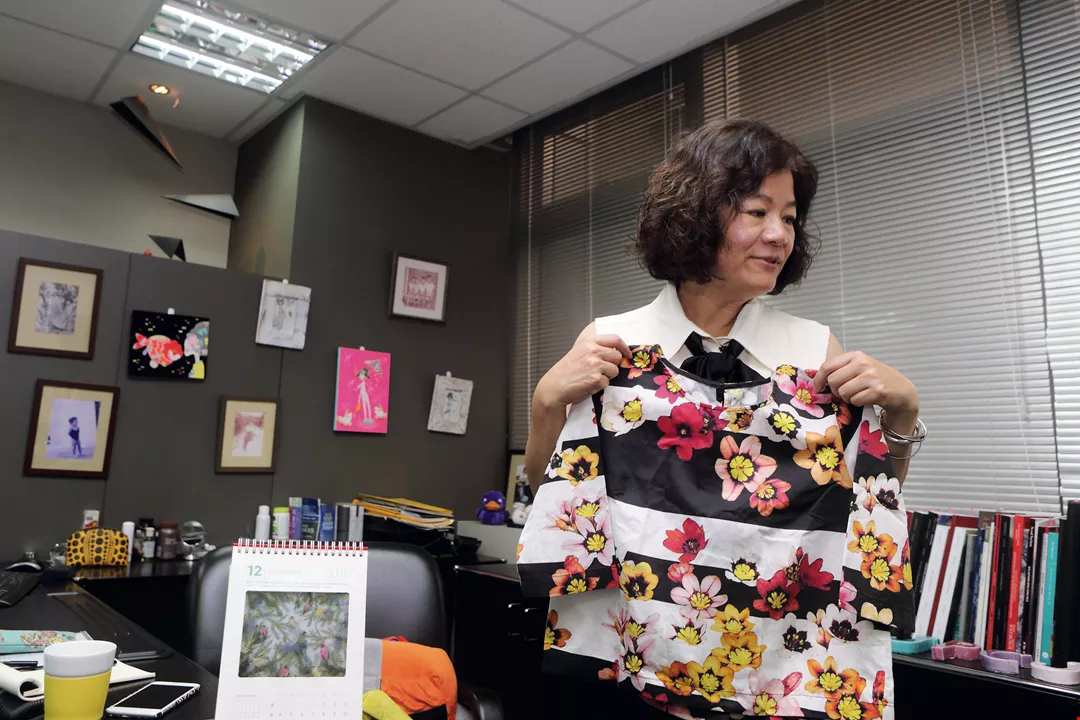
The fireflies of Chang’s hometown of Gukeng inspired her to found the creative enterprise “L’amofirefly,” hoping to reconnect with Taiwan’s land and environment. Through the skill of the designer, L’amofirefly brings the ecology of Taiwan to life on fabric, transforming nature into fashion.
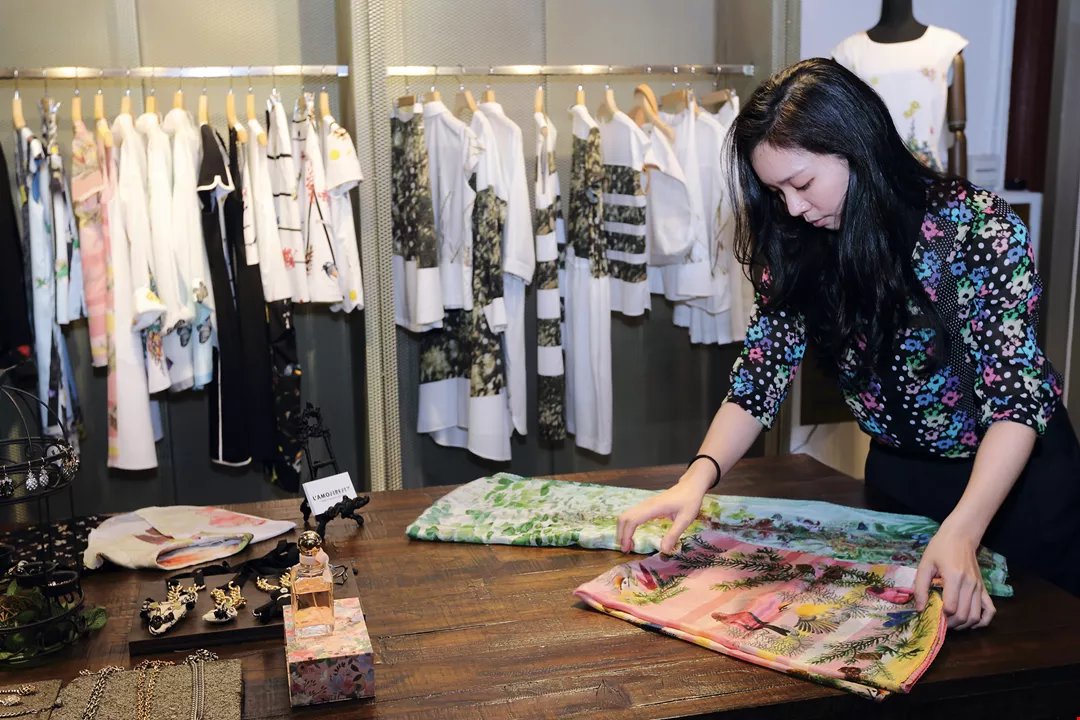
The fireflies of Chang’s hometown of Gukeng inspired her to found the creative enterprise “L’amofirefly,” hoping to reconnect with Taiwan’s land and environment. Through the skill of the designer, L’amofirefly brings the ecology of Taiwan to life on fabric, transforming nature into fashion.
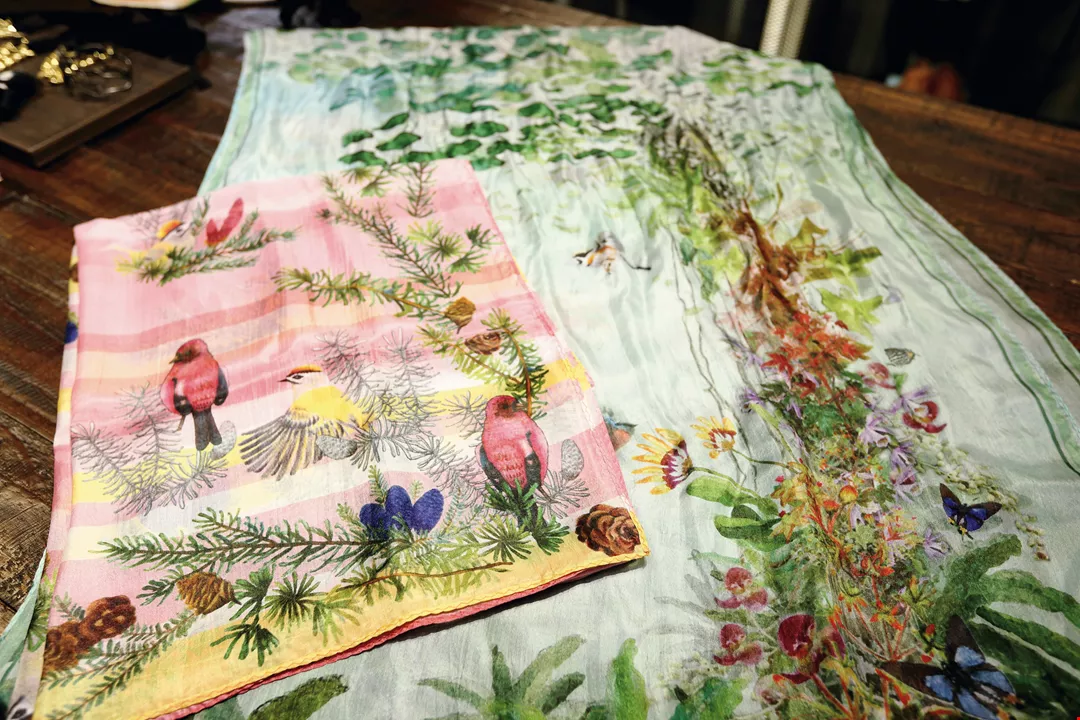
The fireflies of Chang’s hometown of Gukeng inspired her to found the creative enterprise “L’amofirefly,” hoping to reconnect with Taiwan’s land and environment. Through the skill of the designer, L’amofirefly brings the ecology of Taiwan to life on fabric, transforming nature into fashion.
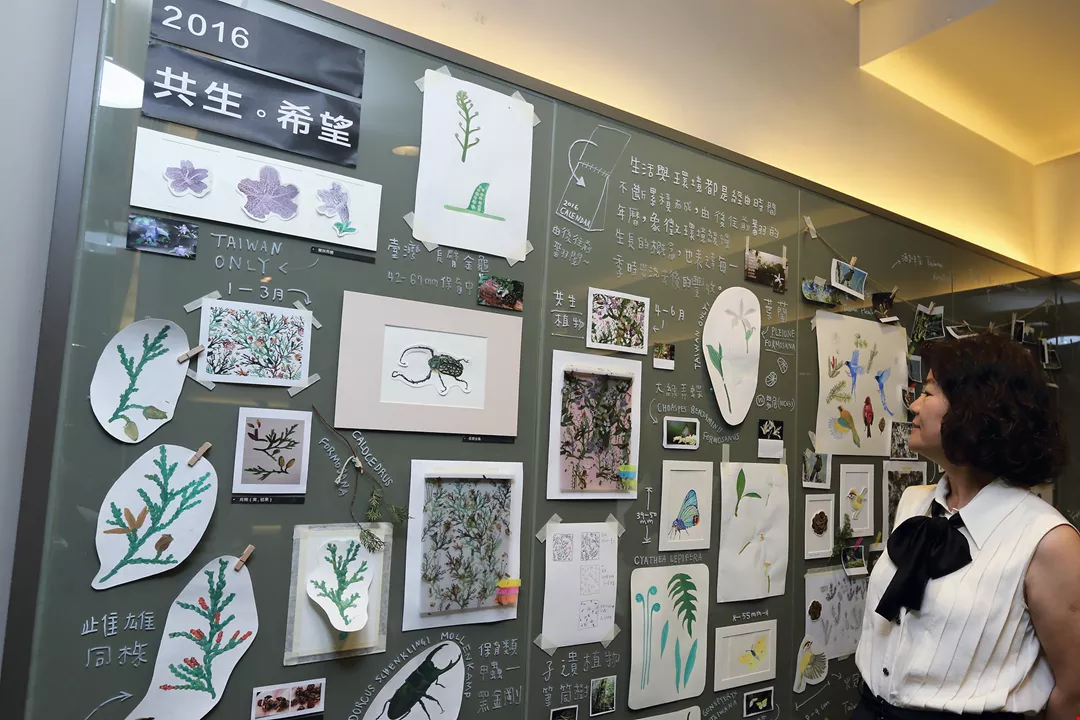
Jessica Chang is dedicated to helping women create new businesses and become self-reliant. She hopes that these small steps will contribute to a more vibrant and glittering future for creative and cultural enterprises in Taiwan.


