Racing at Baojin: a glimpse of Yuan-Dynasty Imperial Dragon Boat Festivities
Another highlight of Solitary Elegy / Splendor is Dragon Boat Race by the Baojin Hall, a marvelous example of jiehua (ruled-line painting) by the 14th-century architectural painter Wang Zhenpeng. Lin tells us that only about nine such works exist worldwide today, and the NPM proudly houses four of them.
A court painter of the Yuan Dynasty, Wang Zhenpeng meticulously depicted the delicate scales on the dragon boats, the ornate beams of the architecture, and the intricate latticework of the windows—even rendering the rolled-up blinds with astounding precision. A closer look reveals aquatic acrobatic performances and the majestic Baojin Pavilion, featuring a lavishly draped dragon throne on the balcony, prepared for the emperor. Through these fine details, the artist conjured up the grandeur of the Northern Song spectacle on Jinming Pool, where the emperor had personally overseen the dragon boat races.
Finding strength in solitude
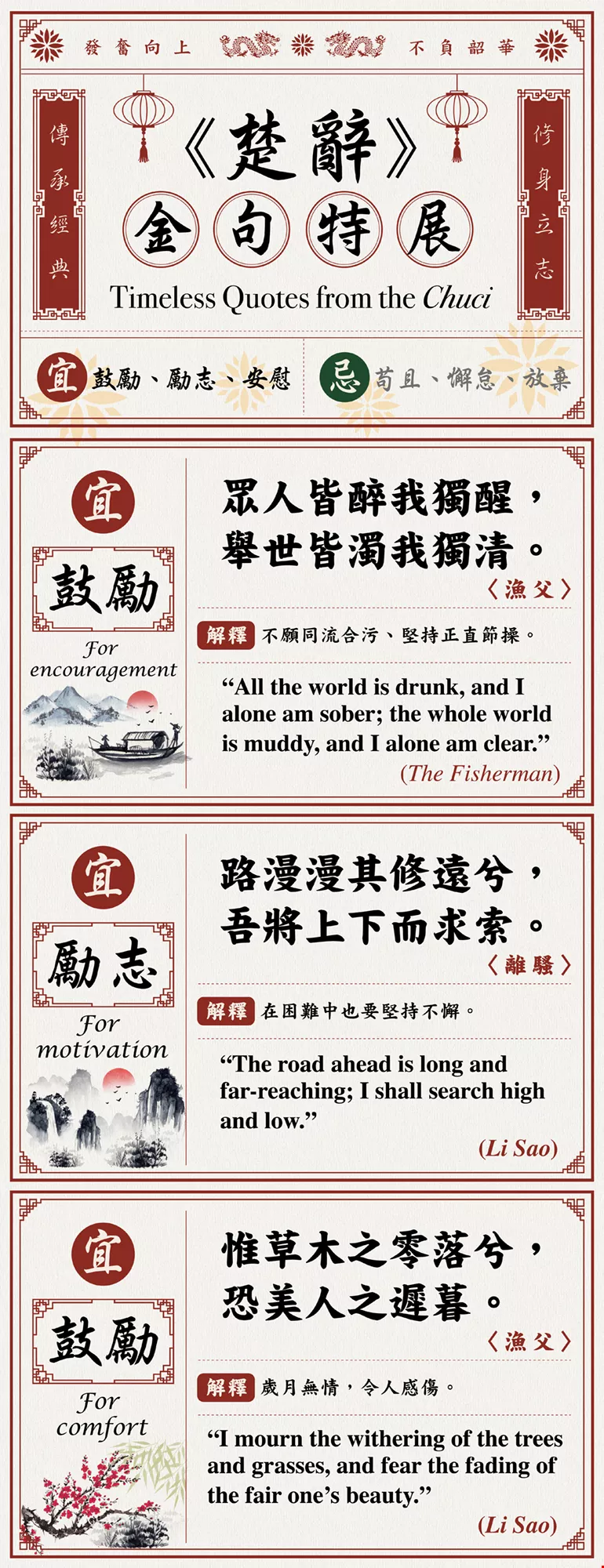
Ultimately, the exhibition is far more than a seasonal display; it is a profound dialogue about personal sorrow and spiritual sublimation. Amidst the festive cheer of the Dragon Boat Festival, visitors are invited to feel the solitude and melancholy that inspired Qu Yuan’s poetry. By returning to the Chuci, modern readers can still find resilience and comfort amidst life’s trials and tribulations.
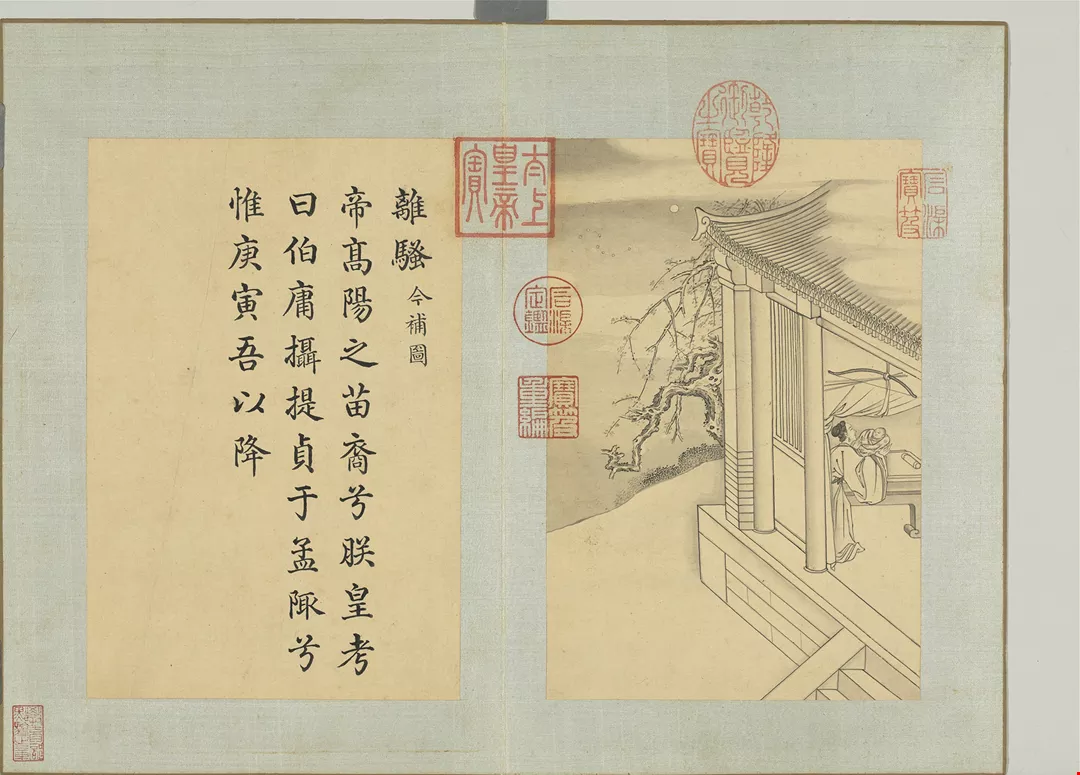
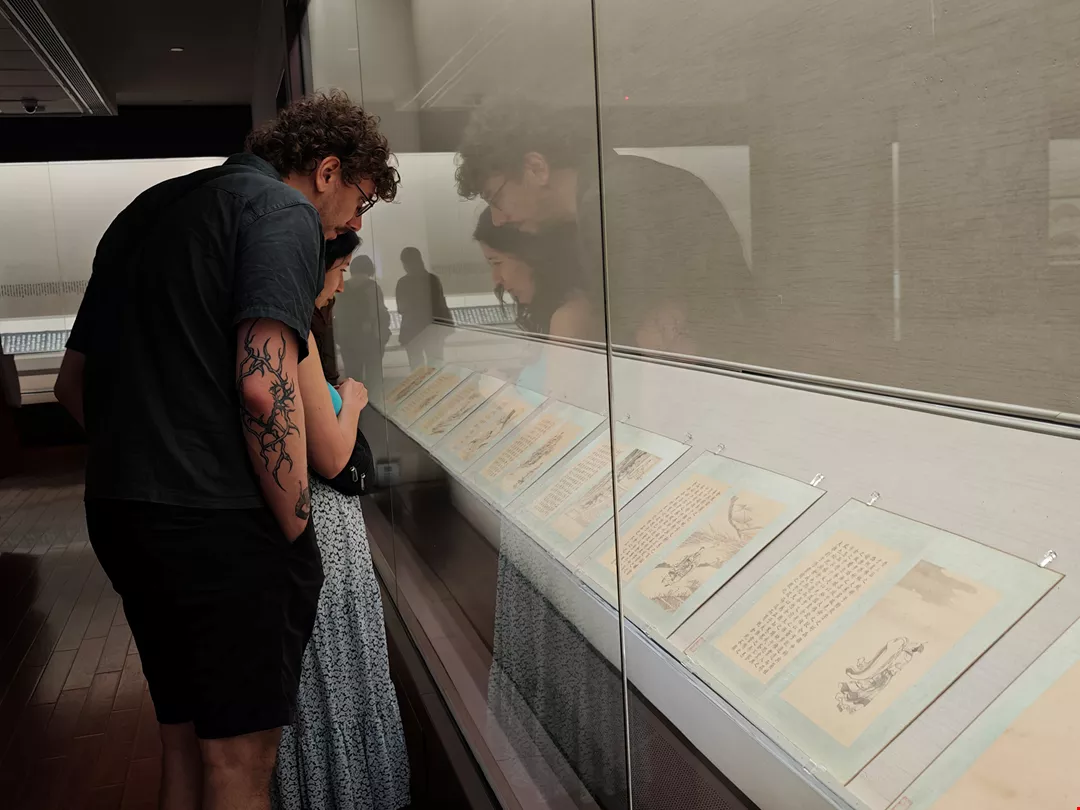
In 1781, the Qianlong Emperor commissioned court painter Men Yingzhao to produce the Imperially Commissioned Supplement to Xiao Yuncong’s Illustrations of the “Li Sao”, expanding upon the work of the late-Ming to early-Qing artist Xiao Yuncong. Accompanied by the famous opening lines of the Li Sao, the exquisite illustration and sophisticated layout here demonstrate that the Chuci remained a revered classic, widely read and copied among Qing courtiers and literati. (courtesy of the National Palace Museum)



.jpg)


