A Different Response to Globalization--El Salvador Journal
Andre Huang / photos courtesy of Conjunction Films / tr. by Josh Aguiar
September 2008


The Chinese saying "that which we use in a single day takes hundreds of hands to prepare," is just as applicable today as when it was first coined-even more so in the context of globalization. The brand-name clothes we wear may be ordered from New York, but the raw materials used to make them could come from US, African, or Australian farms; the sewing machines used to assemble them might be Japanese or German; and the assembly itself is more likely to take place in the Philippines, mainland China, or El Salvador before the clothes finally make their way to store shelves in Taiwan.
Many are unaware that the model for this type of global operation originated in none other than Taiwan.
When the world's first export processing zone opened in Kaohsiung's Chienchen District in 1966, few could have guessed it would become a model for the global economy of today, inspiring more than 3000 similar zones in over 116 countries around the world. Today, Taiwan, along with South Korea, Hong Kong, and Singapore, has gradually transcended its earlier role supplying factory muscle, to become an investor in factories overseas that use the same approach, taking raw materials and preparing them onsite for sales around the world.
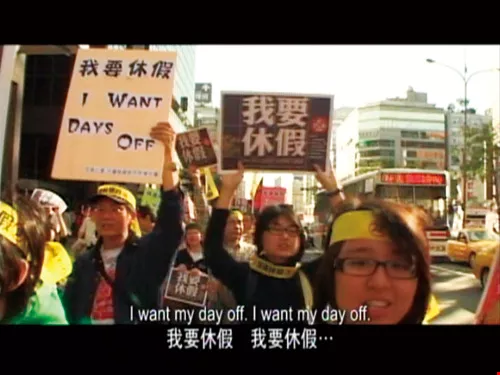
Once a supplier of inexpensive labor for others, today Taiwan has become an investor nation that attracts its own migrant workers. At the end of 2007, workers from nations throughout Southeast Asia took to the streets to demonstrate for worker rights.
Tough it out or be replaced
Business magazines reserve the spotlight for those enterprises that dominate the chain of global production, with little coverage devoted to the places where the actual manufacturing is done.
According to US watchdog organization Sweatshop Watch, 50% of a finished garment's sale price goes to retail distribution, 35% to the brand owner, and 10% to the contract manufacturer, leaving a paltry 5% for worker wages.
Because wages are so low, export processing zone workers need labor unions to protect them. But unfortunately, as in Taiwan back in the days of martial law, the factory owners forbid worker organization, and are willing to uproot and relocate at the slightest sign of unrest.
The fact that fierce competition amongst manufacturers drives factory profits down, and the extremely fluid nature of global investment, both work against healthy wages and benefits for workers. But surely there must be another alternative besides choosing between sticking it out at an exploitative job, and unemployment?
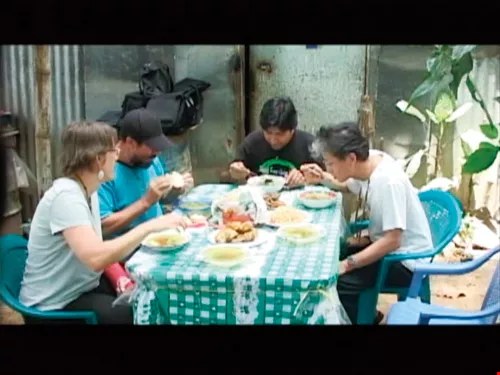
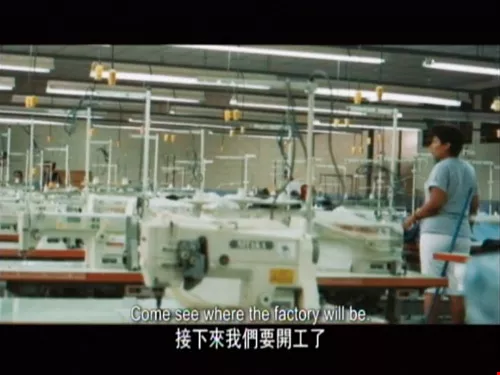
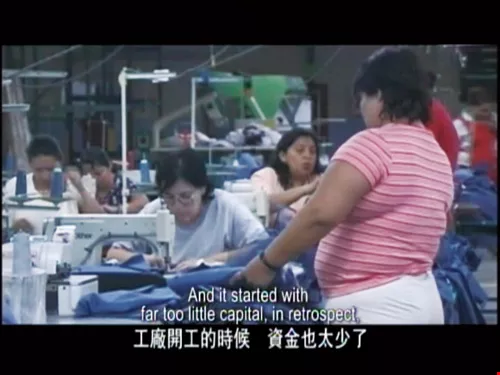
The documentary tells how Salvadorean workers at a Taiwanese-owned factory fought to establish a factory called Just Garments, which they helped to manage, and how they dealt with failure when the factory eventually closed.
Investing in El Salvador
In 2004, 40 years after the export processing zone model was first established, a definitive solution finally appeared. Once again, Taiwan was involved.
In 2000, the 30-plus-year-old Tainan Spinning Company established garment plants in El Salvador because of the tax incentives that nation offered and also because the location made it a convenient base for shipping orders to the US. Their presence in El Salvador brought precious employment opportunities to a nation whose economy had been ravaged by civil war. But in 2002, as local workers sought to unionize, the company prepared to close down their Salvadorean factory, citing insufficient contracts as a pretext. At the same time they distributed a blacklist of individuals involved in labor organizations to other companies with factories in El Salvador, to bar "troublemakers" from gaining employment.
The incident quickly came to the attention of the American organization Sweatshop Watch and labor rights activists in Taiwan, leading to the creation of an international support network comprising activists in El Salvador, the US, and Taiwan. In El Salvador, workers' continued efforts to unionize garnered broad support in public opinion. Sweatshop Watch began pressuring large American companies not to terminate their contracts with Tainan Spinning, as well as directly censuring the company itself. Taiwanese groups came out against Tainan Spinning, as well, but also facilitated negotiations between company and labor representatives, and rallied support for the Salvadorean workers amongst Tainan Spinning's employees in Cambodia and Indonesia.
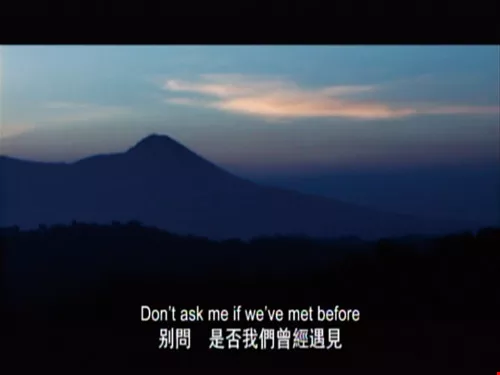
The documentary tells how Salvadorean workers at a Taiwanese-owned factory fought to establish a factory called Just Garments, which they helped to manage, and how they dealt with failure when the factory eventually closed.
Making history
After a series of heated negotiations, management and labor reached an agreement in San Francisco, USA at the end of 2002. Tainan Spinning made amends with their former employees by funding the building of a new factory in El Salvador to be cooperatively managed by corporate and labor representatives. Under the new terms, the board of trustees would include corporate and labor representatives in a 50-50 ratio. The plant manager would be a Salvadorean citizen jointly appointed by both sides. Several large American clothing brands awarded contracts to the new factory to jumpstart the new operation.
The new factory was named "Just Garments," and its cooperative management model made waves in export processing zones in central America and throughout the world. For the first time since export processing zones came to prominence in 1966, workers in the third world could have a direct say in factory operation, thus illuminating an attractive alternative to the dilemma that workers in the global market have continually faced, namely having to choose between enduring an unfair job and becoming unemployed.
"On the day they finished installing the machines, everyone was just so excited-even the people sweeping the floor looked like they were dancing!" says Associate Professor Chen Hsin-hsing of Shih Hsin University's Graduate Institute for Social Transformation Studies, who helped mediate the negotiations that led to the establishment of the new facilities.

Comrades in arms
A documentary about the new factory called El Salvador Journal won the 2008 Taipei Film Festival's Special Jury Award. But the film goes beyond the initial triumph of the establishment of the factory to focus on the hardships that lay ahead.
It turns out that as the documentary was being shot in 2007, Just Garments was beset by a series of major operational difficulties. Orders were way down and limited revenue made it impossible to purchase new machinery. Eventually, when they were unable to pay the rent, the landlord sealed off the facilities. It appeared that this one-of-a-kind, historically significant manufacturing experiment had run its course.
However, in the film we see another story developing: the bond of friendship between protagonists Chen Hsin-hsing and Salvadoreans Gilberto and Joaquin.
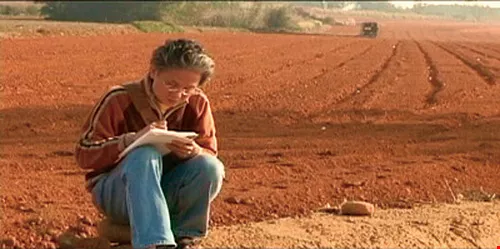
Associate Professor Chen Hsin-hsing of Shih Hsin University's Graduate Institute for Social Transformation Studies has been an important contributor to global labor movements for seven years.
Kindred spirits
"The people of El Salvador have been through the horror of civil war, an experience which has made them more subdued than Taiwanese stereotypical impressions of "hot-blooded" Latin peoples. In fact, they are a lot like the Taiwanese were during the martial law era," says Chen, who, wanting to show solidarity with his Salvadorean friends' struggle, visited El Salvador for a third time while appearing in El Salvador Journal. In corresponding with Gilberto and others involved in the labor movement over the years, 7-800 e-mails and telephone calls were exchanged and numerous problems discussed, but they never had time to discuss their feelings.
Many of the Salvadorean subjects of director Ho Chao-ti's documentary wept on camera when speaking of their movement's failure. The director's sensitive, penetrating camera takes us beneath the workers' teak-tough shells and offers a rare opportunity to hear them speak candidly about their feelings and experiences.
We get to see them discuss their plans to carry on the struggle, but the real privilege is in seeing coworkers of eight to nine years share for the first time the horrors they experienced during the civil war. We see them visit each other's homes for the first time, and by singing and crying together, gain a deeper understanding of one another.
At a farewell banquet, Gilberto says, "Before, all I knew of Taiwan was that that was where the dictator responsible for the slaughter of so many of our compatriots, Roberto d'Aubuisson, studied. Only after fighting together with Hsin-hsing and his people did we come to realize that there are Taiwanese people just like us."
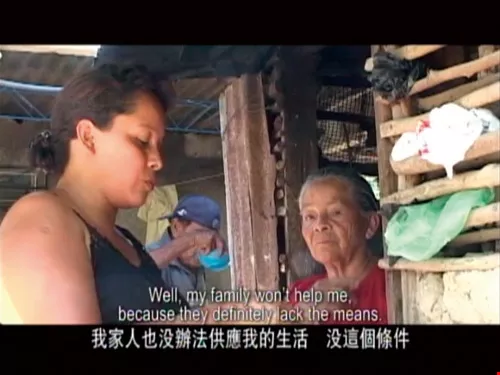
The documentary tells how Salvadorean workers at a Taiwanese-owned factory fought to establish a factory called Just Garments, which they helped to manage, and how they dealt with failure when the factory eventually closed.
United voices
As for the film itself, though it offers a flesh-and-blood portrayal of a group of individuals struggling for their livelihood as well as their dignity, it also is worth examining for the way it illuminates through a specific case the larger questions of globalization, and Taiwan's own role in it.
Away from the film, the factory at the center of the drama has closed, leaving the Salvadorean workers to make their way toward an uncertain future. But the friendship between Chen Hsin-hsing, Gilberto and the rest is nothing less than a profound footnote on how globalization can unite disparate people in pursuit of social change. Though their numbers may not overwhelm, people such as these are determined and ready to fight for what they believe in.
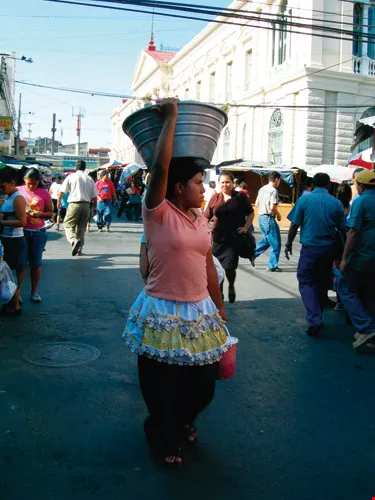
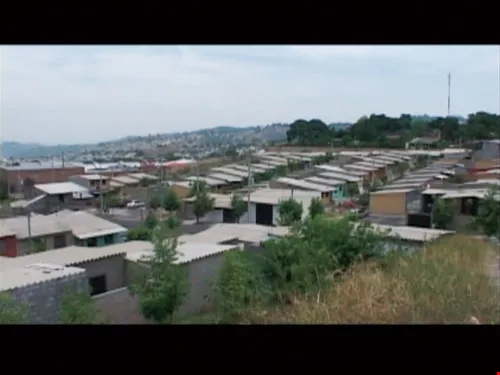
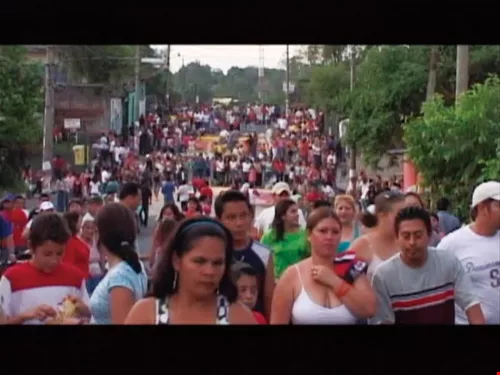
The smallest country in terms of area in all of Central America, El Salvador survived years under a repressive dictatorship and then civil war to become a part of the global economy, developing an export processing zone.
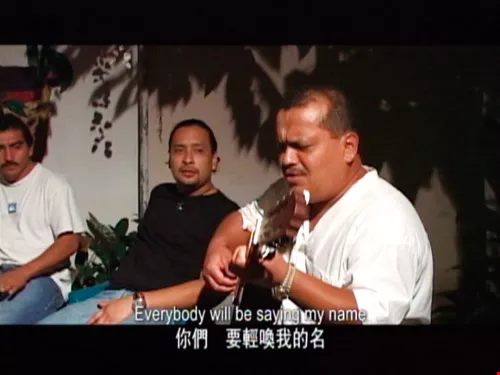
The documentary tells how Salvadorean workers at a Taiwanese-owned factory fought to establish a factory called Just Garments, which they helped to manage, and how they dealt with failure when the factory eventually closed.
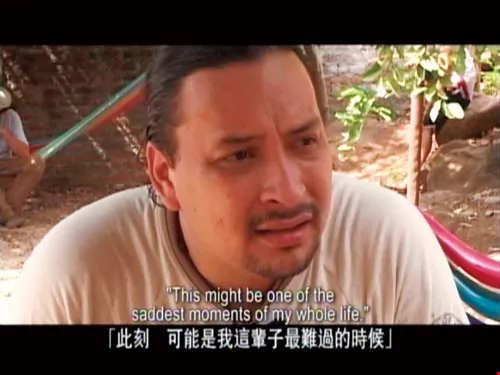
The documentary tells how Salvadorean workers at a Taiwanese-owned factory fought to establish a factory called Just Garments, which they helped to manage, and how they dealt with failure when the factory eventually closed.
The documentary tells how Salvadorean workers at a Taiwanese-owned factory fought to establish a factory called Just Garments, which they helped to manage, and how they dealt with failure when the factory eventually closed.
The documentary tells how Salvadorean workers at a Taiwanese-owned factory fought to establish a factory called Just Garments, which they helped to manage, and how they dealt with failure when the factory eventually closed.
The documentary tells how Salvadorean workers at a Taiwanese-owned factory fought to establish a factory called Just Garments, which they helped to manage, and how they dealt with failure when the factory eventually closed.
The documentary tells how Salvadorean workers at a Taiwanese-owned factory fought to establish a factory called Just Garments, which they helped to manage, and how they dealt with failure when the factory eventually closed.

@List.jpg?w=522&h=410&mode=crop&format=webp&quality=80)


