Contemporary Legend Theatre: Peking Opera à la Mode
Liu Yingfeng / photos Contemporary Legend Theatre / tr. by Phil Newell
June 2016


It’s not easy for an arts troupe to operate continuously for 30 years in Taiwan. But Contemporary Legend Theatre, which endeavors to blend modern drama with traditional opera, has done it.
From their founding original work The Kingdom of Desire to their latest production, a reworking of A Midsummer Night’s Dream, the company has continually broken new creative ground. Wu Hsing-kuo, whose whole career has been built on bringing traditional Peking Opera into settings that contemporary audiences can identify with, has never flagged in his creative work. His goal today remains, as it always has been, to stage “contemporary legends” that are brilliant and moving, and leave a legacy for future generations.
Contemporary Legend Theatre (CLT) is putting on an adaptation of William Shakespeare’s A Midsummer Night’s Dream to celebrate their 30th year. In addition to such familiar faces as Wei Hai-min, the renowned Peking Opera actress, and Chang Da-chun, the famous writer, who handled the script, this production also draws on the talents of new-generation film score composer Owen Wang as well as former Cirque du Soleil member Billy Chang. As soon as word came out about the four consecutive days of performances in Taipei in March, tickets sold out instantly.
After the run, reactions in art circles and among critics varied radically from plaudits to extreme rejection. If this had been someone else putting on the show, perhaps they would have become despondent. But as far as Wu Hsing-kuo is concerned, ever since he founded the company in 1986 and chose to focus on smashing tradition and integrating Peking Opera with modern experimental work, this kind of cacophony and astonishment has been following CLT around for well over 10,000 days.
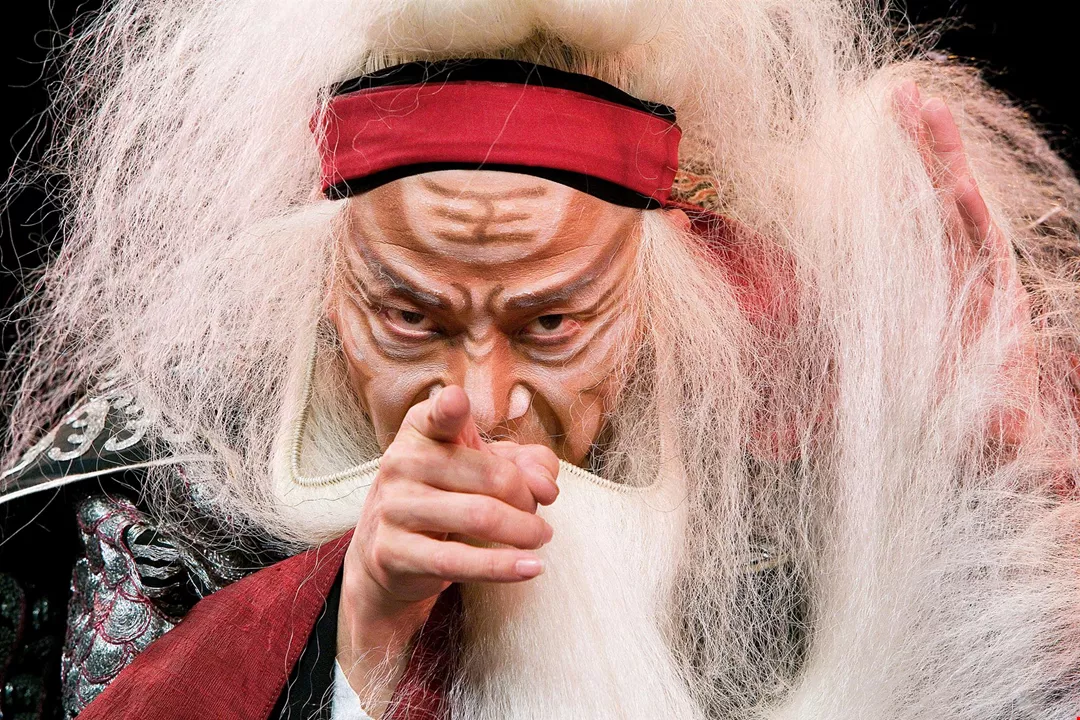
In his classic solo version of King Lear, Contemporary Legend Theatre founder Wu Hsing-kuo played 12 roles, taking audiences by storm.
A rebel against orthodoxy
Wu came from a very poor family, so his mother sent him to the Fu Hsing School of Dramatic Arts (now the National Taiwan College of Performing Arts) at age 11, marking his entry into the world of theater. Because of his exceptional ability, Wu was given a special place, reserved for the school, at Chinese Culture University. After graduation, he smoothly transitioned into the army’s Peking Opera company, quickly becoming the most popular performer of wusheng roles (martial male characters). While in university, he also joined the Cloud Gate Dance Theatre, where, relying on his foundation skills and rigorous training as a wusheng player, he quickly stood out from the crowd. In those days he danced with Cloud Gate while performing opera as well, and his fine physique and exceptional singing skills gained the appreciation of Peking Opera master Chou Cheng-jung. Wu thereupon became Chou’s student, giving him the status of “acolyte,” so to speak, to a venerated figure in that world.
In the 1980s, Taiwan was passing through a period of social and political liberalization, and while diversity and innovation flourished in the fields of culture and music, the ancient art form of Peking Opera withered. Seeing that the glory days of the past were gone forever, Wu, then only 33 years old, thought to himself that innovation was the only way to restore some of the luster to Peking Opera. And so he set up his own troupe—Contemporary Legend Theatre.
For the company’s maiden voyage, The Kingdom of Desire, Wu used experimental techniques to adapt Shakespeare’s Macbeth. In the production, Peking Opera’s four guiding plot themes of “loyalty, filial piety, integrity, and righteousness” were transformed into insatiable desire. In addition, Wu completely dispensed with the traditional “one table and two chairs” arrangement of stage props that had invariably constituted the fundamental structure of Peking Opera. In the work, he melded Peking Opera with contemporary dance, Kunqu, Western Opera, and dance music. The show was very well received by many critics who enjoyed its imaginative modernization of Peking Opera. Needless to say, there was also vociferous criticism from traditionalists. Some angrily declared him to be “in rebellion,” while others bluntly said that the performance “was a violation of and disgrace to the tradition.”
Thereafter, everything from Greek mythology to master works by Western writers like Samuel Beckett and Franz Kafka became grist to the mill of Contemporary Legend’s creative work. The boldness of these cross-fertilizing experiments often left older opera fans breaking out in a cold sweat. In 2007, CLT adapted one of the four great classics of Chinese literature, Shui Hu Zhuan (variously titled in English as The Water Margin, Outlaws of the Marsh, and All Men Are Brothers), and incorporated new-wave elements, including pop music, into a production called 108 Heroes. After the performance run, some audience members worriedly wondered whether CLT’s creative work was becoming a type of isolated “subculture”—possessed of a loyal following but too unorthodox to attract wider audiences. Looking back on those events, Lin Hsiu-wei, who serves variously as producer, scriptwriter, and choreographer for the company (and is also Wu’s wife), can’t help but laugh.
CLT’s fearless rebelliousness has not by any means always won over audiences. Some works get resounding applause right from their first performance, but others have to be worked and reworked for several years before they get positive reviews. Lin explains, “Contemporary Legend is not afraid of failing. Works need time to grow and mature.”
Judging only by their promotional materials, you wouldn’t think you were going to see Peking Opera. But once you enter the theater you become aware that underneath the new-wave and avant-garde embellishments, there is a fierce loyalty to some traditions. No matter how shaken and stirred the format of onstage performances may be, no matter how mind-boggling or daring the mixtures, no work fails to include the core gestures, facial expressions, singing and declaiming techniques, body language, and martial arts of Peking Opera. This is something that Wu Hsing-kuo, who got his start in Peking Opera, has always insisted upon.
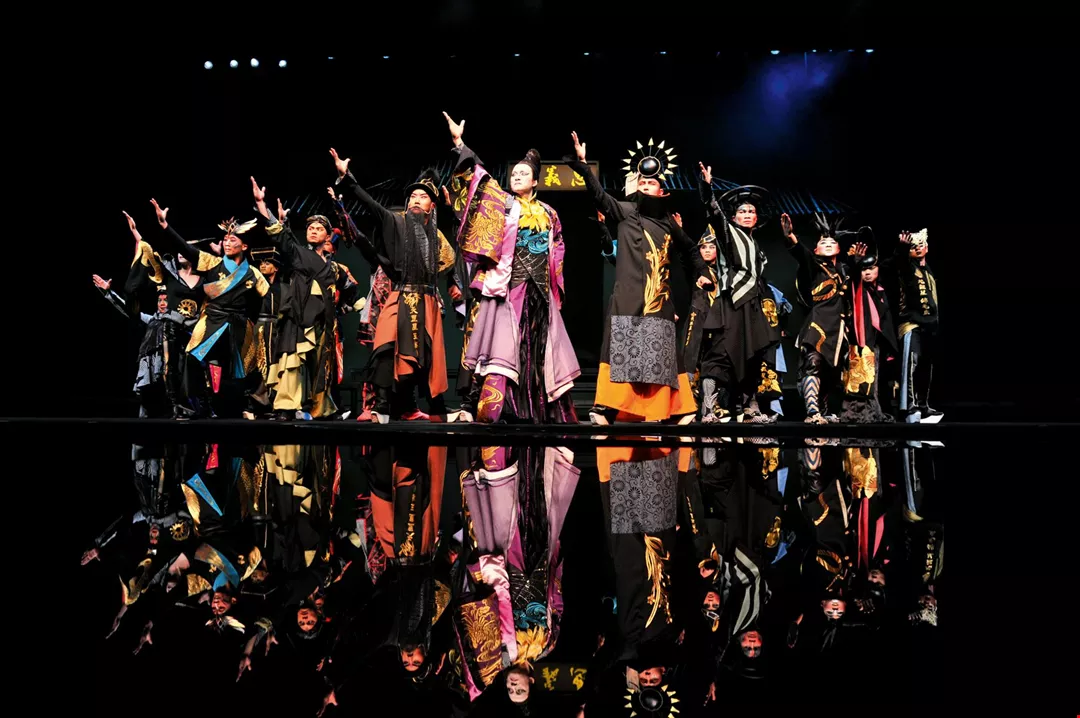
Every work staged by CLT breaks new ground, injecting a new spirit into Peking Opera. The photo shows 108 Heroes, an adaptation from the classic Chinese novel Shui Hu Zhuan.
King Lear, single-handed
Wu Hsing-kuo has never worried very much about what other people say. It was only in 1998, when he was unable to find a venue willing to put on his version of Waiting for Godot, that Wu had finally had enough. In a fit of pique, he announced that the troupe would no longer perform. It was not until two years later that he took to the stage again, and even then it was in distant France.
Upon learning that Contemporary Legend was suspending its activities, Ariane Mnouchkine, founder (in 1964) and director of the avant-garde French dramatic company Théâtre du Soleil, who had previously seen Wu perform at the Avignon Festival, specially invited him to come to France and give a course. To help Westerners to more readily understand the complex elements of Peking Opera, Wu chose to introduce these via a work more familiar to foreigners: King Lear.
As Wu taught his classes, it came to him that the role of King Lear in the play resonated very much with his own personal circumstances. Just as Lear felt angry and bitter at being betrayed by his daughters and kin, so did Wu feel misunderstood and frustrated at every turn in his efforts to create a renaissance for Peking Opera. Eventually, these feelings gushed forth and the entire first scene of what would eventually become Wu’s classic Peking Opera version of King Lear came into his head all at once.
Wu did the entire play solo, playing 12 different roles. His masterly performance rocked the theater world, and after the premiere in France, Mnouchkine excitedly threw her arms around Wu’s neck and said to him: “If you don’t go back and get the company restarted, I’m definitely going to kill you!” Spurred by this remark, Wu quietly came to a firm decision: “In the future, even if we are only able to perform on the street, I will keep the company going for the rest of my life.”
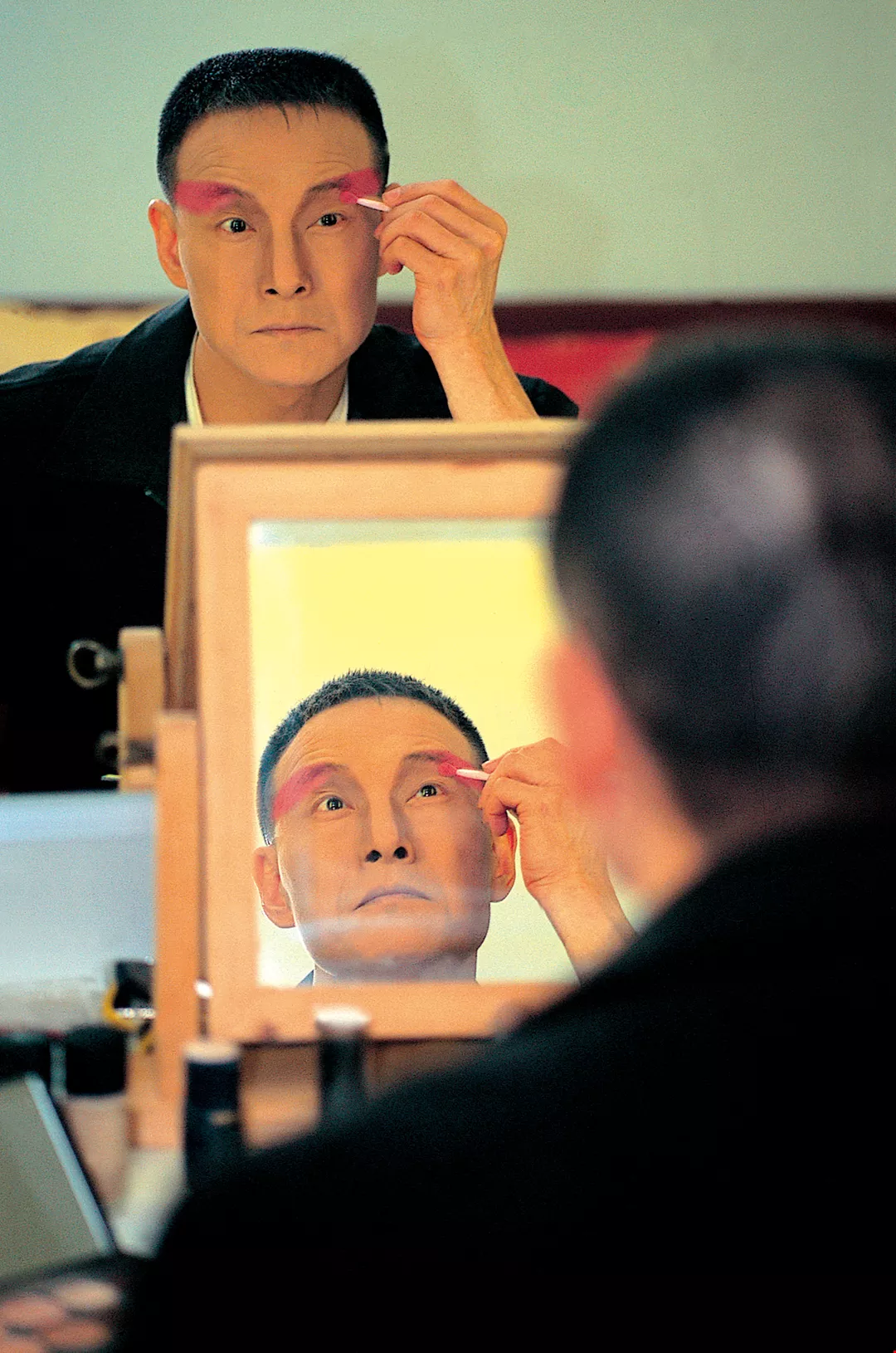
Staring into a mirror as he puts on his makeup, Wu Hsing-kuo brings the same perfectionism to everything he does, onstage and off. (photo by Hsueh Chi-kuang)
A perfect balance of optimism and caution
Over the 30-year history of Contemporary Legend Theatre, while Wu has borne the double burden of creative work and performing, Lin Hsiu-wei has also carried a heavy load. Even as she has been concurrently doing administrative and creative work for the Tai Gu Tales Dance Theatre, Lin has been responsible for handling all kinds of administrative matters large and small for CLT. She has truly been an indispensable figure.
At the pre-premiere press conference for A Midsummer Night’s Dream in mid-March, as the gaudily attired Wu Hsing-kuo, Wei Hai-min, and other major actors were being interviewed, Lin Hsiu-wei stood off in a corner just watching and listening. One figure standing on stage under the lights, and another behind the curtain…. This has become the standard, most recurring image of Contemporary Legend Theatre.
Although the couple’s life together has been virtually in lockstep with the progress of CLT, their personalities are markedly different. Lin says with a laugh that if the same book falls into the hands of them both, it will have a completely different fate. For Lin herself, she will devour the volume in just a few days, whereas the rigorous Wu will spend three months reading the book with meticulous thoroughness, and researching it in detail, in order to feel that he has genuinely completed his task. Because of his natural prudence and caution, Wu mostly tends to be pessimistic about things, whereas the optimistic Lin requires only the slightest glimmer of hope and she is willing to struggle to keep moving forward, disregarding any obstacles.
Their different personalities are also reflected in their attitudes toward making decisions. Lin reveals that whenever she sees a good new script, she normally comes right out and declares, “Wu Hsing-kuo, you’ve absolutely got to do this!” Wu, on his side, hems and haws and goes back and forth weighing the pros and cons. Nevertheless, to evaluate everything and to hone every detail is precisely what makes the classic “Wu style” of trying to do everything to perfection. In the end, Lin reminds us, “Once the decision is made, he moves forward with absolute determination.” Indeed, it is precisely because of this level of commitment that the Wu that people see on stage leaves such a profound impression.
If you were to write a history of theater in Taiwan over the last 30 years, there would definitely have to be a chapter for CLT. But why should that be? Lin says with conviction: “When we say ‘Contemporary Legend Theatre,’ that stands for something that transcends time and space, culture and aesthetics. It stands for a comprehensive, fully integrated performance drawing without limit on all possible sources. It stands for breaking down stereotypes, yet has a thread of continuity of innovation and a foundational style through all of its works. It means something that stays in step with the times, that makes astonishing transformations, and that struggles with all its might against the commonplace and the mainstream.”
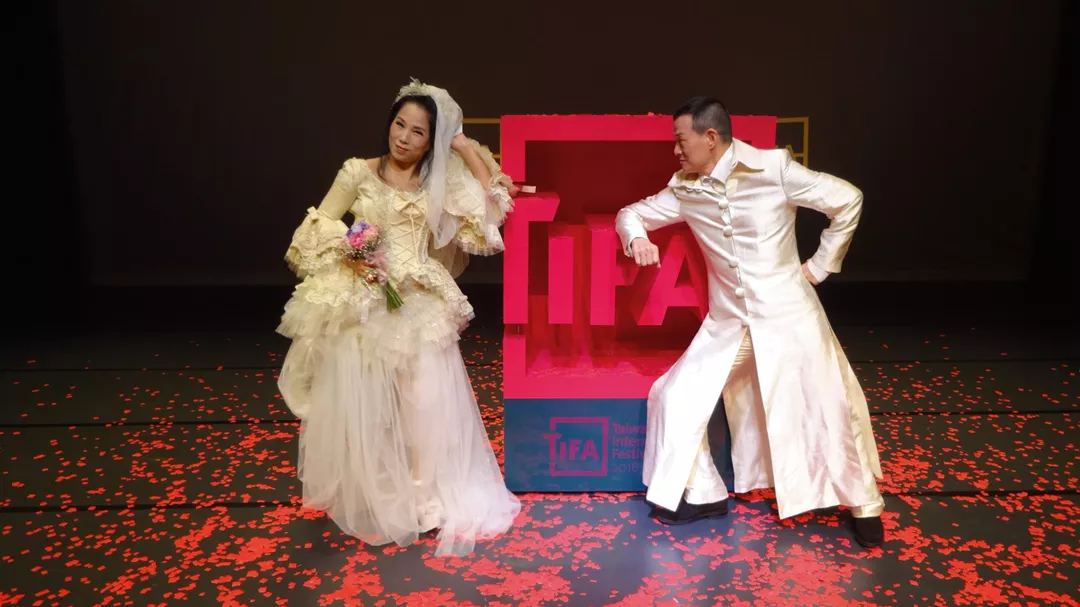
Wu Hsing-kuo’s dynamic on-stage presence is balanced by his wife Lin Hsiu-wei’s behind-the-scenes managerial skills, optimism, and creative input—they make a perfect team.
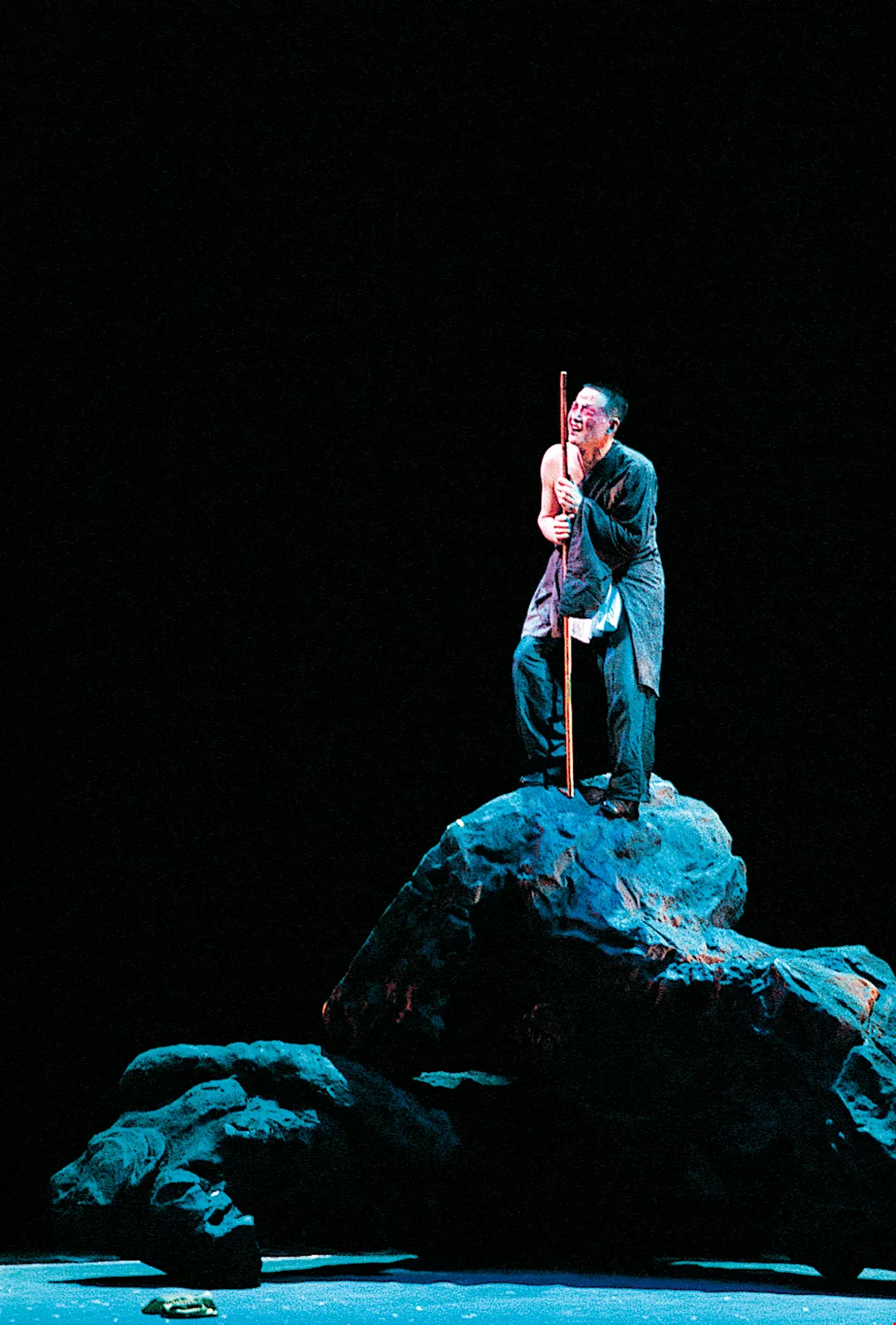
In King Lear Wu plays a range of characters from the childishly comic to the tragic. For lovers of theater, this is a must-see show. (photo by Hsueh Chi-kuang)
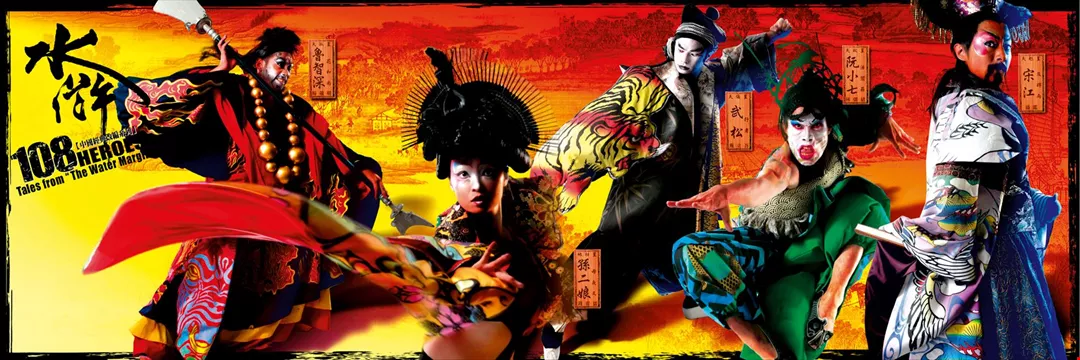
Wu worked with popular writer Chang Da-chun and Chinese pop star Emil Chau (also widely known as Wakin Chau) to adapt the venerable novel Shui Hu Zhuan into the play 108 Heroes, creating a classic cross-genre fusion piece.
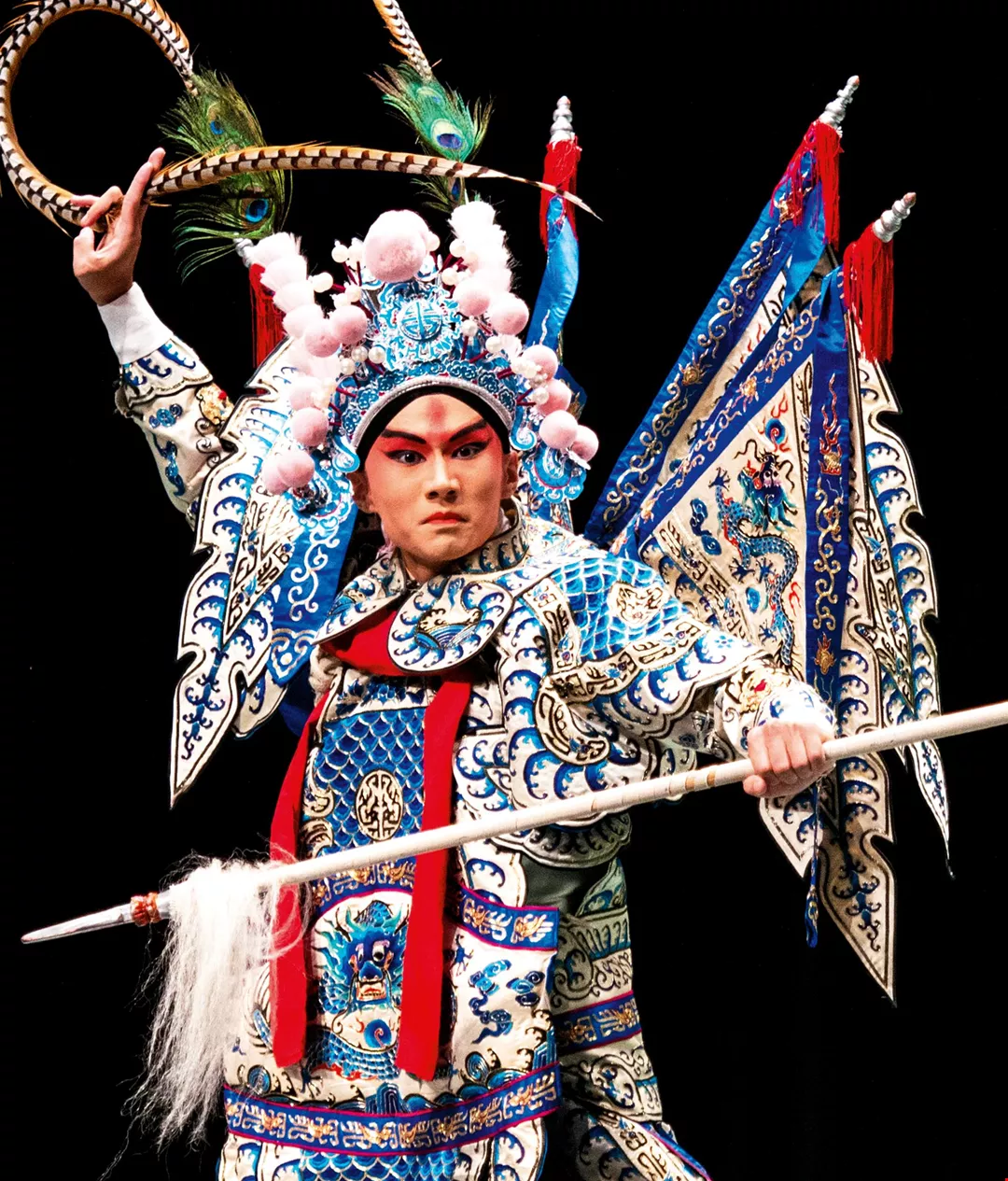
Having entered its 30th year, Contemporary Legend Theatre has created an affiliated troupe specifically aimed at training a new generation of talent for Peking Opera.


@List.jpg?w=522&h=410&mode=crop&format=webp&quality=80)


