

Huang Fei-hong is all the rage!
Ever since Hong Kong's talented director Tsui Hark brought in kungfu genius Jet Li from mainland China, and using dazzling cinematic techniques, reinterpreted the story of the late Ching dynasty southern Chinese martial arts master Huang Fei-hong, a craze for Huang Fei-hong has been sweeping through Hong Kong, Taiwan and the Chinese communities in America. Even young children strike heroic poses and in their stammering voices loudly sing the films ' theme song A Man Should be Strong (adapted from the ancient Chinese melody The General's Command): "Proudly facing the myriad pounding waves, our hot blood like the red sunlight..." With a spirited glare, a loud shout and a clap of their hands, they put their legs wide apart and stretch their arms out one in front, one behind, palms upwards, in Huang's trademark pose. "Little Huang Fei-hongs" can be seen everywhere.
Huang Fei-hong was a kungfu master from Guangdong Province. As well as his martial arts talents, he was highly literate and a skilful physician. He practiced medicine in his "Pochilum Clinic." In an age of turmoil when China was weak and prey to Western invaders, with one hand he struck at the foreign sowers of intrigue and disorder, and with the other he fought against the corrupt and treacherous elements within China which sprang up to bedevil the country in its hour of difficulty. In the Chinese cinema of the l990s, the heroic figure of Huang Fei-hong bears strong parallels with Bruce Lee, who was the sensation of the film world 20 years ago.
Once Upon a Time in China I, the first film in Tsui Hark's Huang Fei-hong series, was one of the non-competing films at the 1992 Berlin Film Festival, where it played to houses packed with Westerners and expatriate Chinese.
When the Huang Fei-hong films were shown in New York art cinemas and in movie theaters in the city's Chinatown, many Western cinemagoers were astounded by the dazzling kungfu action. When Huang Fei-hong, after sorting out some bad guys, would land firmly on his feet with a flourish of his robes and the air of a great master, some even leapt from their seats with a cheer.
One thoroughly westernized young ethnic Chinese who was born and raised in the USA recently began collecting information about traditional Chinese culture. The reason: after seeing Tsui Hark's Huang Fei-hong, he feels "proud to be Chinese," and wants to know more about China.
The episodes above were recounted from personal experience by film critics Wang Wei and Wang Chih-cheng, and another Chinese. In the two decades since Bruce Lee's death, kungfu films, which are a special feature of Chinese cinema, produced no other heroic figures capable of delivering high-quality kungfu action and box office success, but also able to awaken "ethnic consciousness." As Bruce Lee's screen image gradually fades from people's memories, Tsui Hark's Huang Fei-hong is replacing it with the mark of today's hero.
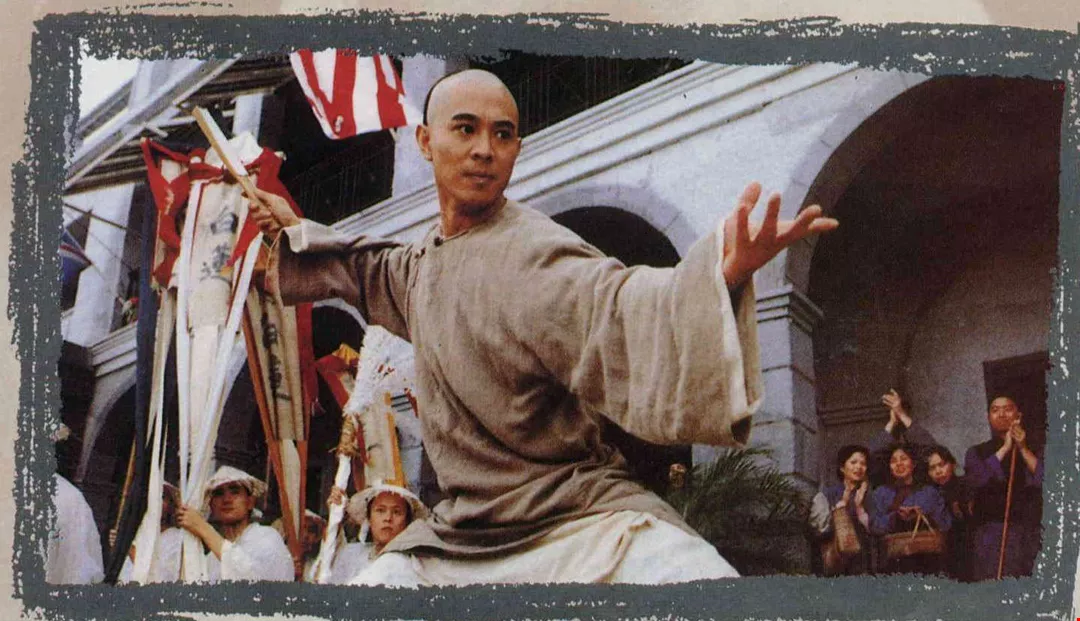
(courtesy of Long Shong Pictures Ltd.)
Heroes are the product of their age
Few Chinese anywhere in the world who lived through the 1970s, with such tense international events as Taiwan's departure from the United Nations and Japan's occupation of the Tiaoyutai Islands, will have forgotten what a sensation Bruce Lee's films caused at that time.
In the films, Bruce Lee played such roles as a student in a martial arts training school in one of the foreign concessions in the early years of the Republic of China, or a lonely Chinese expatriate going to Southeast Asia or the West to try and make a living. Faced with inevitable bullying and insults from Westerners and Japanese, he would endure their repeated taunts, suppressing his anger until he could yield no further and all his pent-up ire would burst out. Even today, people recall with enthusiasm how the cinemas would ring with cheers when Lee fixed some tyrant with his fierce, derisive gaze and delivered a burst of his own "Stop Fist" kungfu, with which he overcame Oriental and Western martial arts experts alike.
In the 1970s, when Chinese people faced harsh political setbacks, Bruce Lee provided proud moral victories over international bullies. Film critic Edmond Wong comments that audiences' ideological consciousness often has a great bearing on whether a film can spark off a trend. In the international atmosphere of those days, with the Cold War dividing East and West and the Third World opposing the United States, Bruce Lee's films really could give audiences a great sense of satisfaction at the bad guys' come-uppance, and help to "inflame" ethnic consciousness.
But sadly Bruce Lee died after making only four films in the space of three years. For many years, kungfu films have held their place in the film market, and in the 1980s Jackie Chan's movies were very popular for a time, but his were mostly detective stories, cast in a very different mould from Lee's films. Only now, in the 1990s, has there appeared another "ethnic hero" figure, caught in a struggle between East and West: Huang Fei-hong.
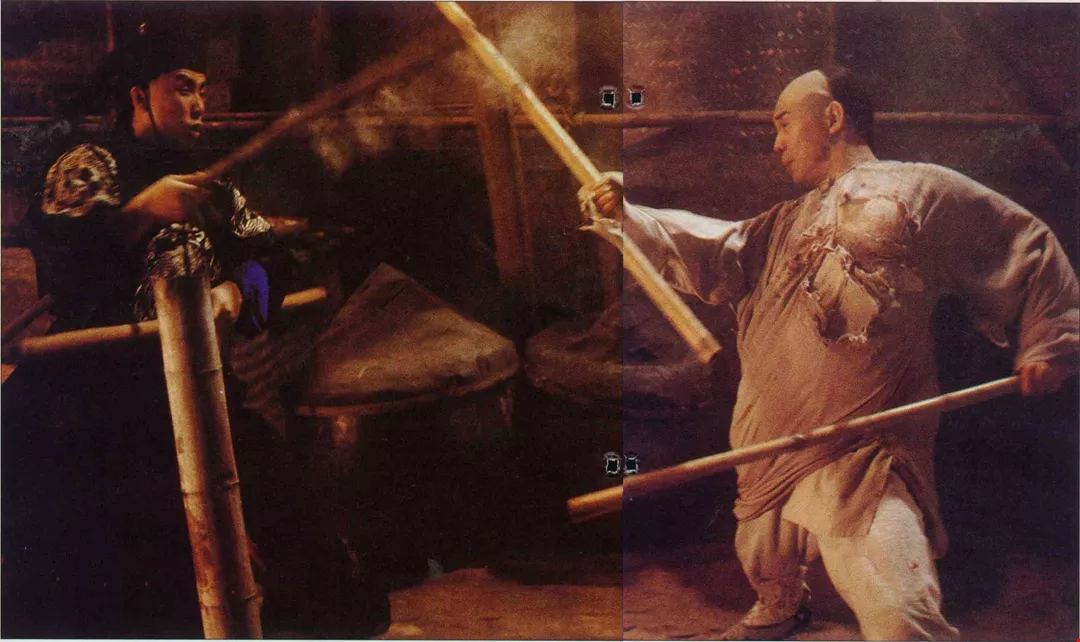
With mainland kungfu star Jet Li in the role of martial arts master Huang Fei-hong, exciting kungfu action is assured--as is box-office success. (courtesy of Long Shong Pictures Ltd.)
Remodelling Huang Fei-hong
Actually, the character of Huang Fei-hong has long been well known in Hong Kong. From the1950s to the 1980s, Hong Kong's famous Cantonese opera star Kuan Teh-hsing played in a series of almost 100 Huang Fei-hong films. The Huang Fei-hong he portrayed was a venerable old kungfu master, cool-headed and resolute. Pang Ka Fat, a professor in Chengchih University's journalism department who was born and raised in Hong Kong, started watching Kuan Teh-hsing's Huang Fei-hong films at the age of two. He recalls: "He was idolized as a father figure by many children in Hong Kong. He always taught kindness and justice, and we all looked up to him." This traditional virtuous kungfu master, firmly rooted in Hong Kong people's consciousness, was transported by Tsui Hark back to his youth, and remodelled against the background of a society in an era of conflict between China and the West. Thus a new and different screen hero was created.
"For Huang Fei-hong, being idolized as a folk hero is a daunting task; he has to carry all kinds of burdens and responsibilities. But were heroes really always all-knowing and all-capable? I don't think so, and Huang Fei-hong made mistakes. He could be stubborn and rash, and so I wanted to bring out his faults rather more..." This is how Tsui Hark revealed his vision of Huang Fei-hong in an interview with a Hong Kong magazine. "In 1875, southern China was threatened by hordes of Western warships, and everyone lived in fear of their lives. For Huang Fei-hong, being an ethnic hero was a heavy cross to bear. In the end, because his understanding of the world was inadequate, when pressure came from many sides he had no answers to the problems which faced him..."
The Huang Fei-hong whom Tsui Hark creates is a hero with the character of an ordinary mortal.
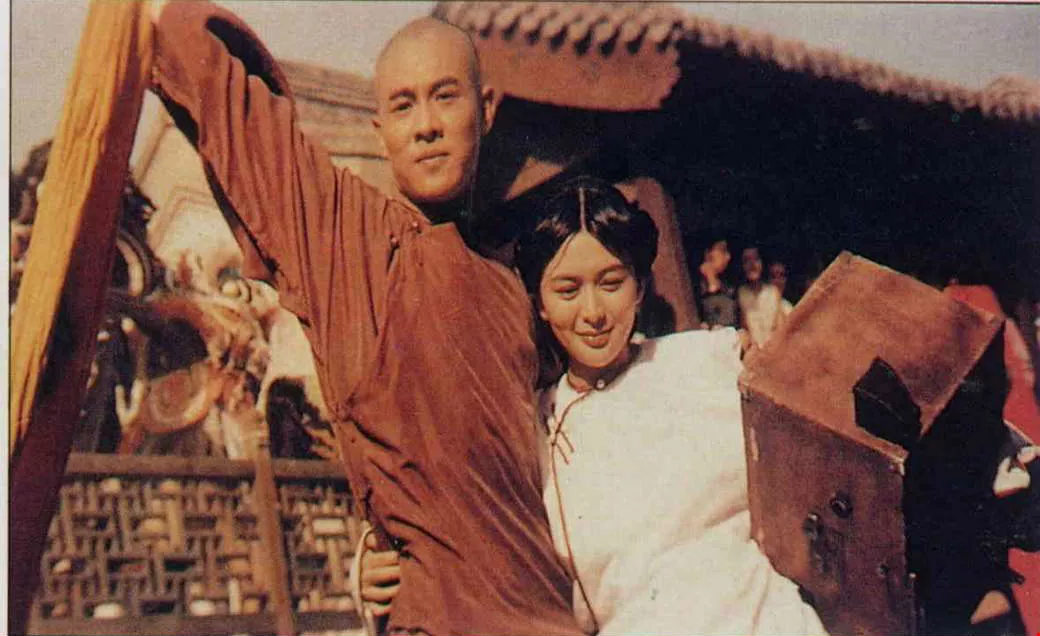
Since Once Upon a Time in China IV, Huang Fei-hong has been played by Zhao Wenzhuo, but most Huang fans regard Jet Li's as the classic portrayal of the role. Li as Huang Fei-hong and Rosamund Kwan as Auntie Yee make an unforgettable duo. (courtesy of Long Shong Pictures Ltd.)
The Hong Kong perspective on history?
Many film critics believe that Tsui Hark's Huang Fei-hong is full of commercial comic elements symptomatic of the "Hong Kong 1997 syndrome." Huang has consummate martial arts skills, but is faced with the reality that bare hands are no match for Western rifles and cannon; he is law-abiding and respects traditional Confucian moral values, but he cannot abide corrupt officials and the benighted ignorance of the White Lotus Sect, and so feels he has no choice but to help revolutionaries to escape; he is worried about China's fate, but at a time when people are rushing off to America to join in the gold rush, he cannot help wondering if perhaps California really is as wonderful as people say. He does not bow to Western might, yet he is forced to acknowledge that Western science and technology (such as the steam engine) advance civilization and bring power and prosperity to nations and their peoples...
"These films bring out an emotional dilemma which many Hong Kong people find themselves in: should they identify with traditional moral values (their backward motherland after 1997), or surrender to the West (Western colonial culture)? This is a problem which people in Hong Kong have always been faced with, and it has been a theme in many of Tsui Hark's films," comments Wang Wei. For him, the Huang Fei-hong films basically present history from a Hong Kong perspective. But the whole history of that era (the corruption of the Ching court and the incursions of the Western powers) was a tragedy which affected all Chinese, so the films can probably strike a common chord with Chinese everywhere, whether in Hong Kong or Taiwan, at home or abroad.
In the two decades from Bruce Lee to Huang Fei-hong, times have changed. The Cold War is over, international conflicts are moving towards detente, and the past clear distinctions between friends and enemies have become blurred. This trend is reflected in the Huang Fei-hong films: though of another race, Westerners often stretch out a helping hand in friendship, while Chinese often place obstacles in the way of their own compatriots." Huang Fei-hong is a hero filled with concern for his home and country, but he often finds himself baffled and helpless, not knowing whether he should be fighting the foreigners or the Chinese," writes film critic Tsai Kang-yung, elegantly summing up Huang's dilemma. Or as Wang Chih-cheng puts it: "Huang Fei-hong is caught up in the process of transition from tradition to modern awareness."
Bruce Lee's films held up an image of nationalism and of Chinese people sticking together to defeat foreign enemies. But the Huang Fei-hong films vividly portray a different scene: Chinese gloating over others' misfortune and rejoicing in disorder. In Once Upon a Time in China I, when Huang Fei-hong arrests the leader of the Shahe Gang, among the crowds of onlookers watching the excitement there is no-one willing to step forward as a witness except a Western missionary; and when Huang's follower Liang Kuan is being hunted down by killers, he can find no-one to give him shelter. Wang Chih-cheng believes the films vividly portray the bad side of the Chinese, "like Lu Hsun's The True Story of Ah Q in period costume."
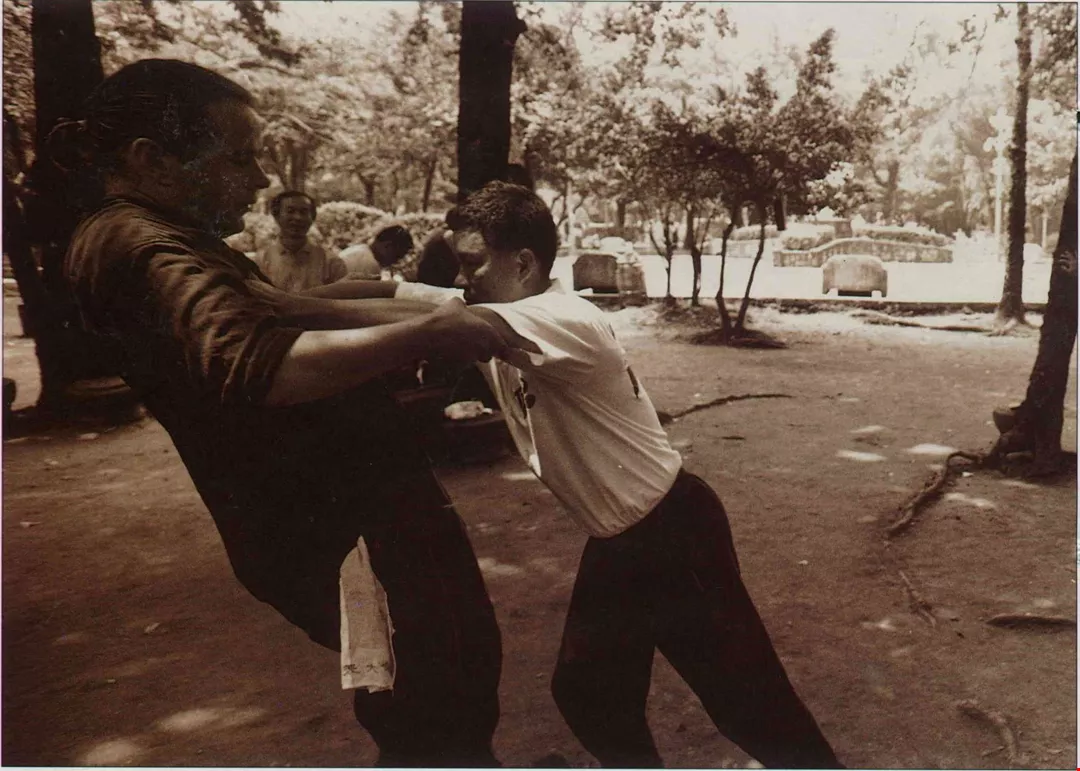
Bruce Lee's films sparked off a worldwide craze for kungfu, and brought many Westerners to the Orient to learn martial arts skills. (photo by Hsueh Chi-kuang)
A hero with time for romance
Having left behind the world of black-and-white fights between good and evil and having gained in human complexity, Tsui Hark's Huang Fei-hong still appears in the role of an "ethnic hero," but his image is already a far cry from Bruce Lee, who "showed no more emotion than a robot," comments Taiwanese martial arts expert Peng Han-ping.
As well as being uncertain what to do in the face of internal and foreign threats, Huang Fei-hong has a rather muddleheaded air about him generally. But the biggest difference between Huang Fei-hong and Bruce Lee is that Huang has room in his heart for romance, and is not immune to jealousy. He is a thoroughly "human" character.
The love story between Huang Fei-hong and Austle Yee (played by Rosamund Kwan), who has returned to China after spending time overseas, provides some light relief from all the violent kungfu action. Auntie Yee's grace and passion, and Huang Fei-hong's failure to catch on to her amorous intentions, often give great delight to audiences.
Graphic designer Chang Sheng-kuo is a great fan of Huang Fei-hong. As a child he worshipped Bruce Lee, yet as he grew up he came to discover that "Bruce Lee's physique and character as portrayed in the films are like something out of a fairy tale; but Huang Fei-hong's character is closer to the audience. Although his kungfu is terrific, his personality is no different from yours or mine." A 31-year-old cinemagoer who emerged from a showing of Once Upon a Time in China V with a satisfied expression on his face, also explained that he had idolized Bruce Lee as a child, but that he now idolizes Huang Fei-hong. "I can't help it; first Bruce Lee's muscles were outclassed by Arnold Schwarzenegger, and now Huang Fei-hong has taken Lee's place as a hero. Huang Fei-hong is more like a real person."
Because Huang Fei-hong is a more accessible character, people have filmed comic versions of his exploits and he even appears in sketches on variety shows. But we have never heard of anyone wanting to do comic versions of Bruce Lee.
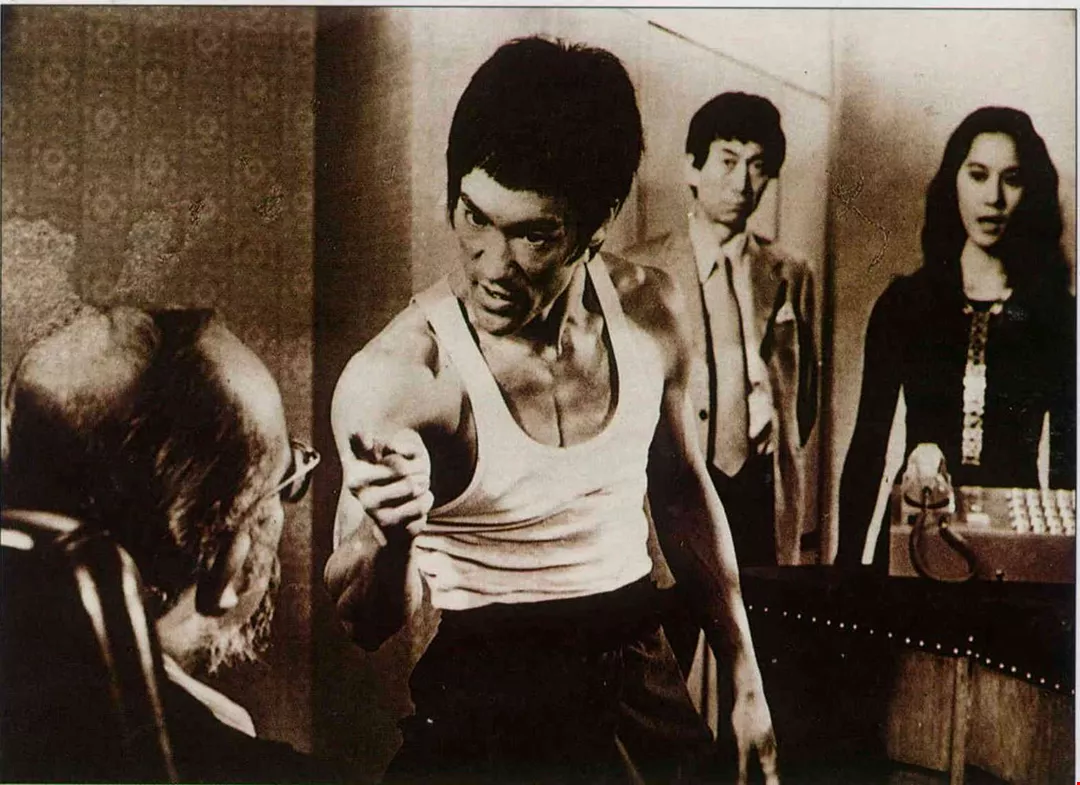
In the 1970s, when China's standing was at a low ebb, Bruce Lee's portrayals of going to the West and standing up to foreigners gave many Chinese spiritual satisfaction. (courtesy of Huang Jen)
Film industry glitz
Some people have accused Jet Li, like Bruce Lee, of lacking sufficient acting skills. But Tsui Hark successfully matched the actor to the role, and Li's simple straightforwardness reflects Huang Fei-hong's nature very well. Film critic Tsai Kang-yung jokingly says that Jet Li's round, shaven head is just right for playing a Ching dynasty character. His charming face with its lovable but not stupid expression would be no good in a serious role, but is perfectly suited to Tsui Hark's Huang Fei-hong, and is thoroughly pleasing.
Christine Tseng, Domestic Division Program Coordinator of the Golden Horse Film Festival Executive Committee, says frankly: "Jet Li as Huang Fei-hong is a transitory 'idol,' not a lasting 'hero."
Seeing through "Huang Fei-hong the idol," Peng Han-ping believes that the reason Bruce Lee was acknowledged as a hero was because he combined Chinese Wing Chun kungfu with Western fighting techniques to create his own "Stop Fist" kungfu, and his films display real martial arts skill; to this day, they remain very valuable material for martial arts students to study. But Jet Li's kungfu is just "display kungfu," flashy and beautiful, but only good for brief entertainment.
Bruce Lee's clear individual attraction lay in his creation of fight scenes which were both realistic and exciting, "but the simplicity of the plots, camera work, props and scenery all helped to highlight the main character." This is the unbiased view of Mr Chiu, a photographer who is a fan of Bruce Lee.
Some people have criticized Tsui Hark's Huang Fei-hong as "superficial" and lacking the real martial skills of a great master. The constant use of ropes, of special effects which go beyond the humanly and physically possible, and of speededup action, the all-pervading Chinese popular aesthetic, the dramatic camera angles, the melodramatic dialogues and plot development, create an overall effect which is "very exciting," but the special qualities of the main character Huang Fei-hong become rather blurred. "Huang Fei-hong is the joint creation of the whole 1990s Hong Kong film industry, quite unlike Bruce Lee, whose talents were all his own," observes Edmond Wong. Many foreigners watching Huang Fei-hong today are actually being bamboozled by Tsui Hark's techniques.
But on the other hand, most cinemagoers are actually only looking for entertainment, and the ever improving techniques of the cinema create an insatiable appetite for sensory excitement. Bruce Lee's old realism would not necessarily appeal more to today's audiences than Tsui Hark's kungfu, created with special effects; and in ten years' time, perhaps today's portrayal of Huang Fei-hong will seem hopelessly outdated.
[Picture Caption]
P.84
(courtesy of Long Shong Pictures Ltd.)
P.86
With mainland kungfu star Jet Li in the role of martial arts master Huang Fei-hong, exciting kungfu action is assured--as is box-office success. (courtesy of Long Shong Pictures Ltd.)
P.87
Since Once Upon a Time in China IV, Huang Fei-hong has been played by Zhao Wenzhuo, but most Huang fans regard Jet Li's as the classic portrayal of the role. Li as Huang Fei-hong and Rosamund Kwan as Auntie Yee make an unforgettable duo. (courtesy of Long Shong Pictures Ltd.)
P.88
Bruce Lee's films sparked off a worldwide craze for kungfu, and brought many Westerners to the Orient to learn martial arts skills. (photo by Hsueh Chi-kuang)
P.89
In the 1970s, when China's standing was at a low ebb, Bruce Lee's portrayals of going to the West and standing up to foreigners gave many Chinese spiritual satisfaction. (courtesy of Huang Jen)


@List.jpg?w=522&h=410&mode=crop&format=webp&quality=80)

