

What is causing young people to take up writing as a kind of meditative practice? Is it a reaction against the extent to which computers and consumer electronics have taken over our lives? Or is it the gradual waning of interest in adult coloring books?
The surging popularity of practicing penmanship has swept the online, publishing, and fountain-pen industries in recent months, and even engendered the birth of a new handwritten font industry. Rejecting the uniformity of the age and the impersonal virtuality of computers and mobile devices, many people have begun turning back to writing by hand as a means of imbuing their lives and communications with greater warmth, personality and sincerity.
In 2013, the poet Xiang Yang published The Handwritten Era, a collection of stories and letters handwritten by 24 Taiwanese writers in the 1980s. The poet waxed wistful in his introduction to these manuscripts: “In those days of writing by hand, the ink on the page captured the temperature of our moods and burned them into our receptive hearts in a way that has disappeared since we began pounding out texts on keyboards. This book is an attempt to recall, stroke by stroke, whether formal or cursive, a mindset that the clamor of modern life makes ever more distant.”
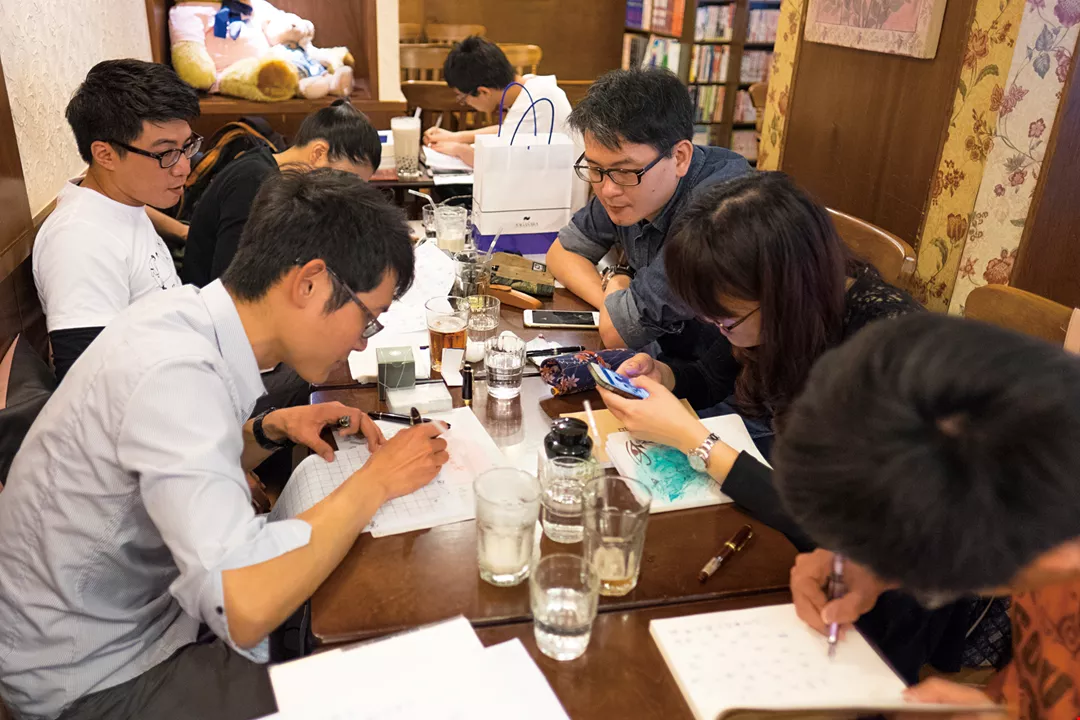
A group of pen enthusiasts enjoy a meetup, chatting and sharing examples of their penmanship.
The Lemmings
Fortunately, the golden age of writing by hand has not passed beyond hope of revival, and a new enthusiasm for pen and ink has arisen among young people online.
“The Fountain-Pen Lemmings Brigade,” or “Lemmings” for short, is a Facebook group founded three years ago as a forum for young people to share their work in pen and ink.
The group’s mission statement is clear: “There is an odd rodent that takes paper as nest, pen as food, and ink as drink. It bites at the sight of a pen and won’t let go, grasping pens for pleasure and sharing its every inkling. When people first observed the behavior of these rodents, they named them ‘lemmings.’”
Yan Lizhong, the group’s founder, says that the Lemmings are a pretty nerdy bunch who often show off their collections and their work to the group.
“A flower fades, but Spring goes on unaffected.”
“Even if there’s no Pure Land, one can still meditate.”
The Lemmings’ basic model is for members to write bits of encouragement or moody thoughts with a fountain pen and share them. Detail-oriented posters will also append the brand and color of the ink and stationery they used, while others use drawings of cute animals to give their posts a little extra character.
Yan says that he founded the group just for fun, never imagining it would grow to its current size of more than 125,000 members. “An average of 300–700 people sign up every day. On weekends and holidays, the number can go over 1,000.” He says it all came as a surprise to him. “I just happened to be at the top of the wave as it crested.”
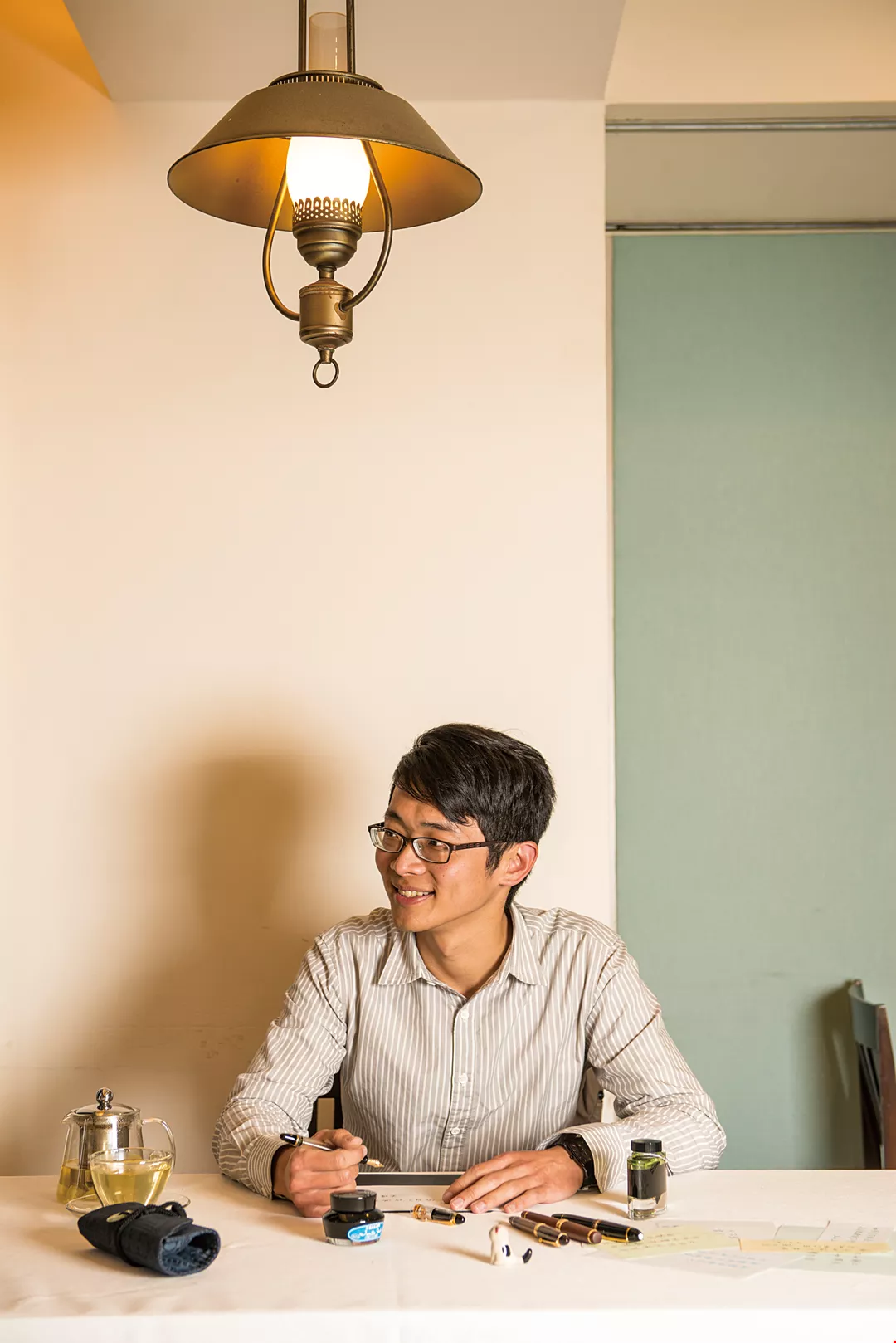
Ethan Yeh sees penmanship practice as a kind of self-cultivation, as well as a means to make friends and help others.
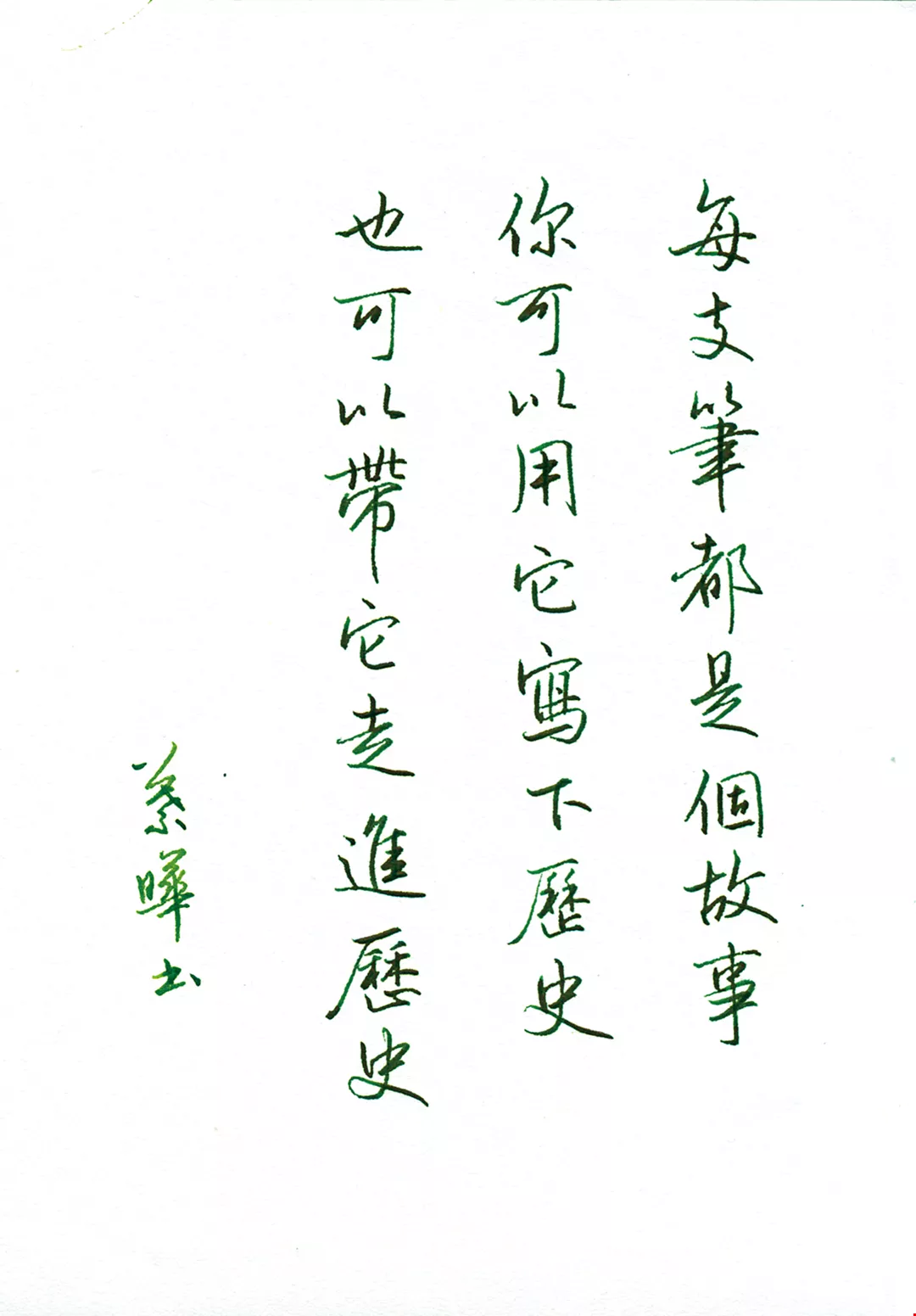
Ethan Yeh’s calligraphy
The Lemmings include any number of individuals well known for their penmanship, Ethan Yeh among them.
Ethan Yeh, a middle-school art teacher in his 30s, not only has lovely handwriting, but is also a champion calligrapher. In fact, he has won the National Taipei University of Education National Pen-based Calligraphy Competition’s xingshu (semi-cursive script) prize five consecutive times, and its kaishu (regular script) prize once.
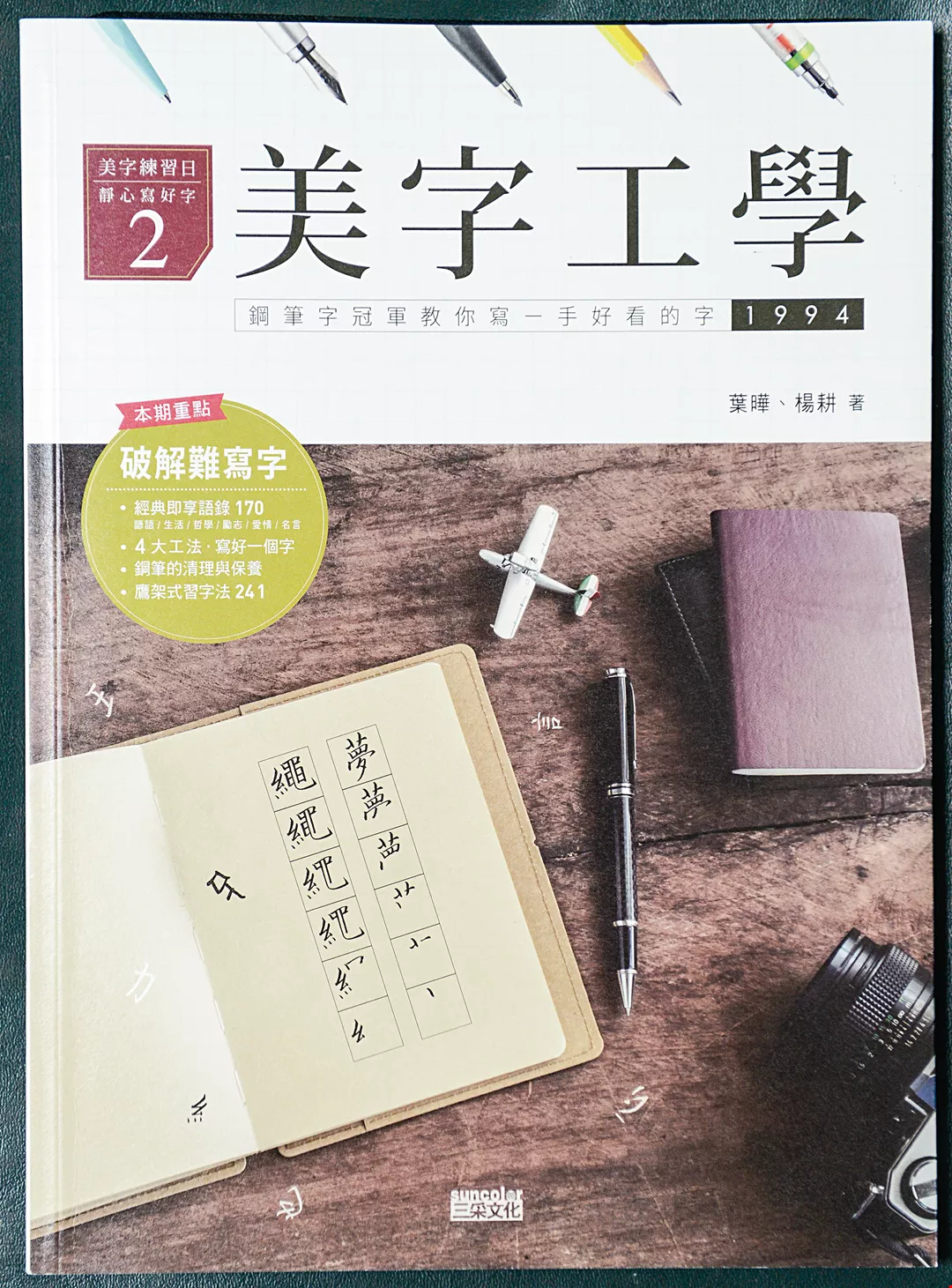
Sun Color Culture discovered both Yeh and Yang Geng through their postings to the Lemmings group, and published the two men’s first copybook, Daily Writing Practice: Focusing to Write Beautifully. The book was so widely anticipated that the publisher had to initiate a second printing before it was even released, and by late April 2016 had sold 60,000 copies. “Penmanship is not usually considered a popular pastime. Who would have guessed it would become such a craze?”
Yeh’s business card describes him as a “nightly writer.” It’s an accurate description: he really does sit at his desk every night, quietly practicing his penmanship for 30 minutes or an hour.
“Calligraphy means a great deal to me,” says Yeh, adding that he finds writing similar to meditation or Zen practice in that it gives him a sense of transcendence.
But the pleasure Yeh takes in writing isn’t limited to his solo practice: he also enjoys teaching calligraphy. With that in mind, he’s created his own Facebook page, which has gathered more than 8,000 followers in just a few months.
Although Yeh owns 20 or 30 fountain pens, including some pricey antique ones, he typically uses an inexpensive pen for demonstrations. In fact, he most often uses an SKB ballpoint that costs just NT$7. “The ink flows out smoothly and its very maneuverable, so all the characters come out looking nice.”
A middle-school homeroom teacher, Yeh has gotten many of his students interested in penmanship. “The students see what I’ve written in their contact books, and ask me about writing techniques.” He sees penmanship as a way of cultivating a certain attitude towards life: the students in his class with poor penmanship have become interested in improving their writing, and look forward to doing so.
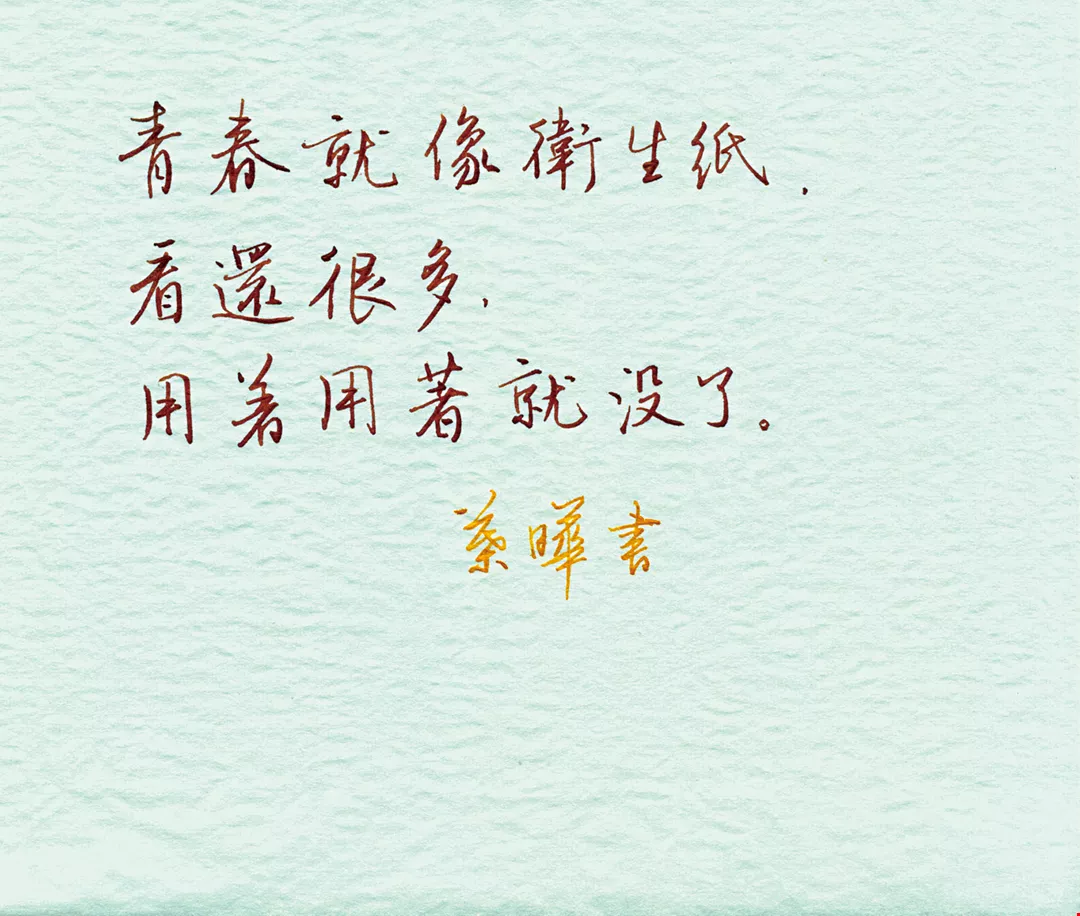
Nice writing focuses the mind
Last year’s enthusiasm for coloring books has subsided and been supplanted by a new copybook craze. Sun Color Culture was the first publisher to sniff out the trend.
Summer Chou, from the company’s department of sales and marketing, says that the publisher noticed that the protagonists in Korean dramas were beginning to take up penmanship as a pastime. “Looking to the past in search of pretty things has become something of a fashion.” So Sun Color began planning a series of copybooks for Chinese and English calligraphy.
The first volume, Daily Writing Practice: Focusing to Write Beautifully, sold very well and rapidly earned spots on the Books.com.tw and Eslite Bookstore bestseller lists for art and design books. Encouraged by the copybook’s performance, Sun Color moved forward with its next offering, Writing for Quiet Strength: A Calligraphic Heart Sutra. In the introduction to this volume, Li Yu wrote that the scratching of pen on paper calms the mind, enabling the writer to appreciate this most primal of aesthetics.
The writing bug is spreading, and the demand for pens and inks, and for books on the subject, has become feverish.
Fountain-pen fever
The new enthusiasm for penmanship has driven tremendous growth in sales of fountain pens, ink, and paper. According to one newspaper report, online retailer PChome24h Shopping has seen an eightfold increase in its sales of such products.
Brick-and-mortar stores have been keeping pace. Ty Lee, the owner of the well known Taipei fountain pen retailer Xiaopin Yaji, has had to hire ten shop assistants to manage all his customers, and is still struggling to keep up with demand. Lee says that he sold off several years’ worth of colored-pencil inventory when the coloring-book craze took off last year. Now that the public has caught the penmanship fever, fountain pens have become his best sellers. “We’re completely sold out of the three major Japanese brands of fountain pens. We can sell as many as they can make.”
The 65-year-old Lee has a lot of experience with fountain pens. He recalls his family being so poor when he was growing up that he had to write with cheap, off-brand pens that required constant repair. He didn’t begin collecting pens until much later, when he bought his first Montblanc. As his collection grew, he became part of the online fountain-pen community and began trading pens with other members. He then went on to open Xiaopin Yaji eight years ago.
More than a pen dealer, Lee is also the founder of Pen Cabin, a pen club that that arranges occasional “pen gatherings” and penmanship competitions.
“People pick up a pen and want to write a little something.” Yan Lizhong, who repairs fountain pens professionally and calls himself a “pensmith,” describes pen collecting and penmanship as a lifestyle. The two interests are closely connected, and some hobbyists end up catching the “stationery bug.” “The Lemmings club has a branch they call the ‘plague zone,’ where people with the stationery bug go to trade.” Yan himself has one or two hundred pens and jokes that his own “illness” probably warrants treatment in an intensive care unit.
The craze isn’t limited to pens. Inks are also becoming far more diverse. In the old days, you had basically three color choices: black, blue and red. Nowadays, there are hundreds available, luring the Lemmings ever deeper into their hobby.
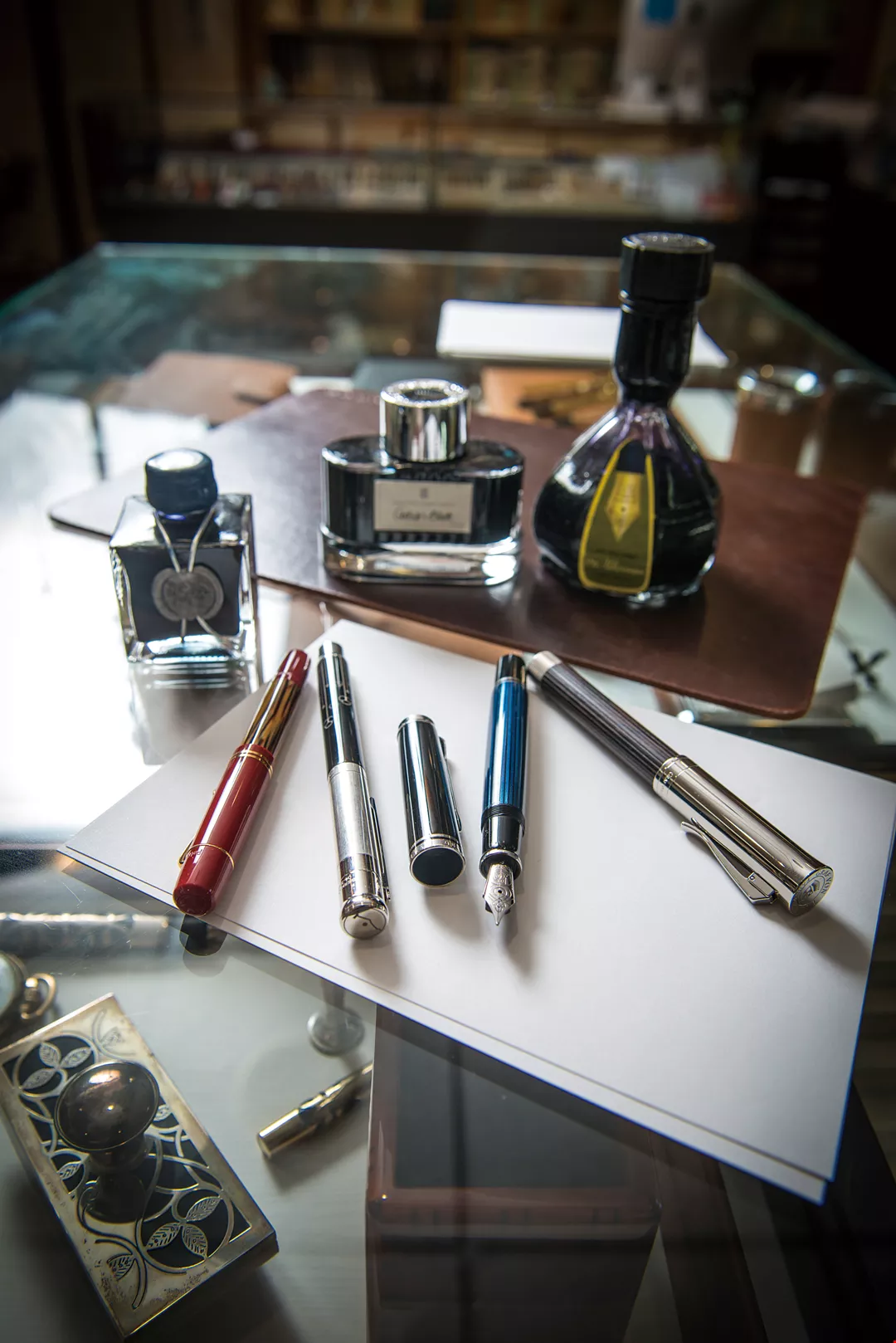
The writing bug is spreading, and the demand for pens and inks, and for books on the subject, has become feverish.
Just write
Printed text simply can’t match the warmth of a handwritten note. But wouldn’t it be great if computers could emulate your own personal handwriting? It might not be as far away as you imagine.
Last year, a font company called justfont launched the new “justwrite” brand, which focuses on creating characters that look handwritten. Company owner Michael Yeh says he got the idea to create “individual handwriting” fonts from his father’s lovely handwriting. He made inquiries among font makers in Shanghai and Hong Kong, but found either the prices to be too high or the fonts too ugly, and decided to develop the idea himself.
Yeh spent more than a year developing his first font. When he ran a trial of his service from October through December 2015, he discovered that far more people than he’d expected shared his vision. He limited the trial to six personal fonts per month, and quickly filled his quota. Yeh’s company has since developed more than 100 customized “handwritten” fonts.
The first step to creating such a font is to have the customer write 3–6,000 common characters in order of their frequency of use. Justfont proofs the list and makes any necessary corrections before handing it off to justwrite, which removes any smears, recenters the characters, and then uses parameters such as the thickness of the lines and the relative sizes of the characters to create an entire font in the customer’s writing style.
When justwrite comes across an especially pretty writing style, the company attempts to negotiate a partnership with the creator to bring it to market. Examples include the Grandma Xionggu, Mr. Eggplants, and Mei-a fonts. And the buzz around Ethan Yeh’s “Yeh Calligraphy” font has already generated more than 300 pre-sales.
“The idea of having a font of your own handwriting really resonates with Lemmings members,” says Ethan Yeh. “The only drawback is that the font can’t replicate the varying degrees of darkness that result when you write by hand with a pen.”
Interestingly, the text on pop star Cheer Chen’s Songs of Transience DVD was written using the personalized font created for her by justwrite. The company is currently in talks with the singer to release a font based on her handwriting.

Taipei stationer Xiaopin Yaji is a veritable place of pilgrimage for pen enthusiasts.
Starting over
While some people aren’t terribly interested in writing by hand, others are dedicated to the practice and find it deeply engaging.
“There’s no culture without the written word,” says Ty Lee. “People today are incapable of writing a thing without a computer.” He believes that we live and die by the Internet nowadays, and, for all that the Lemmings are encouraging young people to write by hand, they are doing so via the Internet.
Lee enjoys teaching penmanship and has been doing so with increasing zeal. He has also developed a 30-minute method for improving people’s handwriting. “It’s hard to change people’s writing style once it has developed. You have to get them to cast away their old style and start over.” He asks them to completely abandon their original handwriting, and has them practice writing in a flat and broad style to break their old habits.
“Calligraphy is about turning your thoughts into ink on paper.” Yan too believes that many people are incapable of writing without a computer or mobile device, and sees written Chinese as evolving from its pictographic and ideographic origins into a phonetic system. “The current enthusiasm for practicing penmanship needs to continue if we’re to keep calligraphy alive.”
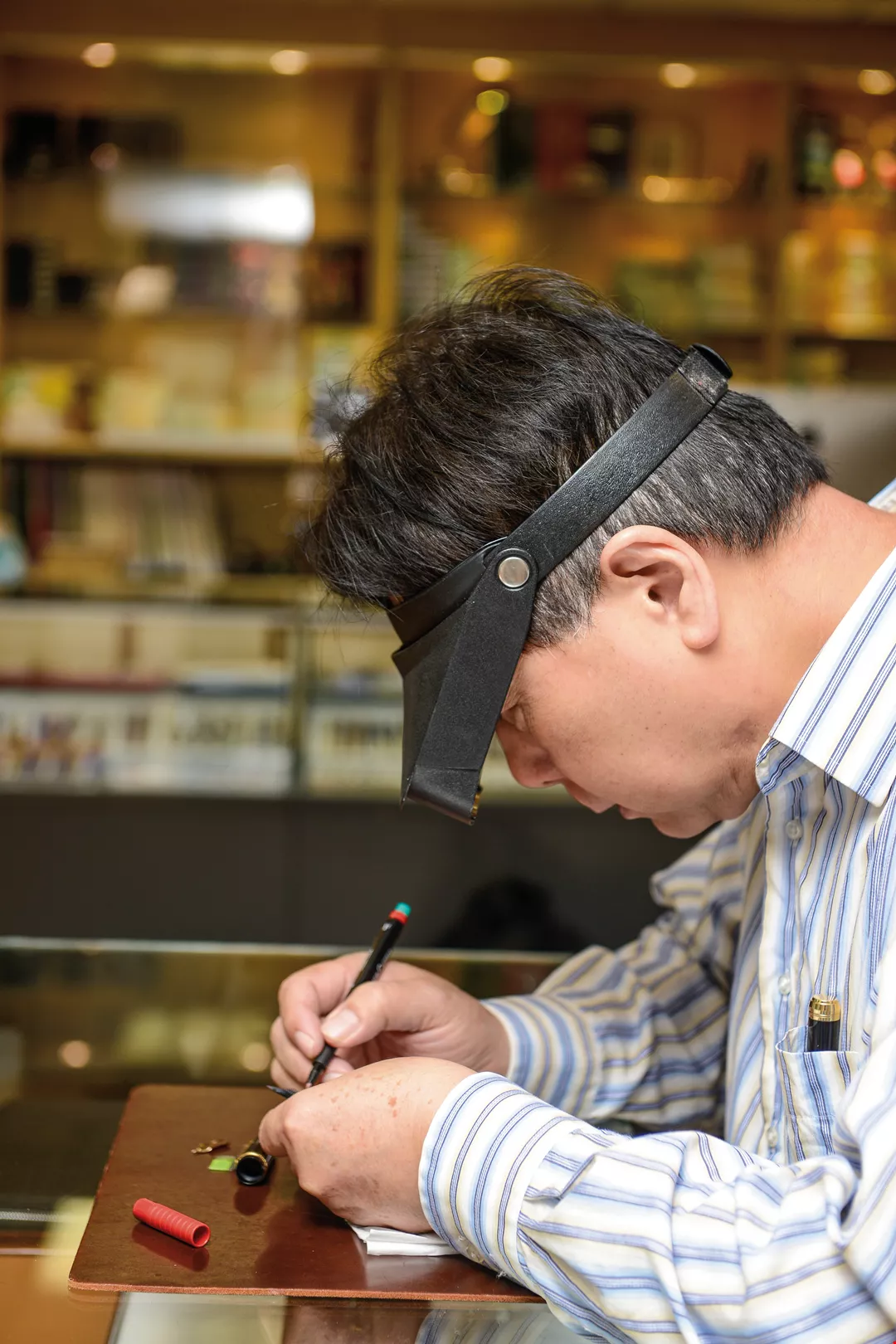
Xiaopin Yaji proprietor Ty Lee is more than simply a retailer and repairer of pens. He is also an enthusiastic practitioner and teacher of penmanship.
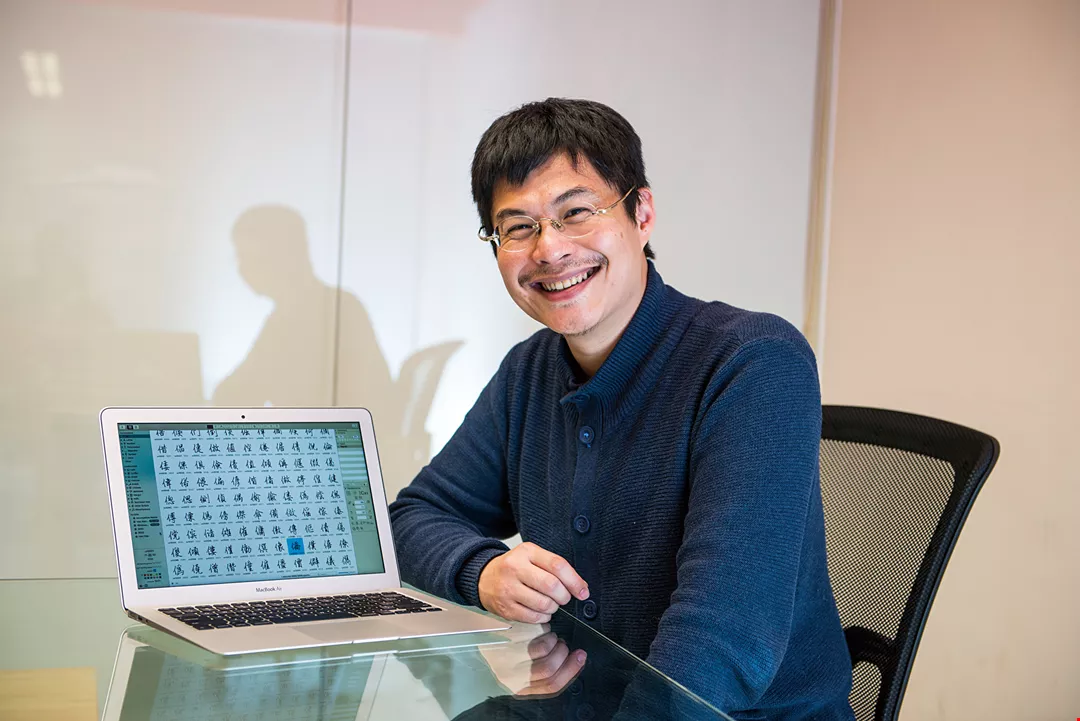
Want to capture the character and warmth of handwritten text? justwrite founder Michael Yeh can help.
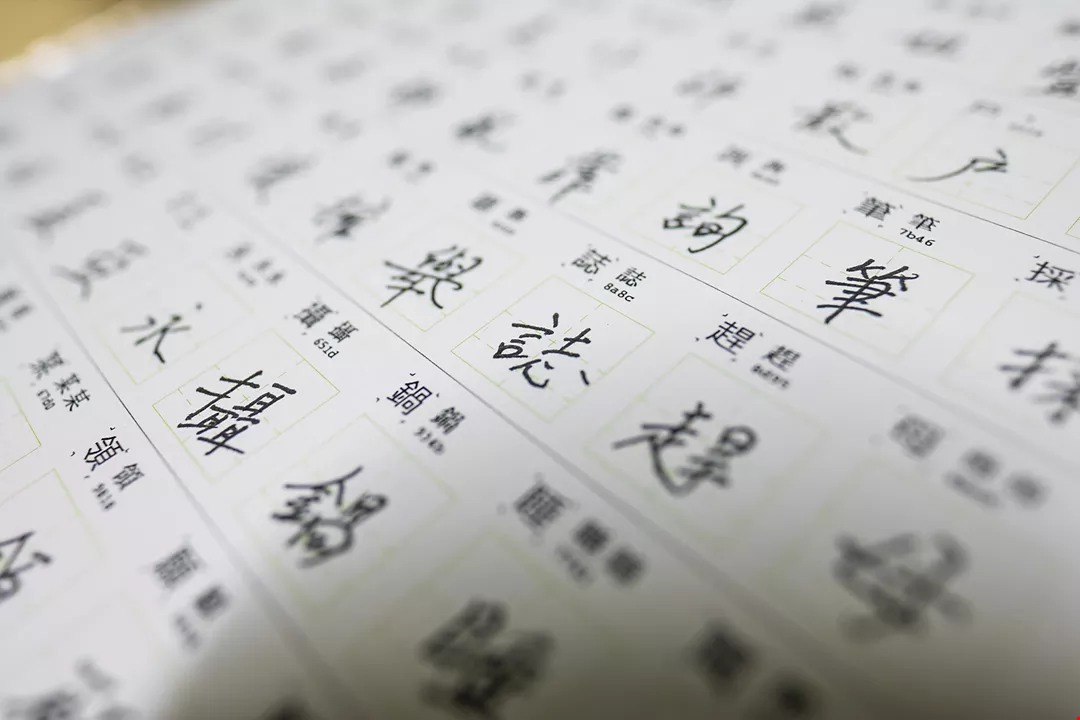
All you need to do to acquire a font based on your own handwriting is write out 3,000 common characters by hand. A computer does the rest, correcting any errors and rebalancing the characters.
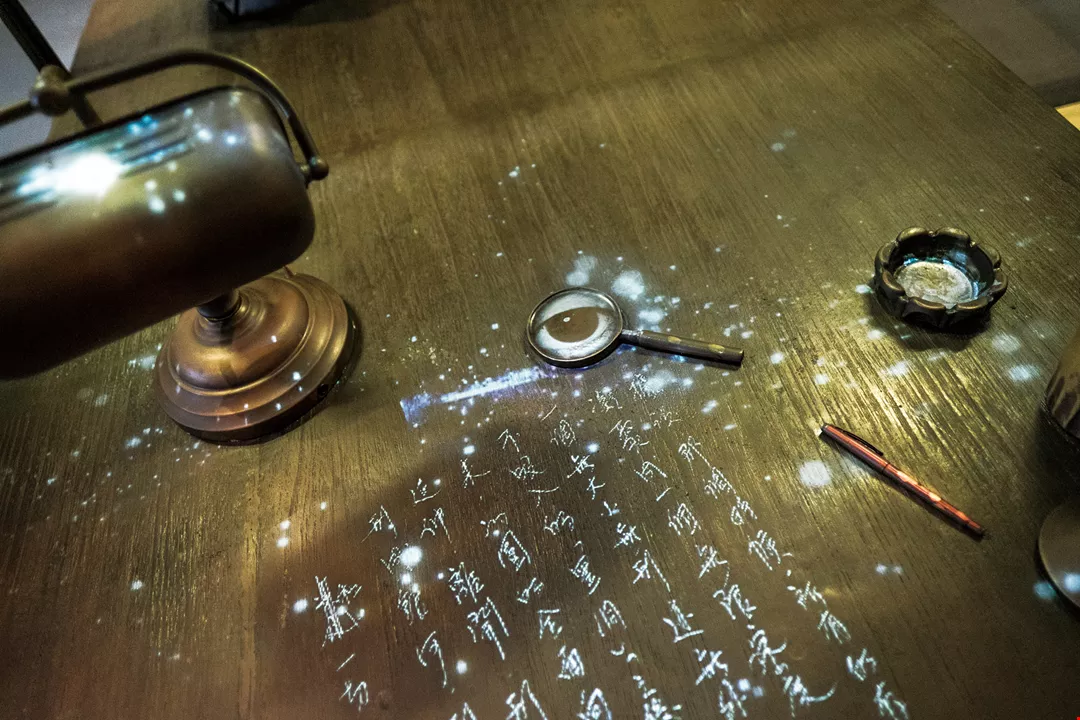
The permanent exhibition of the National Museum of Taiwan Literature includes a virtual display of handwritten manuscripts.


@List.jpg?w=522&h=410&mode=crop&format=webp&quality=80)

