Lin Lichan: Outstanding “New Immigrant”
Liu Yingfeng / photos courtesy of Lin Lichan / tr. by Geoff Hegarty and Sophia Chen
June 2014


Lin Lichan, a young Cambodian woman who is married to a Taiwanese man, spends much of her life helping others. She has set up a new social network encouraging “new immigrants” (a name often applied to women from Southeast Asia and mainland China who have married Taiwanese men) and local residents to work together to improve their lives in Taiwan. She has been honored both as one of Taiwan’s Ten Outstanding Young Women, and as one of the Ten Outstanding Young Persons. She is the first new immigrant to receive either of these awards.
Wife, mother, and new immigrant Lin, now aged 37, regards Taiwan as her new home. She won her place as an Outstanding Young Person alongside the likes of international ultramarathon gold medalist Tommy Chen and writer Wei-yun Lin Górecka.
Lin Lichan has overcome barriers of language and lifestyle to become the pride of her new family. Despite initial criticisms and hardships, she has managed to put down strong roots in her new hometown, injecting a warmth and power into communities she has touched.
A red congratulatory poster at the entrance of Changchun Community Center in Huatan Township, Changhua County, reads “Congratulations to Lin Lichan for becoming one of the Ten Outstanding Young Persons!” Four months after her winning the award, Lin and her husband Xie Shuijin along with a dozen villagers are still doing their routine street sweeping early on weekend mornings.
Immediately after the activity, Lin and her 15-year-old son Xie Fengyi drive to Yuanlin Township where she studies computer skills with other new immigrants from Indonesia, Thailand and mainland China.
Shorthaired Lin concentrates hard during the lesson and raises her hand when she has doubts: “Sir, I have a question.”
During the past 18 years of married life in Taiwan, Lin has taught herself Chinese without any formal instruction, has gained a bachelor’s degree in beauty science at Chienkuo Technology University, and is now studying in the master’s program for nonprofit organization management at National Chi Nan University. She is actively involved in community work, serving new immigrants and older people in remote areas. “I intend to prove that the best way to eliminate barriers and discrimination is to interact and keep in touch with people,” says Lin.
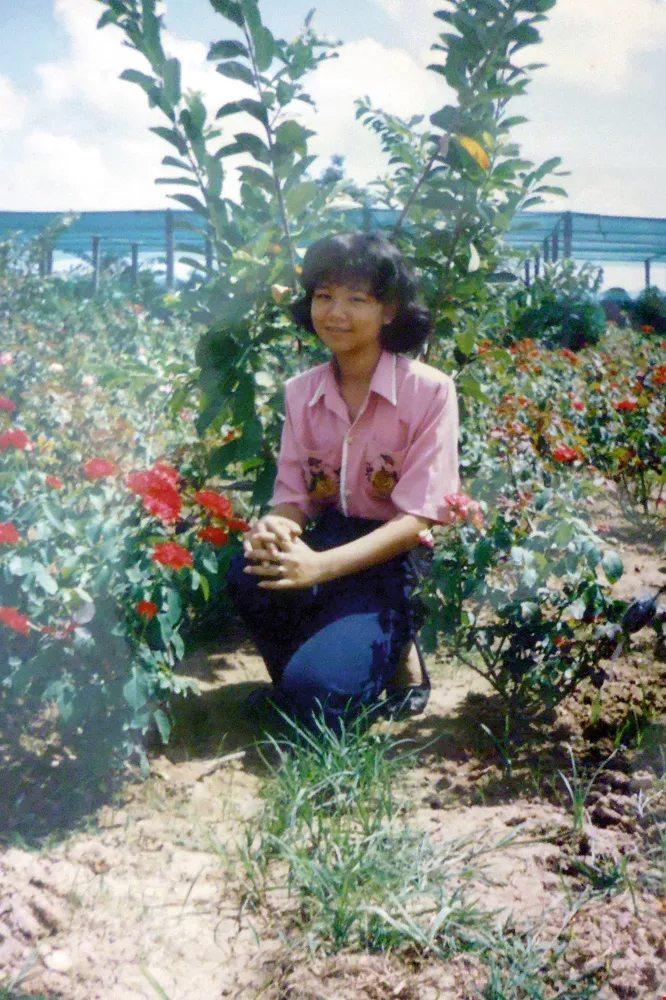
After marrying her husband Xie Shuijin, Lin Lichan gained a university degree. In recent years, she has become dedicated to improving communication between new immigrants by promoting a range of family activities.
Lin Lichan’s poem “Palm Sugar Marriage,” which was entered in the 2012 new poetry competition organized by the Taichung City Cultural Affairs Bureau, depicts how the poet misses her mother and tells the story of her transnational marriage:
“Palm sugar brought by my mother from Angkor Wat / Evokes my nostalgia. / A 20-year-old palm in full blossom waiting to marry. / Taro from my husband’s family farm, blessed by the goddess Mazu / Is the medium holding us together. / Marriage is ordained by the karma of past centuries.”
But Lin didn’t even know where Taiwan was before she got married. Born in 1977, Lin is third-generation Cambodian Chinese, in a family originally from Chaozhou, mainland China. The family lived in Cambodia’s capital Phnom Penh where the father had become a successful businessman. They were well off until her father died in a traffic accident when she was in high school, and the family’s fortunes gradually declined. By her mother’s arrangement, the young Lin met her future husband Xie Shuijin and they became engaged. It was only then that Lin started to learn Chinese by watching Taiwanese soap operas.
Lin married her Taiwanese beau in 1997. Before she arrived in Taiwan, she imagined it as a country with rich people’s mansions dotted over the landscape. But she discovered the truth pretty soon after her arrival: the rural village they arrived in was very different from the TV dramas she had watched in Cambodia. But there was little time for her to adjust. She was immediately put to work helping out in her husband’s hardware factory, and was responsible for preparing the employees’ meals. One year on, after the birth of her first child, life had become even busier.
Lin remembers thinking that Taiwanese people were being nice to her, but that was before she had a grasp of the language. After she made some progress in Chinese, she was sad to discover that “people said our family had bought a foreign bride. Some neighbors even asked me how much they paid.”
Lin thought about confiding in friends, other Cambodian women who had also married into Taiwan, to talk about her suffering, but she feared trouble in that very conservative village. With nowhere to express her feelings, Lin could only find relief in her dreams. “I often dreamed of my late father, and my hometown in Cambodia. The dreams were so real, while reality was like a dream.”
In 2004, a nurse in a nearby clinic asked Lin to be a model for her cosmetology certification. For the first time Lin realized that she was able to help people, and this did wonders for her self-confidence. She began to get out more and get in touch with the outside world. She taught herself beauty care and gained a beautician certification, and even became a volunteer at her children’s school.
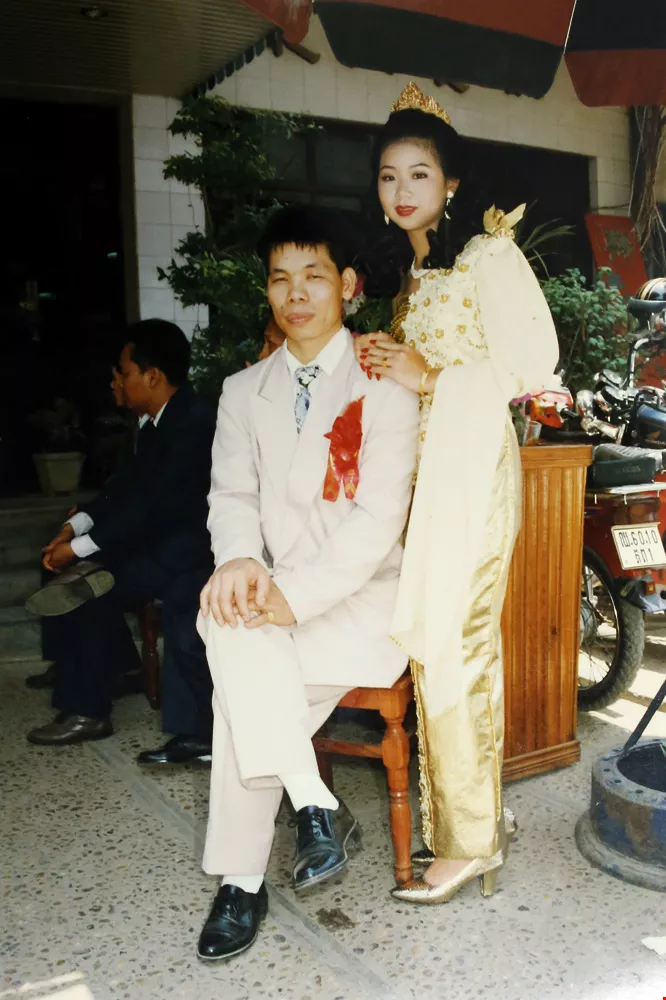
After marrying her husband Xie Shuijin, Lin Lichan gained a university degree. In recent years, she has become dedicated to improving communication between new immigrants by promoting a range of family activities.
Lin had been hit hard by her own father’s sudden death, so she promised herself that no matter how much she suffered, protecting her two children would always be her primary goal. From the first day of her children’s elementary school, she stood outside the classroom every day for a week to make sure that her children suffered no discrimination. In the end, a teacher had to persuade her to leave.
But concern for her children often brought her to tears. A school volunteer mother who once witnessed this suggested that she become a volunteer herself, so she’d be there to take care of her kids. So Lin joined the school volunteers, helping out in classes and—with encouragement from other mothers—even taking on storytelling, an enormous challenge with her limited Chinese language skills.
After two weeks of practice at home, Lin became more confident, but ended up frustrated after the very first lesson. “I thought that Taiwan embraced cultural diversity, so everything should have gone smoothly. But I discovered that I was being too optimistic. With all the innocence of little children, they made fun of me,” says Lin.
The first time she opened her mouth in class, the children were curious about her strong accent and posed a lot of difficult questions: “Are you a foreign bride? What did you say?—I can’t understand you! Which country are you from?” Lin was shocked by some of the questions, and wasn’t sure how to respond. Eventually however, another mother came to the rescue and calmed everyone down.
Lin didn’t give up. She brought small gifts for the children the following week, and made a joke of writing the name of her country, Cambodia, in Chinese using different characters, to introduce her country to the kids. Best of all, the children’s disparaging questions were replaced by friendly curiosity.
After she had overcome the challenges of helping out at the school, Lin’s own children also posed some difficult questions. One day, while her daughter was doing her homework, she asked: “Mom, did you go to school when you were in your country? Do you know anything about Taiwan history?” Not wanting her own children to be ashamed of her—and also to prove to herself that she could do it—Lin decided to advance her education: to take the entrance exam for the credit course in the Department of Beauty Science at Chienkuo Technology University (CTU).
The complex application process proved too trying for the other four candidates, so Lin was the only one to pass the entrance exam. “I asked the university straight out what their requirements were, and I begged to be allowed in to study. I really wanted to learn,” says Lin.
Lin’s Mandarin became much more fluent because of the need to communicate with her 50-odd classmates, most of whom were born in the 1990s. When she traveled with her classmates to serve as a volunteer hairdresser in remote areas, she met a number of disadvantaged groups, and realized how fulfilling it could be to help others: “You think about things other than yourself: you forget about the quarrel you just had with your husband, and find out you have other talents, apart from looking after children and doing the cooking.”
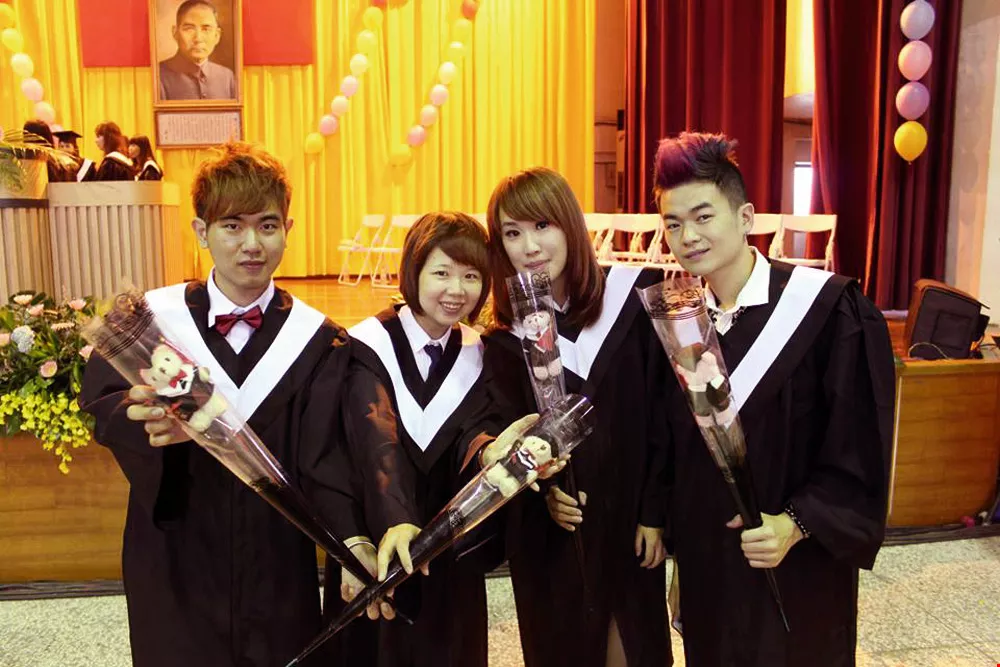
After marrying her husband Xie Shuijin, Lin Lichan gained a university degree. In recent years, she has become dedicated to improving communication between new immigrants by promoting a range of family activities.
While she was giving free haircuts, Lin also witnessed the problems confronting new immigrants in rural areas, including their children’s education, and other family and life adjustment issues. In 2011 she invited 30 foreign spouses to come together to establish the Association for Development and Communication for New Immigrants in Taichung, an association aimed at helping new immigrants who are single parents or vulnerable in other ways.
Initially, Lin’s idea didn’t gain any worthwhile recognition—a friend even once said to her: “Taking good care of your own children is enough for anyone. How on earth will you make the time to care for others?” Lin’s enthusiasm, however, was a match for the task. “In any society, if only one or two are good, that’s not good enough. But if everyone tries to be good, then that will be a good society because everything and everyone in that society is linked to all others.”
Two years ago, a woman from Cambodia who had married and later divorced died in a road accident on her way to work. Her ex-husband wasn’t willing to deal with the arrangements, so Lin was asked to locate and deal with the woman’s family in Cambodia so they could organize the funeral. The experience highlighted for Lin the extreme vulnerability of, and lack of support for, foreign spouses. So she was inspired to promote the association’s role more actively.
Watching Lin travel between Taichung and Changhua to attend to her obligations, her husband suggested she return to their village to spend more time with local residents. After taking a job directing the Changchun Community Development Association, Lin found an abandoned local community center they could use as a base, and invited CTU alumni and foreign spouses living nearby to work together to transform the place into an office. The neighborhood was known as the “newspaper community” because the community center’s many broken windows had been pasted over with old newspapers.
Then Lin got people to donate more than 10,000 books to establish a small library, and organized calligraphy classes and talks on topics such as music therapy—all achieved with little funding. “Knowledge can make poor people rich, as well as conquer discrimination,” says Lin.
Though there are quite a number of foreign spouses living in Changchun Village, for Lin “the association not only takes care of new immigrants, but also aims to overcome the boundaries between local Taiwanese and new arrivals in the community.”
As a part of Women’s Day activities, the community association intended to display the traditional clothing of local foreign spouses. But Lin didn’t forget the village’s elderly. She invited them to dig out their traditional Taiwanese garments that had been stored away for years to participate in the exhibition. In addition, she set up a “wordless” book club for senior members of the village who possess limited literacy, using oral descriptions and old photos to share memories of the past. “Diversity should involve not only new immigrants, but Taiwan’s various cultures as well,” says Lin.
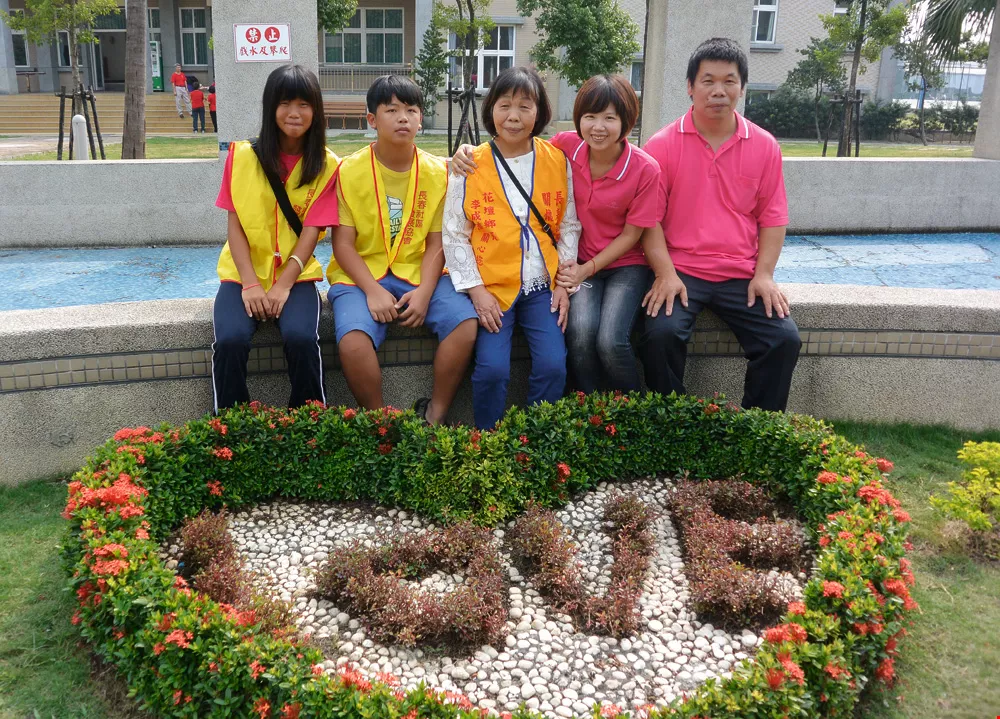
After experiencing the difficulties of life in a foreign land, Lin Lichan has worked to eradicate stereotypical attitudes towards new immigrants. She is now the pride of her family—especially of her mother-in-law, husband and children.
But Lin’s foreign spouse status continues to bring criticism. Once when the community association was in the process of applying for the county government’s education subsidy for new immigrants, one of the officers ridiculed Lin’s role: “Even most Taiwanese can’t do volunteer work competently; what makes you think that you can do better?”
Lin was frustrated more than angry; she had the practical experience but her skills were still not being recognized. So in order to dispel doubts, she decided to take the credit course for social work at Providence University. Then in 2013, she was admitted to study in the master’s program for nonprofit organization management at National Chi Nan University.
Lin’s continual educational and social development has been watched with interest by her husband’s family. Lin’s mother-in-law no longer calls her a “purchased” daughter-in-law. Instead, she proudly praises Lin, claiming that she does a better job than the president. And while the children of foreign spouses tend to be afraid of being branded as different, Lin’s children are proud to introduce their mother to their classmates: “My mother is from Cambodia!” Lin’s husband, who was initially not optimistic about her community service, is now also heavily involved. Lin has become a model citizen of the village, and has inspired many mothers-in-law of foreign spouses to encourage their new daughters to get out of the home and take an active role in the community.
“Compared to my early years in Taiwan when I didn’t know how to adapt or what to do when I was feeling hurt, I’m now full of optimism,” says Lin.
On her not-always-easy journey through life in a foreign land, Lin has found ways to ease her pain and distress through gaining knowledge and helping others in her community—and beyond. She is now confident and optimistic, taking a stand against people’s stereotypical attitudes towards new immigrants, breaking down the boundaries between peoples and allowing love to flow freely between them.
Current positions: President of the Association for Development and Communication for New Immigrants/Director of the Changchun Community Development Association, Huatan Township, Changhua County
Year of birth: 1977
Birthplace: Phnom Penh, Cambodia
Education: Phnom Penh High School, Cambodia/Bachelor’s degree in beauty science, Chienkuo Technology University/Credit course in social work, Providence University/Master’s degree in nonprofit organization management, National Chi Nan University
Year of arrival in Taiwan: 1997
Awards: Winner, 2013 Ten Outstanding Young Women/Winner, 2013 Ten Outstanding Young Persons
table by Liu Yingfeng
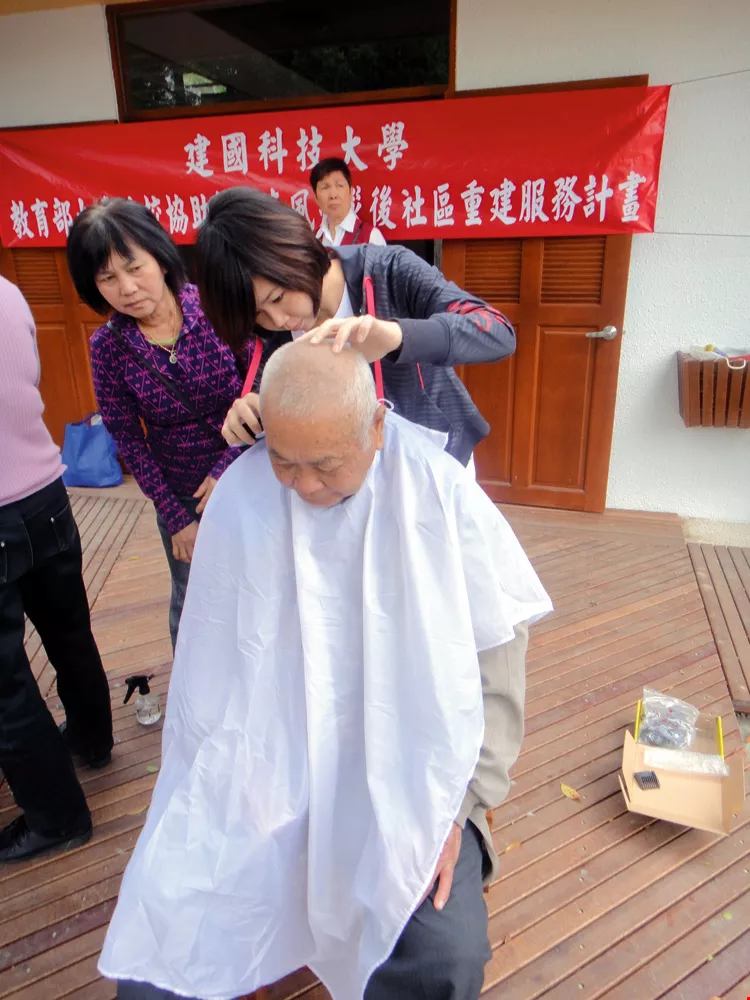
Lin Lichan is both president of the Association for Development and Communication for New Immigrants, and director of the Changchun Community Development Association in Huatan Township, Changhua County. She has set up a service to provide free haircuts for the elderly, promoting local potential to the full.
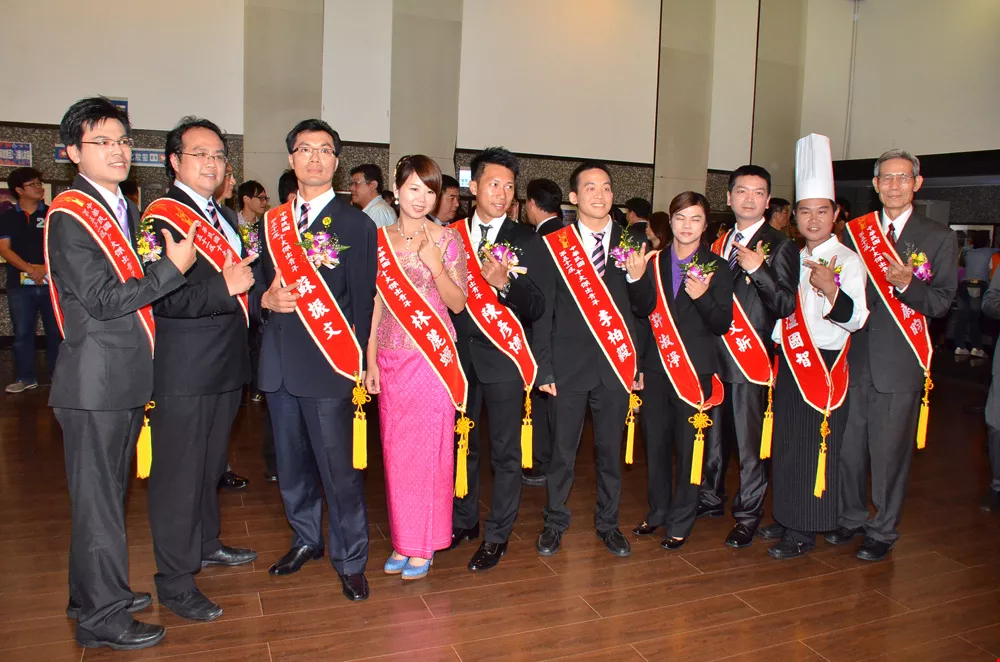
Lin Lichan was among the laureates of the 51st Ten Outstanding Young Persons award, along with ultramarathoner Tommy Chen and artist Leland Lee.
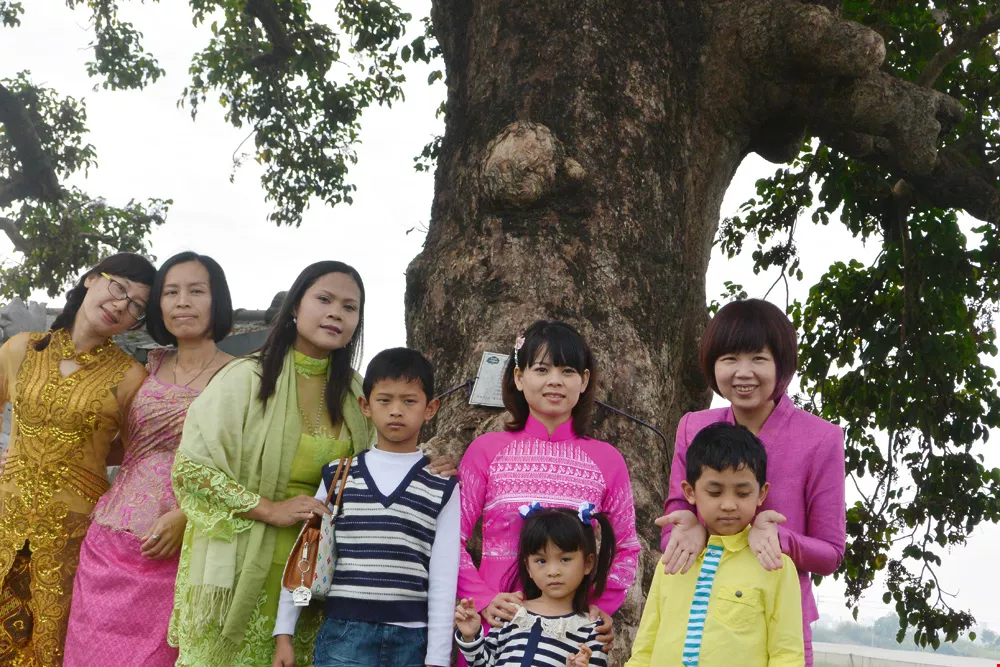
After marrying her husband Xie Shuijin, Lin Lichan gained a university degree. In recent years, she has become dedicated to improving communication between new immigrants by promoting a range of family activities.
@List.jpg?w=522&h=410&mode=crop&format=webp&quality=80)

@List.jpg?w=522&h=410&mode=crop&format=webp&quality=80)


@List.jpg?w=522&h=410&mode=crop&format=webp&quality=80)

@List.jpg?w=522&h=410&mode=crop&format=webp&quality=80)
