Tungting Hu Is Number One No More
Gypsy Chang / photos Chin-Show Ltd. / tr. by Peter Eberly
November 1986


Eight hundred years ago, the poet Fan Chung-yen described the view he saw from Yueh-yang Tower of Tungting Hu, China's largest lake: "... enfolding the distant hills, engulfing the Yangtze River, vast and restless, stretching between boundless shores, in morning radiance and evening shade a majestic ever-changing scene...."
If Fan Chung-yen were to climb the same tower today, he might exclaim with a sigh, "How even the lands and seas themselves do change!"
That's because the distant hills have now vanished, the blue of the lake has yielded to fields crisscrossed by dykes, and the songs of the fishermen are no more to be heard....
But what would probably shock old Fan even more than the change in scenery would be the change in a millennia-old fact: Tungting Hu is no longer China's largest freshwater lake.
Satellite photographs published in the 1984 book The Bad Earth: Environmental Degradation in China by Vaclav Smil, a professor at the University of Manitoba, show clearly how Tungting Hu has shrunk in area by one-half since 1943, down to 2,800 square kilometers, making it now second in size to Poyang Hu.
Tungting, Poyang, and Chao Hu are the three main lakes of the Yangtze River basin, the Yangtze being China's longest river and the basin China's most important agricultural area, particularly around Hunan and Hupeh, the two provinces flanking Tungting Hu.
To increase crop production, the Chinese have made many attempts throughout history to encroach on Tungting and other lakes. During the Tang dynasty (618--907), farmers discovered "having stolen land from the lake" were subject to a heavy penalty. And during the Northern Sung dynasty (960--1127), the prime minister Wang An-shih opposed a suggestion to dry up Liangshanpo on the grounds that "there would be no place to store the water." Then during the Southern Sung (1127--1279), to increase tax revenues, the court instituted a large-scale land reclamation program. When this led to heavy flooding, officials petitioned the emperor to strictly forbid the draining of lakes. So it went, back and forth, for the next seven centuries, as reclamation and prohibition continued to clash.
While lake filling has a long history behind it, the greatest change in China's lake surfaces is matter of the last two or three decades. According to Chinese Communist statistics, from 1896 to 1949, Tungting Hu shrunk an average of 20 square kilometers a year, while from 1949 to 1976 the rate jumped to 97.
The main cause for this fourfold increase in the shrinkage rate lies in the "grain-first" policy adopted by the Communists in the 1950s to deal with insufficient food supplies. No voice of dissent being tolerated under a communist system, the populace went to work at once clearing forests, opening up grasslands, and filling in lakes, changing the face of the Chinese countryside. The areas affected by lake reclamation stretched all the way from Inner Mongolia and Manchuria in the northeast to Yunnan and Kweichow Provinces in the southwest.
There are no precise figures on exactly how much lake area has been filled in over the last 30-some years. But in Hupeh, the proverbial "province of a thousand lakes," just 3,000 square kilometers of lake area of an original 11,000 remain. And a Chinese Communist publication has predicted that, if the present rate of reclamation continues, Tungting Hu itself will disappear from the face of the earth by the end of this century.
Leaving alone the sense of loss that the Chinese people would feel at such an event emotionally, does the death of a lake entail any other consequences? Hasn't Holland always been proud of claiming land from the sea? Why not from lakes?
"Lakes aren't seas, after all," a geography professor at National Taiwan University remarks. Lakes, especially those alongside rivers, serve to regulate the volume of water flowing into them. During the rainy season, they act as natural reservoirs, absorbing the river's floods. And in times of drought, farmers can use the lake waters for irrigation.
"One of the main reasons why the Chinese people advanced south from the Yellow River to the Yangtze was to enjoy the protection from flooding afforded by the lakes of the Yangtze," Huang Juihsiang, a research fellow at the University of Hawaii, points out.
This year the People's Daily reported seven major floods during June and July, destroying 50,000 homes and 13 million mu of croplands. Nor was this exceptional. An economic journal published on the mainland in 198l reported that between 1954 and 1978 the province of Hunan alone was subject to 14 floods that destroyed over 800,000 mu of croplands each. And a geological journal published on the mainland last year reported a "strange lack" of water that spring and summer, which had resulted in a loss of 1.8 million kilos of crops and a shortage of drinking water.
In addition to flooding and drought, soil exhaustion is a third adverse consequence of lake reclamation. Huang Juihsiang says that the reclaimed land lacks nutrients and organic matter and has become alkalized from oversaturation due to the lack of adequate drainage systems. The result has been a startling loss of arable land.
In an article published this August in Hong Kong, Cheng Chu-yuan, a professor at Ball State University, states that, because of increases in soil alkalinity, between 1949 and 1981, the total arable land on the mainland actually declined, from 1.67 billion shihmu to 1.49 billion shihmu, and the per capita amount decreased by one half, from 3 shihmu to 1.5. (Note: 1 shihmu equals 6.7 mu; 1 mu equals 0.025 acres)
Filling in lakes has had other side effects, as well. Freshwater fishing grounds have decreased by one-seventh in area, and, as massive amounts of chemical fertilizers have been applied in an attempt to raise the fertility of the reclaimed soil, annual catches have plummeted by one half. The middle and lower reaches of the Yangtze, once known as the "land of fish and rice," is fast becoming a "land of rice and no fish."
Tungting Hu has another, apparently less valuable product, which nevertheless brings in US$8.1 million a year: reeds. Reeds can be used as a substitute for wood in papermaking and are important in maintaining a stable ecological equilibrium. As a result of reclamation, Tungting Hu, which is still the country's largest reed producing area, has lost some 240,000 mu of reeds to land reclamation.
Finally, navigation has been seriously affected by the loss of waterways, raising the time and cost of water transport, vital in the Yangtze region.
After 30-some years of pursuing the dream of wresting land from lakes, the Communist authorities are gradually coming to a rude awakening. Intellectuals on the mainland are now calling to "return the fields to the lakes."
If the land is given back, will the fish return? Will the reeds grow back? Will the Yangtze still be the Yangtze, the Tungting still the Tungting?
Huang Jui-hsiang fears the cure may be too late. Deforestation on the upper reaches of the Yangtze led to huge amounts of silt and sediment downstream, and the Tungting is the first major lake on the way. Huang says that unless the problem upstream is solved, the lakes downstream will never have a chance of clearing up.
Another measure that has been proposed is construction of a giant dam at Sanhsia, a proposal that is currently the subject of much discussion by experts around the world. What is of greatest concern to all Chinese is whether the three evils of drought, flooding, and soil deterioration that are plaguing the Yangtze River basin may eventually be controlled. Historically, the center of Chinese civilization shifted from the Yellow River to the Yangtze region. If the Yangtze is no longer fit for cultivation, where else can the Chinese people go?
[Picture Caption]
(Above) Fan Chung-yen stood on Yueh-yang Tower 800 years ago and looked out on Tungting Hu. Times have changed; the lake is not what it was.
(Below) Due to poor drainage, standing water remains on the fields reclaimed from Tai Hu. (courtesy of Huang Jui-hsiang)
The lakes on the lower and middle course of the Yangtze are rapidly dwindling. On the left is an aerial photo map from 1943. By 1978 less than one-third of the lake area remains. (Source: The Bad Earth by V. Smil)
Half of Tungting Hu has been filled with land.
Picking lotus seeds culled from Tungting Hu, these children work and play at the same time.
With plenty of boats but fewer fish, fishermen feel the pinch.
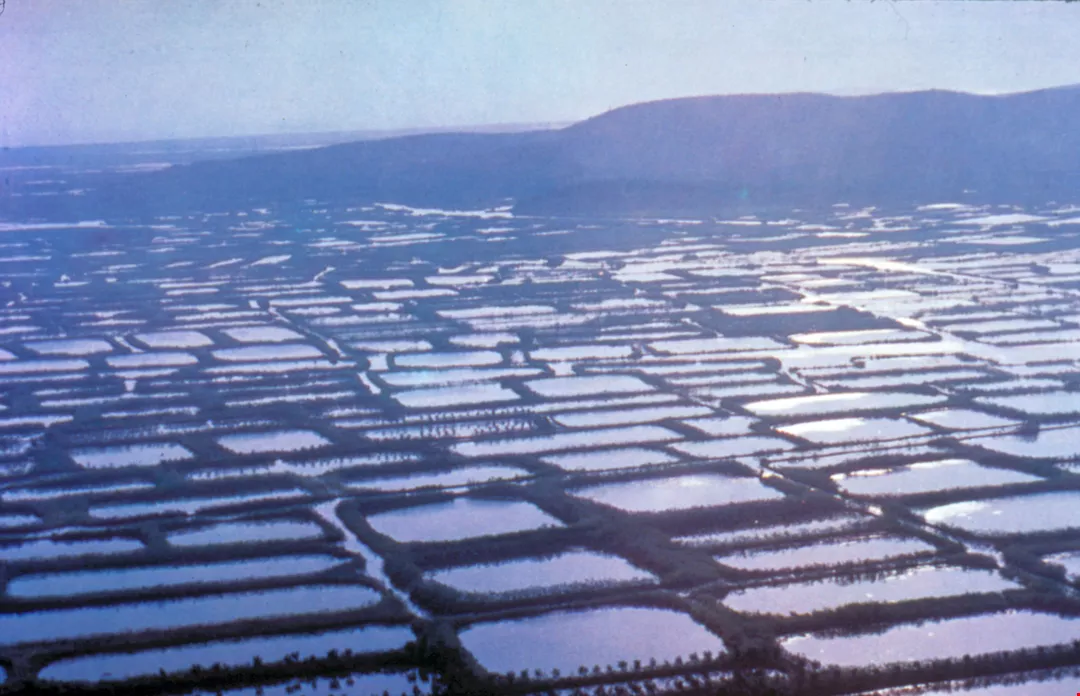
(Below) Due to poor drainage, standing water remains on the fields reclaimed from Tai Hu. (courtesy of Huang Jui-hsiang)
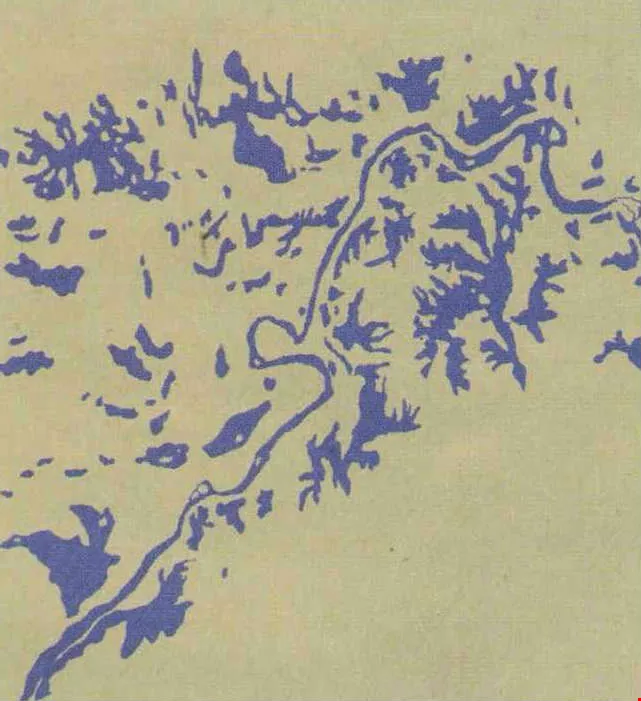
The lakes on the lower and middle course of the Yangtze are rapidly dwindling. On the left is an aerial photo map from 1943. By 1978 less than one-third of the lake area remains. (Source: The Bad Earth by V. Smil)
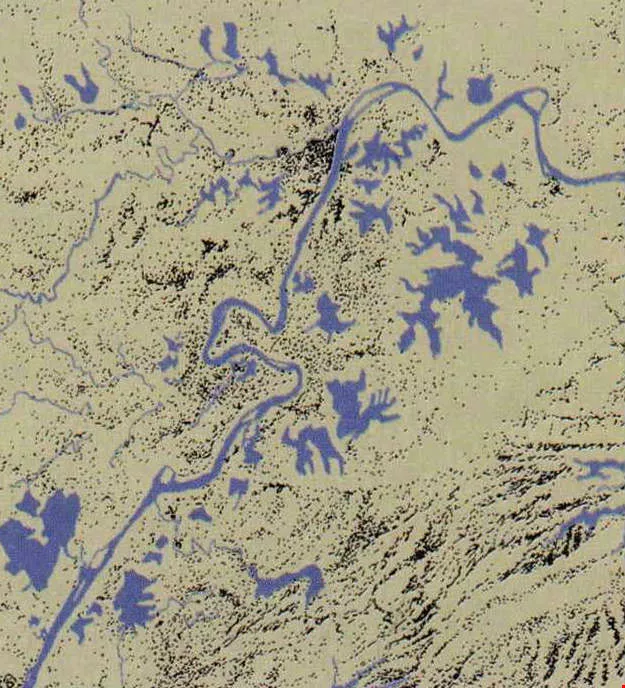
The lakes on the lower and middle course of the Yangtze are rapidly dwindling. On the left is an aerial photo map from 1943. By 1978 less than one-third of the lake area remains. (Source: The Bad Earth by V. Smil)
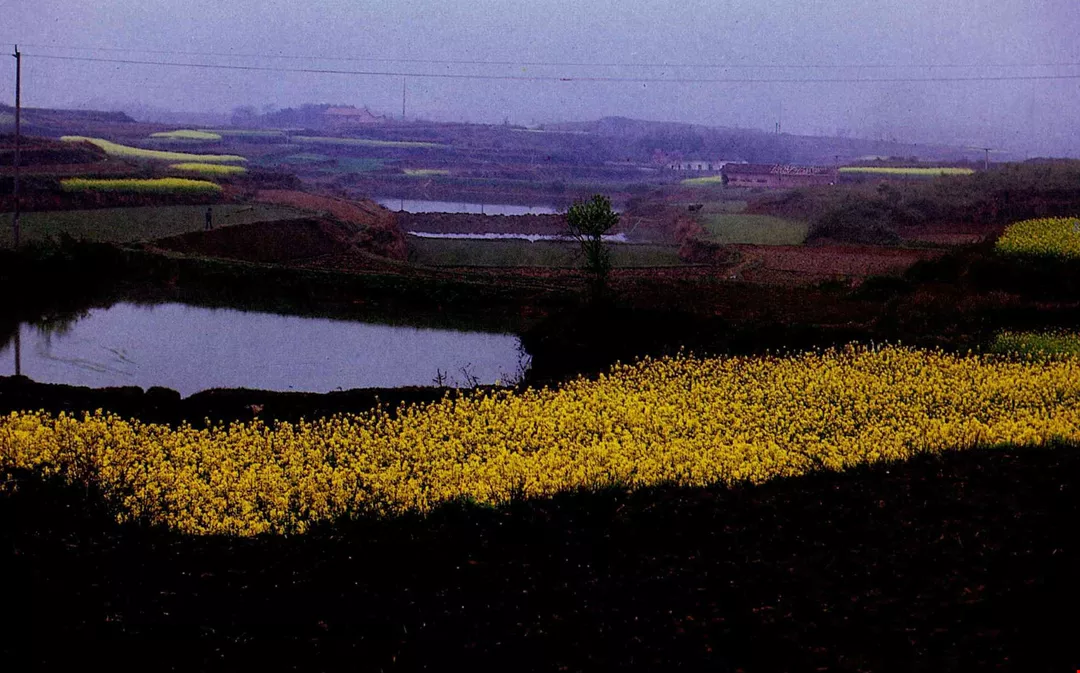
Half of Tungting Hu has been filled with land.
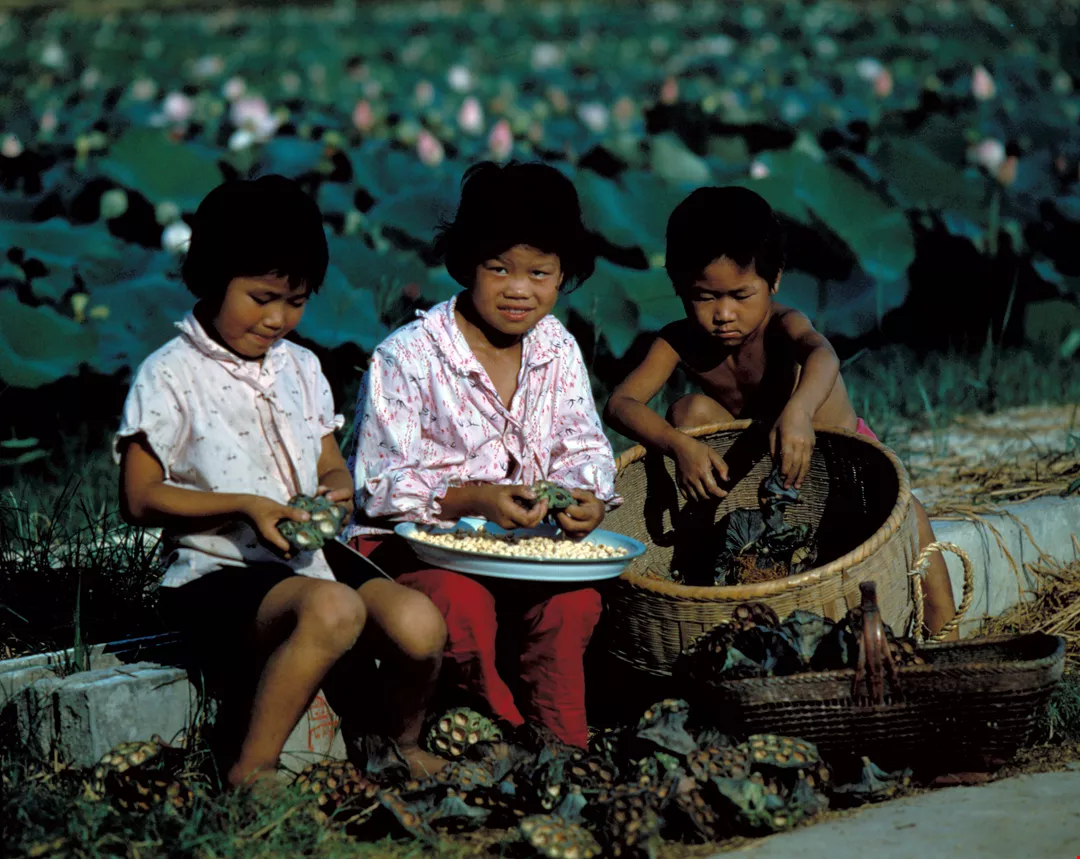
Picking lotus seeds culled from Tungting Hu, these children work and play at the same time.
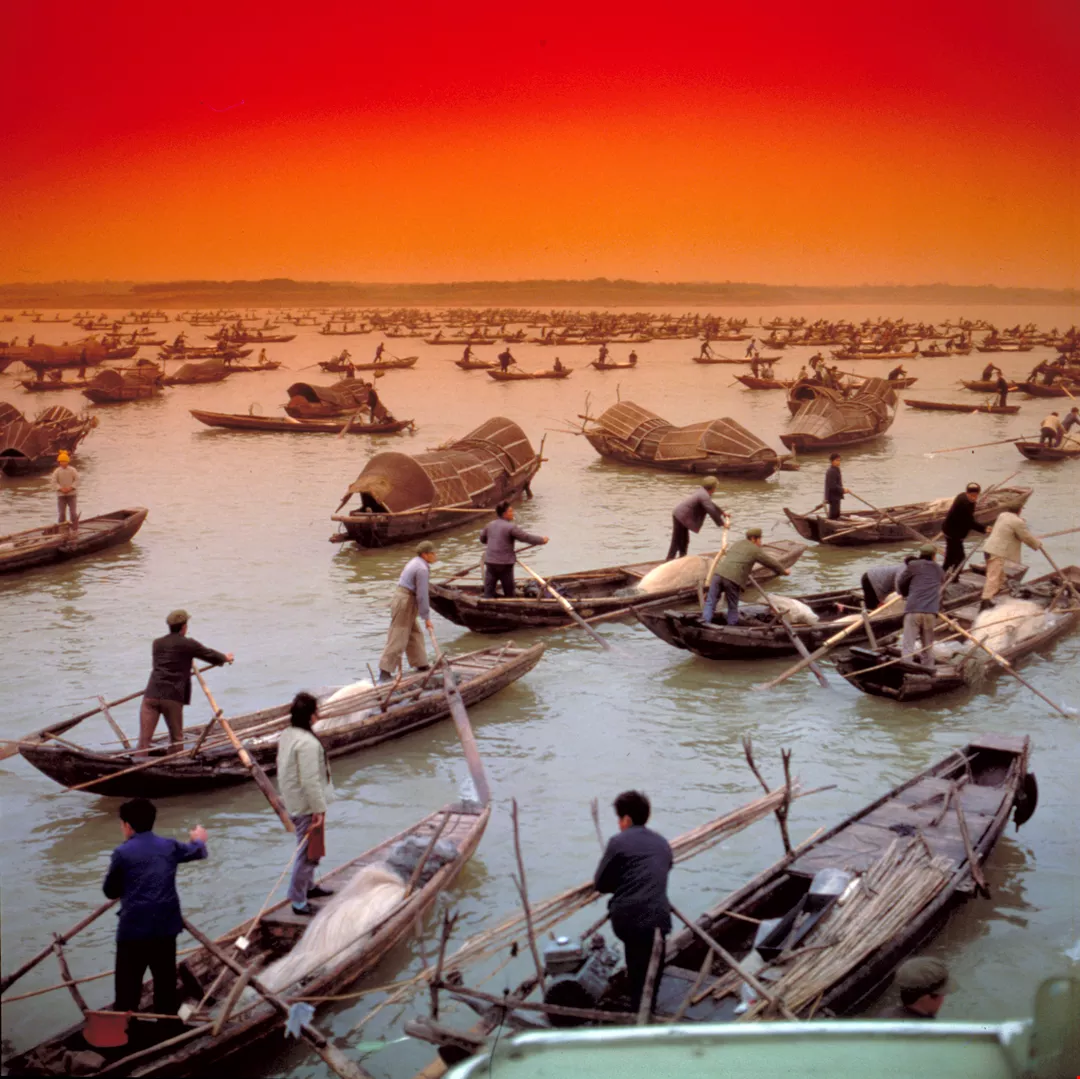
With plenty of boats but fewer fish, fishermen feel the pinch.

@List.jpg?w=522&h=410&mode=crop&format=webp&quality=80)
@List.jpg?w=522&h=410&mode=crop&format=webp&quality=80)


