Cloud Gate Celebrates 40 Years of Innovative Dance with Rice
Chang Chiung-fang / tr. by Jonathan Barnard
January 2014


Like the paddy rice of Chishang in Taitung, rooted in and drawing nutrients from the rich Taiwanese soil, Cloud Gate Dance Theatre, now 40 years old, uses physical language to powerfully transmit stories about this land. Just as the outstanding rice grown in eastern Taiwan has earned international plaudits for its quality, so too has Cloud Gate, by mixing Eastern and Western cultural forms, created a global sensation.
On the night of November 22, 2013, Rice, Cloud Gate’s work to celebrate its 40th anniversary, made its debut at the National Theater.
“Four decades have passed in a flash,” says Lin Hwai-min, Cloud Gate’s founder and artistic director, dressed, as always, in black and standing at the edge of a darkened stage. “Cloud Gate is a performance group that has grown through the power of social cohesion. We appreciate the support we have gotten from everyone, and we’re going to continue to give it our best.”
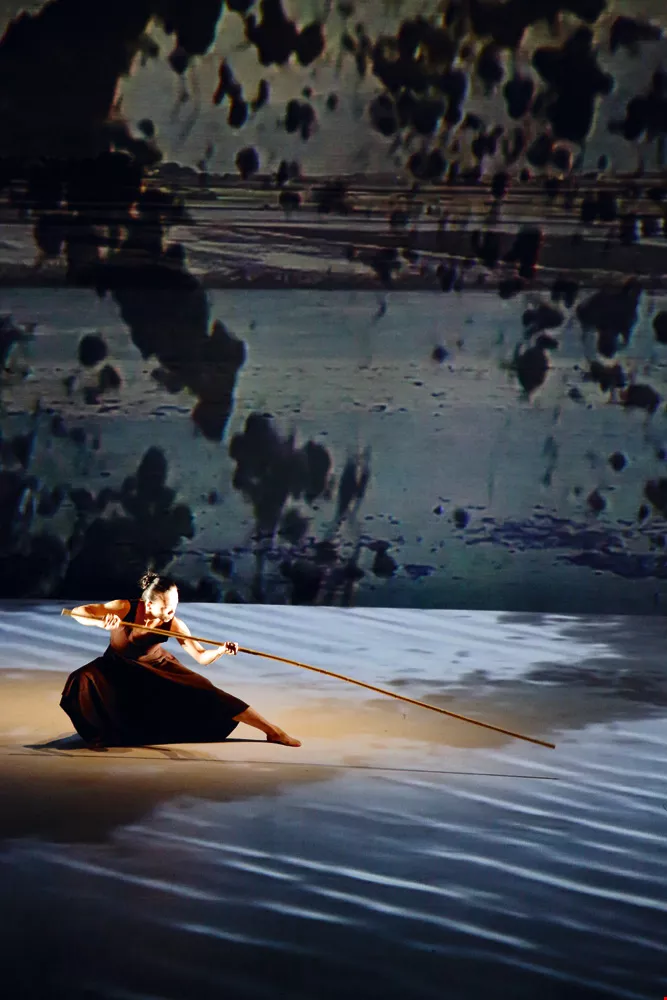
Rice explores the four stages of growing rice to describe the cycles of life and the relationship that people have to the land. From left to right: pollination (photo by Chin Hung-hao), sunlight (photo by Chuang Kung-ju), fire (photo by Chin Hung-hao), and water (photo by Chin Hung-hao).
“The sun sinks behind the mountains and the moon rises....”
A poignant Hakka folk song rings out accompanied by the sound of the wind in Chishang, as images of expansive fields of rice are projected on stage. Stomp, stomp, stomp… the dancers lift their feet to awaken the sleeping land.
The audience is transfixed by two dancers, a man and a woman, seemingly naked on stage. The intertwining of their bodies represents the process of pollination. Bathed in light, the dancers’ bodies are covered with yellow-green pollen. The scene conveys a dreamlike beauty.
Rice swaying in the wind is shown to resemble a woman struggling in childbirth.... In the background a fire rages and thick smoke spreads before our eyes, as male dancers do battle with rattan sticks. As the sticks hit the ground the sound resounds in the hearts of the audience.
The fire burns out, the smoke clears, and the broken, exhausted landscape has nothing left but scorched earth. Soon comes flooding, and as the water covers the land, one can see the reflection of sky and clouds on its surface. Conveying the Tao of rice, the dance describes the four stages of growing rice, as well as related aspects of human life: birth, aging, sickness, and death.
As soon as the dance ends, another drama unfolds on the plaza: To offer blessings to Taiwan, members of the audience and the crew unfurl a giant 45-meter-long, 14-meter-wide work of calligraphy by Grace Tong.
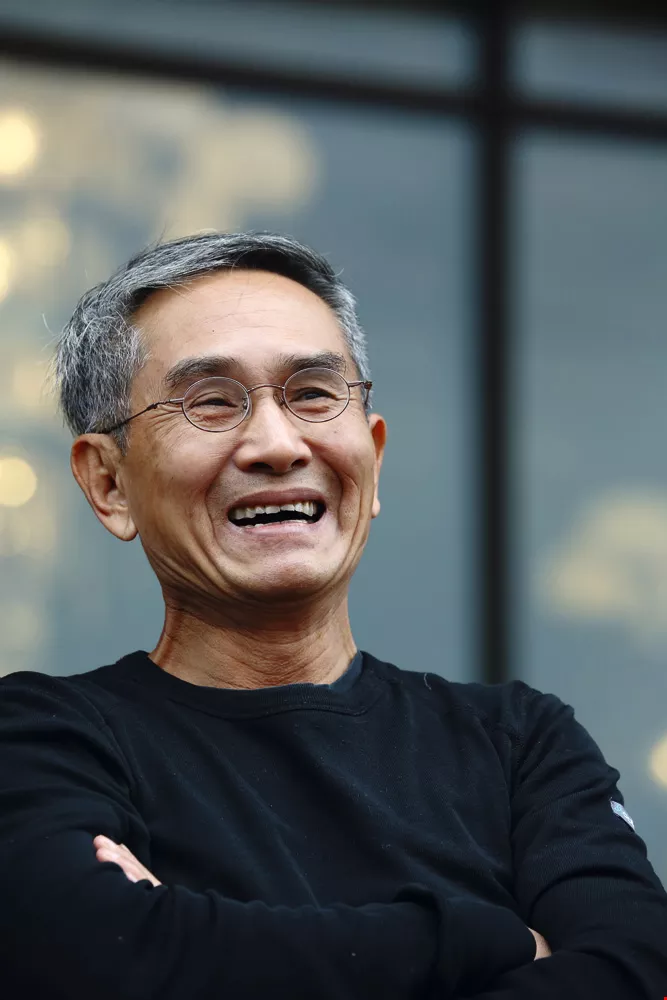
Full of energy in his 60th year, Lin Hwai-min is still constantly creating, employing his unique physical vocabulary both to convey his feelings for the land and to bring its stories to life.
Rice, a work in celebration of Cloud Gate’s 40th anniversary, took Lin Hwai-min two years to finish.
Cloud Gate Dance Theatre has traveled to five continents and 187 cities, where it has performed more than 2000 shows. But what Lin, the founder of the company, cares about most are the small towns and campuses that the dance company wanted to serve when it was founded.
“I discovered that the quickest way to Taitung was through New York.” When speaking to young people about their dreams, Lin explains with great feeling: You can only stake out some space on your native soil if you first boldly make forays abroad. He is finally able to act upon his earliest hopes for Cloud Gate now, 40 years later.
When he was 14, overflowing with natural talent, Lin began to write fiction. The José Limón modern dance company visited Taiwan that year, and it piqued his interest in dance. He took the money he earned from his writing and applied it to dance lessons.
In 1969 Lin graduated with a degree in journalism from National Chengchi University and went abroad to pursue further studies. While he was in the United States, he grew enthralled with Martha Graham and enrolled in a program where Graham and Merce Cunningham taught.
In 1972 Lin completed his studies and returned home. The following year, passionately believing that Taiwan should have its own dance troupe, Lin founded Cloud Gate, Taiwan’s first professional dance company and Greater China’s first modern dance troupe, almost on a whim. He has stated on several occasions that it wasn’t until the company sold out all 3000-plus seats of Zhongshan Hall in its first performance that he really decided to devote himself to choreography. “I almost collapsed under the pressure!”
Cloud Gate started off by dancing in its homeland, but it was not all smooth sailing. In 1983 Lin was invited to found the dance department at Taipei National University of the Arts. Burning the candle on both ends left him feeling burnt out, and he ended up in 1988 announcing that Cloud Gate was suspending its operations.
The company’s hiatus caused quite a stir. Fortunately, to great fanfare and anticipation, Cloud Gate revived in 1991, soothing the spirits of Taiwan’s people. Yet what was Lin himself relying on for comfort and support?
Ever since he founded Cloud Gate when he was 26, Lin knew that his life would not be easy. He often describes himself as “pregnant” as he gives birth to a new work. He laments that the 24 hours of a day are not enough for him to accomplish the tasks at hand. He fills his own needs very simply, often eating nothing but bread and boiled frozen dumplings. And because he lacks time to consider what to wear, he is given to matching black shirts with black pants.
However simply he meets his material needs, Lin, who is now 60, is able to draw energy from reading widely and enjoying the passionate support of the public. In The Making of Cloud Gate, he describes participating in the pilgrimage of the Dajia Mazu deity. He recalls meeting a woman in Xizhou, who grasped his hand and said: “Thank you for your beautiful art.” The comment was a form of spiritual medicine that kept him going for another three years.
Cloud Gate is Asia’s preeminent modern dance company and also among the greatest of dance companies anywhere. In 2013 Lin was invited by UNESCO to represent dancers from around the world to deliver a three-minute message in Paris on International Dance Day.
“Dance is a powerful expression,” he said. “It speaks to earth and heaven. It speaks of our joy, our fear and our wishes.... In this digital age, images of movements take millions of forms. They are fascinating. But they can never replace dance because images do not breathe.”
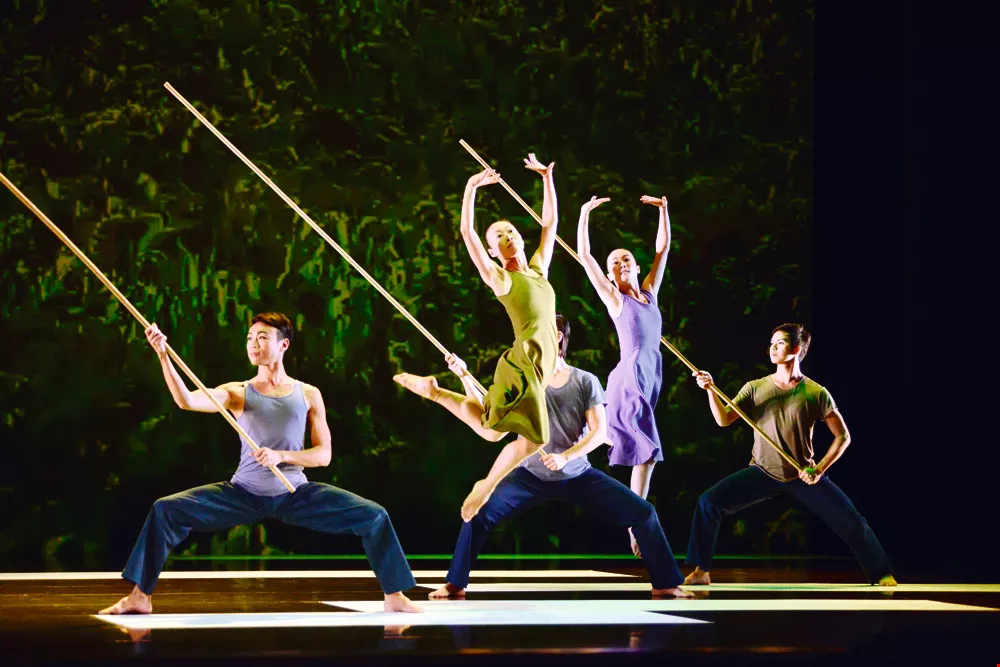
Rice explores the four stages of growing rice to describe the cycles of life and the relationship that people have to the land. From left to right: pollination (photo by Chin Hung-hao), sunlight (photo by Chuang Kung-ju), fire (photo by Chin Hung-hao), and water (photo by Chin Hung-hao).
For Taiwan, Cloud Gate is irreplaceable. Here’s how Jiang Xun, a scholar of aesthetics, puts it: “Cloud Gate has the pulse of the people of its era.”
On December 16, 1978, Cloud Gate debuted Legacy in Chiayi. On the morning of the same day the US government announced it was establishing diplomatic relations with the People’s Republic of China on the mainland. The Taiwanese public grew flustered and angry. That night an emotional audience of 6000 greeted the first work of art devoted to the history of Taiwanese immigration with deafening rounds of applause and shouts of approval. From the choreography that combined power with beauty, from the historical depictions of immigrants crossing the Taiwan Strait, conquering the wilderness, and putting down roots in a new land, from Cheng Da’s plaintive song “I Remember,” the audience left the theater feeling cleansed and uplifted.
What moving and surprising experiences is Cloud Gate, still going strong at 40, offering the world now?
In October of 2011, in a speech at the Chinese University of Hong Kong, Lin said that Cloud Gate had originally planned on performing Legacy for its 40th anniversary, but he worried that its dancers, who had grown up playing video games, wouldn’t be strong enough to handle it. “Legacy is too taxing,” he said. In an immigrant society, one can only survive via great exertion, but today’s dancers don’t need to struggle in that manner.
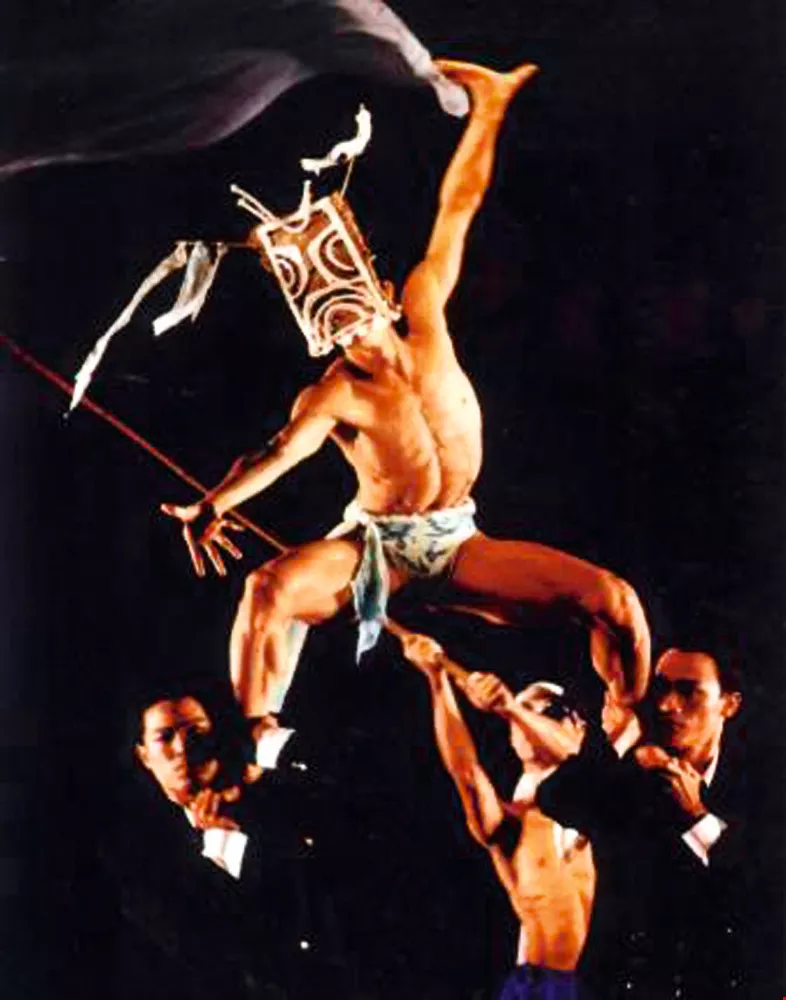
Nine Songs was created for Cloud Gate’s 20th anniversary.
Lin, born in Chiayi in 1947, gets “emotional about rice,” he says. “The topic of rice gets me excited; it’s an essential part of my life.”
“Even after winning many awards, when I confront the challenge of creating a new piece I have to wait nervously for inspiration to strike. And that was especially the case for Rice,” says Lin. One can’t force one’s muse. On the contrary, “She has to find you.”
“It was a beautiful and dangerous journey,” says Lin, comparing the choice of rice as something akin to one’s mother: Nothing and no one is more familiar, but you’re at a loss as for how to actually describe her.
Lin points out that in Rice all of the inspiration comes from Chishang.
Cloud Gate’s videographer Chang Hao-jan spent two years visiting a beautiful rice field that lacked all views of electric lines. He recorded with his camera the changes of the season—the irrigation, the planting of seedlings, the plant growth, the harvest and finally the burning of the fields. Those videos now serve as the background for the dance.
Two-thirds of the songs used in Rice are Hakka songs, both because many Hakka live in Chishang and also because Lin finds Hakka folk songs extremely beautiful.
And the shaking of the rattan strips in the dancers’ hands, which symbolizes the passage of time, was inspired by the dangling strips of fabric used to drive away birds in Chishang’s rice paddies.
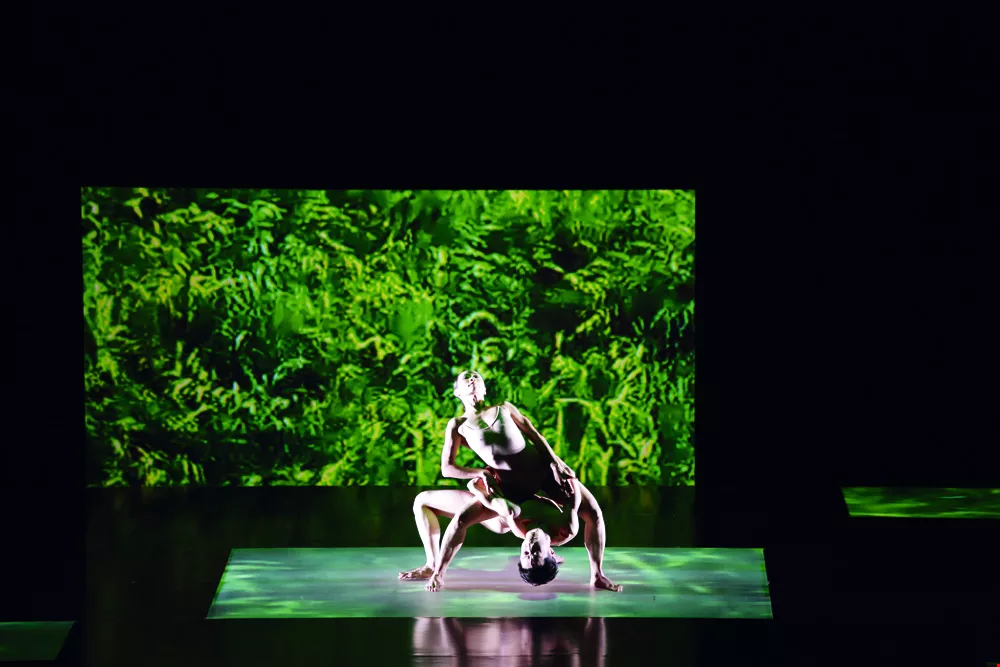
Rice explores the four stages of growing rice to describe the cycles of life and the relationship that people have to the land. From left to right: pollination (photo by Chin Hung-hao), sunlight (photo by Chuang Kung-ju), fire (photo by Chin Hung-hao), and water (photo by Chin Hung-hao).
Rice energizes and evokes deep feelings in Lin. In his work the meaning of rice has steadily grown clearer and more distinct: In Legacy, which dates from the 1970s, Lin captures the movements of planting rice. In Songs of the Wanderers, from the 1990s, three and a half tons of rice is showered onto the stage, as if falling from the sky. The beautiful image leaves people dumbstruck.
Today, in Rice, one can’t find a single grain of rice on stage, but Chishang and its rice are constantly accompanying the dancers.
Back when they performed Legacy, Lin led his dancers to the rock-strewn floodplain of the Xindian River, where they climbed, lay on, and moved boulders and rocks. Recently, as they prepared to perform Rice, Cloud Gate’s dancers had to toil at harvesting rice in Chishang, so as to experience the bent-over postures that come with working the land.
“When your feet are planted in the mud, your body grows relaxed,” says Lin. When they were practicing, the Cloud Gate dancers were constantly focused on their centers of gravity, and they invited Xiong Wei, a tai chi master, and Adam Hsu, a master of “internal” martial arts, to come and teach them. They didn’t study the particular forms of these martial arts disciplines but rather the basic movements, lines and attentiveness that these disciplines foster from the inside out.
Over time Cloud Gate’s dances have cast off their heavy burdens to take a lighter approach. But with regard to Legacy, a classic work that consolidated Cloud Gate’s reputation, Lin insists, “So long as Cloud Gate exists, Legacy will be part of our repertoire.”
In fact, as the only Taiwanese-choreographed work to be recorded by the Dance Notation Bureau in New York, Legacy has already become part of the international modern dance canon.
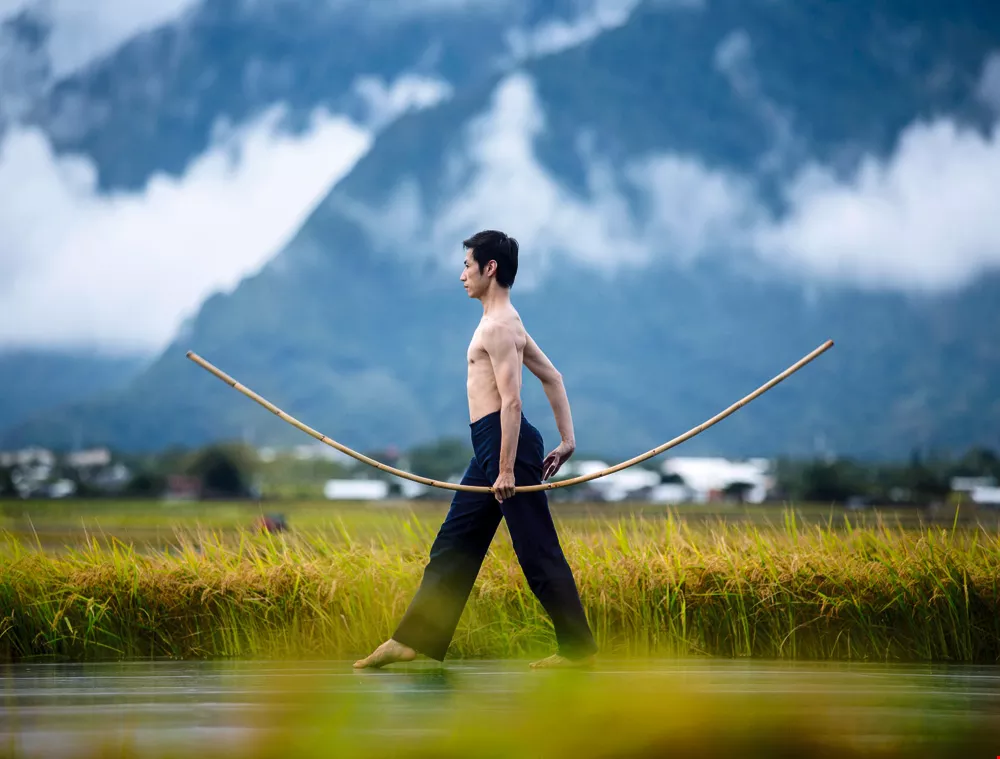
Against a background of forested mountains and white clouds and with fields of golden rice as a stage, Cloud Gate performed Rice at the Chishang Autumn Rice Harvest Arts Festival. The scenes of beauty deeply moved audiences.
“Legacy is a story about people, whereas Rice is a story about nature,” writes Jiang Xun in his essay “Cloud Gate’s Bodies, the Nation’s Stories.” He continues: “Legacy may in fact not be so much a story about a nation as it is a story about the land, or a story about humanity as a whole.”
For Lin Rice is a way of showing respect to the motherland of Taiwan, which has nurtured the growth of Cloud Gate. So as to offer thanks to Chishang’s land and people, in early November 2013 Cloud gate participated in the Chishang Autumn Rice Harvest Arts Festival. With the Central Mountain Range as a backdrop, fields of golden rice as a stage, and a variety of weather conditions—including scorching sunny days and torrential downpours, as well as the clear, cool time after the rain—the Cloud Gate dancers and more than 5000 members of the public experienced a moving and cleansing experience in nature.
“Rice demonstrates a concern for the land. The rice seedlings grow to maturity in 120 days before being harvested. Then the farmers burn what remains in the fields and the stalks decompose to nourish the spring earth. The fields are flooded and the earth is plowed in anticipation of Insects’ Awakening [one of the 24 Solar Terms of the traditional Chinese calendar, beginning around 6 March], when new seedlings are planted.... That’s the way rice is. That’s the way life is.”
After speaking for a while, Lin, confident yet still humble, flushes a bit. He’s embarrassed to be using language to expound on the topic once again. After all, it’s already so perfectly expressed in the choreography of Rice, performance after performance.
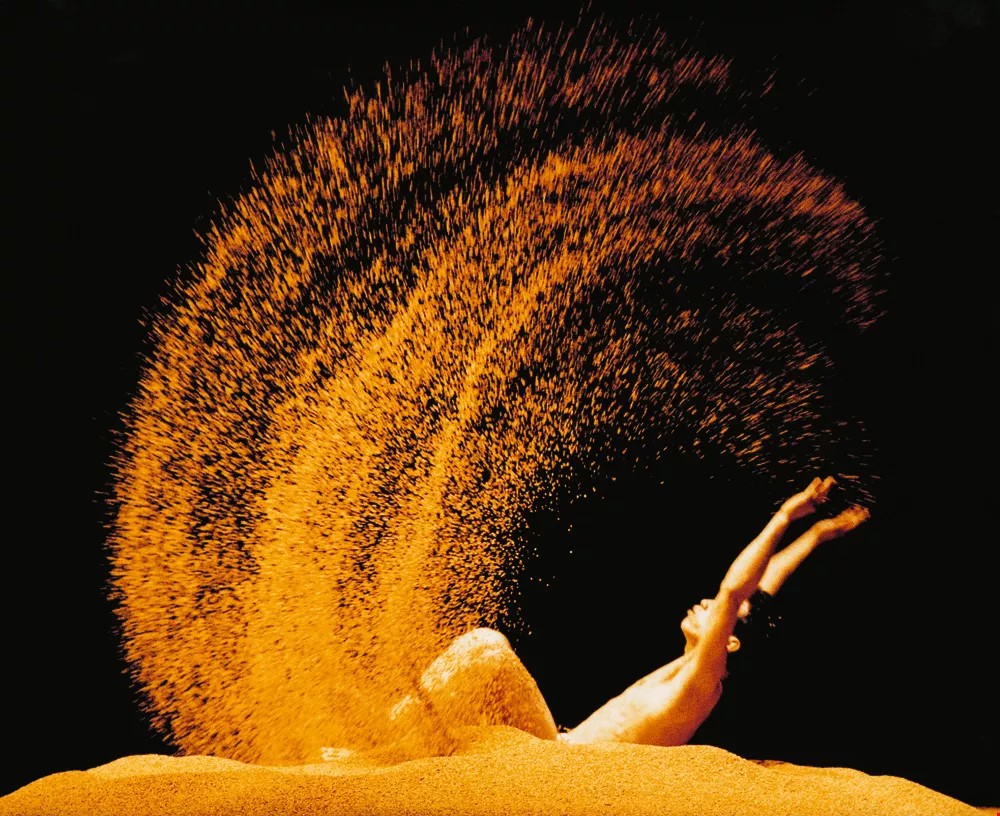
For Songs of the Wanderers, which was inspired by Hermann Hesse’s novel Siddhartha, three and a half tons of rice was sprinkled on stage.
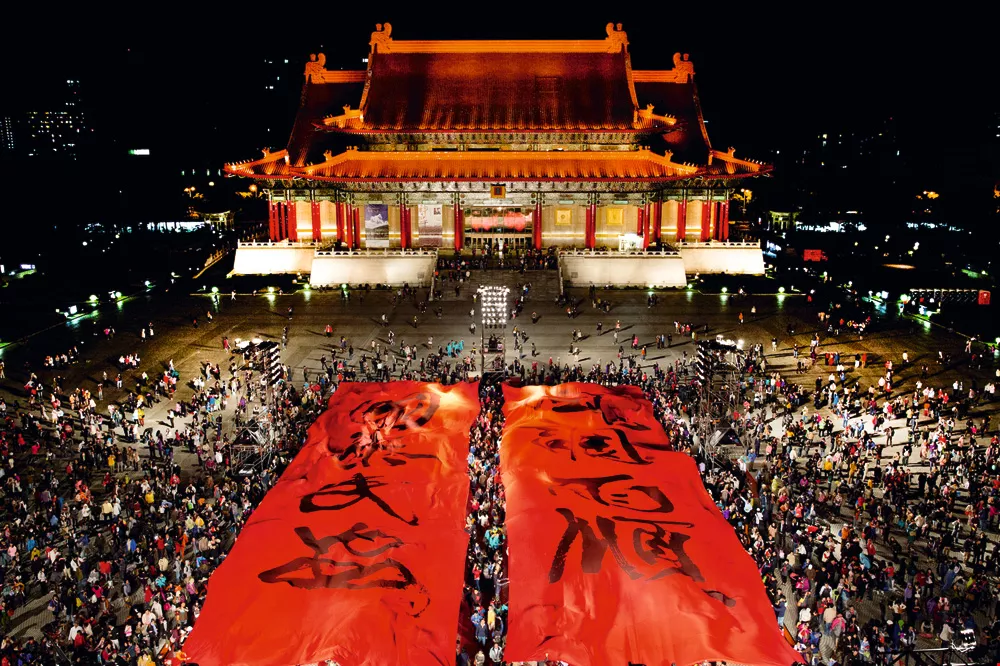
After Rice was performed for the first time, giant calligraphic scrolls by Grace Tong were unfurled in the plaza between the National Theater and National Concert Hall. Written to bless Taiwan, they read: “Mild Winds and Nurturing Rains” and “Peace and Prosperity for the Nation.”

@List.jpg?w=522&h=410&mode=crop&format=webp&quality=80)

@List.jpg?w=522&h=410&mode=crop&format=webp&quality=80)


