Pineapple Cake, King of Edible Gifts
Lavai Yang / photos courtesy of the Taipei Bakery Association / tr. by Jonathan Barnard
September 2011


According to Tourism Bureau statistics, shopping represents 50.6% of consumption by foreign tourists in Taiwan. And the top item that these foreign shoppers purchase is pineapple cakes.
How hot are pineapple cakes? Just look at the most eye-catching positions on the racks near the doors to duty-free shops at the airport, or peer into the bags that tourists carry, and you'll often see gift boxes with images of pineapples and the Chinese characters for "Taiwan," "treasure island," or Taiwanese place names famous for growing pineapples.
The newfound popularity of the pineapple cake has brought an utter change of fortune to this traditional old snack, turning it into a foreign-exchange-earning "little gold ingot." Long-time cake manufacturers and new brands alike are eager for a piece of the action. Pineapple cakes have even surpassed moon cakes in their popularity, with sales growing 16 times in five years, from NT$1.5 billion to NT$25 billion. What exactly has turned the pineapple cake into the king of edible gifts?
At the Vigor Kobo cake shop on Taipei's Chengde Road, busloads of tourists come one after another, and sales of pineapple cakes can be counted by the truckload. The one-day sales record for Vigor Kobo's "original flavor" pineapple cakes stands at 100,000. If you stacked up the NT$400 million worth of pineapple cakes that the store sells in a year, the tower would rise five times as high as Taipei 101.
Pineapple cakes' popularity owes a lot to tourists from mainland China. In contrast to Japanese tourists, who spend most of their money in Taiwan at hotels and restaurants, mainlanders spend about half of their Taiwan dollars shopping. The average mainland tourist spends about NT$1300 on pineapple cakes.
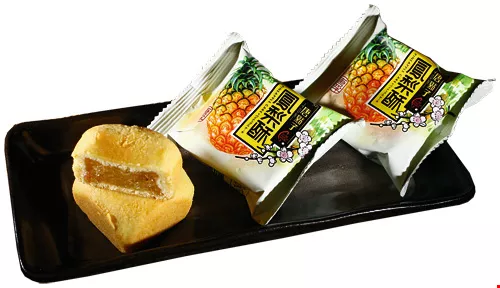
In recent years pineapple cake manufacturers have been continually innovating with flavors. Their molds and packaging also reveal tremendous variation.
"The Taiwanese word for pineapple sounds like 'prosperity arrives,' so it's very auspicious," explains food critic Ann Hu. "Since pineapples symbolize both Taiwan and wealth, it's no wonder they've become so popular."
Pineapple cakes' success is connected to their special characteristics.
First of all, they keep well and are easy to carry. Not especially sweet or moist, they can remain fresh for 15 days without preservatives. "And they're not crumbly either, so you don't have to worry that they'll fall apart if you bump into something," notes Chang Kuo-rong, chairman of the Taipei Bakery Association.
Next, since pineapple cakes are mostly bought as gifts for friends and family, flavor and price are top considerations. Buttery pineapple cakes are sweet without being oily. And they're not particularly expensive, with 12-pack boxes running from NT$300-------600.
Furthermore, the pineapples used to fill these cakes are mostly grown in southern and central Taiwan. The supply is stable, and the crop isn't sensitive to the weather. Tasty, sweet and keeping well, they are well suited to serve as a representative product of Taiwan.
Early on pineapples were one of Taiwan's most important cash crops. During the Japanese era, various new varieties from overseas were introduced, laying the groundwork for the pineapple-processing industry. In 1971, some 4.01 million boxes of canned pineapples were exported. They made an outstanding contribution to earning foreign exchange and fostering prosperity in Taiwan's farming villages.
Later, due to rising costs of production as well as low-cost competition from Southeast Asia, pineapple exports were hit hard. In the 1980s there was a shift from "focusing on processing for exports with domestic sales as secondary" to "focusing on domestic sales of fresh fruit, with exports as secondary." In recent years, thanks to promotions by government agricultural agencies, many new varieties have been introduced for fresh consumption, causing market demand to grow.
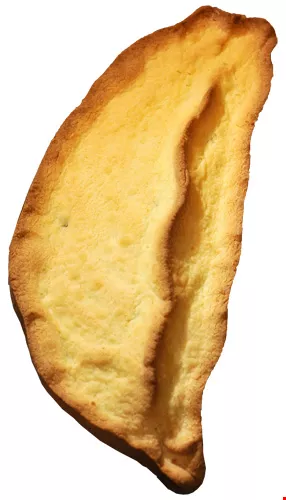
In recent years pineapple cake manufacturers have been continually innovating with flavors. Their molds and packaging also reveal tremendous variation.
In 2006 the Taipei City Government launched the Pineapple Cake Cultural Festival, which has ended up playing an important role in garnering new business opportunities for pineapple cake manufacturers.
The idea for the festival came from the Taipei Bakery Association. Discovering that almost all tourists who come to Taipei purchase pineapple cakes, the TBA decided to vigorously promote the baked product.
The festival offered the participating cake manufacturers potential high-level exposure. Success could make them the talk of the town. The topic for the pineapple festival changes every year, so cake makers always have room for improvement. Last year the theme was flower fillings. This year it's rice fillings. Changing the theme stimulates innovation. As they concoct new flavors, the bakers create new business opportunities.
Konig Foods, the winner of the gold prize for creativity this year, used brown rice for its crust with a filling blended from purple glutinous rice, longan, sweet fermented rice and pineapple. The fragrance of the rice was highlighted, and the cakes were shaped like coins so as to suggest the idea of "ushering in wealth and prosperity."
It's not particularly hard to make pineapple cakes, but what's the secret to making the best tasting ones?
Pineapple cakes have at least a century of history in Taiwan. Early on, made from pineapple paste surrounded by a cake crust, the cakes were truly cake-shaped. But pineapple's sourness and stringy fiber (which easily gets caught in the teeth) gave them a rather coarse mouthfeel. Consequently, the makers began to try out other ingredients. They stumbled on winter melon, which has a water content of 90%.
The fiber of winter melon is finer. Makers first cook it and remove the water, before adding pineapple, sugar, malt and other ingredients. It turned out that simmering the mix of winter melon and pineapple for a long time created the filling that tasted best. It wasn't stringy, wouldn't stick to the teeth, and offered a glistening yellow color, with the fragrance and flavor of pineapple. Overall, it was a big improvement. According to the principles of traditional Chinese herbal medicine, winter melon has a "cool" nature. It helps to dispel heat and is good for the metabolism. Meanwhile, thirst-quenching pineapples promote production of saliva and help with digestion. They're a perfect match.
Nevertheless, with the passage of time, the filling used for pineapple cakes ended up becoming overwhelmingly winter melon with very little pineapple. That was a cause for concern. Via experimentation at the 2006 Pineapple Cake Festival, experts and master bakers were able to determine that pineapple should constitute at least 20% of the filling, and that the water content of the finished product should not exceed 12%. In that way the crust of a pineapple cake remains flaky, and the filling is sweet but not cloying, with a natural fruit aroma. The perfect match of filling and crust melts in the mouth.
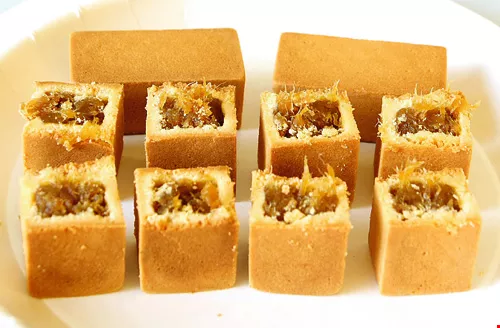
In recent years pineapple cake manufacturers have been continually innovating with flavors. Their molds and packaging also reveal tremendous variation.
Recently, with a growing reverence for authenticity, makers introduced pineapple cakes with a filling that consists almost entirely of pineapple with no winter melon at all. That in turn kicked off a craze for using different varieties of pineapple in the filling.
For instance, Sunny Hills, a Nantou maker of pineapple cakes that was founded in 2009, uses Tainung No. 2 pineapple for its filling. Its sour flavor and coarse texture are its salient features. Sunny Hills' cakes are so popular that group purchasers on the Internet have to wait for three weeks to receive their orders.
Taipei's Ambassador Hotel once analyzed the sweet and sour content of various pineapple fillings and discovered that one with a sourness rating of 61.5% (featuring Pingtung No. 2 and No. 3 with a bit of Tainan Guanmiao No. 17) was ideal-sweet with a mildly sour finish.
Having jumped out of its traditional box, the pineapple cake industry has become very competitive. Innovation is now essential to success.
The filling innovations are most numerous. Manufacturers have added cranberries, saffron, red wine, and longan, among other ingredients. For the crust, they've added whole wheat, flax seeds and wheat germ. As for their shapes, apart from the commonly seen cube-like "little gold ingot," there are also the ancient coin, the island of Taiwan, the ink stone, the gold medal, the dog bone, the mahjong tile and numerous others. These playful designs are quite adorable.
Their packaging shows even more variety. The Mingjian Agricultural Association, for instance, has designed packaging to look like a book. When you open the cover, you behold the story of the Kaiying variety of pineapple used by Mingjian.
Pineapple cakes have gone from being down-home Taiwan treats to high-class gifts. Tourists from Japan, Hong Kong, Macao, Europe and America have all demonstrated their own enthusiasm for the cakes, carrying the fashion for them overseas. Risa Suzuki, who is Japanese, loves pineapple cakes so much that she has come to Taiwan 18 times and has even established a pineapple cake website!
The charms of pineapple cakes simply astound! How many boxes would you like to buy?
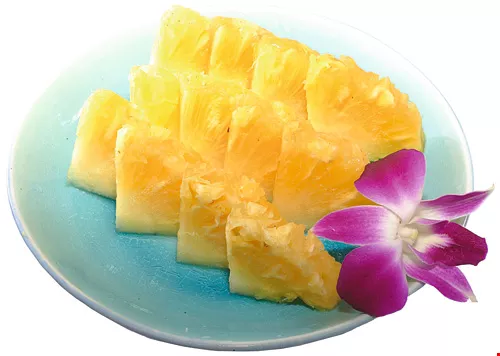
From an early focus on canning pineapples for export, Taiwan's pineapple industry has turned to fresh fruit for the domestic market, developing many new varieties.
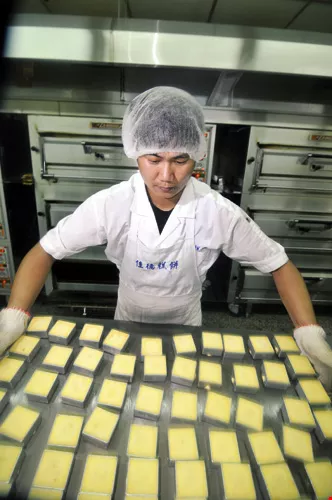
The secret behind good-tasting pineapple cakes is the use of authentic ingredients and a dedication to the particulars of food preparation and baking.
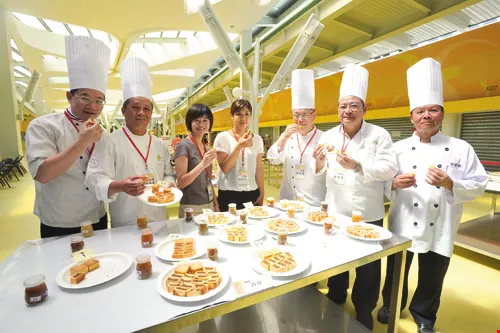
Since the Taipei City Government started up the annual pineapple cake festival, fresh designs and recipes have been devised. We have seen pineapple cakes shaped like Taiwan (lower left) and ancient Chinese coins (center) in addition to the traditional cube-like "little gold ingots." Novel flavorings have included longan and cranberry.
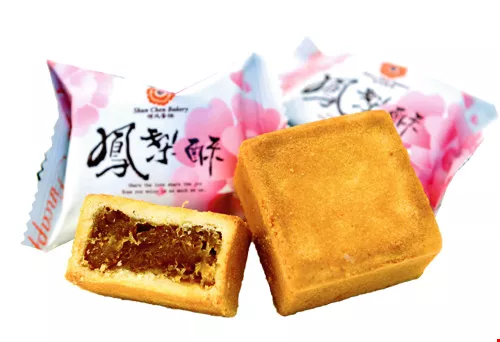
In recent years pineapple cake manufacturers have been continually innovating with flavors. Their molds and packaging also reveal tremendous variation.
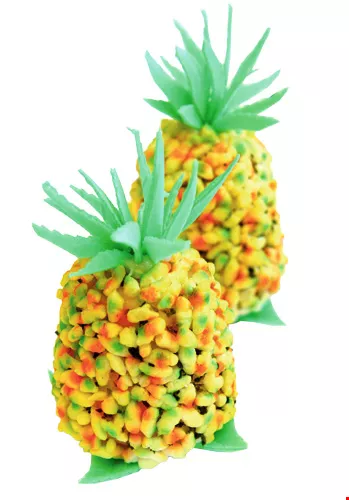
In recent years pineapple cake manufacturers have been continually innovating with flavors. Their molds and packaging also reveal tremendous variation.
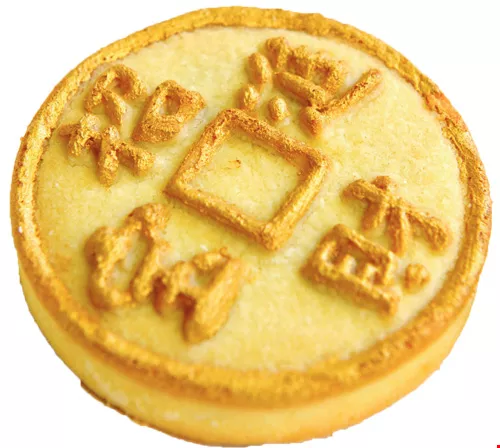
In recent years pineapple cake manufacturers have been continually innovating with flavors. Their molds and packaging also reveal tremendous variation.

@List.jpg?w=522&h=410&mode=crop&format=webp&quality=80)

@List.jpg?w=522&h=410&mode=crop&format=webp&quality=80)

@List.jpg?w=522&h=410&mode=crop&format=webp&quality=80)
@List.jpg?w=522&h=410&mode=crop&format=webp&quality=80)

