A Step in the Right Direction—Taiwan and New Zealand Open Up Trade
Sam Ju / photos Chuang Kung-ju / tr. by Geof Aberhart
January 2015


With China Airlines launching flights between Taipei and the South Island city of Christchurch, Taiwanese travelers to New Zealand now have a new option in addition to Auckland. These flights are but one of the potential benefits of the Agreement between New Zealand and the Separate Customs Territory of Taiwan, Penghu, Kinmen, and Matsu on Economic Cooperation (ANZTEC), in this case the “open skies” agreement therein.
ANZTEC is a trade agreement orchestrated under World Trade Organization structures, and is the first such economic and free trade agreement between the Republic of China and a country that does not formally recognize it. The agreement went into effect on December 1, 2013, commencing moves to remove tariffs on virtually all items of trade between the two nations either immediately or over time.
The agreement also includes sections addressing non-trade areas like film and television co-production, indigenous cooperation, and air transport, earning it a reputation as a “comprehensive” and “high quality” free trade agreement. It is also widely regarded as facilitating Taiwan’s entry to the Trans-Pacific Partnership.
To mark this important step forward in relations between our two nations, Taiwan Panorama reporters visited New Zealand to bring you this special feature on the country, which will be continued in our next two issues.
With the ANZTEC agreement, Taiwan follows in the footsteps of Australia, Singapore, Thailand, Chile, Brunei, mainland China, Malaysia, Hong Kong, and ASEAN in signing a free trade agreement with New Zealand.
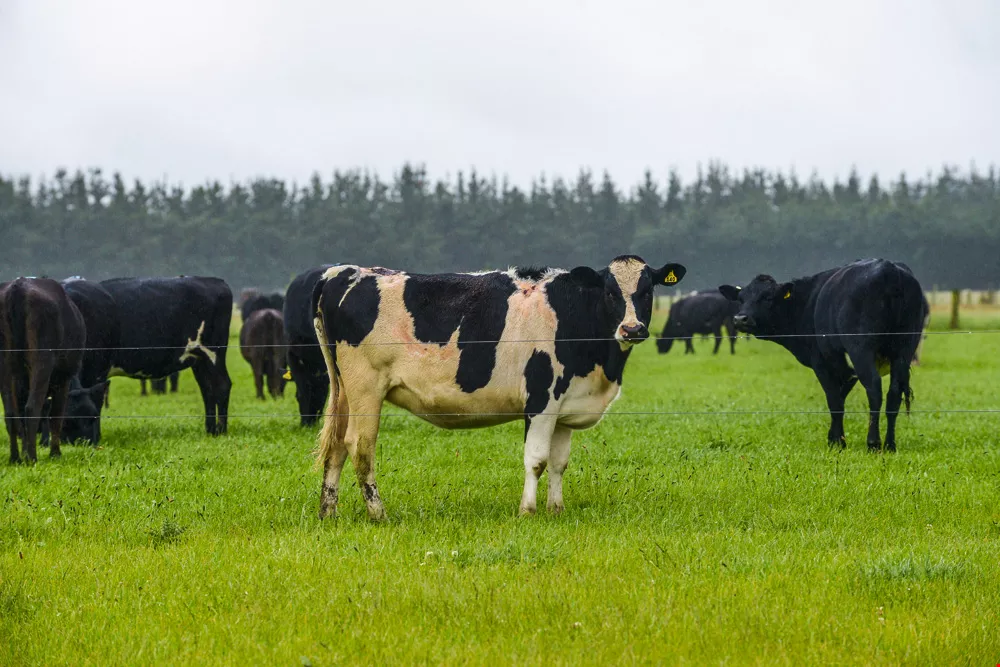
The unspoiled environment and natural purity of its agricultural products have made New Zealand the seventh largest source of agricultural imports into Taiwan.
A year after ANZTEC took effect, statistics from the ROC Ministry of Economic Affairs from between December 2013 and September 2014 show an increase of 24.57% in exports from New Zealand to Taiwan, and of 14.97% in exports from Taiwan to New Zealand compared with the corresponding period one year previously. This shows that both sides are enjoying clear growth in the wake of the agreement.
Taiwan is New Zealand’s tenth largest export market and 13th largest trade partner. While New Zealand’s main exports are agricultural products, overall these products complement Taiwan’s own agricultural products.
New Zealand agricultural products—including milk powder, cheese, butter, mutton, beef, kiwifruit, apples, and cherries—account for a significant amount of the Taiwanese market for such products. Since ANZTEC took effect, tariffs have been reduced to zero on over 8500 such products.Another 479 New Zealand agricultural products will have tariffs eliminated over a period of two to 12 years. However, there are no reductions in tariffs on imports from New Zealand of 11 rice-based products that are critical to Taiwan’s agricultural sector, while other New Zealand products, such as deer velvet and liquid milk, are subject to quotas.
Tariffs are a protective measure, and as such their reduction or elimination may not necessarily be reflected in market prices. However, it can be beneficial to businesses. Export New Zealand executive director Catherine Beard explains that the reduced tariffs can give companies more room for innovation and development: “The money you save can be reinvested in businesses, in innovation, in product R&D, in focusing on how your business can be globally competitive. I think businesses can be globally competitive without subsidies and protection.”
For Taiwan’s part, most of its exports to New Zealand are products like threaded fasteners, hand tools, digital devices, bicycles, steel and building materials. Under ANZTEC, tariffs were removed from more than 7000 Taiwanese products upon the agreement taking effect, while tariffs on 29 industrial products will be reduced over four years.
Experts on both sides estimate that Taiwan stands to save US$13 million in tariffs each year in the early days of the agreement, while New Zealand could save as much as US$75.8 million a year. For those involved in international trade, the benefits of ANZTEC are quite evident.
The New Zealand market is a mature one, and according to Taiwan External Trade Development Council associate researcher Huang Ya-ling, there is significant potential for Taiwanese exporters of items including food, steel, metal parts for hand tools, communications products, bicycles and bike parts, and sporting goods.
In terms of food products, though, it may still be an uphill struggle. Harry Yang, managing director of T-Mark, Auckland’s largest Asian supermarket chain, notes that while New Zealanders may be more confident in food products from Taiwan than in those from mainland China, the market is still limited, and “Kiwis just don’t buy them.” As if to illustrate his point, with rents and operating costs rising, T-Mark had to close down one store and begin focusing more on online sales in 2015.

The unspoiled environment and natural purity of its agricultural products have made New Zealand the seventh largest source of agricultural imports into Taiwan.
ANZTEC also includes provisions for officially recognized audiovisual co-productions in areas like film, TV and video recordings, animations, and digital format productions. Film is the subject of the current push through agencies like Taiwan’s Bureau of Audiovisual and Music Industry Development and the New Zealand Film Commission.
The rules on co-productions do not impose any requirements as to content, but rather just ask that the two parties split funding, casting, and technical and creative involvement at a ratio no greater than 80:20. Proposed co-productions must first gain official approval on both sides, after which they will be accorded all the benefits accorded to domestic films in each territory.
Before making this agreement with Taiwan, New Zealand had already signed co-production agreements with the UK, Australia, Canada, Denmark, France, Germany, India, Ireland, Italy, Singapore, Spain, and South Africa, as well as film-specific ones with mainland China and South Korea.
Mladen Ivancic, head of finance at the New Zealand Film Commission, explains that whereas negotiations are still ongoing regarding a free trade agreement between New Zealand and South Korea, TV co-productions are already agreed upon, while consultations are in progress regarding a TV co-production agreement with mainland China.
With regard to film, since 1988 New Zealand has made a total of 21 films with partner nations, with the UK accounting for the largest number at eight. 2007’s The Tattooist is currently the nation’s only Asian co-production, having been made in cooperation with Singapore.
Over the last two decades, says Ivancic, New Zealand’s Asian population has grown dramatically, and this, along with a continuing positive outlook for Asian economies, has inspired more and more New Zealand directors and producers to look at Asian issues. Hence the New Zealand government is increasingly turning its attention from English-speaking countries to Asia when it comes to audiovisual co-productions.
With regard specifically to potential NZ–Taiwan co-productions, Ivancic says that practically speaking, mid-scale films with budgets of around US$5 million (approx. NT$150 million) would be most appropriate. Currently exchanges between producers and directors from both sides are being arranged through international film festivals in order to build consensus and find potential opportunities.

New Zealand is 7.5 times larger than Taiwan in area, but has only 20% the total population, and its unspoiled beauty has earned it a reputation as a natural paradise. This photo shows the South Island tourist mecca Queenstown.
The aspect of ANZTEC that most showcases both Taiwan and New Zealand’s most unique elements is its addressing exchanges between Taiwan’s Aboriginal tribes and New Zealand’s indigenous Maori people. It includes not only promotion of each side’s indigenous languages and cultures, but also cooperation on commerce, natural resource development, education, human rights, traditional medicine, and agriculture, deepening the links between Taiwanese Aborigines and Maori.
Taiwan Indigenous Television (TITV) and Maori Television are already sister stations and members of the World Indigenous Television Broadcasters Network, further facilitating such exchanges.
TITV is operated by the Indigenous Peoples Cultural Foundation. Foundation chair Chou Hui-min explains that the two stations have already reached agreement and will begin exchanging programs in 2015. The list of programs is already decided, and after being subtitled in English, the Taiwanese shows will be broadcast on Maori Television, helping promote mutual understanding on both sides.
Lungnan Isak Fangas, head of programming for TITV, adds that Maori Television has expressed a particularly strong interest in Taiwanese Aborigines’ culinary and traditional hunting cultures. Furthermore, there is potential for joint productions in the future that will promote exchange of technical skills as well as understanding of the issues that concern each side.
Another important medium for possible cooperation is in the realm of literature. The ROC’s Council of Indigenous Peoples is set to publish an English-language collection of writings from Aboriginal authors, including poetry, short stories, and essays, along with a volume covering major events in Taiwanese Aboriginal literature. The project is headed up by former minister of Aboriginal affairs and current vice-president of the Control Yuan Sun Ta-chuan, and has selected pieces from authors across tribes and generations to present the diversity of Taiwan’s indigenous peoples.
“Getting translated into English is a strategically important thing for Aboriginal authors in the long term,” says Sun; while there are over a dozen volumes of collected Aboriginal literature available in Japanese, the English number is lagging far behind.
Maori literature is particularly flourishing, adds Sun, and through ANZTEC and 2015’s Taipei International Book Fair (scheduled for February 11), we will hopefully be able to see more Chinese translations of Maori authors’ works available in the near future.

Mladen Ivancic, head of finance at the New Zealand Film Commission, says that New Zealand is seeking opportunities for film and television co-productions with Asian nations. In the wake of ANZTEC, New Zealand has gone on to include TV co-production as part of its negotiations over a free trade agreement with South Korea.
“Bringing the World South.” Such is the confident slogan of Christchurch International Airport. Christchurch is the largest city in New Zealand’s South Island, and is the international gateway to the south of the country. And with China Airlines offering flights from Taipei to Christchurch between December 2014 and February 2015, Taiwanese travelers’ interest in the South Island is heating up.
Currently China Airlines is offering 11 flights a week to Christchurch, with three new seasonal flights available thanks to ANZTEC’s “open skies” agreement. Going to Christchurch via the Australian city of Sydney even cuts four hours off travel time when compared with going via Auckland, which is good news for both travelers and cargo.
Scott Callaway, general manager of trade development and marketing for Christchurch International Airport, notes that according to Ministry of Business, Innovation, and Employment statistics, between 2009 and 2013 eight of the ten destinations most visited by Taiwanese travelers were in the South Island.
While the North Island city of Auckland is the most visited destination, the province of Canterbury (in which Christchurch is located) ranks second, with third place going to Queenstown, the first place in the world with a commercial bungee jumping operation. It currently being peak season for tourism in the Southern Hemisphere, Callaway is optimistic that the addition of China Airlines flights will attract even more Taiwanese visitors to the South Island during the upcoming Chinese New Year period.
Christchurch International Airport CEO Malcolm Johns is also emphasizing the value these new flights have for cargo transport, increasing the amount of high-value cargo shipped from the South Island and getting agricultural and perishable goods to Asian markets in less time.
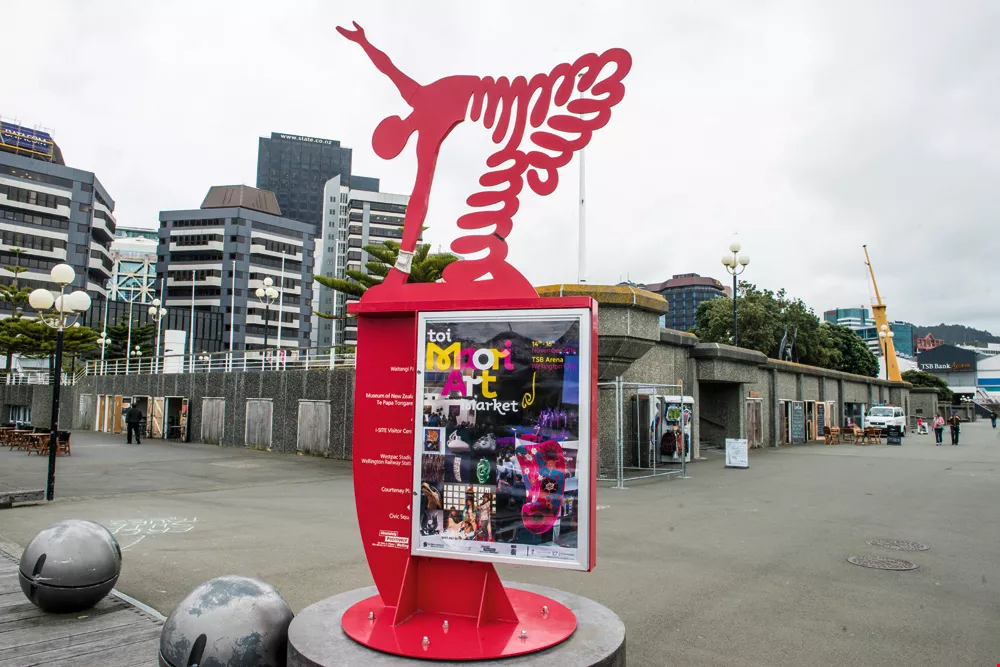
Cultural diversity is one of New Zealand’s greatest social assets, with Maori culture and art often on display.
Negotiations over ANZTEC began in May 2012, with the final agreement signed in July 2013. Elliott Charng, now director-general of the Ministry of Foreign Affairs’ Department of East Asian and Pacific Affairs, who at the time of the negotiations was the ROC’s representative in New Zealand and its chief negotiator, believes that the speed of this process is largely down to the fact that during the negotiations neither side viewed the other as a competitor, but rather as a partner. The goals of both sides were in concord, and both believed that the signing of this agreement would be a win-win situation.
New Zealand chief negotiator Charles Finny, formerly head of the New Zealand Commerce and Industry Office Taipei, calls ANZTEC a model for other nations negotiating free trade agreements for its high quality and comprehensive nature. When completing negotiations with mainland China over a free trade agreement in November 2014, Australia used ANZTEC’s tariff agreements as the model for their demands that the mainland open up its market.
Finny adds that ANZTEC also proves that Taiwan has the capacity to engage in high-quality free trade agreements, further helping in negotiations to join the Trans-Pacific Partnership.
The world’s major economies have all long been engaged in a race to conclude free trade agreements. Credit Suisse has referred to ANZTEC as a “step in the right direction” that is “another milestone for Taiwan” in securing its position on the global economic stage.

Charles Finny, former head of mission with the New Zealand Commerce and Industry Office Taipei, believes that ANZTEC will be an asset to Taiwan as it seeks membership of the Trans-Pacific Partnership.

Export New Zealand executive director Catherine Beard says that food safety is at the core of the reputation of New Zealand’s agricultural products, and the Food Act 2014 aims to maintain the country’s high standards through more stringent monitoring of high-risk businesses.

New Zealand is a sports-mad country, and one often sees cyclists riding past on bicycles from Taiwanese brands like Giant and Merida.
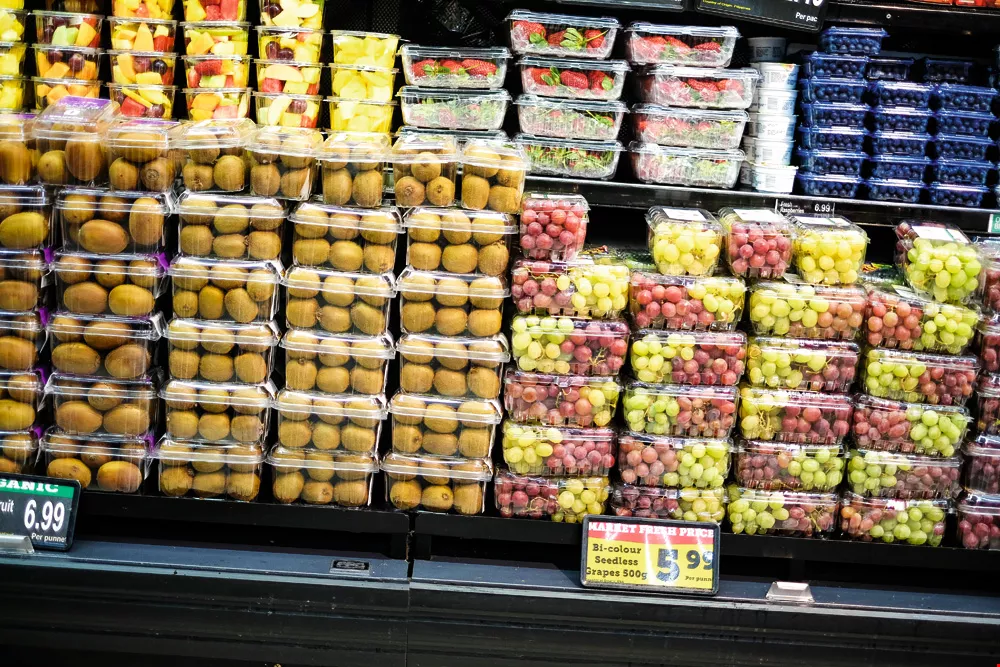
The unspoiled environment and natural purity of its agricultural products have made New Zealand the seventh largest source of agricultural imports into Taiwan.
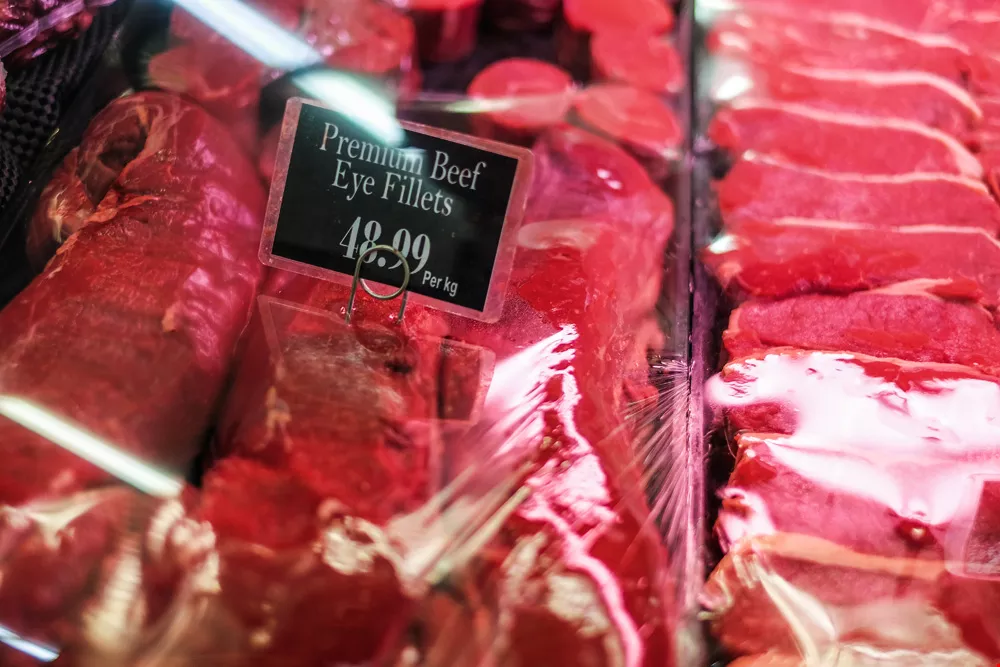
The unspoiled environment and natural purity of its agricultural products have made New Zealand the seventh largest source of agricultural imports into Taiwan.
@List.jpg?w=522&h=410&mode=crop&format=webp&quality=80)

@List.jpg?w=522&h=410&mode=crop&format=webp&quality=80)
@List.jpg?w=522&h=410&mode=crop&format=webp&quality=80)


@List.jpg?w=522&h=410&mode=crop&format=webp&quality=80)
