On the morning of March 9th, the streets of Taipei presented an unusual sight. No honking horns, no traffic jams, no traffic lights. Just a pack of 2300 runners from seven countries, urged on by crowds of spectators on the sidewalks and in the windows above, making their way in the first Taipei Marathon.
Given the city's traffic and pollution problems, some people were skeptical that a marathon could be successfully staged here. Chi Cheng, Secretary-General of the Republic of China Track and Field Association, was unfazed. "Seoul has worse pollution than us, and Tokyo has bad traffic problems, too. If those two cities can hold marathons, why can't Taipei?", she reasoned. In all, the Track and Field Association spent eight years planning the event.
As road-running fever touched all parts of the globe in the 1980s, cities all over the world have begun to hold marathons. Their number includes New York, London, Fukuoka, Seoul, and even Leningrad and Peking. Compared with other events, marathons cover a great deal of ground and are a good way to boost a city's image. Doubts were raised before the first New York Marathon about the runners' safety, but the enthusiastic response of city spectators, cheering and aiding the contestants, quickly put those fears to rest. Inter-city competition is fierce, and some places offer prizes as high as US$70,000 to attract entrants.
The marathon, as many know by now, stems from the Athenian victory near the town by that name over the invading Persians in 490 B.C. Though heavily outnumbered, the Athenians used an enveloping strategy to rout the Persians. When the issue was no longer in doubt, the Greek army sent a runner, Phidippides, to announce the result to an anxious Athens. After covering the 26-odd miles, Phidippides burst through the city gates, shouted "Ours the Victory!", and dropped dead. Later, when the Greeks started the Olympic Games, they featured the marathon as an event, with the 26 miles and 385 yards run by Phidippides used as the standard distance.
In Taiwan, marathons and long-distance races have been dominated by aborigines. In 1960, Wutai's Tu Pao-lu, 150 centimeters tall (4'11") and weighing 40 kgs (98 1bs), won the marathon and the 10,000-meter run at the Taiwan Games, earning himself the title of "The Abebe Bikila of Taiwan," after the Ethiopian runner who won marathons at the Rome and Tokyo Olympics.
At the time, Tu was only 18 and had never left Wutai, let alone known what a track meet was. His time of 2 hours and 40 minutes may seem a bit slow to us now, but Tu "trained with flour bags on his back and came to the meet with a sweet potato in hand." Many other outstanding aboriginal runners followed Tu in rising to prominence.
Marathons, in Taiwan as in other places, were part of the exercise fever of the 1970s. The Track and Field Association began to look for prospects with the lanky frames and driven personalities appropriate for long distance running. Two marathon events were established along beautiful mountain and seashore courses in northern and eastern Taiwan.
Besides enormous stamina, the marathon demands considerable fighting spirit, which may partly explain why many of the best marathoners are older than other athletes. The world record holder is 38, and the holder of the ROC record is a rather unyouthful 28. Statistics show that the peak years for a marathoner are between 25 and 35.
Other factors may be even more important than stamina. Running a fast marathon demands experience, which means knowledge of road conditions, a proper diet, when to drink how much in the course of a race, and how to properly pace oneself. Mistakes as little as one too many cups of water and ill-fitting new shoes have been known to severely throw off one's performance.
Replenishment of body fluids is an important part of the marathon. Intense physical activity causes the body to lose a considerable amount of moisture and blood sugar, and runners have been known to lose 2-4 kgs (4-9 1bs) after finishing the course. Water is provided at stops every five kilometers, with wet sponges available every ten kilometers. In an hour of exercise, the body can burn up 600-800 cc of liquid for every 1000 cc ingested, with the remainder staying in the digestive system. Too much water can do more harm than good, which is one reason why runners' stomachs suddenly often ache in the course of a race.
Marathons last at least two hours, which means that runners must carefully pace themselves, an art which comes only with experience. Should one run 400 meters at a brisk 45-second clip instead of the more leisurely 52 seconds as prescribed by the coach, he or she may accumulate an "oxygen debt." Such over-pacing can produce cramps and sudden losses of fluid and breath, a frightening experience for any runner.
Yet regardless of how skillfully runners handle the problems of drinking and pacing, at about the 20-mile mark all encounter the phenomenon known as "crashing through the wall." At that point, the body's supply of blood sugar is nearly exhausted and breathing becomes much more difficult. Some call it "God's test of your body and spirit," when each step feels like climbing a steep mountain. Only those who have personally run a marathon can appreciate the remark of runner who said, "You wish a car would come and run you over."
What comes to mind while running 26 miles and 385 yards? P'u Chung-ch'iang, who set a world record for his age group in the New York Marathon, reportedly likes to ponder complicated mathematical problems. Others prefer to think about home work or music. Kinmen standout Hsu Chi-sheng wears the characters for Kinmen every time he races and says he hears sup porters from home cheering him on.
Research has shown that Asians may operate at a disadvantage in the marathon. Runners from the Orient average 2.2-2.3 meters a stride, with those from other areas loping at 2.7-2.8 meters with each step. The Japanese have made significant progress in conquering this obstacle, placing nine runners in the world's top 50 marathoners, but Chinese competitors still have a long road ahead. The national record of 2 hours and 18 minutes trails the world mark by 11 minutes, which translates roughly into a long 3000 meters. Tu Pao-lu's son, also a marathoner, admits that the gap might be a bit too big for his generation to close completely, but then there is always hope for the future.
[Picture Caption]
The world of the marathon knows no boundaries.
(From the Min Sheng Pao.)
March 9th found Jenai Road mobbed with runners.
Tu Pao-lu now works as a custodian at a Pingtung junior high school. He may be heavier, but still heads most any pack of runners.
Water along the way is a critical part of long-distance running. (Photo by Vincent Chang.)
Loss of fluids can sometimes put a runner on a stretcher.
See you next year! (Photo by Vincent Chang.)
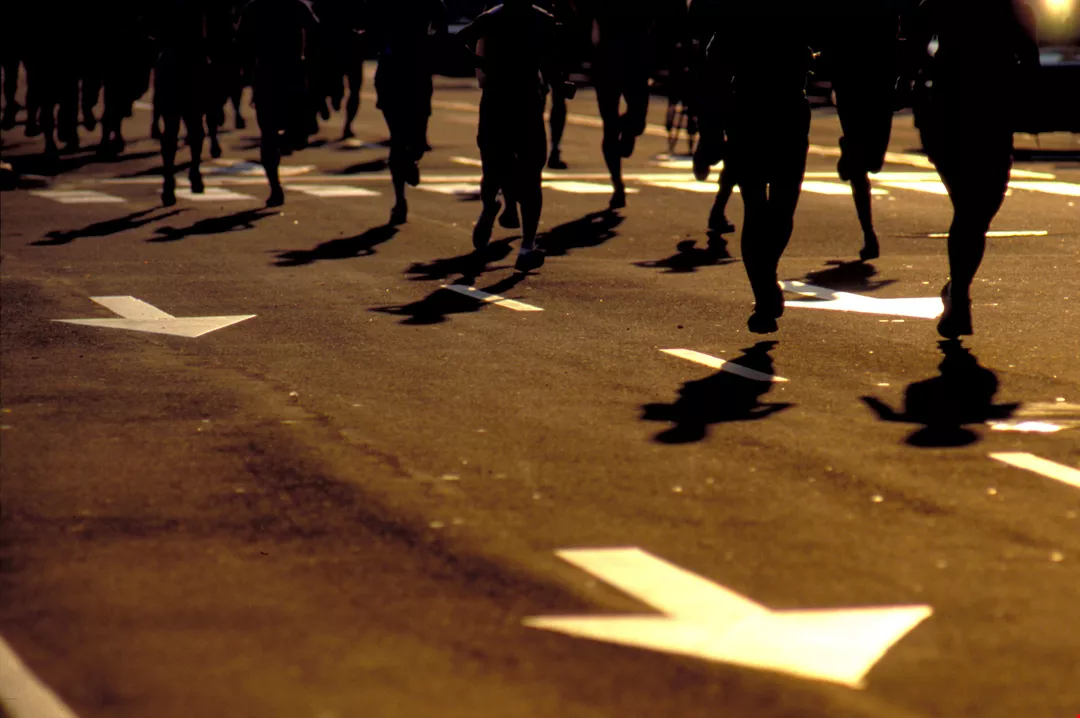
The world of the marathon knows no boundaries.
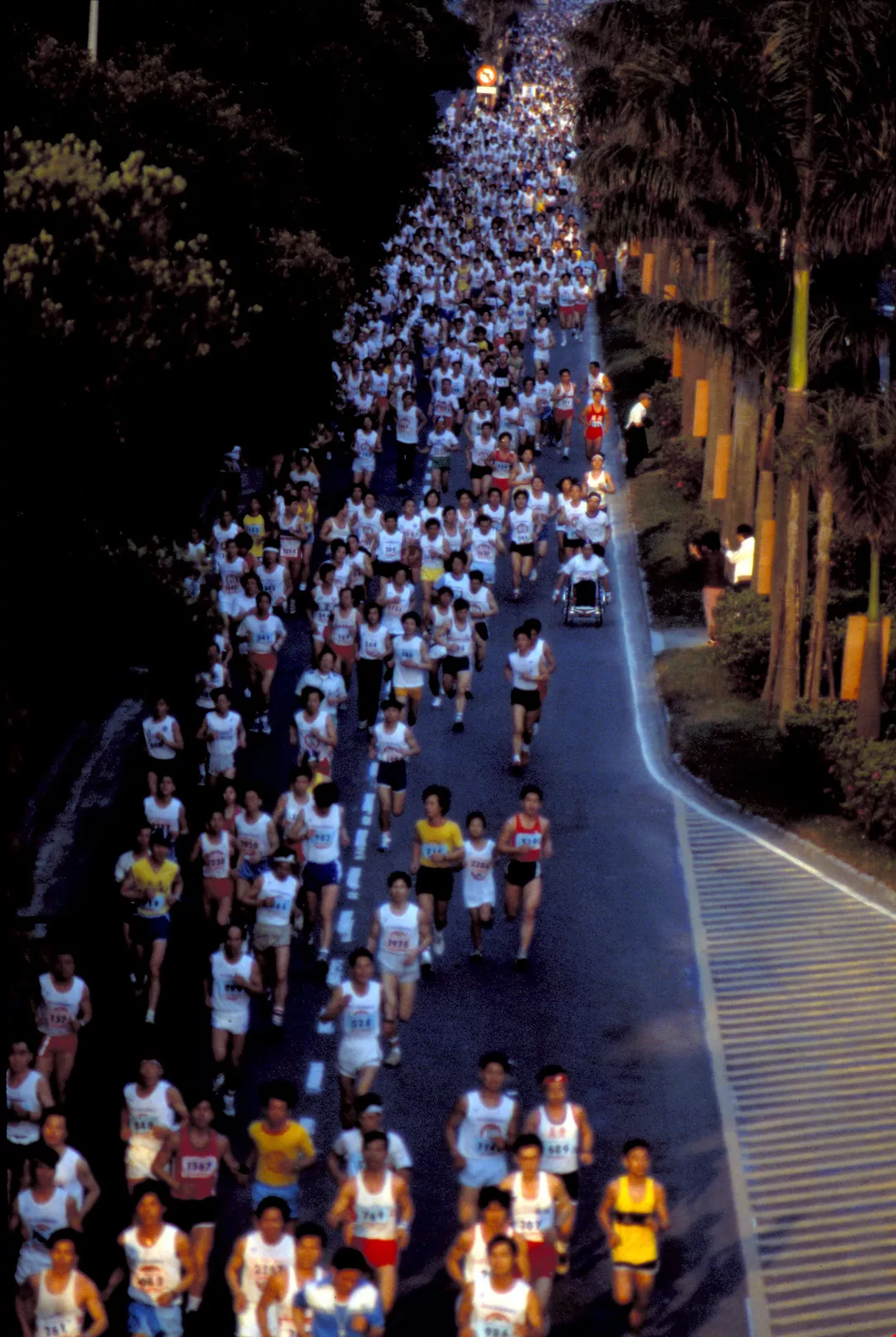
March 9th found Jenai Road mobbed with runners.
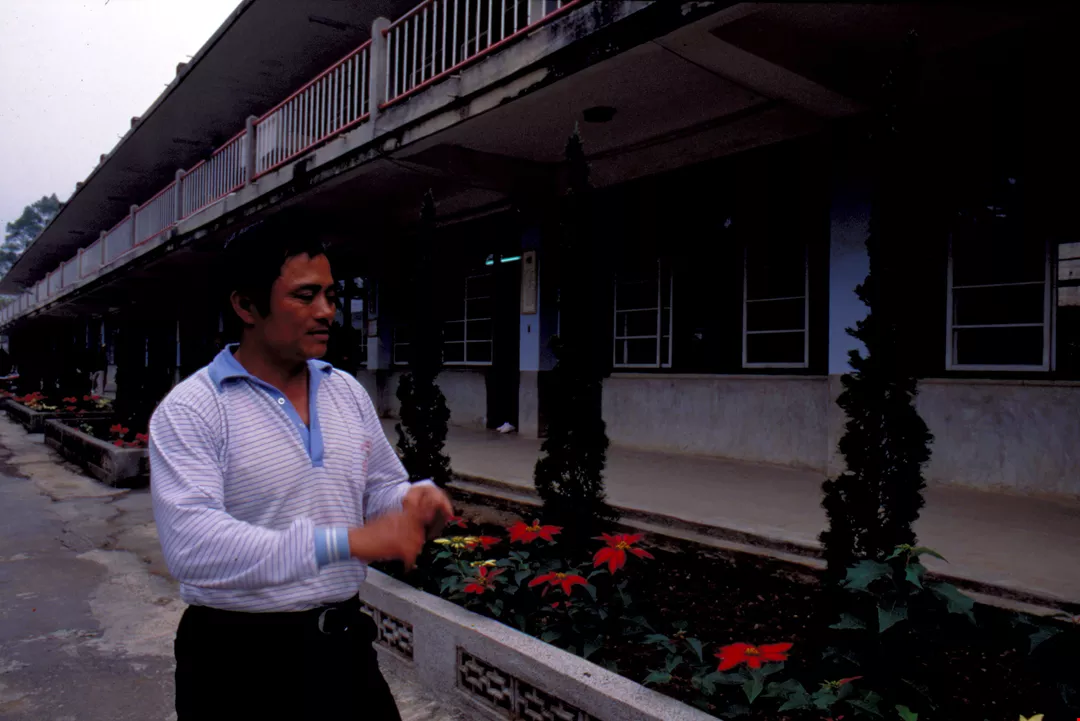
Tu Pao-lu now works as a custodian at a Pingtung junior high school. He may be heavier, but still heads most any pack of runners.



@List.jpg?w=522&h=410&mode=crop&format=webp&quality=80)

@List.jpg?w=522&h=410&mode=crop&format=webp&quality=80)


@List.jpg?w=522&h=410&mode=crop&format=webp&quality=80)

@List.jpg?w=522&h=410&mode=crop&format=webp&quality=80)