

After crossing the considerable distance to come here, Malaysians who study at a college or university in Taiwan also have to face the fact that academic degrees from Taiwan aren't recognized by the Malaysian government. (photo taken at Foom-Yew Middle School in Malaysia)
Chinese Malaysian alumni of Taiwan colleges and universities have all at one time or another been the "overseas Chinese students from Malaysia" in our midst. Besides crossing the considerable distance that separates Malaysia from Taiwan, they have also had to overcome the challenge that academic degrees from Taiwan are not recognized by the Malaysian government. More than 30,000 Chinese Malaysians have studied in Taiwan over the past 30 years. Why did they take this circutious route to higher study? And will their future course prove smoother going?
The most practical consideration behind their coming here is the fact that tuition has always been much lower in Taiwan than in Europe or North America and affordable for ordinary families. Between 1954 and 1963, as part of its effort to prevent the spread of Communism in Asia, the United States encouraged overseas Chinese to study in Taiwan and offered each student a stipend of NT$20,000 a year. That was a huge figure at the time, and many colleges and universities fought to obtain overseas students. The revenue they generated was used to put up new dormitories and classroom buildings and also helped to pay many professors' salaries.
Final Destination for Chinese-Language Education: Even after American aid stopped, a government program to encourage "overseas Chinese to return to the homeland for study" has continued to provide overseas Chinese students considerable support, such as scholarships, work/study grants and special allowances to students from low-income families. Malaysia and Hong Kong have always accounted the bulk of overseas Chinese students in Taiwan. In recent years, about 1,000 Chinese Malaysians have studied at colleges or universities here each year.
Viewed more closely, studying at a college or university in Taiwan can be seen as a logical extension of Chinese-language education in Malaysia. If it weren't for the special conditions of Chinese-language education there, tens of thousands of Chinese-Malaysian youngsters would never have come all the way here during the past 30 years to "grind their ink stones beneath the same window," as the ancient Chinese phrase puts it.
Even though Malaysia is the last country in Southeast Asia to maintain and preserve Chinese-language education, the system stops at the high school level, applications to establish a Chinese-language university having been turned down repeatedly. As a result, the universities and colleges of Taiwan along with Nanyang University in Singapore became the logical extension of this system, and during the 1980s, after Nanyang University was closed, students who wanted to complete a full 16 years of Chinese-language education had little choice but to come to Taiwan.
Angeline Chew, who runs her own company and says she has learned a great deal from Taiwan businessmen, recalls that when she was in high school they read about the First Emperor of the Ch'in dynasty in Malay and she learned that he built the Great Wall, but she knew practically nothing else about Chinese history and geography. It wasn't until she came to Taiwan that she realized she was a Chinese. Desmond H.C. Teh, who is manager of a travel agency and married a younger woman from Taiwan in the same department as his at college, remembers that he saw a picture of Sun Yat-sen hanging on the wall in his father's office when he was a boy and didn't recognize it--he thought it was an ancestor. It was only after he came to study in Taiwan that he realized who it was.
Will the Route Be Cut Off? A couple of years ago, however, some unexpected variables cropped up on the path to studying in Taiwan, creating a "college entrance crisis" of sorts for overseas Chinese students. The government's policy on overseas Chinese students was called into question by members of the opposition party in the Legislative Yuan, and students at National Taiwan University and National Chiao Tung University passed out flyers protesting that overseas Chinese students had taken places that would otherwise have gone to students from Taiwan. "If you want to get into National Taiwan University," they asked sarcastically, "do you have to take the orientation program for overseas Chinese students first?"
These dissenting views caused a considerable commotion among Chinese-Malaysian students in Taiwan. The Malaysian Alumni Association of Taiwan Universities and Colleges held a series of seminars on the issue in 1989 and compiled a collection of essays called Thirty Years of Studying in Taiwan that provided a retrospective of the past with a look ahead into the future. Older Chinese Malaysians were especially grateful for the care and attention they had received and insisted that "the road of study in Taiwan must not be cut off."
"We were welcomed with open arms back when times were tough, but now that Taiwan's well off, they're shutting the door. Doesn't that mean they're happy to share hard times with us but not the good ones?" David P.L. Yong asks with a sigh, expressing the heartfelt feelings of many.
The times are changing. In fact, even without the backlash, the number of students from Malaysia in Taiwan has dropped by 30 percent during the past two years. The main reason is the rising cost of living, which has increased the financial burden. In addition, more and more colleges in Malaysia are allowing students to earn a degree by studying in Europe, North America or Japan their junior and senior years. Mainland China began recruiting students from Malaysia last year, and the number of them studying in Taiwan has inevitably declined. Given restrictions and limitations of our own making, will there come a day when the term "Chinese-Malaysian student in Taiwan" has become a thing of the past?
How to Repair the Road: Su Cheng-fu, director of the Overseas Chinese Students Guidance Office at the Overseas Chinese Affairs Commission, says that the commission and the Ministry of Education have made some policy adjustments in response to people's concern. The application criteria were originally aimed mainly at graduates of independent high schools, but starting with the 1992 school year, students from public Chinese-language high schools will be able to apply to enter the overseas Chinese university preparatory course as well. As for the controversial issue of "taking away spaces," beginning with the 1992 school year, overseas Chinese students will be distributed among universities around the island instead of concentrated in a few highly sought-after departments in major universities in the north, such as the medicine and chemical engineering departments at National Taiwan University, as they have been in the past. At the same time, with a view to future employment needs, the Overseas Chinese Students Guidance Office is carrying out a graduate manpower survey to set up a manpower bank for the reference of local employers and to provide consultation to individuals starting up businesses of their own.
The Ministry of Education has also announced that a new university will be set up in Puli in Nan tou County to help solve the problem of overseas Chinese students studying in Taiwan. During the initial period, it plans to have a student body of 10,000, divided evenly between overseas Chinese and local students, to facilitate greater exchange.
"The Chinese community in Malaysia really wants to have extended Chinese-language education overseas, to force sprouts from cracks in the stone," Kuo Leng-sheng, a Taiwan businessmen who has lived in Malaysia for many years, says with feeling. He hopes that the policy on overseas Chinese students will continue, and that Taiwan will make its economic experience available to overseas students and provide them with the training they need to return to their homelands and put what they have learned to work.
Not going into the question of whether it's due to the economic stimulus brought about recently by Taiwan businessmen in Malaysia or to the affection of a more traditional generation for a Chinese-language education, Chinese Malaysians hope they will continue to travel the route to study in Taiwan for some time to come.
[Picture Caption]
After crossing the considerable distance to come here, Malaysians who study at a college or university in Taiwan also have to face the fact that academic degrees from Taiwan aren't recognized by the Malaysian government. (photo taken at Foom-Yew Middle School in Malaysia)
About 1,000 Chinese Malaysians come to Taiwan to study at a college or university each year. Most of them enrol in the university preparatory program for overseas Chinese first.
Taking a break at during a course in the preparatory program. Squeezed from both sides, the number of Malaysians studying in Taiwan has dropped by 30 percent. Is the path of studying in Taiwan about to be cut off?
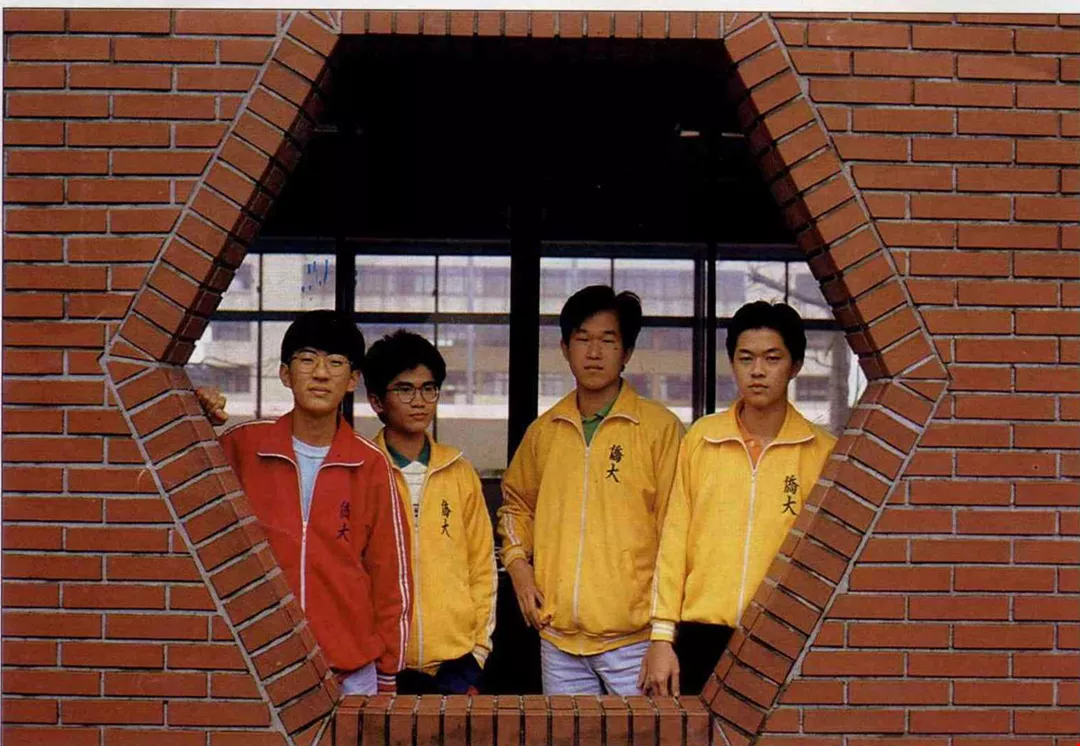
About 1,000 Chinese Malaysians come to Taiwan to study at a college or university each year. Most of them enrol in the university preparatory program for overseas Chinese first.
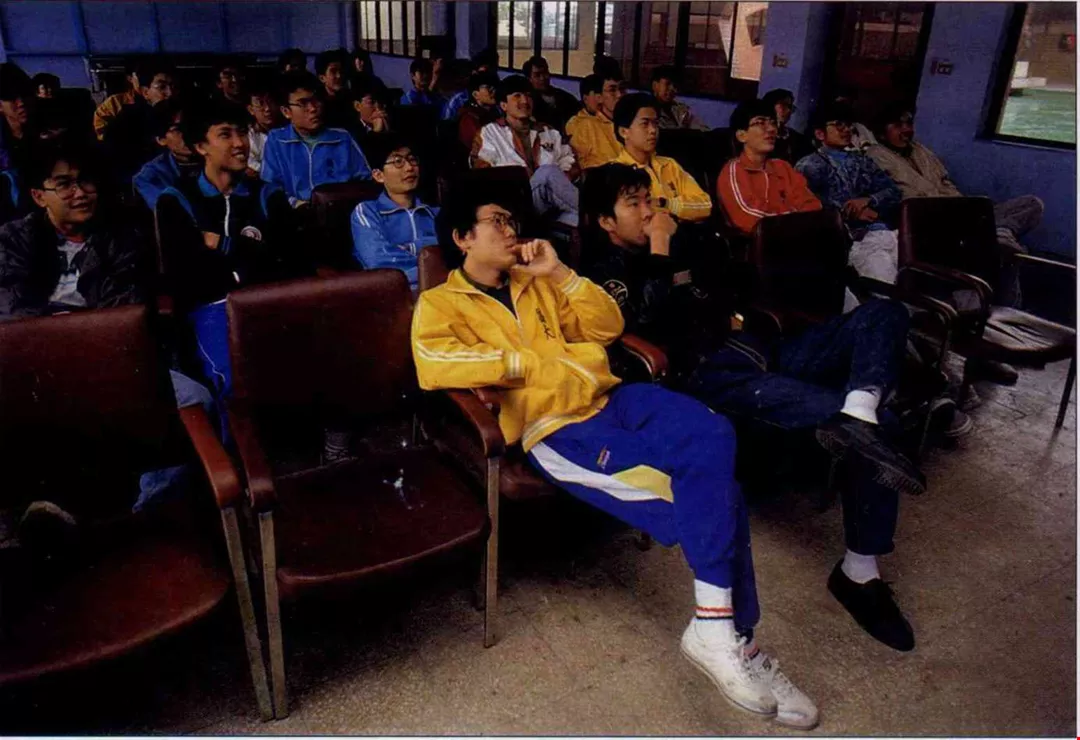
Taking a break at during a course in the preparatory program. Squeezed from both sides, the number of Malaysians studying in Taiwan has dropped by 30 percent. Is the path of studying in Taiwan about to be cut off?
@List.jpg?w=522&h=410&mode=crop&format=webp&quality=80)

@List.jpg?w=522&h=410&mode=crop&format=webp&quality=80)


@List.jpg?w=522&h=410&mode=crop&format=webp&quality=80)

@List.jpg?w=522&h=410&mode=crop&format=webp&quality=80)
