When Hollywood Comes to Taiwan
Teng Sue-feng / photos Hsueh Chi-kuang / tr. by Christopher MacDonald
July 1999


Star Wars: Episode I--The Phantom Menace is this year's most-hyped movie. Fans begin lining up for tickets outside the Chinese Theater early every morning.
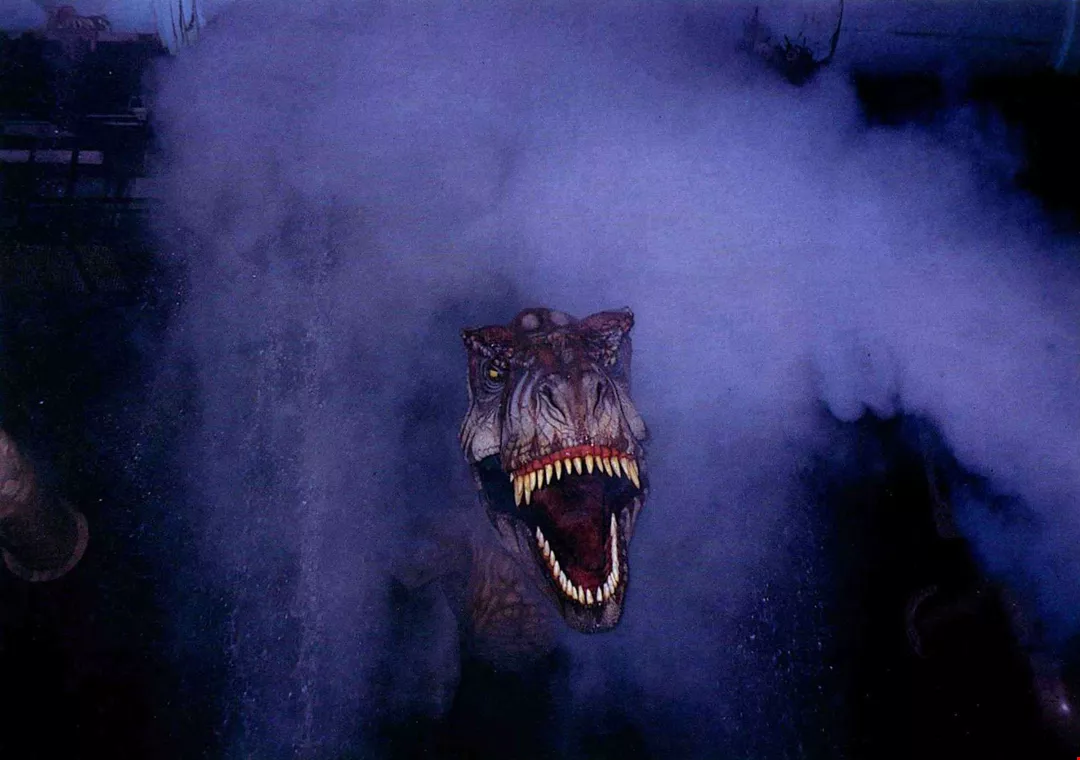
The success of Hollywood's commercial machinery can be seen in the popularity of the Universal Studios theme park, especially since the hit film Jurassic Park. Visitors happily spend their last dollar for another chance to be given a fright.
When Hollywood selects Taiwan as the location for the world premiere of a new film, do we celebrate this as a boon for consumers, or is it the death-knell for the local movie industry? Taiwan audiences have more and more time on their hands, and leisure spending appears to be rising. But can the domestic entertainment industry cash in on that potential? Instead of resisting Hollywood, doesn't it make more sense to study how Hollywood manages to earn money everywhere around the globe?
How close is the relationship between Hollywood and Taiwan?
For more than ten years Taiwan has been one of the US film industry's top 15 revenue-earning regions. Every year, Hollywood-made movies account for around 65% of box office earnings in Taiwan, and the situation doesn't look likely to change any time soon.
In 1997 for example, of the 227 foreign films on release in Taiwan, one third (72 films) were released by the Taiwan branches of Hollywood companies, yet they bagged a 76% share of total box office.
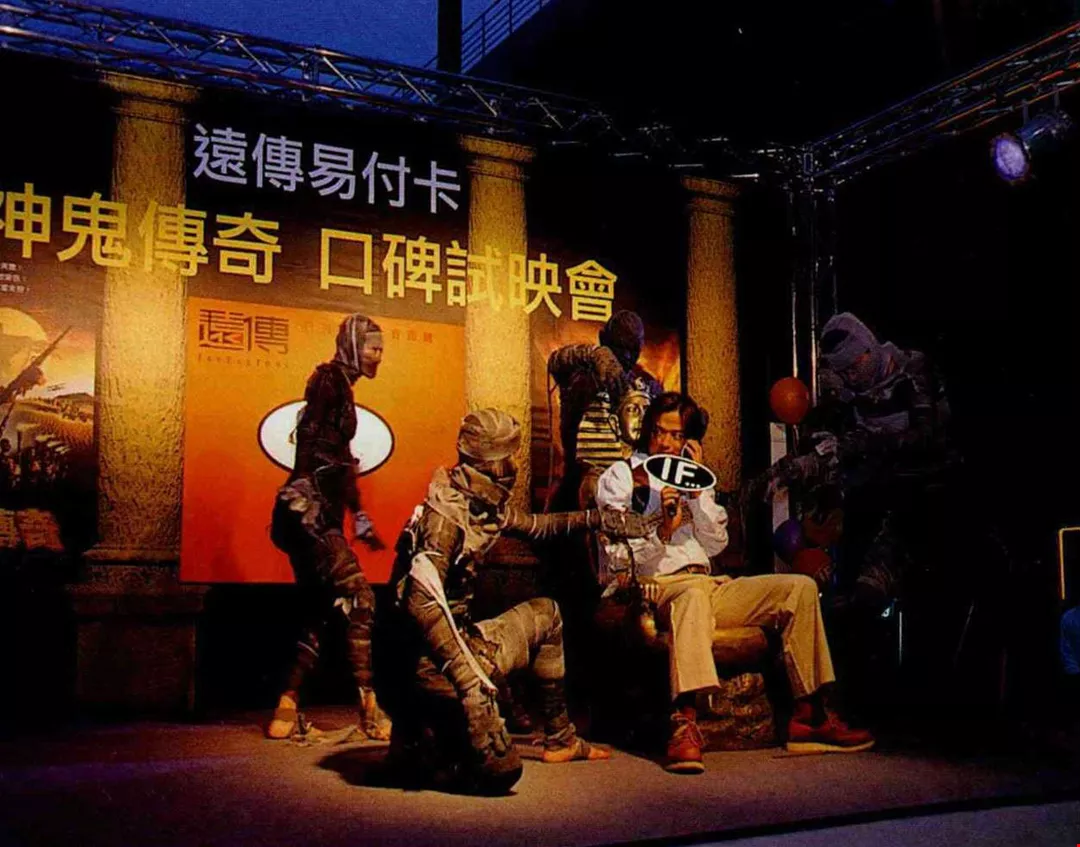
The amount of Western films that are released, and the length of time they take to produce, gives Taiwan distributors ample time to find corporate co-sponsors. The premiere for The Mummy at Warner Village in Taipei, held in conjunction with a mobile phone company, helped raise the sponsor's profile at the same time as creating a good launch f or the film.
Spend money to make moneyHow is that Hollywood movies do so well? If a film fills theaters, does that make it a good movie? According to the Motion Picture Association of America, in 1997 the big studios spent an average of US$22 million per film on prints, advertising and marketing, with marketing expenditure up by 12% on the previous year.
In the kingdom of movies, where around 400 new films are made every year, it's hard to attract an audience if you don't promote the product. The 1996 sci-fi film ID4 was typical of the kind of film for which "the marketing was bigger than the picture." Production costs were US$70 million, mid-range by Hollywood standards, and the film itself wasn't overly original: aliens attack planet Earth, White House destroyed, heroic US president helps save the world. Without a big-name cast, and having to go head to head against blockbusters like Mission: Impossible and Twister, the producers of the film began running previews in cinemas a full six months ahead of release, captivating audiences with the sight of the White House being blown up. When the Atlanta Olympics were launched in July of that year, ID4's makers bought an enormously expensive advertising slot on the electronic screen above the main stadium to advertise the film. The sight of the White House getting destroyed above tens of thousands of spectators caused a sensation.
The publicity stunts and box office successes of ID4 in the US were repeated around the world. As anticipated, the film became the biggest money-earner in Taiwan that year, grossing NT$180 million.
Judging from the readiness of film fans in America to stand in line for hours to get a ticket for the premiere, this year's biggest marketing success is of course Star Wars: Episode I-The Phantom Menace.
In May, Newsweek magazine did a cover story on The Phantom Menace, analyzing director George Lucas's exhaustive marketing strategy in the run-up to the movie's launch. This included his meticulous orchestration of media exposure to prevent scheduling clashes between coverage in different magazines, and a mass of merchandising agreements for products such as Lego, electronic games and bicycle helmets, along with fast-food chain tie-ins. This meant huge royalties for Lucas, while also whipping Star Wars fans into a frenzy of anticipation. February's Vanity Fair ran a picture of the film's cast on its cover, with the result that circulation soared, and it became the magazine's fifth best-selling issue in its history.
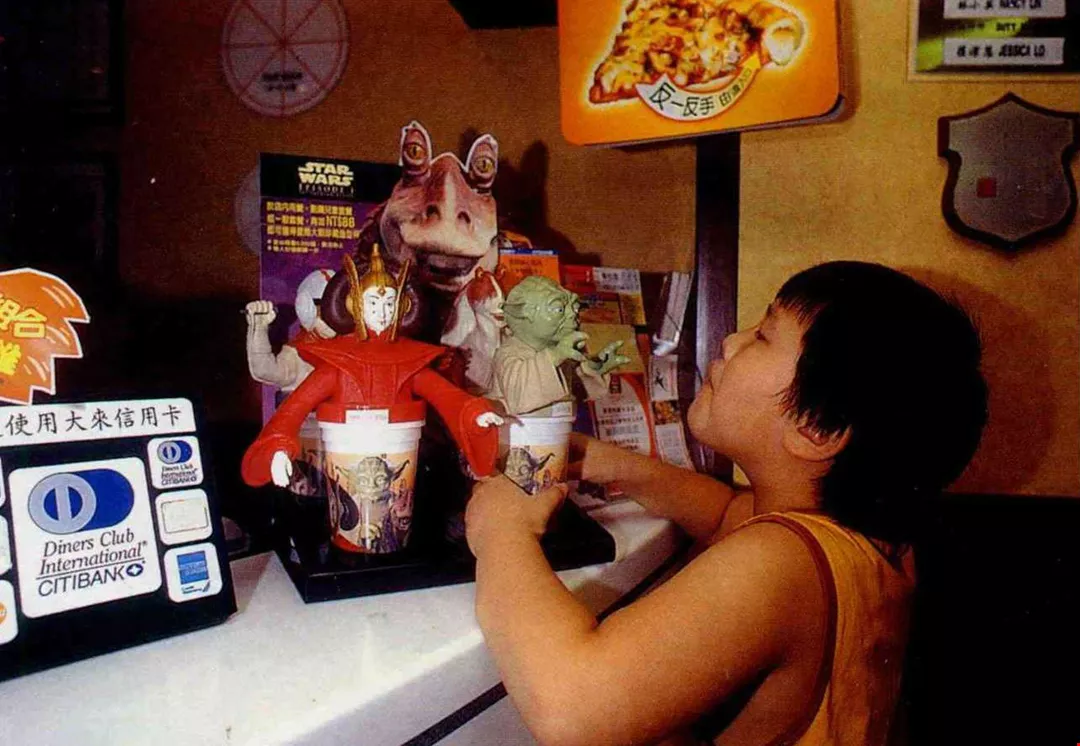
Hollywood's film industry, from the studios through to the merchandising operations, video suppliers and cable TV distributors, has great confidence in the spending power of Taiwan consumers.
Marketing momentumNewsweek film critic David Ansen asked with amazement: Where on earth does this myth about Stars Wars come from? Looking at the film on its own merits, Ansen concluded that Lucas's directing skills had gone rusty after 22 years. The psychology of the main character Anakin Skywalker's defection to the Dark Side is never adequately explained, writes Ansen, and the whole plot lacks tautness. In his view, the film is a tremendous disappointment.
But bad reviews couldn't shoot down The Phantom Menace, which seemed to be wearing a "critic-proof vest." Newsweek readers wrote to the magazine in droves to protest, saying that reviews would have absolutely no effect on them and that the film was still a "must-see."
Star Wars is perhaps in a different league when it comes to marketing, but its example shows that publicity is no less important than the film itself.
Here in Taiwan, there is virtually no time-lag between the local film market and the US. More and more evidence shows that if a film does well in the US, it will do well in Taiwan too.
Referring to the recent Warner Bros. release The Matrix, Hsiung Chia-chen, the company's Taiwan marketing manager says that "marketing still plays a very important role," even for a "major movie" with amazing visual effects like this one. The company spent around NT$8 million on a three-pronged marketing drive, including media exposure, advertising and PR activities. The result was that the film grossed NT$60 million in Greater Taipei after only two weeks, with estimated revenues of NT$100 million for the whole of Taiwan.
Rudy Tseng, general manager of Disney's Taiwan operation, says that "movie sales strategy is totally interlinked, with a need for many supporting conditions." Two years before Mulan arrived in the cinemas, they knew that Disney was going to make the film, and advance material was provided one year ahead of release, allowing ample time to find partners for promotional purposes.
Using films to promote filmsIn these days of multiplying cable TV channels, an important part of film promotion is providing material to help fill program time. The "behind the scenes"-type programs that are now seen so often on television, showing how a movie was made, along with excerpts and interviews with the people involved, are actually edited compilations of material provided by the film companies themselves. Hollywood provides this material to its companies overseas for promotion purposes. In Taiwan it invariably ends up as "entertainment news" and "hot movie briefings," and there is always a blitz of these fillers on cable before the release of films like Mulan, The Matrix and The Phantom Menace.
Another strength of Hollywood's is the way that it can "use one film to support another film." The big Hollywood studios like Disney, Fox and Warner Brothers release an average of over 200 films per year in Taiwan, but not necessarily all of them are hits. In 1997, 84 of these films (41% of the total) earned less than NT$1 million at the box office.
Patrick Huang is vice general manager of New Action Entertainment, an independent distributor for films from Europe. In his view, an image has been built up that puts Hollywood at an opposite extreme to films from other regions. "It's like the difference between a Mercedes-Benz and a push-bike." And the attitude of cinema owners in Taiwan is that they don't want a bicycle on display in their showroom.
For example, New Action was only informed two weeks in advance by Warner Village that they wanted to show Live Flesh, the latest offering from Spanish director Pedro Almodavar. Total box office takings for the Disney-released The Other Sister at the eight Taipei cinemas where it was shown were less than for Live Flesh, which only ran at one cinema, "but it still got a three-week run at Warner Village," says Huang, because Hollywood has a trump card: if you don't show it for three weeks, then you won't get Tarzan. That's a trump card with the potential for over NT$100 million in earnings.
The enemy of Taiwanese films?Hollywood has an immense amount of capital at its disposal, and there is no way that films from Taiwan or from independent studios can compete in terms of scale, star line-up, or promotional spending. If Hollywood provides the only measure of value, then Taiwan-made movies aren't even in the picture. But is Hollywood really the enemy of Taiwan films?
Patrick Huang says that the true rivals of Taiwanese art films are art-house productions like The Kingdom, while it is commercial films with a more general appeal that take the brunt of the Hollywood offensive. It is a highly segmented market, with different audiences drawn to different kinds of film.
If Taiwanese productions tend to be more like art films, with minority appeal, then shouldn't they be marketed like art films?
"Not too feasible" says Huang, going by his experience as an agent for art films. He feels that audiences for art films are intrinsically limited. For example, the winner of the Golden Palm at Cannes this year, Eternity and a Day, which could be described as arty even by the standards of art films, earned NT$2-3 million in Taiwan. Contrast this with the relative success of Central Station and Life is Beautiful, for which 90% of the audience were not art film regulars. "You definitely have to cross over into the mainstream," says Huang, and there has to be a different kind of marketing strategy, geared to the current situation for Taiwan films.
Pointing to the marketing techniques used for three fairly successful recent Taiwanese films, The Personals, Grandma and Her Ghost and Boys for Beauty, Huang notes that they were all shown exclusively at busy Taipei multiplexes, with tickets on sale in advance.
"It's not that audiences don't want to see Taiwan-made movies, but that with Taiwanese movies unable to compete against Western movies, they tend to lose out at the last moment. To prevent Taiwanese films from disappearing in the flood, you need to extend that moment. Advance ticket sales provide the necessary mechanism," says Huang. There were also some attractive freebies thrown in with The Personals and Grandma and Her Ghost, like playing cards, soundtrack CDs and personal notebooks, available only with the tickets and not for sale. For films like this to notch up NT$10 million in revenues, at a time when Taiwanese movies are in a slump, is an impressive feat.
The reason that many Taiwanese films fail may be that "they lack a particular selling point," says Patrick Huang. It seems that domestic movie-makers need "an improved strain of rice." But film backers and theater operators should also provide more opportunities for Taiwanese movies.
Trading on its strengthsAlthough big Taiwanese corporations seem to lack interest in the entertainment industry at present, foreign entertainment corporations are full of confidence about Taiwan's consumer spending power.
Two years ago, America's largest chain of video rental stores, Blockbuster, opened 22 outlets in Taiwan at a single stroke. Some people felt that this represented the complete duplication in Taiwan of the US film system, from movie production through to multiplexes, video stores, cable TV and soundtrack releases.
Regarding Hollywood's move towards globalization, film critic Weng Chien-wei writes that this is the inevitable result of Hollywood spreading its market risk and continually developing regions outside of the US. This includes drawing on action movie personnel from Hong Kong, sophisticated (but cheap) computer special effects production from New Zealand and Australia, and widely admired acting talent from the UK.
There is much to learn from Hollywood's commercial mechanisms, its pioneering of new types of film, and its continual updating of promotional techniques. For Taiwan's domestic film industry, rather than trying to resist Hollywood, it may be more important to see how well it can trade on its own strengths, and claim a role for itself within the divided responsibilities of a global movie industry.
@List.jpg?w=522&h=410&mode=crop&format=webp&quality=80)


