Urban Acupuncture Revives Old Railway Sites—A New City Initiative
Yang Ling-yuan / photos Chin Hung-hao / tr. by Geoff Hegarty and Sophia Chen
May 2014


Viewed from above, the remains of Taipei’s old railway system and its neighboring settlements look like a fish spine draped across the city.
This old railway was one of Taipei’s major transport arteries, responsible for propelling the city’s prosperity. But after the tracks were rerouted underground, the many businesses and factories that had grown along the length of the railway corridor gradually faded into obscurity.
At a time when Taipei City is celebrating the 130th anniversary of the construction of the city walls in 1884, its railway heritage is also being celebrated and renewed. Unlike the previous single-site approach, Taipei has launched a grand strategy to revitalize old structures built along the line, allowing the “fish spine” to grow new flesh and to flourish again, bringing new blood to the city’s tourist and leisure destinations.
It’s drizzling in Taipei. Spring is coming to an end and summer is just around the corner. Students from National Fengshan Senior High School in Kaohsiung have come to Taipei by tour bus for their graduation trip.
Huashan 1914 Creative Park is their first stop. With the aid of a megaphone, the tour guide introduces the history of the park, the earliest of Taipei’s 14 historic railway sites to be revitalized, and by now a benchmark for the development of similar locations across Taiwan. “The stylish concert hall and exhibition venue you see today are actually old factories which a century ago were producing camphor and wine!” says the guide.
With raindrops dripping onto the old warehouses—typical Taipei spring weather—the students come away deeply impressed by what they’ve seen during the one-hour tour. “This place is very similar to the Pier-2 Art Center in Kaohsiung. The blending of old and new, and the whole concept of reviving old buildings, are really exciting. But isn’t it a bit too commercialized? There are so many restaurants and bars,” says a student named Li.
Indeed, getting the right balance between the preservation of historic sites and the commercial use of such sites in order to generate revenue to pay for their upkeep, has been the focus of many recent discussions across Taiwan’s cultural community. The integration of commerce and culture is undeniably a major point of attraction for many people. Huashan 1914 Creative Park, Songshan Cultural and Creative Park, and the Sugar Refinery Cultural Park in particular have become must-see locations for both local and foreign tourists.
Lin Chung-chieh, director of the Taipei City Urban Regeneration Office (TCURO), recalls that the idea for reviving industrial sites along the old railway began in 1997. At the time, the avant-garde Golden Bough Theatre was performing in an abandoned warehouse (today part of Huashan 1914 Creative Park), its audacity sparking hot debates. As a result, the arts community got together to lobby for the revitalization of what were then derelict buildings. Eventually in 2007, after an assessment by the Council for Cultural Affairs (now the Ministry of Culture), the entire area was appropriated for artistic performances and exhibitions.
Soon after, other events such as the Simple Life Festival and creative markets made use of the same space, with response far exceeding expectations. Huashan Park thus developed gradually into a diverse cultural venue housing arts performances, concerts, exhibitions, and restaurants.
The park’s success inspired the Taipei City Government to pick up the pace to make over other old railway sites, including the current Songshan Cultural and Creative Park and the Sugar Refinery Cultural Park. TCURO has launched a comprehensive strategic plan coordinated with Taipei’s designation as World Design Capital 2016. The focus is to be on the creation of innovative clusters around old railway sites, shaping the impression of a creative city.
The Ministry of Culture is also planning to submit the “fish spine” to UNESCO in the hope that the old railway and its surrounding industrial settlements could become a world heritage site.
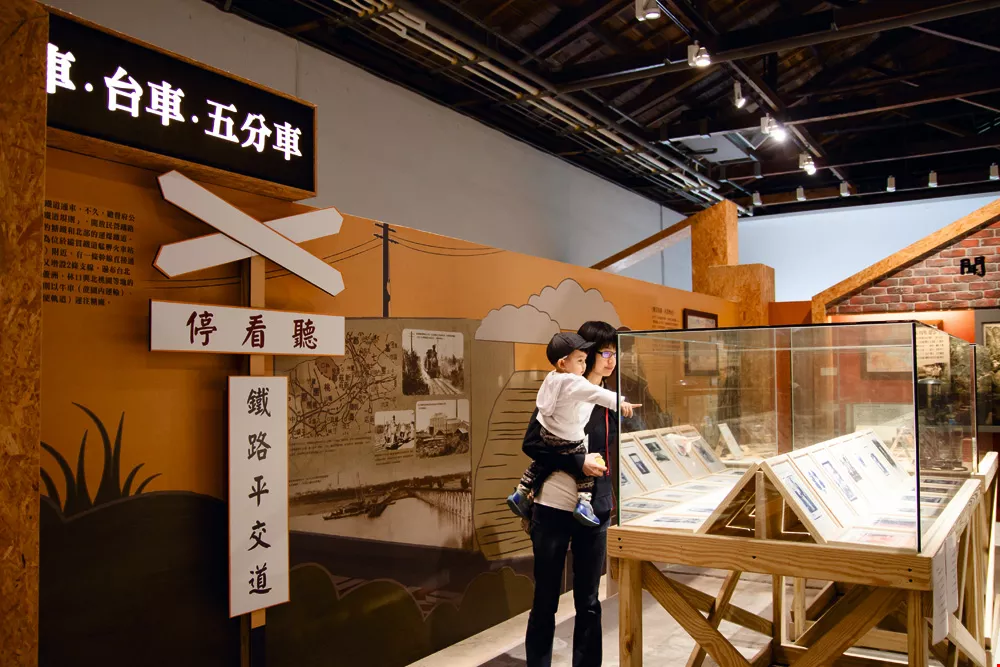
The permanent exhibition at the former sugar warehouse in Wanhua’s Sugar Refinery Cultural Park demonstrates the important role the old railway played in the history of Taiwan’s sugar industry.
Looking back into Taiwan’s history, Governor Liu Mingchuan built the island’s first railway in Taipei’s Dadaocheng in 1887, during the Qing Dynasty. It opened a new era of transport in Taiwan, and also laid the foundations for Taipei as the political, economic, and transport hub of Taiwan.
Over the next few decades, factories, government buildings and other settlements were built along the railway line across the entire Taipei basin (see figure, p. 119).
But with urban development, factories gradually moved to the suburbs. The underground railway project began in 1983, and the new Taipei Railway Station was completed in 1989. In 1996, the first part of the elevated Civic Boulevard Expressway constructed along the path of the old railway tracks was opened to traffic. The old railway’s role as Taipei’s original backbone had passed into history.
“Railway development tends to be in a belt. Progressing from the regeneration of individual sites to the revival of a whole area requires a unique urban planning technique,” says Lin Chung-chieh. TCURO calls this technique “urban acupuncture.”
It involves spreading conceptual seeds in fertile locations, encouraging community leaders to initiate discussions with residents, and seeking consensus on the use of the city’s historical sites to create new creative and cultural business opportunities.
After acupuncture treatment for each site, energy and lifeblood begin to flow. TCURO drew up an “ecological map of historical sites” to create three thematic tours: sugar, tobacco, and alcohol. The public will be able to rediscover Taipei’s industrial and railway past introduced by professional guides on regular tours of the sites.
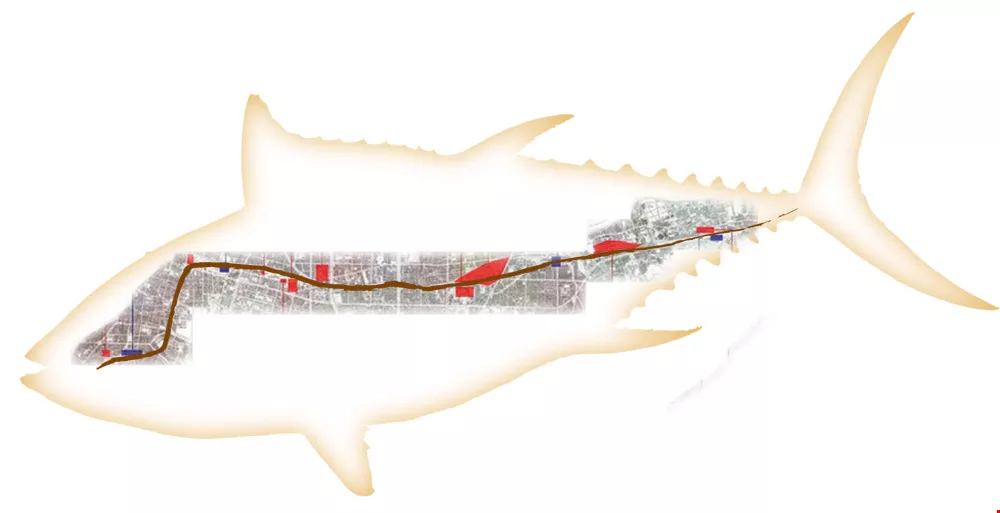
The three key industries of sugar, tobacco and alcohol were fundamental to Taiwan’s economic development, and the old Taipei Railway reflected this historical context in full.
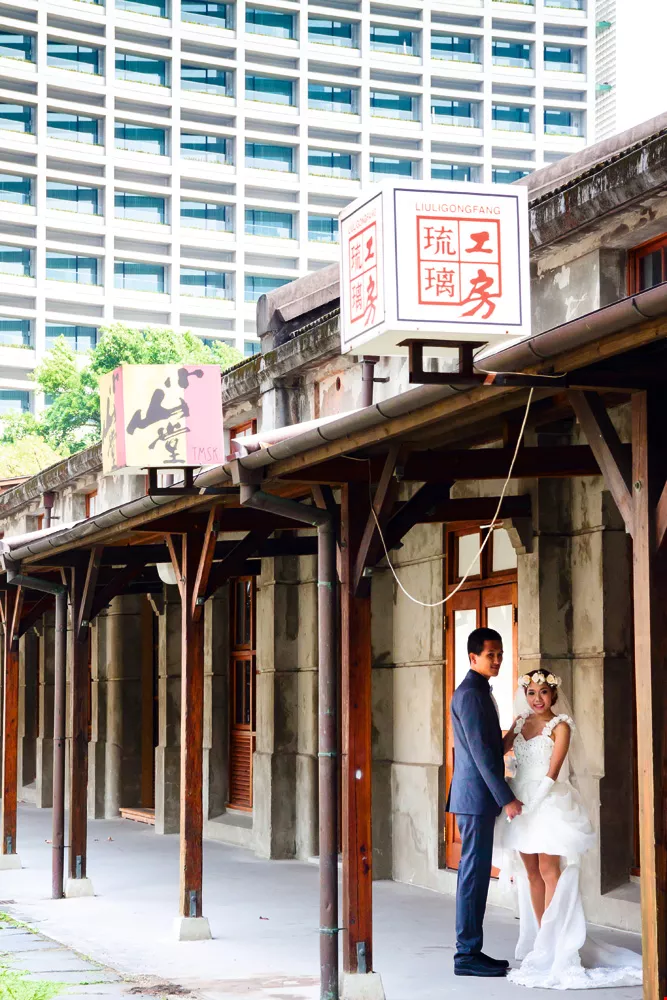
The cleverly designed Songshan Cultural and Creative Park has become a favored spot for wedding photography and for city residents to hang out.
The area around Dali Street in Taipei’s Wanhua District was known in earlier times for growing cane and manufacturing sugar. In fact, the area was home to the largest sugar plant in northern Taiwan during Japanese rule. These days, three old warehouses and a railway platform have been preserved to bear witness to the formerly thriving sugar industry.
The sugar tour starts at Wanhua Railway Station, and continues along Kangding Road where the century-old Chin Yi Ho Store building is located. Then there is the Taipei Costume and Culture Center on Xiyuan Road, the historic Lin House, the Renji Hospital, built under Japanese rule, the Ai Ai Nursing Home and finally the Sugar Refinery Cultural Park. Each site boasts its own beautiful architectural character and a rich historical background. These sites remind people of the economic boom to which Wanhua’s sugar industry contributed in the city’s early years.
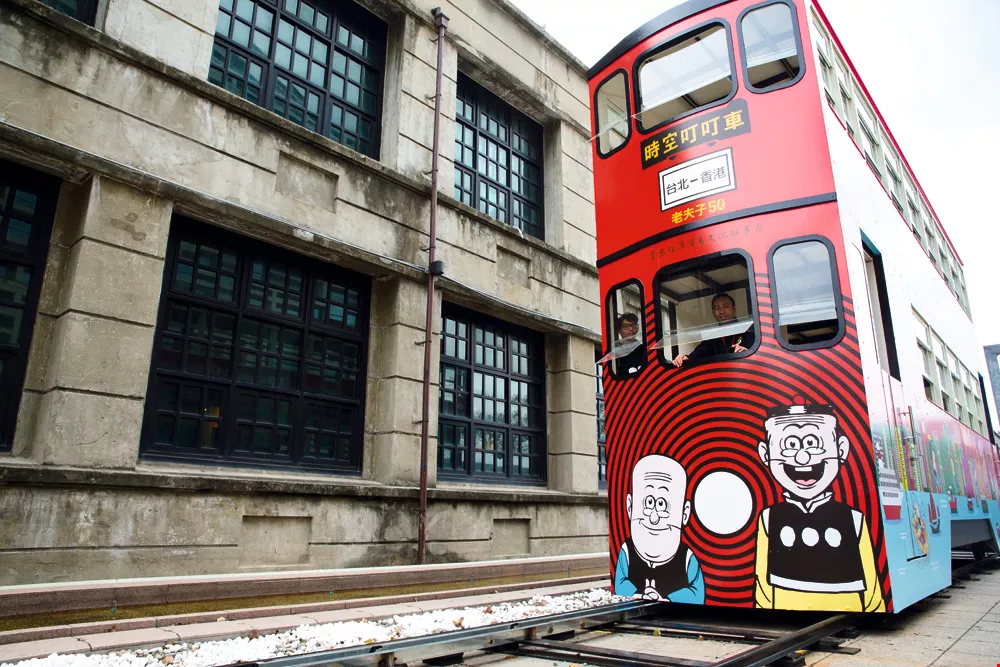
Old Master Q Comics celebrated its 50th anniversary with an exhibition tour, whose first stop in Taiwan was at Songshan Tobacco Factory. Visitors could take a ride through history on a Hong Kong-style tram.
The tobacco tour starts at the historic site of the old Songshan Tobacco Factory, then extends eastward to the Taipei Railway Workshop.
In the Japanese colonial period, tobacco began to be planted in Taiwan. During the Pacific War, the Songshan Tobacco Factory was the center for cigarette manufacturing in northern Taiwan, supplying tobacco not only to Taiwan but also to central and southern mainland China and Southeast Asia. Demand far exceeded supply. By the 1960s the island had become a veritable “tobacco kingdom” with enormous production and earnings.
On the top level of the old warehouse, one can still see the conveyers used to transport tobacco products between warehouses, and the preserved railway tracks on wooden ties. We can picture the scene: huge numbers of workers busy processing tobacco and packaging cigarettes.
The Taipei Railway Workshop, built in 1930, was known as the “train hospital.” It was responsible for the assembly, maintenance and repair of Taiwan’s locomotives and rolling stock, and was emblematic of the railway industry during Japanese rule. Today, examples of the first generations of the Tsu-Chiang and Taroko express trains can be seen in the workshop. With abandoned train parts scattered around the courtyard, one can imagine a time when trains were being inspected, maintained and repaired there.
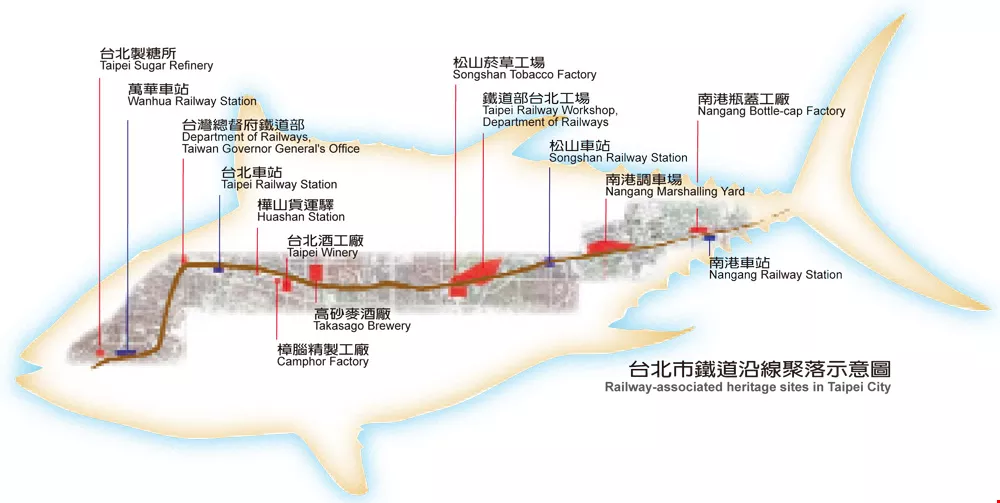
Railway-associated heritage sites in Taipei City
The alcohol tour is focused on Huashan 1914 Creative Park. The park covers a huge area that includes the former Taipei Winery, Camphor Factory, and Takasago Brewery.
Established in 1914, the Taipei Winery produced a range of alcohol products: rice wine, fuel alcohol, and varieties of fruit wine. The site retains even today a rich and diverse heritage of the wine-making business.
The park’s many fascinating historical structures include a three-story brick-and-concrete tower, once used for brewing rice wine, and the plum wine factory building, a good representative of the high technical standard of Taiwan’s industrial structures from the 1930s. The chimney that accompanies the boiler was once 50 meters tall, and was seen as a symbol of Taipei’s progress.
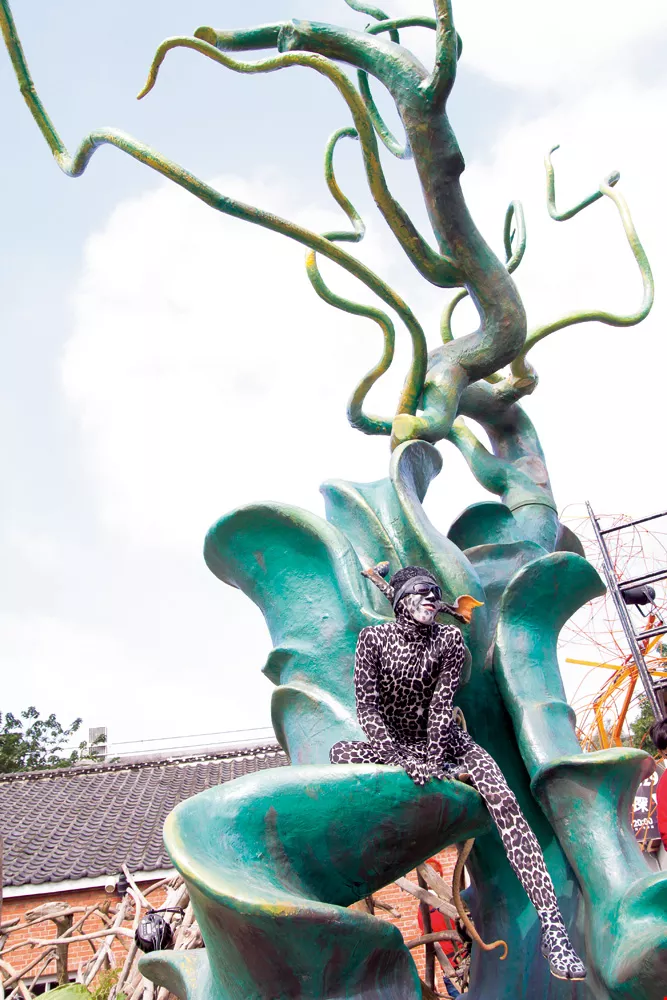
At the 2012 Headspring Festival, a stage set up on the square at Huashan 1914 Creative Park encouraged close interaction between performers and audiences.
Since the industrial facilities surrounding the railway network have been revitalized, they are no longer just empty shells for people to reminisce over; instead, these elegant old structures have become a way of preserving history. Their new lease on life has enabled the past to become deeply rooted in people’s lives today.
“The celebration of these old buildings should become a core value shared by the people of Taipei, thus reflecting the real meaning of urban regeneration,” says Lin. Today, many Taipei residents remain unaware that a significant number of large-scale modern industrial sites have been preserved across the city. The industries they represent are diverse, ranging from wine making, tobacco manufacturing and sugar refining to camphor production and bottle cap fabrication. These sites highlight the fact that the city of Taipei was once a busy and bustling industrial center.

@List.jpg?w=522&h=410&mode=crop&format=webp&quality=80)


