Making Good Things Happen—Red Turtle and Crowdfunding Charity
Chen Chun-fang / photos Chin Hung-hao / tr. by Geof Aberhart
January 2015


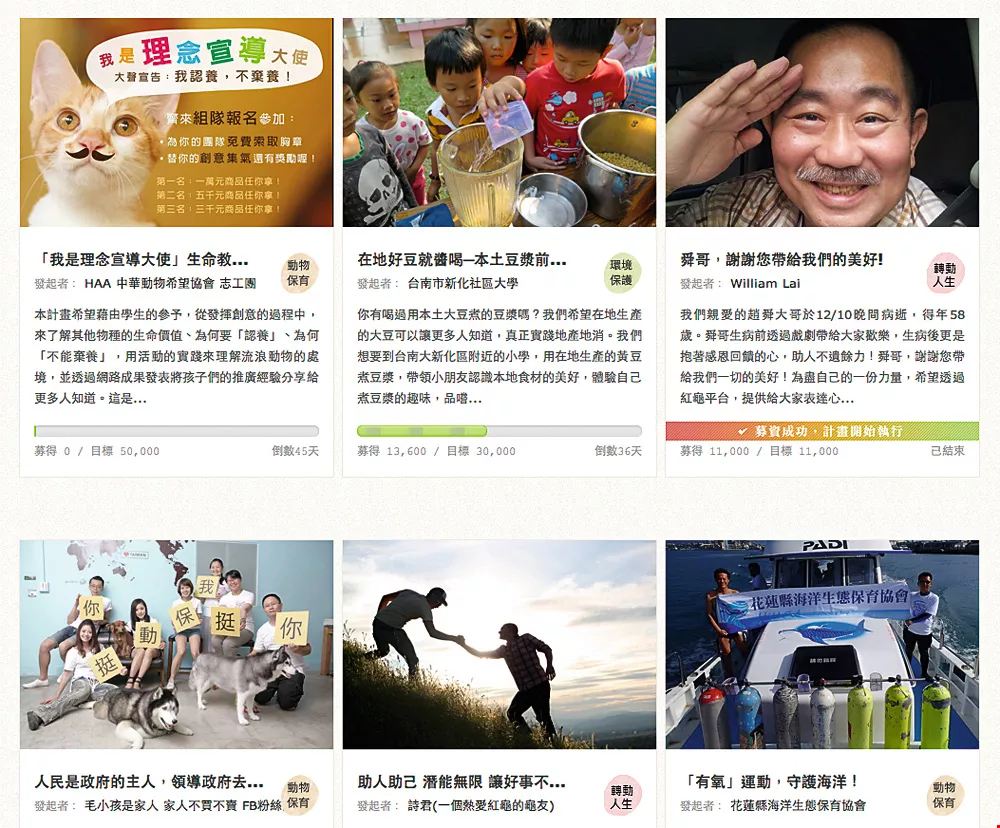
Taiwanese folk legend tells of a Robin Hood figure, Liao Tianding, who with his sworn brother Hong Gui stole from the rich and gave to the poor. Today the name of Liao’s brother has been adopted by a website that calls for the masses to help those in need. The site is known as “Red Turtle”—the translation of Hong Gui—and its mission statement is “Make Good Things Happen.” Their goal is to become the Liao Tianding of the Internet, bringing people together to make the world a better place.
When it comes to crowdfunding, most people immediately think of Kickstarter, Indiegogo, or even Taiwan’s own flyingV, but a new platform has arrived with a different take. Red Turtle was founded using the savings, bonuses, and even severance pay of a group of aspiring entrepreneurs, but its goal isn’t to fund enterprising startups or innovative products, but rather to provide a platform for helping others.

As the children happily grab their new shoes, this work of charity is planting the seeds of future philanthropy in their hearts.
The brains behind Red Turtle already had a history of both supporting and starting projects on flyingV. Founder Peter Lin is a frequent fisherman at Fenniaolin Harbor in Yilan County, and noticed that as the area’s tourism industry has grown in recent times, so too has the amount of trash left behind by visitors. With Fenniaolin relatively remote, environmental organizations generally don’t allocate any of their limited manpower to regular cleanups there, leaving it all up to the locals to buy cleaning gear and garbage bags, and to clean the area themselves. But as the number of visitors grows, the local residents have found it increasingly difficult to keep up with the garbage left behind.
Returning to Taipei after a visit to Fenniaolin, Lin immediately set about starting a crowdfunding project to raise money for cleanup efforts, and within a week it had reached its goal of NT$5,000. Once the money came in, Lin went out and bought the necessities and headed back to Fenniaolin to hand them out to the locals. Astonished by the dedication of this outsider, the residents of the area decided they couldn’t just stand by and watch, and began working together more concertedly to create a more beautiful future for Fenniaolin.
In 2013 William Lai, the other founder of Red Turtle, set up a project to raise money for gear bags for the table tennis team at Taitung County’s Hongye Elementary School. Hailing from an under-resourced town in eastern Taiwan, the team would resort to stapling their paddles together if they broke, and at competitions they had to share the good paddles. When on the road competing in national tournaments, the team even had to stash all their equipment in cheap plastic bags, having no proper backpacks to use.
Lai hoped that a fundraising effort would collect enough money to give the kids a feeling of being supported and cared for as they chased their dreams, so in late October that year he started a project calling for funds to get proper equipment bags for the team before their November competition. After meeting their goal and delivering the bags, on the day of the competition Lai and some partners also headed to the venue to cheer the team on.
Both Lai and Lin were involved in the tech sector, spending their days staring at cold, unfeeling computers and boring numbers, wondering whether it was possible to find a kind of job that would bring people together and help them realize their dreams. Having already run a few fundraising projects, the two came up with an idea: why couldn’t a crowdfunding platform be used for charity instead of just startups? After looking at the operating models of crowdfunding sites from other countries, the two set about implementing their idea, and in April 2014 Red Turtle was born.
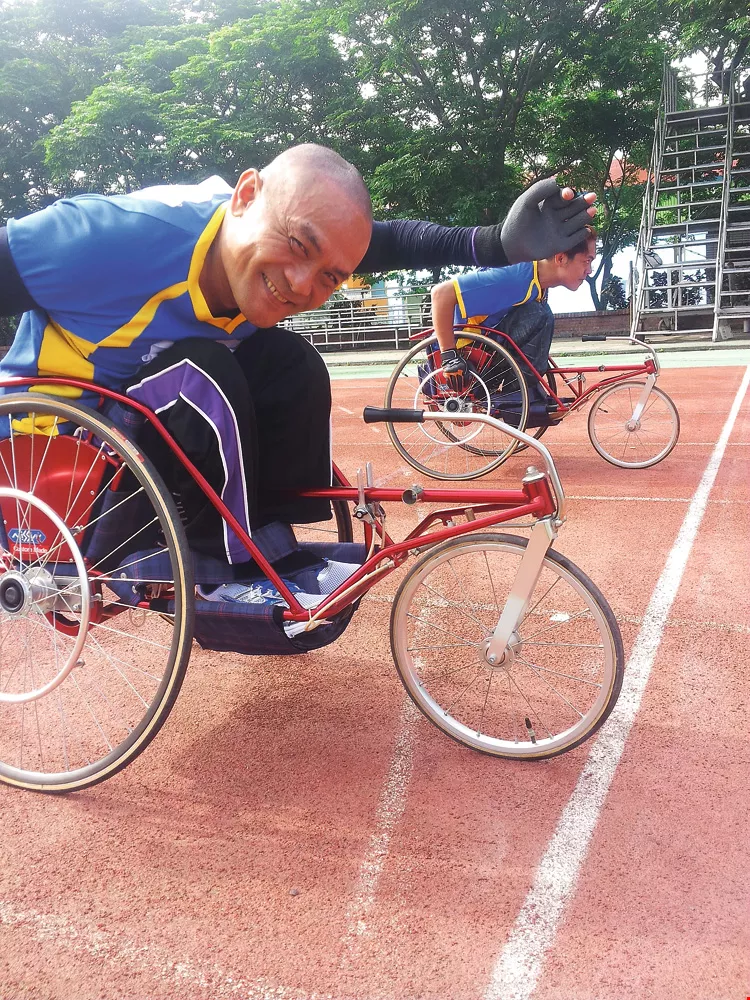
Chen Fugui uses his positive attitude and example to help other others facing illness or disability stand tall again.
Crowdfunding projects need to provide information on their intent, requirements, and planned usage of funds to earn the support of potential backers, taking a step toward creating a virtuous circle. Such platforms can also provide a way for traditional social welfare organizations to use technology to develop a new support base.
Unlike other Taiwanese crowdfunding platforms, which offer a broad range of categories, Red Turtle is focused on only four: “Children’s Education,” “Aiding the Underprivileged,” “Caring for the Environment,” and “Protecting Animals.” After setting up shop in their main area of concern, project founders can then work to attract support from those with a longstanding interest in that area. While one person can only do so much, these platforms offer a way to use the Internet to harness the multiplicative power of the crowd.
To “Make Good Things Happen” is Red Turtle’s primary mission. Many people have the desire to make change or find independence, but lack the resources. “It’s like getting your car stuck in the mud—if you get a few people to give you a push, you’ll eventually be able to get moving,” says Lin. Red Turtle aims to help those trying to get out of their own mudholes and turn their lives around.
A project on Red Turtle doesn’t need to be some kind of sob story—on the contrary, the platform is about positive energy and active desire for change. Such projects can create a stir among potential backers, showing them that their own contribution, however meager, can help bring change to those who are striving for it.
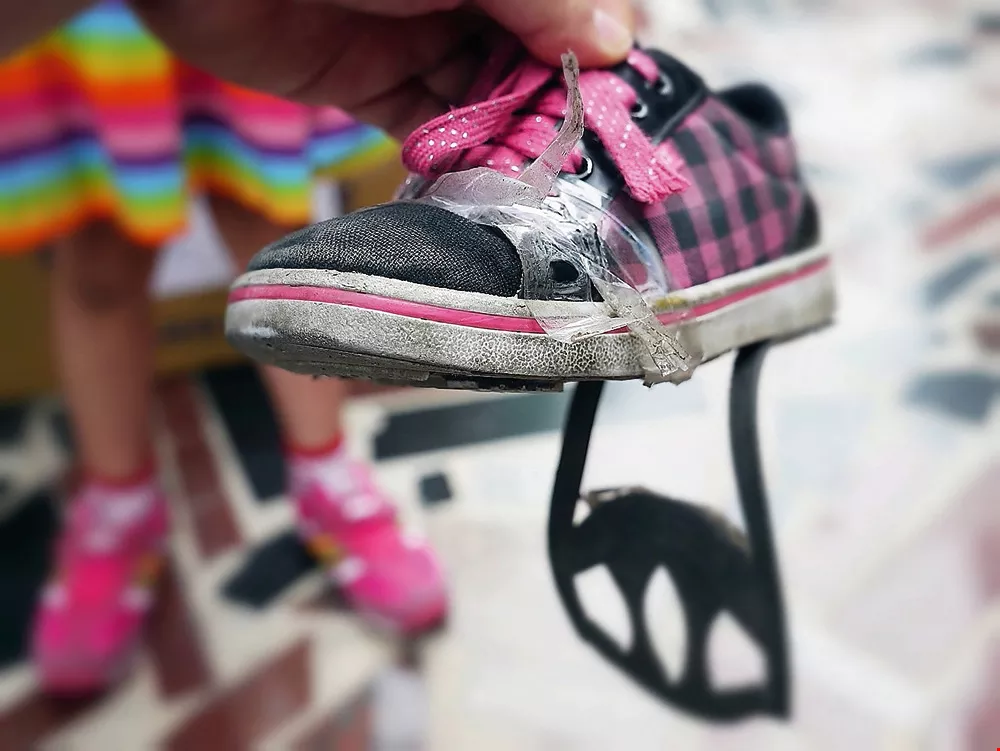
Seeing children in remote and impoverished communities walking around in old shoes held together with tape can be heartbreaking.
Red Turtle takes no cut from projects it hosts, and so beyond processing fees, every dollar backers give goes directly to the project organizers; “If a kid is already having trouble getting a nutritious lunch, how could we have the temerity to take a bite out when he finally gets one?” asks Lin.
The site itself is funded in part by the team that started it, and in part by supporters making NT$50–100 monthly donations. Whatever money they receive is used to pay for rent, utilities, and other operating costs, and Lai and Lin themselves take no salary despite being dedicated to Red Turtle on a full-time basis.
Oftentimes the identities of the people behind online projects can be the subject of questions and doubt. Red Turtle not only requests that project creators provide ID and sign a contract agreeing to fulfill their project, they will also make visits in person to make sure the creators are for real and bombard them with questions. “It might sound harsh, but we want to help them succeed while also protecting Red Turtle’s reputation,” says Lai.
In addition to questioning creators, Red Turtle also provides advice and assistance with project proposals, helping them to avoid being rejected at first glance by potential backers. For example, if a proposal lacks appealing photographs to back it up, Red Turtle will arrange for a volunteer photographer to work with the creators to fix that.
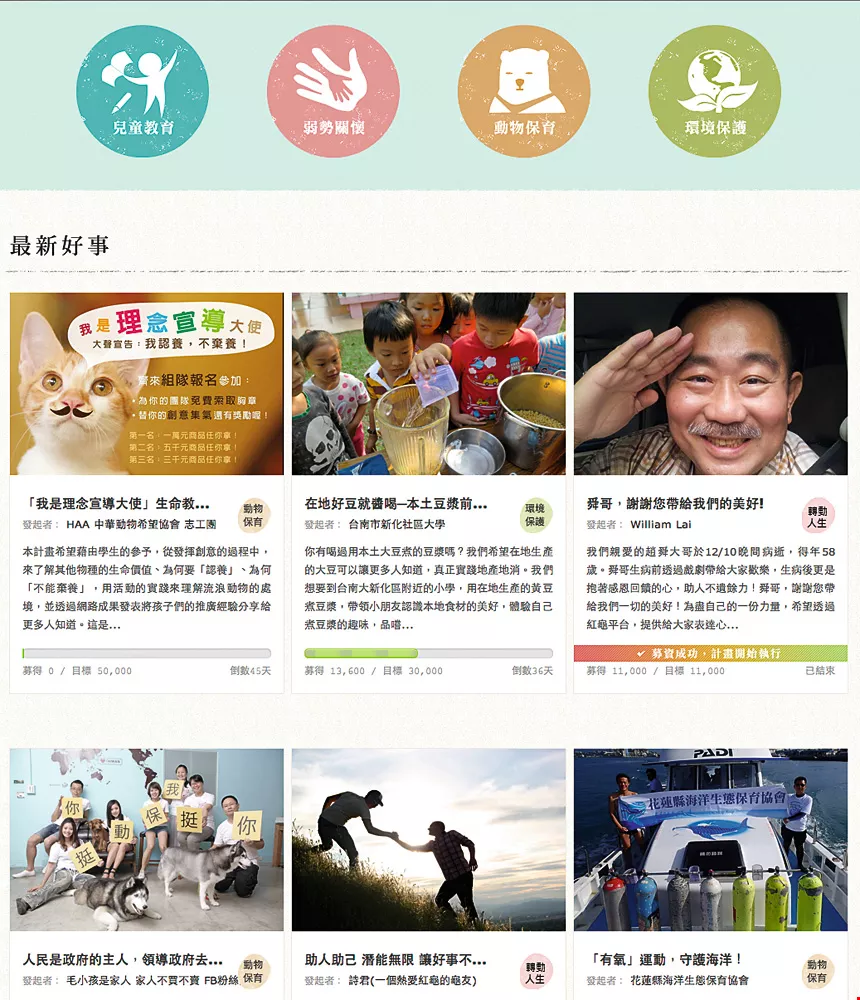
Red Turtle has successfully used technology to give a new face to traditional fundraising.
Since Red Turtle launched, 19 projects have successfully reached their funding goals. And in addition to providing funding, many backers also get personally involved in the projects they support.
When the Taiwan Saint Foundation found underprivileged children in Neipu Township, Pingtung, were wearing worn-out shoes wrapped up in tape, they set up a project on Red Turtle to deliver new shoes and socks for them.
In September 2014, Lai, Lin, and backers from Red Turtle were invited to join the foundation in going to Neipu to distribute new shoes to children at Tai’an Elementary School. The organizers also aimed to make the event educational: the children were given vouchers to “buy” the shoes they wanted, and could spend anything left over on toys or on stationery items. In this way they could learn the importance of managing their own finances. To experience the joy of giving, they were also encouraged to donate store till receipts to charities, letting the charities benefit from any winnings in the bimonthly government drawing of receipt serial numbers.
The project continues today, giving new hope to underprivileged children across Pingtung, and hopefully one day across Taiwan.

Peter Lin (left) and William Lai (right) are the co-founders of Red Turtle, through which they are bringing people together to share the power of positivity and make good things happen.
As well as letting social welfare organizations start projects themselves, Red Turtle also seeks out others in need of help—people like Chen Fugui.
Forty-five-year-old Chen Fugui, from Taitung County, is a member of the Puyuma tribe. Eleven years ago, he was operating an excavator and working on clearing a road when the machine rolled, leaving him paraplegic. For two years after the accident, Chen wallowed in misery, never leaving his home. Then, to stop his daughter from being mocked for having a “cripple” for a father, he began taking his daughter to school, wheeling along in his wheelchair and saying hello to his daughter’s classmates. Realizing that unless he got back out into the world his daughter would continue to be a target of mockery, Chen made the decision to stop shutting himself away and began remodeling himself into someone who confronts life with positivity.
In June 2013, Chen joined a training program run by the Taitung Somatic Health Sports Federation in preparation for the 2014 National Disabled Games. As a younger man, Chen was a hunter capable of carrying a muntjac deer on one shoulder, so the coach saw great sporting potential in him.
Despite lacking resources, Chen refused to let his situation be an obstacle. As his hand didn’t quite have the grip strength to hold a table-tennis paddle for long, he tied the paddle to his hand with cloth for his practice sessions. For javelin and shot-put practice, meanwhile, he used a wooden staff and a heavy rock respectively.
Chen Fugui’s determination in the face of adversity inspired the people at Red Turtle, who started a project to raise the funds he needed both for gear and to take part in the games. For his part, Chen didn’t let his supporters down, earning three golds, one silver, and two bronzes at the games, as well as setting National Disabled Games records in the shot put and javelin.
He has also inspired others to challenge themselves, including people like Lin Yanying.
At age 27, Lin suffered an immune disorder that caused her spinal cord to become inflamed, ultimately leading to her lower body becoming paralyzed. She moved back home to Taitung from Taipei and began working with her mother making cheesecakes and selling them online. Originally content to just stay at home and make cakes, on a visit to the hospital Lin encountered Chen, who was volunteering there. Chen encouraged her to take up table tennis, and even brought her along to some games. As the two of them played more and more, Lin gradually started being able to return the ball, and the better she got, the more confident in herself she felt.
When she learned that Chen wanted to compete in a table tennis open in Thailand but couldn’t because of the cost, she set up a project on Red Turtle to raise money for him, promising free cakes to larger donors. After the project closed, she turned out an amazing 104 cakes in just three days to get them to her backers before Father’s Day, and presented the money raised to Chen as a token of her appreciation.
Red Turtle’s projects have already created miracles in the lives of those they’ve aimed to help. These examples of the power of positivity have inspired others, making more and more good things happen. With Red Turtle by our sides, every one of us can become a modern-day Liao Tianding!
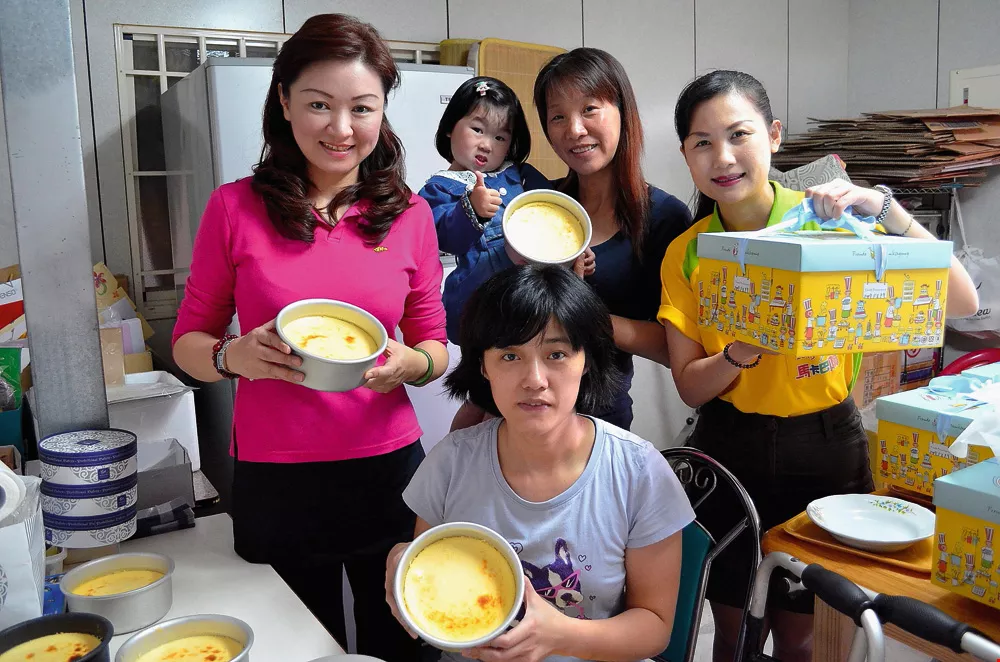
Hand-made by Lin Yanying (seated), these “Sunrise Cakes” warm the soul as they fill the stomach.

@List.jpg?w=522&h=410&mode=crop&format=webp&quality=80)

@List.jpg?w=522&h=410&mode=crop&format=webp&quality=80)


