Taiwan: Island of Fish
Chang Chiung-fang / photos courtesy of National Geographic Channel / tr. by Geoff Hegarty and Sophia Chen
March 2015


Taiwan is an island abounding in many rich resources, none more fundamental to its culture than seafood. Fish following the ocean currents are harvested by communities of courageous fishermen toiling at sea, while the nation’s scientific experts are working hard to develop fish farming technologies and maintain the marine ecology.
The National Geographic Channel (NGC) and the Ministry of Foreign Affairs (MOFA) have together produced a documentary series entitled Taiwan to the World 5: Island of Fish, which brings to the screen fascinating tales of Taiwanese people, the fish they hunt, and the oceans—the home of their prey. This is the fifth season of this highly acclaimed series on Taiwan.
While the fish are a resource provided by nature, the courageous fishermen working in the harsh ocean environment represent the tenacious spirit of the Taiwanese people.
The documentary was launched at Huashan 1914 Creative Park by National Geographic on 18 January, 2015 with invited speakers President Ma Ying-jeou and Minister of Foreign Affairs David Lin.
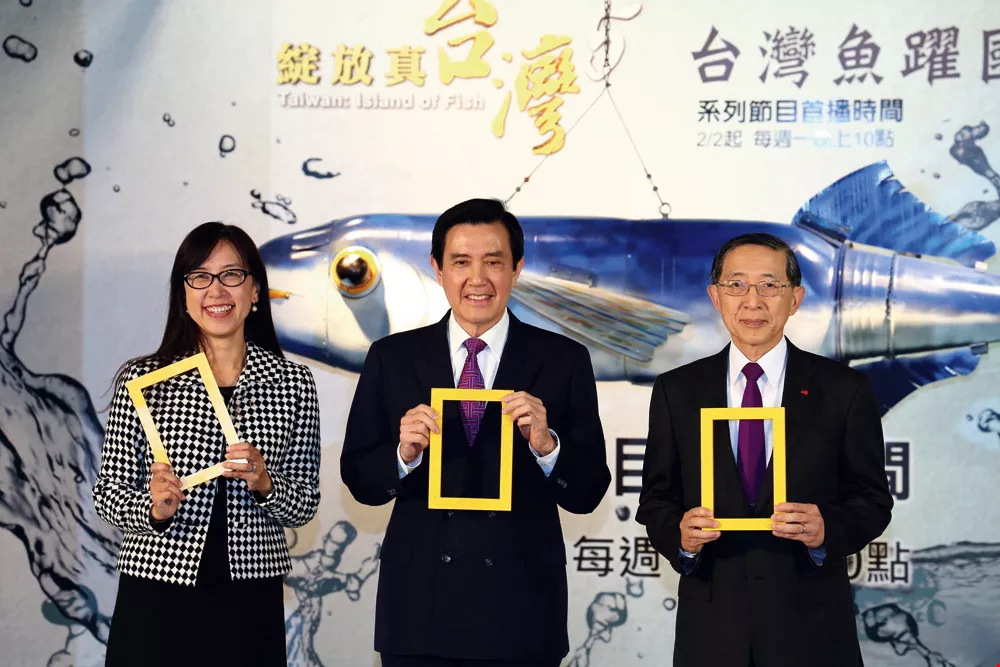
President Ma Ying-jeou (center) joins Minister of Foreign Affairs David Lin (right) and Joanne Tsai, FOX International Channels Asia’s executive vice president and managing director for Taiwan and China, at the kick-off event for the documentary series Taiwan to the World 5: Island of Fish.
Taiwan’s fishing industry is worth NT$100 billion a year, accounting for 20% of the total production of agriculture and fisheries. In his speech, President Ma acknowledged the benefits that the country enjoys from its ocean resources, but also noted that Taiwan has signed a number of conventions to reduce disputes in the area of fishing rights. For example, after the signing of an agreement between Taiwan and Japan, the volume of fish caught by Taiwanese boats rose 3.6-fold, and the total value of the catch increased 2.9 times. Among these increases, Taiwan’s share of Pacific saury has surpassed that of Japan for two years in a row, taking the nation to number-one global producer.
Minister Lin said that in recent years, MOFA has actively promoted international fishery negotiations to protect the rights of Taiwan’s fishermen. So when Taiwanese fishing boats are working in international waters, they must strictly abide by these agreements to ensure the sustainable use of marine resources.
Joanne Tsai, executive director and managing director for Taiwan and China at FOX International Channels Asia, pointed out that at the launch of its cable channel in Taiwan in 1998, NGC committed to bringing the world to Taiwan. And since the joint program Taiwan to the World started in 2005, they have taken Taiwan to the world. A viewing audience of over 100 million in as many as 171 countries have seen the authentic, the good and the beautiful sides of Taiwan.

Deep-sea fishing boat Wenfa 606, equipped with a helicopter and jetboat, travels for months on end each year in the Atlantic Ocean, 5000 kilometers from home, looking for fish.
Ocean fishing is hard work. And the documentary production team also worked very hard to create the program. For example, for the episode “Big Catch,” the team spent two years documenting deep-sea fishing from on board the fishing boat Wenfa 606. They sailed from Kaohsiung and traveled 5000 kilometers into the central and western Pacific Ocean to film the work of the crew catching yellow-fin and skipjack tuna. The team used seven cameras and spent a total of 32 days at sea.
Taiwan’s offshore fishing industry creates US$20 million value annually. But because overfishing has led to fish resources becoming somewhat depleted, achieving a good haul is more difficult than in years gone by.
Wenfa 606 is equipped with sonar, electronic fish finders, a helicopter for tracking fish, and a jetboat which helps to herd fish into the net. And the net is huge: at two kilometers long and 150 meters deep, it can encircle an enormous area, equivalent to about 59 football fields. Hauling the net back on board takes at least two hours. Every sweep with the net is a gamble—sometimes they can win and take a huge haul, but often they don’t catch much.
People want to catch fish, but no fish wants to be caught. “To catch fish, you need patience above all else!” Fisherman Yan Zhizhong shares his 25 years’ experience.
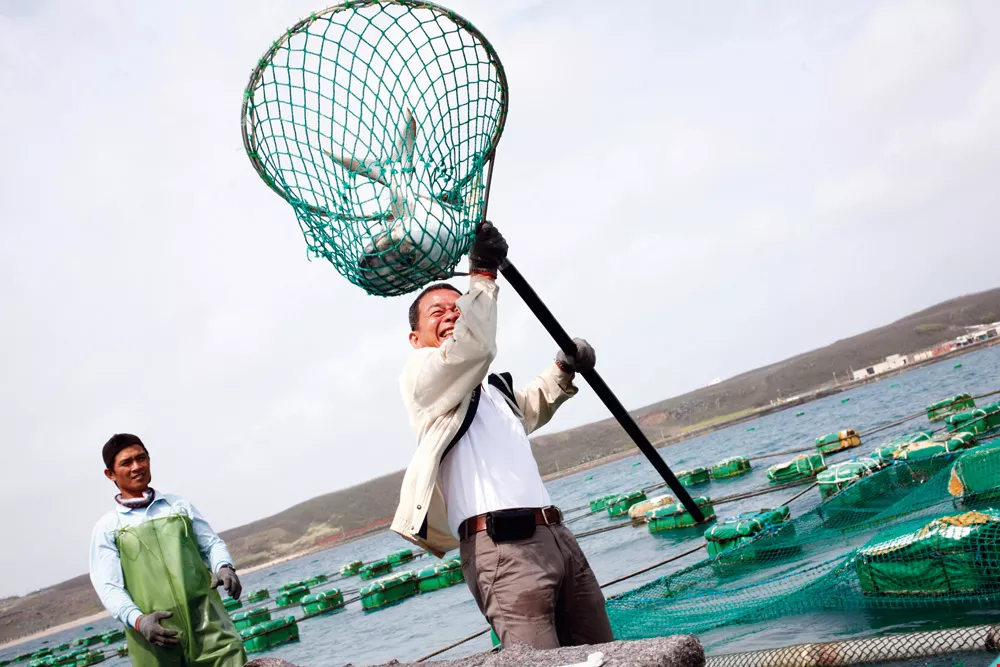
Tanhou chairman Liu Tanhou is very happy catching silver pompano bred in his own fish farm.
In recent years, Taiwan’s inshore fisheries have had to face the issue of falling catches. But thanks to the Kuroshio Current, flowing through the waters off Taiwan’s east coast, there are still a great number of migratory fish passing by. The best example is the dolphin fish, which has become a major product of Taiwan’s fishing industry in recent years.
Another episode, entitled “Promised Fish,” depicts Taitung fisherman Chen Yiwei’s story of courage and perseverance catching dolphin fish.
Following the ocean currents, dolphin fish visit Taiwan’s eastern seaboard twice a year—in spring and autumn. In only three days using longlines, a 32-ton inshore fishing boat can harvest a good haul of dolphin fish of nearly two meters’ length and around ten kilograms per fish.
“Speed is the key,” says Chen Yiwei, skipper of fishing boat Xinchangfa. Chen points out that the longlines stream for over 30 nautical miles and carry around 2000 hooks, so just baiting the hooks is an enormous task.
Caught dolphin fish are thrown immediately into ice buckets to cool and later transferred to a freezer to keep them fresh. As soon as the boat docks, the fish are unloaded and auctioned in the market, then sent to northern Taiwan for processing. After packaging, most are exported to Europe and the US. Not a moment is wasted. Because of Taiwan’s advantageous geographical position plus good fishing and preservation techniques, dolphin fish have created a boom for Taiwan’s fisheries in recent years. But this also means that in order to maintain a sustainable industry, avoiding overfishing the dolphin fish has become a major issue.
Dr. Chiang Wei-chuan, a research fellow at the Fisheries Research Institute of the Council of Agriculture, spent some time at sea on board the Xinchangfa to conduct research into the dolphin fish. He explains that the dolphin fish is a very important species. They are a good source of protein, and as mid-level predators they tend to contain lower concentrations of heavy metals. Hopefully, through an understanding of their migratory habits, dolphin fish can be protected and at the same time properly managed as a sustainable food resource.
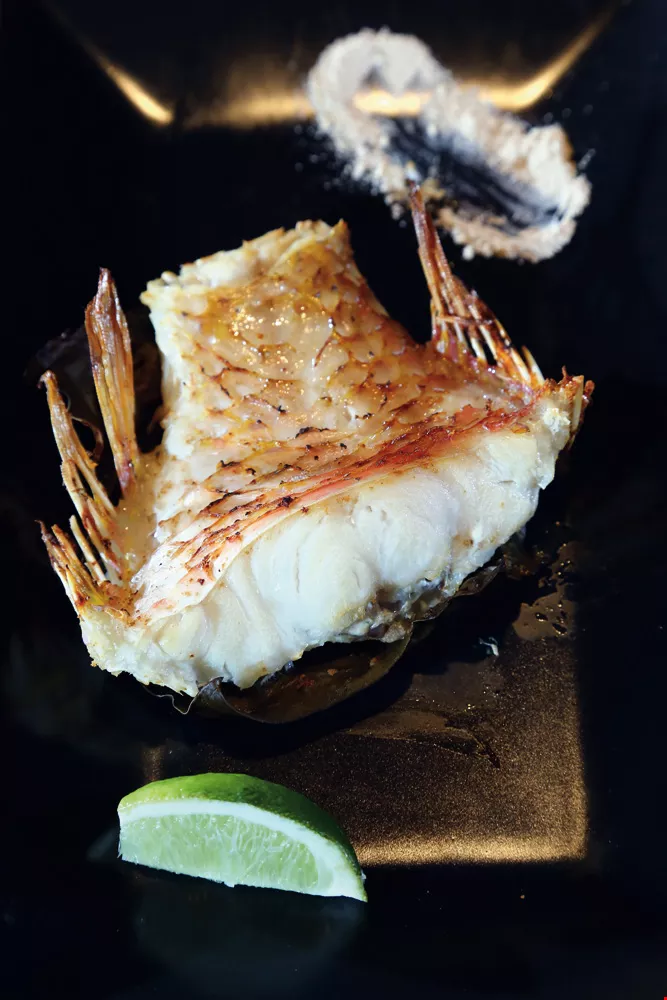
Taiwan’s delicious seafood tastes all the sweeter when you know that it’s the product of a sustainable marine ecosystem.
Looking at fishing more generally, the global catch is gradually falling while demand remains high. So it may be that fish farming will necessarily become a future star of world food supplies.
One of the documentaries, entitled “Fish Made to Order,” depicts a process managed by a company called Tanhou, whereby silver pompano are bred and grown in watery cages.
Liu Tanhou built this 25-hectare fish farm among the Penghu Islands. The region is perfect for raising fish in cages as there is no industrial pollution and the water is crystal clear. However, as parasites can exist everywhere and especially in enclosed breeding cages, if one fish became infected, it could easily damage the entire stock.
The skin fluke Benedenia, for example, attacks the skin and eyes of affected fish. Breeders can use drugs and chemicals to combat the parasites, but Liu needs to consider the health of both consumer and fish, so he never uses drugs or chemicals. Instead, he has invented a more natural cure to deal with the problem: a method he calls “water rinsing.” He takes advantage of the difference in osmotic pressure between salt water and fresh water to kill the flukes. Fresh water can kill parasites that normally live in a saltwater environment. The method uses the short period in which saltwater fish can survive in fresh water, to shower the fish with fresh water. It kills the parasites without any drugs or chemicals.
Fish farming has other technological benefits too. The use of fish scales for medical purposes is a recent development in biomedical science.
Body Organ Biomedical Corporation develops high-end medical equipment and techniques such as regenerative medicine and tissue repair. The company has successfully used the scales of Taiwan tilapia to develop a bio-cornea. Company chairman Michael Lai says that a decade-long effort has finally borne fruit. The bio-cornea is expected to be ready for human trials in Germany this year. If successful, it will benefit millions of vision-impaired people worldwide, giving them a chance to see the world again.

Chef Kuo Tsung-kun says that any type of fish will create a delicious meal as long as people buy the fresh and seasonal product and use proper cooking methods.
Compared with the very harsh environment of offshore fishing, the seemingly calmer ornamental fish industry is a very different type of business.
Aquarium fish are an emerging industry, providing a prime opportunity for Taiwan to jump into a rapidly expanding international market. JY Lin Trading Company in Neipu Township, Pingtung County, is Taiwan’s largest exporter of ornamental fish, as well as a leading production center globally for angelfish.
The company exports over 400 kinds of ornamental fish to more than 20 countries throughout four continents. Among the preferred species, the genetically modified GloFish has attracted the greatest attention worldwide.
The documentary episode “Amazing Aquarium” describes a process developed by Dr. Lin Yu-ho, chairman of JY Lin Trading Company, that uses genetic technology to breed angelfish.
Unlike past techniques that relied on natural mutations to create beautiful fish “by mistake,” since the emergence of genetic modification technologies in the ornamental fish industry large numbers of beautiful fish colors have been bred deliberately, such as “Fluorescent Green Prince” and “Pink Angel.” One of the most amazing and popular creatures is the pink angelfish, which is genetically modified with a pink coloration gene from a species of coral.
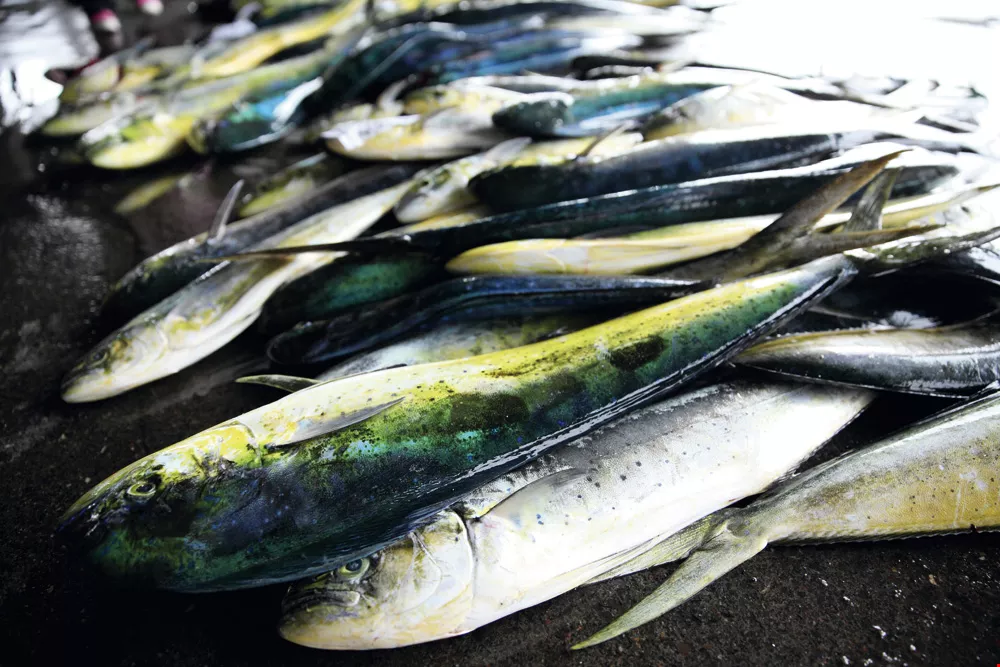
Following the ocean currents, dolphin fish visit Taiwan’s eastern seaboard. The species has become a major resource for Taiwan’s inshore fishing industry.
Maintaining sustainable fish resources and being able to enjoy the taste of seafood are not mutually exclusive aims. Since Taiwan is uniquely blessed in the degree to which ocean currents bring rich marine resources close to the coastline, the islanders have learned how to cook and enjoy seafood in a range of styles. Taiwan’s seafood chefs continue to offer a range of new dishes, making the island’s seafood cuisine even more delicious and healthy.
In the episode “Taste of Fish,” seafood chef Kuo Tsung-kun says that as long as people buy fresh and seasonal fish, even just cheap little fish, they will be able to cook delicious seafood meals.
“Fresh is the top priority,” says Kuo. But he notes that fresh fish that haven’t undergone freezing and defrosting will not necessarily be very tasty because of high lactic acid levels.
Kuo suggests that after buying fish, it should first be soaked in iced salt water, then cleaned and stored in the refrigerator at 2–3 °C for one to two days. After this process, any rank smell will have disappeared and the food will be more tasty.
From catching fish, to breeding and eating fish, the name of Taiwan tends to come to the fore. One can witness the courageous spirit of Taiwan’s fishermen battling their harsh environment, the progress in biomedical science and technology, and the ultimate pursuit of flavor—all within the considerations of sustainable development.
Taiwan’s reputation as an “Island of Fish” is well deserved.
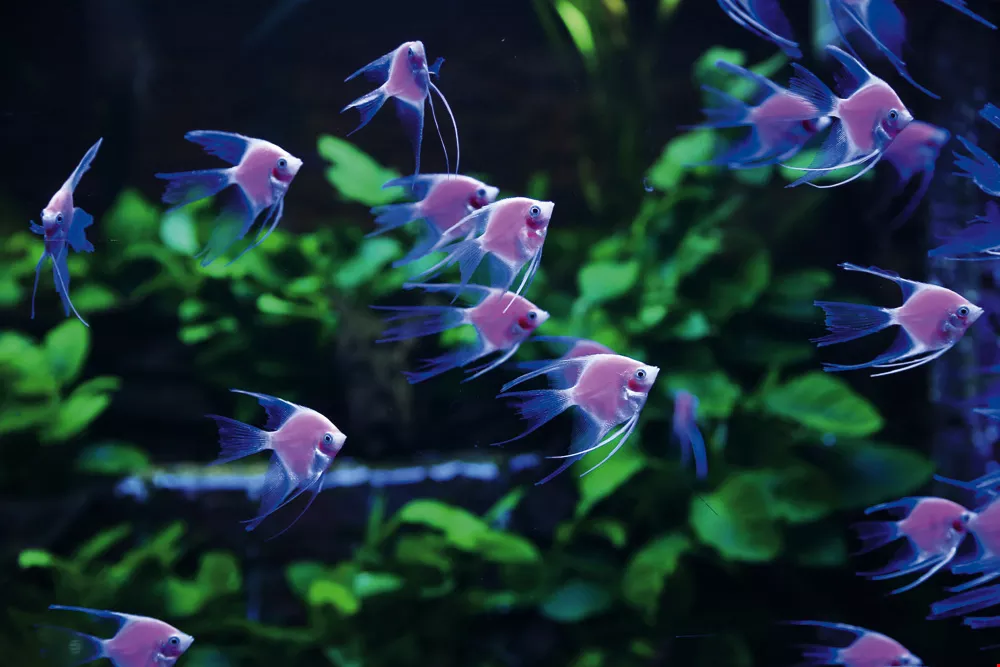
The brilliant pink angelfish is the first in the world to be genetically modified with a pink coloration gene from a species of coral.

Body Organ Biomedical Corporation has used the scales of Taiwan tilapia to develop a bio-cornea, a decade-long effort finally bearing fruit. The bio-cornea is expected to be ready for human trials in Germany this year.
@List.jpg?w=522&h=410&mode=crop&format=webp&quality=80)

@List.jpg?w=522&h=410&mode=crop&format=webp&quality=80)


@List.jpg?w=522&h=410&mode=crop&format=webp&quality=80)

@List.jpg?w=522&h=410&mode=crop&format=webp&quality=80)
