

In recent years, “best eating” voting events have become extremely popular in Taiwan. Some are contests organized by local governments in connection with festivals, while others are online people’s choice campaigns held by portal websites. Even foreign tourists take to the voting with enthusiasm. Interestingly, quite often the top finishers are not famous restaurants, but little hole-in-the-wall eateries.
Globalization has triggered the spread of both fast food joints and gourmet dining establishments throughout Taiwan, and as standards of living rise people are increasingly inclined to go out for fine dining. Even so, mom-and-pop eateries are still going strong, unfazed by economic cycles or the latest trends.
So why do gourmands of all nationalities have such a soft spot for Taiwan’s lowbrow eating spots? And what is the mindset that propels these low-profile places past their swanky competitors into first place in the hearts and minds of so many?
On a warm, sunny afternoon, Taipei’s tree-lined Minsheng Community is an especially pleasant place to be alive. At two o’clock in the afternoon, though the lunch hour is past, people take numbers and queue up in a long line along a side street, waiting their turn to take a place at one of two tables set out in front of a nondescript streetside mom-and-pop eatery. The fare? A plate of fried rice.
“Minsheng Fried Rice” has been in business for 30 years, and came out on top in a November 2013 online poll conducted by Taiwanese search engine Yam to select the ten best fried-rice eateries in all of Taiwan, even beating out the renowned Din Tai Fung restaurant. Overnight, the shop’s fame skyrocketed. Customers at this “fried-rice champion” get a tremendous bang for the buck. Business was already good before the poll, but now people are even showing up from overseas. With only one burner to cook on, it’s impossible to keep up with demand, so from 10:30 a.m. and continuing well past the lunch hour, customers have to take a number. The same routine holds from 4:30 p.m. till past dinnertime. And if the shop closes before your number comes up, then it’s just your tough luck!
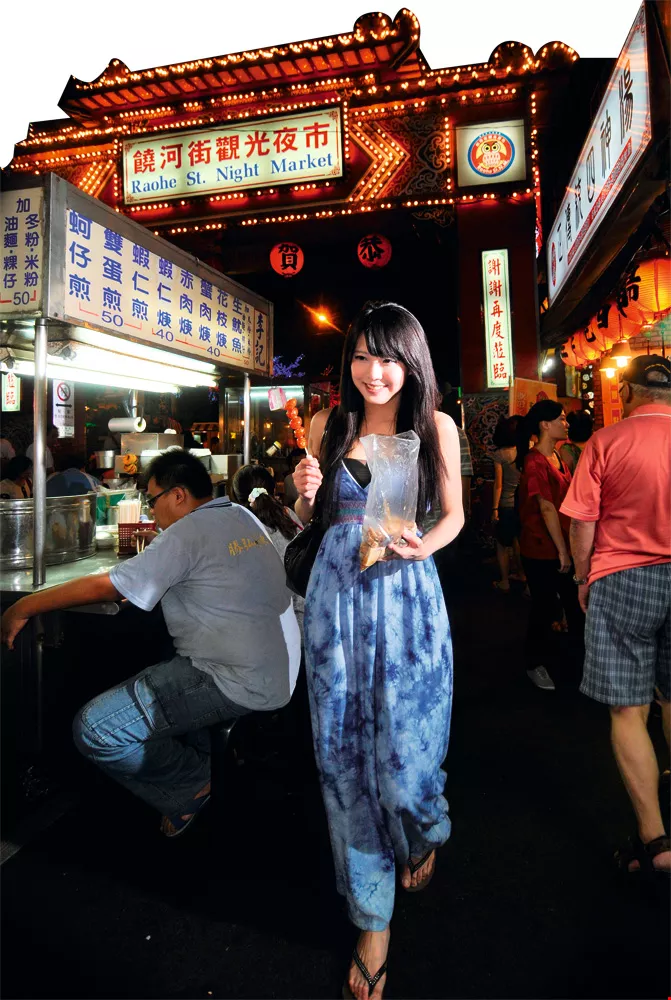
Mom-and-pop eateries are an integral part of daily life for everyday people in Taiwan. The fare is simple, yet supremely satisfying.
After the media starts reporting on the results of one online poll or another, it invariably sparks a wave of consumer interest that, for the winners, sends sales through the roof. The effects are felt throughout the entire ethnic Chinese world, and food lovers from other cultural backgrounds also get caught up in the excitement.
The popularity of people’s choice activities picked up a decade or so ago, and originated in the food blogging community. It is practically de rigueur now, before going to an unfamiliar restaurant, to look it up on a search engine to see what others have to say about it. As a result, “best eating” polls and contests, food festivals, and dining guides are suddenly popping out of the woodwork. And every time a foreign media outlet publishes a list of the most distinctive foods of Taiwan, it always elicits an outpouring of discussion here.
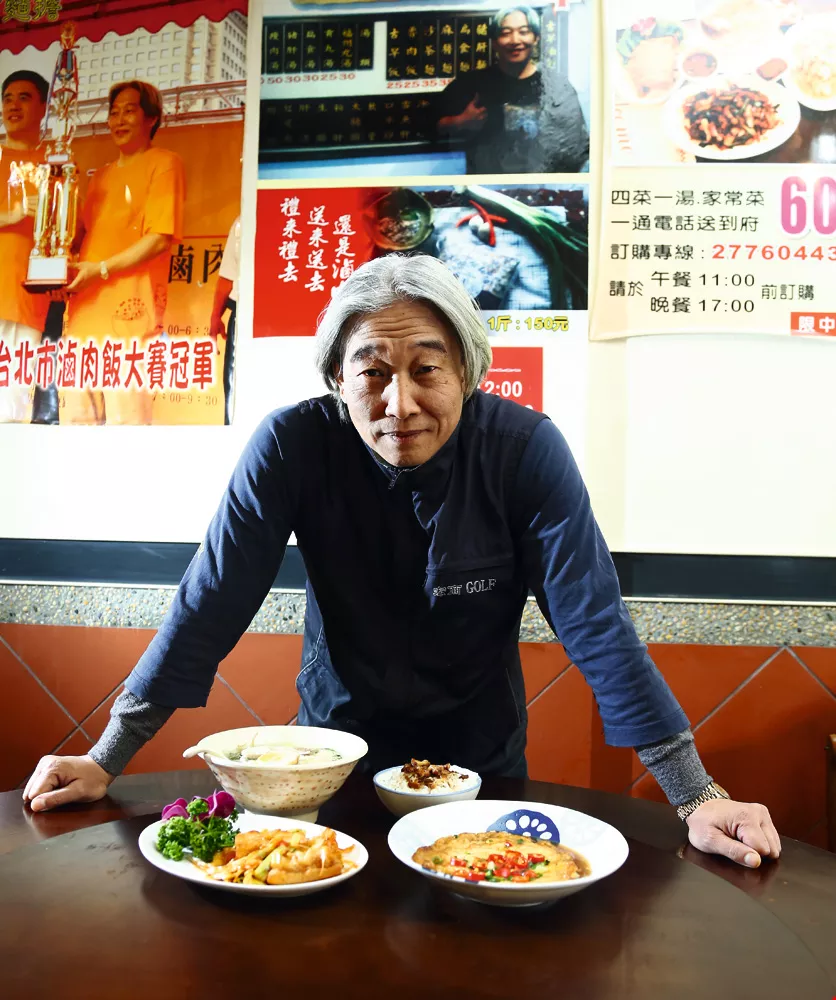
Proprietor Wu Zhixian sticks to his family’s time-tested secret recipes, and personally makes each batch of braised pork. This task is never entrusted to outsiders.
In addition to various online voting events, government entities also do a lot to promote this type of thing.
Figures released by the Ministry of Economic Affairs’ Department of Commerce show strong growth in Taiwan’s food and beverage industry over the past decade. Operating revenues in 2013 hit NT$391.5 billion, up 1.6% from the year before. Further breaking down this figure, revenues in the “other food and beverage firms” category, which mainly comprises hole-in-the-wall eateries, came to NT$16.5 billion. These small establishments account for 10% of Taiwan’s 110,000 restaurants, and their business is growing at close to a 3% annual clip.
Tourists constitute an increasingly important market segment for these businesses.
In the past, most foreign tourists who came to Taiwan were attracted here by the island’s scenic beauty and the National Palace Museum. Now, however, more and more of them are coming here for the food. This applies especially to travelers arriving from Japan, Hong Kong, South Korea, and Macao. And since 2009, with mainland tourists now allowed into Taiwan and direct cross-strait transport links a reality, night market eateries have been a must stop for mainland Chinese visitors.
It was business opportunities in the food and beverage industry that prompted the government to launch the Gourmet Taiwan International Action Program. Significant resources have been employed in an effort to further enhance the competitiveness of Taiwan’s food and beverage industry.
In September 2013, the Tourism Bureau held a contest to select the ten most distinctive Taiwanese dishes in three different categories. In the meantime, the Taipei City Government has been holding a couple of annual events—the Taipei International Beef Noodle Festival and the Lobabeng Festival (“braised pork rice festival”)—that have stirred a lot of interest and inspired local governments around Taiwan to follow suit.
The hope in the public sector is that big food festivals such as these will increase the international visibility of Taiwanese cuisine.
But how is it that an utterly commonplace hole in the wall could come out number one in a restaurant survey?
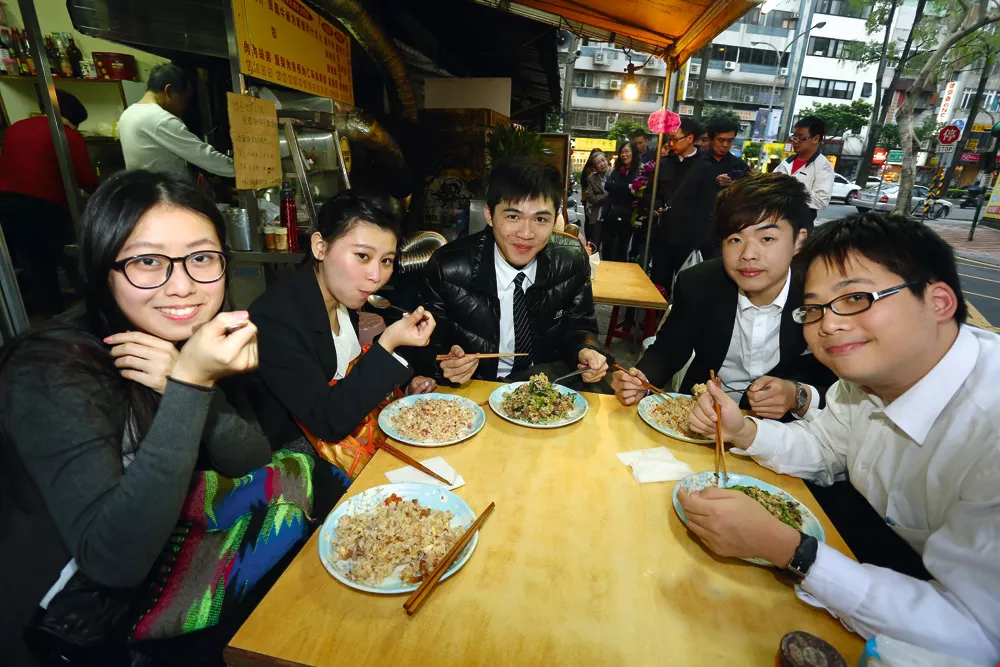
Customers who’ve made a special trip to Taipei from out of town just to taste a bowl of prize-winning fried rice have to endure a long wait in line before their numbers come up.
The Taipei International Beef Noodle Festival quickly became very popular after it was first held in 2005, and began attracting more than 100 beef noodle shops to compete each year. It was held for the tenth time this year in March.
The gregarious Lin Xiuyuan (nicknamed “Ah Niu”), a 51-year-old native of Taitung County and a member of the indigenous Amis tribe, started apprenticing at age 19 under a master chef. He went on to open his own shop, and later worked in a food company, where for seven years he studied hot pot ingredients. His diligent studies paid off in 2012 and 2013 when he took top prize in the Taipei International Beef Noodle Festival’s clear broth division for two years in a row.
The ingredients in his broth include beef bone, cherry tomatoes, ginger, scallions, celery, apples, lots and lots of onion, and white radishes. The lone condiment he adds is salt. Years of hit-and-miss experimentation went into the recipe, which successfully reduces the gamey flavor of the beef while enhancing the taste.
“The secret to getting rid of the gamey flavor is that before throwing the beef bone into the broth, you first scoop out the marrow. And to make the broth sweeter, you use white radish.” But while the concept seems simple, it’s in his close attention to the tiny details that Ah Niu sets himself apart from the competition. He has studied how the pungency of scallions and garlic varies from one season to the next, and is very exacting about getting the heat just right: “It’s very important to put the broth over a low flame for four hours, because a high flame will turn it cloudy.”
When he sets a bowl of his prize-winning beef noodles on the table, the greens of the coriander, chopped scallions, and Chinese cabbage combine pleasingly with the white of the noodles. The aroma is outstanding, while the chunks of beef—half shank, half boneless short ribs—are generous. It’s a simple, elegant picture that excites the taste buds.
“I’d like to market beef noodles all around the world. I want to get financing so I can expand and help out the young people from our indigenous villages,” says Ah Niu. He has hired three young indigenous employees so far, and once the business gets on a more stable financial footing he’d like to go on to bigger and better things.
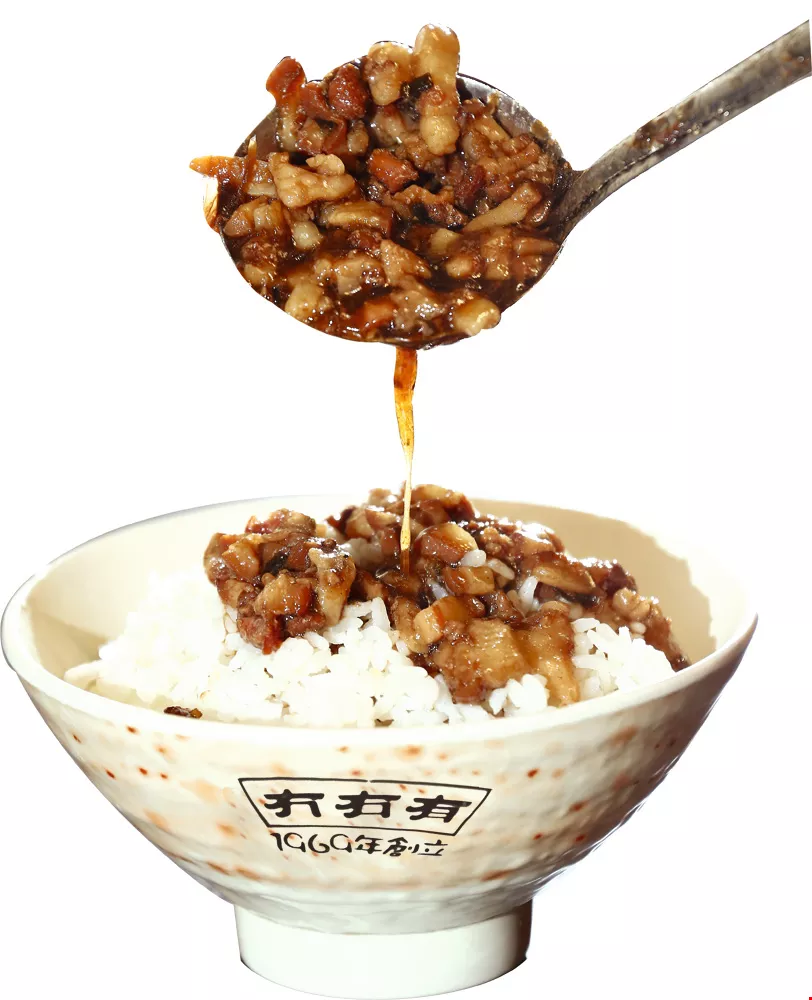
Pa Ding Wu Noodle House, a 50-year-old establishment, is famous for the humorous names it has chosen for its dishes, but its hottest-selling item is a no-frills bowl of braised pork rice.
Pa Ding Wu Noodle House, on Liaoning Street in Taipei, has a very unique Chinese name that literally translates to the “nothing–one–some” noodle stand. Chosen by the mother of current proprietor Wu Zhixian when she established the shop in 1969, it means “from nothing to something; the longer you’re in business, the better it gets.”
The restaurant is famous for the humorous names it has chosen for its dishes, but its hottest-selling item is a no-frills bowl of braised pork rice.
Braised pork rice is a lowbrow dish developed in Taiwan in the 1960s. Back in those less affluent times, a bit of pork broth mixed in with a bowl of white rice was a delicacy. Wu Zhixian, now 55 years old, learned how to make the dish from his grandmother. Using her secret recipe, he entered the Taipei City Government’s Lobabeng Festival in 2008. After he was shortlisted in an initial round of “passerby voting,” a judging panel of ten foreigners awarded the win to Wu, who thus walked away with the grand prize for the best braised pork rice in Taipei City.
Even though it’s been nearly 30 years since he took over the store, Wu still uses his family’s secret recipe. He personally makes each pot of the braised pork for which his restaurant is best known—this task is never entrusted to outsiders.
Each morning at 9:30 a.m., the butcher delivers prime cuts of pork. Wu first grinds the meat, taking care to get just the right mix of fat and lean. He adds star anise, five-spice powder, pepper, and other spices, sautés and then simmers the meat for 50 minutes, stews it for two hours, then turns off the flame and keeps it covered for two more hours to thoroughly cook the flavor into the broth.
To serve, the pork and its broth, with their complex blend of flavors, are poured over the white rice, while some pickled radish on the side helps cleanse the palate. Each batch weighs about 36 kilos, and sells out in a day and a half.
Says Wu: “In eating, there’s no such thing as a first prize. Only food competitions hand out first prizes. Good eating is a very subjective thing.”
Time-tested recipes are the cornerstone of traditional home-style cooking. Gourmet food critic Yeh Yilan feels that the more any particular lowbrow dish has taken on the status of a classic, the more important it is that those who make it stick to a simple, straightforward, traditional sort of taste. Such dishes can withstand the onslaught of new trends, so the temptation to change must be resisted.
Wu Zhixian grew up watching his family run a self-serve buffet out of their home on Beiping East Road in Taipei, and admits that the hard work had little appeal for him. Wanting to take his own path, he sold real estate and office machines for a time, but after marrying at age 28 he threw in the towel and came back home.
He recalls with a chuckle: “When I was young, I thought running a little hole-in-the-wall eatery was cause for shame. I never wanted my classmates to see me helping out with the cooking.” Little did he know that he would expand from a tiny night-market stall on Liaoning Street to open four branch locations, and next year he’ll be opening up a shop at an Eslite bookstore in Suzhou, China.
But what has been the secret to success?
According to Wu, “time + expertise + the exact right mix” yields “the good old-time taste.” The simpler something is, the longer it takes to get it just right.
“They say practice makes perfect, but that’s easier said than done. There are a whole lot of little details to deal with.” When he was helping relatives open a shop in the Xidan area of Beijing, Wu found that despite using the exact same recipe and importing all the very same ingredients used in Taiwan, the taste of the stew broth still came out different because of the different water quality in Beijing. He is now preparing to pass the three-generation family business on to his son, who just recently finished his military service.
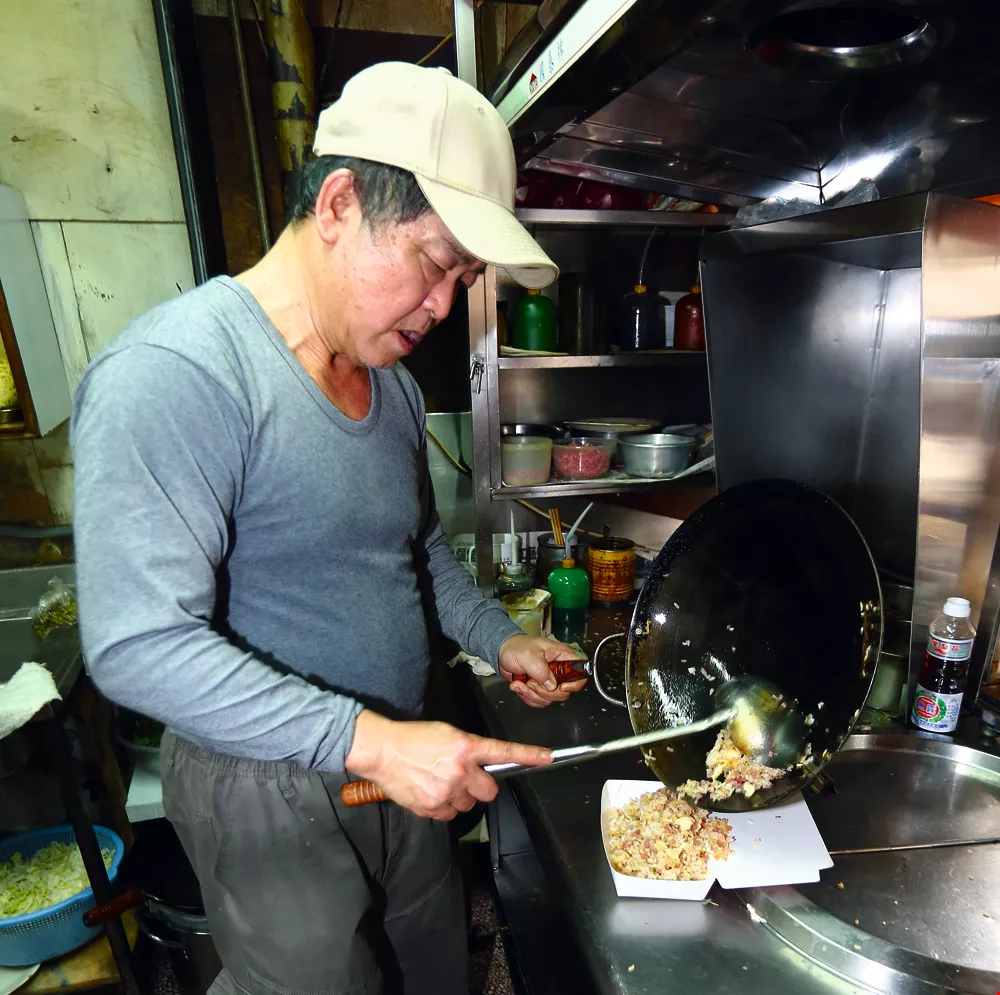
At Minsheng Fried Rice, which recently skyrocketed to fame after taking top place in a people’s choice “best fried rice” voting event, proprietor Huang Taishen stays in perpetual motion for as long as the shop is open for business.
At Minsheng Fried Rice, the sudden influx of new customers after its recent rise to fame has not scared off the old customers. But they do intelligently wait until 2 p.m. to show up.
A woman who’s been helping at the shop for a long time raises her voice to ask the customers waiting in line: “We’re about to start doing a batch of fried rice with fish bits. Who wants in on it?”
A long-time customer named Mr. Xu, who often makes a special trip in from suburban Xizhi just for the fried rice, says that timing your visit to arrive just as they’re getting ready to do a batch of fried rice is the smartest choice because, “what the heck, it’s all delicious no matter what you order, and this way you don’t have to wait too long.”
Though the shop supposedly closes for the afternoon at 2 p.m., 57-year-old proprietor Huang Taishen continues working furiously until 2:30. He always goes back home in the afternoon to shower, eat, and take a nap, then comes back to the shop to make fried rice again from 4:30 to 9:30 p.m. The process starts all over again the next morning at 9:30. Day after day, he leads the existence of a worker bee.
The routine is unimaginably tough. Three people ply their trade with one burner in a shop of less than seven square meters. The proprietor never stops moving. Each day, they go through two big bags of short-grain rice and 200 eggs. Two electric rice cookers turn out a good 20 batches of rice per day.
Huang, who previously ran an auto repair shop, a nightclub, and a restaurant, learned how to cook from the chef at his restaurant. He decided 30 years ago to close his restaurant and just run a simple streetside shop out of a tiny first-floor storefront next door to his home. With nothing but one wok to make fried rice and one pot for soup, his business slowly grew in repute. Now, 30 years on, I ask him the secret to making good fried rice.
He chuckles: “There’s really nothing special about it, you just have to make each serving as if you were going to eat it yourself.” But there certainly are tricks to the trade. Otherwise, wielding a five-kilo wok for six or seven hours a day would quickly lead to repetitive stress injury.
Food critic Yeh Yilan points out that professional-quality fried rice can’t be made at home. “The rice has to be done exactly right—just the right moisture content, and just the right stickiness, and you can’t let the grains get mushed together. And once it’s fried, you have to be able to tell that it’s been done in a really hot wok. You don’t get that kind of quality at home.”
But that is precisely what you get with fried rice from Huang Taishen.
For beef fried rice, for example, after stir-frying the beef, Huang puts it aside until needed. He then pours beaten egg into the hot wok. As it begins to set, he adds in rice, followed by cooking oil, soy sauce, salt, pepper, and satay sauce. Skilled hands ensure that each grain of rice has a thin coating of yellow egg. Next, water spinach and the stir-fried beef are added in. Five minutes later, a colorful, fragrant, tasty batch of beef fried rice is ready to serve.
But less knowledgeable customers from afar may miss out on the soups that Huang cooks up in his sizzling-hot wok. When he ran a restaurant, Huang learned from his chef how to make “granny soup” using water spinach, tree fungus, and shredded ginger. Long-time customers know to ask for this home-style soup, even though it’s not on the menu.
Just as the eatery is closing up for the afternoon, a taxi stops nearby and the driver exchanges a knowing glance with Huang, who serves up a bowl of noodles with tomato and egg.
“This is my kitchen,” quips the taxi driver, who learned about Huang’s fried rice from a fare 20 years ago. He tried it out, and has been coming back ever since, eating a bowl of noodles every day for lunch and a bowl of white rice with stir-fried vegetables for dinner. He is now good friends with Huang, and even stops by each lunar new year’s to share a meal with the proprietor’s family.
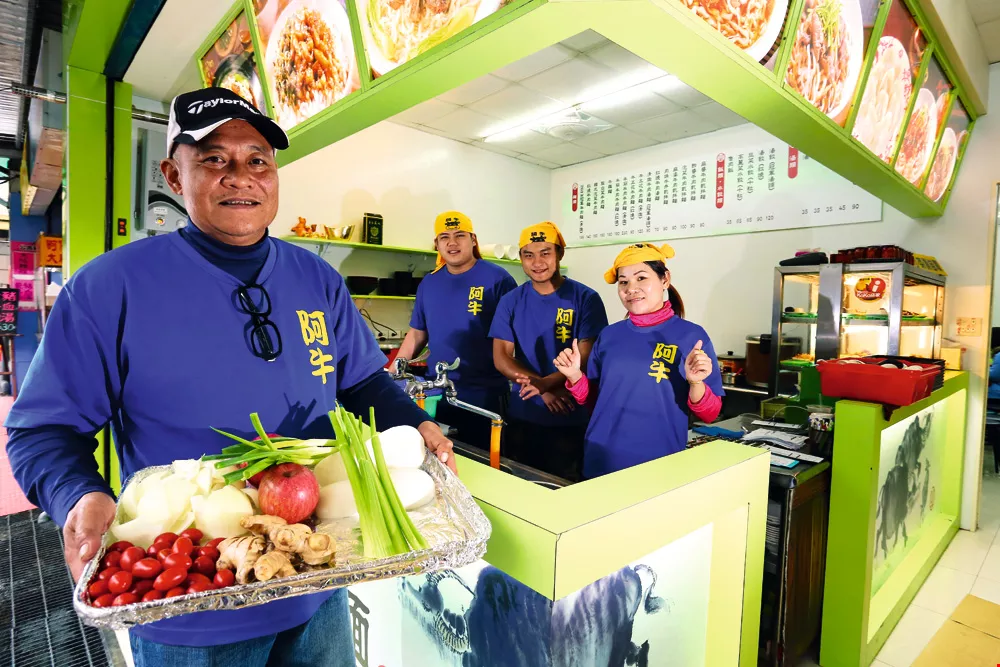
Lin Xiuyuan (nicknamed “Ah Niu”) took top prize in the Taipei International Beef Noodle Festival’s clear broth division for two years in a row. Years of hit-and-miss experimentation went into the recipe for his prize-winning broth.
Food critic Yeh Yilan comments: “Contests organized by media organizations and government entities stir up a lot of interest that spurs development of the food and beverage industry and stimulates consumption. But more important still is for eating establishments themselves to be really good at what they do.”
In addition to contests and people’s choice events, she says, it is especially critical that small eateries be regarded as an important urban resource.
Since eating is a big tourist draw, in addition to organizing contests, governments could consider the possibility of adopting a coordinated set of related measures, such as enhancing public sanitation, running shuttle buses, designing bus routes to ensure easy access to the right places, and making maps available. And they could also do a comprehensive survey of traditional home-style recipes, record stories about eateries, and compile a history of their development and their relationships with the areas or cities in which they are located, to ensure that good traditions are kept alive. “To ensure that Taiwan’s precious home-style eatery culture remains sustainable over the long term, we’re going to have to really put in a lot of effort.”
Mom-and-pop eateries have long been an integral part of daily life for everyday people in Taiwan. If all you want is something simple to fill up on, NT$25 will get you a carefully prepared bowl of braised pork rice. And something just that simple is all it takes to get you feeling like you’re in paradise.
Home-style eats take you back to an earlier time when human ties were built on familiarity and trust. That is the real reason why Minsheng Fried Rice took top place in the voting. And therein lies the unbeatable attraction of the best of the best in streetside eating!
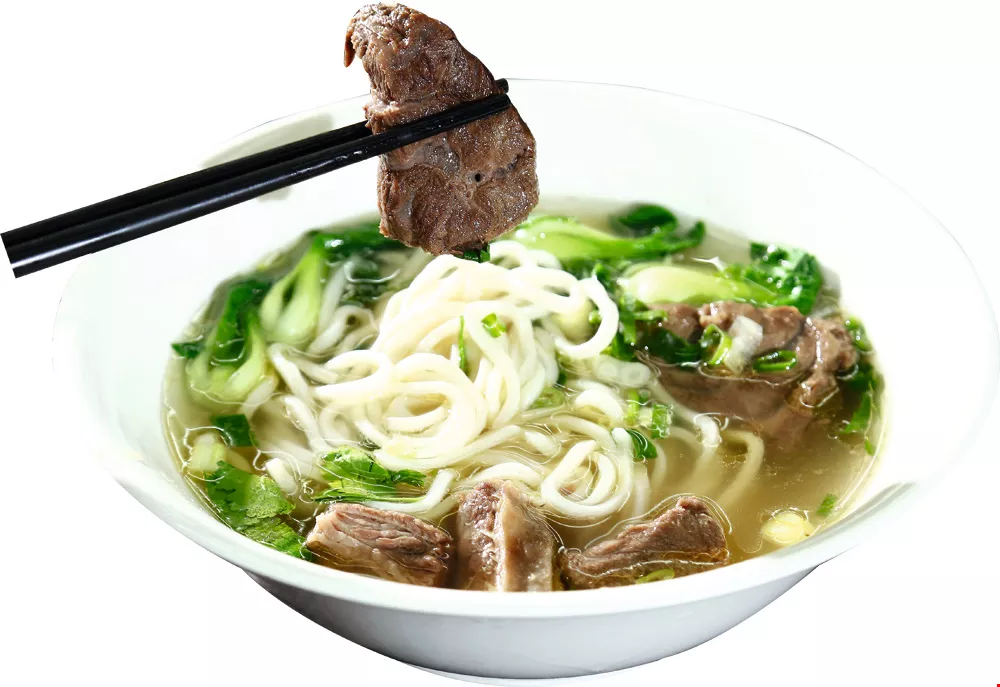
Generous chunks of beef plus noodles cooked exactly al dente, along with a lovingly made beef broth, are the makings of a prize-winning bowl of beef noodles.

@List.jpg?w=522&h=410&mode=crop&format=webp&quality=80)
@List.jpg?w=522&h=410&mode=crop&format=webp&quality=80)


