

The Kingdom of Saudi Arabia occupies most of the Arabian Peninsula, bordering on the east with the Arabian Gulf, on the west with the Red Sea, to the south with North and South Yemen, Aden, Oman, Qatar and the United Arab Emirates, and to the north with Kuwait, Iraq and Jordan. With an area of some 2,115,000 square kilometers, Saudi Arabia plays a leading role in Middle Eastern affairs. The Kingdom's population is about 8 million, making the Republic of China's population density almost 120 times greater.
Religion plays an important role in Saudi Arabia, since its citizens are all devout Moslems. The Islamic faith requires its adherents to say prayers five times a day at specific times calculated according to the Islamic calendar. Prayer sessions, varying in length from 10 to 30 minutes, may be performed in a mosque, in the home or even in a public place. But whatever happens all other activities must cease. Apart from the daily prayer sessions, Moslems must go to the mosque on Friday, the Moslem Sabbath. The ninth month of the Islamic calendar is Ramadan, which this year lasted from June 22 to July 23. During this month, Moslems may not eat or drink during daylight hours.
The climate in Saudi Arabia is hot and dry. Much of the Kingdom's interior is desert, so the people must live and work near oases. Agriculture is widely dispersed and the Kingdom is not self-sufficient in vegetables or fruit. The staple meat is mutton.
Saudi Arabia's principal natural resource is oil, and according to estimates, the Kingdom has reserves of 168 billion barrels, about 26 percent of the world's total. After the energy crisis of the 1970s, Saudi Arabia's influence in the international community was greatly enhanced. Though oil has made Saudi Arabia wealthy, its people are fully aware that they are relying on a finite resource. They are therefore making efforts to diversify.
While the rest of the world is suffering from a severe recession Saudi Arabia is prospering. New airports, highways, harbors, universities and houses are being built.
The tenets of Islam are irreconcilably opposed to Communism, and Saudi Arabia shares staunch anti-communist views with the Republic of China. In recent years, the ROC and Saudi Arabia have strengthened their friendship with numerous cooperative agreements. The late King Khaled once publicly proclaimed: "The relationship between the Republic of China and the Kingdom of Saudi Arabia is friendly and firm. No third party can damage this relationship."
The ROC's Ambassador to the Kingdom of Saudi Arabia, Hsueh Yu- chi, pointed out that there are now more than 10,000 specialists and technicians from Free China working in Saudi Arabia. When Ambassador Hsueh first arrived in 1975, Chinese technicians were only engaged in small-scale agricultural projects. Now the cooperative projects have become so large and diverse that it will require two Sinorama reports to cover them.
In 1965, the first ROC agronomists were sent to take part in rice cultivation projects in Saudi Arabia. In 1972 a formal agreement between the two governments was signed, and the ROC's agricultural mission to the kingdom was officially established. The mission was headquartered in Hofuf, a desert oasis and rice- growing region some 360 km from the Saudi capital of Riyadh.
The harsh climate and geography of Saudi Arabia have made imports of rice necessary. Since rice forms an important part of the Saudi diet, the mission's first task was to cooperate with local organizations to increase production of the crop. Chief of the ROC team at Hofuf, Lin Cheng-yi, recalls that numerous technical problems arose. "Although underground water is plentiful, it is brackish and therefore harmful to crops. We worked out a two-pronged solution to the problem. First, we developed strains of rice which are less affected by heat and saline soil. Second, we started a soil desalinization program. The climate in Saudi Arabia is dry, so there are few insect pests. Once the salt problem is overcome, the long hours of sunlight will make the region ideal for agriculture," he said.
Originally the agricultural cooperation agreement between the ROC and Saudi Arabia was renewed on an annual basis. In 1977 the mission's work reached the end of its first phase, and the excellent results at Hofuf caused the Saudis to extend the cooperation agreements to five years. Since then, the mission's activities have broadened to include promoting the successful methods used at Hofuf to other regions.
The mission is now developing vegetable projects, including those for turnips, cabbages, cauliflowers, onions, beans, lettuce, eggplant, tomatoes and watermelons. Members of the mission are particularly proud of the results in the seedless watermelon project.
The first five-year agreement expired last year and work is proceeding on drafting a new one, for which the Saudi government has increased funding from 20 million riyals a year to 70 million. The number of mission members is to be increased from 42 to 86, and a 560- hectare farm, located five kilometers from the mission headquarters in Hofuf, will be provided for experimental plots.
Other ROC projects in Saudi Arabia involve a fishing team which arrived in 1970, and water conservation work which began in 1979.
[Picture Caption]
1. Much of Saudi Arabia is desert and this picture of the red desert near the city of Riyadh shows red sand dunes receding into the distance. 2. Mission members examining different crops at the demonstration farm. 3. Mission members assist local farmers with seedless watermelon cultivation. 4. At dusk herds are led back to the farms.
1. Saudi farmers are delighted at the prospect of a good income from the cauliflower crop. 2. New strains of rice are growing very well in Saudi Arabia. 3. These Saudi Arabian eggplants are a cross between the long Taiwanese and the round Egyptian eggplant. 4. Shepherds watching their flocks.
1. Ambassador Hsueh Yu-chi has been ambassador to the Kingdom of Saudi Arabia for seven years and has contributed much to the growth of Sino-Saudi relations. 2. This is a very common tree in Saudi Arabia. Its fruit is unique. 3. Mission Headquarters in Saudi Arabia. 4. The mission has introduced various small agricultural machinery to the Saudis. 5. Mission members at the cantaloupe patch. In the foreground division leader Lin Cheng-yi places straw on the soil to protect the melons. 6,7. In the desert camels are a common sight.
1. Saudi Arabia's largest city, Jeddah, is by the Red Sea and the scenery is studded with cacti. 2. The Saudis love to camp by the seaside. 3. Ruins of an ancient battlefield. 4. A night view of the ROC mission's fishpond. 5. Mission members share their fish raising experience with interested Saudis. 6. The owner of this private farm, who can be seen wearing the traditional Saudi garb, enjoys raising fish. 7,8. Ancient ruins near Riyadh.
1. A street scene in Jeddah. 2. A country scene in southwestern Saudi Arabia. 3. Only a little green occasionally decorates the yellow desert. 4,6. The Petroleum University campus is very beautiful. 5. The Saudis love to sing and dance as seen in this photo taken at a national park.
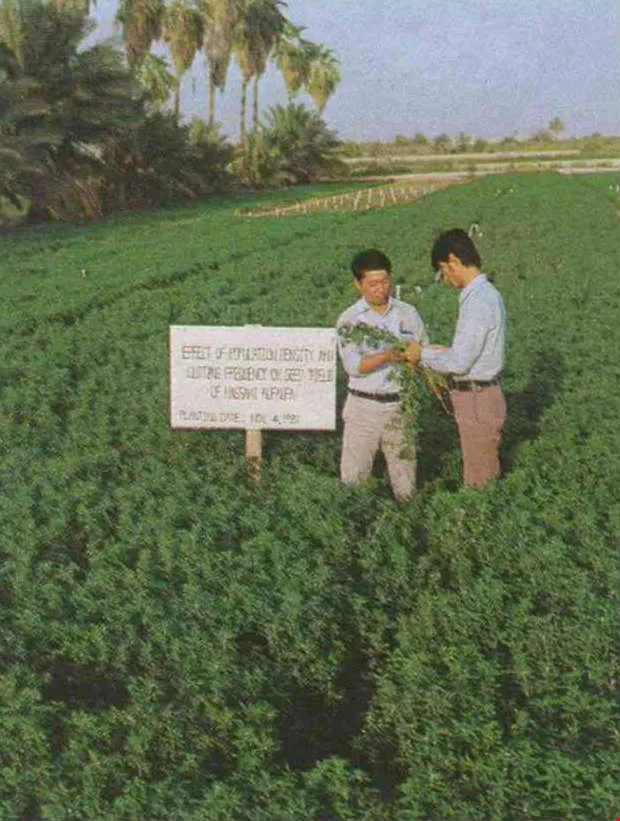
Mission members examining different crops at the demonstration farm.
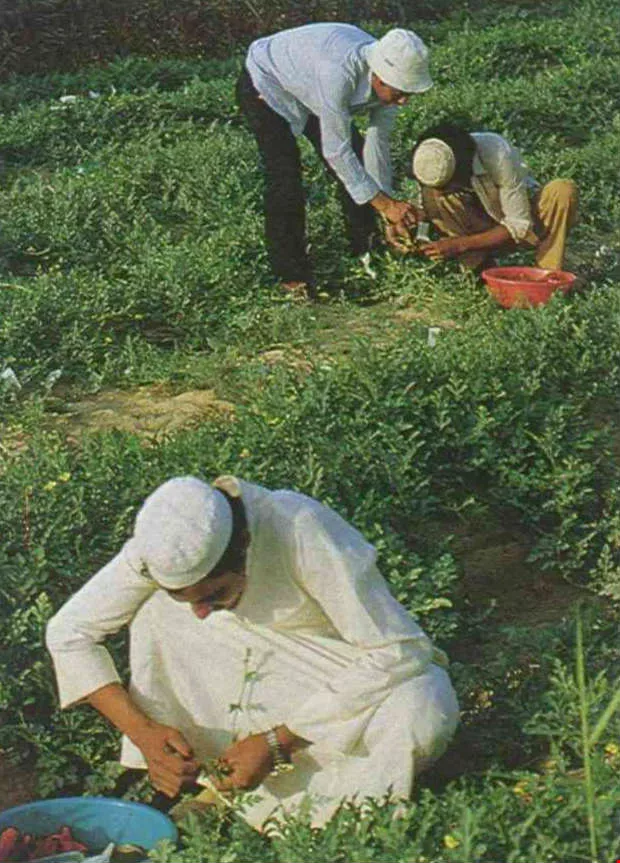
Mission members assist local farmers with seedless watermelon cultivation.
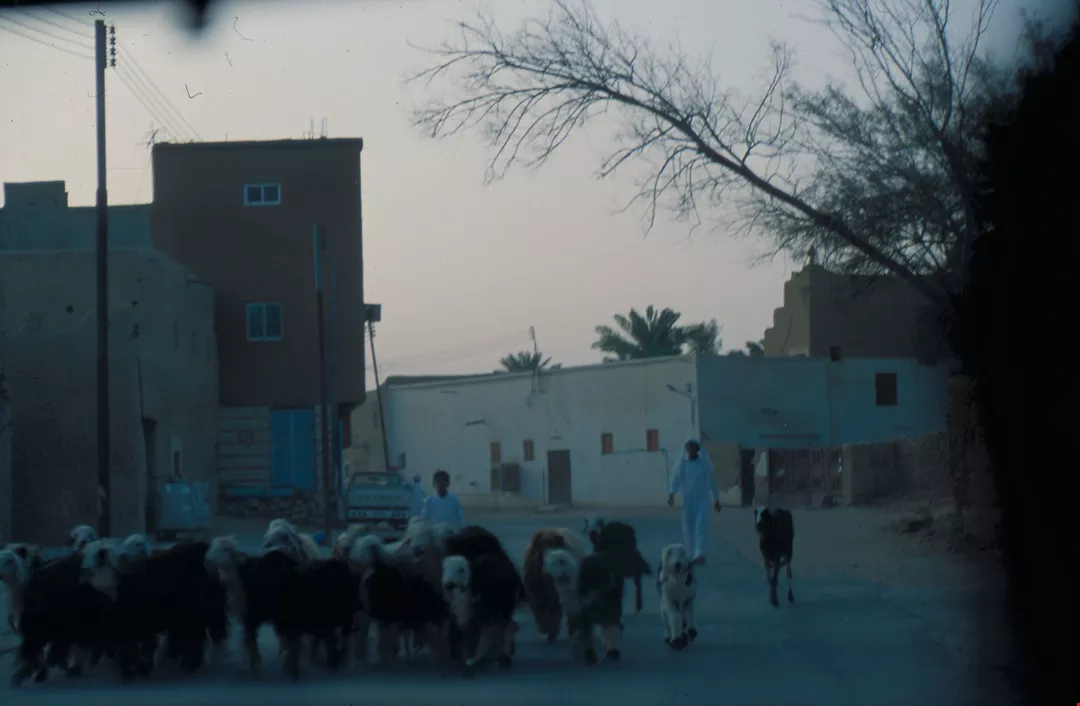
At dusk herds are led back to the farms.
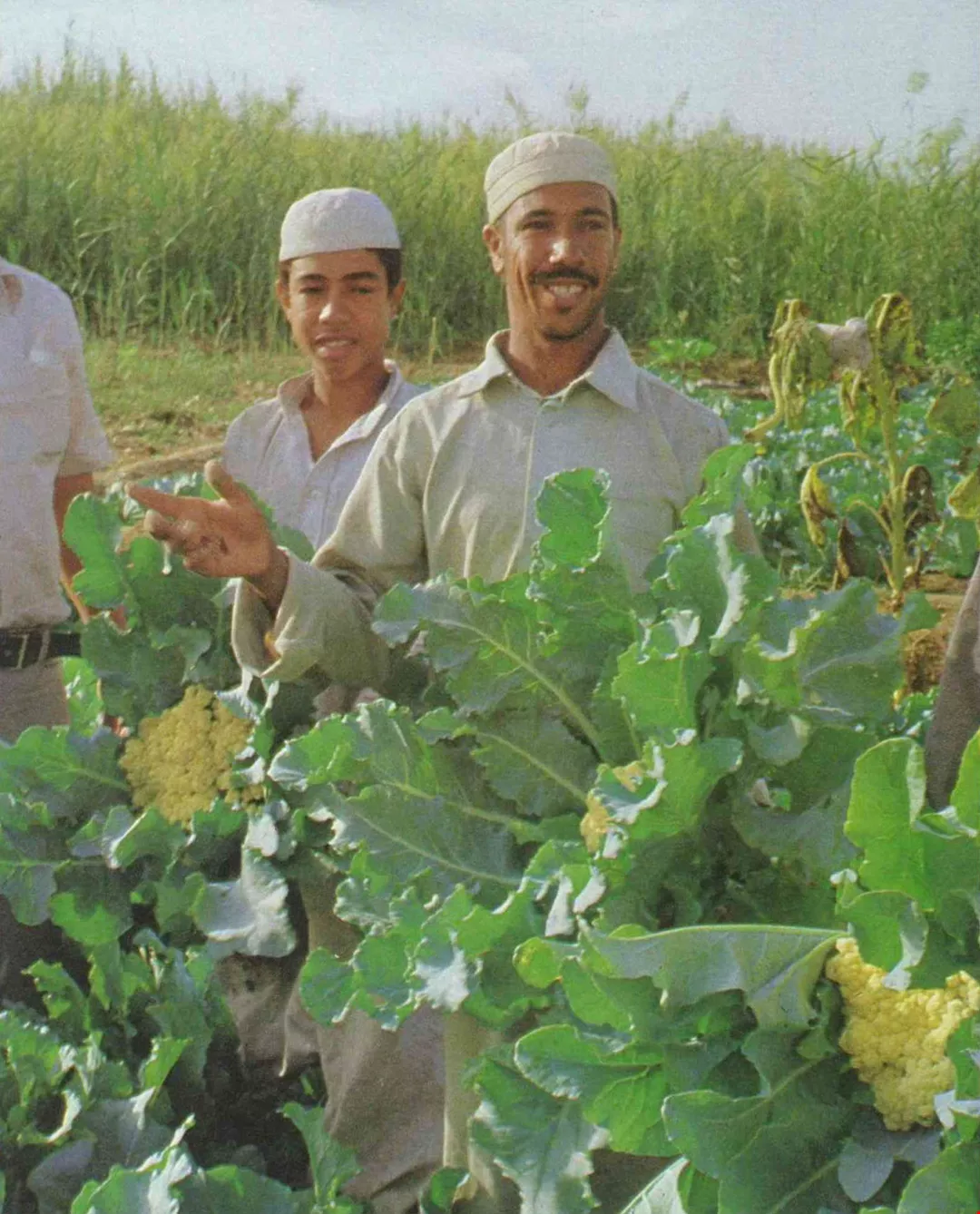
Saudi farmers are delighted at the prospect of a good income from the cauliflower crop.
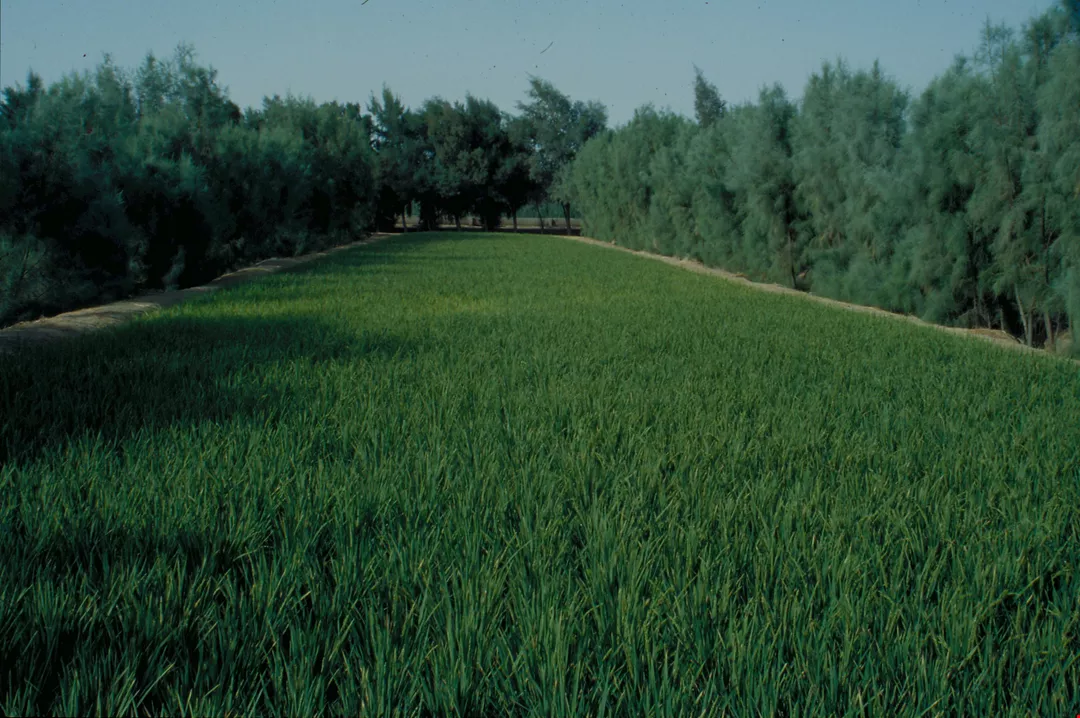
New strains of rice are growing very well in Saudi Arabia.
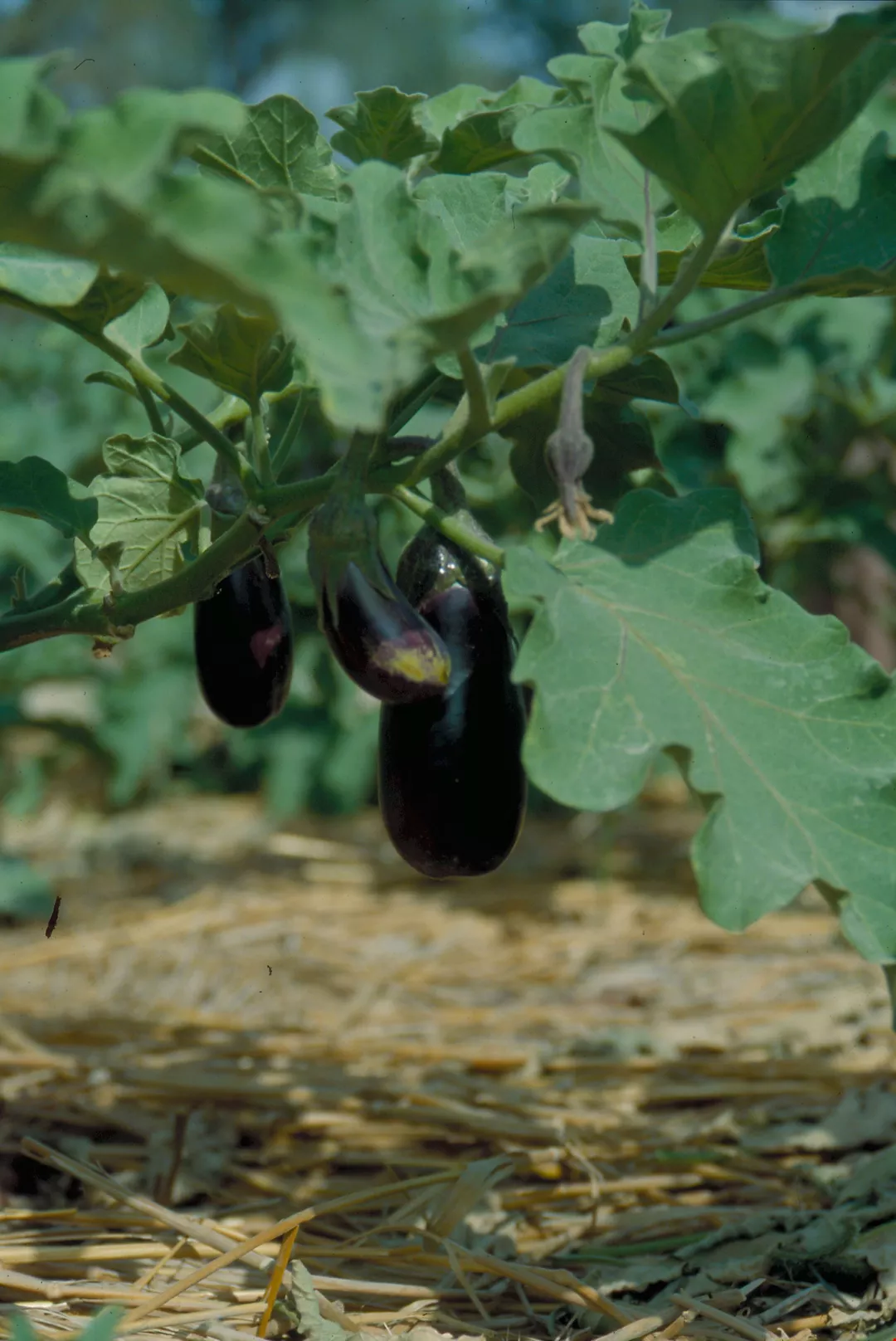
These Saudi Arabian eggplants are a cross between the long Taiwanese and the round Egyptian eggplant.
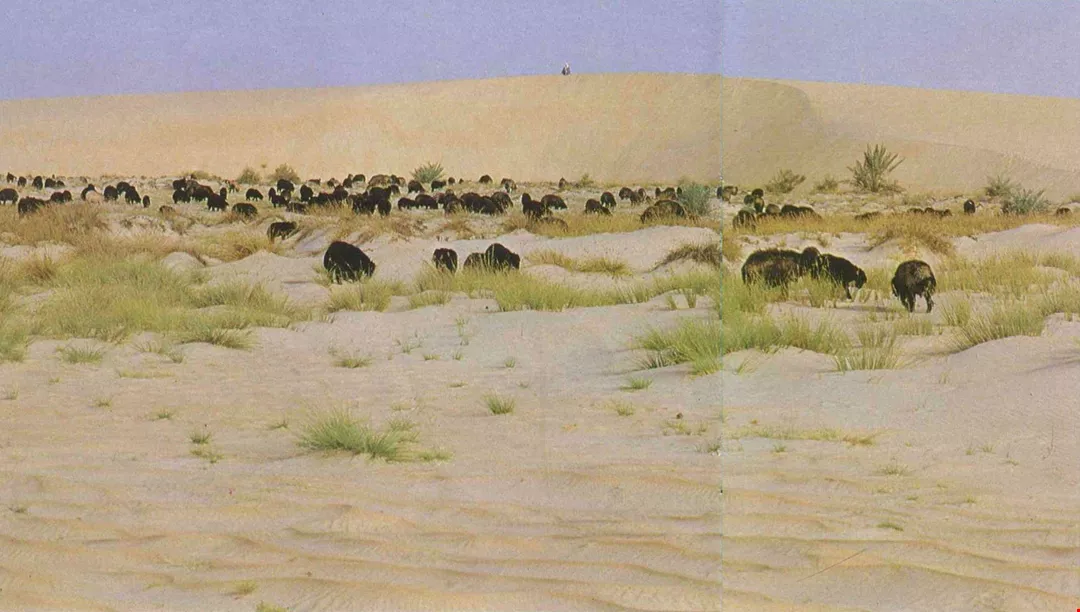
Shepherds watching their flocks.
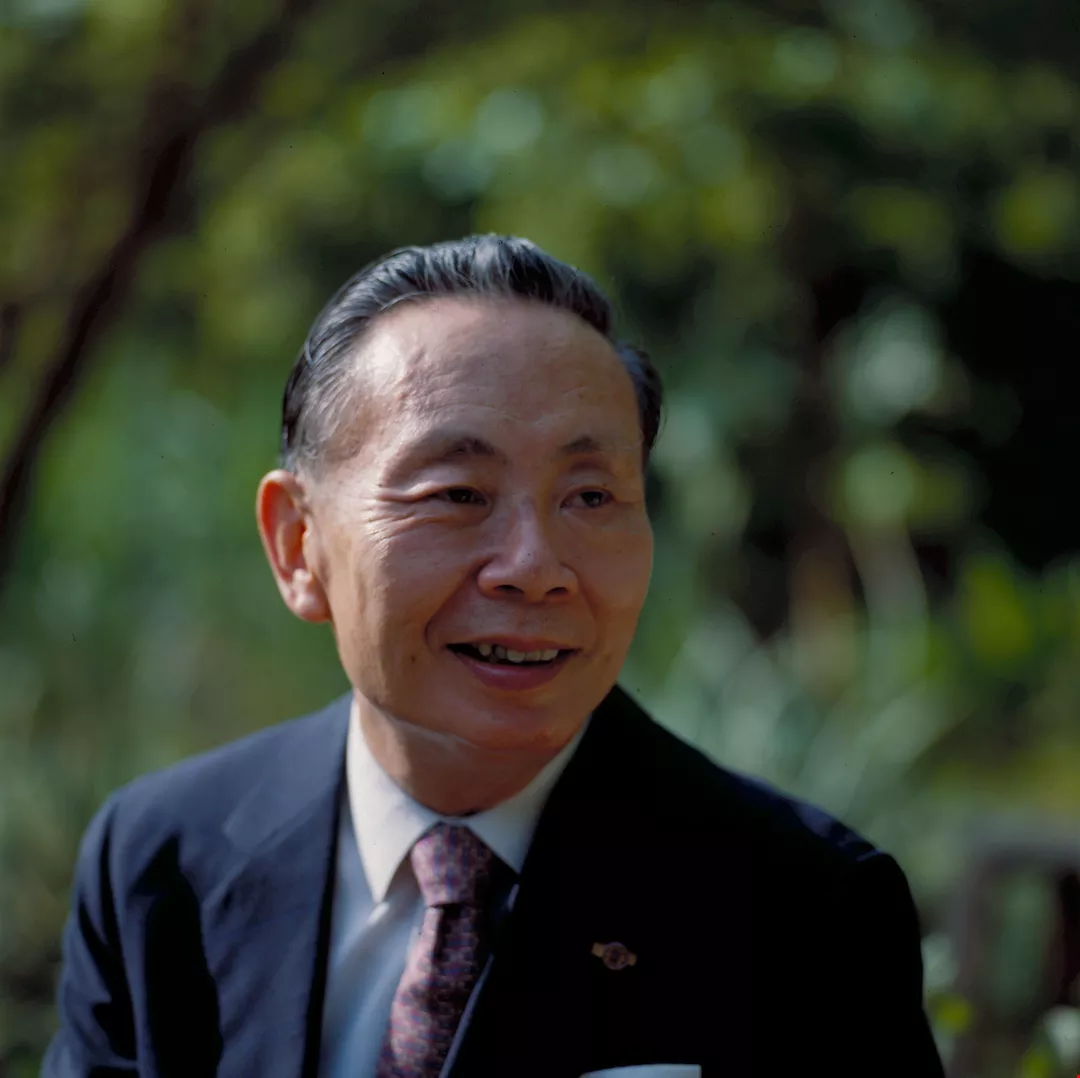
Ambassador Hsueh Yu-chi has been ambassador to the Kingdom of Saudi Arabia for seven years and has contributed much to the growth of Sino-Saudi relations.
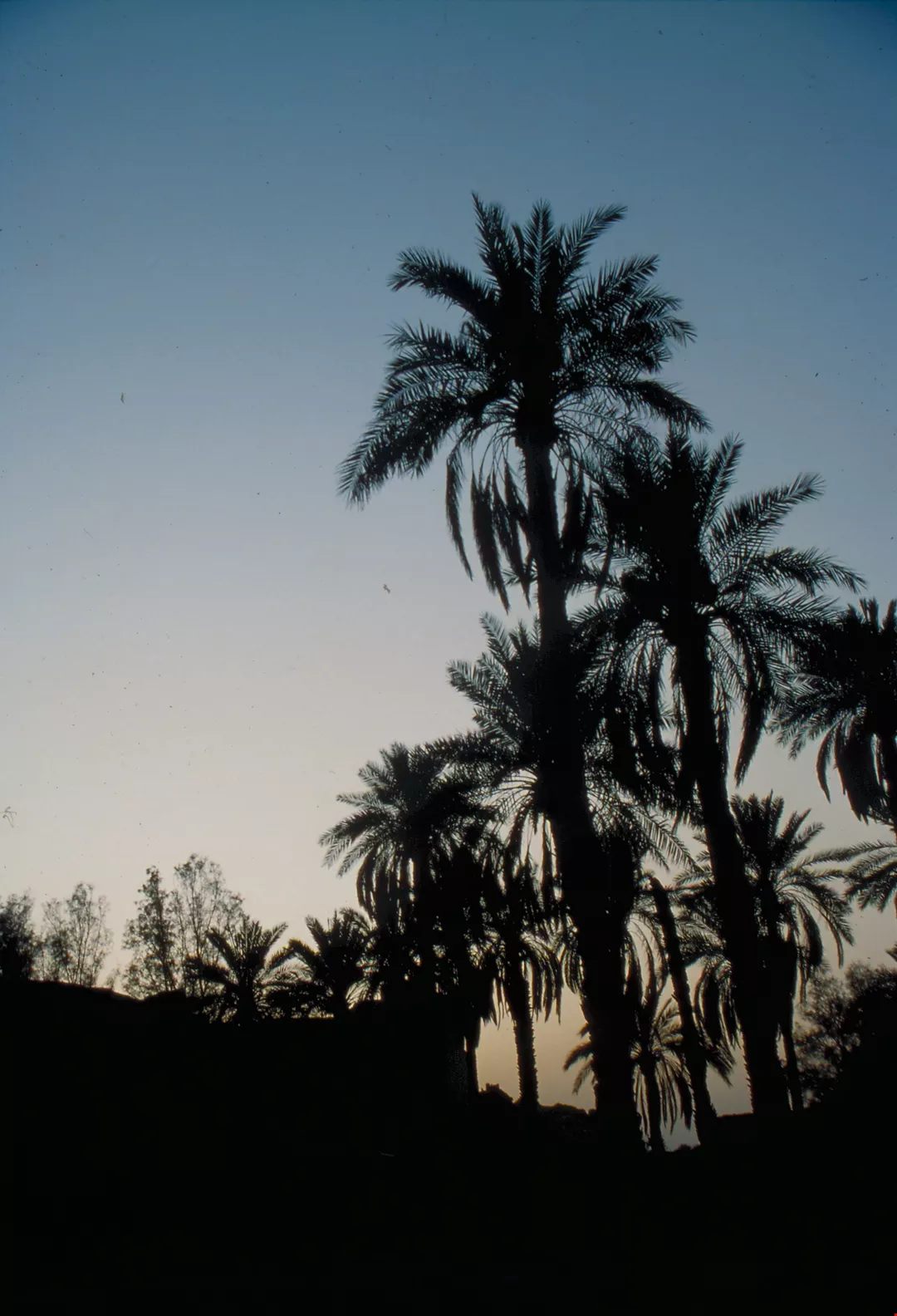
This is a very common tree in Saudi Arabia. Its fruit is unique.
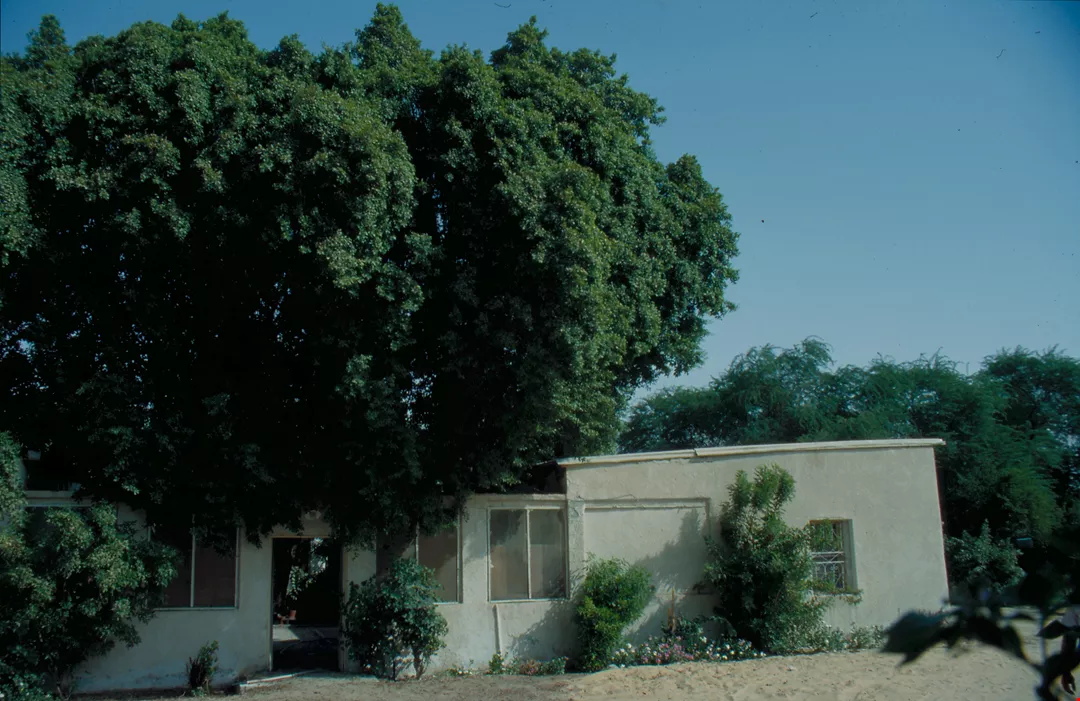
Mission Headquarters in Saudi Arabia.
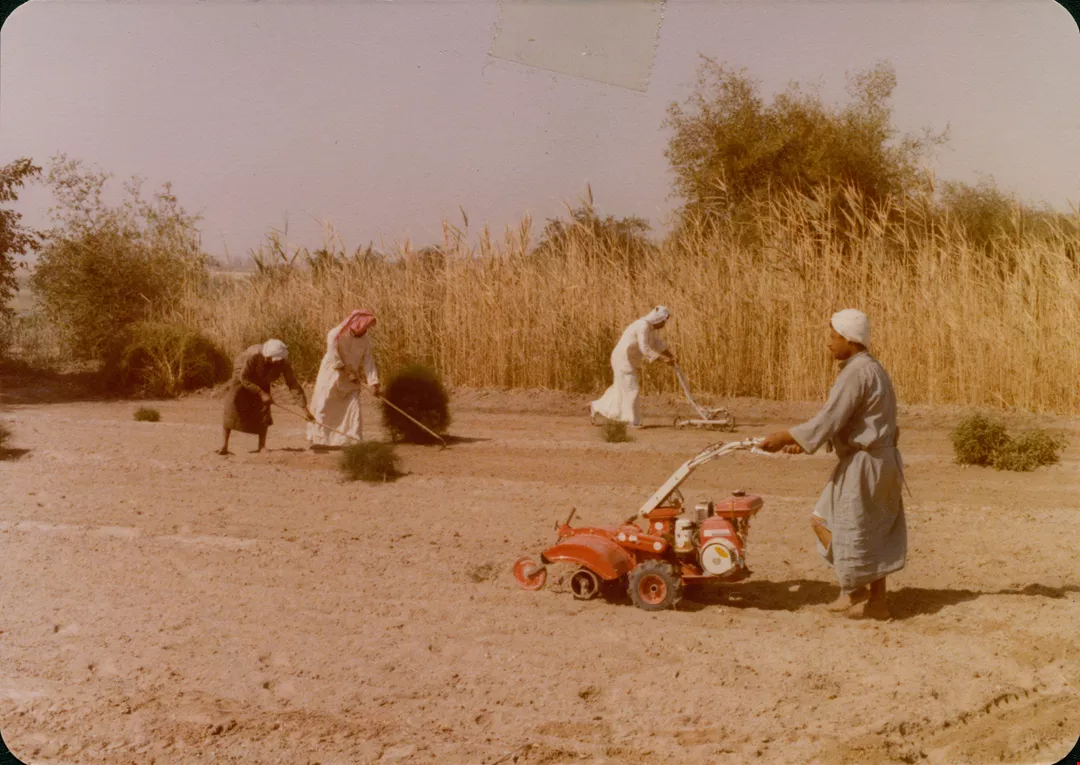
The mission has introduced various small agricultural machinery to the Saudis.
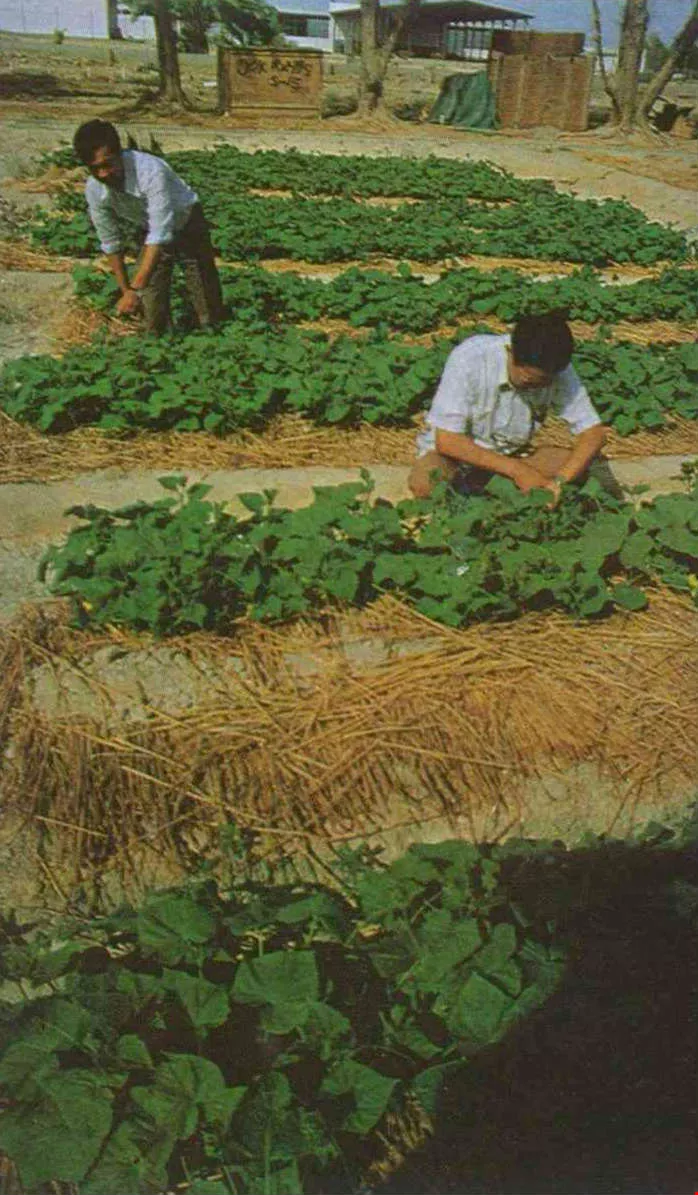
Mission members at the cantaloupe patch. In the foreground division leader Lin Cheng-yi places straw on the soil to protect the melons.
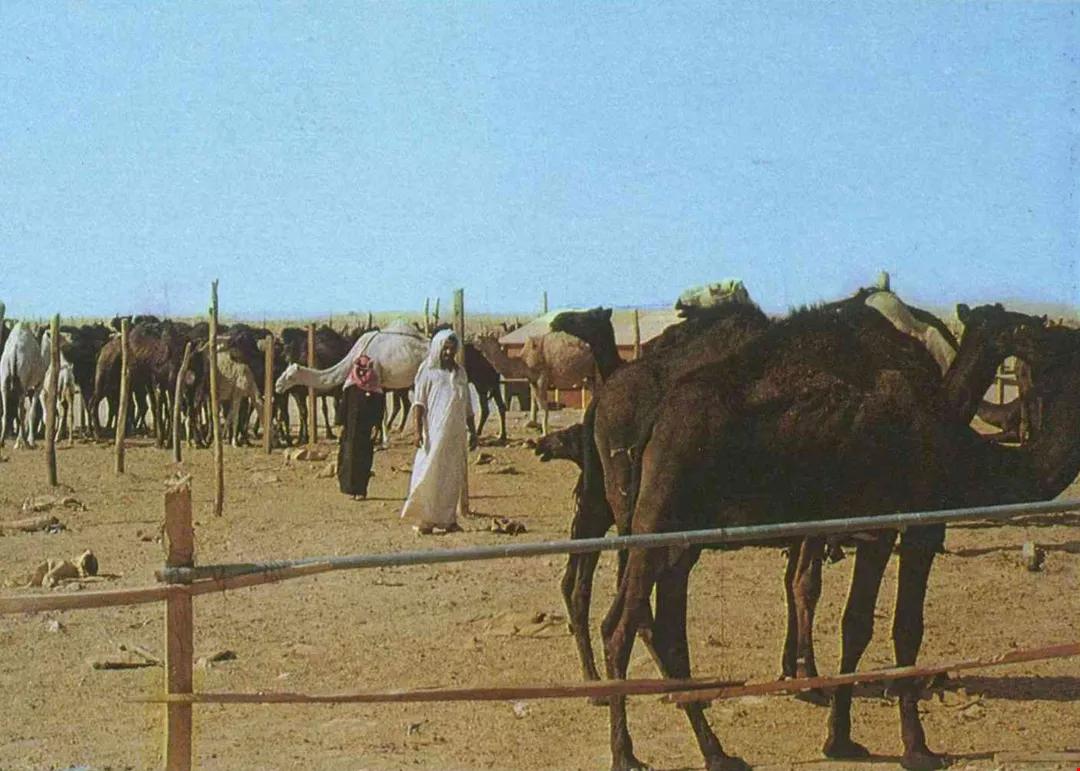
In the desert camels are a common sight.
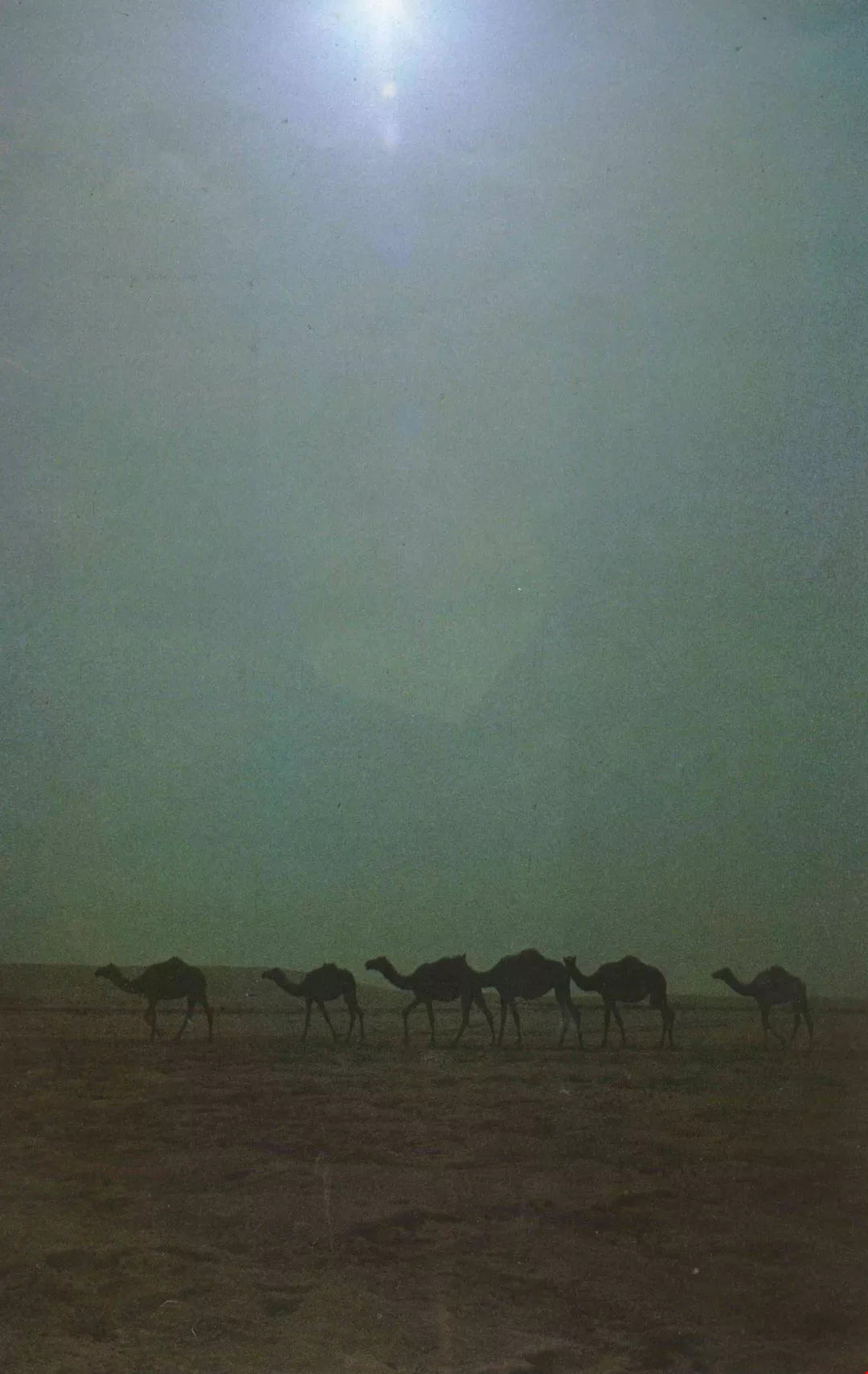
In the desert camels are a common sight.
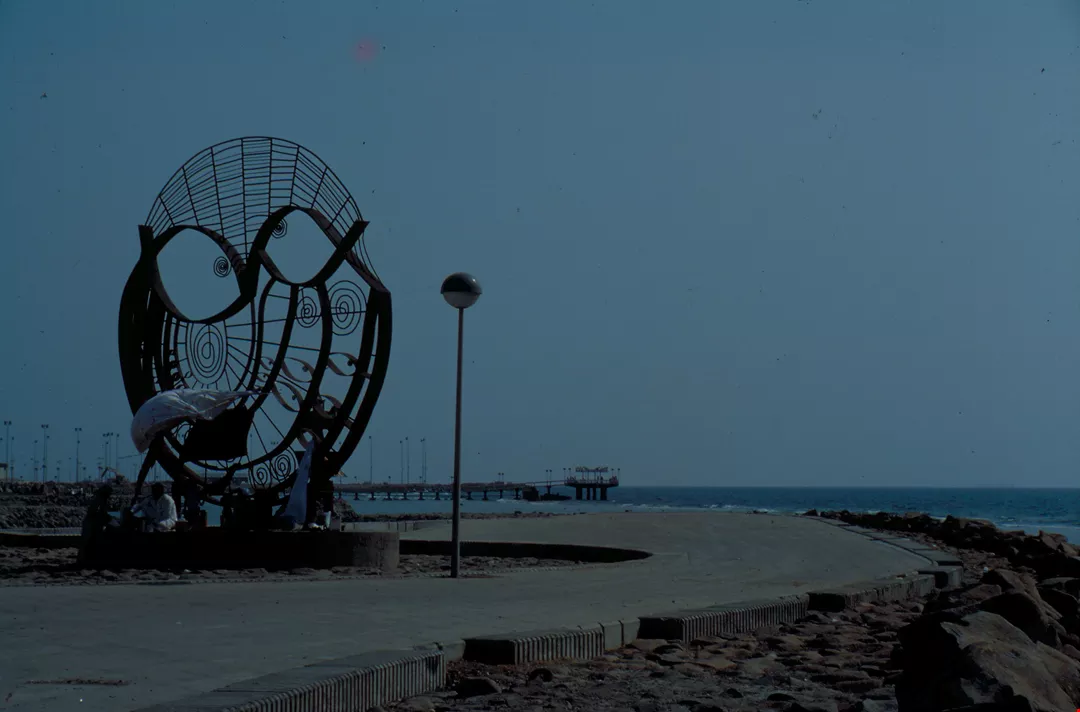
Saudi Arabia's largest city, Jeddah, is by the Red Sea and the scenery is studded with cacti.
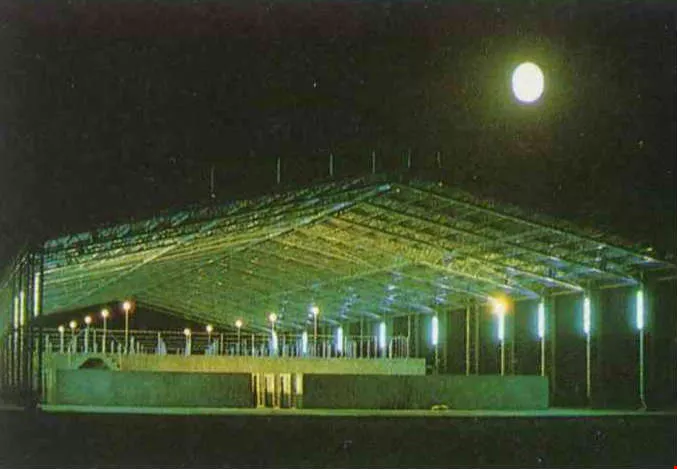
A night view of the ROC mission's fishpond.
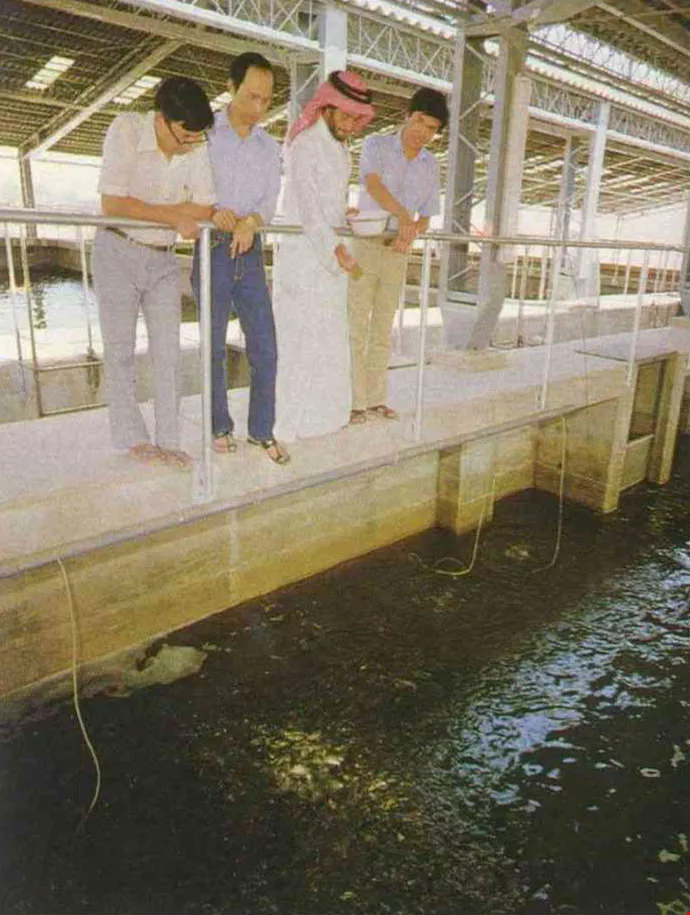
Mission members share their fish raising experience with interested Saudis.
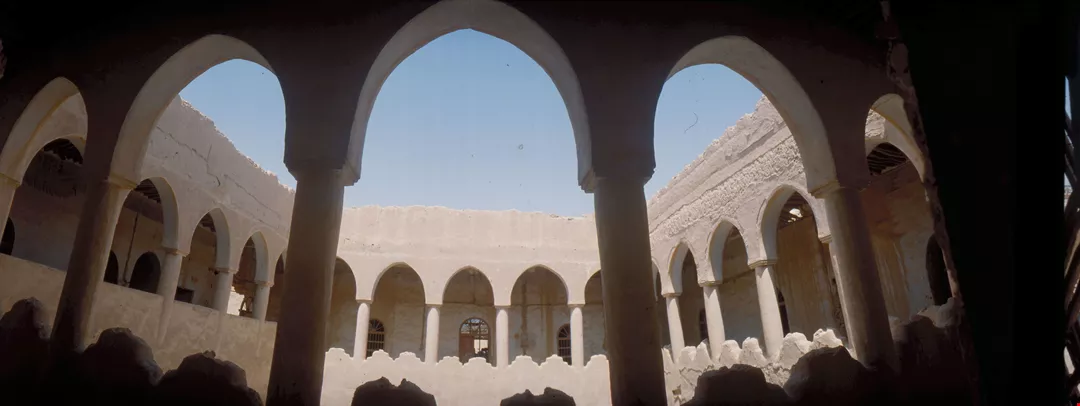
Ancient ruins near Riyadh.
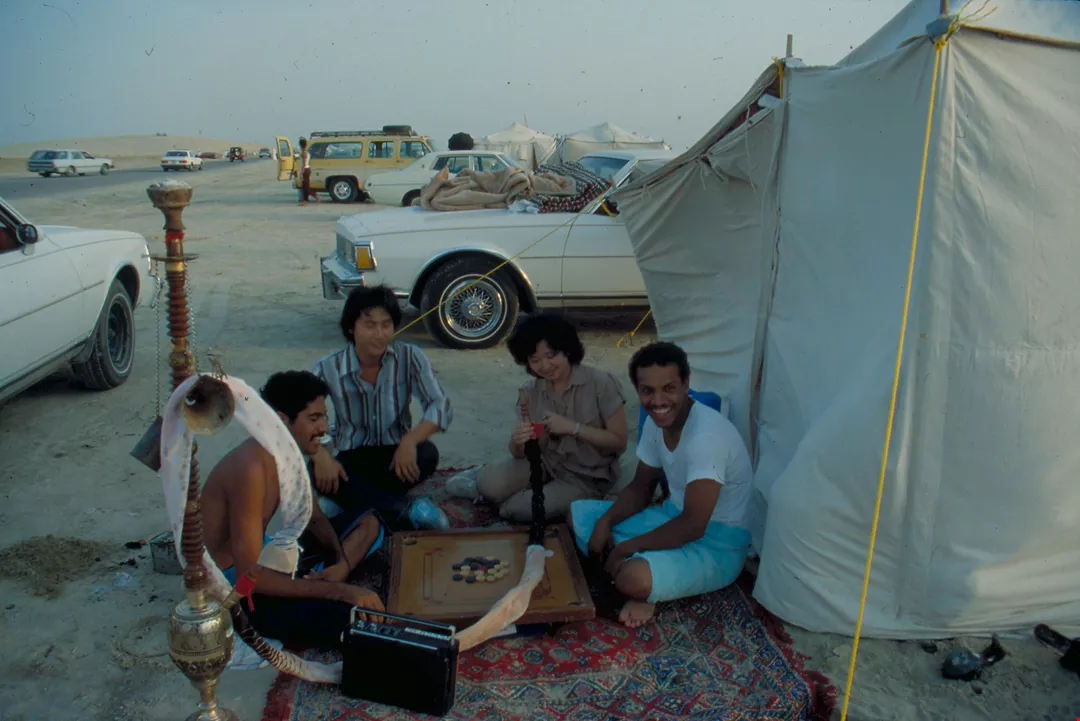
The Saudis love to camp by the seaside.
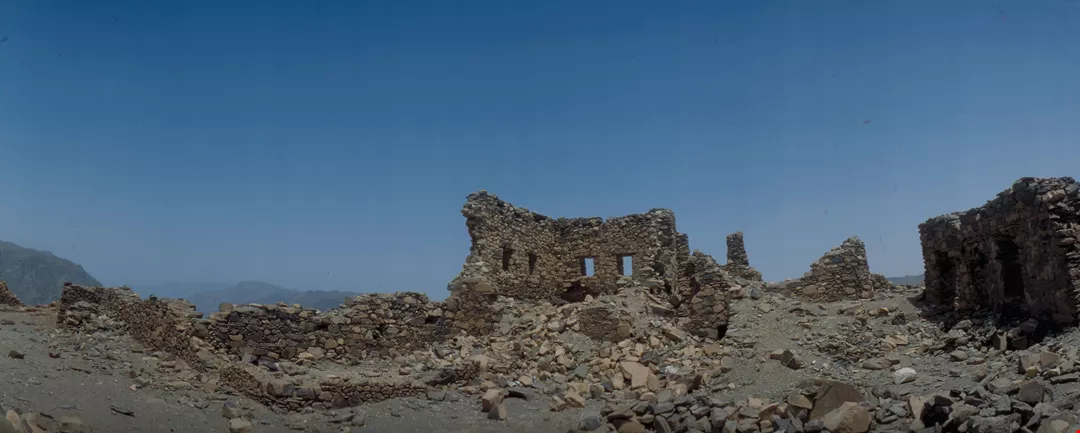
Ruins of an ancient battlefield.
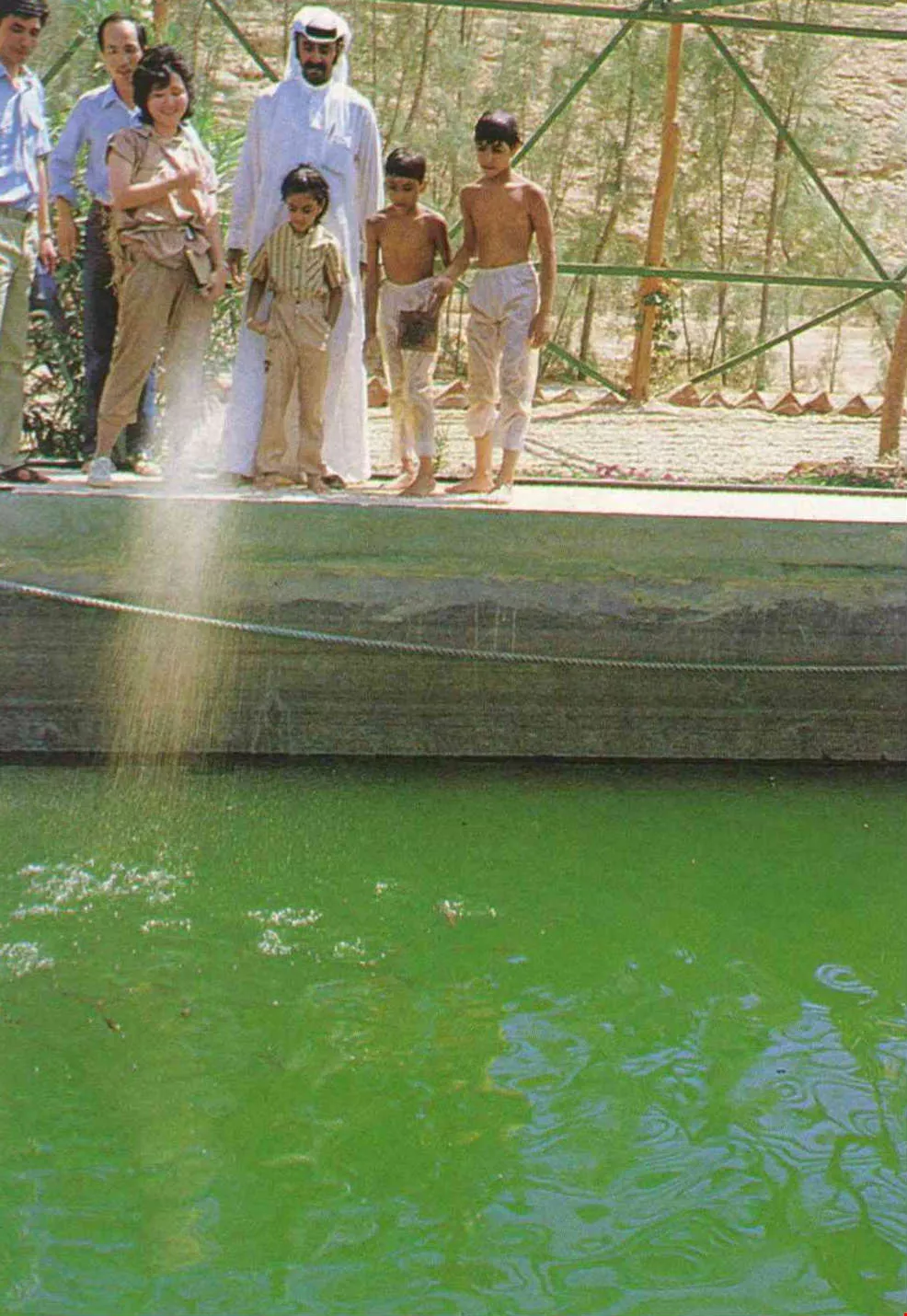
Mission members share their fish raising experience with interested Saudis.
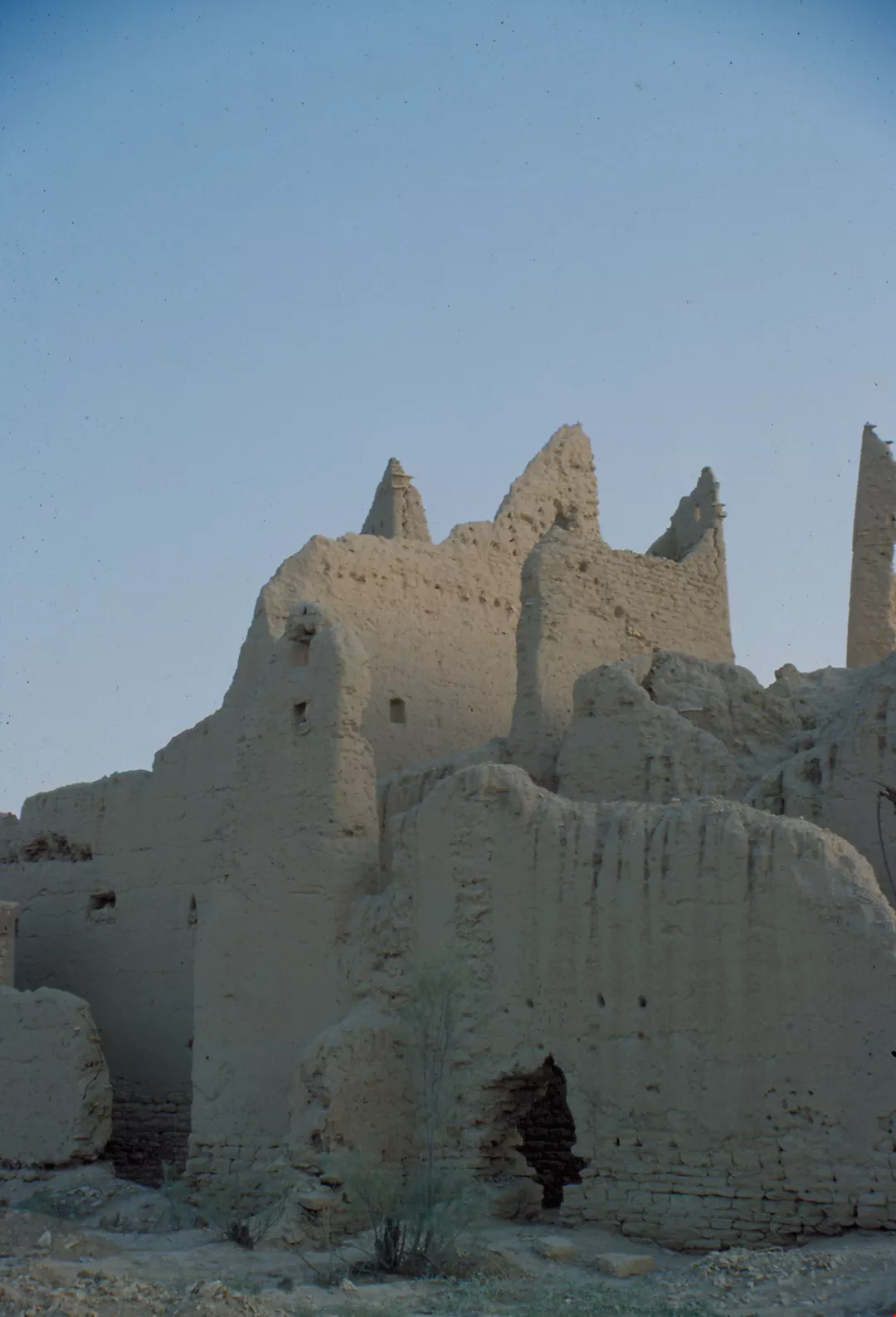
Ancient ruins near Riyadh.
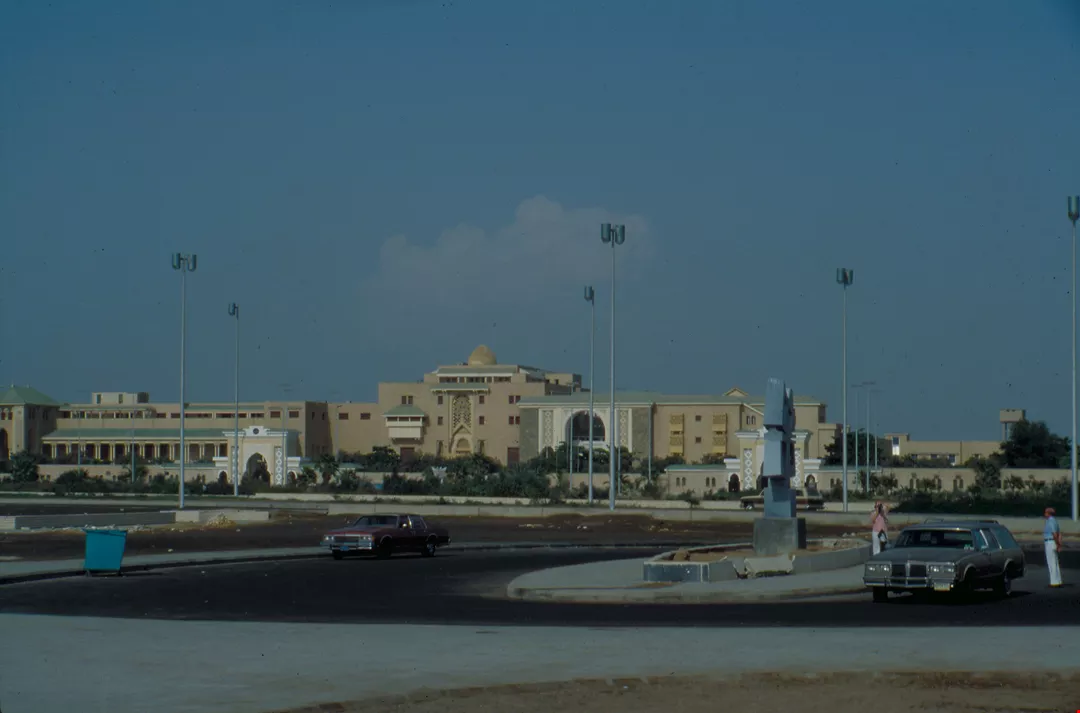
A street scene in Jeddah.
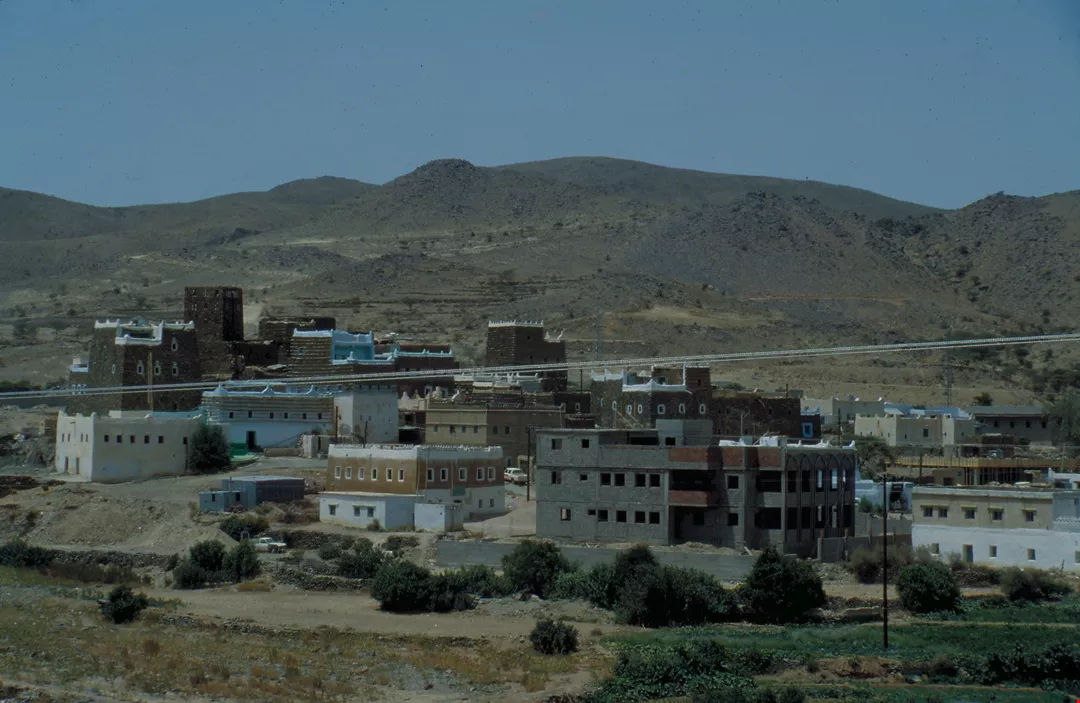
A country scene in southwestern Saudi Arabia.
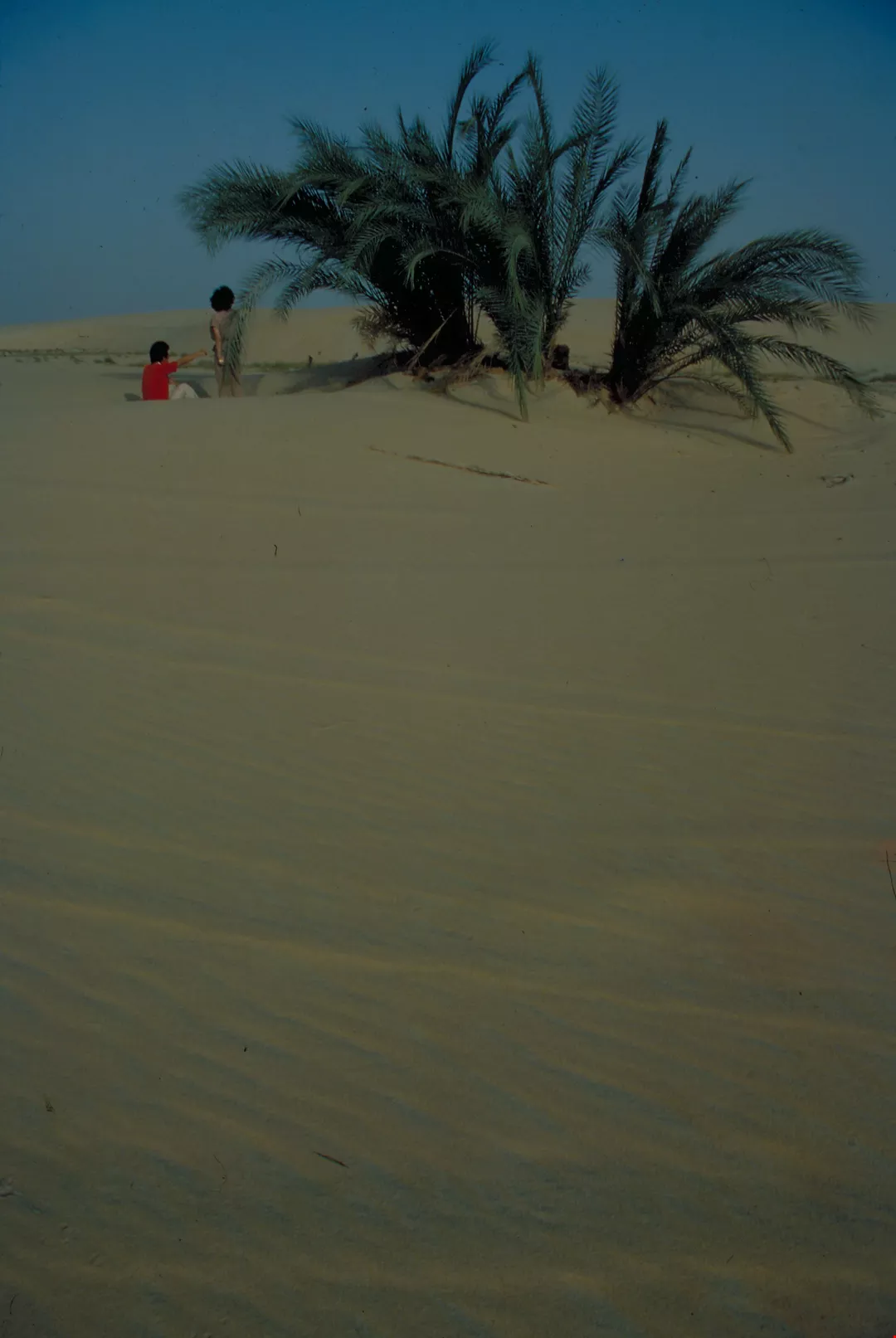
Only a little green occasionally decorates the yellow desert.
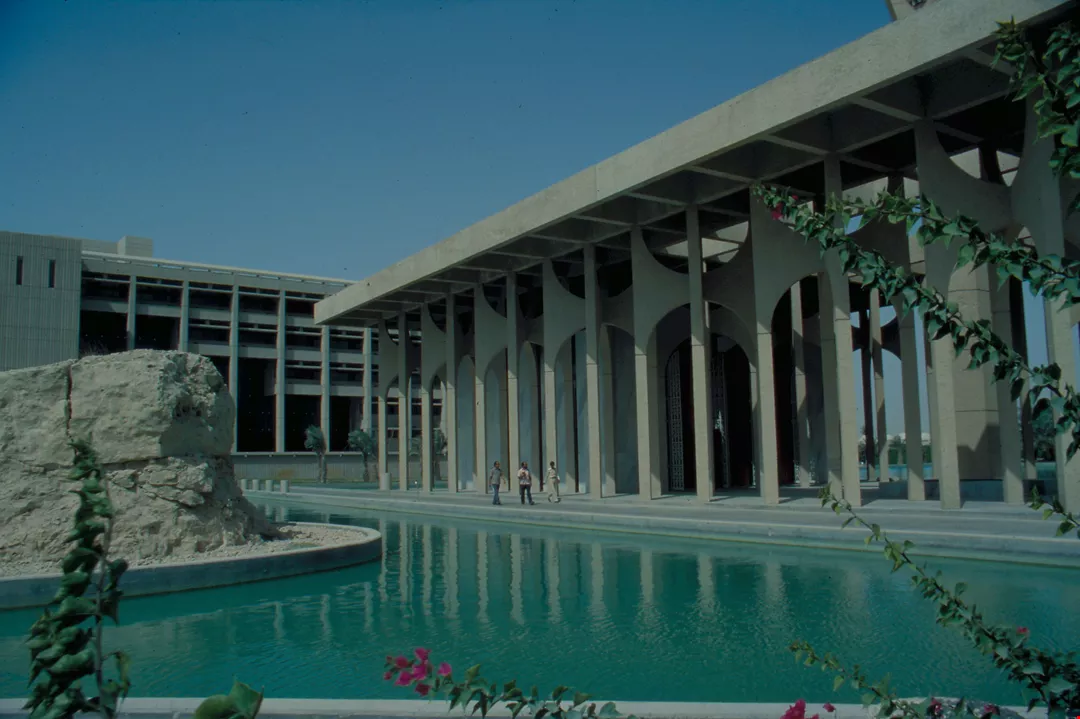
The Petroleum University campus is very beautiful.
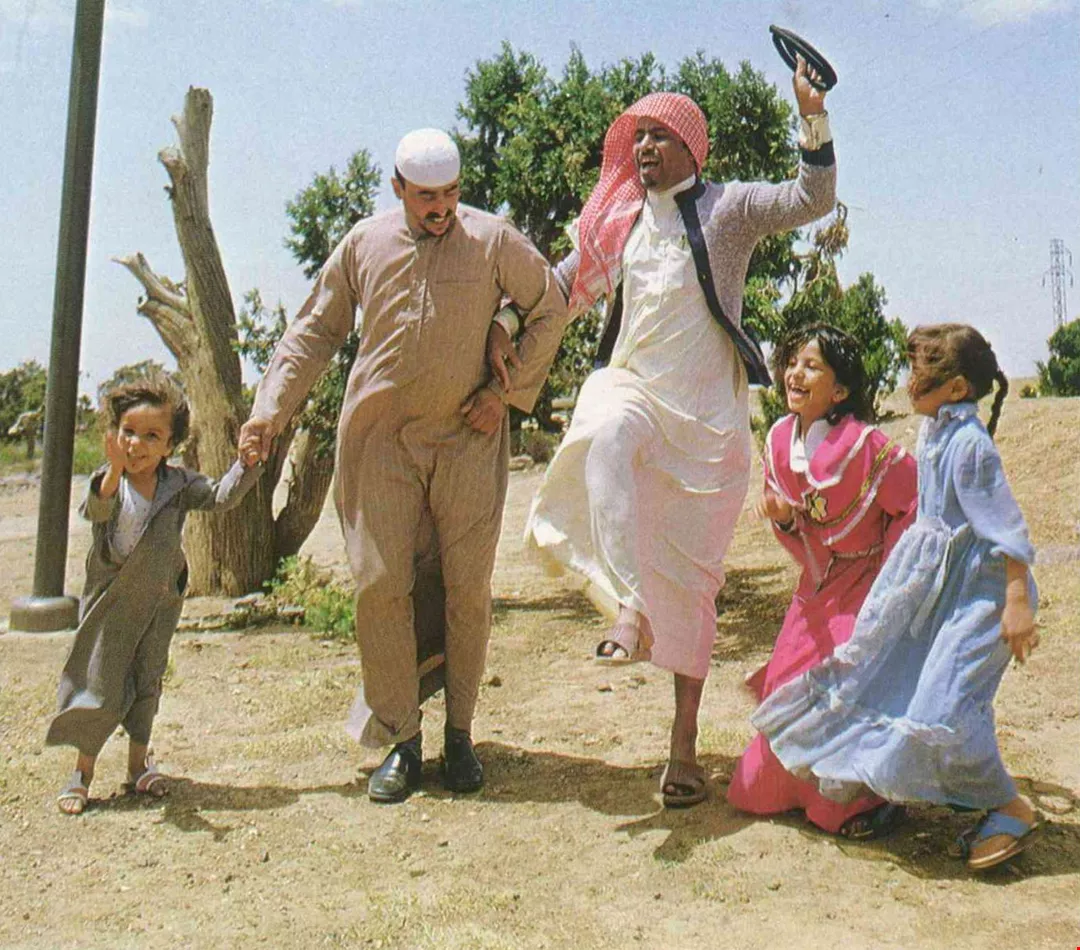
The Saudis love to sing and dance as seen in this photo taken at a national park.
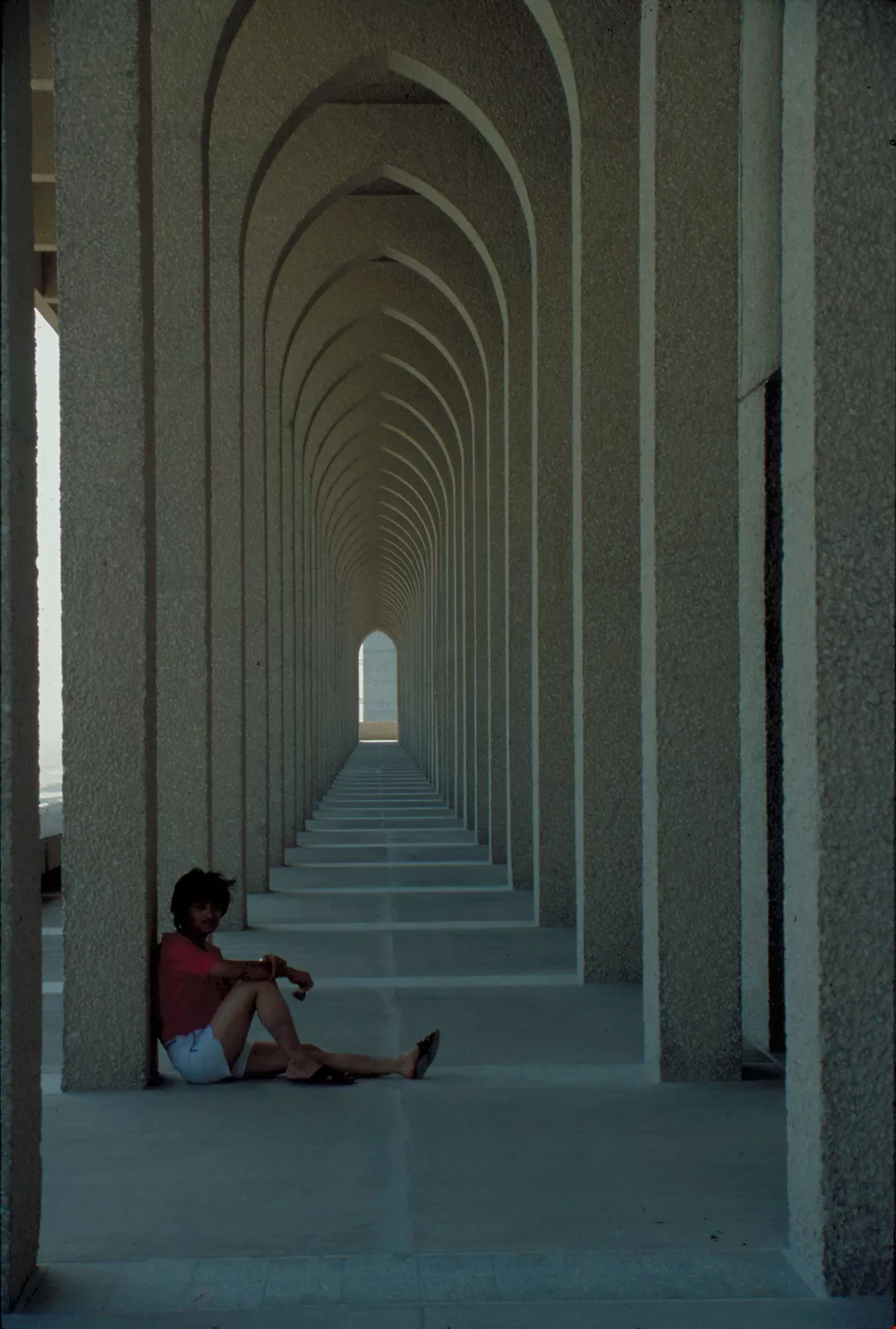
The Petroleum University campus is very beautiful.

@List.jpg?w=522&h=410&mode=crop&format=webp&quality=80)
@List.jpg?w=522&h=410&mode=crop&format=webp&quality=80)


