Everyone's a Star-- The Fantastic World of Cosplay
Chang Shih-lun / photos Hsueh Chi-kuang / tr. by Scott Gregory
December 2006


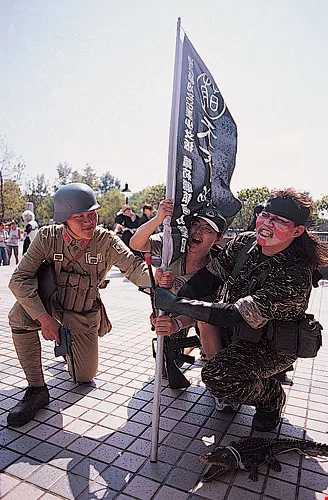
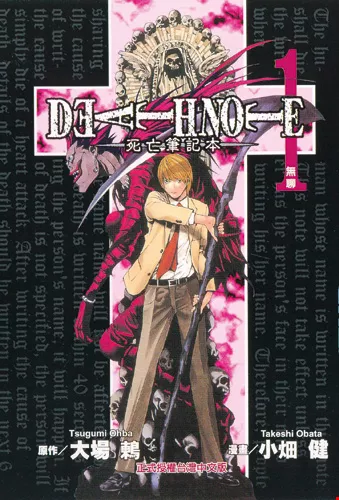
The bright, leafy campus of National Taiwan University is a center of serious scholarship, but this weekend there is a different air about the place. All around are young people decked out in outrageous costumes and heavy makeup, dressed as their favorite anime and manga characters, such as Light Yagami from the manga Death Note, Su Huan-jen from the Taiwanese puppet shows made by Pili Multimedia, or Sergeant Keroro from the manga and anime series Keroro Gunso. They all strike poses and have their photos taken.
This is cosplay, the latest trend from Japan to hit Taiwan. With the costumes and the actions, participants get to escape from their everyday identities for a while and take on the personae of their idols--anime and manga characters, musicians from Japan's colorful "visual-kei" rock scene, and even Taiwanese puppet theater characters.
Young fans can show their appreciation for their favorite characters in countless ways. They can surround themselves with products featuring them, act out their parts or repeat their catchphrases, create stories about them, or go all the way and simply "become" them. To some fans, that is the best way.
But some people are not familiar with this culture of dress-up. They merely see a crowd of oddball kids on the streets holding mock swords, with wild hair, strange get-ups, and thick make-up. A real-life version of Su Huan-jen, for example--not only does he have a purple and white wig, but his face is made up with long eyebrows and a serious expression. He holds a sword or a special flywhisk as he casts an imposing gaze. The sight might make an outsider to the scene wonder what the world is coming to.
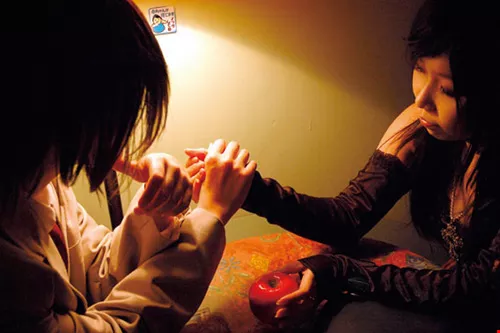
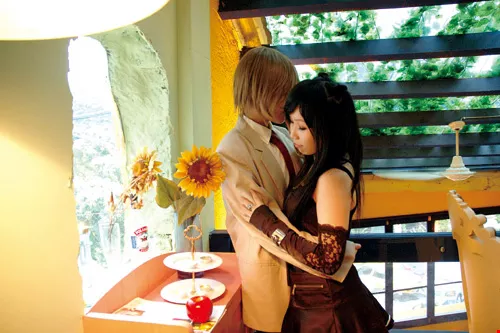
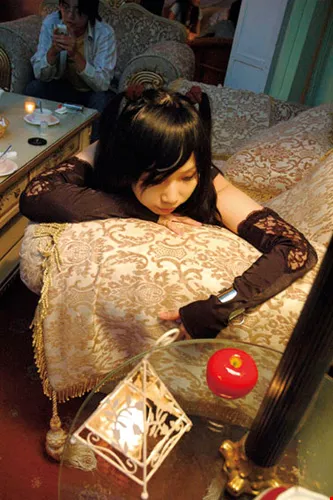
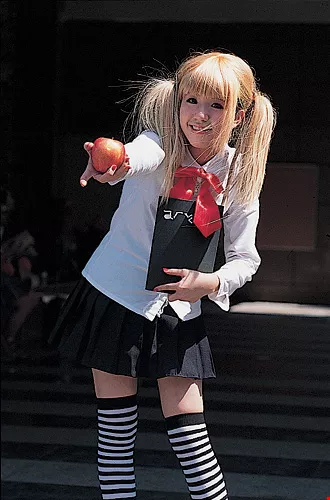
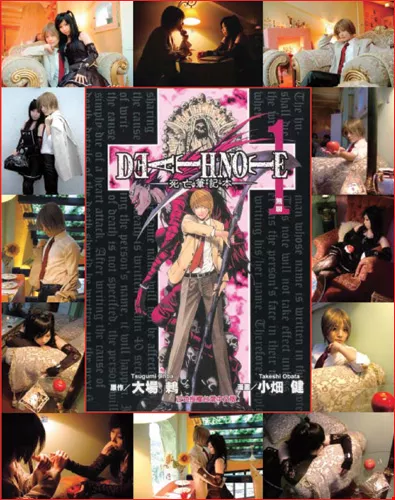
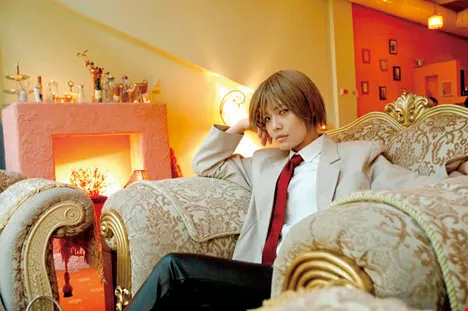
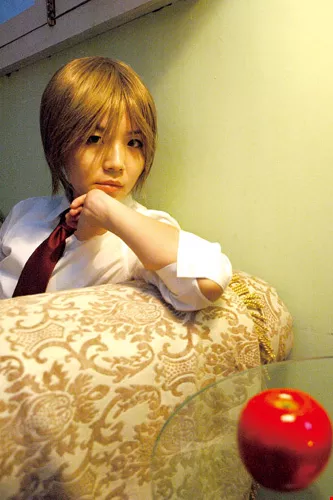
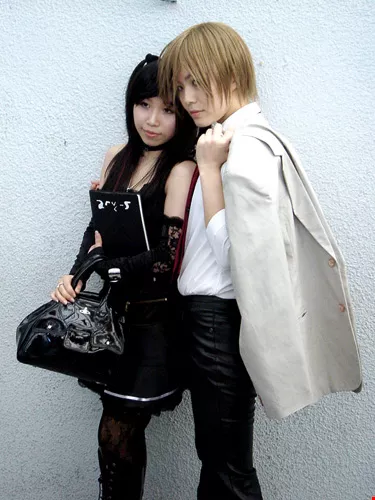
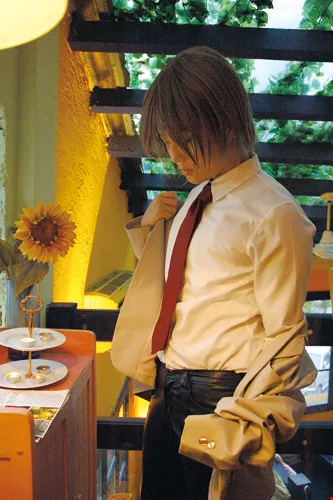
Many cosplayers dress up as characters from the Japanese manga Death Note. Here, Rabbit and a friend dress as Light Yagami (in white) and Misa Amane (in black).
The word "cosplay," short for "costume play," was coined in Japan to describe the phenomenon of fans dressing up as their favorite idols from the worlds of anime, manga, video games, film, TV, and music, and acting out the part with makeup, actions, props, and catchphrases. The trend started in the 1990s in Japan, the birthplace of anime and manga.
In Taiwan, where Japanese pop culture has always been influential, a similar "fan culture" also began to develop in the late 1990s. These fans were not content to merely enjoy the work featuring their idols--they began creating fan fiction and interacting with one another. They would publish their own "fanzines," and many would dress up as their favorite characters when attending conventions at which fanzines were traded or sold.
In 1997, a comic book store chain held Taiwan's first cosplay event at a fanzine convention at Taipei Railway Station. The event captured the imaginations of many attendees. Thirty-something Nyssa still remembers the surprise she felt when confronted with the sight of her idols made flesh: "When I was in high school, I used to fantasize about how great it would be to dress up like a manga character!"
Many cartoon-obsessed fans show their love for their favorite characters by drawing their own comics about their heroes. But not everybody is artistically gifted, and for those who are not, cosplay represents the perfect opportunity to become one with their idols. Businesses have also found that holding cosplay events for fans is a great avenue for promotion. Passionate fans and savvy entrepreneurs have caused cosplay to take off in Taiwan in recent years.
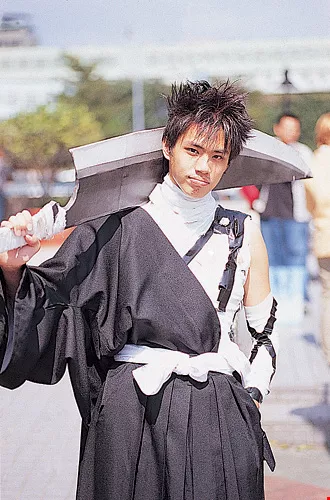
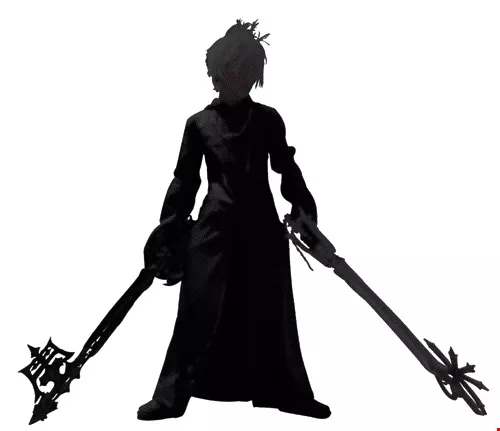
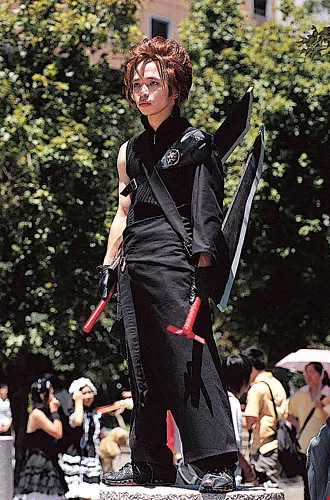
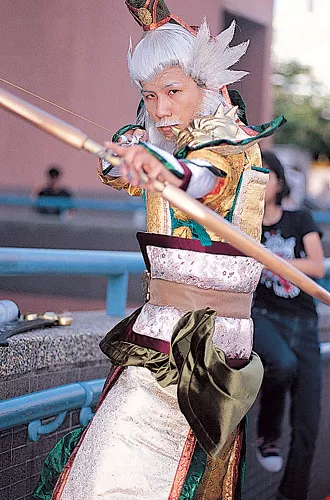
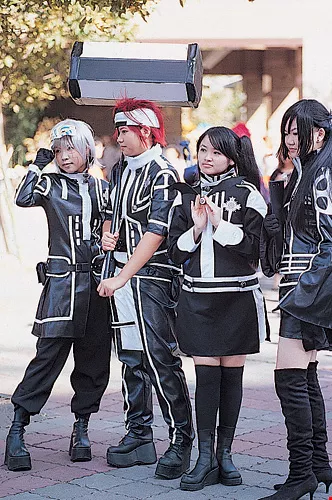
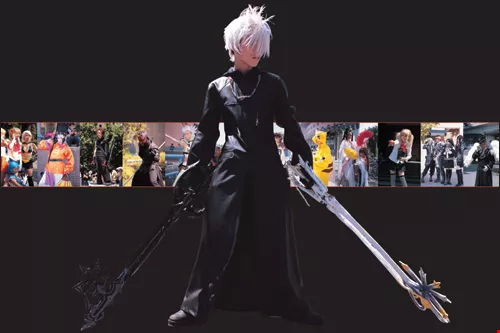
Cosplayers show their creativity and passion by dressing up as their favorite cartoon and video game characters. This photo shows a young man cosplaying as Roxas from the video game Kingdom Hearts 2.
Not every fan gets behind the fantasy-turned-real spirit of cosplay, however. Some think that spending so much money on a costume and props just to dress up for a short time at a convention and snap a few pictures is just meaningless showing off.
Nyssa says that it is a difference of age groups. People of her age or younger are more likely to be interested in cosplay since over the last decade or so Japanese manga and anime have come to downplay the traditional emphasis on storyline in favor of aesthetics and artistic technique. That has meant that characters have become more and more like pop idols, and cosplay has become more and more commonplace. The popular comic book Saint Seiya is a good example of this trend. It began as a plot-heavy book about struggles between male characters, but it changed with the times and is now a favorite among girls and cosplayers.
Many twenty-something cosplayers were introduced to the hobby by friends of the same age. Twenty-three-year-old Hsiao Chen, a cosplayer since high school, says her high-school animation club was like a "protective umbrella" to her: "We all egged each other on, and could get crazy together. We didn't have to worry so much what other people thought."
Nowadays in Taiwan, most cosplayers range from high-school to college age. That's largely because it takes not only a lot of money but a lot of time to get involved. High-school kids tend to have more freedom than junior-high kids, and they also tend to have more pocket money. They might even have some savings from a part-time job. That makes this age the prime time for cosplay. Some retain their interest through their college years, but most move on as their outlooks change and they begin to feel the pressures of preparing to start their working lives.
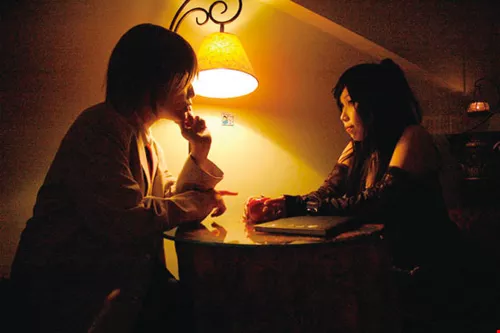
Many cosplayers dress up as characters from the Japanese manga Death Note. Here, Rabbit and a friend dress as Light Yagami (in white) and Misa Amane (in black).
In Taiwan, there are now four general types of cosplayers--those who dress up like Japanese anime or manga characters, those who prefer to emulate Japanese visual-kei rockers, those who model themselves on Taiwanese puppet theater characters, and those who make up their own characters. But whatever type of costume you might want to go for, it will cost you to put it together.
When Hsiao Chen got into cosplay, she didn't have much money for a costume. It would take at least NT$20,000 to put together a puppet theater character costume like Su Huan-jen. A Japanese cartoon character get-up complete with props would easily run over NT$10,000. Those were all out of the reach of most high-schoolers, so she decided to create her own character.
When you create your own look, you don't have to be true to any well-known character's image. You are free to follow your own creative instinct and get as wild as you want, perhaps choosing a brightly colored hoop skirt, spiking your hair with gel, and putting in colored contact lenses. With just a few thousand NT dollars, you can become a flashy cosplayer.
This DIY version of cosplay is a subject of controversy among cosplayers, however. Some feel that the true spirit of cosplay is in dressing up as a beloved character or idol--if you just dress up as you please, who can judge your skills? But others say that as long as you express yourself and make a statement, there's no reason to be limited to a pre-existing image.
To model yourself on a character takes a lot of time. Not only do you have to find the right clothes, materials, and props, but sometimes you have to have parts of your outfit tailor-made or even make them yourself. To dress up as Goku from Dragon Ball, for example, you need to have an orange vest custom-made with the Chinese character for "turtle" written on the back. You also need to buy a pipe from a hardware store to stand in for Goku's mighty weapon, his staff. You'll also need to go to a stylist and get a haircut or buy a wig to complete the look.
In recent years, an industry has grown around Taiwan's cosplay scene. When Nyssa first got into cosplay in 1998, it took her months to put together a costume, and an old-fashioned black wig cost around NT$3000. Nowadays, a cosplayer can get a wig in any color for just around NT$500 and have a hair stylist cut it. Tailors in Taipei's Hsimenting area who used to cater to dance-hall girls now have a booming business making costumes for female cosplayers.
Some people think cosplay is an expensive pastime, but Nyssa stresses: "If you think of cosplay as a real creative outlet or a performance, then spending seven or eight thousand NT dollars is reasonable!" The former industrial design major says her interest in cosplay led her to learn how to make jewelry and sew. She's also developed an eye for fashion and hairstyles. Now she'll go to the Yunglo Market on Taipei's Tihua Street to buy fabric when she wants to make outfits. Now she's experienced enough to design anything, even parasols, and has marketable skills. "Cosplay opened up new possibilities for me," she says. She thinks her hobby and her work complement each other, and that's why she's been able to keep at it so long.
Cosplayers show their creativity and passion by dressing up as their favorite cartoon and video game characters. This photo shows a young man cosplaying as Roxas from the video game Kingdom Hearts 2.
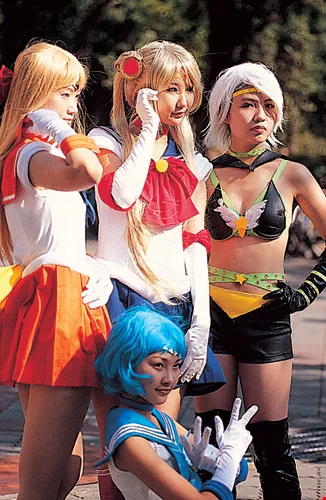
Many cosplayers coordinate their outfits by theme and get together in groups to exchange ideas and take photographs. Some dress up like the members of visual-kei rock bands such as X Japan, Luna Sea, L'Arc-en-ciel, or Glay, and meet up in a rehearsal studio or outdoors. They strike poses in emulation of their idols and have their pictures taken.
When deciding on a costume, a cosplayer has to decide which idol is truly his or her favorite. Then, the cosplayer has to consider the difficulties involved in creating a costume of that idol, and whether the clothes, props, and makeup required are feasible. That's not all--cosplay is not just about appearances. A cosplayer has to play the part to the fullest with actions, mannerisms of speech, and catchphrases. Twenty-seven-year-old Rabbit likens cosplay to channeling a spirit. To her, it's like the characters take over the players' bodies.
Rabbit says the most difficult character she's ever played was Death Note's Light Yagami. Her friends often kid her about the meek impression she makes, and Light Yagami is a cunning, wicked character. It was a big stretch for her, so it was tough to get into the part. "It was only after I read the mangas from cover to cover several times over, trying to understand the character's heart and personality, that I managed to get it," she says. Through cosplay, she discovered how to display other parts of her personality.
Nyssa says she had trouble when she tried to dress up as Lalah, an Indian character from Mobile Suit Gundam. She wanted to get the character's skin color down, but in those days tanning lotion was not yet popular, so she tried covering herself with eyeshadow. She found that if she used too dark a color it looked like she was bruised, but too red a color made her look like she had a sunburn. It took some experimentation but she finally got it down. The day she was to meet up with her cosplayer friends in costume, she planned to sneak out the door while her father took his afternoon nap. That day, however, he didn't budge from the living room. Nyssa had to get her sister to call their father away so she could slip away. He managed to catch a glimpse of her going out the door and asked her sister, "Who was that?" She covered for her, saying, "Oh, that's just Nyssa's classmate!"
Nyssa and Rabbit tell the same story--when they got into cosplay, their parents didn't approve so they had to take part-time jobs and be economically independent. One junior-high student took money she was supposed to use to pay for tuition at a cram school and bought cosplay stuff. Suspecting something funny was going on, her parents checked with the cram school. When they learned the whole story, they hit the roof.
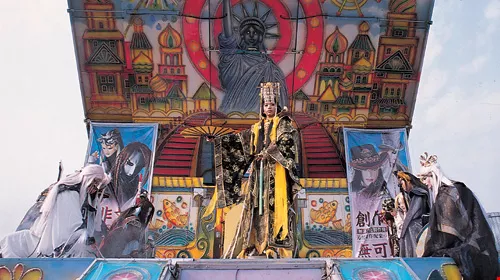
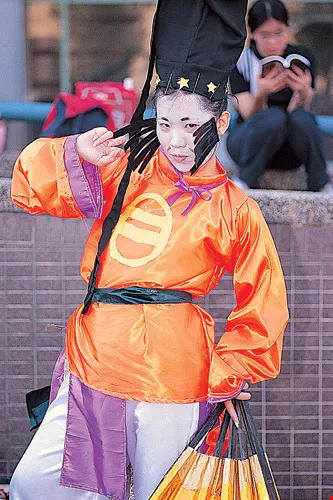
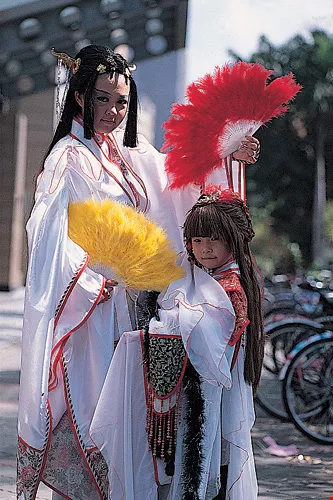
Not all cosplayers choose to dress as Japanese cartoon characters--some go for puppet theater characters from the shows of Taiwan's own Pili Multimedia. Here, a Feng Chia University student shows off a Pili-inspired take on a character from the classic novel Journey to the West at the 2006 Taike Rock concert.
Nyssa says that serious fans of anime and manga tend to be obsessive and antisocial because of their interests. They live in their own fantasy worlds and dislike interacting with the real world around them. But in cosplay, everyone shares their interests. They prepare together, meet up, make new friends, and trade instant messenger screen names, and their insular worlds gradually open up. Not only do they have the opportunity to share their experiences and interact with one another, they also get the message that they are not alone in their situations.
Hsiao Chen says cosplayers are really no different from other students in their social interactions--they just lack experience. On top of that, cosplayers are influenced by the extremely direct manners by which cartoon characters communicate, so they tend not to be as "nuanced" in their interactions as outsiders might be.
Nyssa says that she was something of an outcast in high school too, yet cosplay gave her a social outlet. "Now I can even get along fine with people outside of the cosplay world," she says.
Rabbit says that not everyone can be a star in everyday life, but in cosplay, if you really make an effort to understand your character and are serious about your costume, you will receive praise and affirmation. Hsiao Chen says that by assuming the virtual identity of her character, she can escape the pressures of school and feel free for a while.
Actually, everyone has a character to play in society no matter what their age is, such as student, parent, or office worker. They have to play their parts and stay in character. Cosplay is also role-playing, but it is often thought of as an immature game that young people play to "escape the real world." Is cosplay really so different from the search for social role models?
Professor Victoria Lu of Shih Chien University's Institute of Fashion and Communications Design believes that humans have an instinctive ability to mimic others, and that people become socialized by emulating their family members. Accordingly, cosplay represents an aesthetic that is neither realist nor abstract that young people can use to re-invent themselves through their idols. Though it seems like cosplayers are breaking away from their everyday routines, they are really just doing what humans do instinctively.
For this reason, says Lu, society should be more accepting of cosplay and not be overly threatened by it. The aesthetics of anime and manga have entered the mainstream internationally. Artists like Taiwan's Cola King and Hung Tung-lu, Japan's Takashi Murakami and Yoshitomo Nara, and China's Cao Fei have all incorporated elements of cartoons or cosplay into their art to critical acclaim. Renowned photographers Cindy Sherman and Tomoko Sawada take pictures of themselves dressed up as stereotypical images from popular culture or everyday life in order to question the traditional roles allotted to women in patriarchal society.
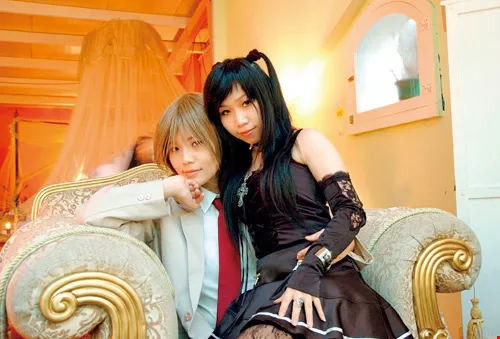
Many cosplayers dress up as characters from the Japanese manga Death Note. Here, Rabbit and a friend dress as Light Yagami (in white) and Misa Amane (in black).
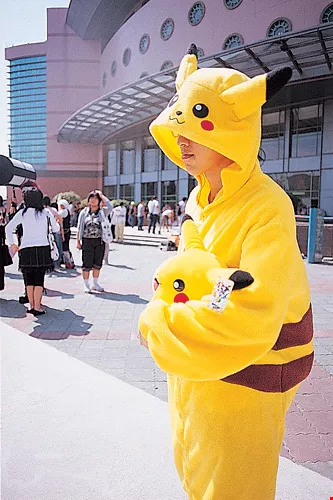
"Cute" characters such as Doraemon, Keroro, and Pikachu are popular with the general public, yet few cosplayers try to dress up as them since those characters are not human. Such a costume would have to cover a cosplayer head to toe--not only would it be stiflingly hot inside, but the cosplayer's face wouldn't even show so there would be little point. The most common costumes for cosplayers are based on main characters from popular anime and manga, especially those who are young and attractive.
Nyssa says that cosplayers all have "a love that knows no bounds" for the characters they dress up as. When they see someone else playing their character poorly, they can't just laugh it off--they feel angry that their idols have been insulted. But in these circumstances, there's little they can do. They'll just slide up to the offending cosplayer and say, "Your outfit stinks. Get serious."
Gender is an interesting issue in cosplay. In theory, a cosplayer is free from the restrictions of everyday life when in costume, but there is some gender discrimination even in the cosplay world.
In Japanese cartoons, male characters are traditionally effeminate and even "pretty." That means they are a perfect match for female cosplayers. The result is true to the image of the character, and there is an aesthetic ambiguity. But a male cosplayer trying to dress as a female character faces problems of body shape and appearance--only more effeminate males can do it well. But even if he gets high marks from fellow cosplayers for his look, outsiders to the scene will still say he looks "queer."
Actually, more than 70% of cosplayers are female. Hsiao Chen believes that this due to the fact that females are already acculturated to wear makeup and dress up. Males, on the other hand, are brought up to think they have to maintain a tough exterior, so they might think cosplay is something shameful.
Rabbit thinks that there is a difference in how men and women are treated at cosplay events. Even though women are in the majority, the events are male-oriented. The men are either trying to take racy photos or pick up girls.
Sometimes perverts will show up and try to take voyeuristic pictures. They don't just take pictures of the women's chests, they take the whole scene as being sexual in nature. Photos of a cosplayer dressed as a nurse made their way to an X-rated website, contributing to misconceptions about the nature of cosplay.
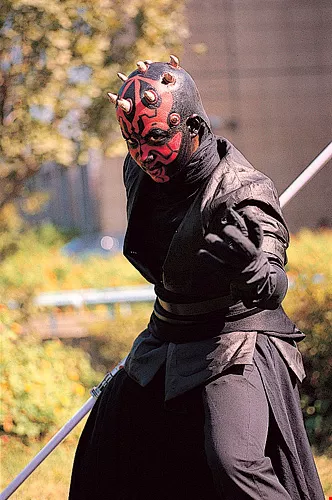
Taiwan's cosplayers mainly dress as Japanese anime and manga characters. A few dress as characters from Hollywood films like Star Wars, Lord of the Rings, and Star Trek, but they are a small minority. Taiwan does not have a strong animation industry, so few cosplayers draw their inspiration from locally produced works. The notable exception is the Taiwanese puppet shows by Pili.
Pili combines traditional Taiwanese puppetry with modern effects into a bold, innovative style. The plots are fantastic and bizarre--even aliens and vampires have shown up. The shows are very popular among Taiwanese youth. Because traditional puppet theater is more cultural, most of the cosplayers who dress as its characters are Chinese or drama majors who can really do the moves, repeat the dialogue with the proper accent, and sing the shows' theme song: "The upright is not upright forever / Evil's not always evil / Everything evil will become upright / Everything upright will become evil...." These players are injecting some local flavor into cosplay.
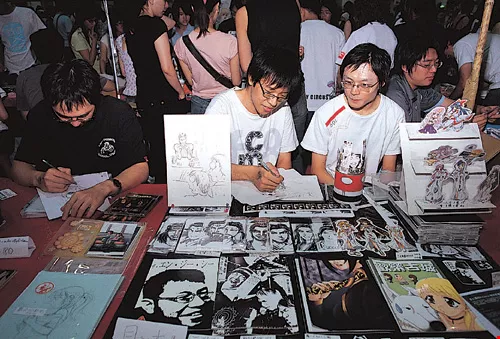
The "fan culture" that has sprung up around Japanese cartoons is now a major youth trend in Taiwan. Pictured are fans at a comic convention (left), and fans selling their own manga-inspired works (right).
With cosplay becoming more and more popular, anime and manga producers have caught on that they can utilize the trend to promote their products. Before releasing the film Nana, which was based on a Japanese manga, the distributors held a cosplay event centered around the character of the title. The event was widely covered in the local media. Cosplay is now becoming recognized for its market force, and is going from the underground to the mainstream.
But what does cosplay mean to the fans? Hsiao Chen, who is now a university student, says that cosplay represents an "idealized self- and worldview." This world could never materialize, but with the work the cosplayers put into their costumes it manages to jump out from the comics and movies for just an instant. She says she can no longer be fulfilled by cosplay because it is too far from the real world. "But," she says, "at least it is a beautiful dream I once had, and in it I gained happiness."
Nyssa, who is still at it after nine years, also says that people have different goals at different stages of life. "But as long as the novelty is still there and it complements my design work I'll keep doing it," she says.
Some might say that the cosplay world is one of loud and empty fantasy that masks the loneliness and alienation of its participants. But on the other hand, this fantasy world exists as a testament to the efforts of the fans who create it. Through it, the fans make their mark. Just what is the force driving this phenomenon? Nyssa and Rabbit both answer that question with a recent popular catchphrase: "It's all for love!"
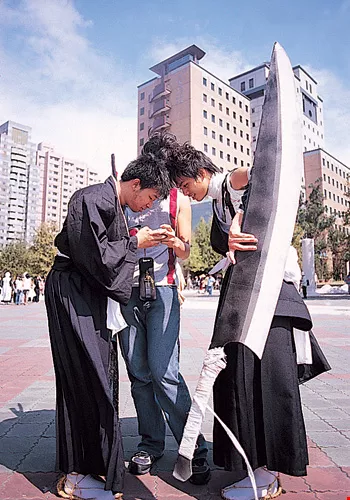
Cosplayers take each others' pictures with digital cameras, then check out the results on the spot.
Many cosplayers dress up as characters from the Japanese manga Death Note. Here, Rabbit and a friend dress as Light Yagami (in white) and Misa Amane (in black).
Many cosplayers dress up as characters from the Japanese manga Death Note. Here, Rabbit and a friend dress as Light Yagami (in white) and Misa Amane (in black).
Cosplayers show their creativity and passion by dressing up as their favorite cartoon and video game characters. This photo shows a young man cosplaying as Roxas from the video game Kingdom Hearts 2.
Cosplayers show their creativity and passion by dressing up as their favorite cartoon and video game characters. This photo shows a young man cosplaying as Roxas from the video game Kingdom Hearts 2.
Cosplayers show their creativity and passion by dressing up as their favorite cartoon and video game characters. This photo shows a young man cosplaying as Roxas from the video game Kingdom Hearts 2.
Cosplayers show their creativity and passion by dressing up as their favorite cartoon and video game characters. This photo shows a young man cosplaying as Roxas from the video game Kingdom Hearts 2.
Cosplayers show their creativity and passion by dressing up as their favorite cartoon and video game characters. This photo shows a young man cosplaying as Roxas from the video game Kingdom Hearts 2.
Cosplayers show their creativity and passion by dressing up as their favorite cartoon and video game characters. This photo shows a young man cosplaying as Roxas from the video game Kingdom Hearts 2.
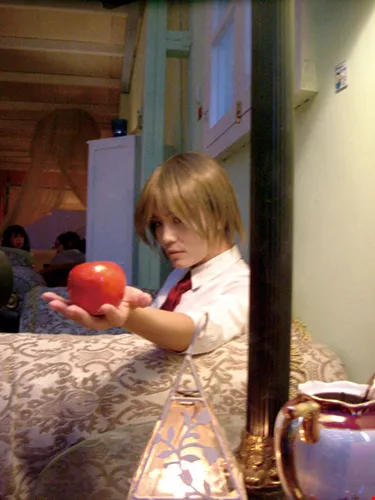
Many cosplayers dress up as characters from the Japanese manga Death Note. Here, Rabbit and a friend dress as Light Yagami (in white) and Misa Amane (in black).
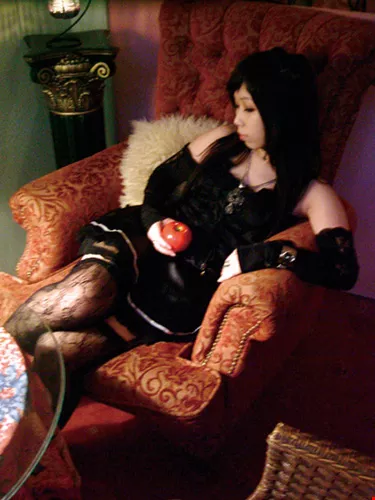
Many cosplayers dress up as characters from the Japanese manga Death Note. Here, Rabbit and a friend dress as Light Yagami (in white) and Misa Amane (in black).
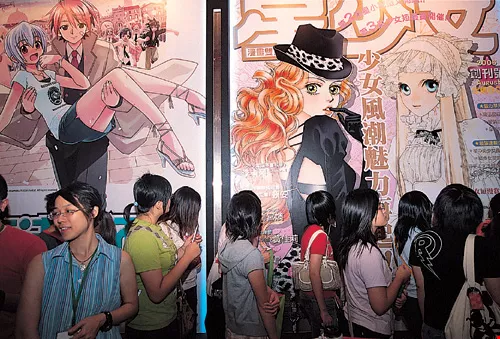
The "fan culture" that has sprung up around Japanese cartoons is now a major youth trend in Taiwan. Pictured are fans at a comic convention (left), and fans selling their own manga-inspired works (right).
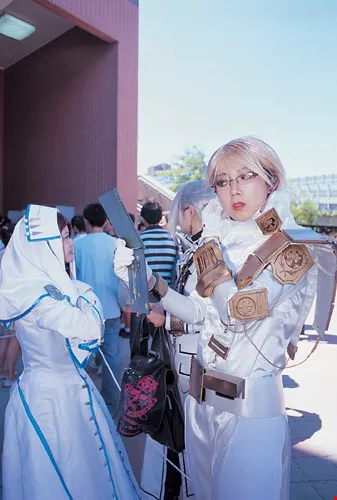
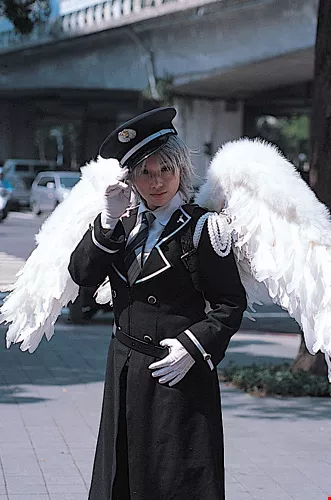
Cosplayers get quite serious about their looks.
Cosplayers show their creativity and passion by dressing up as their favorite cartoon and video game characters. This photo shows a young man cosplaying as Roxas from the video game Kingdom Hearts 2.
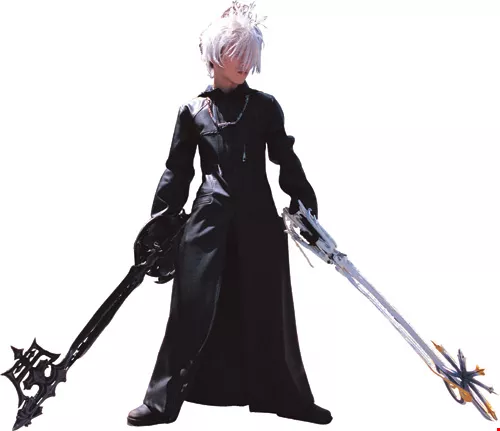
Cosplayers show their creativity and passion by dressing up as their favorite cartoon and video game characters. This photo shows a young man cosplaying as Roxas from the video game Kingdom Hearts 2.
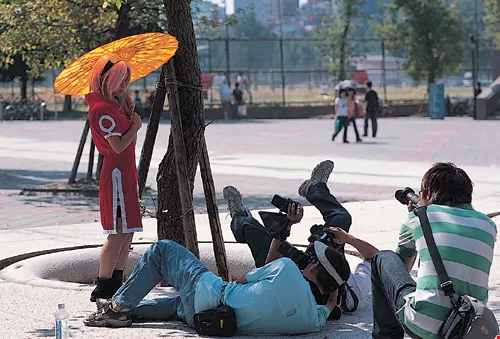
Cosplay events attract participants and photographers alike.
Many cosplayers dress up as characters from the Japanese manga Death Note. Here, Rabbit and a friend dress as Light Yagami (in white) and Misa Amane (in black).
Many cosplayers dress up as characters from the Japanese manga Death Note. Here, Rabbit and a friend dress as Light Yagami (in white) and Misa Amane (in black).
Cosplayers show their creativity and passion by dressing up as their favorite cartoon and video game characters. This photo shows a young man cosplaying as Roxas from the video game Kingdom Hearts 2.
Cosplayers show their creativity and passion by dressing up as their favorite cartoon and video game characters. This photo shows a young man cosplaying as Roxas from the video game Kingdom Hearts 2.
Many cosplayers dress up as characters from the Japanese manga Death Note. Here, Rabbit and a friend dress as Light Yagami (in white) and Misa Amane (in black).
Many cosplayers dress up as characters from the Japanese manga Death Note. Here, Rabbit and a friend dress as Light Yagami (in white) and Misa Amane (in black).
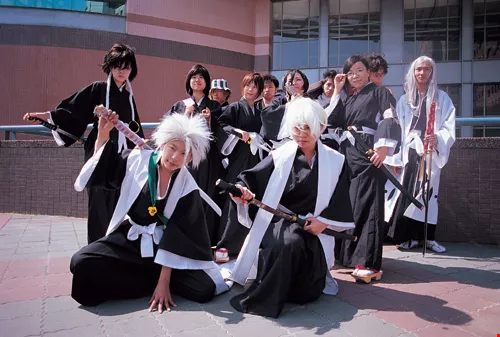
Some cosplayers will organize themselves into groups around related costumes. Here, a group of cosplayers dress as characters from the manga Bleach.
Cosplayers show their creativity and passion by dressing up as their favorite cartoon and video game characters. This photo shows a young man cosplaying as Roxas from the video game Kingdom Hearts 2.
Many cosplayers dress up as characters from the Japanese manga Death Note. Here, Rabbit and a friend dress as Light Yagami (in white) and Misa Amane (in black).
Many cosplayers dress up as characters from the Japanese manga Death Note. Here, Rabbit and a friend dress as Light Yagami (in white) and Misa Amane (in black).
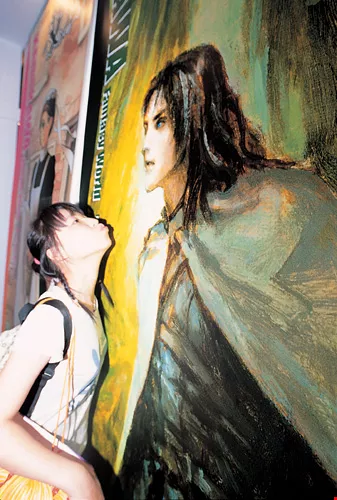
Fan culture shows the passion of young people toward manga world. Its cultural significance is something to consider before passing judgment.
Cosplayers show their creativity and passion by dressing up as their favorite cartoon and video game characters. This photo shows a young man cosplaying as Roxas from the video game Kingdom Hearts 2.
@List.jpg?w=522&h=410&mode=crop&format=webp&quality=80)

@List.jpg?w=522&h=410&mode=crop&format=webp&quality=80)
@List.jpg?w=522&h=410&mode=crop&format=webp&quality=80)


@List.jpg?w=522&h=410&mode=crop&format=webp&quality=80)
