The Taiwan Film Industry’s First Superstar
Chen Chen
Chang Meng-jui / photos courtesy of Chang Meng-jui / tr. by Scott Williams
December 2013


Chen Chen, an actress beloved by filmgoers in Taiwan, Hong Kong, and Southeast Asia since the 1970s, has been named the winner of this year’s Golden Horse Film Award for lifetime achievement.
A film actress from the age of 16, Chen played roles in more than 50 films over the course of her career. She’s best known for critically acclaimed hits such as The Bride and I, The Story of Ti-Ying, and Everlasting Glory. A two-time winner of the Asian Film Awards’ “best actress” title for her work in The Story of Ti-Ying and Splendid Love in Winter, she had never before won a Golden Horse.
Chen devoted her youth to Taiwanese film, and is unquestionably one of the biggest stars our industry has produced.
In October 2011, Chen Chen flew to Taiwan from Hong Kong with her son Jeremy Liu to help promote his second album. Long retired from the film business, Chen is to most young people simply the mother of Jeremy Liu and the wife of talented director Liu Chia-chang. Film fans, however, still remember her as a megastar of the 1970s.
“Fifty years have flashed by, and I’ve transformed from a young woman into an old lady. Meanwhile, the Golden Horse Awards remain the highest honor in Taiwanese film. I hope they continue to gallop on into the future, spurring Taiwanese films to become better and better.” So said Chen on hearing that she would be receiving the Golden Horse for lifetime achievement in film. Surprised and grateful, she added: “I’d like to thank everyone for not forgetting me, and for relieving me of my regret at never having won a Golden Horse.”
.jpg?w=1080&mode=crop&format=webp&quality=80)
Director Pai Ching-jui’s Love in a Cabin (1972), an adaption of a novel by Hsuan Hsiao-fu, turned Chen Chen and Alan Tang into the ideal onscreen couple.
Chen’s entrance into the film business wasn’t planned, but her good looks and onscreen vivacity soon made her a star.
Born in 1947, Chen (whose birth name was Zhang Jiazhen) is the daughter of a soldier. Her connection to the film business came about in her senior year at Ginling Girls’ High School. Hong Kong film director Richard Li happened to be in Taiwan forming Grand Motion Picture Co. at the time, and he was hiring. Grand’s job notice attracted applications from more than 1,300 beauties the moment it was posted. Unbeknown to Chen, a friend had submitted her picture as well. Chen didn’t discover the subterfuge until she received an interview notice in the mail.
Just 16 at the time, Chen hadn’t a clue about the film industry. It didn’t matter. When her lead interviewer asked her to perform a scene from a period piece, her mind leapt to The Love Eterne, a movie she had seen 11 times. In Five Years that Changed History: Grand Motion Picture Co., film critic Peggy Chiao quotes Chen as saying: “I threw in everything I could think of, including all of Betty Loh’s facial expressions.”
Much to her surprise, she beat out all her competitors for the job. She signed a seven-year contract with the studio at a salary of NT$1400 per month, and with it received a stage name (courtesy of Li): Chen Chen.
The newly formed Grand Motion Picture worked hard to cultivate local films and stars, and ultimately succeeded in creating its very own “Five Phoenixes”: Chiang Ching and Wang Ling, whom Li had brought with him to Taiwan from Hong Kong; Niu Fangyu, recruited from the Xiao Dapeng Peking Opera Troupe; Li Denghui, known for her work in Min Opera; and Chen herself, found via the studio’s open auditions.
Chen was the youngest of the five, and, next to the dance-trained Chiang and beautiful Wang, was something of a diamond in the rough.
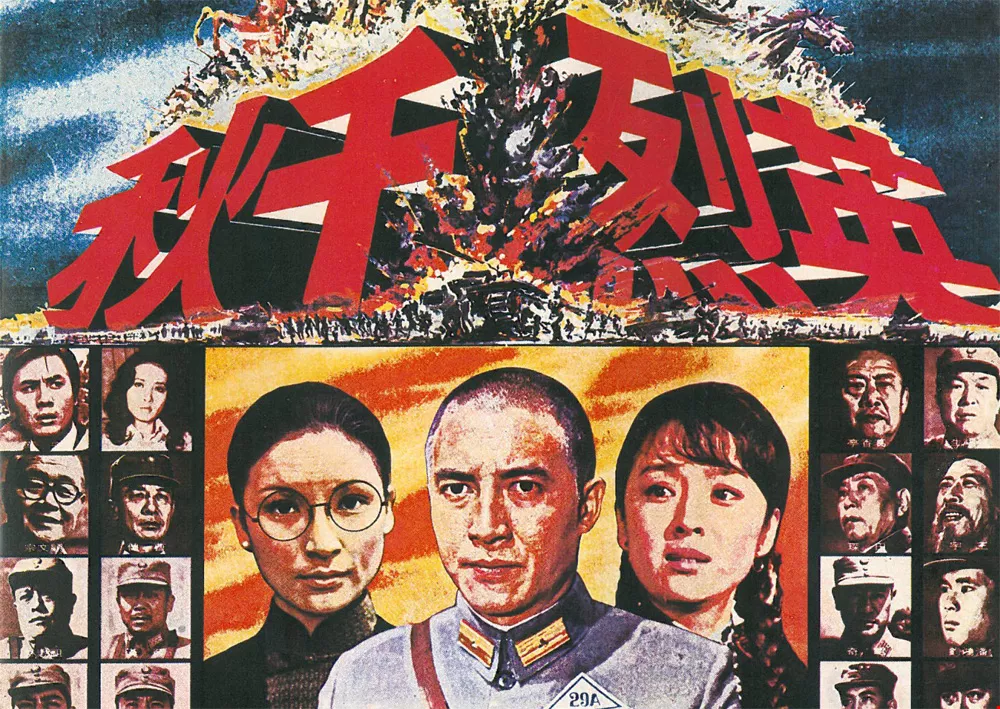
Chen Chen experimented with roles in non-romantic films, including 1974’s The Everlasting Glory. Ko Chun-hsiung and Chen played a patriotic father and daughter in the film, even though in reality Chen was only three years Ko’s junior.
Chen soon put her demonstrable acting talent to use in her debut in the period drama A Perturbed Girl. She was even more striking in the contemporary drama Many Enchanting Nights, in which she played He Shuangshuang, the rebellious daughter of a wealthy family.
Based on a story by Chiung Yao, the film is perhaps the most realistic of the novelist’s works adapted for the big screen. It is a tragic tale of the Chinese civil war, stretching from Chongqing to Taipei. Grand Motion Picture’s production team used designer Gu Yi’s sketches to recreate Chongqing’s Shapingba district for the film. The sets, built near the beach at Jinshan, included historically accurate Sichuanese-style sedan chairs and the winding stairways of a mountain town, and featured white-turbaned Miao people. The film’s shots of no-longer-extant Taipei landmarks such as New Park, the Chunghwa Market, and the Hsin Sheng Theater, give it documentary value as well.
Chen was outstanding in the film. She says that her performance was drawn in part from her memories of other films she’d seen. “I’d happened to see Imitation of Life [the 1959 film based on Fannie Hurst’s novel] at around that time. Sandra Dee played a rebellious 16 or 17-year-old girl. I took some things from that, and for the rest just went with what I felt.”
When Grand Motion Picture ran into financial difficulties and suspended operations in 1968, the state-owned Central Pictures Corporation leapt at the chance to pick up Chen’s contract. She then starred in the studio’s The Bride and I (1968)and The Accidental Trio (1969). Directed by Pai Ching-jui, The Bride and I won Golden Horses for best film and best director, and was the second-highest-grossing domestic film of the year, catapulting Chen Chen into superstardom virtually overnight.
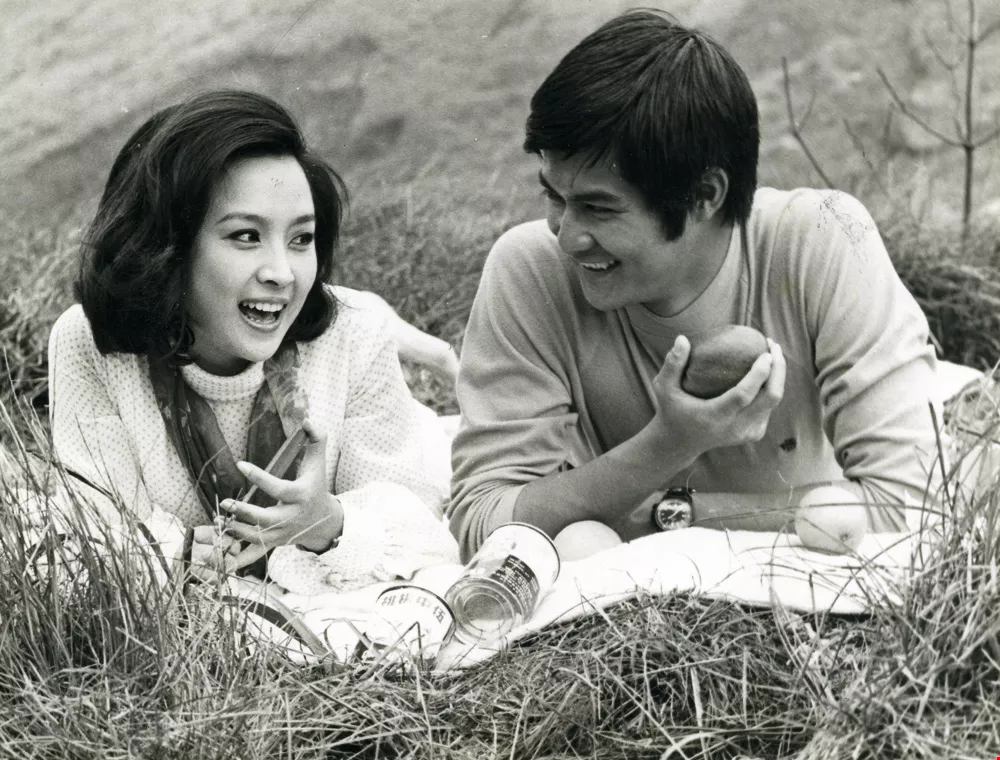
Director Pai Ching-jui’s Love in a Cabin (1972), an adaption of a novel by Hsuan Hsiao-fu, turned Chen Chen and Alan Tang into the ideal onscreen couple.
The young star’s prospects were golden. She exuded talent, her films ran the gamut from period pieces to contemporary works and from tragedy to comedy, and her intelligent-but-roguish image had earned her a place in audiences’ hearts.
In 1970, Richard Li signed on to direct The Story of Ti-Ying and cast Chen in the lead role. The film is an adaptation of a Gao Yang novel, which tells the story of Chunyu Yi, a doctor thrown into prison after being framed by an alchemist. Chunyu’s youngest daughter, Ti-ying, risks death by halting the emperor’s carriage to appeal her father’s sentence, and succeeds in winning his release.
The China Movie Studio pulled out all the stops in making Ti-Ying, which went into production immediately after the wartime spy movie Storm over the Yang-tse River. The film’s oblique narrative style and meticulous mise-en-scène, and Li’s focus on period-correct costumes and sets, resulted in a charming example of imperial-court drama and helped raise the artistic and technical standards of domestic films.
Chen had spent the previous several years playing mischievous young characters. Now in her 20s, she put everything she had into the scene where Ti-ying appeals to the emperor to save her father. In it, she falls to her knees, her petition held high as she shouts “Injustice!” She then creeps forward on her knees, step after laborious step, as blood soaks through her skirt. Her performance brought audiences to tears.
Ti-Ying won the 1971 Golden Horses for best picture, script, leading actor, cinematography and art direction, and Chen herself earned a best actress award at the 17th Asian Film Awards. She was just 24 at the time.
In the wake of the awards, film offers came pouring in, making her one of the most prolific of the younger generation of stars. She also became one of the few female stars able to guarantee ticket sales.
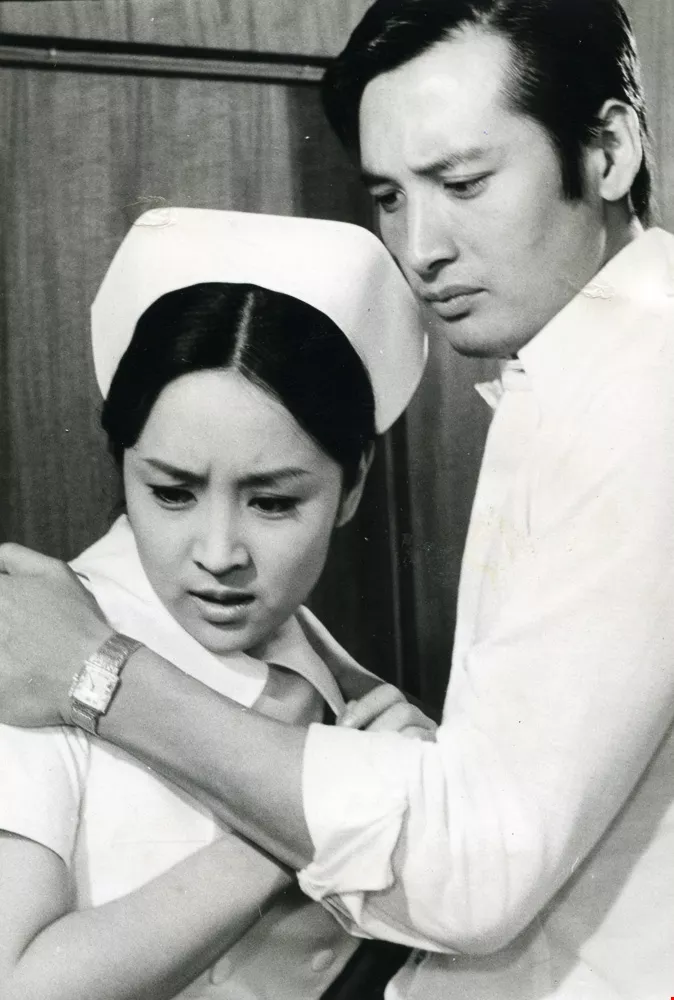
Chen played a nurse in Lee Hsing’s The Heart with a Million Knots, an adaption of a Chiung Yao novel. The character exemplified the author’s vision of a new, independent woman.
In 1972, she worked with Alan Tang on the beautifully poetic Love in a Cabin, a film that marked the start of her decade-long turn to romantic films, the works of Chiung Yao in particular.
Hou Hsiao-hsien, the current chairman of the Golden Horse executive committee, served as an assistant on the set of The Heart with a Million Knots. Hou recalls Chen being incredibly charming, and says that there were always groups of people hanging around the studio hoping to sign her on to films.
Lee Hsing, who directed The Young Ones and Where the Seagull Flies, also praised Chen for her talent, grasp of film, and work ethic, which he says made her a model for other stars.
In her personal life, Chen has been married twice, both times to prominent film-industry personages. She met Hong Kong actor Patrick Tse while shooting The Story of Ti-Ying. Previously focused entirely on her career, Chen found herself moved by Tse’s ardent pursuit of her affections. The couple married in 1974, but separated after just two years together in Hong Kong. They divorced in 1978.
Chen fell in love with another “monster talent” after returning to Taiwan: creative powerhouse Liu Chia-chang. When they married in 1978, Chen began withdrawing from film work. The couple later moved to the US.
Movies were near and dear to the hearts of Taiwanese in the 1970s, and Chen’s performances provided audiences of the day with immeasurable joy. Even more importantly, her acting skill and star power sparked a Taiwanese love affair with romantic films that counterbalanced the enormous popularity of Hong Kong martial arts films and enabled the Taiwanese film industry to develop.
Stars attract audiences. Chen’s award, coming on the 50th anniversary of her entry into film, is symbolic of the ongoing resurgence of Taiwan’s film industry.
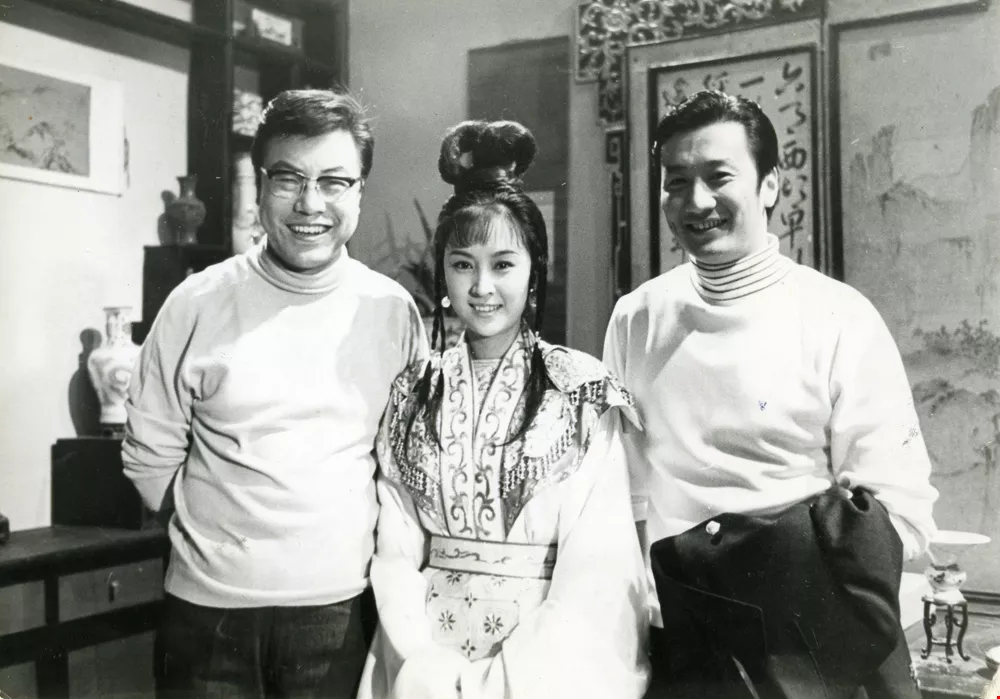
Director Richard Li frequently cast Chen in his films. She is seen here on set with Li (left) and with Hong Kong star Patrick Tse, who was then in pursuit of her affections.
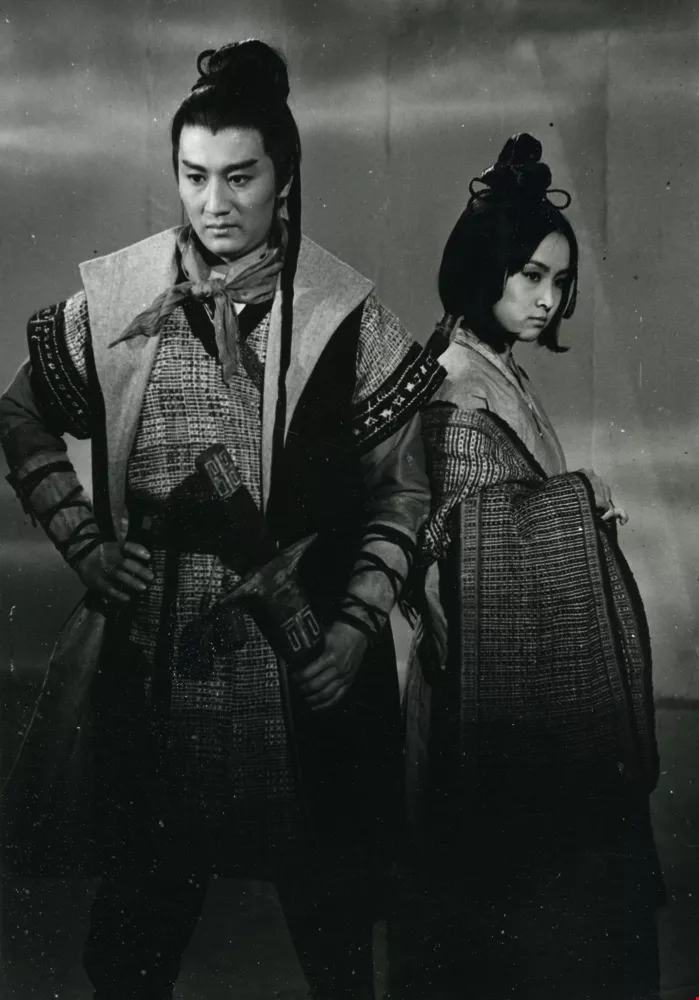
For The Story of Ti-Ying (1970), Chen played a young woman who puts her life at risk by demanding justice for her father. The role earned her a best actress award from the Asia-Pacific Film Festival. It was through this film that she met Hong Kong star Patrick Tse (left).
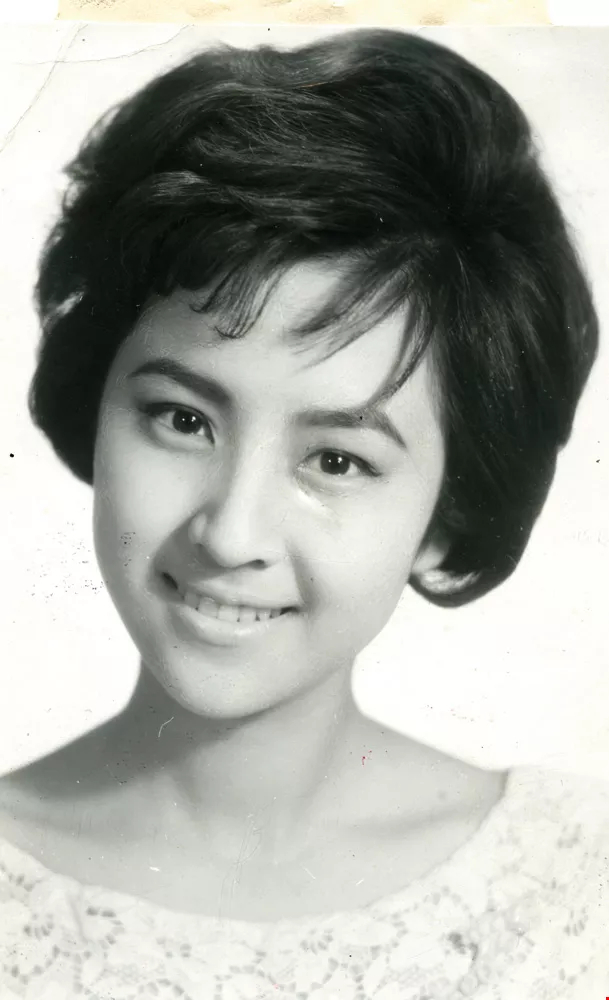
Chen Chen made her film debut at the age of 16. With her stunning good looks, she went on to become the queen of 1970s Taiwanese cinema.

@List.jpg?w=522&h=410&mode=crop&format=webp&quality=80)

@List.jpg?w=522&h=410&mode=crop&format=webp&quality=80)


