No Pain, No Gain in the Battle for Tax Reform
interview by Coral Lee / photos Jimmy Lin / tr. by David Smith
June 2012


After the Ministry of Finance (MOF) sent a proposed legislative amendment to the Legislative Yuan to reinstate a capital gains tax on securities, Kuomintang (KMT) legislator Tseng Chu-wei responded by introducing his own alternative version that included provisions for progressive tax rates. Tseng stressed that taxes imposed upon small-time retail investors would not go up under either the MOF proposal or his own, and that the purpose of both versions was simply to re-establish the fairness that had been lost a long time ago.
While reform inevitably stirs up resistance from entrenched interests, Tseng feels that the government deserves credit for showing the courage to take a first step in the right direction.
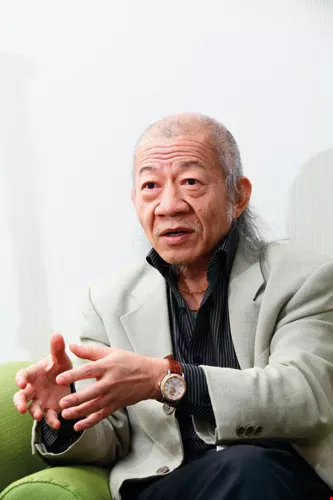
Amidst the ongoing uproar over the issue of a capital gains tax on securities, Tseng agreed to an interview with Taiwan Panorama to discuss the issues involved and help readers better understand capital gains taxes and the direction of reform.
Q: Where is Taiwan’s tax system unfair?
A: There are basically three types of tax in the world: taxes on income, taxes on consumption, and taxes on property. And there are three principles to consider when determining whether taxes are being collected reasonably.
The first principle is fairness. Do you take from me, and not from him? Do you take more from the rich, and less from the poor? And do you take from those who earn wages, but not from those who make money on stocks?
The second principle is efficiency. The imposition of taxes changes people’s behavior. For example, if doing a certain thing means I’ll be taxed by the government, then I may choose to do something else that doesn’t get taxed. This makes markets less efficient. Take, for example, the imposition of a capital gains tax on securities, which securities firms and major investors have been so concerned about lately. Once the tax is imposed, people who originally would have bought stocks may choose not to buy them anymore, or to buy less.
The third principle is competitiveness. A certain type of tax may make a nation or a company more competitive. Another type may do just the opposite. For example, some people worry that the recently proposed capital gains tax on securities could prompt foreign investors to pull out of Taiwan, which would make our financial markets less competitive.
Viewing the three main types of tax through the prism of these three principles, you find that because for many years now, Taiwan has put too great a priority on competitiveness and efficiency, the taxation of income, which provides the lion’s share of tax revenues, has become uncreasingly unfair.
The issue of greatest social concern today is unequal wealth distribution, so the task facing us now is to re-establish fairness, too much of which has been given up in the past. But we have to be aware that correcting this problem will necessarily come at a cost to society. The success of tax reform depends on whether society is willing, for the sake of fairness, to shoulder that cost in terms of reduced competitiveness and efficiency. If we don’t understand this point, we’ll never find the answer.
The difficulty of tax reform lies in the fact that no single priority is so overwhelmingly important that people are willing to do whatever it takes to accomplish it to the exclusion of other competing priorities. The task of ordering these priorities thus falls to the government.
Q: Some 70% of Taiwan’s income tax revenues comes from taxes on wage earnings, while lucrative earnings on stocks and real estate go untaxed. How did this situation come about?
A: Income taxes are imposed on such things as wage earnings, insurance benefits, capital gains, and stock dividends. The term “capital gains” refers to money you make through the buying and selling of property, including movable property (such as stocks) and immovable property (such as real estate).
The problem with movable property is that most people’s property goes untaxed, or is very lightly taxed (the alternative minimum tax system). That is why the MOF earlier this year set up a Task Force for Sound Fiscal Policy, the members of which represented a broad cross-section of society. The task force decided to concentrate on stocks as the first order of reform.
The problem with immovable property is not that gains go untaxed, but that they are taxed at a very low rate. There are two types of immovable property—land and built property. Gains on the sale of land are subject to a land value increment tax, but the amount of the increment is based on the government’s announced current value, which runs far below actual value. [Editors’ note: The system of property taxation based on actual sale price, scheduled to take effect in September, will raise announced current values to about 90% of market value.] So even though, for example, you’ve clearly earned NT$100 million on a piece of land, the government might only tax NT$20–30 million of it, on the basis of the announced current value. The existence of a loophole like this means that people in a position to make money on land transactions don’t need to pay much in taxes.
Gains on the sale of built property, meanwhile, count toward consolidated income and are taxed accordingly. However, because land and built property are always bought and sold together, it is not actually possible to separate out what portion of the selling price is attributable to the land, and what portion to the built property. There is no way to figure out how much money one has earned on the sale of built property.
Before a local government collects tax on built property, it will first assess the built property’s value, and the resulting figure—“current assessed value of built property”—will serve as the basis for taxation. The MOF then deems the amount earned on the sale to be 30% of the current assessed value of the built property. However, the current assessed value is always too low, which enables the rich to use real estate to accumulate wealth and avoid taxes.
Worse yet, real estate is available in only limited supply, which gives builders an opportunity to manipulate prices. This makes housing unaffordable for young buyers, thus creating a serious social problem.
The key to a resolution is to tax gains on both land and built property on the basis of actual sale prices.

Impact of taxes and social expenditures on reduction in income disparity between top and bottom income quintiles/source: Tseng Chu-wei
Q: Most people actually support tax reform. Can you capitalize on public support to get reforms pushed through?
A: Many opinion polls have shown that 70–80% of the public believe current taxes are unfair, more than 60% support a capital gains tax on securities, and 70% favor taxing real-estate transaction gains based on actual sale price. However, reform cannot be driven by opinion polls. Public opinion can only serve to spur the government to act more boldly.
Moreover, the process of reform is often accompanied by a good bit of self-contradiction. When you ask the people if they want fair taxes, most people will say they do. But once they realize that those same taxes will fall on their own heads, they swing around to opposition.
But the government cannot possibly satisfy everyone. It has to focus on the long term. With the capital gains tax on securities, for example, it ought to be quite clear from the start where opposition will come from, but the government must clearly communicate what it is trying to achieve. To succeed with reform, the government has to defuse the public’s short-term negative impression and win over their support.
Q: There are quite a few proposals floating around for a capital gains tax on securities. In addition to the Executive Yuan’s version, there are at least four others. How are they all to be integrated?
A: The MOF version, my version, and the versions put forward by other legislators all share a common objective of reducing unfairness in the way we tax income. The only difference is in the degree to which we seek to roll back the unfairness.
The versions proposed by the other legislators are basically revisions of the MOF version. In those versions, you see the proposed tax rate reduced from 20% to 10%, for example. The dividing line between short-term and long-term capital gains, which the MOF set at three years, is changed to one year in some of the other proposals. And you see the proposed securities transaction tax reduced to 0.1%. There are two basic reform proposals. The others can all be grouped together as one. And the other one is mine.
Cabinet version riles up investorsQ: The Executive Yuan says its version seeks greater fairness and higher taxes on the rich, but you say this claim is just smoke and mirrors. Why do you say that?
A: I have two main complaints against the Executive Yuan version (itself a revision of the MOF version). First, capital gains on securities are taxed separately from other taxable income. And second, it exempts anyone who earns less than NT$4 million per year (MOF version: NT$3 million).
Regarding the capital gains tax on securities, the Task Force for Sound Fiscal Policy had originally reached a consensus to “tax the big boys and let the little ones go.” But where to set the threshold? Based on calculations by some experts, the MOF eventually decided to try and get the taxation threshold set at NT$3 million, with those earning less than that per year not required to pay. Unfortunately, this number became a political football, and technocratic considerations lost out to politics. After the MOF forwarded its proposal to the Executive Yuan, the latter raised the threshold to NT$4 million, and it will be adjusted again in the Legislative Yuan.
Because it hasn’t collected a capital gains tax on securities in several decades, the MOF sought to avoid political difficulties by narrowing the range of people affected by the change. Their target for the threshold was NT$3–4 million. I’m okay with that concept, but the problem is that having a threshold forces millions of stock investors to calculate their gains to find out if they’ll be taxed. In other words, even before a single major investor has been taxed, all investors have already been forced to do paperwork that wasn’t formerly necessary.
And another problem is that, having gone to the trouble of identifying who is to be taxed, they then shy away from taxing them at progressive rates. Instead, they tax capital gains on securities separately from other taxable income, and at a fixed rate of only 15–20%.
The question I’d like to ask is: Why is someone who earns a salary of NT$5 million a year taxed at 40%, while someone who earns NT$5 million a year on stocks is only taxed at 15–20%? And why does the stock trader get the first NT$4 million completely tax free, while the wage earner only gets a deduction of NT$100,000?
Tseng’s proposalQ: What are the defining features of your version?
A: Under my proposal, the basic idea is that the vast majority of stock investors could continue to conduct their affairs as usual without having to worry about getting taxed. Only three groups of investors would be assessed a tax. The first group includes those with high income who fell in a 30–40% tax bracket in the previous year. These people have good earning power and should contribute a bit more. If they traded stocks, then they should be assessed at a rate of 30–40%.
Second, anyone who buys stock in an initial public offering (IPO) should be taxed. To encourage companies to list in Taiwan, the government imposes no circuit breakers to limit price fluctuations during the first week after an IPO [a stock traded in Taiwan is ordinarily subject to a maximum price move of 7% up or down in a single day], so price moves are biggest during that first week. When the Wowprime Group recently listed its stock, the price of a single lot [1,000 shares] fluctuated several hundred thousand NT dollars. Since the small number of investors who were in on the action made a lot of money, they should be assessed at the same rate that applies to their consolidated income.
Third, anyone whose securities transactions amount to NT$100 million or more in a single year is a big investor who does this for a living, so taxing them needn’t stir up any controversy. But setting this threshold is a nettlesome problem. If you get it wrong, you start taxing some ordinary housewives and retirees who do a lot of investing. I don’t necessarily mind that they raised the threshold I had proposed, but as a matter of principle, I still feel that retail investors who earn a fortune trading stocks should also be taxed. The logic is still the same—why do people who make their money in other ways get taxed, while those who make money on stocks enjoy tax-exempt status?
My version includes provisions to mitigate the impact upon markets. For example, gains and losses can be netted out, and gains on stocks held for two years (or one year) would be taxed at half the rate applying to short-term capital gains.
Taxes as basis for competitivenessQ: You once said that tax reform contributes to a nation’s long-term competitiveness, which appears to run quite contrary to conventional wisdom.
A: I once suggested during interpellations at the Legislative Yuan that the government should stop hiding behind all the talk about competitiveness. That is a bunch of baloney. Every time somebody mentions competitiveness, it’s always to raise a hue and cry about corporations being saddled with excessively high costs. There is no call for such a namby-pamby attitude. Take the issue of higher prices for gasoline and electricity, for example. The fact that the government has come in for a hailstorm of criticism is not what matters; the real problem is that the policy making process is still based on the same old ways of thinking. In raising electricity rates and gasoline prices, the Executive Yuan is responding to rising international crude oil prices. But, for fear of affecting Taiwan’s competitiveness, it has tacked on a proviso that the price hikes cannot be any steeper than those in neighboring countries. We really box ourselves into a corner by doing that.
If we don’t break free of this way of thinking, we’ll never get anywhere with tax reform, because all taxes are costs. If Taiwan’s industries are to upgrade themselves and start turning out higher value-added content, they can’t just cut costs to eke out an extra sliver of profit. If you have high-quality products and superior technologies, customers will gladly fork out for what you’ve got to offer, even if it’s expensive. That is true competitiveness. That’s what it takes to absorb the cost of taxes.

@List.jpg?w=522&h=410&mode=crop&format=webp&quality=80)


