

The word “brunch” was first coined in Britain more than a century ago. But the brunches we know in Taiwan today are a modification of the American-style version: after Saturday revelry, you can get up late on Sunday and as a reward for the week’s labors enjoy a meal whose portions and make-up are halfway between breakfast and lunch.
The brunch trend has spread from the United States all over the world. Now there are 100 or so restaurants offering brunch in Taipei, with businesses ranging from breakfast chains to five-star hotels getting a piece of the action. One of the earliest of these, The Diner, has become a major crowd-pleaser because of its authentic American tastes.
On an ordinary Saturday afternoon, at The Diner’s Rui’an Street branch, a long line has formed outside the door, with couples finished with their shopping and families pushing strollers, carefree yet fastidiously dressed as if brunch is a fashion statement.
The Diner, providing American-style brunches all day long, has been open seven years. Now with four locations, it’s Taipei’s earliest brunch restaurant to have thrived on word of mouth.
Owner Amy Tu says that to cater to local tastes, many American-style restaurants modify and over-localize their flavors. But The Diner’s goal was for customers to enjoy authentic American tastes. One American customer who came to dine here was so overcome by the hometown flavors that he thought the owners were American. Little did he know they were a young Taiwanese couple!

(left photo)The Diner’s founders, husband and wife Dean Liu (first right) and Amy Tu (second right), serve up bountiful, energizing brunches.
What’s interesting is that neither Dean Liu nor his wife Amy Tu had been to the US before opening their restaurant. How could they create meals that Americans accept as American cuisine?
Tu, 35, and her husband, four years her senior, used to be colleagues at the American-style restaurant T.G.I. Friday’s. Liu worked preparing food in the kitchen, while Tu eagerly waited tables. The couple, both of whom had majored in tourism, performed superbly and were hired by their former manager to work at his new restaurant. After changing jobs a couple more times, Tu and Liu decided to open their own eatery.
The couple, who by then had worked in the food service industry for over a decade, had a schedule different from that of ordinary nine-to-fivers, often skipping breakfast because they got up late in the day. After some thought, they realized that with the large population of people working in similar fields, why not serve brunch to energize these late risers for the day’s long working hours?
“Surely you think breakfast should be a happy occasion!” says Tu with a twinkle in her eyes; after all, breakfast is the source of your day’s energy. And American brunches are made with numerous simple ingredients, like eggs, potatoes and bacon, rich in nutrition and ample in portion: wouldn’t it be a pity if you could only eat it in the morning!

The Diner’s décor features warm color schemes paired with vintage posters for an American-style ambience. Large-portioned cheeseburger meals are a signature item on their menu.
Upon hearing Liu mention this idea, his American brother-in-law, a teacher in Taiwan, immediately replied, “You’re thinking of a diner.”
This is the kind of diner that often features in American movies and TV, and it offers standard fare that includes burgers, sandwiches and brunch. In the US it’s a ubiquitous kind of restaurant, but back then in Taipei they numbered less than five. A “blue ocean” in the food service market thus emerged.
Familiar with American food, Liu’s brother-in-law became their cooking consultant. They experimented nonstop with ways to prepare an American brunch; the hollandaise sauce that goes with their Eggs Benedict took over a month of development before it met with his brother-in-law’s approval.
Liu, a veteran of American-style restaurants, had believed at first that he was well versed in preparing American-style burgers and sandwiches; he hadn’t expected to face such hurdles.
“Food preparation at Friday’s and The Diner are different things altogether,” says Liu, who has 10 years of kitchen experience. Major restaurant chains have centralized kitchens, and when making burgers they use pre-made, frozen patties; the cook’s job consists chiefly of heating and assembling. But at The Diner they planned to serve handmade burgers, so they had to do the meat selection, purchasing and preparation themselves. The accompanying condiments, vegetables and fries were also a major field of study, which he took great pains to master.
A big boost came when gourmet blogger Gary Hsu tried their signature mushroom double cheeseburger. At the first bite, the dripping juice sparked sighs of delight, and thanks to the recommendation that this epicure wrote on his blog, The Diner became a Taipei crowd drawer not six months after opening.

The Diner’s décor features warm color schemes paired with vintage posters for an American-style ambience. Large-portioned cheeseburger meals are a signature item on their menu.
Besides meals, The Diner’s American “flavor” is also expressed in its décor and service.
Tu, a fan of Sex and the City, found that Taiwan’s restaurants were either too posh or too basic, lacking the mix of sophistication and comfort of the places patronized by the lead characters.
In decorating The Diner, they took a warm and natural route, using wooden furniture, and the servers were instructed to be cordial and hospitable so the customers can get that at-home feeling.
The couple, looking back at their days of starting up, recall the steps they took.
Back then they took out a business loan of NT$3 million, and to get their money’s worth on the rent, they worked hard to get the restaurant running as soon as possible. From the time they decided to start their business until their grand opening they spent three months working 14 hours a day, taking only one day off a week.
“My first break time was to see the doctor because I had worked myself sick,” says Liu. Busy all day getting the orders to the tables, after closing each night they worked on the menu and bought ingredients. The physical and mental strain was taxing, but they pushed through it for the sake of their restaurant.
The next big challenge of serving American brunches was to cope with the customers’ myriad particular demands. “Runnier yolks, less powdered sugar on the French toast, more honey, bacon that’s crispy but not charred, hamburgers with cucumber but no tomato—the list goes on,” says Tu. Such customized orders not only tested the servers’ reaction and experience, but also challenged the chefs’ skills at delivering satisfying meals while keeping costs under control. Every day at work is like a battle.
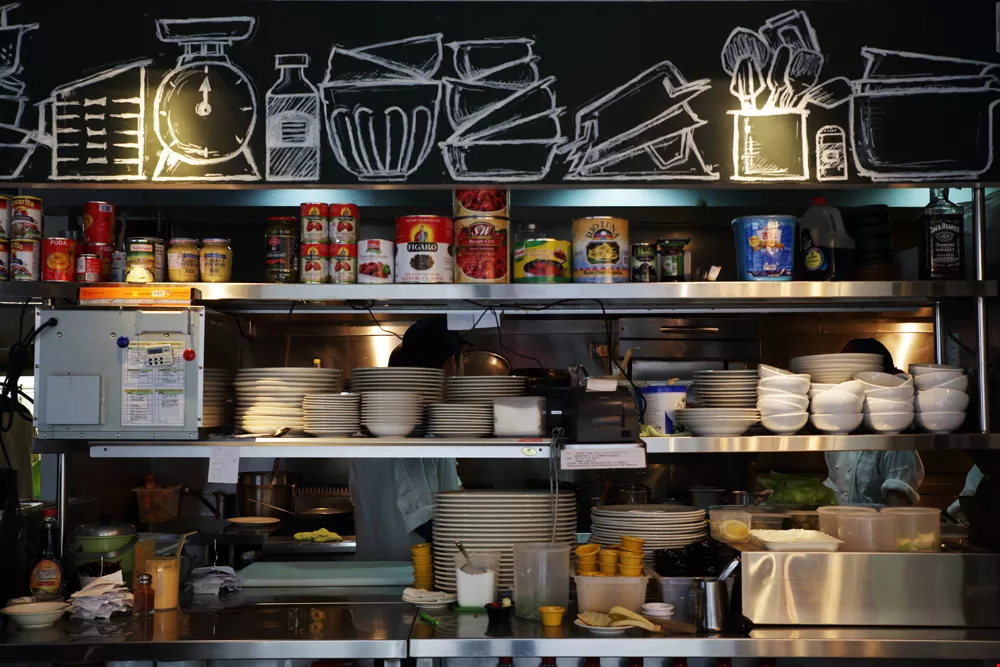
A well-organized kitchen helps The Diner serve a rich and varied meal selection in minimal time.
“If we open any more branches, it will be to create opportunities for our employees,” says Tu. Currently, each of the branches other than the Rui’an location is managed by two or more partners. They’re required to be in tune with The Diner’s corporate culture and personally participate in on-site work. In Tu’s opinion, who would make better candidates for partners in a new location than their own employees?
Built from a small eatery on Rui’an Street, The Diner has been a driving force in Taipei’s brunch craze. Even five-star hotels like the Regent Taipei, the Ambassador and W Hotel have jumped into the market by offering classy brunches. American-style brunch, now a fixture in Taiwan’s dining culture, has become a leisure-time trend for lovers of food and life.

@List.jpg?w=522&h=410&mode=crop&format=webp&quality=80)

@List.jpg?w=522&h=410&mode=crop&format=webp&quality=80)


