Exotic Hometown Flavors Thrive in Taiwan
Chen Hsin-yi / photos Chuang Kung-ju / tr. by Geoff Hegarty and Sophia Chen
May 2012


With the rising numbers of Southeast Asian immigrants resident in Taiwan over recent years, signboards touting Southeast Asian cuisine can been seen everywhere around the lanes and alleys of Taiwanese towns, prepared mainly by a very industrious group of female émigrés.
For those new to the country, there’s both physical and mental comfort to be had from being able to enjoy the food of their motherland in Taiwan. For native Taiwanese, the exotic flavors of the new cuisines have given new meaning to the concepts of fresh and authentic, spicy or sour.
Located in Yonghe District, New Taipei City, is a bustling Vietnamese restaurant called Yuexiangguan. The business is owned by a Vietnamese woman who married a local man and moved to Taiwan 11 years ago. Before starting her business, she had a number of jobs: working in her husband’s family-owned noodle factory, as a domestic worker, in a breakfast cafe, and three years on a construction site. Although Thu Giac was kept busy with both housework and part-time work, she still managed to find time to study at a nearby junior high school in the evenings (she had already graduated from high school in Vietnam). So she speaks Mandarin quite fluently.
A couple of years ago with support from her husband’s family, she decided to start her own business. “I was a pretty good cook after many years of cooking for the whole family. I thought it would be better to do it for profit!”
It wasn’t all smooth sailing, however. Thu Giac wasn’t familiar with some Vietnamese dishes that Taiwanese tend to enjoy. “My family in Vietnam lives in the countryside, and we don’t eat beef, so I had never tasted rice noodles cooked with beef. We were poor and the family was quite large, so a big pot of rice noodles mixed with a little bit of minced pork and sauce was our daily fare. Only when we had guests did we taste treats like spring rolls.” But Thu Giac remembers distinctly the exquisite flavor of fresh vegetables and seafood caught from the river in her hometown.
She gathered recipes from the Internet and practiced the dishes many times, and with her excellent taste buds and skillful hands, she finally developed a unique formula—a fusion of South and North Vietnamese cuisines. She opened a food stand selling Vietnamese dishes three months later.
In under six months, the reputation of her home-style cooking had spread far, and her dream had come true: “I never thought that one day I would become a restaurant owner!”
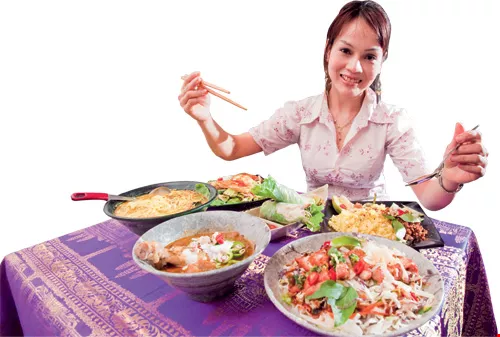
“Southeast Asian cuisine, which includes sweet, sour, spicy and aromatic flavors and uses lots of fresh vegetables, stimulates the appetite and keeps diners healthy,” says Tina, the owner of Angkor Wat Eatery. The photo above shows Cambodian curried fish rice noodles.
Wei Qingwen, who is from Liuzhou City in mainland China’s Guangxi Province, married a local man 10 years ago. She was the first restaurateur in Taiwan to sell both the Liuzhou specialty luoshi rice noodles (rice noodles cooked in snail meat broth), and Guilin rice noodles. Her extremely busy restaurant on Bangka Boulevard, Taipei City, does home delivery, as well as serving the never-ending queue of loyal customers in the restaurant.
Wei explains that both Guilin and luoshi style rice noodles, large in size with a smooth, springy texture, are a popular dish in southern China with a tradition stretching back over 1000 years. The degree of their popularity is equivalent to the well-known Tainan specialty danzai noodles—steamed oil noodles garnished with pork sauce—in Taiwan.
Luoshi rice noodles are made to a unique recipe, and include Bellamya purificata, a variety of freshwater mud snail found in ponds and along riversides. They are smaller than escargots, which have a thinner shell but contain more meat. For luoshi, the snails are stewed for many hours in a broth with 10-odd spices. Just before serving, other ingredients are added: pickled bamboo shoots, beans, cabbage, fried bean-curd crust, wood ear fungus, peanuts, and coriander, creating a blend of sour, sweet, spicy, and aromatic flavors. Perhaps because of the complicated preparation and the difficulty of obtaining all the necessary spices, most Taiwanese are unfamiliar with the dish.
Wei has become financially self-reliant from the restaurant. “In the past, my husband took care of me, but due to the success of my business, he’s been able to retire and relax a bit.”
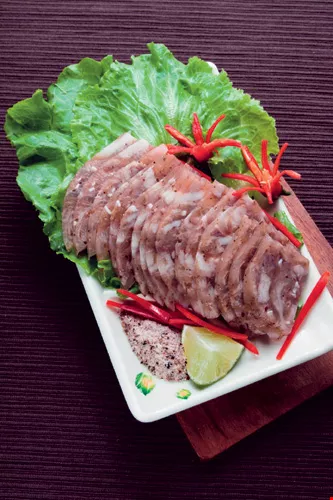
Through the skill and hard work of Taiwan’s Vietnamese daughters-in-law, delicious Vietnamese cuisine has won the hearts of many. Photos show some popular dishes from Yuexiangguan in New Taipei City(from left to right): Shredded chicken salad. Deep-fried spring rolls. Fresh spring rolls. Pigskin in aspic. Rice noodles with pork and seafood. Fried beef and rice noodle salad.
Like Thu Giac and Wei Qingwen who are running their own ethnic restaurants, increasing numbers of people are venturing into the field. According to statistics from the Ministry of the Interior, the number of people who have immigrated through marriage from Southeast Asian countries and mainland China has grown over the years to a cumulative total of around 460,000. The largest group is from mainland China (about 297,000 people), followed by Vietnam (86,000), Indonesia (27,000), Hong Kong and Macao (12,000), and several thousand each from Thailand, the Philippines, and Cambodia. The majority have settled in New Taipei City and Taipei City (about 30%). There are also 429,000 foreign laborers from Southeast Asia currently in Taiwan.
Wu Jiazhen, director of the North Taiwan office of the TransAsia Sisters Association, Taiwan (TASAT), points out that female immigrants have become Taiwan’s invisible labor force, but because of restrictions on working rights (for example, previously a foreign spouse who had not yet acquired ROC citizenship had to apply for a work permit), barriers of language and social connections, low wages and the difficulty of finding full-time work, operating a restaurant has become a way of avoiding these obstacles. The women are able to take over some of the families’ financial burdens (both the husband’s family and her own), and it also gives them a huge sense of achievement.
Among Southeast Asian cuisines, Taiwanese diners are quite familiar with Thai and Vietnamese dishes; Thai restaurants are generally operated by Taiwanese, and the latter chiefly by Vietnamese-born Chinese or spouses from Vietnam.
Wang Chih-hung, professor of the Graduate Institute of Building and Planning, National Taiwan University, notes that because the Thai government has been very successfully promoting its cuisine abroad since the 1990s, Thai food has developed an image as healthy, exotic and fashionable. In the early days, there were also a number of Vietnamese restaurants, usually run by Vietnamese-born Chinese. Recently, however, because immigrant numbers have grown solidly over the past decade, and also because of the frequent visits of Taiwan businesspeople to Vietnam, the cuisine has blossomed.
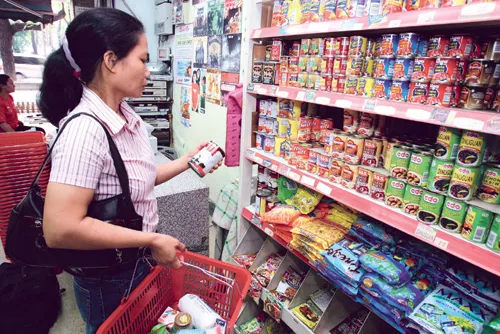
Southeast Asian grocery stores are booming in Taiwan, showing the increasing popularity of (and nostalgia for) hometown cuisine.
For most, Southeast Asian cuisine means sweet, sour, aromatic and spicy. Where did this impression originate? How is it related to local customs and climate?
Feng Qingqiang, a Vietnamese-born Chinese who migrated to Taiwan at age 15 and has worked as a chef for many Southeast Asian restaurants, comments on these questions in a recent cookery book. Because Southeast Asia is close to the equator with its frequent rain and year-round summer, people have developed a taste for sour, spicy and strong flavors to stimulate the appetite and prevent food from going bad. The wide range of flavors stems from the use of various herbs and spices.
Southeast Asia is the land of spices in terms of both variety and quantity. Indonesia, in particular, has worn the tag of “Spice Islands” since ancient times. Lucien Guyot, academician of the Académie d’agriculture de France, in his book entitled Les Épices, points out that the European battle for control of the spice trade from medieval times resulted in Southeast Asia’s long colonial history. Even today, spices remain a major item of Southeast Asian exports.
In typical Southeast Asian cuisine, the fragrant sour flavors come from kaffir lime leaves, lime juice, and tamarind (originally from India, its juice is extremely sour); sweetness originates with coconut milk and palm sugar; spice comes from galangal, red cluster pepper, and dried chili pepper. Lemongrass and pandan leaves, which are often used as ingredients for curry or soup, bring fragrance and relieve the heat.
Southeast Asian cuisine also uses the acidity and sweetness of a variety of fruits.
The long coastlines of the region are a bonus for those who make seafood products. The best examples are fish sauce and shrimp paste, made from fermented sun-dried and salted fish or shrimp. In Vietnamese cuisine, fish sauce is an essential ingredient like soy sauce for the Chinese. While for some it may smell rather foul on its own, it has a magical effect on the food, which suddenly becomes delectably aromatic.
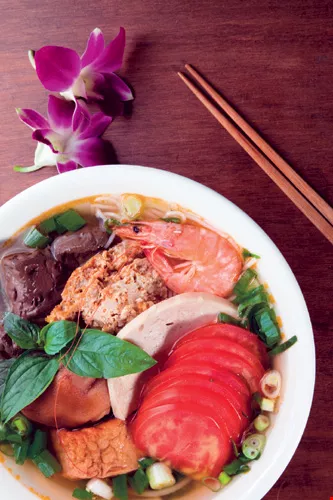
Through the skill and hard work of Taiwan’s Vietnamese daughters-in-law, delicious Vietnamese cuisine has won the hearts of many. Photos show some popular dishes from Yuexiangguan in New Taipei City(from left to right): Shredded chicken salad. Deep-fried spring rolls. Fresh spring rolls. Pigskin in aspic. Rice noodles with pork and seafood. Fried beef and rice noodle salad.
In terms of cultural exchange, hometown dishes brought in by new immigrants have not only enriched the taste buds of Taiwanese diners, but have also enlivened the creativity of Taiwan’s own food culture.
Thai cuisine is a good example. Taiwanese cuisine has long been influenced by the spicy foods of Sichuan and Hunan provinces in China which were brought to Taiwan many years ago, creating a culinary tradition of eating spicy food. But the unique flavors of the highly spiced, sour Thai dishes were an unprecedented experience for Taiwanese.
Gourmet Andy Wu, who has studied Thai cooking in Thailand, shares some of his alarming experiences trying out the local Thai snacks in his blog: “A bowl of seafood rice noodles looks ordinary. But you’re supposed to add some fish sauce, then sprinkle on a few drops of vinegar in which raw peppers have been marinated, and finally add Thai pepper. After only a few mouthfuls, I was sweating. It was an experience, but great fun.”
The interesting thing is that yueliang xiabing (minced shrimp wrapped in a spring roll and deep fried), a dish that most Taiwanese would order when they go to a Thai restaurant, was invented by Taiwanese! Some say that the dish originated from Taiwan’s jiujia cuisine of the 1960s (jiujia are upscale restaurant-bars catering to middle-aged businessmen and employing hostesses to accompany diners). Another source claims that it’s derived from the Thai dish tod mun goong—minced shrimp mixed with minced chicken and lemongrass, shaped into a round and then coated with breadcrumbs to deep fry. A few years ago, the Thai Tourism Bureau stepped forward to clarify the origin of yueliang xiabing: it’s definitely not a traditional Thai dish. However, because tourists visiting Thailand like to order it, nowadays yueliang xiabing is actually offered in restaurants in Thailand.
Although Taiwan can boast a variety of delicious foods of its own, some authentic Southeast Asian flavors are rare here due to the difficulty of finding appropriate ingredients. Hong Man-chi, vice-chairwoman of TASAT and an immigrant from Vietnam, enjoys cooking and has tasted Vietnamese cuisine all around Taiwan. While she’s pleased that her hometown food is available in Taiwan, she’s also sad that the spring rolls offered in Taiwan’s Vietnamese restaurants are so inauthentic in flavor.
She explains that spring roll wrappers and rice noodles in Vietnam are always freshly made, but the Taiwan variety is imported, so they’re never as fresh as the authentic Vietnamese article. Vietnamese spring rolls also come in a range of more than 10 flavors, and use exquisitely delicious ingredients. The beef spring roll, for example, has such ingredients as green starfruit, green banana, boiled young jackfruit, perilla, and mint leaves. The escargot spring roll includes peanuts, scallion, and jicama, a sweet tuber that tastes like Asian pear.
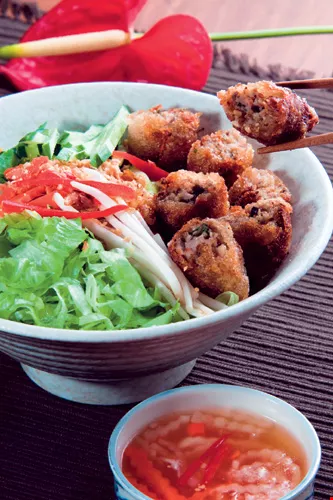
Through the skill and hard work of Taiwan’s Vietnamese daughters-in-law, delicious Vietnamese cuisine has won the hearts of many. Photos show some popular dishes from Yuexiangguan in New Taipei City(from left to right): Shredded chicken salad. Deep-fried spring rolls. Fresh spring rolls. Pigskin in aspic. Rice noodles with pork and seafood. Fried beef and rice noodle salad.
While the art of cooking evolves with time, improving the flavor and quality of ingredients is always worthwhile. Wei Qingwen says she has tried hard to collect all the essential ingredients for her luoshi rice noodles because she wants her customers to enjoy the authenticity of the genuine ingredients. Nevertheless, she has brought new ideas into the cooking of the dish—adding either stewed pork hock, beef shank or pork intestine in the broth, or all three. People from her hometown region have complimented her on the flavor: many say her creation is indeed better than the authentic dish.
In fact, the cuisines of many Southeast Asian countries are turning into a fusion of multinational flavors because of the impact of geographical location and migration. Cambodian-born Tina immigrated to Taiwan and is running an Angkor Wat-style restaurant on Changchun Road, Taipei City. The menu includes a range of rice dishes, soups, rice noodles, salads, stir-fried food and small hotpots. In all, she offers 60-odd dishes from many different cuisines: Chinese, Thai, Vietnamese, and Indonesian. And new dishes are added from time to time. However, the rich aroma that is the essence of Cambodian food remains discernible.
The next time you sample the hometown food brought here by Taiwan’s new immigrants, don’t hesitate to give them your compliments and encouragement. While the exotic flavors of their fare have often traveled a long way across the seas to Taiwan, each delicious mouthful symbolizes a desire to put down new roots in a new land, to achieve a dream.
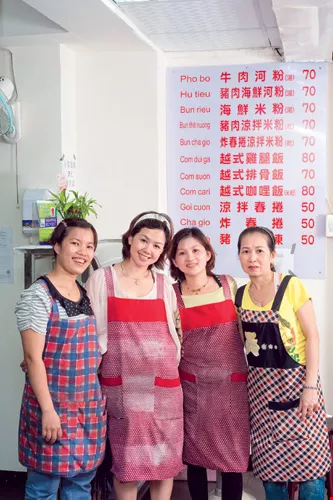
Thu Giac (left), owner of Yuexiangguan, is thankful for the friendship of her fellow Vietnamese immigrants, with whose support she has been able to develop her business from a street-side food stand into a fully-fledged restaurant.
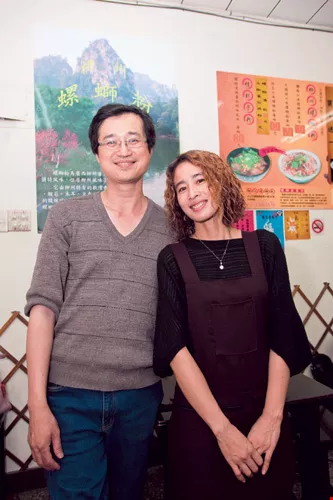
Wei Qingwen (right) from Guangxi, China, with the support of her husband, is running a restaurant featuring the cuisine of her hometown. Her luoshi rice noodles, a Liuzhou specialty, are pictured right.
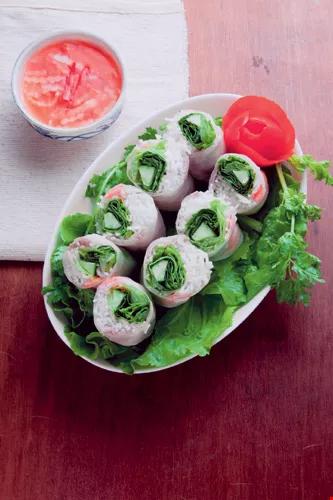
Through the skill and hard work of Taiwan’s Vietnamese daughters-in-law, delicious Vietnamese cuisine has won the hearts of many. Photos show some popular dishes from Yuexiangguan in New Taipei City(from left to right): Shredded chicken salad. Deep-fried spring rolls. Fresh spring rolls. Pigskin in aspic. Rice noodles with pork and seafood. Fried beef and rice noodle salad.
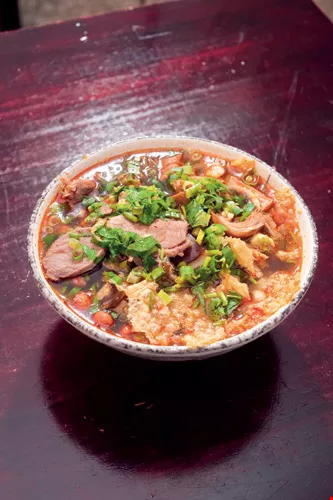
Wei Qingwen (right) from Guangxi, China, with the support of her husband, is running a restaurant featuring the cuisine of her hometown. Her luoshi rice noodles, a Liuzhou specialty, are pictured right.
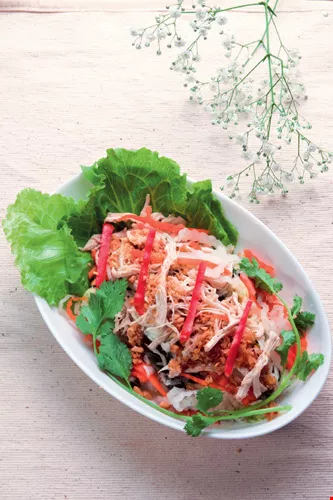
Through the skill and hard work of Taiwan’s Vietnamese daughters-in-law, delicious Vietnamese cuisine has won the hearts of many. Photos show some popular dishes from Yuexiangguan in New Taipei City(from left to right): Shredded chicken salad. Deep-fried spring rolls. Fresh spring rolls. Pigskin in aspic. Rice noodles with pork and seafood. Fried beef and rice noodle salad.
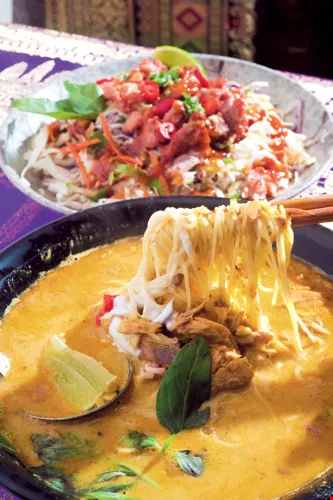
“Southeast Asian cuisine, which includes sweet, sour, spicy and aromatic flavors and uses lots of fresh vegetables, stimulates the appetite and keeps diners healthy,” says Tina, the owner of Angkor Wat Eatery. The photo above shows Cambodian curried fish rice noodles.
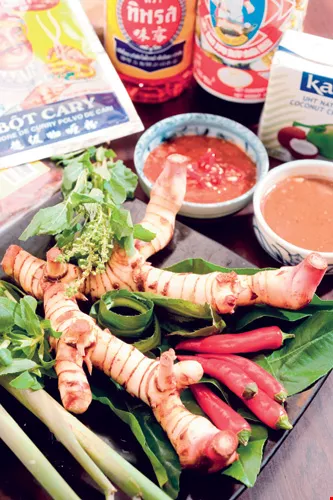
With a thousand years of tradition, natural spices and sauces are the soul of Southeast Asian cuisine.

@List.jpg?w=522&h=410&mode=crop&format=webp&quality=80)

@List.jpg?w=522&h=410&mode=crop&format=webp&quality=80)

@List.jpg?w=522&h=410&mode=crop&format=webp&quality=80)
@List.jpg?w=522&h=410&mode=crop&format=webp&quality=80)

