

Along, long time ago, between space and time, a spirit made two creatures, a good animal called a barong, and an evil animal called a rangda. Good and evil do not get along, but due to their strengths being about equal, they coexist in the world.
The rangda has asked Dewi Kunti to sacrifice her son Sadewa to him. Since her magic power is not strong enough to oppose him, she agrees. But she can not stand to give her beloved son to the monster, so she continually delays the sacrifice.
One day, the rangda puts evil thoughts into the mind of Dewi Kunti. She commands that her son be tied up in front of the cave the rangda lives in, for the rangda to eat.
At this moment, the god Siwa rescues Sadewa and gives him both immortality and strong magic. Due to this changed circumstance, the rangda is nearly defeated by Sadewa. Their strengths are nearly equal; the rangda finally has to agree to go up to Heaven and no longer do evil on Earth.
A maid of the rangda called Kalika also wants to eat Sadewa. He sees her impertinence and begins a battle of magical powers. Kalika changes herself into a wild boar, then into a monster bird, but is defeated both times. At last she changes into a rangda, and when Sadewa cannot defeat her, he changes into a barong. At this point, they are about evenly matched, and the fight cannot reach a conclusion.
Good and evil are both in the world, in a ceaseless struggle.
This is the traditional barong dance of Bali. The theme of the dance is in accord with Balinese religion. The barong is a good god, the rangda an evil demon, and Siwa, whose name means "destruction," the chief god, who destroys in order to allow new things to appear. On the stage, the dancers wear batik sarongs, brightly colored in red, gold, yellow, and blue.
The Balinese dance has a special technique. The forearms open and close, the arms bend and straighten, the wrists twist and turn, the fingers open and close sideways. It almost seems as though the dancers have no bones. The movements of the dancers' feet are equally graceful.
The musical accompaniment usually consists of percussion instruments. One is made of bars of copper of varying lengths struck with a copper striker. Sometimes there is music by simple woodwind instruments.
Bali lies to the east of Java. It is a volcanic island. Most of the volcanoes are extinct, but some still emit white smoke. The island is covered with lush trees and flowers, and along the coast are tropical coconut groves, matching the gorgeous sea. Moreover, since the island has been kept intact, every thing is still in an unspoiled state, proving extra attractive. Furthermore, the temperature on Bali is always between 20 and 30 degrees centigrade, very suitable for tourists at all times.
Besides its natural beauty, the biggest attraction is its primitive, mysterious, romantic atmosphere, laden with the air of pervasive religion.
Bali has 2.5 million inhabitants. They are mostly farmers, and are characteristically short in stature, but graceful in posture.
Bali is a matriarchal society. Besides taking care of household tasks, the women have a unique skill--they can balance things on their heads to carry them. On the streets, one often sees women carrying full baskets on their heads, with graceful, carefree movements. Perhaps this early training results in the women having a keen sense of balance and results in their world-famous figures.
The men usually wear long skirts, and flowers behind their ears. They do as they please. Cockfights originally were religious sacrifices, but later resulted in gambling. Now they are banned, except during religious festivals.
The influence of the traditional religion on Bali is great, and it has been called the island of temples. Bali has more than 20,000 temples and the most important object of worship is Siwa. Inside the temples, the carvings and paintings are usually done in pairs, to represent the coexistence of good and evil.
The temples hold many carvings of wood and stone. The people study carving from youth, in order to make beautiful objects to present to the gods. The Balinese seem to have a certain natural talent, and they get abundant practice, so their carvings are world renowned.
The carvings are rivaled by two other art forms: painting and batik. The carvings are first and foremost for religious purposes, featuring images of gods, but many also depict daily life. Paintings are done in a variety of media; most are first drawn in ink, then either watercolors, or oils, or both are applied to finish the work. The previous sketching gives the paintings a special quality. Batik is usually made by hand. It involves putting an intricate design in wax on a piece of cloth. The cloth is then immersed in dye. The wax resists the dye on certain areas of the cloth, making a pattern. This process can be repeated many times with new applications of wax to make multicolored, intricate designs. Such handmade batik is expensive, however, and machines are used at times to put simple wax patterns on cloth to make it more affordable.
The island has a relaxed, tranquil atmosphere. Most tourists wear shorts; one rarely sees formal dress. It is a great refuge from the rat race. Bali is still an inexpensive place to travel. A lobster dinner can be purchased for $5. Bali is a land of delights that have disappeared elsewhere.
[Picture Caption]
1.2.5. The traditional barong dance of Bali, thick with the flavor of religion, bearing a tint of mystery. 3. The barong dance is a must for tourists. 4. The musicians in Balinese dance wear traditional dress--a long skirt, and a flower by the ear.
1. Everywhere on the island one can see tall coconut palms, and one can also see natives climbing them to fetch coconuts. 2.3.6. Bali's seacoast is gorgeous, and at sunrise, sunset, and every time it has a special charm. The seacoast has grass pavilions for strollers, all with a rustic atmosphere, and boats for tourists. 4.5. Bali is full of tropical plants, pleasing to the eye and mind. 7. Terraced fields are one special feature of Bali's scenery.
1.2.3. Bali has a thick air of fine arts; one can see carvings everywhere. These stone carvings are full of the simple beauty of the people's culture. Carved images usually depict gods or mythical monsters. 4. The entryways to Balinese temples usually have opposing elements, representing the opposition of good and evil. 5.6. The scenic spots of Bali also have carvings; picture 5 shows a carving in front of the Holy Spring temple; picture 6 shows the carvings around the pool at the temple; every image has a bottle of water in its hands; the water (the "holy water") is said to never cease, and if rubbed on the body to guard health and bring blessings. 7. The Balinese love flowers; the local residents even put them on the images. 8. Even the mouth of a cave has a carved image.
1.3. Balinese wood carvings mostly feature figures from mythology; after painting they are 100% beautiful. 2. The local people carving wood. 4. Even the rooftop has an intricate carving, a special feature of Balinese architecture. 5. Bali has many art galleries, displaying paintings. The paintings are colorful and gorgeous. 6. Some paintings are made on batik. 7. The stone carvings on the wall manifest Bali's traditional life style. 8. In the art galleries there are often people painting. 9.10. Leather and metal ornaments are also famous Balinese handicraft items.
1. While selling batik, she puts the extra cloth on her head. 2. Batik is a special product of Bali, made by hand. The picture shows the process of putting wax on the cloth. 3. The traditional method of weaving by hand is still preserved on the island. 4. Women winnow rice in front of their houses. 5. Bali's women and children often carry things on their heads. 6. Small baskets made of tender coconut leaves, with flowers inside, are a common Balinese offering to the gods.
1. A tourist hotel beside Bali's coast. 2. A house being built on the island; these are usually made of the lush bamboo and grasses of the island. 3. An open air restaurant where one can both eat and enjoy performances; in the lantern light, it's 100% charming.
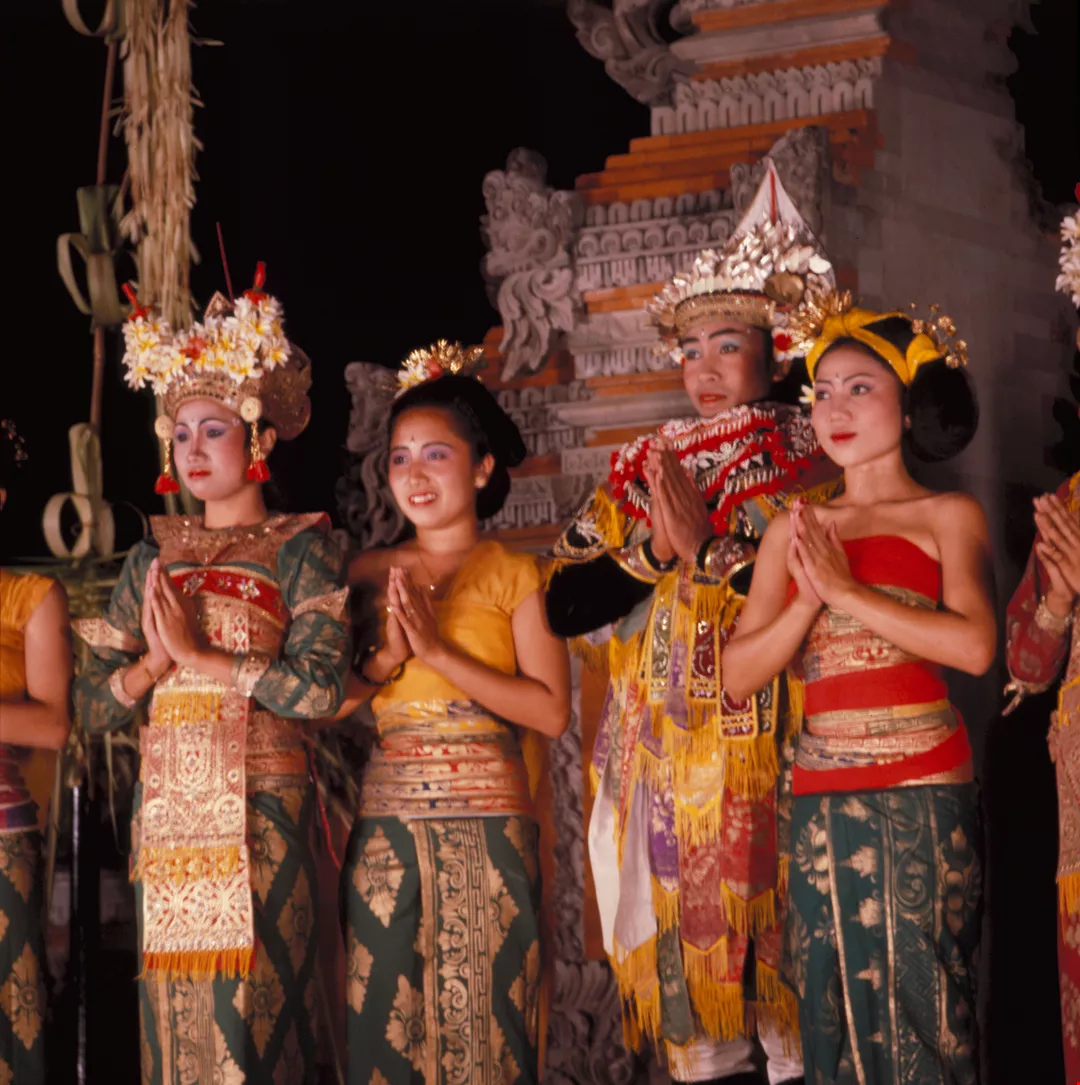
1.2.5. The traditional barong dance of Bali, thick with the flavor of religion, bearing a tint of mystery.
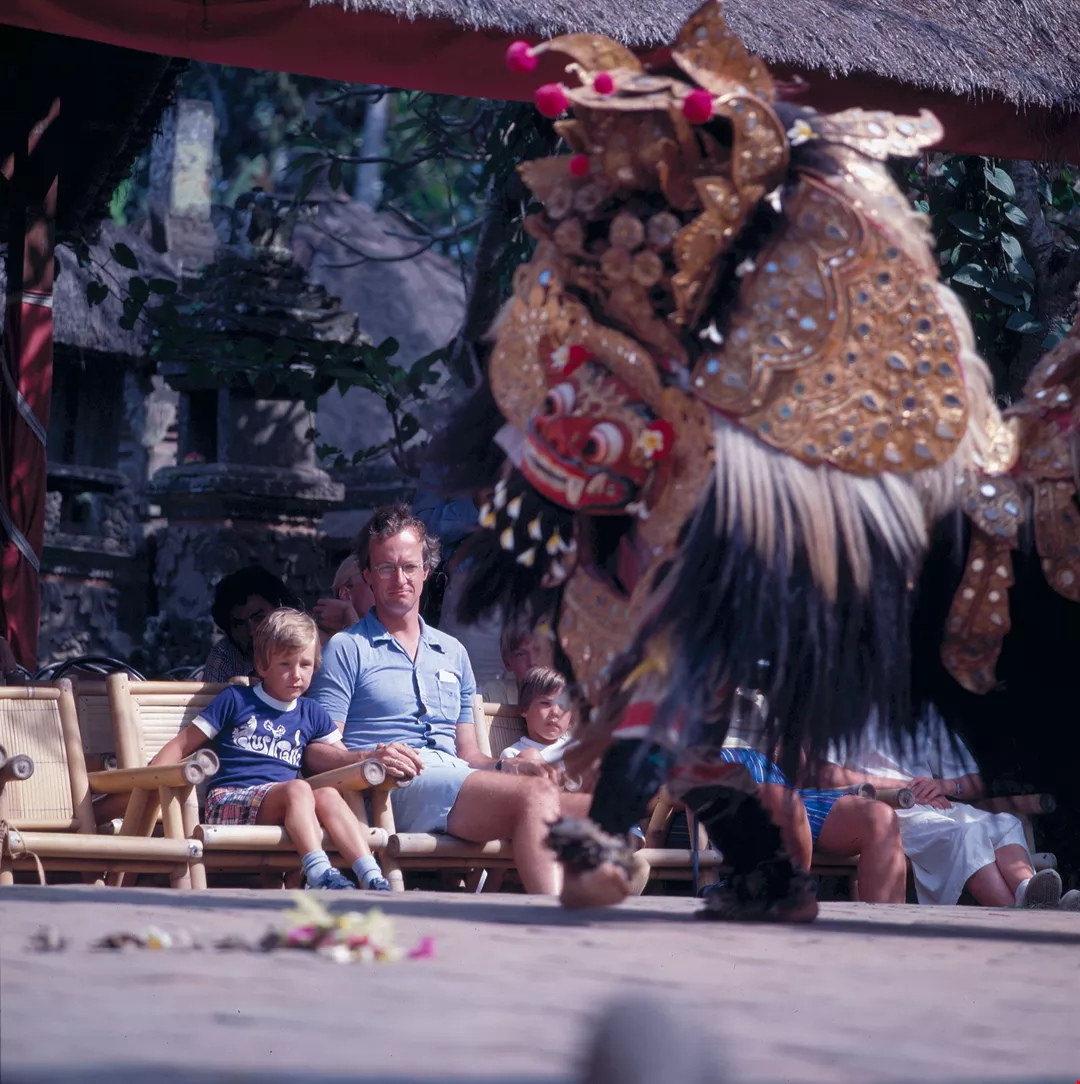
3. The barong dance is a must for tourists.
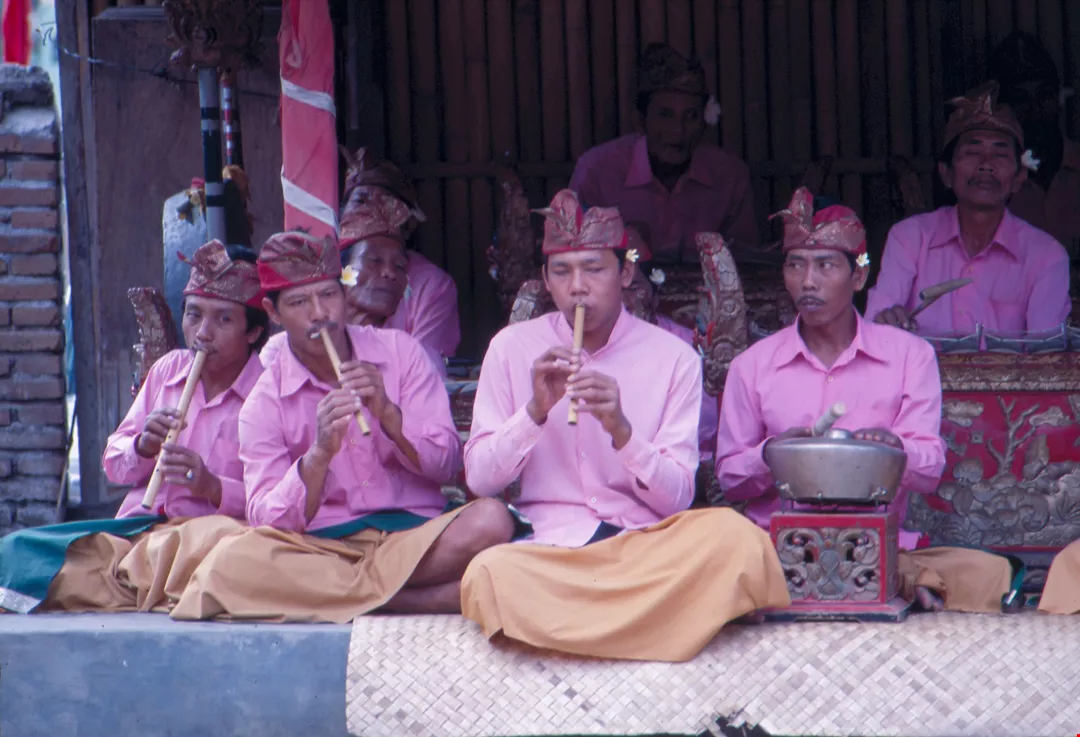
4. The musicians in Balinese dance wear traditional dress--a long skirt, and a flower by the ear.
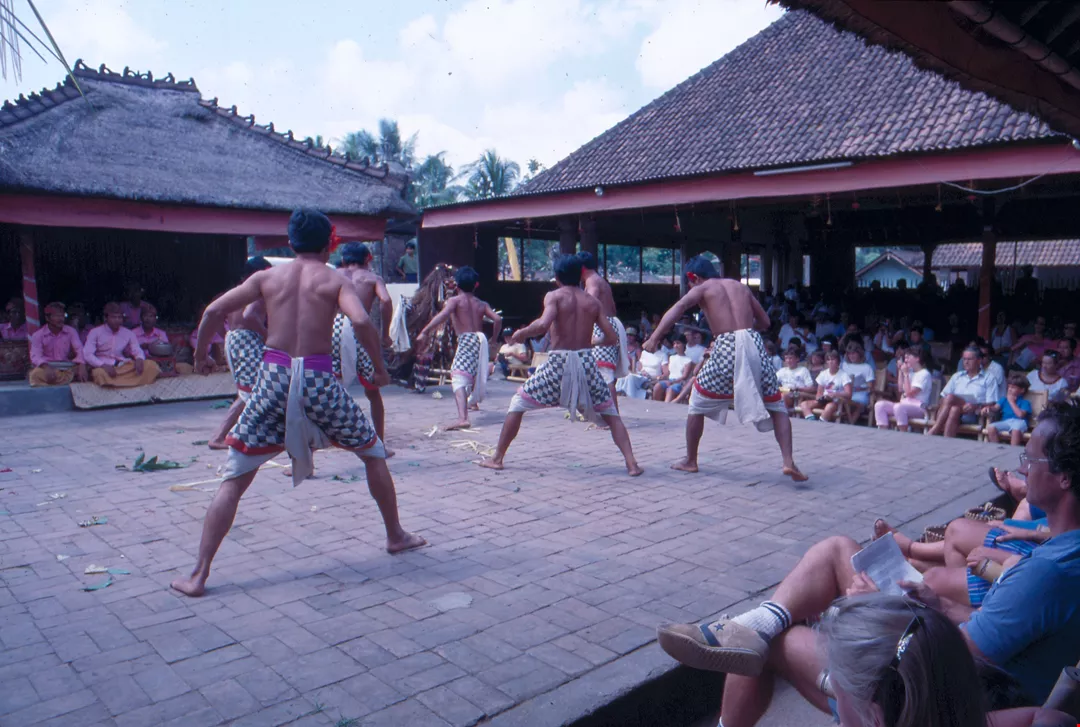
1.2.5. The traditional barong dance of Bali, thick with the flavor of religion, bearing a tint of mystery.
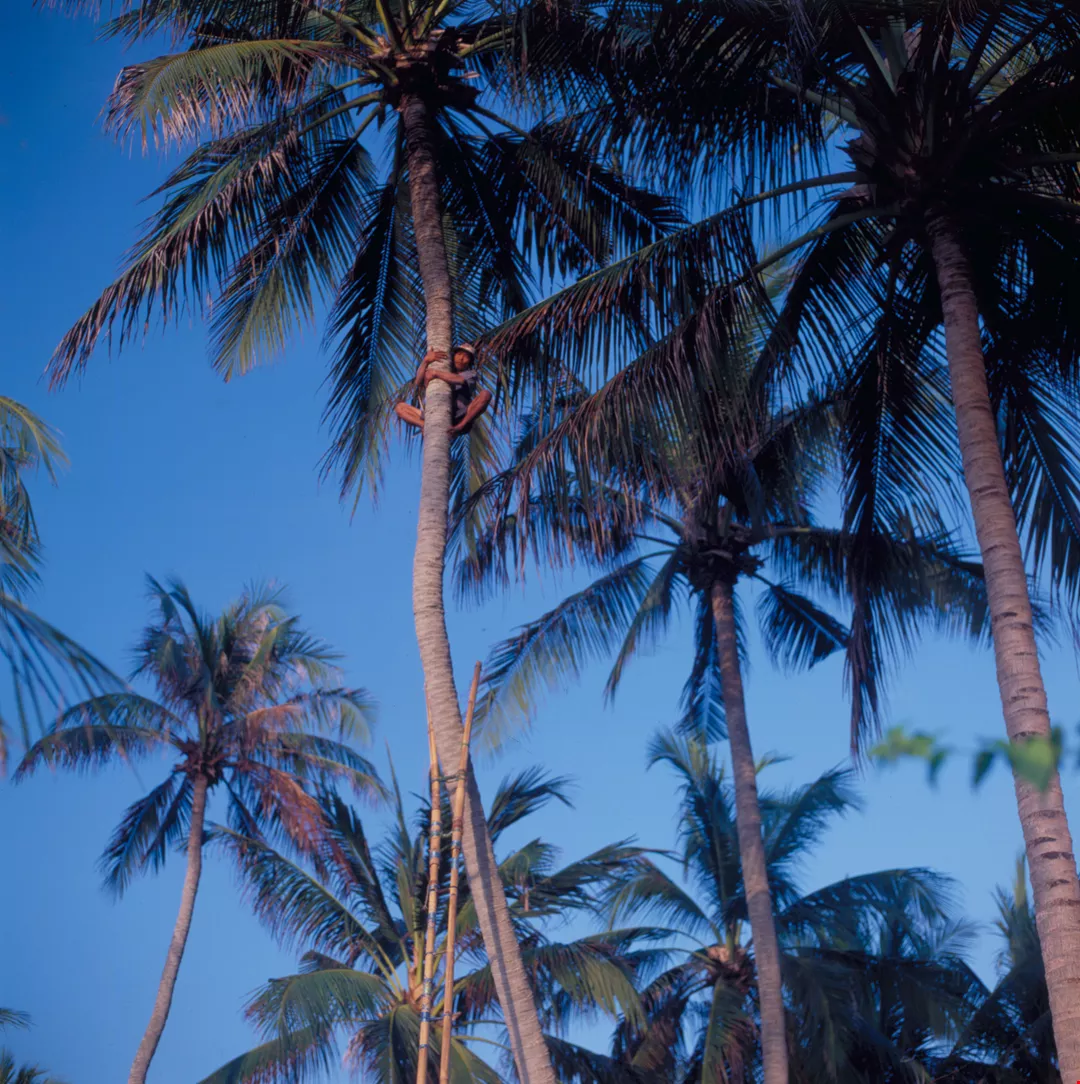
1. Everywhere on the island one can see tall coconut palms, and one can also see natives climbing them to fetch coconuts.
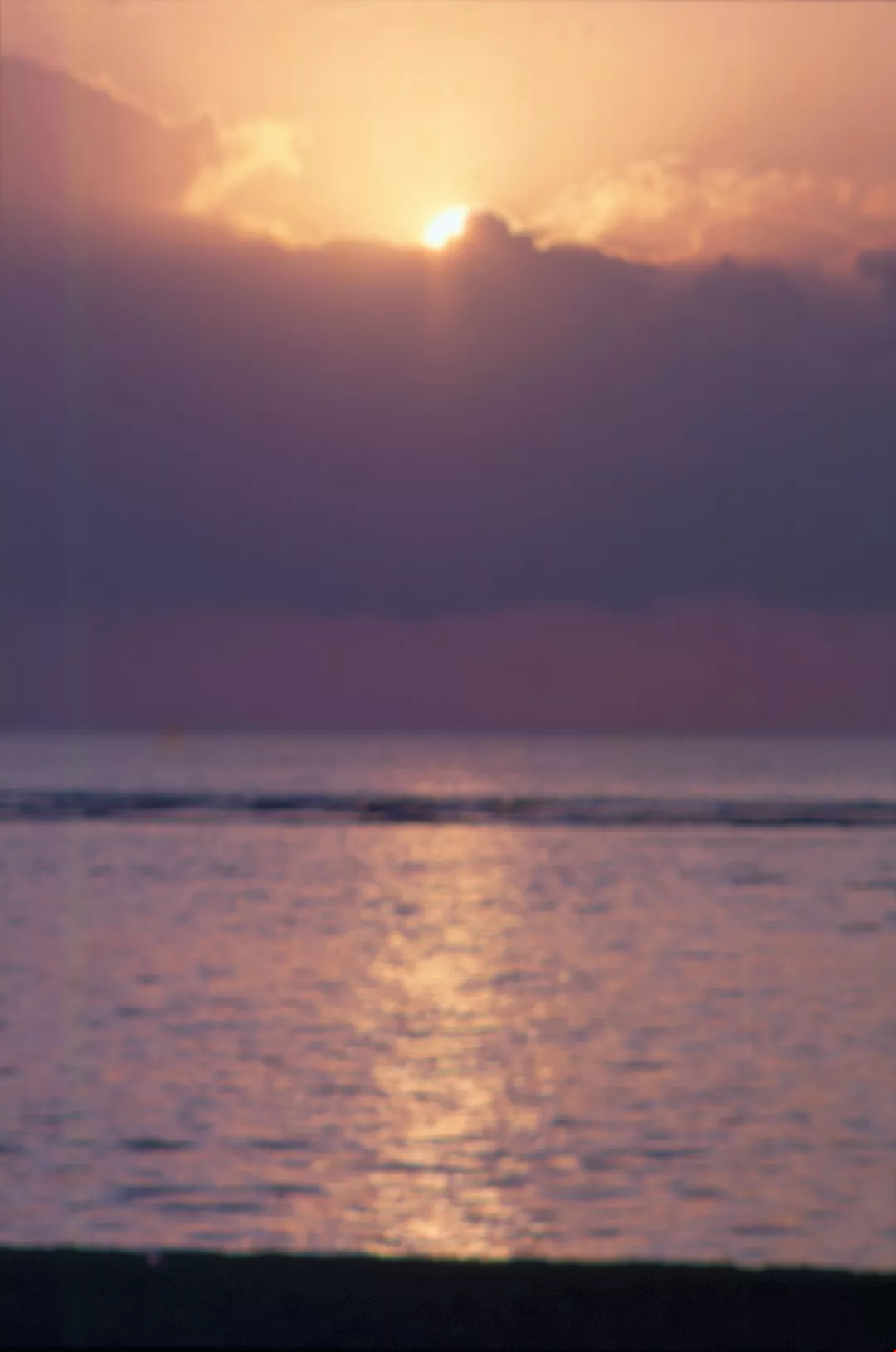
2.3.6. Bali's seacoast is gorgeous, and at sunrise, sunset, and every time it has a special charm. The seacoast has grass pavilions for strollers, all with a rustic atmosphere, and boats for tourists.
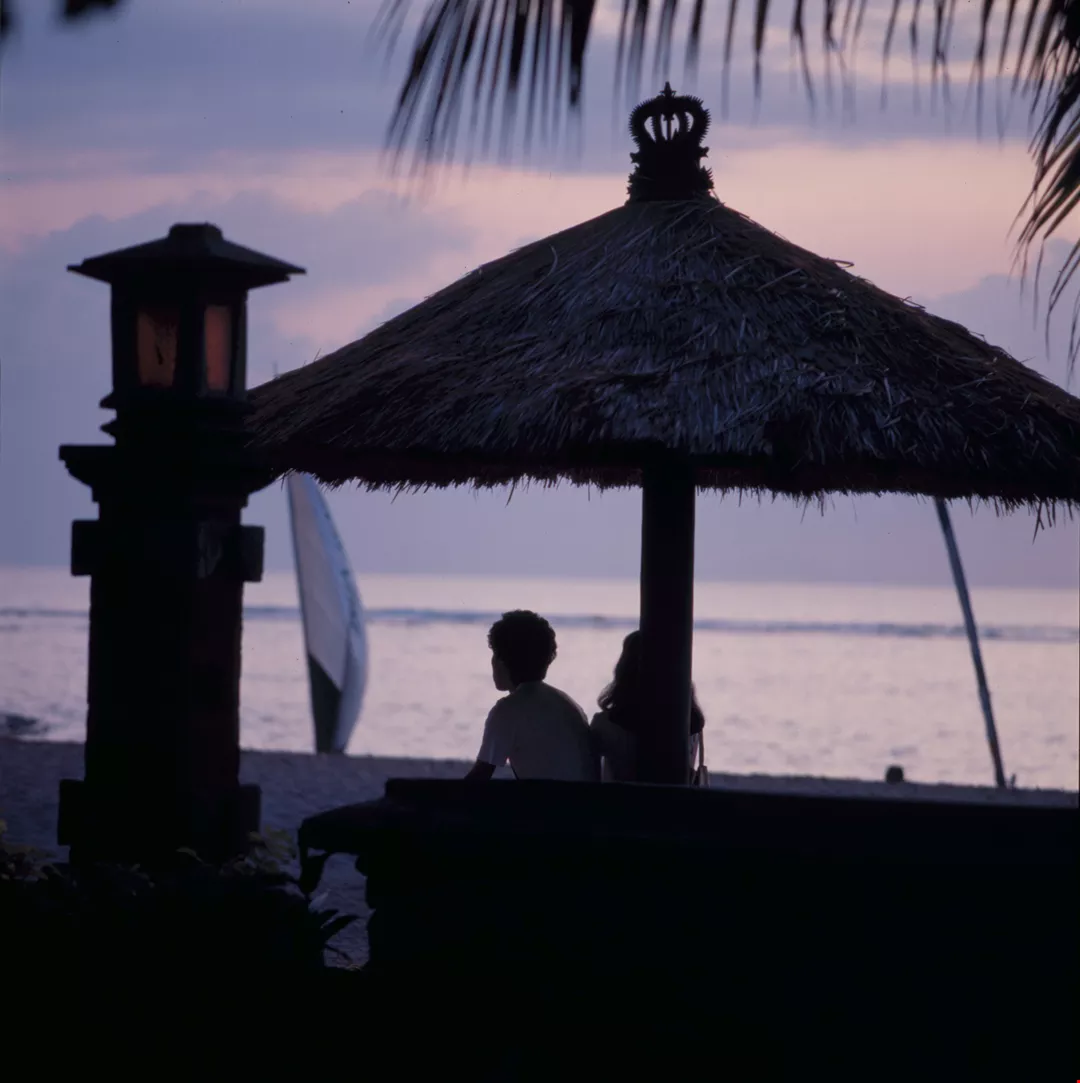
2.3.6. Bali's seacoast is gorgeous, and at sunrise, sunset, and every time it has a special charm. The seacoast has grass pavilions for strollers, all with a rustic atmosphere, and boats for tourists.

2.3.6. Bali's seacoast is gorgeous, and at sunrise, sunset, and every time it has a special charm. The seacoast has grass pavilions for strollers, all with a rustic atmosphere, and boats for tourists.
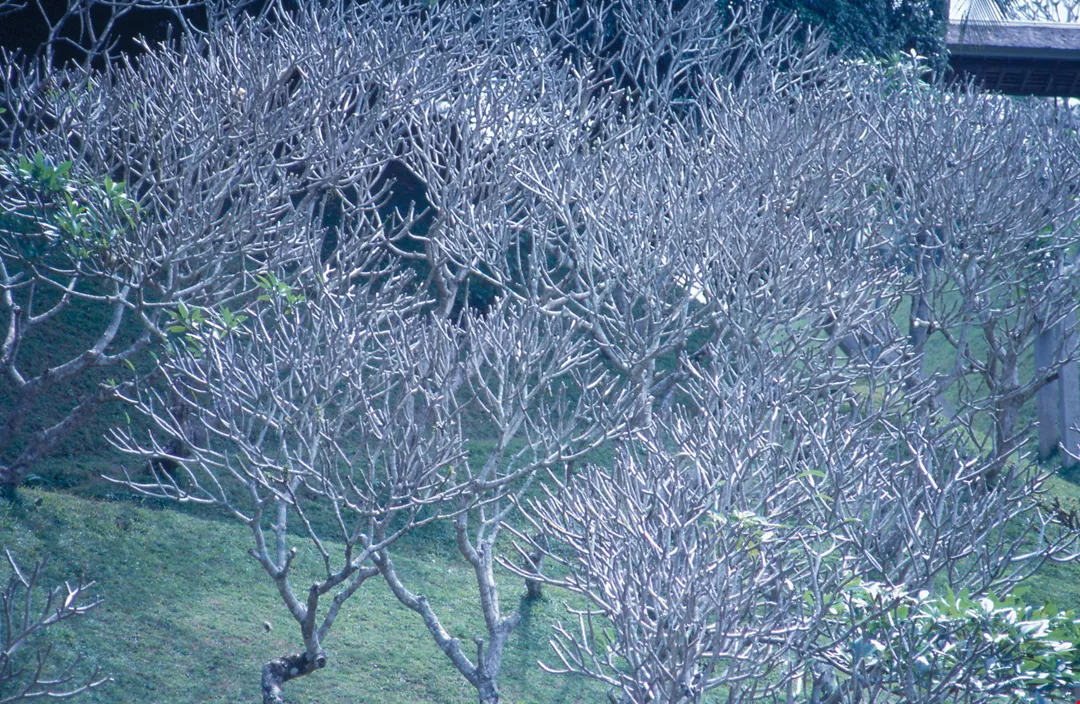
4.5. Bali is full of tropical plants, pleasing to the eye and mind.
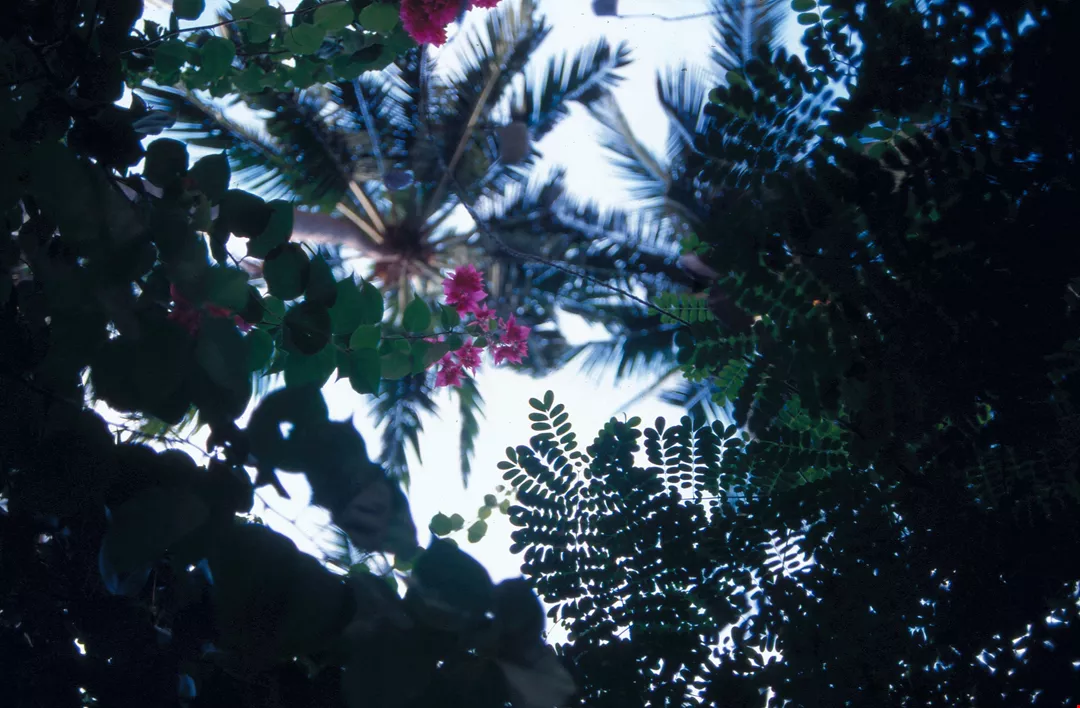
4.5. Bali is full of tropical plants, pleasing to the eye and mind.
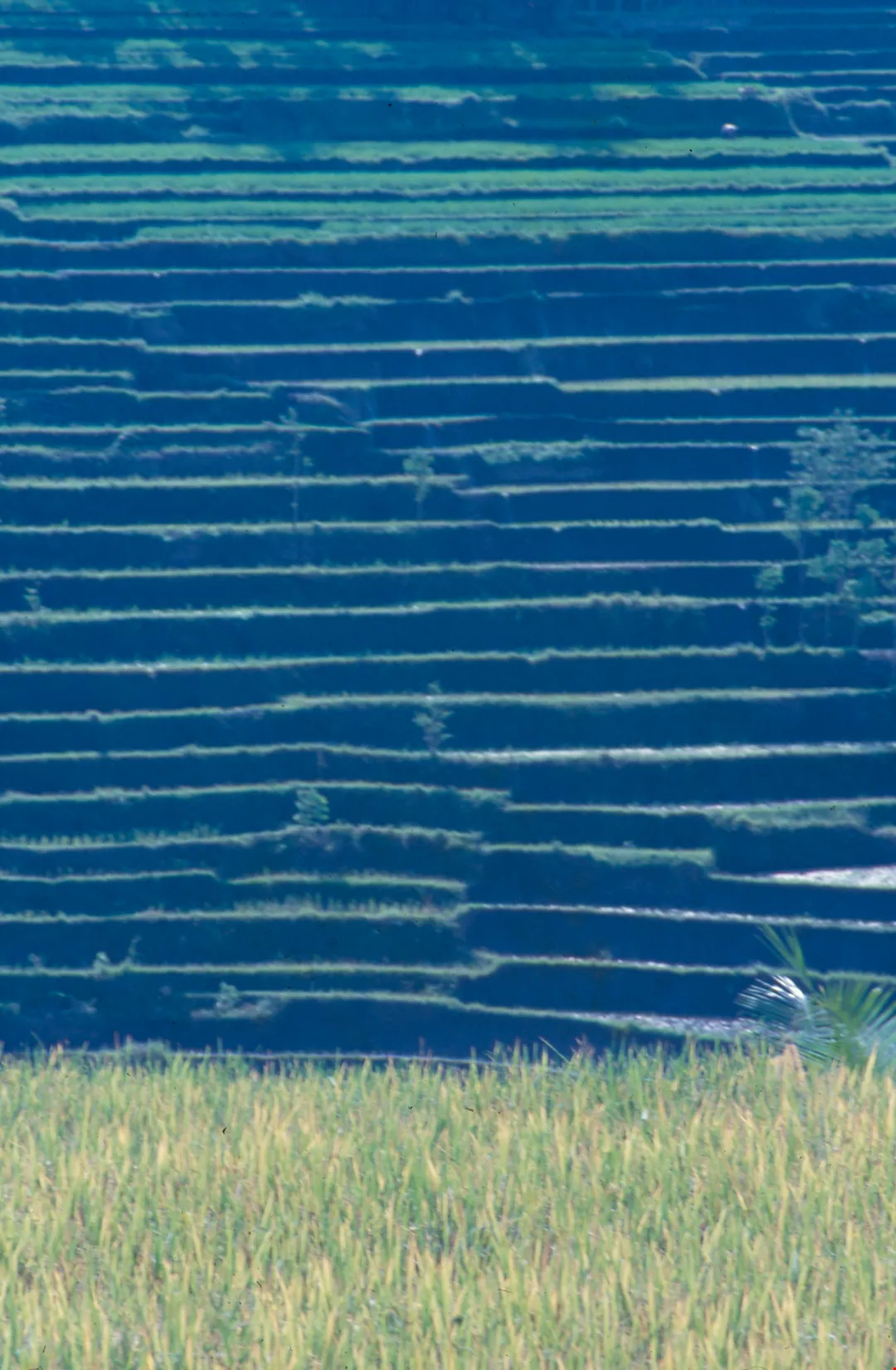
7. Terraced fields are one special feature of Bali's scenery.
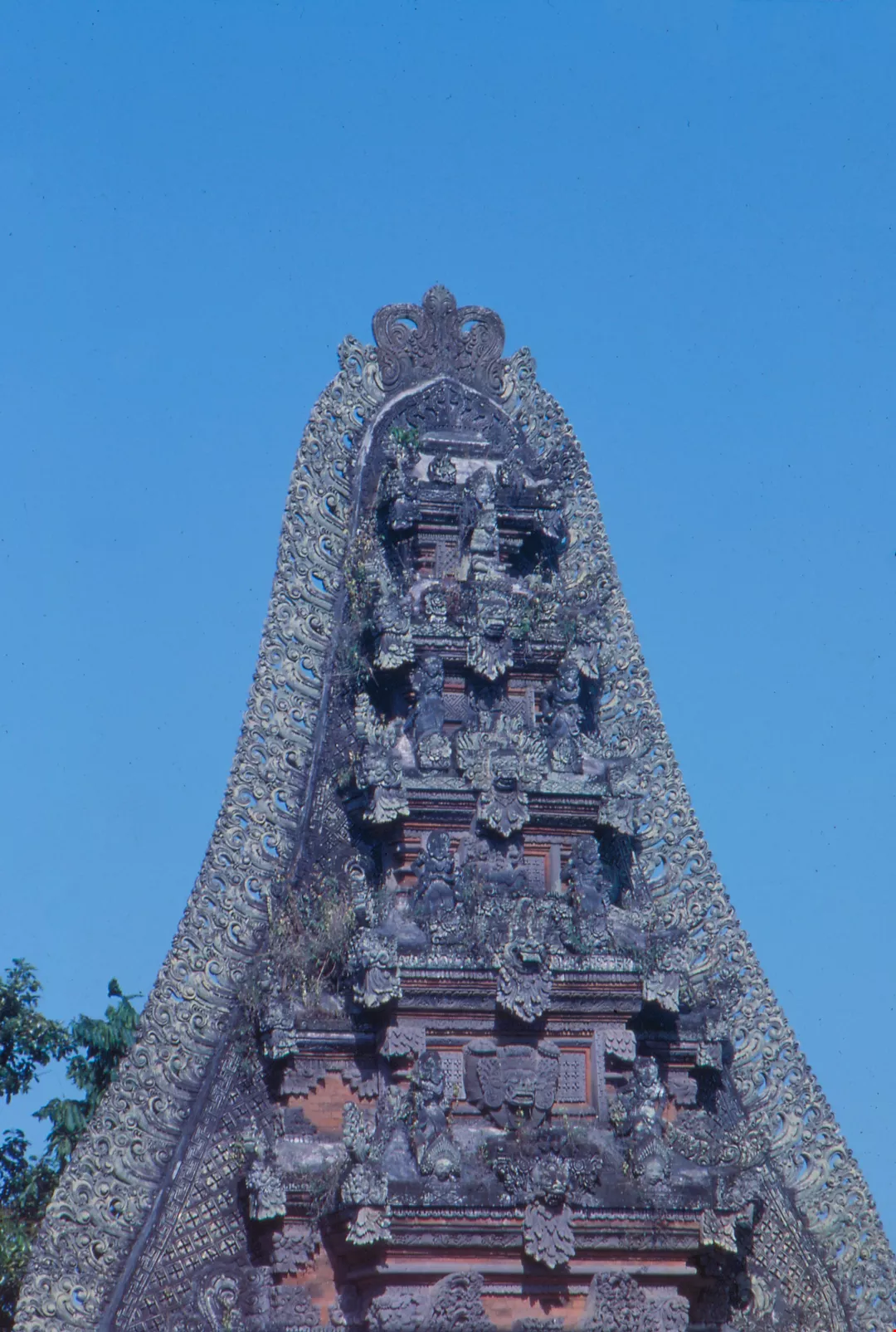
1.2.3. Bali has a thick air of fine arts; one can see carvings everywhere. These stone carvings are full of the simple beauty of the people's culture. Carved images usually depict gods or mythical monsters.
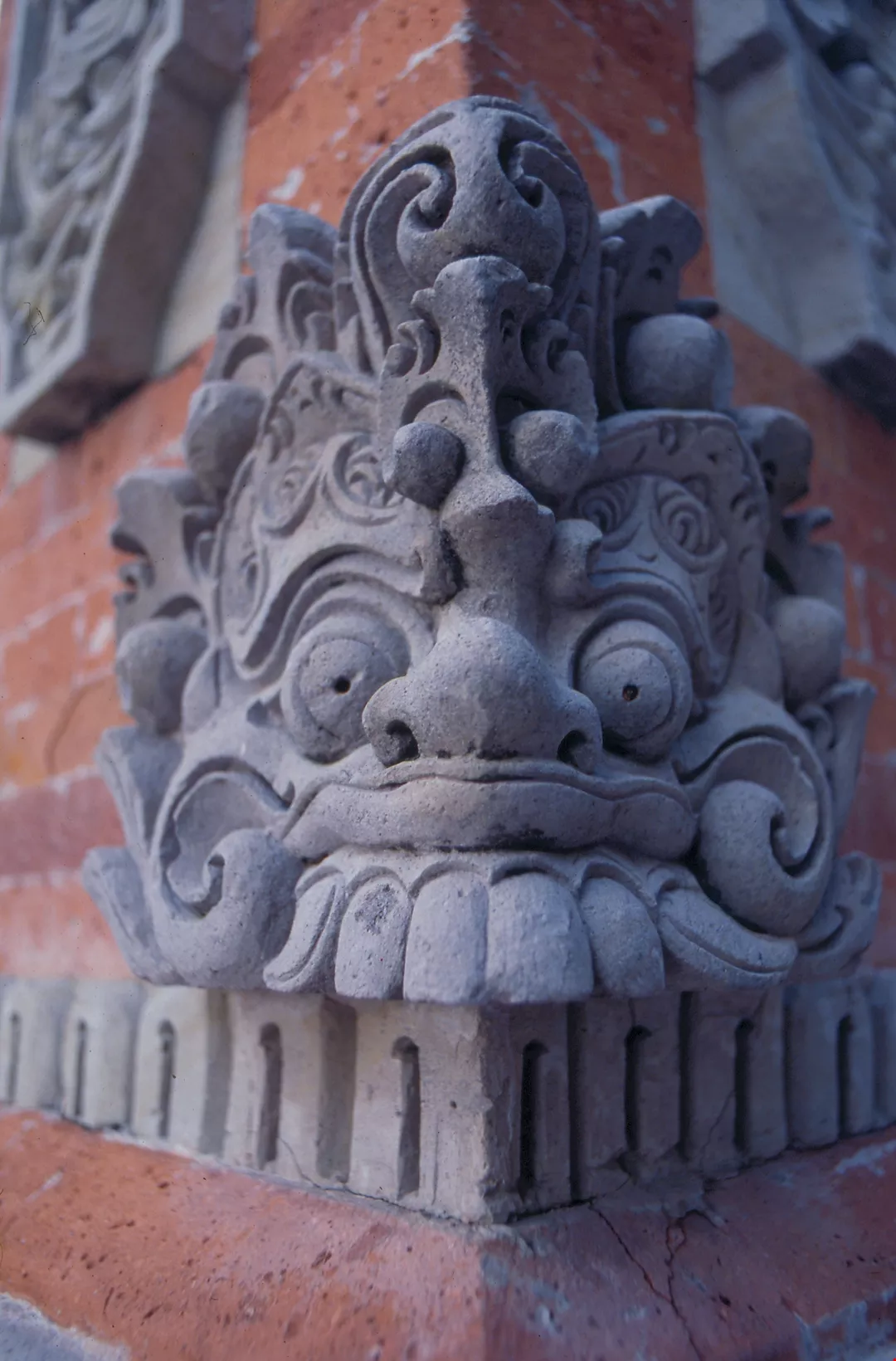
1.2.3. Bali has a thick air of fine arts; one can see carvings everywhere. These stone carvings are full of the simple beauty of the people's culture. Carved images usually depict gods or mythical monsters.
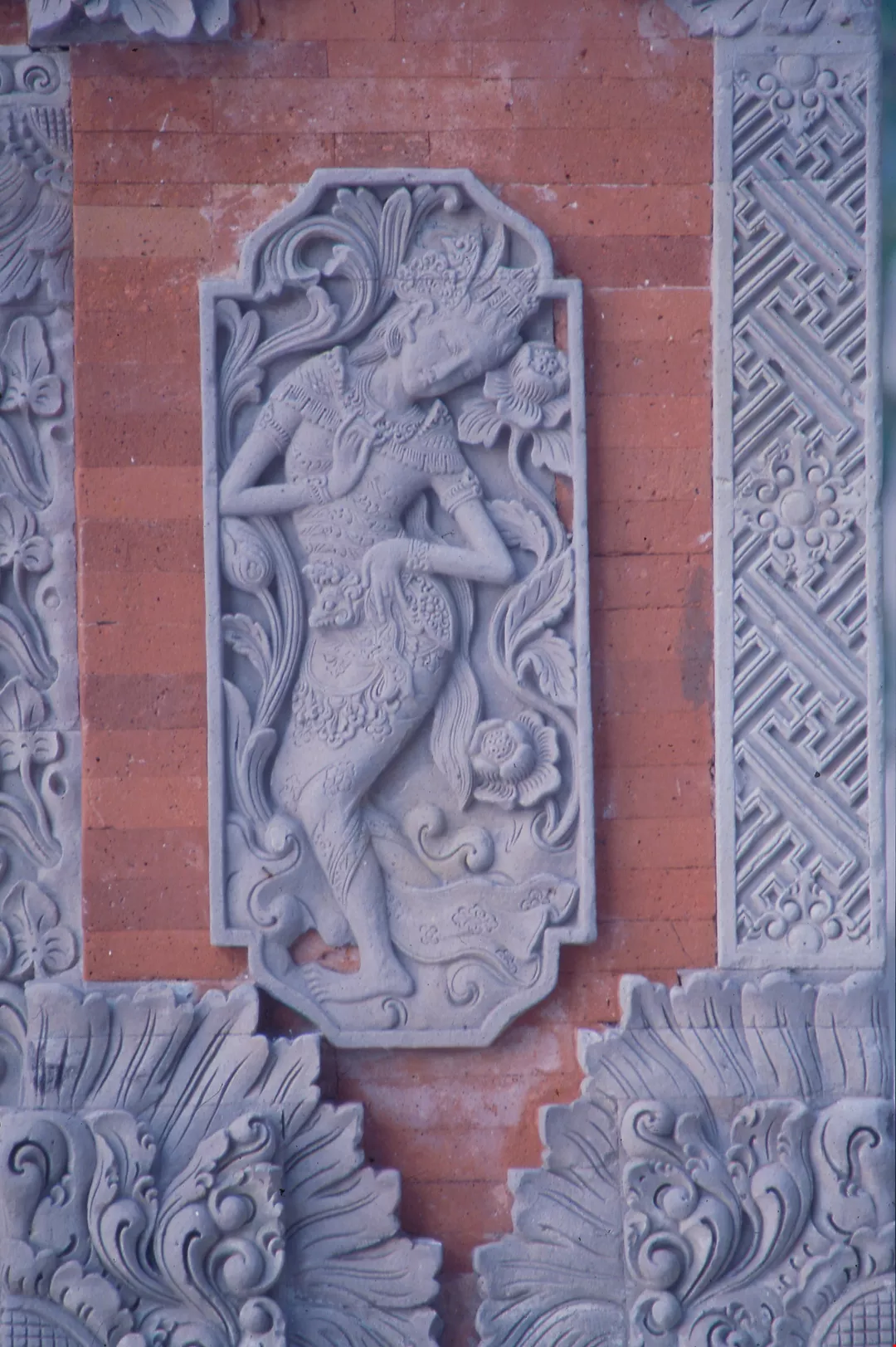
1.2.3. Bali has a thick air of fine arts; one can see carvings everywhere. These stone carvings are full of the simple beauty of the people's culture. Carved images usually depict gods or mythical monsters.
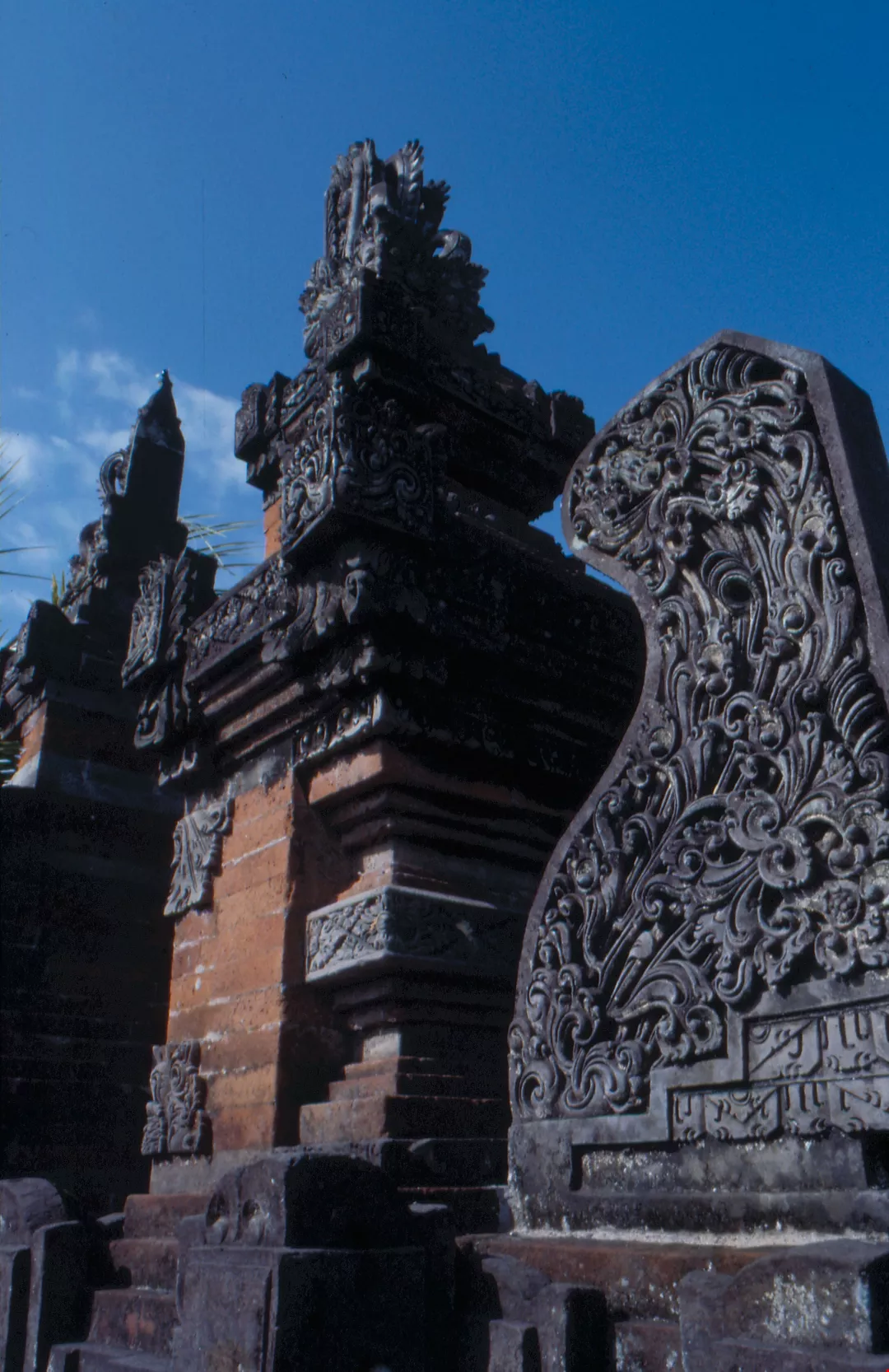
4. The entryways to Balinese temples usually have opposing elements, representing the opposition of good and evil.
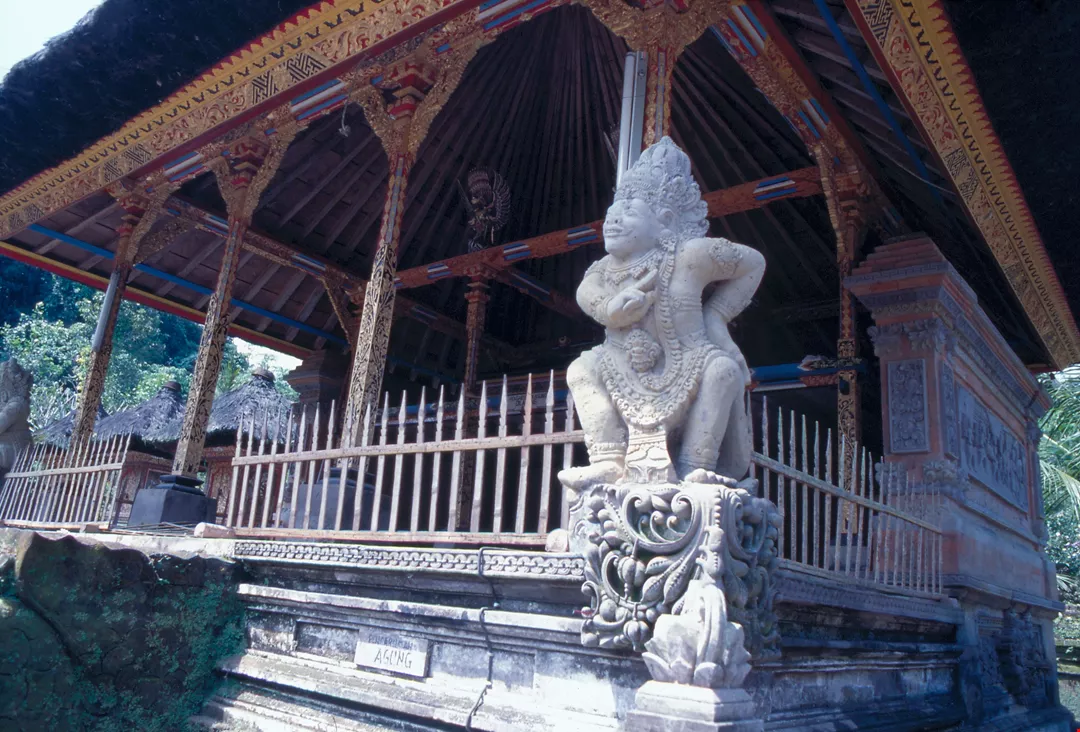
5.6. The scenic spots of Bali also have carvings; picture 5 shows a carving in front of the Holy Spring temple; picture.
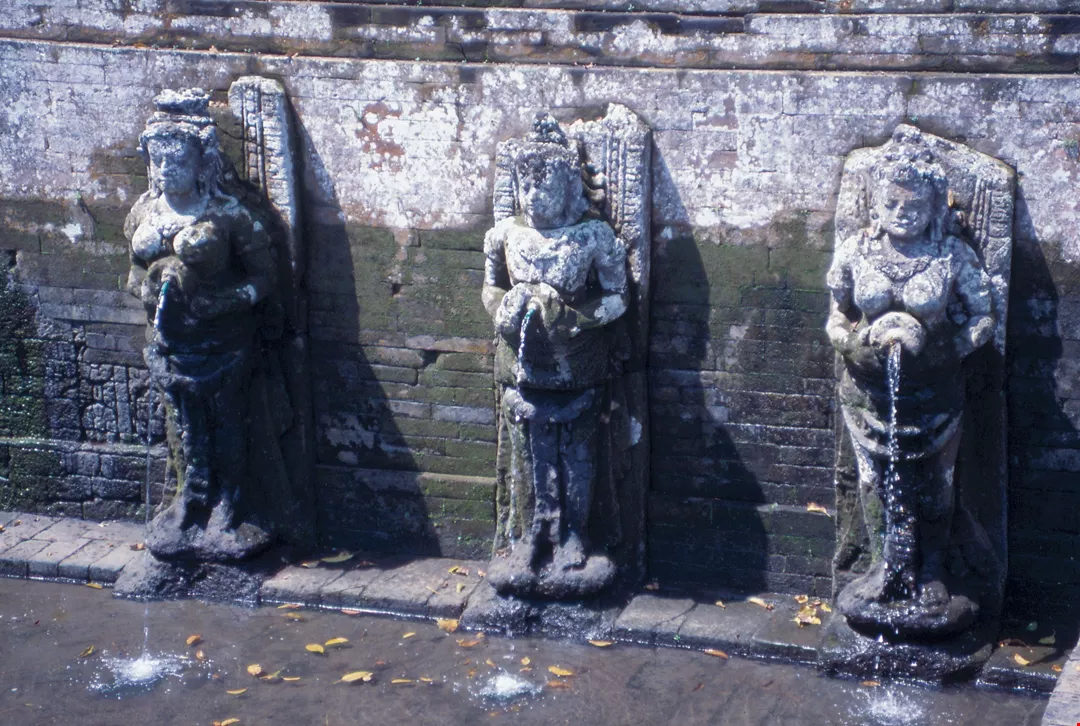
6 shows the carvings around the pool at the temple; every image has a bottle of water in its hands; the water (the "holy water") is said to never cease, and if rubbed on the body to guard health and bring blessings.
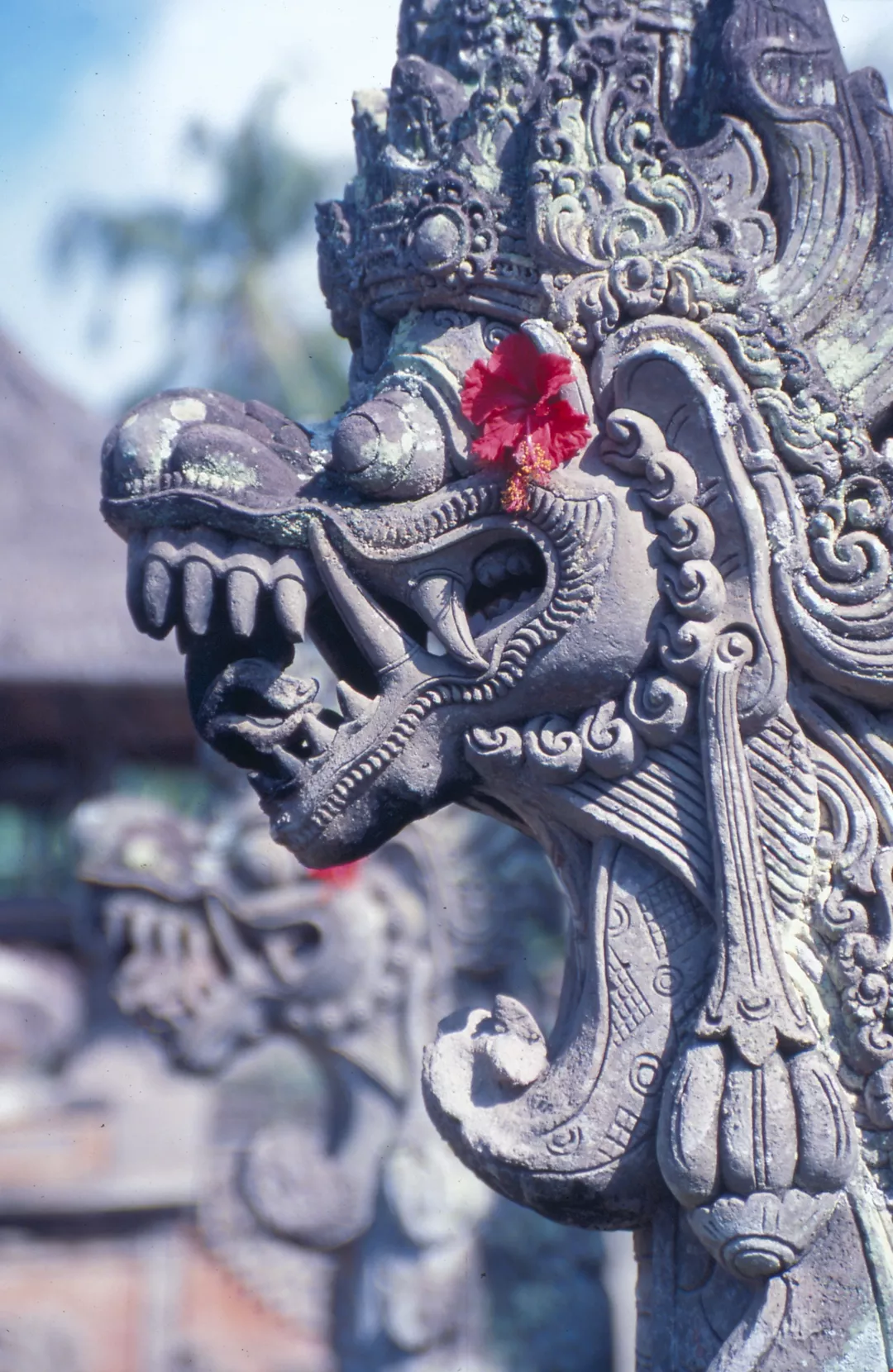
7. The Balinese love flowers; the local residents even put them on the images.
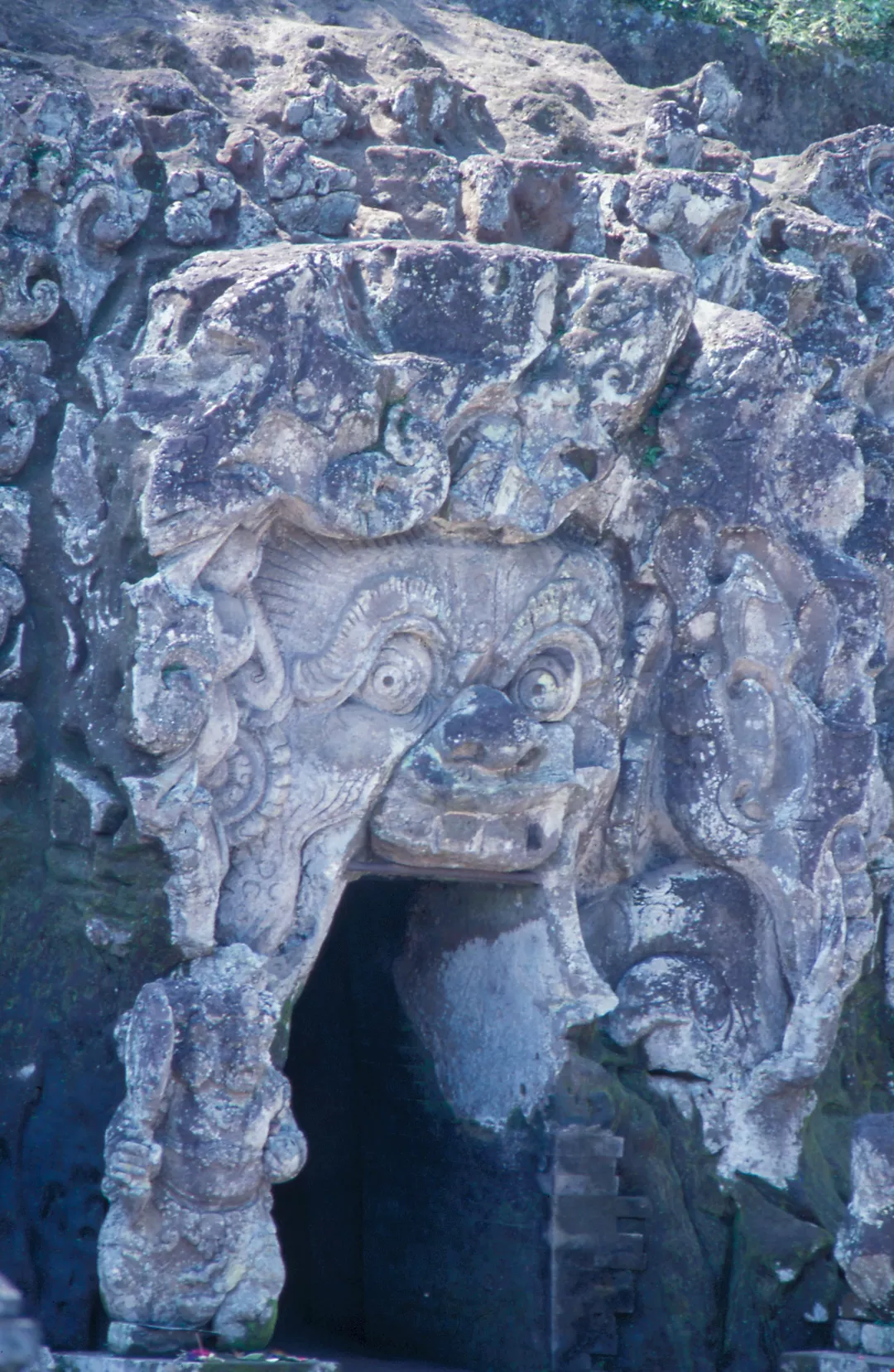
8. Even the mouth of a cave has a carved image.
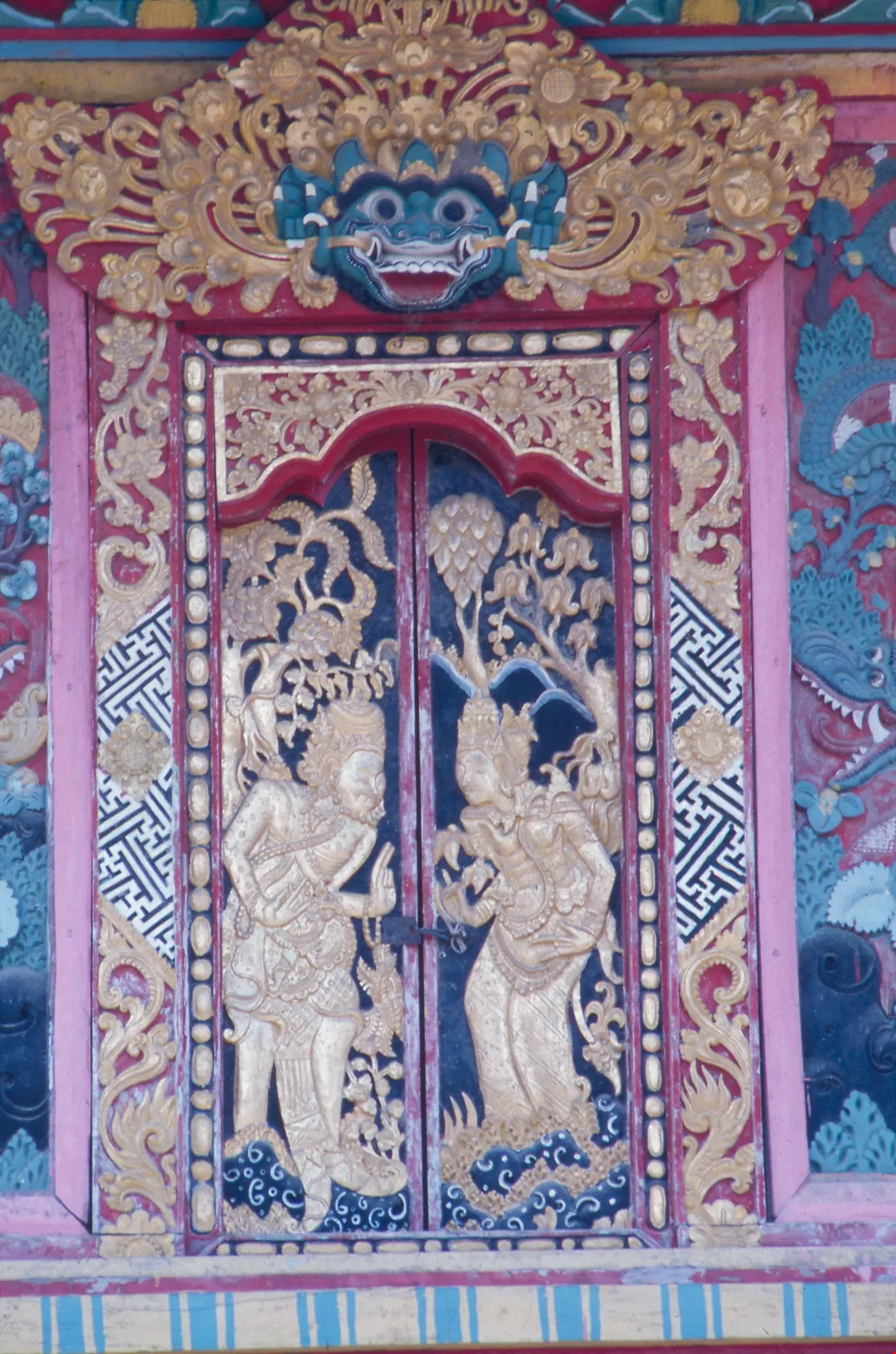
1.3. Balinese wood carvings mostly feature figures from mythology; after painting they are 100% beautiful.
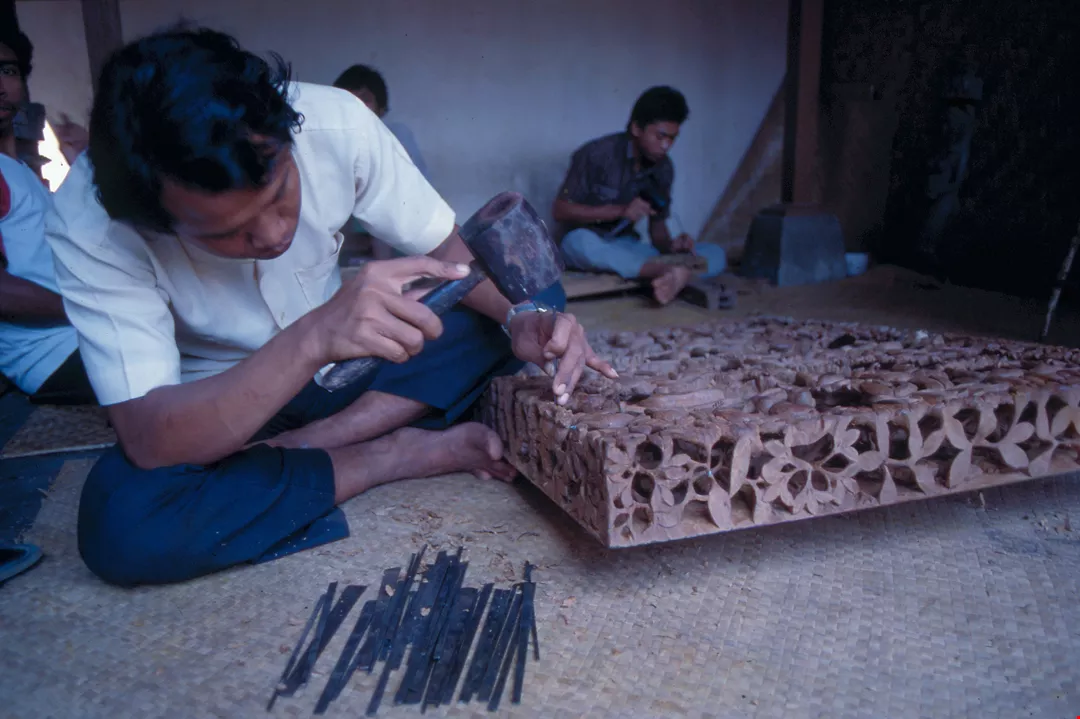
2. The local people carving wood.
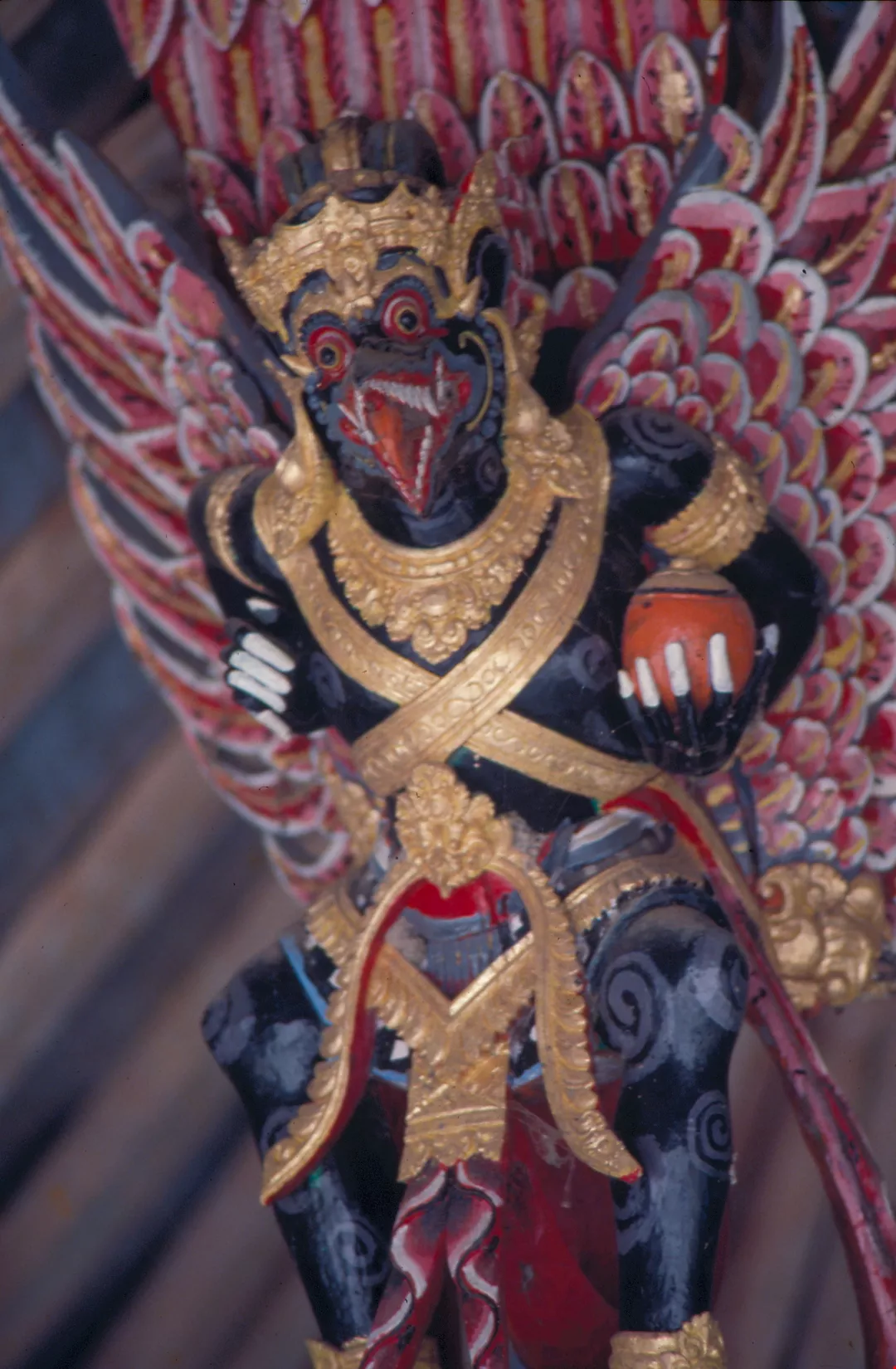
1.3. Balinese wood carvings mostly feature figures from mythology; after painting they are 100% beautiful.
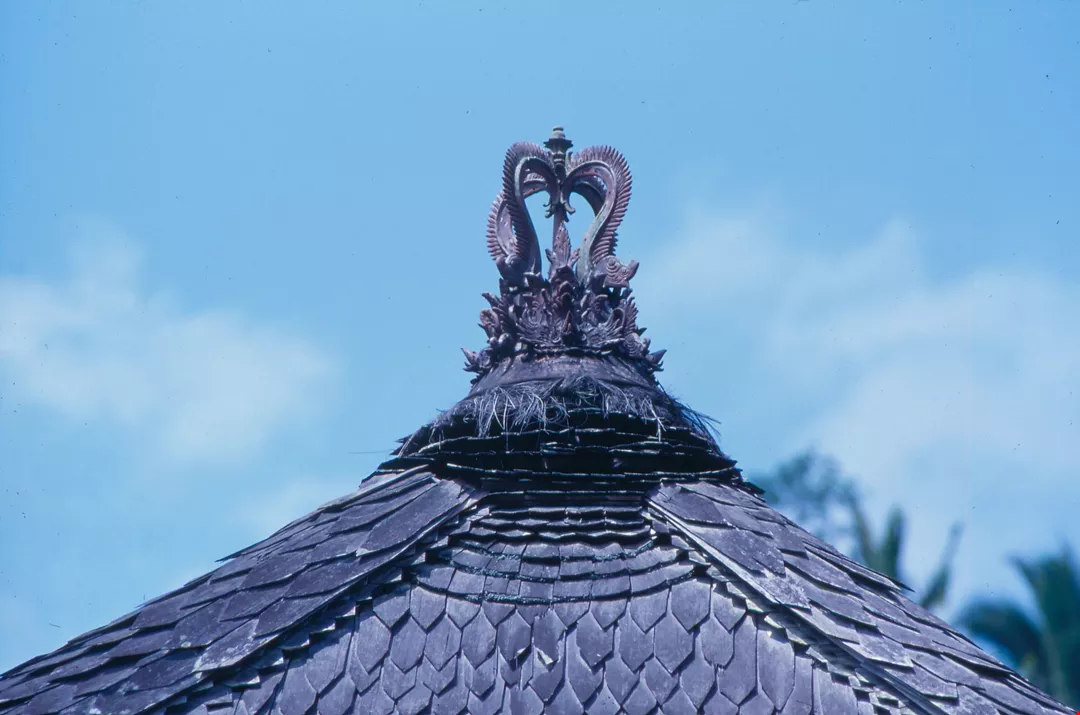
4. Even the rooftop has an intricate carving, a special feature of Balinese architecture.
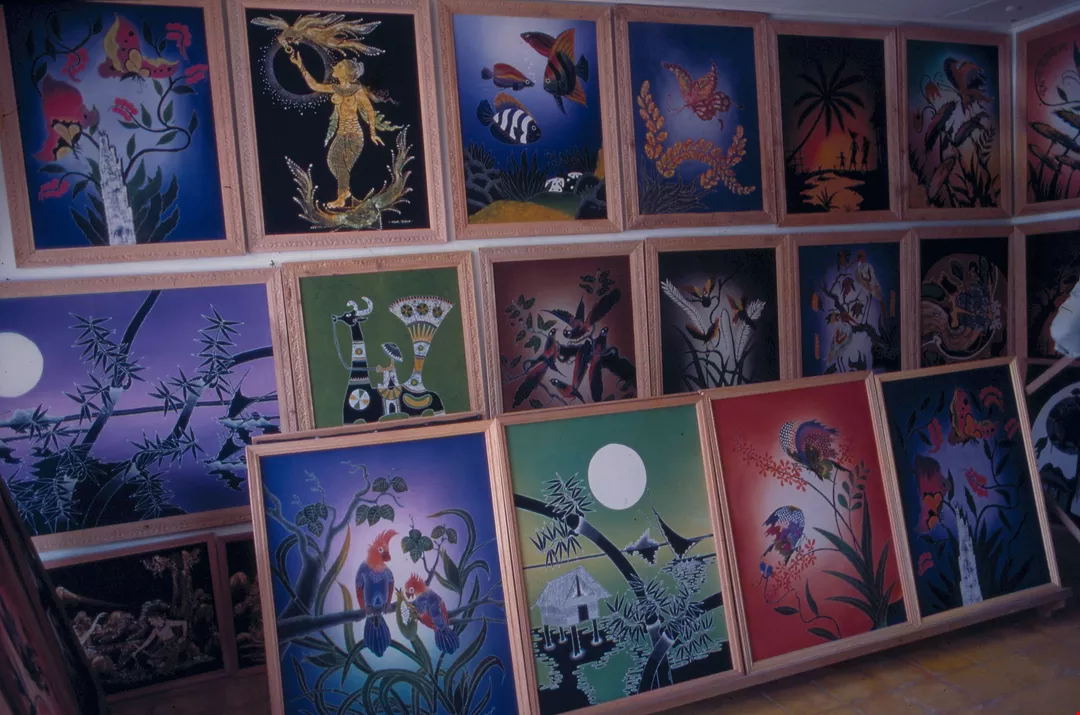
5. Bali has many art galleries, displaying paintings. The paintings are colorful and gorgeous.
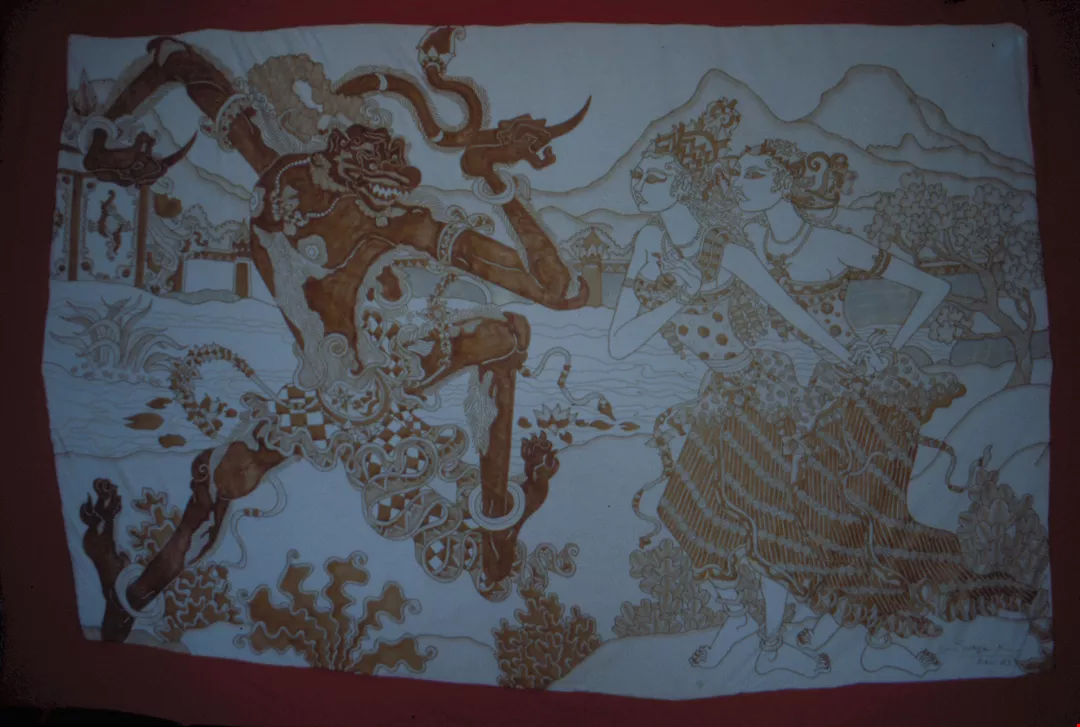
6. Some paintings are made on batik.
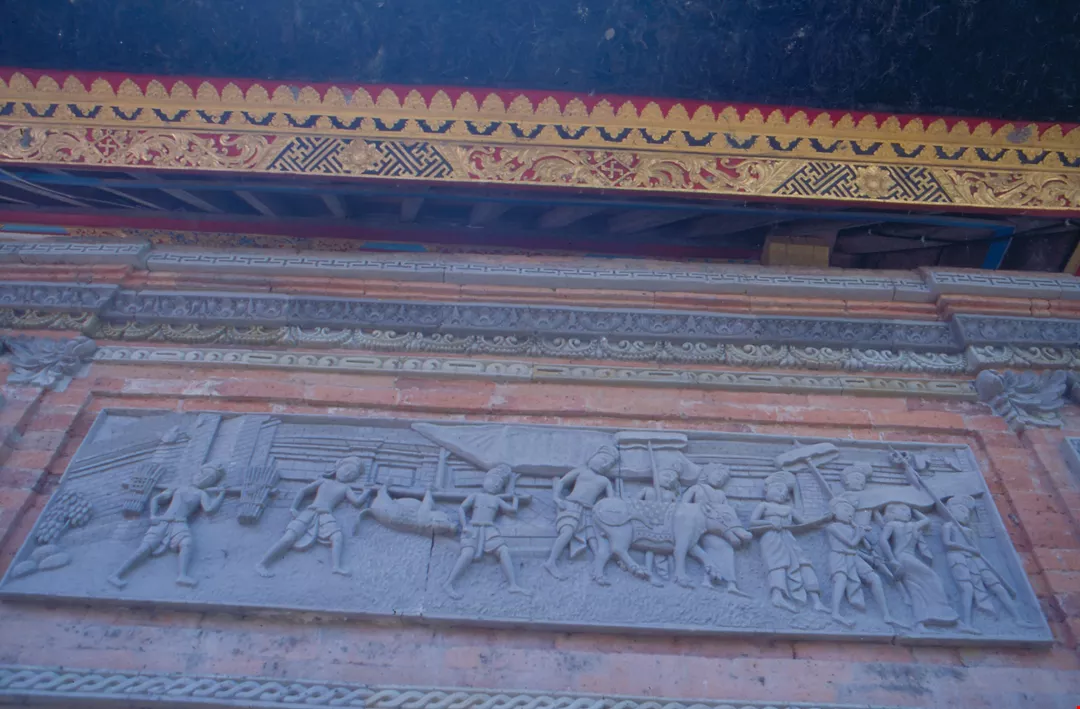
7. The stone carvings on the wall manifest Bali's traditional life style.
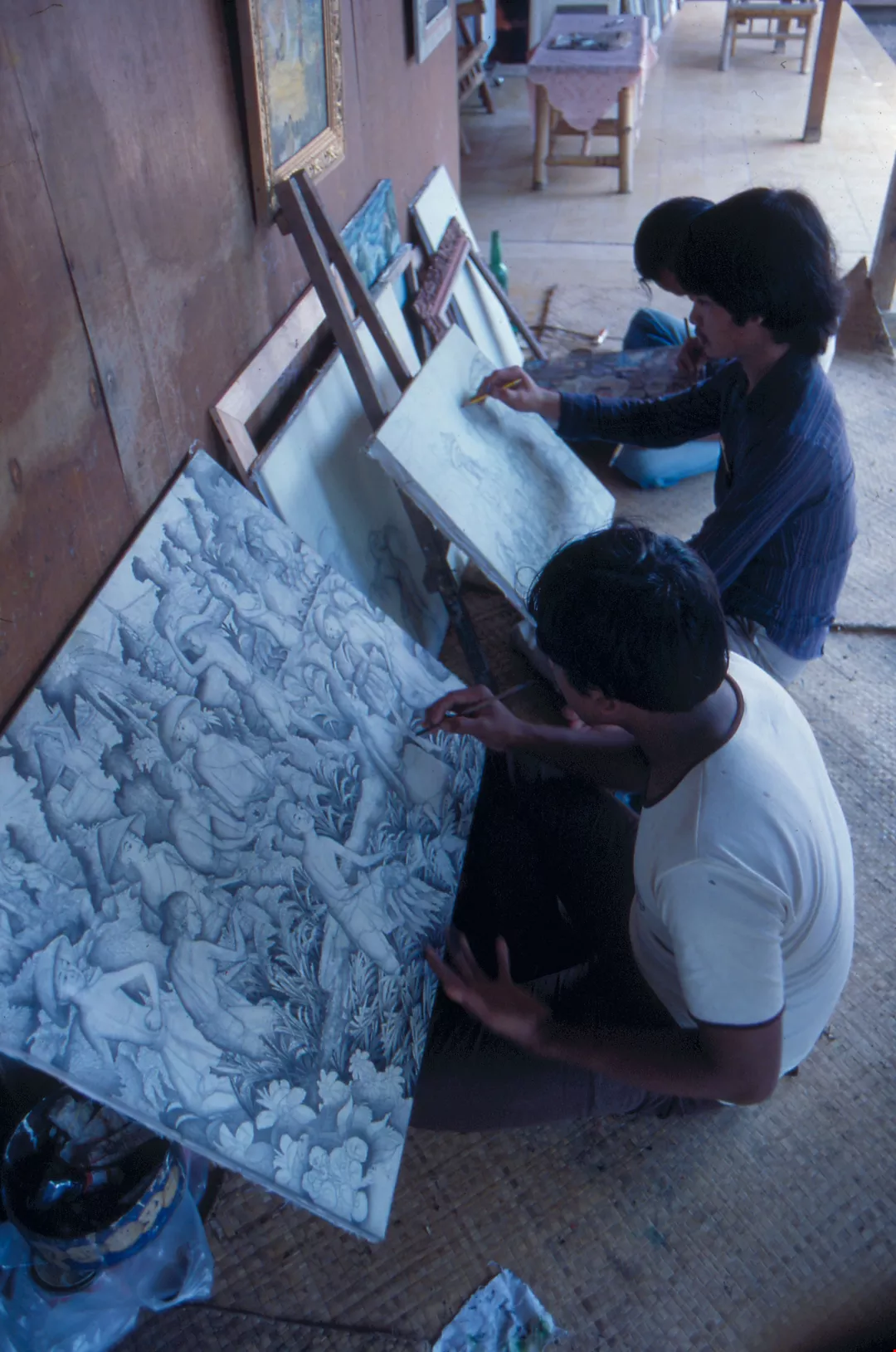
8. In the art galleries there are often people painting.
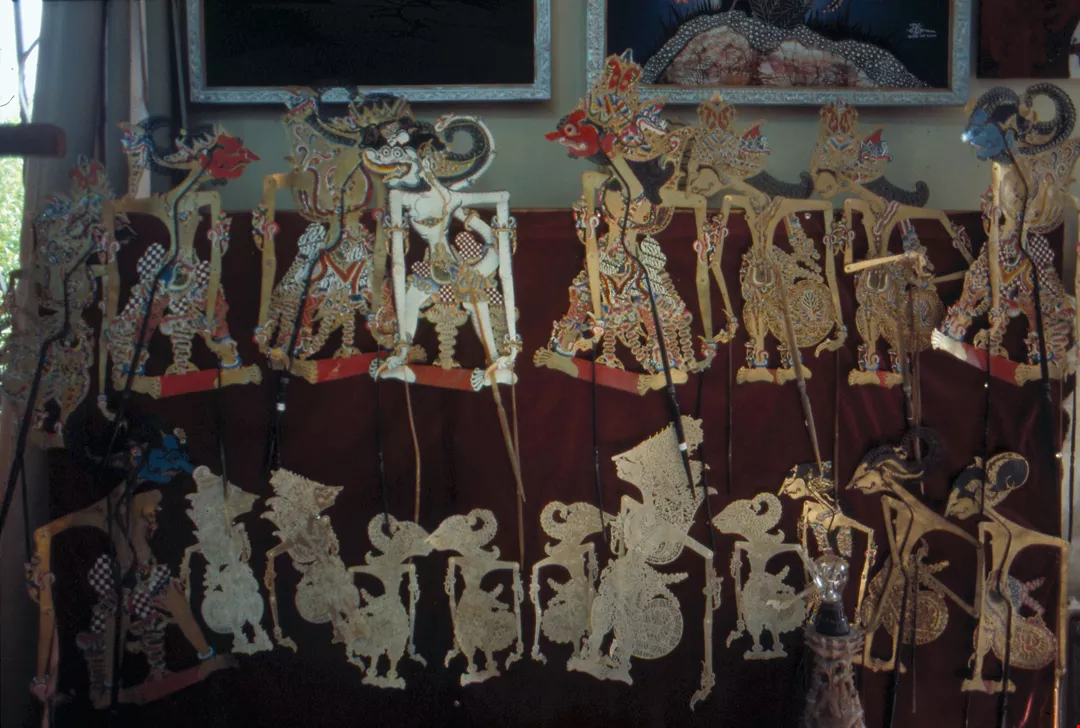
9.10. Leather and metal ornaments are also famous Balinese handicraft items.
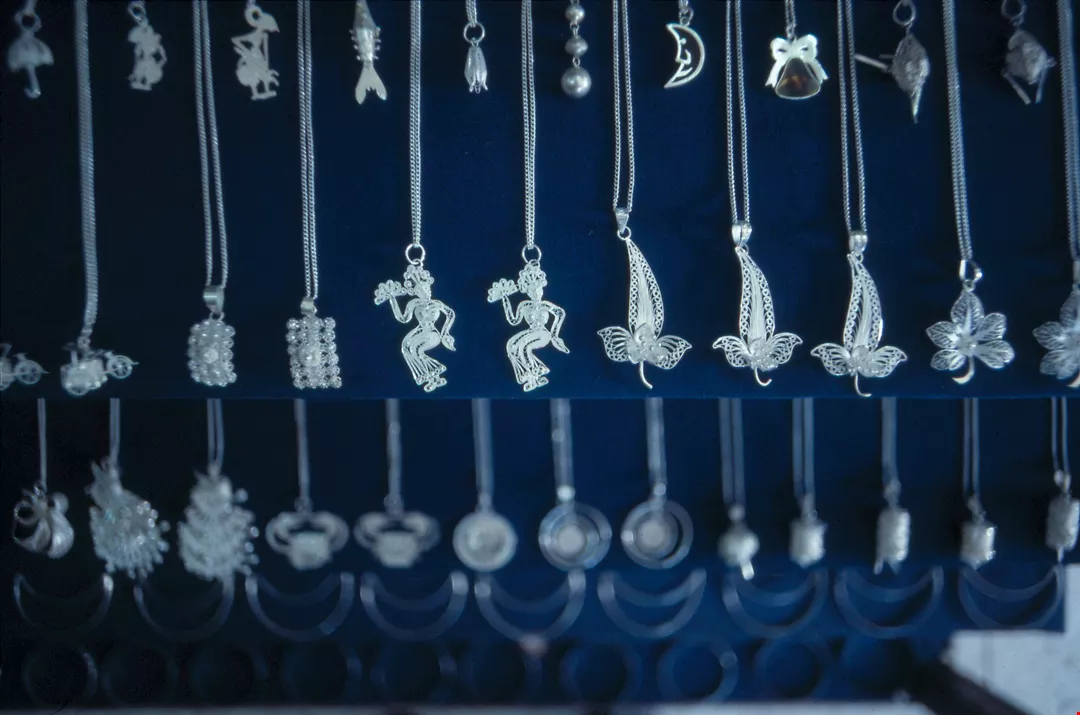
9.10. Leather and metal ornaments are also famous Balinese handicraft items.
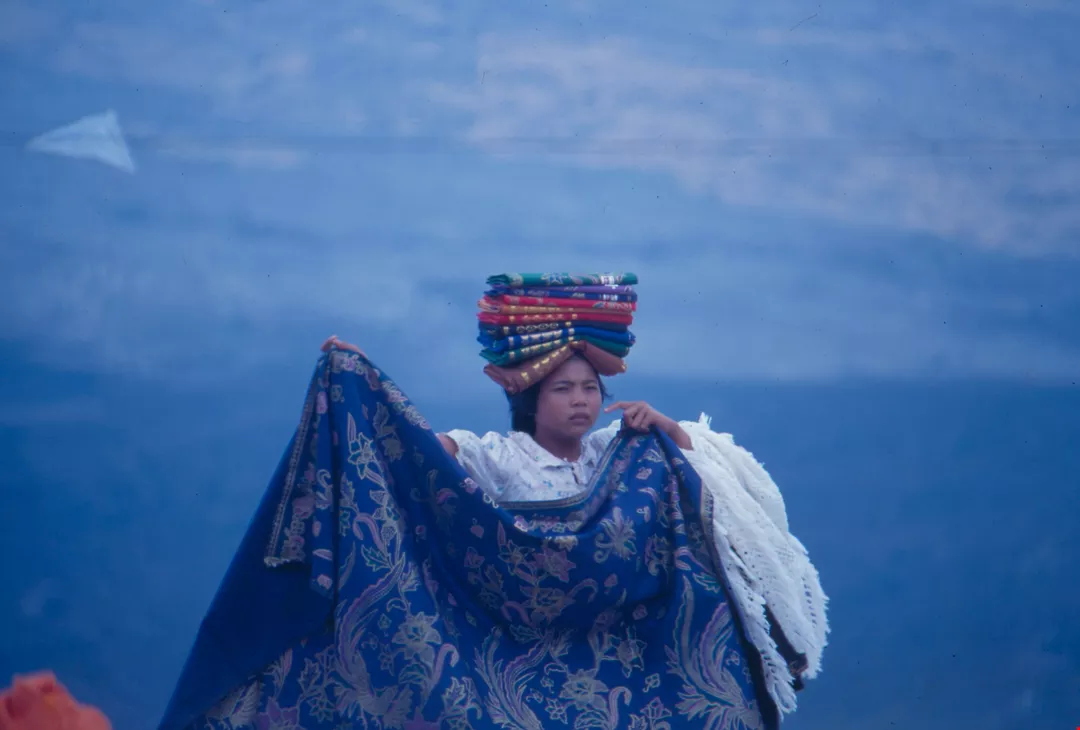
1. While selling batik, she puts the extra cloth on her head.
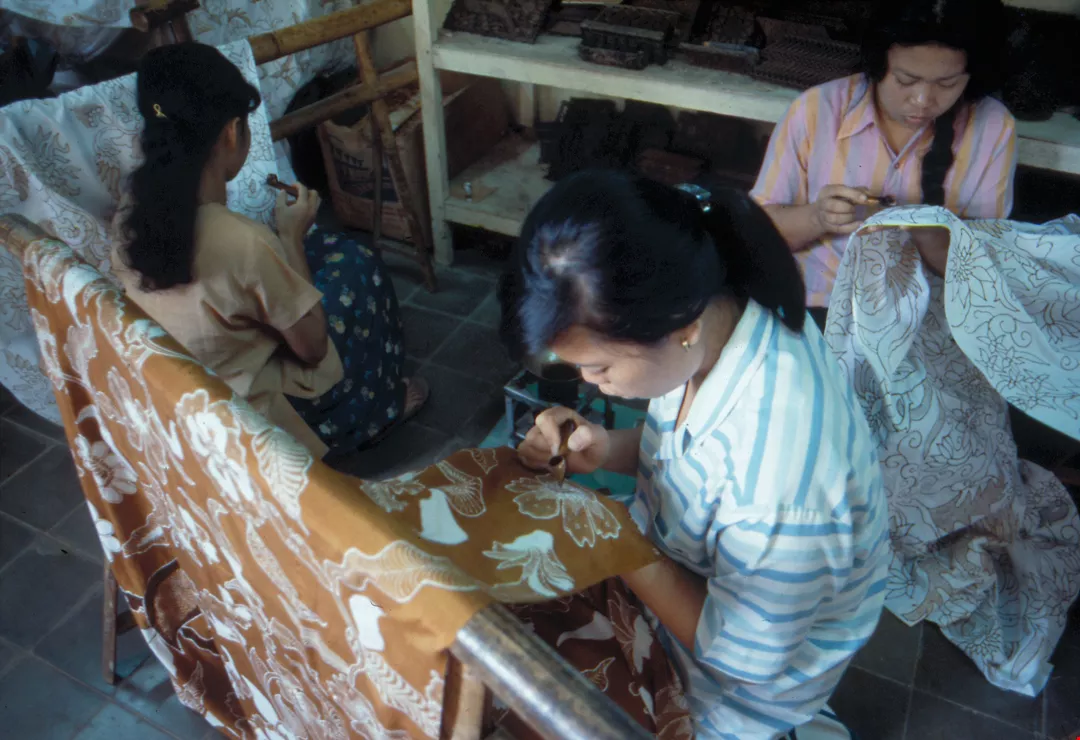
2. Batik is a special product of Bali, made by hand. The picture shows the process of putting wax on the cloth.
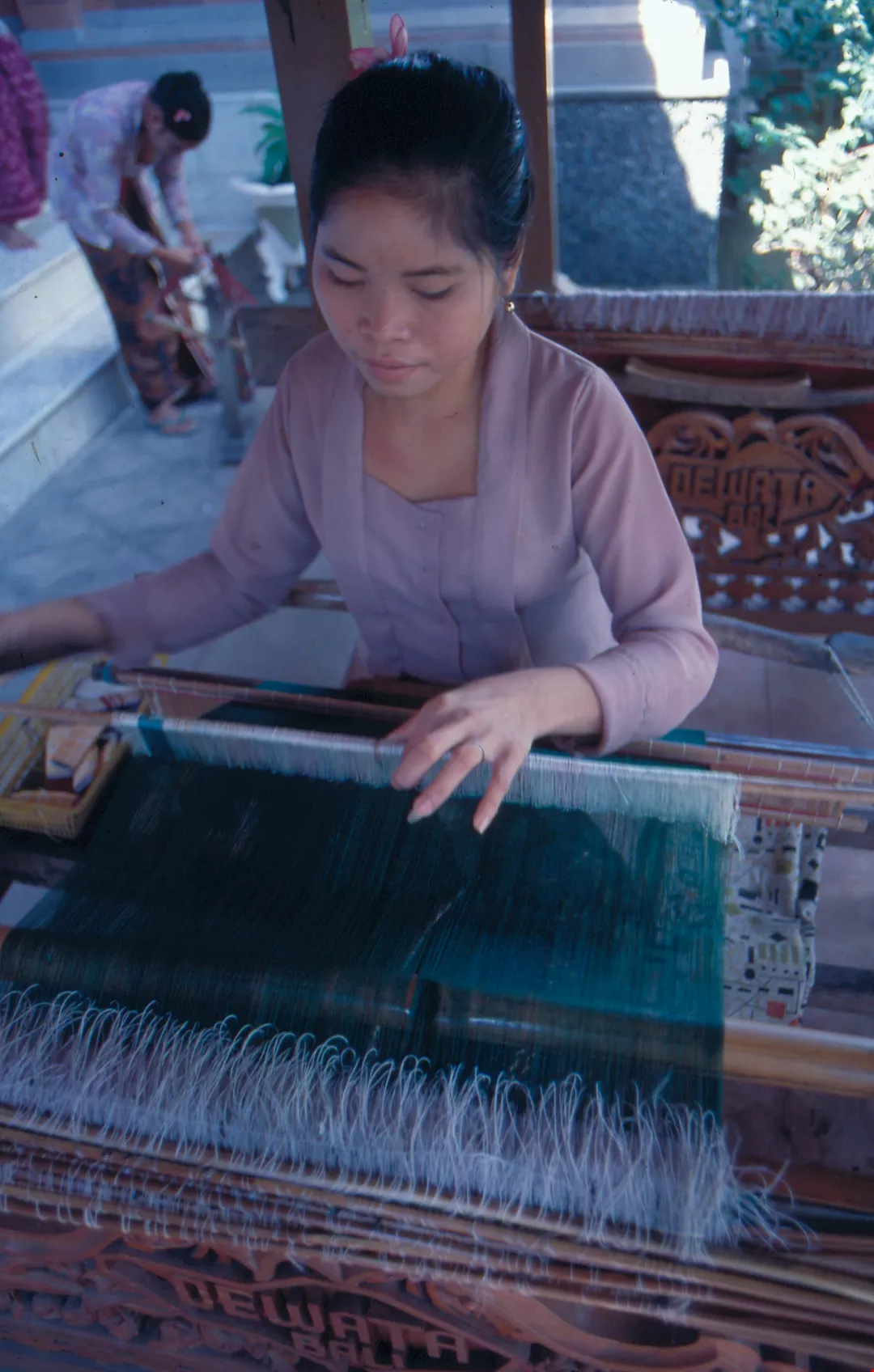
3. The traditional method of weaving by hand is still preserved on the island.
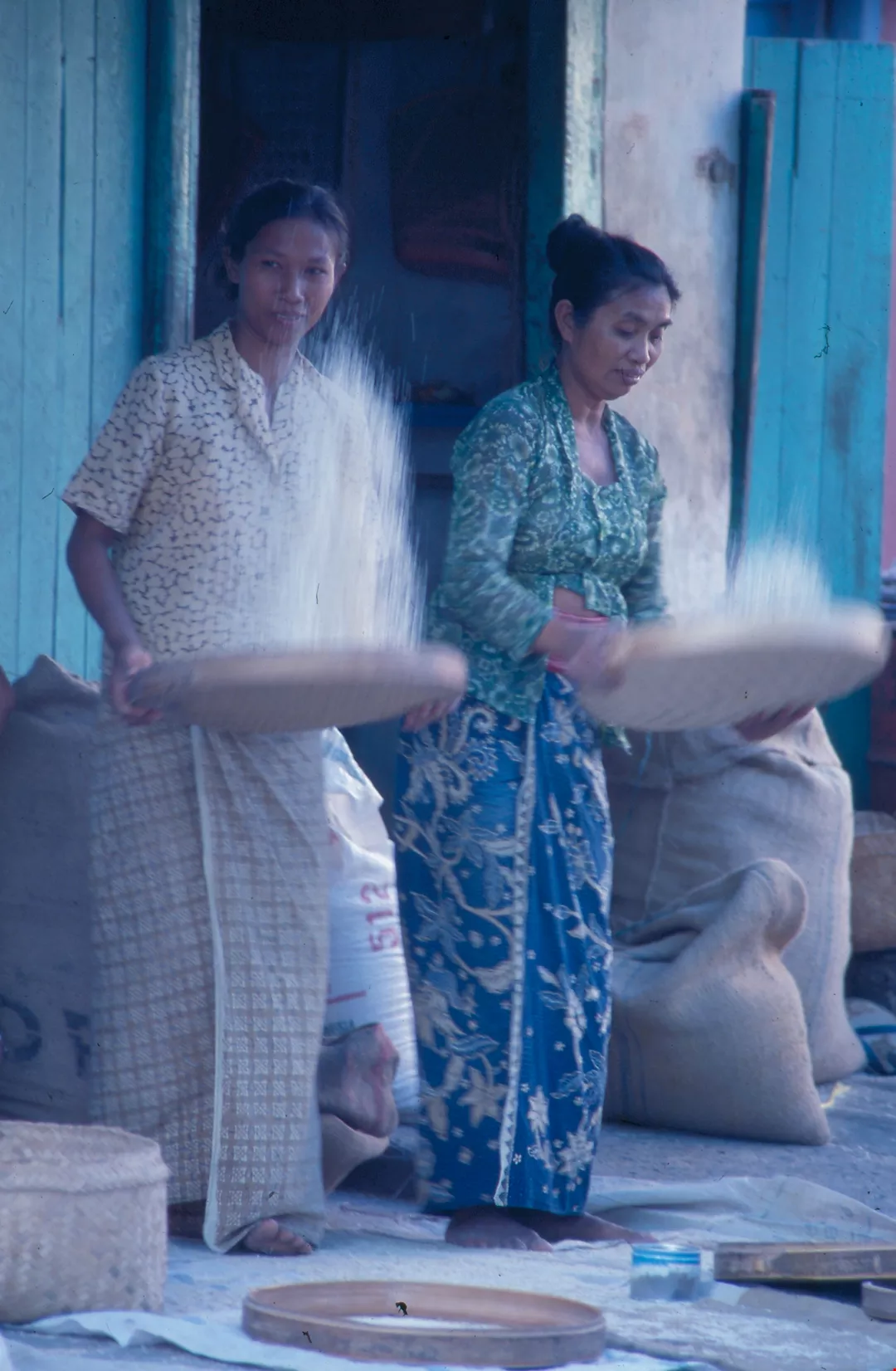
4. Women winnow rice in front of their houses.
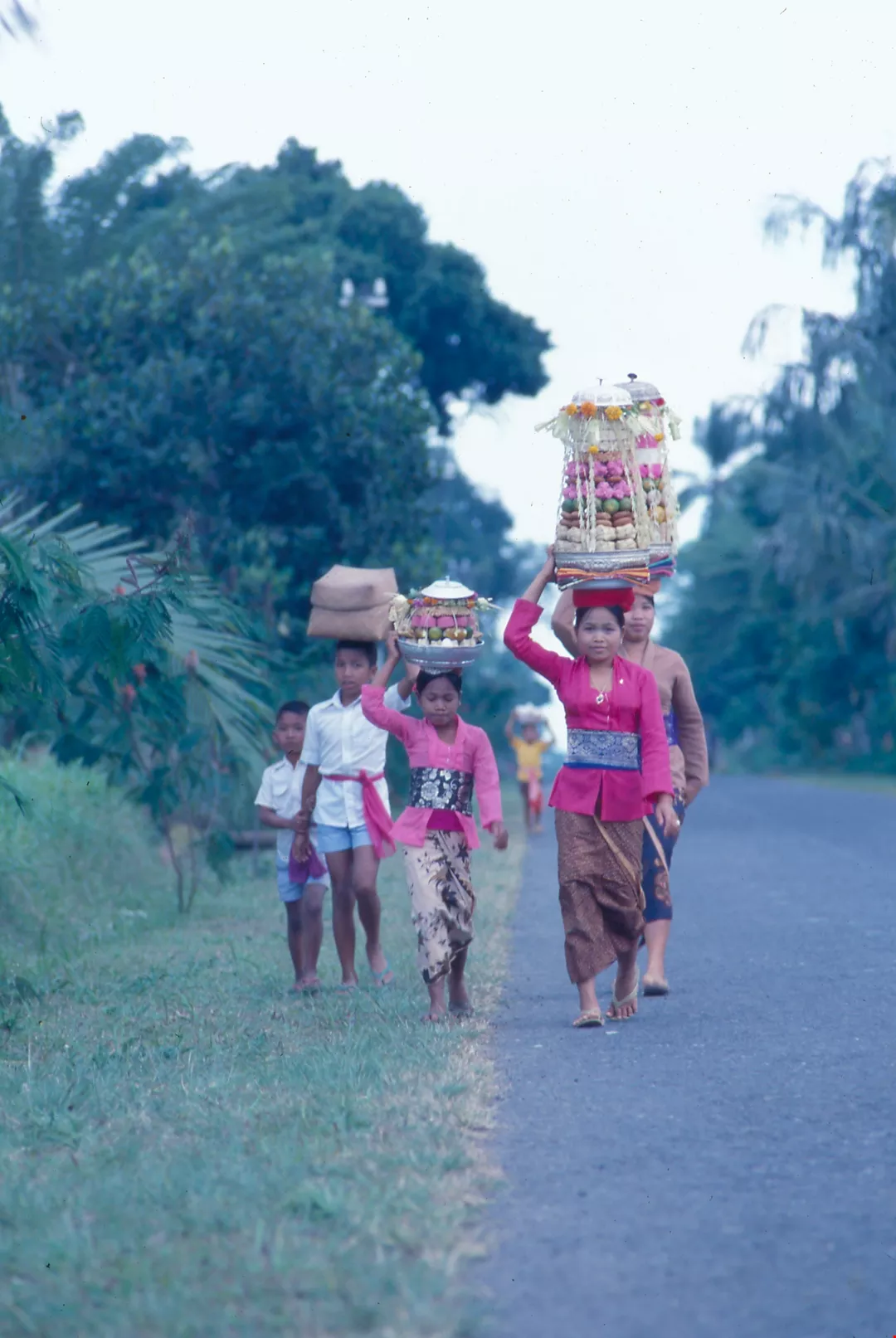
5. Bali's women and children often carry things on their heads.
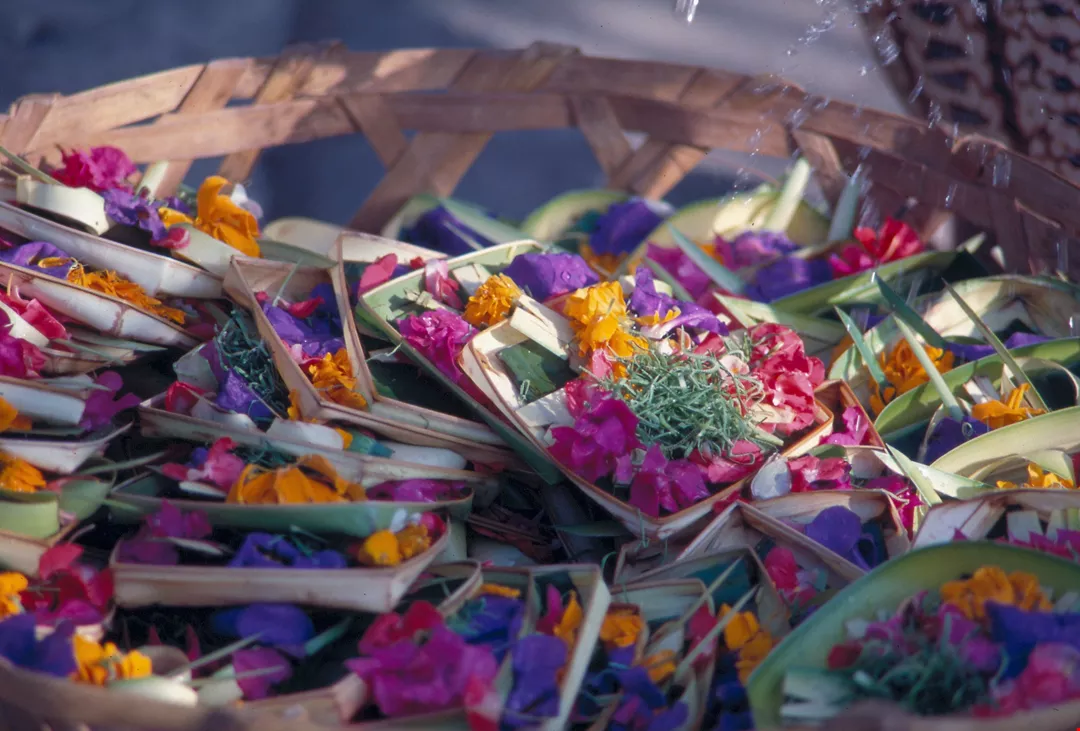
6. Small baskets made of tender coconut leaves, with flowers inside, are a common Balinese offering to the gods.
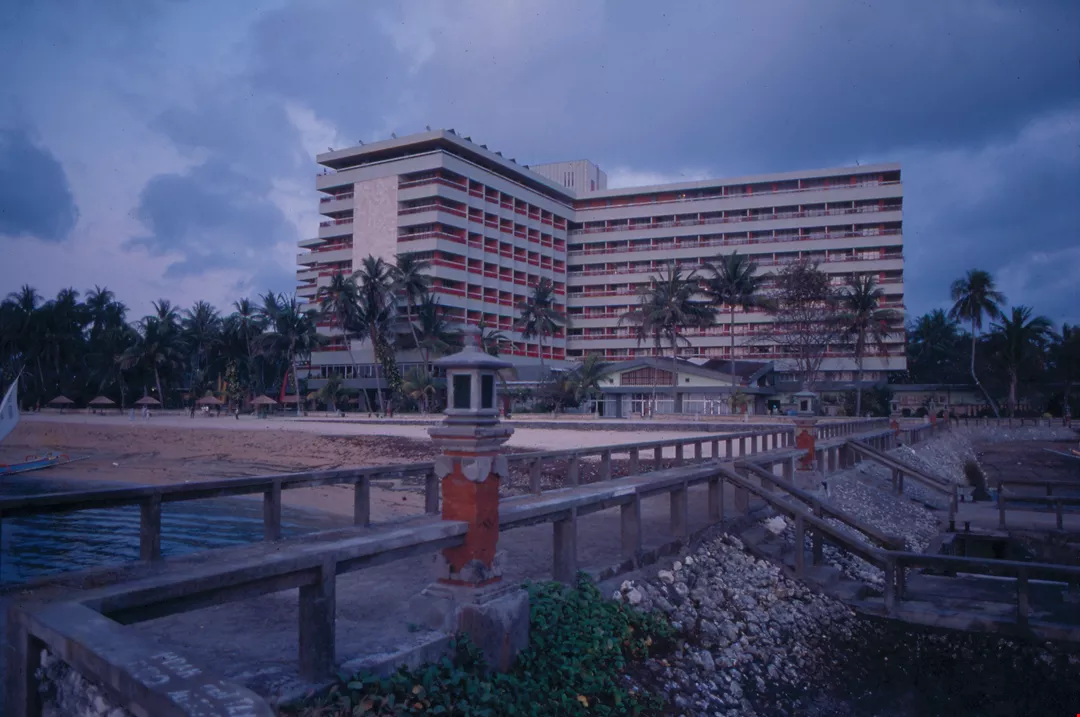
1. A tourist hotel beside Bali's coast.
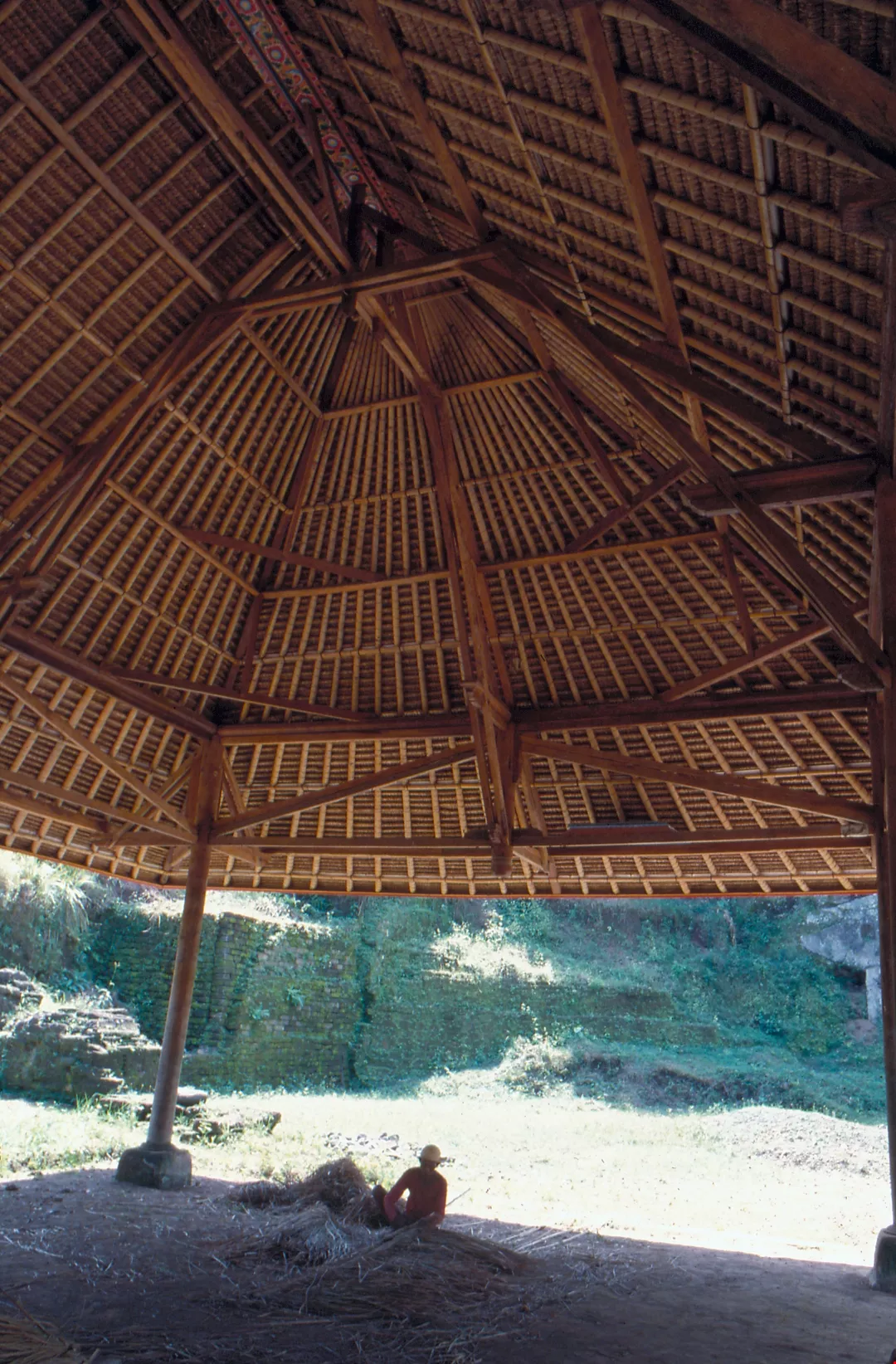
2. A house being built on the island; these are usually made of the lush bamboo and grasses of the island.
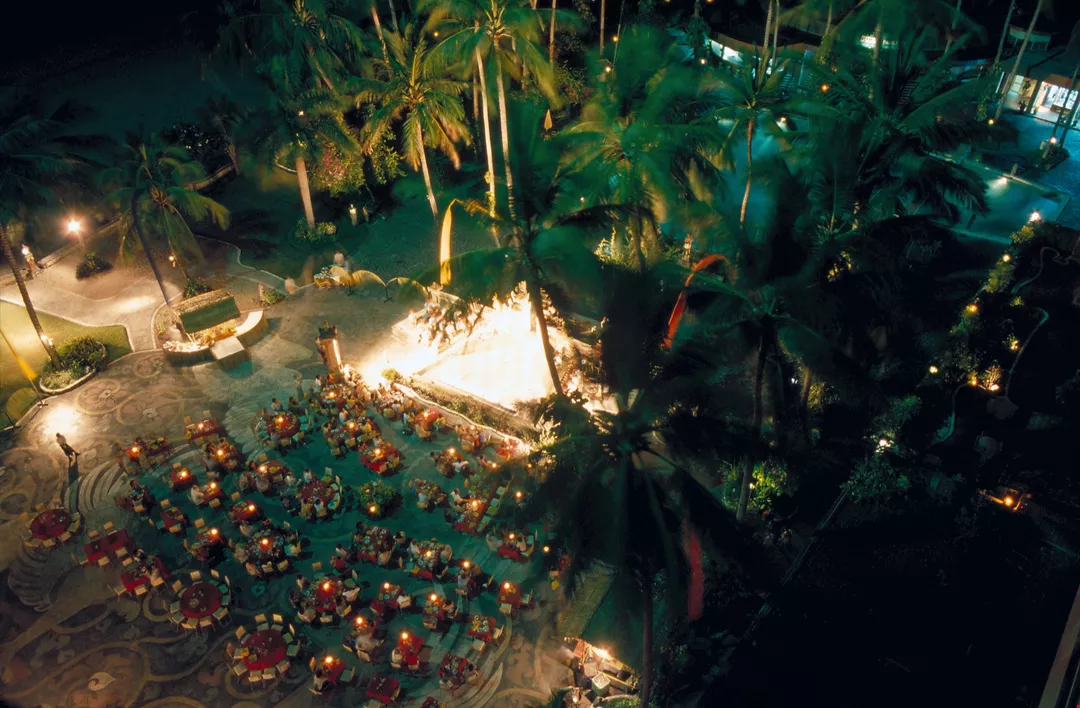
3. An open air restaurant where one can both eat and enjoy performances; in the lantern light, it's 100% charming.
@List.jpg?w=522&h=410&mode=crop&format=webp&quality=80)

@List.jpg?w=522&h=410&mode=crop&format=webp&quality=80)


@List.jpg?w=522&h=410&mode=crop&format=webp&quality=80)

@List.jpg?w=522&h=410&mode=crop&format=webp&quality=80)
