CMCU Opens New Horizons for Rural Life
Liu Yingfeng / photos courtesy of CMCU / tr. by Jonathan Barnard
July 2014


Aiming since its founding 13 years ago to both “bring knowledge to the countryside and learn from the countryside,” Chi-Mei Community University serves nine rural districts of Kaohsiung including Meinong and Qishan. In probing local memories to tell local stories, CMCU is reconfiguring the image of a community college.
In country villages farmers possess agricultural knowledge and skills and local people embody the culture and traditions of their ethnic group, whether Hakka, Minnan, or Aborigine. CMCU has unleashed the vitality and energy of the common people. In this fast-paced modern age, CMCU and the residents of the communities it serves are creating a kind of “rural studies” that is uniquely local in character.
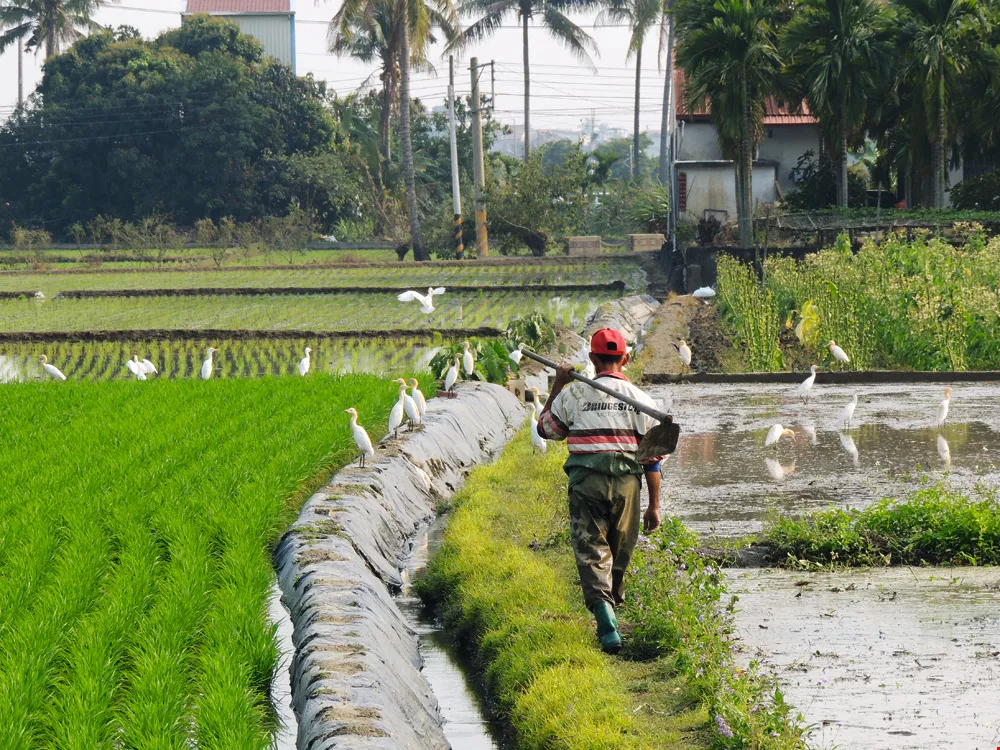
Before the morning dew is dry, students and faculty from Chi-Mei Community University come to a rice paddy. Rolling up their trouser legs, they step into the paddy to plant seedlings in places that the machine missed or where it damaged the plants. Since 2012, CMCU has been promoting a “public fields” system, encouraging its students to work in the fields so as to experience the hardships of agricultural life and provide sweat equity in exchange for rural knowledge and skills.
Located in the middle of a basin, the Meinong Hakka Culture Museum is holding an exhibition: “Education in a Farming Village: CMCU’s Local Studies Program.” The walls are hung with photos that encapsulate the 13-year history of the college, during which it has served farming villages and involved the area’s many ethnic groups in environmental issues. CMCU amply demonstrates the spirit of a “rural community college.”
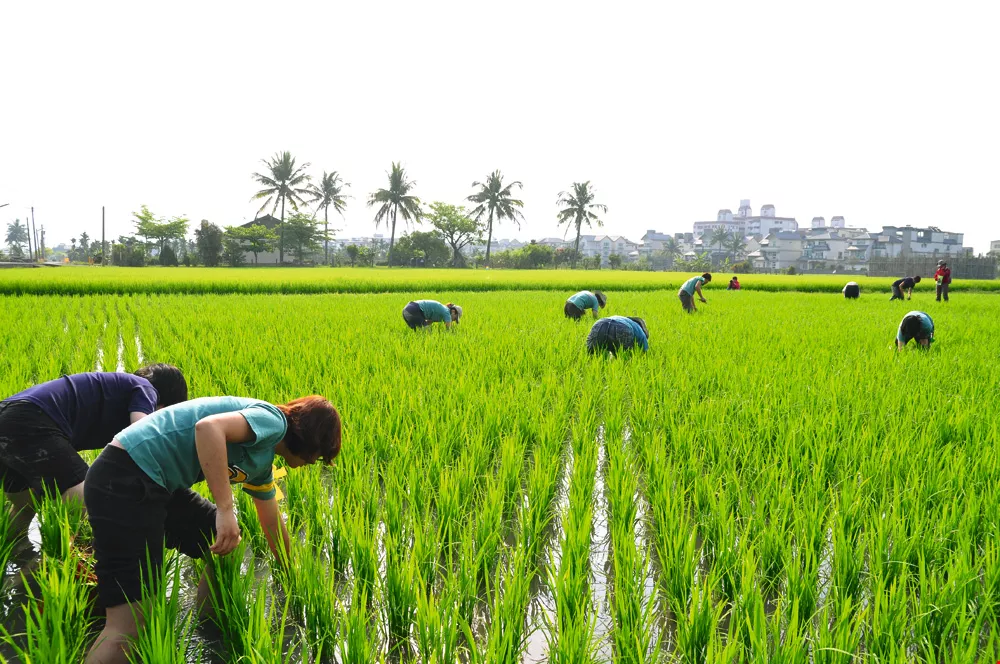
First understand, then serve: CMCU staff participate in farm work, acquiring a rural education through perspiration.
After CMCU was founded in 2001, it established an educational identity with the slogan: “The farming village as a school.” It was the fourth year of community colleges in Taiwan, and 22 had already been set up, most in cities of 100,000 or more. To establish a unique character, CMCU specially selected Qimei (Chi-Mei) and Meinong, both towns with populations of 50–60,000. “From a geographical standpoint, the choice gave CMCU a unique character,” says Zhang Zhengyang, president of the college.
The college’s staff were mostly veterans of the Zhong Lihe Education Foundation and the Meinong People’s Association who were familiar with the area. Since these activist citizen groups had a confrontational spirit, the transition from organizing demonstrations to providing education within the system required a period of adjustment.
At the end of 2000, with just three months to go before classes were scheduled to start, the Zhong Lihe Education Foundation was contracted to set up the college. With little understanding about community colleges among locals, the foundation was worried that few people would enroll.
Consequently, staff from the college put on a fair to introduce its offerings in Meinong. But despite grand plans, only 27 people showed up. The college had no choice but to enlist the help of the Meinong School Principal Friendship Association and entice students to enroll with free book bags or 25% discounts if husbands and wives signed up together.
With these early struggles, the staff of CMCU were reminded repeatedly that “you’ve got to be able to speak a language that residents understand.” Even the design of publicity flyers offered a lesson. CMCU started by providing long written descriptions of course content, but they discovered that locals much preferred materials with ample use of illustrations and color. CMCU changed tack accordingly.
What’s more, CMCU eschewed the model of a single campus, instead offering 80% of their courses at nine satellite campuses in locations including Neimen, Maolin and Jiaxian. This dispersal reduced the hassles of travel for students and established a new model of community college education for rural communities.
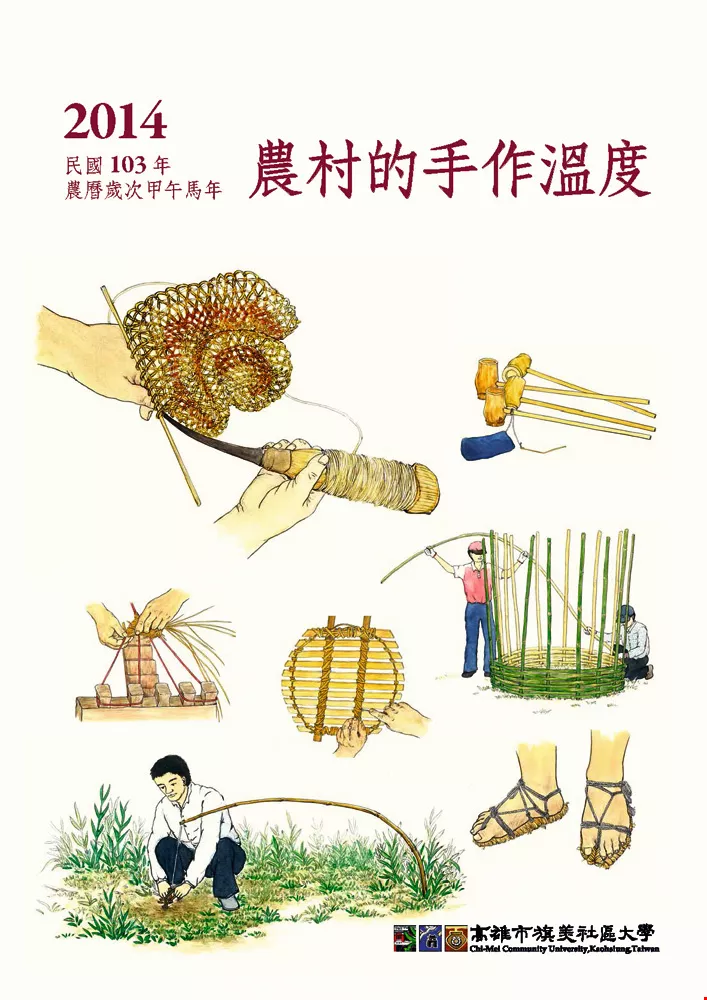
CMCU publishes calendars on local traditions that emphasize handicrafts and foods.
In 2004 CMCU began to see the clear outline of a “rural community college.” Ever striving, CMCU went on to completely reimagine the future of rural communities. A new kind of “rural studies” emerged, rooted in the locale and emphasizing local cultural diversity. It is truly unique to CMCU.
A series of courses closely connected with their locales were launched one after another. For instance, there was the highly popular “Maintenance of Small Farming Machinery,” which was designed with farmers in mind. Other similarly oriented courses have been added, including “Agricultural Processing: Fermenting and Brewing” and “Short Trips for Housewives.”
“Images of life in a rural community aren’t limited to farmers and farming,” says Zhang. Open the website of the college and you’ll see three school insignias: one featuring a Baroque-style building from Qishan and a banana tree (bananas are a major local crop), a second featuring a traditional Hakka blue smock and the Meinong East Gate Tower, and the third a work of Aboriginal ceramics with an image of a hundred-pacer snake. The choices demonstrate how CMCU is embracing the area’s ethnic diversity.
Apart from supporting village businesses, CMCU has been working to forcefully revive Hakka culture, with courses on Hakka ba-yin music offered from the college’s first term. The course encourages members of the younger generation to study traditional Hakka music and culture, with a goal of spurring a sense of local identity and drawing attention to traditional Hakka instruments, including the erxian and yehu (both types of two-stringed fiddle) and the xiao (an end-blown bamboo flute).
Apart from populations of Hakka and Minnan (Taiwanese), both Han in ethnicity, the area served by CMCU also includes Bunun and Rukai Aborigines in Liugui, Jiaxian and Namaxia. Consequently, the college offers many courses on Aboriginal culture. In 2009 CMCU sponsored the “hunters on campus” program, which leveraged the wisdom that Aborigines have about nature to bring students out into magnificent mountain forests and learn wilderness survival skills.
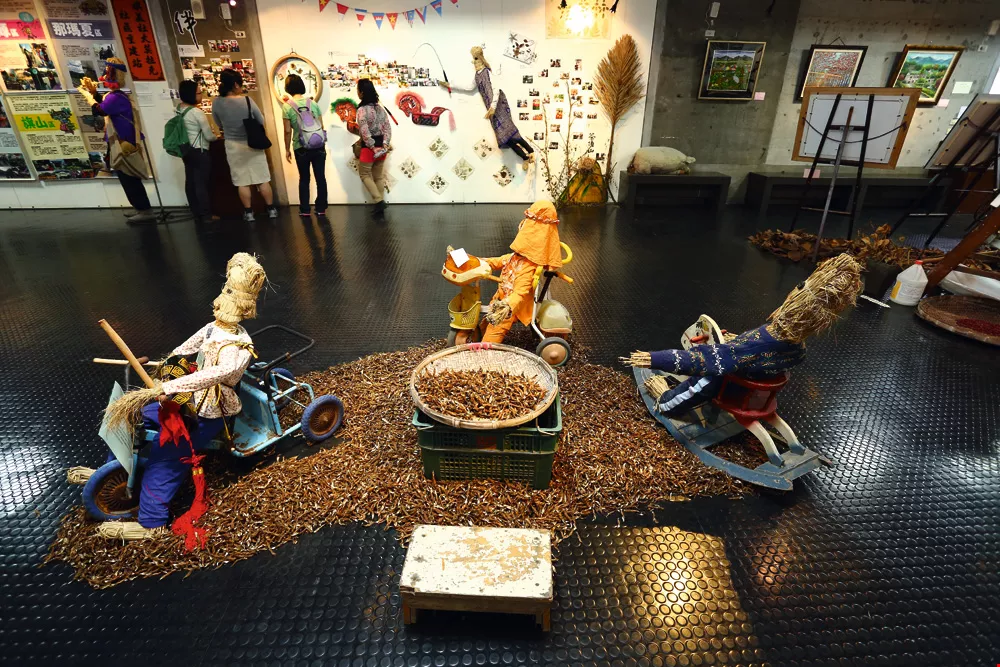
The exhibition “Education in a Farming Village: CMCU’s Local Studies Program” at the Meinong Hakka Culture Museum plots the 13-year history of the college.
Zhang explains that CMCU isn’t just an educational institution; it is also a platform for bringing people together.
Since 2002, via workshops about farming, public forums and other methods, CMCU has reached out internationally to invite experts from Brazil, the Netherlands, Japan and elsewhere to engage in exchanges on topics such as climate and small-scale farming.
Zhang gained experience with this kind of networking back when he was involved in the movement to oppose the building of a reservoir in Meinong. In 1999 he was secretary-general of the Meinong People’s Association, when the association was in contact with the International Rivers Network. That led him to understand that the reservoir issue wasn’t just about water resources and the future of the river basin; it also had major social and cultural aspects. After joining CMCU, Zhang drew from his earlier experience to help create an entirely new vision for farming areas.
In addition to serving as an educational forum, CMCU began to create written and visual records about the faces of rural life. CMCU classes empowered students to begin writing about life in their villages. Beginning in 2006, CMCU has published a calendar on topics such as “pickling” and “storing seeds,” which features scenes from farming life.
The year 2014 was designated as the year of “gauging the temperature of rural handicrafts.” Interview teams from CMCU have helped to introduce local handicrafts, including coir rain capes produced in Namaxia and traditional women’s bamboo tobacco pipes in the Laonong area of Liugui. “Let us now focus our attention on the faces and artistry of rural handicrafts so as to give people a sense of the ‘handmade warmth’ of village life,” states the 2014 calendar.
As it takes root amid these farming villages, CMCU is putting renewed focus on the traditional rhythms of village life, through both book learning and fieldwork. In addition to its more traditional academic coursework, CMCU, by extending its campus into the community and nature, is creating a local studies program that is richly vibrant and deeply moving.
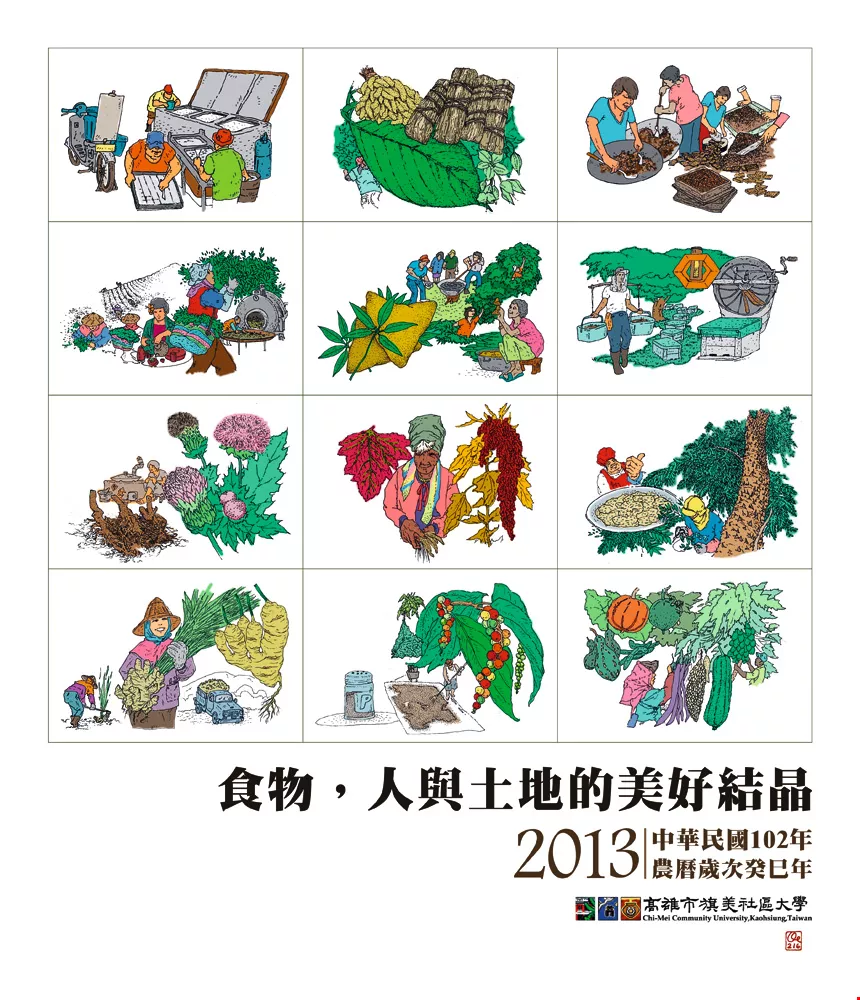
CMCU publishes calendars on local traditions that emphasize handicrafts and foods.
Drawing from abundant and inspiring local knowledge, CMCU puts a dual focus on activism and culture.
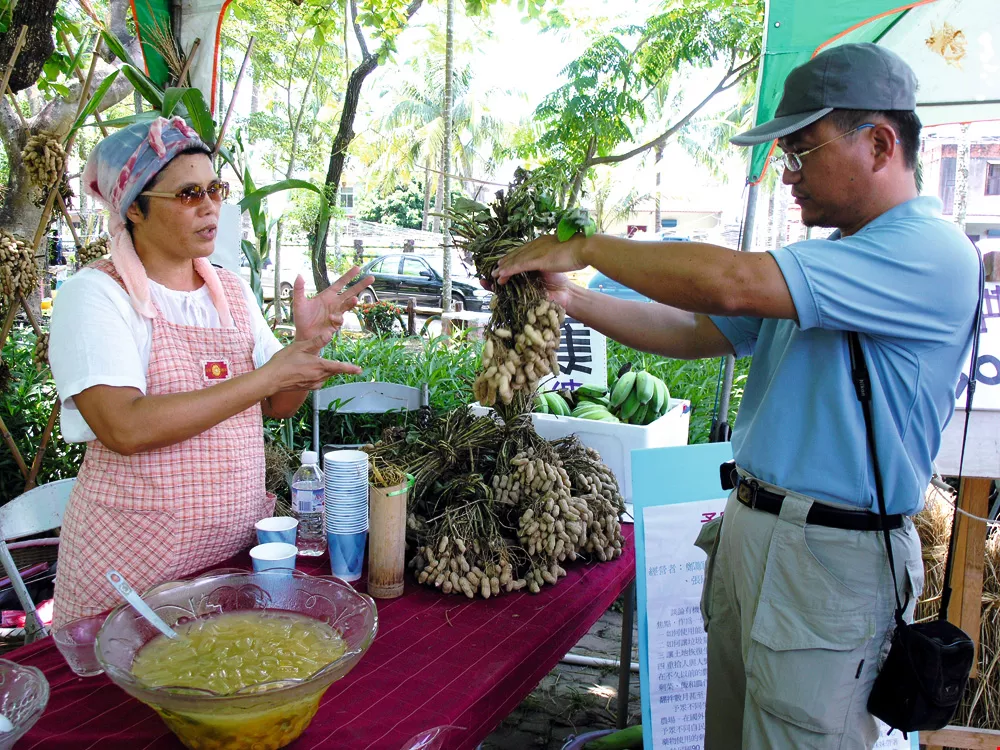
CMCU organizes farmers’ markets, letting consumers hear directly from the producers themselves. These markets were the first of their kind in Taiwan.

@List.jpg?w=522&h=410&mode=crop&format=webp&quality=80)

@List.jpg?w=522&h=410&mode=crop&format=webp&quality=80)


