Spreading Charity from the Mountains to the Seas
Pamela Teng / photos Li Dongyang / tr. by Geof Aberhart
October 2014


What happens when a group of motivated, experienced hairdressers meet a club of passionate, idealistic college students? In the remote fishing villages of Penghu and the Bunun villages of Taitung, what happened over a few short days was a spectacle of charity that touched all involved, and a promise to do it all again.
“It must be fate!” laughs Meichun, a hairdresser from a Taipei branch of salon Happy Hair.
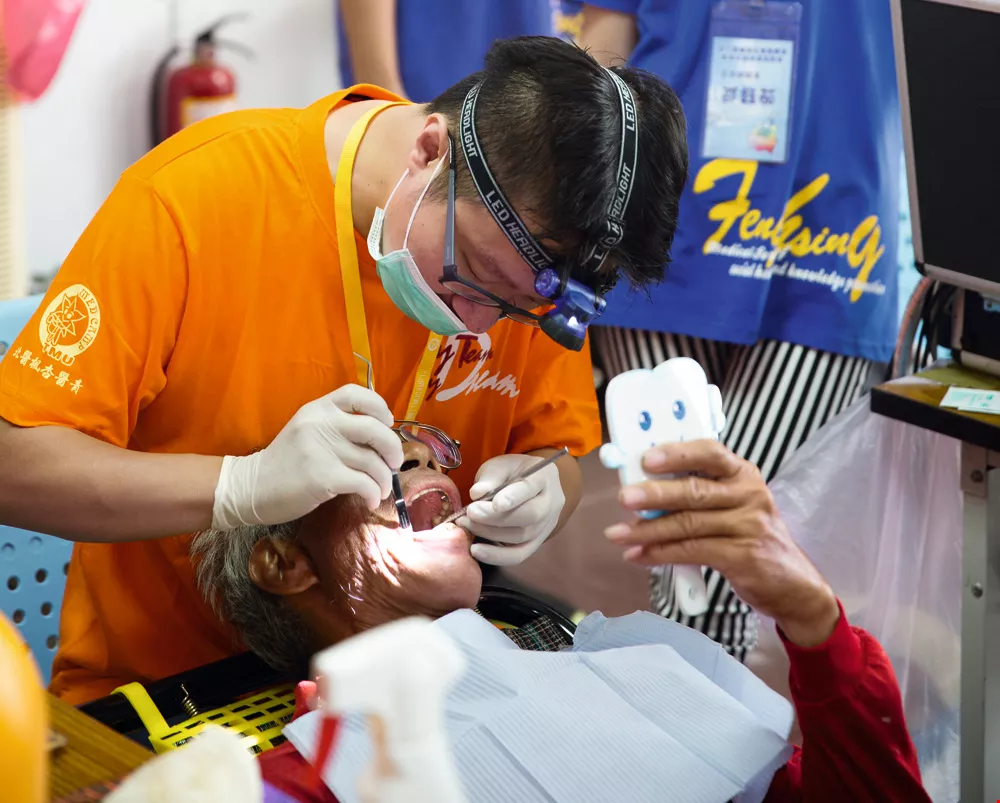
Having alumni involved not only adds to the numbers, but also provides the current students with models to learn from.
2014 was the fifth year her branch had traveled to Haiduan Township in Taitung County, to provide free haircuts to people in the Bunun villages of Bulbul, Lidtu, and Samuluh.
News of the need for haircuts there reached the hairdressers by way of a long-time client of Meichun’s, Li Yaling. Li is the supervising teacher for a student organization at National Taiwan University focused on providing charitable services to remote Aboriginal villages, as well as being a former member herself. One of the older student groups still active at NTU, this group was formed in 1973, although times dictated they stop traveling to the villages in 1993. This stoppage lasted nearly two decades, until Li and a few other former members returned to Haiduan, to a warm reception. Through this visit they discovered that the area was still in need of outside assistance. The children they had worked with all those years ago had become pillars of their communities, and explained that the children now still needed company and guidance over the long summer vacations. Spurred on by these words, Li returned to Taipei and resurrected the student group, giving a new generation the opportunity to provide much-needed services to these relatively remote indigenous communities.
Struck by inspiration, Li thought she should talk to her hairdresser Meichun about joining the group’s summer activity, creating a crossover of very different worlds.
“Every year I agreed to join in, but I kept finding reasons not to go, like my kids being too small or Taitung being just too far away,” says Meichun, “until one year I finally just decided to join Yaling.” She remembers that first visit, going to see a young elementary schooler whose parents were both off in the city making a living, leaving him and his blind grandfather to take care of each other. It was in the moment she met that boy that Meichun understood that children like him need more than just a haircut.
Starting the following summer, Meichun brought her fellow hairdressers and assistants along with her to Taitung, and each year the number has grown. Today, the annual trip to Taitung is one of the biggest events of the year for them.
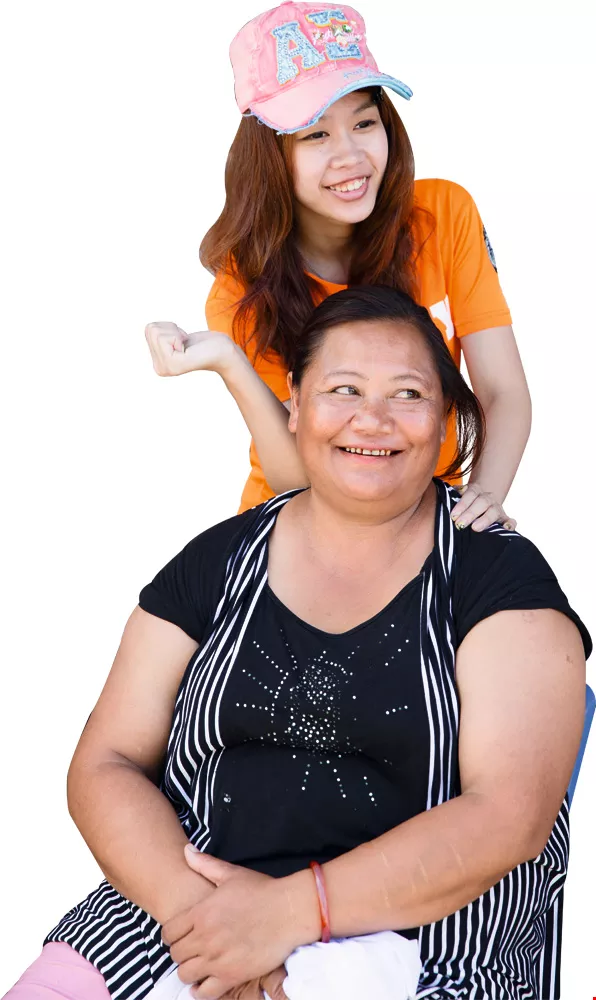
The hairdressers also help the hard-working local women relax with quick shoulder massages.
As soon as they step into the village, the hairdressers all scan the area for familiar faces they’ve helped before. Seeing children run over and say hello is the happiest moment of the trip for them, and they grab the children’s hands and see how much they’ve grown, while the children comment on the hairdressers’ new hairstyles. It’s like catching up with old friends as they dole out their haircuts.
Cuiping, a manager from Happy Hair’s main branch, has been part of these trips for three years now. As they start visiting the residents, she asks about one of the elderly people she assisted the previous year, only to find out the sad news of their passing. “It’s not just the elderly people they’re losing here too. Even people that should be in the prime of their lives have been suffering ill health, and each time we come back we see fewer and fewer familiar faces.”
Stylist Peggy, originally from Tainan, says the glitz of Taipei can sometimes make her feel a bit lost, but heading to Taitung and seeing the smiling, innocent faces of the children reminds her of her own childhood. Her colleague Ella also kept her promise to go this year, despite being pregnant; in fact, she believes doing so is a good way to positively influence her unborn child.
While the hairdressers can provide an instant change to the people, the NTU group is more about long-term efforts that generally don’t show instant results.
One student remarks, “Coming here makes me aware that there’s only so much I can do, but even so I want to do more. Sometimes it feels like all we’re doing is keeping them company, but at least we can do that much and help these kids feel loved.”
Self-effacingly, one of the hairdressers comments, “All we can do is look after their scalps and up. The NTU students are the ones trying to find ways of taking care of everything down from there.”
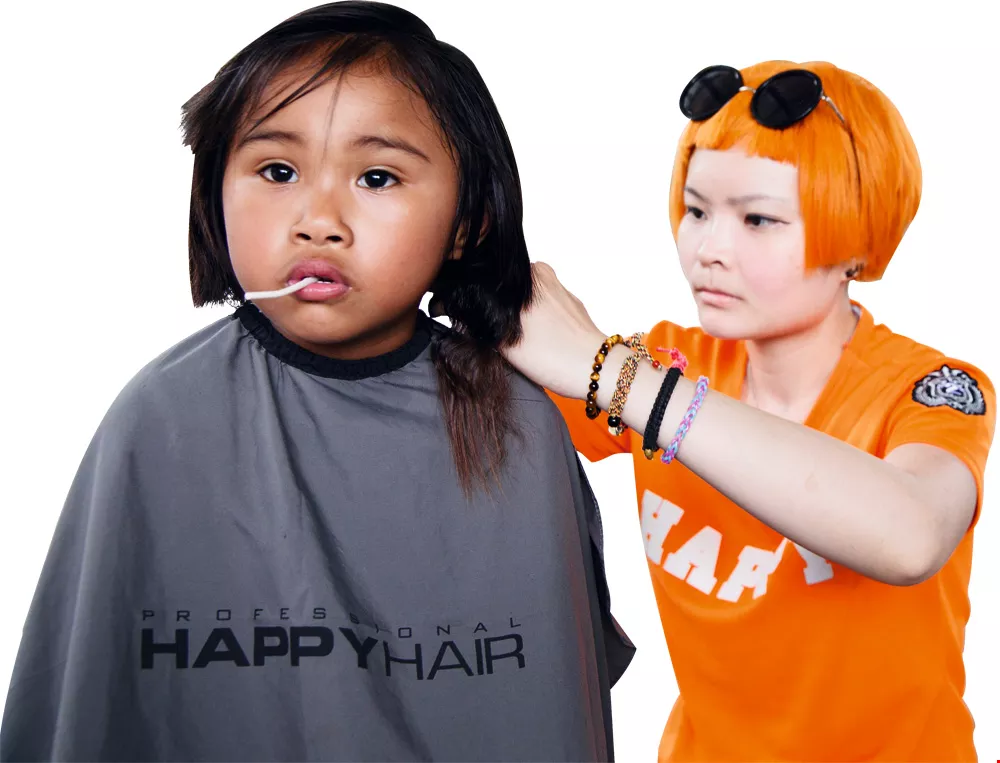
One of the Happy Hair team dyed her hair bright orange, to catch the children’s attention and create a rapport with them.
This year the Happy Hair group expanded their efforts to the Penghu archipelago, joining with students and healthcare professionals from Taipei Medical University in volunteering there.
Happy Hair manager Yang Jinghui regards the TMU group as the most organized student club he’s ever seen. While a supervising teacher does accompany the group on the trips, he’s usually all but invisible during the actual activities, stepping back to let the students decide what to do and how to do it.
“Not everyone who wants to come along even can,” remarks supervising teacher Qiu Shengbo. Qiu goes on to explain that the students need to first go through a training course, pass a test, and get split into teams, with work then being assigned based on each person’s particular strengths. This helps make sure that everyone is up to the task. “After they join the club, they have to get ready for hard times and realize that they might be educated, but that doesn’t make them special. They need to experience different lifestyles during their studies. Only then can they really find their own place in the world.”
Charity work can be like training for life, teaching you to approach things with the right attitude and helping you see who you are. To the hairdressers, already in the service industry, the medical students can seem like they think they’re special, while the students can feel somewhat distant from the hairdressers, being part of Taipei’s high-fashion world as the latter are. But when they finally work together, these misunderstandings slowly melt away, and the two groups develop a strong rapport, finding that no matter how different they might be, they share a common sense of empathy and faith in the value of charity.
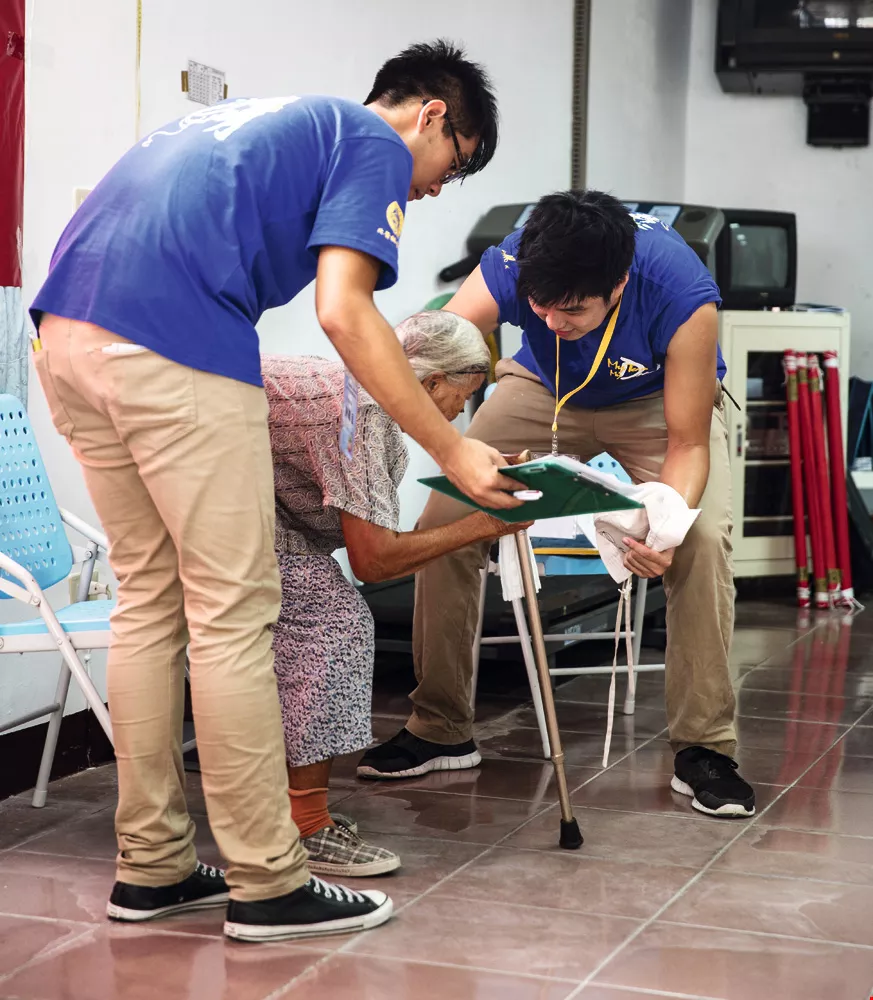
One of the things members of the medical team are required to do is always try to stay at eye level with the elderly people they help. For these two young men, both about six feet tall, this means bending practically in half as they help this elderly woman through an entire checkup.
The key to this cooperative effort is a former medical team leader and licensed dentist, Li Junyu. Born and raised in Penghu, Li moved to Taipei for college, meeting lecturer Yang Jinghui through a course on leadership training. It was from Yang that he learned of the Happy Hair group’s long-time volunteer efforts.
While visiting Penghu with some classmates, Li saw how much they liked his hometown, so he began thinking about bringing a medical team home to help out. First, though, he talked to the elderly people there, visited a few homes, and did some field research to determine what services were necessary. Then he put his plan to the club. His proposal was met with strong support, and even now, years after his graduation, students there continue to be as enthusiastic about giving some of their time to help out on these beautiful islands.
It was when Li was sharing his experience with Yang one time that the two were struck by the idea of creating an “alliance” with the hairdressers. It was an exciting prospect for Li, the idea that as well as getting much-needed medical help, the elderly of the islands could also enjoy the energizing feeling of a new style. Overall, it would give them a day of happiness that is a more effective psychological treatment than any drug.
The addition of the hairdressers has added more smiles and laughs to the service venues. Their friendliness and commitment to good service has been inspiring for the students, says this year’s team leader Bao Bojia, as they are able to get along well with people of all ages. This is a skill many of the students feel they’re lacking, and has made many of them think about the importance of a good bedside manner.
Penghu has long suffered from its younger people moving to the cities, leaving the elderly the bigger proportion of the population. The demographics of the islands meant the medical students quickly realized that oral and joint care is what the area is most in need of. The medical staff involved also demonstrate the right way to help elderly people with their wheelchairs, so that when the students work with them, they can do so in the most comfortable, efficient, and safe way.
Yang and the hairdressers, meanwhile, divide their forces, with one group staying with the medical students to give haircuts there while the other heads into town to work with those who can’t make it to the medical site. Sometimes, where there is enough demand, they also do house calls, which coincidentally also serve as advertising for the medical team.
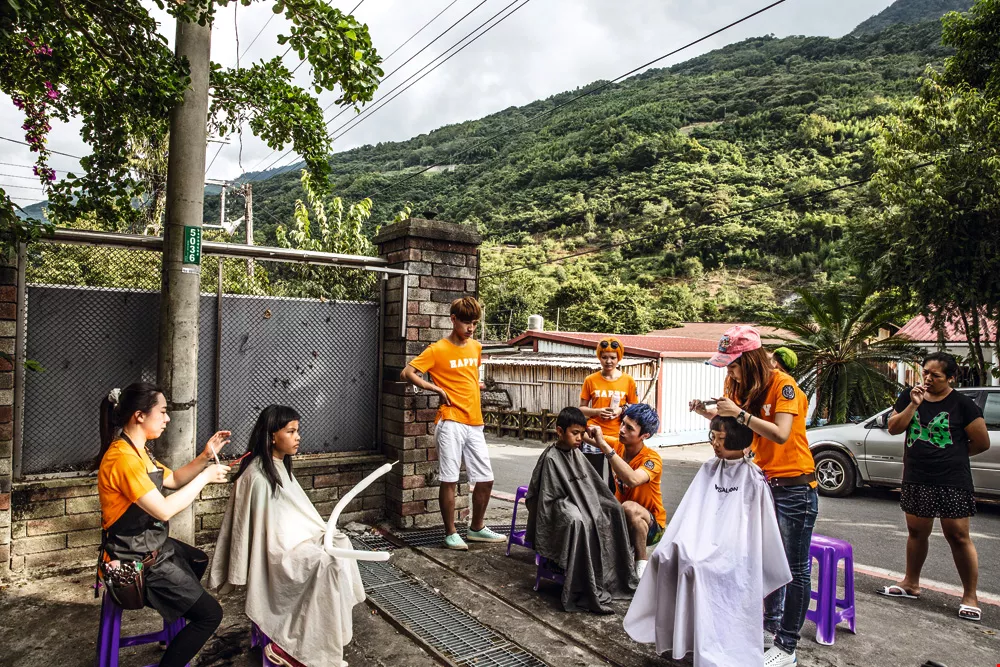
Despite being volunteers, the Happy Hair hairdressers are as professional as ever as they travel these remote villages with their “mobile salon.” Here we see them at work in Bulbul, on the site where the village’s farmers’ market is held.
When the hairdressers have set up their innovative yet traditional “salon stall,” over the next few days word spreads and people start to gather, bringing a taste of the local hospitality with them—local nonagenarians toddle down to give the hairdressers their best wishes, and families spanning three generations come and create a rowdy warmth. On the first day, a child biked past, curious; on the second, he happily got himself a haircut; and the third, first thing in the morning he was on his bike traveling along with the hairdressers, helping sweep hair up off the ground or brushing it off the heads and necks of the “customers.”
Meanwhile, the medical team travels door to door with local high-school students, promoting the medical and hairdressing teams’ work and trying to understand what the residents really need.
The two sides, hairdressers and medical students, motivate and learn from each other, getting along with virtually no friction. Li Junyu remarks that as someone from Penghu, he was deeply touched to see how the hairdressers had brought a little love to the streets and lanes of these remote islands, realizing that he didn’t have to go off to Taiwan proper to chase his dreams, and that the smiles of the old folk there were what truly made him happy.
This was Li’s last opportunity to take part in a charitable trip before starting his military service. The day before he had to report for duty, his friends and classmates watched as the hairdressers clipped his hair for him, helping him face this next stage in life refreshed and ready to go.
While this key figure might be gone temporarily, the cooperative charity will continue. Similarly, Li himself has expressed his determination to continue bringing medical services to Penghu. The stylists of Happy Hair have made a similar promise—as long as they’re needed, they’ll carry on bringing their own kind of care to the islands.
“A lot of people want to find happiness, but if you don’t get out there, you’ll never find it,” say the hairdressers. They look forward to even more people turning their inspiration into action and, in the process of helping others, finding their own path in life, a path that will lead them to a life truly worth living.
@List.jpg?w=522&h=410&mode=crop&format=webp&quality=80)

@List.jpg?w=522&h=410&mode=crop&format=webp&quality=80)


@List.jpg?w=522&h=410&mode=crop&format=webp&quality=80)

@List.jpg?w=522&h=410&mode=crop&format=webp&quality=80)
