Booking Across the Strait --From Mao Zedong to Chiung Yao
Jackie Chen / photos Diago Chiu / tr. by Phil Newell
February 1994


"If you want to win, you have to read Mao Zedong!" This is the provocative full page advertisement placed by a publishing house. Will Taiwan follow in the footsteps of the mainland and catch "Mao fever" as well?
"The love stories of Chiung Yao and the martial arts novels of Wo Lung-sheng have sold hundreds of millions of volumes in mainland China," reveals one publisher who often travels to the mainland.
What kind of books are catching on across the Strait in Taiwan and mainland China? What does all this mean?
In this bookstore on Chunghsiao East Road, the books by mainland authors like Su Tong and Wang Shuo are usually placed on a stand which promotes the latest "Literary Bestsellers." In a bookstore on Wangfujing Street in Beijing, the number one book in their listing of bestsellers is My Father Deng Xiaoping by Deng's daughter Deng Rong. This book has meanwhile been number three on the corresponding list for the Kingstone Bookstore chain in Taipei for the past two months. And the book The Bitter Cultural Journey, currently a hot seller in Shanghai, is also widely recommended by reviewers in Taiwan.
What does all this mean? Some people are saying that, in terms of what the masses are paying attention to, there is already uniformity on the two sides of the Taiwan Strait. When something gets hot in the mainland, the fire seems to leap across the Strait and rage in Taiwan as well. And things that sell well in Taiwan, like popular reading matter such as Brain Twisters, also quickly become fashionable in the mainland. The only difference seems to be that Taiwan is smaller, so that the market responds quickly and works faster than the mainland in producing books and getting a response from readers.
But others disagree, and contend that the two sides are still "out of balance" when it comes to publishing. In Taiwan, there are people who introduce and publish mainland reading materials, but it is not always possible for books that have a big impact in Taiwan to gain entry to the mainland.
There is something behind both arguments, but neither fully encompasses the actual situation. For example, precisely what books from each side are being sold in the bookshops of the other? What books are popular simultaneously on both sides? And which kind find an audience only in the mainland or only in Taiwan, and why?
At the present, just how many mainland publications (here meaning mainly books) are in Taiwan? For such a simple question, the answer gets a bit complicated.
For the moment, Taiwan still does not permit the issuance or direct sale of mainland publications, which have simplified Chinese characters instead of the traditional (or complex) ones used in Taiwan. Individuals or institutions alone are permitted to carry in only a small number of books. According to the Government Information Office (GIO), since1991 more than 2,100,000 volumes have entered the country in this manner.
It is very possible that some of these books are then republished with complex characters and released on the market, but in fact no one knows what the proportion might be. The GIO has approved the republication and sale of 200 mainland items since March of last year. But could this really be the total number of mainland works on the market?
No way, dude! The mainland books now spread all over the bookshelves, besides those authorized by the GIO, are mainly "joint ventures": The texts are written by mainland writers, while Taiwanese take responsibility for laying out the capital, planning, and packaging. This type of book is categorized as an ordinary local publication, and it does not need to be approved by the relevant authorities, so there is no way to get a clue as to their number. But readers, publishers, and government agencies can all sniff out the "mainland flavoring" in these concoctions, so it's hard to say they are not products of the mainland.
Luk Yu-hung, a director of the Publishing Association of Taipei, estimates that up to one-fifth of the books on the local market have involved mainland writers or publishing houses.
So how much is one-fifth? If you start with the number of books registered with the National Central Library last year and listed in the new books catalogue, which is to say more than 19,000, one-fifth would then be 3,800 items. This is a rather startling figure.
And how many Taiwan publications make it to the mainland? According to statistics of the Publications Import-Export Company of China, which is in charge of importing books from outside, the number of books imported from Taiwan is huge, and growing. Last year it was said to increase by 60%, to a total value of US$2.5 million. However, it's still not clear what the actual number of volumes is.
If you look at publication market on the two sides of the Strait, of course it is smaller in Taiwan than on the other side. "For example, the love stories of Chiung Yao or the martial arts novels of Wo Lung-sheng sell two or three hundred million copies" in the mainland, estimates Luk Yu-hung, who frequently travels back and forth across the Strait. There is one publishing house in Taipei which has sold ten million copies of just children's books in northeast China alone.
Of course numbers like this are way out of reach for mainland publications in Taiwan. "The novels of Ah Cheng have sold 20-30,000 copies in Taiwan, and even that is a pretty extraordinary figure for literary works," says Yu Chyi-huey, senior editor at Yuan-Liou Publishing Company in Taiwan.
But there are indeed many common "high-demand" books for publishers on both sides of the Strait. And there's an interesting story behind that.
Perhaps because of readability, both sides have imported literature as the leading edge into domestic markets.
As far as Taiwan is concerned, imports of mainland books go back to the 1980s. Through the literary pages of newspapers, writers of the"Scar Literature," "Reflective Literature," and the "Roots Literature" schools were systematically introduced into the Taiwan book market. Of these, works by the writer Ah Cheng sparked a great deal of discussion in the literary world, leading to an "Ah Cheng whirlwind."
Literature usually doesn't sell that well in Taiwan but "prior to 1989, there was a certain market for literature from the mainland--perhaps from curiosity--so that you could at least sell off all of the first run of two or three thousand volumes," says Wang Wen-ling, editor at the Hsinti Book Company, which is responsible for introducing more mainland books to Taiwan than anyone else. The works of the most popular writers of that time, such as Ah Cheng or Liu Binyan, were fought over by two or three publishing houses, so you can see how thriving business was in those days.
But good times don't last forever. "After 1989,the novelty was gone out of mainland writings, and there was a rising tide of calls to place more emphasis on things Taiwanese, and there was much less introduction of books through academia than in the past," notes Wang. Sales of mainland literature reached a nadir. "Today monthly sales are in the single digits."
Besides the reasons noted by Wang Wen-ling, "after 'Scar' and 'Reflective' literature, the new generation of mainland authors [called 'Vanguard School' writers in the mainland] were writing stuff that was just incomprehensible to Taiwan readers," points out Chen Hsin-yuan, who has researched literary trends on the two sides of the Strait. Differences in the way people live on the two sides is thus very possibly a major reason why mainland literary works have lost appeal.
"Books depicting the Cultural Revolution usually sell poorly," which also affects the sales possibilities for some mainland writers who are not yet famous, notes Chen Hsiao-lin, the director of the Fengyun Shihtai Publishing Company. "Also, Taiwan readers seem to always be like a 'swarm of hornets,' so that whatever they've heard of most frequently are the good books."
In the past few years, some films from the mainland have swept the world, and film – or television-related books have risen with the tide. Early on there were Mo Yan's Red Sorghum Clanand Liu Heng's Ju Dou. More recently, Wives and Concubines (the book on which the film Raise the Red Lantern was based) has been a long-term bestseller.
In the mainland literature generally tends to follow what's in the mass media; they are in fact virtually the same. Wu Liang, vice chief editor at Shanghai Culture Magazine, who has attended a literary conference in Taiwan, says that of Taiwan literature, the only authors most people could name are Chiung Yao and San Mao, who write escapist literature. Their works still sell very well, but, when you get right down to it, the credit for that goes to the mass media. For example, "That a production company went to the mainland to film a TV series based on a Chiung Yao novel, or the news that San Mao committed suicide were both helpful to sales of their books."
But besides this, perhaps because there are still only a very few "special" people in various research organs or universities who are given access to Taiwan literature, or perhaps because the mainland is really too large and the market for importing Taiwan books "just isn't as complete as Taiwan's is," suggests Chen Hsin-yuan, though you can see authors like Chen Ying-chen, Sung Tselai, or Ang Lee in mainland bookshops, it still feels like most of the material is by Chiung Yao, San Mao, or the like.
Huang Chao-heng, the chairman of the Publishing Association of Taipei, notes that the reasons why Taiwan books cannot be introduced to the mainland in a systematic, diversified way are connected to the whole socio-economic milieu there.
She suggests that, on the one hand, educational levels are still low in the mainland, and, on the other, people have yet to develop the habit of buying books themselves. Therefore, "although official figures declare that the average person in the mainland spends eight RMB to buy 5.5 books per year, in fact a huge proportion of these are textbooks," adds Huang. Most of those who buy books in the open market are in fact government units.
Of course the state-run units that buy books have their own considerations. For example, early on when importing literature from Taiwan or Hongkong, they only considered works that revealed the "dark side" of Taiwanese society. And over the past few years, under the impact of rapid economic growth, these units would much rather import books on economics and management than leisure reading materials.
Ever since the 1980s there has been a craze in the mainland for short, light essays, and the small pieces produced by writers such as Luo Lan and Liang Shih-chiu have been republished in large numbers. But their popularity is not what it was in the 80s, when works by Chiung Yao and San Mao swept the nation, penetrating every little town and alley.
When you get right down to it, the reason why particular cultural publications (including literature) attract discussion on the two sides of the Strait can only be understood on a case-by-case basis, with the factors for each volume being different. Take for example the book The Ugly Chinese, a critical look at Chinese political culture by exiled Taiwanese author Po Yang, publication of which was banned in the mainland in the late 1970s and early 1980s, but which later was quite popular: "In fact mainland Chinese just wished to express themselves through Po Yang, but if we said those things ourselves there would be trouble," says Wu Liang.
Another reason why escapist mass-appeal literature such as Chiung Yao and San Mao is popular is because "for a long time in the mainland the emphasis was placed on officially sanctioned high ideals like country and society; as soon as restrictions were eased, there was an urgent need to compensate in the areas of daily concern like familial or romantic love. Since Taiwan literature was written in the same language, and was helped along by the mass media, naturally it has been popular for a long time," says Kung Peng-cheng, a professor of history at National Chung Cheng University.
Yet on the other side of the Strait, Taiwan readers "have been exposed to daily life material for too long, and they are looking for something more elevated and admirable," offers Kung. Thus books like Rivers of Sorrow and The Bitter Cultural Journey have been hot topics for discussion, reflecting this phenomenon.
But, "you have to pay attention to the point that what Taiwan chooses is also a part of the social culture," argues Kung. Taking Rivers of Sorrow for example, those most commonly discussed here are those like "Maritime China." But the mainland puts more emphasis on questions like "China's Cultural Future" and "The Impact of Western Culture," which have not incited nearly the response that "Maritime China" has.
What is the significance of the fact that books like Bitter Cultural Journey (at least three versions of which have been widely read in Taiwan) have been so successful for so long?
Chen Hsiao-lin says that the popularity of these books on both sides of the Strait proves that it is not necessary to have heavy commercial promotion, and good books can compete in the marketplace just through "word of mouth" among the literati. The "nostalgia for the glorious culture of the past" described in these books "is perhaps just what is commonly needed on both sides," suggests mainland author Ah Cheng.
As for political biographies of Mao Zedong and Deng Xiaoping, these have generated much more enthusiastic sales and discussion in Taiwan than in the mainland. Cheng Depei, assistant editor of Haishang Wentan, a literary magazine published in Shanghai, points out that although the book My Father Deng Xiaoping was at the top of the bestseller list in the bookstore on Wangfujing Street in Beijing, the book release event was extremely poorly attended. Unless the authorities were deliberately downplaying the event, it seems that people really weren't very interested.
Wang Meng, the former Minister of Culture in the mainland, suggests that the fact that there are readers in Taiwan for books about Mao and Deng "indicates that Taiwan is still within the political radiation range of the mainland." It also shows that people in Taiwan have an interest in influential persons.
As for books on cultural thought, no matter how intense the discussion seems to be, in fact their impact is limited to a small audience. In fact, the books that sell best of all on both sides are ones long neglected by the literary world: "How-to books." These include children's books, books on construction, language textbooks and dictionaries, and so on, or some useful reference books like a complete collection of the world's art, collected Chinese archaeological artifacts, or medical encyclopedias.
When you get to the "joint venture books" for the two sides, you're in the big time. Wang Hwarong, editorial director of Kwang Fu Book Enterprises Company, says that the main reason publishing houses target this sector is because they can make money on both sides of the Strait. For example, Kwang Fu reissued The Illustrated Chinese-English Dictionary and sold it in Beijing. The first run was 50,000, and they are optimistic about the future market. Or take books like The Beauty of Chinese Architecture or The Beauty of Chinese Archaeological Artifacts--both were cooperative efforts between the two sides of the Strait and were released simultaneously on both sides, so there will certainly be more than a few readers.
Although the books have been released simultaneously on both sides, because of differences in the two societies, there are still different emphases in the choices of readers. Wang Hwa-rong points out that children's books and books on daily living (such as health and beauty, cooking, or acupuncture) are popular on both sides. But because the economy is just taking off in the mainland, the best selling books are ones on management, advertising, and construction or interior decoration. Some translated books of Western thought are also in demand. In Taiwan, there are relatively few basic science books (such as books on internal medicine), or specialized books on literature, history, or philosophy, yet these are major imports in the mainland.
Huang Chao-heng points out that the current process--from buying and selling publishing rights to utilizing the strengths of each side jointly, from groping for the special characteristics of each side to trying to work together--is an inevitable road for booksellers on the two sides. What's important is whether or not publishers can get past many "non-publishing" obstacles in order to allow both sides to benefit and flourish.
For example, mainland publishers often complain that they cannot visit Taiwan, so they don't know what good books Taiwan has to offer. After strenuous efforts on both sides, this obstacle will be lifted completely beginning in 1994.
Also, it is not permitted for mainland books printed with simplified characters to be sold directly to Taiwan, and mainland booksellers often think this is because of ideology. But "you can buy books about Mao Zedong all over the street," says Huang Chao-heng, "and in fact the main issue is economic. It is feared that mainland books are too cheap, and will affect sales of books published within Taiwan." Of course, there are those who say that there is no reason for concern if the market is opened to books from the mainland, based on the argument that "people buy a book because they need that particular one, not because of the price," as Luk Yu-hung puts it. This point awaits further discussion.
As far as Taiwan publishers are concerned, at present all publication and issuing of books in the mainland is state controlled, and sales are guided by the state-run Xinhua bookstores. In order to sell books there, Taiwan publishers can only ask mainland publishers to go through back channels to reach private enterprises that sell books; even then the subjects for cooperation must be approved.
Although it's the same in Taiwan, this type of review process in the end cannot hold back the market impact. "For example, Buddhist Master Hsing Yun is persona non grata with the mainland authorities because of his anti-communist stance, but the joint venture book Conversations With Hsing Yun came out as usual--it couldn't be suppressed!" says Kung Peng-cheng, who has just returned from the mainland. But these problems cannot be resolved overnight, and will continue to be obstacles to the normal sale of Taiwan books in the mainland. Perhaps there's no reason to be overly excited by the things that are "in step," and no reason to worry about those that are "out of balance." Only when these obstacles are removed can readers on both sides "normally" read what they will and find ever more diversity and deeper meaning.
[Picture Caption]
p.102
The Taipei International Book Fair held in January shows the determination of Taiwan publishers to penetrate the international market.
p.104
Are Taiwan and the PRC really that far apart? Mainland authors invited to Taiwan exchange views with local writers from whom they have been divided for forty years. The photo shows, from right, Li Jui, Chen Ying-chen, Huang Chun-ming, and Liu Hsin-wu.
p.105
Taiwan author Yeh Shih-tao argues that Taiwan literature is unique, and not simply "a branch of Chinese literature." The photo in the background is of mainland author Mo Yan.
p.106
The power of the audio-visual media is crushing. Author Su Tong, the writer behind the film Raise the Red Lantern, is sorry that people only remember his connection with the film, but not his original work of literature.
p.107
"How-to" books are the majority of Taiwan books that go into the PRC. The book on advertising pictured here was well received on the mainland.
p.108
Publications from the Mainland Entering Taiwan(Both those used by Institution and Individuals)(Source: Government Information Office)
p.109
Many PRC bookstores have been in financial trouble, some even subletting their storefronts or shifting over to selling audio tapes and stationery. (photo by Pu Hua-chih
)
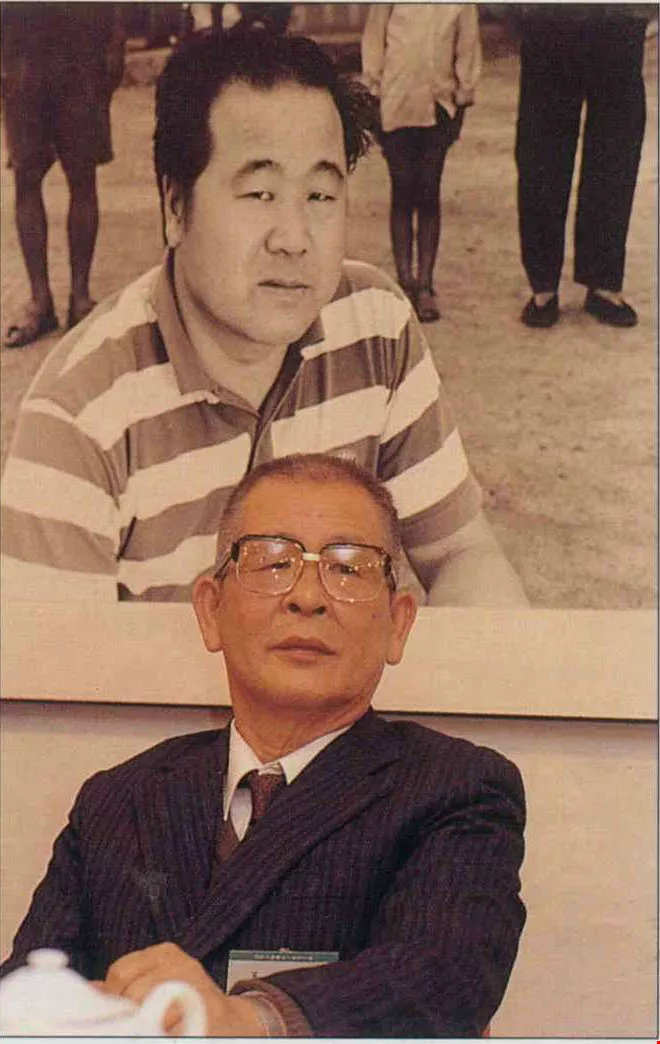
Taiwan author Yeh Shih-tao argues that Taiwan literature is unique, and not simply "a branch of Chinese literature." The photo in the background is of mainland author Mo Yan.
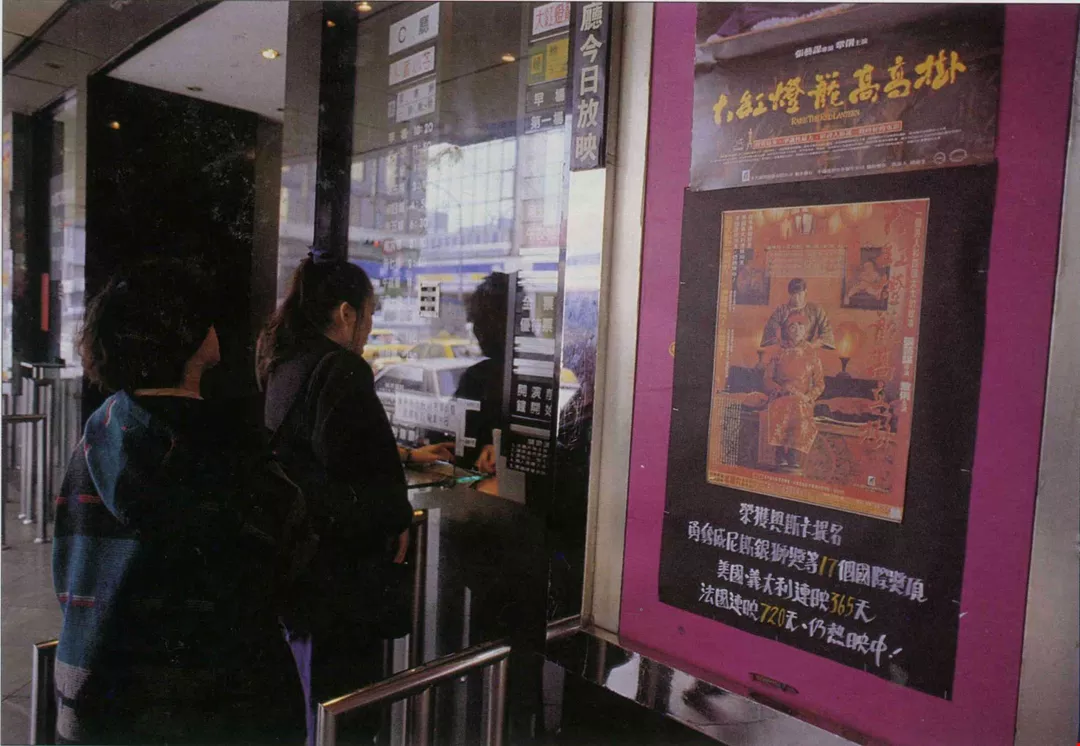
The power of the audio-visual media is crushing. Author Su Tong, the writer behind the film Raise the Red Lantern, is sorry that people only remember his connection with the film, but not his original work of literature.
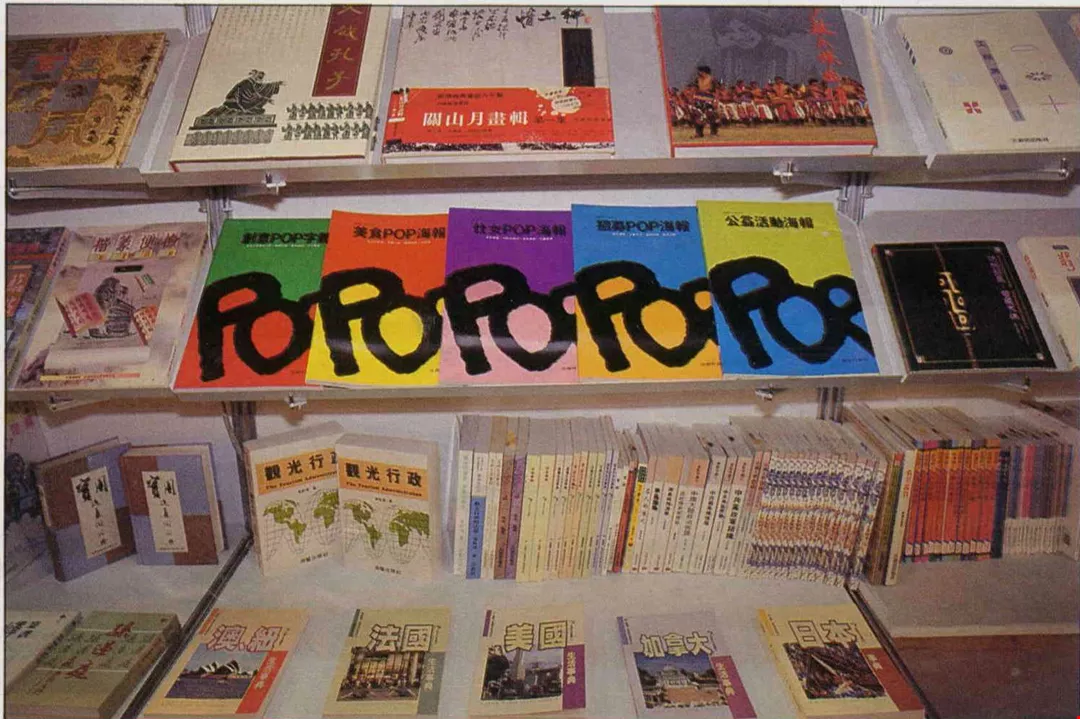
"How-to" books are the majority of Taiwan books that go into the PRC. The book on advertising pictured here was well received on the mainland.
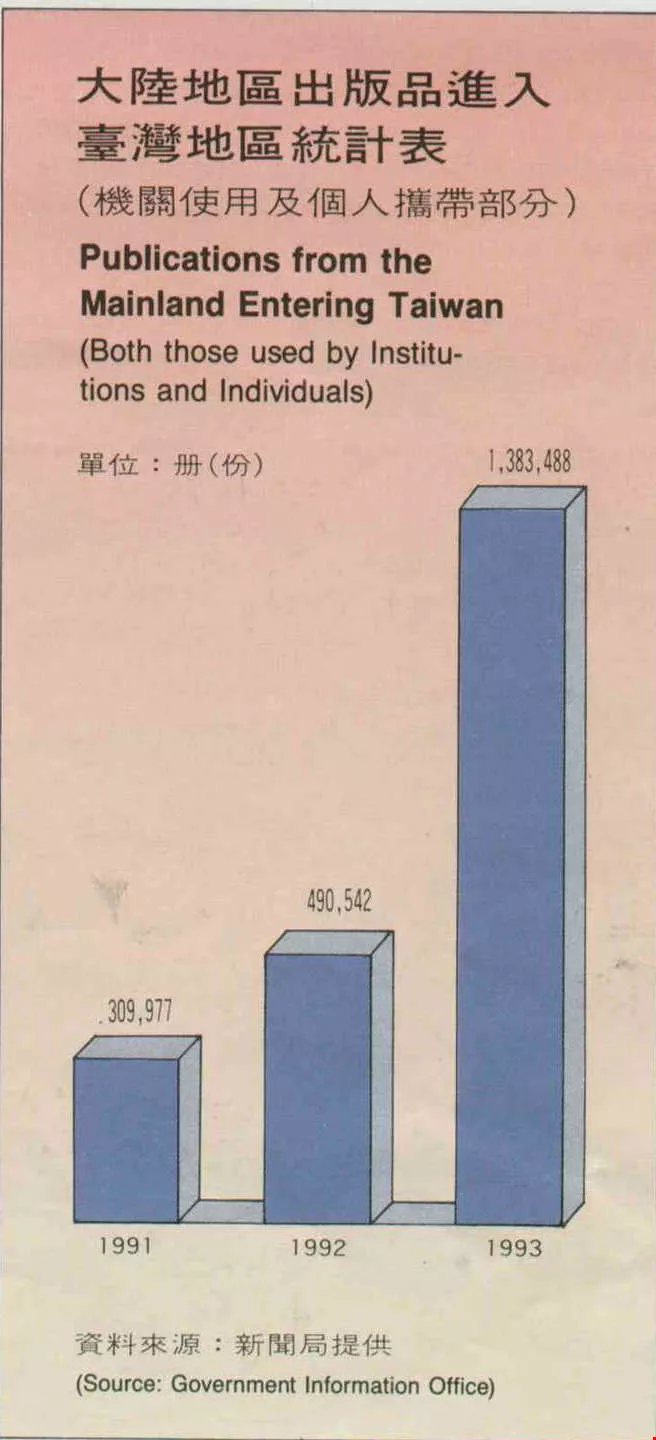
Publications from the Mainland Entering Taiwan(Both those used by Institution and Individuals)(Source: Government Information Office)
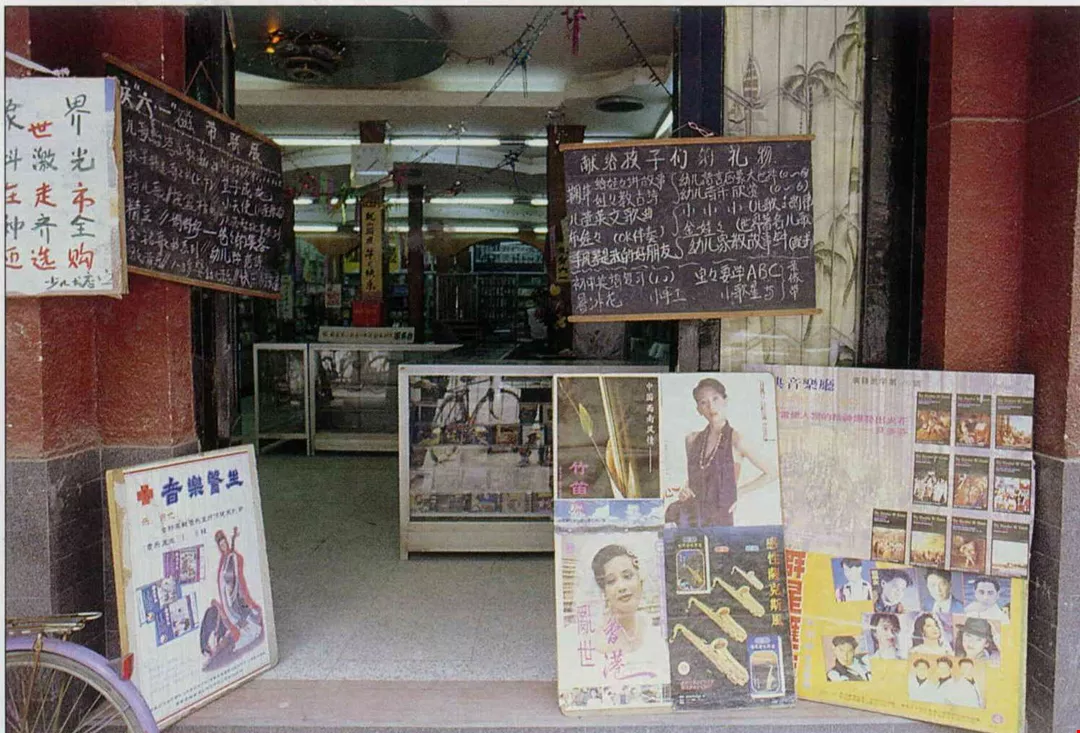
Many PRC bookstores have been in financial trouble, some even subletting their storefronts or shifting over to selling audio tapes and stationery. (photo by Pu Hua-chih)
@List.jpg?w=522&h=410&mode=crop&format=webp&quality=80)

@List.jpg?w=522&h=410&mode=crop&format=webp&quality=80)


@List.jpg?w=522&h=410&mode=crop&format=webp&quality=80)

@List.jpg?w=522&h=410&mode=crop&format=webp&quality=80)
