Running a Coastal City: An Exclusive Interview with Kaohsiung Mayor Chen Chu
interview by Vito Lee / tr. by Scott Williams
March 2007


Chen Chu, winner of Kaohsiung's recentmayoral election by a slim 1000 votes, knows her adopted city's people very well.
Born in Ilan, Chen made her first trip to Kaohsiung 28 years ago as a participant in the dangwai movement. Excepting a six-year stint in prison following the Formosa Incident, four years as head of the Taipei City Government's Department of Social Welfare, and six years as chairwoman of the Executive Yuan's Council of Labor Affairs (CLA), she has lived there ever since. Chen argues that two factors enabled her to win the election without the massive local resources of Kaohsiung-born candidates: the city's open-armed acceptance of outsiders, and her own firm political beliefs.
With her background in the human rights and democracy movements, Chen has long been a staunch defender of workers' rights. A highpoint of her tenure at the CLA was the implementation of a new pensions system in July 2005. This system requires employers to deposit pension contributions into workers' individual accounts, making retirement funds "portable" when workers change jobs. Chen is also happy to list the passage of legislation such as the Gender Equality in Employment Act among her achievements while at the CLA.
But Chen was forced to resign in 2005 when rioting by foreign laborers building the Kaohsiung rapid transit system tarred Taiwan in the international media as a violator of workers rights.
Chen, affectionately known as "Big Sister Chu," lives an extremely simple life for a political figure. Her only indulgence during her many years of public service was karaoke-style singing with close friends. But during her tenure at the CLA, she was compelled to give up even this simple pleasure by the sharply critical eye that the Taiwanese media casts upon the island's politicians.
Imprisoned for many years for her part in the Formosa Incident, Chen went on to become one of the most highly respected members of the Cabinet. Though her slim margin of victory in the mayoral election has necessitated a recount of the vote, the business of governing will not wait. In this exclusive interview with Taiwan Panorama, Chen discusses her first month in office.
Q: First, can you share your thoughts on the achievements of former mayor Frank Hsieh's administration? And what are the most urgent problems now facing the city?
A: Mayor Hsieh's record was one of the most important factors in my own electoral victory, and it was undoubtedly his work cleaning up the Love River that most impressed the public. His cooperation with the central government to improve Kaohsiung's water quality and beautify the city also made a strong impression.
As for what needs to be improved now, air pollution tops the list. Kaohsiung's per-capita carbon dioxide and greenhouse gas emissions are the highest in the world. [Per capita, Kaohsiung generates 34.7 metric tons of CO2 per annum, almost ten times the global average.] Kaohsiung's heavy industries have contributed greatly to Taiwan's economy, and the city's environment has, inevitably, borne the cost.
But with global warming worsening, responsible nations must address the issue. We have to require heavy industries such as China Steel, China Shipbuilding, and Chinese Petroleum to reduce their emissions.
Q: Kaohsiung is a port city, but its prosperity has waned in recent years. How do you intend to make the Port of Kaohsiung competitive again?
A: Kaohsiung has fallen to sixth in the world in terms of the volume of cargo it handles, and Rotterdam, the number seven port, is right on its heels. Kaohsiung's role in transshipping goods from Southeast Asia to Europe and the Americas is now also being challenged by Shenzhen and Xiamen.
The establishment of a free port zone has not brought firms pouring in, but we think that the opening of the "three links" with China will probably improve the situation.
The Port of Kaohsiung and Kaohsiung International Airport aren't merely important transportation hubs: they are at the heart of the city's development. Maritime and airborne transport networks have to link up with overland networks, but the Sun Yat-sen Freeway is the only highway coming into Kaohsiung and it cannot handle the massive volumes of air and sea freight coming into the city. I will push the central government to support the construction of a highway exclusively for the transportation of cargo and to expand Provincial Highway 88 to invigorate the port.
Q: The Democratic Progressive Party's platform in Kaohsiung calls for "unifying" the port and the city, but there has so far been little progress on this front. How do you intend to push this forward?
A: We believe the city government should take a leading role in developing the port. Given the port's importance to the city, it should be at the heart of future planning.
As for putting the port under the city's control, the key issue is the law. The reason for the hold-up is that the relevant legislation is still languishing in the Legislative Yuan. But we're now cooperating with the Harbor Bureau in a number of areas. For example, there's now a division of labor between the city government and the Harbor Bureau on certain aspects of port usage, an area that is officially administrated by the Harbor Bureau.
For instance, the joint development of Wharfs 1 through 22 could help define the character of the port as an important tourist attraction. This is an objective we can work on until the legislative issues are resolved.
Q: Aside from the issue of integrating the port with the city, what's the biggest business challenge currently facing Kaohsiung?
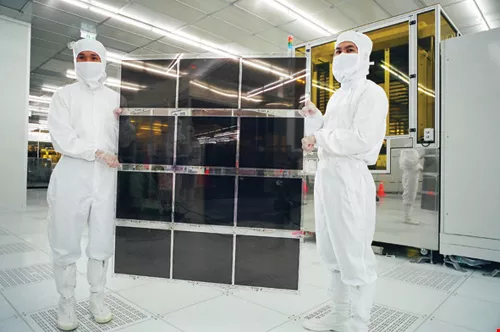
A: In the process of globalization, Kaohsiung is also dealing with the problem of traditional industries relocating overseas. Taiwan is doing well in terms of high-tech value-added and industrial development. The Hsinchu Science Park, the Tainan Science Park, and even the Science Park in Luchu in Kaohsiung County are all doing very well. But with the exception of a few firms, such as IC packager Advanced Semiconductor Engineering, Kaohsiung really doesn't stand out in this area. What then will be Kaohsiung's new star industry? That's what we're trying to figure out.
The people who once labored in our traditional manufacturing industries are now mostly middle-aged or elderly. They contributed a lot to Taiwan's economic growth, but are now facing unemployment as firms move overseas. Many of these workers are the breadwinners in their families. We're under a lot of pressure to figure out how to create new job opportunities for them.
On the business development front, Kaohsiung has a number of options: We can, for example, offer incentives for private-sector participation in infrastructure projects, stimulate businesses through subsidies and preferential treatment, renovate shopping districts, promote tourism, build an image of our city as the gateway to Taiwan, develop harbor tours for international tourists and further promote the development of the free port zone.
Since Mayor Hsieh's tenure, Kaohsiung has also been actively developing its tourism industry. In keeping with our role as host of the 2009 World Games, my administration will continue the effort to turn the city into an international tourist destination.
Q: Your electoral prospects weren't good, but in the end you won. Can you say something about the characteristics of Kaohsiung's municipal elections and the so-called Kaohsiung outlook?
A: Kaohsiung is on the ocean, so its people are very open-minded, but also have a kind of fierceness and quirkiness about them. The city has been wounded by its experiences, particularly of the February 28 and Formosa Incidents.
The city has also seen its development hindered by the national government's long-standing preference for politically and economically developing the north at the expense of the south. Consequently, Kaohsiung's people expect their political leaders be consistent in terms of the policies they advocate, to improve the city's standing, and to steer it in a new direction.
As for the Kaohsiung outlook, politically speaking it means protecting Taiwan's sovereignty. But at the same time the city is very open-minded and accepting; it is unacceptable for anyone here to be treated unfairly because of their ethnicity or place of origin.
Q: In your tenure at the CLA, you were one of the DPP administration's longest-serving Cabinet members. You've now been mayor for something over 30 days. What differences are there between being a Cabinet official and a mayor?
A: Cabinet officials must take full responsibility for the running of their own departments. When in charge of labor affairs for the Executive Yuan, I had to make Taiwan's nearly 8 million working persons understand the governing values of the party I represented. There was often a back-and-forth struggle between ideals and practicality--in the area of workers' rights, for example, you need to find a solution that simultaneously promotes business development and protects workers' rights.
But the key is that you must remember the principles that brought your party to power. If the DPP relied upon the underprivileged to come to power, how do you treat underprivileged workers once you have power? These considerations can be a challenge, but a Cabinet official's portfolio is more specialized and more limited [than that of a mayor].
The difficulty of being mayor arises out of the fact that the city government's duties are comprehensive and extremely complex. Though a mayor can largely delegate, I can't take things that easy. Given my personality, I'll have to work very hard as mayor.
About 90% of my team consists of people who are staying on in the municipal government. Their experience is priceless. But in addition to experience, I need ideas and innovation, as well as people who share my values. I've made it very clear to my team which of the things that I want and that the city government must attend to are non-negotiable and which are open to discussion.
Q: Your departure from the CLA was the low point of your political career. How did you turn things around?
A: Since my release from prison for my involvement in the Formosa Incident, I've been constantly working to achieve my goals. When I was forced out of the CLA in 2005, I found myself without work for the first time and realized that I had no idea what I wanted to do with myself. I still got up at 6 o'clock every morning, and would go out to buy all the papers. Even though I didn't feel like I should be looking at the papers, I read each one carefully to understand the direction our society was moving in.
Before long, I decided I needed to really clear my head, so I took a trip overseas where I couldn't read the papers even if I wanted to. Soon after I came back, I got sucked into doing campaign work during the mayoral and county magistrate elections. Then a lot of differnent things happened that led me to return to Kaohsiung as a candidate for mayor. I've passed through a lot of phases in my life. If I've got ten more years, I think I should give my most skilled and productive years to Kaohsiung.
| Year | 2001 | 2002 | 2003 | 2004 | 2005 |
|---|---|---|---|---|---|
| Subsidies (NT$100 million) | 72 | 127 | 147 | 244 | 339 |
| Subsidies to Taipei have remained at about NT$4 billion per year, with no significant increase. However, Taipei receives an annual allocation of central government funds of over NT$50 billion, while Kaohsiung receives NT$20 billion. | |||||
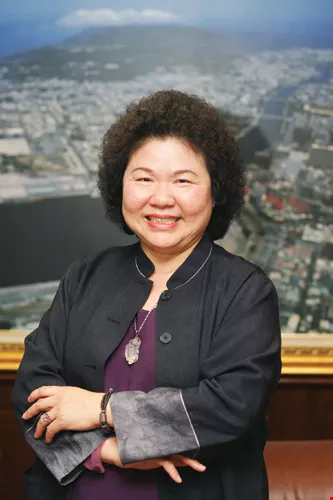
Kaohsiung's new mayor, Chen Chu.
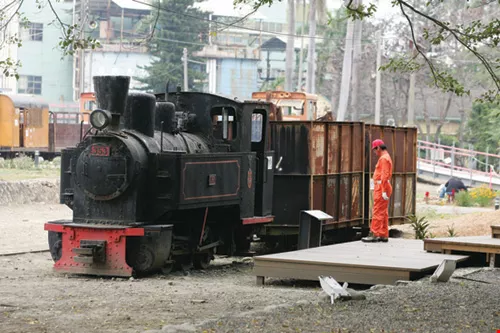
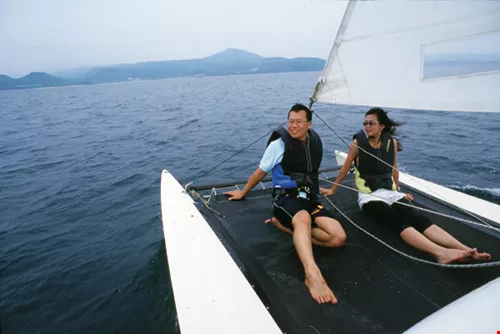
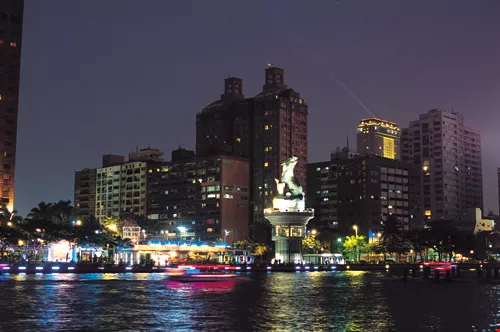
Though the Port of Kaohsiung is not yet under the city's management, the Harbor Bureau and the city government have cooperated several times in recent years on the use of wharves for tourism. As a result, Wharf 14 is now more familiar to city residents as "True Love Pier."


