Sun Ten's Herbal Journey
Chang Chiung-fang / photos Chuang Kung-ju / tr. by Scott Williams
February 2010


Whether as tonics in winter, aids during the first month after giving birth, or supplements to help kids grow up healthy and strong, Chinese herbal medicines permeate every stage of Taiwanese life.
Sun Ten Pharmaceuticals has made Chinese herbal medicines easy. No longer do patients have to cook up bitter traditional concoctions on their stoves. Sun Ten delivers them in ready-made capsules and drinks. It has also taken advantage of a variety of distribution channels-TV shopping channels, drug-store chains, department stores, supermarkets, and even convenience stores-to make its products available virtually everywhere.
In this piece, we explore how the 60-year-old company has used modern pharmaceuticals manufacturing facilities to further develop and spread our ancestors' knowledge of herbal remedies.
Skillful decoction and packaging have made products by market-leading Sun Ten Pharmaceuticals the go-to choice for hip urbanites looking for a health supplement or pick-me-up. In fact, the company makes everything from digestive aids and mood-lifters to nutritional supplements for children.
More than 20 of Sun Ten's 200-plus formulations are unique to the company, including its asthma treatment, its "yin-supplementing decoction," its "menses-stabilizing decoction," and its "supplemented Eight Immortals decoction." Sun Ten's bestselling prescription is its "supplemented free wanderer powder," an important supplement for women that contains Chinese angelica, white peony, bupleurum, poria, mint, and peony root bark. The prescription, which relieves stagnancy of the qi in the liver, harmonizes the blood, and regulates menstruation, is helpful to women experiencing irregular periods or going through menopause.
To foster greater public understanding of and confidence in scientific Chinese medicine, Sun Ten has instituted an open-door policy at subsidiary Sun Ten Natureceutica's manufacturing facility. This policy-and free product samples-have drawn an unending stream of tonic-loving Taiwanese visitors.
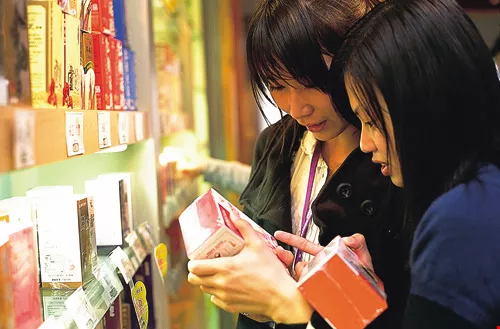
Must good medicine taste bitter? Do young people avoid Chinese herbal remedies? Not necessarily. A visit to Sun Ten's Hanfang herbal medicine facility might well turn such notions on their head and cure your herbal-medicine phobia.
Located in the Taichung Industrial Park, Sun Ten's 17,000-square-meter manufacturing facility is just a five-minute drive from Taichung's bustling Donghai Villa area. The completion of National Highway No. 3 made it even more accessible. In fact, it sits just a half hour south of Wuqi and a half hour north of Nantou County and its many tourist destinations. This fortuitous location has turned the facility into a hotspot for group tours.
When more than 100 students and faculty members from Changhua's Dayeh University dropped by the facility in mid-December, the students were fascinated by their first visit to a technologically advanced manufacturing plant for Chinese medicines.
The company had thought that young people had little connection to Chinese herbal medicines and that they tended to reject them outright, but learned it was mistaken. University senior Chen Huixuan began singing Jay Chou's "Herbalist's Manual": "Nux vomica, fetid cassia, cockleburs, air potatoes, Sophora alopecuroides, toosendan.... Let me put together a prescription to treat the hurt inside from flattering foreigners. Chinese roots run thousands of years deep and are stronger than people know...."
While Chou's pop song might have introduced young people to Chinese herbal medicines, the fact is that Sun Ten's visitors still consist largely of herbal medicine consumers who are over 45 years of age. Even so, exhibition-center manager Zhou Zhiming says that Sun Ten doesn't admit "pilgrimage groups." "Many tour bus operators come to us expecting to get a cut for pushing people to buy medicines. Their attitudes are not in keeping with our educational and promotional objectives," explains Zhou.
Sun Ten began offering tours to groups including foreign dignitaries, affiliated businesses, academic departments, and labor unions soon after it opened its plant. Then a series of negative media reports on Chinese herbal medicines brought Traditional Chinese Medicine (TCM) to a low ebb in 2006. The reports focused on concerns about problems with the ingredients of "two immortals" (tortoise shell and deer horn) jelly and about the presence of pesticides and lead in gentian liver-draining decoction. Sun Ten responded to the TCM crisis by emphasizing the transparency of its manufacturing processes and opening up tours to the general public. As a result, the Industrial Development Bureau of the Ministry of Economic Affairs last year designated the facility a "tourist factory" and named the company one of the outstanding firms of 2009.
The company's effort to open up and let visitors see its operations for themselves has borne fruit. More than 5,000 people have visited Sun Ten's facility over the last year or so, and company sales have increased by more than 20%.
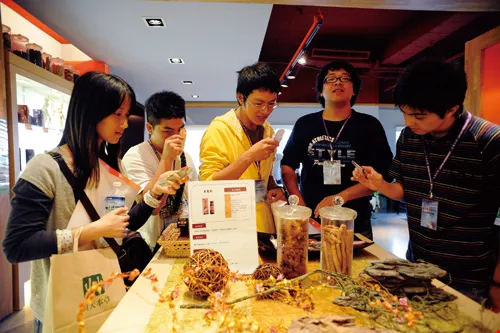
Medicinal herbs have different properties depending upon where they are grown. They are also administered differently depending on the age and body type of the patient, and the time of year. Sun Ten aims to teach visitors how to take care of themselves and use herbal tonics properly.
The Sun Ten Group includes Sun Ten Pharmaceuticals, Sun Ten Phytotech, and Sun Ten Natureceutica. Sun Ten Natureceutica, the company whose facility has been opened to the public, produces health supplements exclusively.
The tour begins with a lecture. Zhou Zhiming notes that the custom-built lecture hall is the "tourist factory's" strongest selling point. Visitors attend an engaging lecture and question-and-answer session that stresses Sun Ten's focus on quality control and safety while also delivering reliable, commonsense healthcare advice.
TCM holds to the old adage that an ounce of prevention is worth a pound of cure.
But keeping healthy takes knowledge. "What you need to do to stay healthy varies with body type, age, and season," says Tony Wu, assistant vice president of Sun Ten Natureceutica.
The Hanfang Healthcare Manual compiled by Sun Ten describes six body types: cold, hot, dry, wet, solid, and weak. People with a cold body type are sensitive to cold, find their extremities easily chilled, and have pale faces. Hot body types dislike heat, have high body temperatures and red faces, and are prone to fevers and hives. Dry body types suffer dry mouths and constipation. Wet body types suffer from edema, excess phlegm, and frequent diarrhea. Solid body types have loud voices, strong physiques, and suffer frequent constipation. Weak body types have soft voices, absorb nutrients poorly, and often suffer diarrhea. Prescriptions must be prepared differently depending on body type. For example, it's TCM protocol that "the weak can't bear tonics" and should limit their consumption of tea, coffee, scallions, ginger, and other stimulative foods. Instead, those with "weak qi" benefit from ginseng and astragalus, while those with "weak blood" should take Chinese angelica and rehmannia.
Approaches to health supplements also vary with stage of life. Generally speaking, TCM sees children as possessed of fragile internal organs and lacking their full allotment of blood and qi. At this stage of life, supplementation is largely aimed at facilitating digestion. During our energetic adolescent years, it's hard to over supplement. In our middle years, when our bodies go into decline and we find ourselves often tired, the focus shifts to tonics for the blood and qi. In our later years, we have to ease up, using smaller amounts of supplements to find a balance.
Health supplementation should also take account of the season. In spring, when the world is bursting with life, TCM recommends supplementing with coix seeds, poria, and poor man's ginseng. In summer, when your metabolism is at its peak, you can give your heart a boost with cordyceps and ganoderma. In fall, when the weather is dry, lily bulbs and apricots are good for the lungs. In winter, when bodily functions are at low ebb, cinnamon and flowery knotweed are an excellent tonic for the kidneys.
Traditional and scientificAfter passing through a gallery of ancient and modern devices used to manufacture herbal medicines, we approach the company's scientific herbal medicine production line and are greeted by the scent of herbal remedies being prepared.
Visitors get to see every step of Sun Ten's process, from the filtering of the water and the selection, refinement, storage, measurement, extraction, and concentration of ingredients to the encapsulation and packaging of the prescriptions.
Though the company stresses that it makes "scientific Chinese herbal medicine," it is very traditional in its selection of materials.
Wu says that in the 63 years since Sun Ten's founding in 1946, the company has never compromised its commitment to use pure, natural medicinal ingredients. It adheres to the quality guidelines and the growing regions described in medical classics such as Medical Treasures of the Golden Chamber, On Cold Damage, Qian Jin Fang, Corrections of the Errors in Medical Works, and the Encyclopedic Dictionary of Chinese Medicine.
In herbal medicine, the same ingredients are known to have different properties when grown in different regions. For example, northern astragalus (grown in Mongolia) has 20 times more polysaccharides than Jin astragalus (grown in Shanxi). Similarly, rehmannia from Henan is more than 20 times more medically effective than that grown in Shandong.
Concentrating ingredients is the key to the scientific manufacture of Chinese herbal medicines. Wu says that Sun Ten uses a low-temperature vacuum method that speeds up the process and prevents the breakdown and loss of active ingredients that can result from high-temperature processing.
Given that the company's scientific Chinese herbal medicine manufacturing facility has received both GMP and ISO 9000 certifications, it almost goes without saying that it has measures in place to protect the production environment. It's just that the glass separating visitors from the boilers and pipes makes it impossible for guests to tell what's being made in the boilers. Instead, they stand amazed at the speed at which the machines pack up the medicinal powders.
The quality control department's use of advanced scientific equipment to test for the presence of harmful substances has greatly increased the public's confidence in the safety of scientific herbal medicines. The department has an inductively coupled plasma mass spectrometer that tests for traces of arsenic, lead, mercury, copper and other substances; a gas chromatography mass spectrophotometer that detects residual pesticides; and a high-performance liquid chromatography instrument that checks for aflatoxins. This cluster of high-tech machinery can't help but make people feel that Chinese medicine has truly entered the realm of the scientific.
Doing it yourselfAfter listening to the lecture and observing the GMP-certified production lines, visitors naturally want to give the products a try. Whether warm ginger tea or a "four agents" beverage, visitors can sample as much as they want. They tend to enjoy them all, and praise their tastiness.
But differences between men and women become very apparent when they choose their samples and make their purchases.
Women tend to plunk down their money for a facial mask containing pearl powder and dahurian angelica, and are eager to try all the flavors of "engendering transformation decoction" and "four agents drink." Many claim the mulberry-flavored four agents drink as their favorite, while others say they buy rose-infused four agents drink for their complexions when drugstores put it on sale.
The men are more interested in Dragon Drink and Imperial Liquid, which contain cordyceps and velvet deerhorn and are claimed to boost sexual prowess.
As part of its effort to make a strong impression on visitors, the tourist factory also gets them involved in do-it-yourself activities.
Sun Ten offers four DIY activities. Female visitors typically enjoy compounding the company's facial mask formula, which whitens skin, acts as a moisturizer, and removes rough patches. Other options include making a product that refreshes tired eyes and lightens dark rings under them, a deodorizer based on bamboo charcoal with saposhnikovia and chuanxiong, and a medicinal sachet containing Eupatorium fortunei, calamus, and galangal.
Even though visitors are only adding and mixing ingredients, the DIY aspect makes it interesting and lets them feel like amateur TCM doctors. All they need to do to take home their very own DIY souvenir is make a reservation and pay a small fee for the ingredients (NT$50 for a sachet or NT$150 for a facial mask).
A statue of Li Shizhen, the Ming-Dynasty doctor who wrote the Compendium of Materia Medica and came to be known as the King of Herbal Medicine, stands outside the Sun Ten facility as a backdrop for souvenir photos. Pictures taken, visitors depart draped in the scent of medicinal sachets. And, who knows? Perhaps that two-hour tour of the facility will make their next dose of herbal medicine that much more effective.

@List.jpg?w=522&h=410&mode=crop&format=webp&quality=80)


